



US, Iraq Collaborate on Electricity and Energy
Posted on 01 October 2013 .
The United States Department of Energy’s (DOE) Office of Electricity Delivery and Energy Reliability conducted a workshop in Baghdad, September 22-26, on electricity operations and maintenance for 20 engineers from the Ministry of Electricity who work at power plants across Iraq.
The five-day workshop provided the Iraqi participants with tools and methods to enhance efficiency and safety in the generation, transmission, and distribution of electricity.
This workshop was the final training session of the Department of State-funded Iraqi Energy Reliability, Survivability, and Resiliency Program. The program supports the U.S.-Iraq Strategic Framework Agreement (SFA), with the specific goal of facilitating the Government of Iraq’s capabilities to deliver essential services to its citizens.
In its entirety, the Iraqi Energy Reliability, Survivability, and Resiliency Program trained 90 Iraqi engineers, provided the Government of Iraq with the tools to identify vulnerabilities within the electricity sector, and proposed international industry best practices to address those vulnerabilities.
The U.S. Department of Energy provided trainers from its headquarters in Washington, D.C. and from the Pacific Northwest National Laboratories in Richland, Washington who are experts in turbine theory, electricity sector operations, and maintenance.
(Source: Embassy of the United States)
Posted in 'Your Country' - United States, Construction & Engineering In Iraq, Iraq Education and Training News, Iraq Public Works News 1 Comment

Electricity Shortage "Costs Iraq $40bn a Year"
Posted on 29 September 2013 .
By Walid Khadduri for Al-Monitor, translated from Al-Hayat. Any opinions expressed are those of the author, and do not necessarily reflect the views of Iraq Business News.
On Sept. 14, 2013, the Iraqi parliament's Oil and Energy Committee published a report drafted by the advisory board of the Prime Minister's Office, which indicated that Iraq is losing around $40 billion annually due to the lingering power outage crisis.
The report confirmed that the continuous power outages caused serious damage to petrochemical plants and private plants. It is worth mentioning that for years now power outages in Iraq have shot up from 15 to 20 hours per day throughout the year, with the exception of the Kurdistan Region of Iraq, where the private sector participates in electricity generation and distribution.
It is true that power outages have become a part of daily life for Iraqi citizens, but their far-reaching implications go beyond significant material losses. The continuous blackout has led to the use of generators at homes and in neighborhoods, causing severe environmental pollution. Moreover, constant and sudden outages damage household electrical appliances such as refrigerators, computers and televisions.
These losses may have been borne by the citizen and not the state as a whole, yet they are significant cumulatively losses for the country, both at the moral and material levels. Besides pollution, Iraqis pay hundreds of dollars for generators and fuel, in addition to the state electricity bills.
Why this dire situation in the electricity sector in Iraq and other Arab countries? Why is this happening at this particular stage and not in the first stages of use of electricity in the Middle East, that is, decades ago, after World War II? Does Iraq — and other countries witnessing the same tragic experience — lack the necessary funds for the construction of power plants? Of course not. The main reason lies in the dissemination of a culture of corruption and lack of accountability, which spread to senior officials in the Iraqi state.
Posted in Iraq Oil & Gas News, Iraq Public Works News 3 Comments

Genel Energy, DNO Deal for Summail Gas
Posted on 19 September 2013 .
By John Lee.
Genel Energy and DNO International have signed a Gas Sales and Purchase Agreement with the Kurdistan Regional Government to supply gas from the Summail field in the Dohuk licence in the Kurdistan Region of Iraq.
The gas will partially displace diesel currently used to generate electricity in a 500 MW power plant in the city of Dohuk (pictured), located 40 kilometres from the field.
Initial deliveries will be around 100 million cubic feet per day sold on a take-or-pay basis for the duration of the Production Sharing Contract or until deliveries reach one trillion cubic feet. The price of gas will range between $3 and $4 per thousand cubic feet over the life of the contract.
The Prime Minister of the Kurdistan Regional Government, Nechirvan Barzani, and the Minister of Natural Resources, Dr. Ashti Hawrami, were present at the signing ceremony held in Erbil today and are signatories to the contract.
The next step in the fast-track development of the field is re-entry and completion of the Summail-1 discovery well and the installation of a 24 inch pipeline to transport gas to what is slated to become the regional gas gathering and distribution network. First gas from Summail-1 is planned in January 2014. The second well, Summail-2, will spud in the fourth quarter and the Summail-3 well is scheduled for 2014.
Following the development of the Summail field, the focus will shift to the appraisal of the oil potential of the Dohuk license.
Posted in Iraq Oil & Gas News 1 Comment

Basra Oil Workers Demonstrate Again
Posted on 30 August 2013 .
By Waheed Ghanim.
This article was originally published by Niqash. Any opinions expressed are those of the author, and do not necessarily reflect the views of Iraq Business News.
Back On The Street In Basra: Oil Workers Demonstrate Again
Earlier this year oil sector workers in Basra began demonstrating for better conditions and the oil dividends they were promised. Their employer, South Oil, which produces most of Iraq's oil, said they would accede to the demands. However nothing has changed and now the workers are back on the street.
In February employees of South Oil, the national petroleum company responsible for oil in Iraq's southern states, stopped work and demonstrated in front of the firm's headquarters. The workers demanded payment of withheld benefits, the right to housing, better contracts and an end to corruption in the company. The protests started in February and in April around 1,000 workers even stormed the company headquarters in Basra.
And recently the oil workers returned to the streets of Basra to continue their fight. The latest protests started because one of the protest leaders, Alaa Abdul-Rida, was transferred to another location.
To defuse the crisis, local government had formed a committee that included two local MPs, to negotiate some kind of settlement. “But even while negotiations were going on between the committee and the Ministry of Oil [South Oil's parent company], we were surprised to find out that Abdul-Rida had been transferred to another oil field, without a new title or any financial compensation,” explains Abdul Karim al-Sada, another of the protest leaders. “It seemed that the transfer was a punishment.”
But al-Sada felt that those tactics wouldn't have any effect on the protesters. “During previous protests, eight of the protest leaders were detained – myself included. But pressure from the other protesters meant that the case was dropped,” he says. “After all, we are demonstrating peacefully and we don't have any intention to stop oil production.”
The oil company has previously said it is prepared to meet the workers' demands. In fact, it was already saying that early in 2013. But as al-Sada confirmed, the issue of housing and the issue of company dividends is yet to be resolved. The workers also want improved conditions at work and that a trade union be introduced.
At a press conference, the head of South Oil, Dia Jaafar, said some of the workers' demands were luxuries but that others were important and immediate. “However,” he added, “some of these are not within my control. But the Minister [of Oil] understands these demands and he's working on making them a reality.”
In Iraq, salaries paid to oil sector employees and locals working in the electricity sector are higher than any other industry, mainly because there are incentives available that cannot be obtained in other areas. The demonstrating oil sector workers counter this by saying they often work in extreme conditions in hot and remote places, where security is a grave concern.
Nasser Majeed Hassan, a former member of the South Oil trade union between 2003 and 2007, says that many of the current problems causing the protests are the fault of former oil minister, Hussein al-Shahristani, when he banned the oil workers' trade unions.
“We formed trade unions under very difficult conditions in 2003,” Hassan notes. “We were visiting the sites, even in remote areas and at great danger, so that we could check out working conditions and to identify corruption there. But high ranking officials fought us all the way.”
The oil workers also say they believe that the rest of Iraq should listen to what they have to say because it is about how national oil incomes are distributed; these methods of distribution affect everyone in the country, because that's where nearly all of Iraq's income comes from.
(Source: Niqash)
Posted in Iraq Oil & Gas News Comments Off on Basra Oil Workers Demonstrate Again
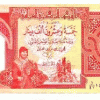
Dinar Exchange Rate Linked to Oil Exports, Federal Reserves
Posted on 28 August 2013 .
By Omar al-Shaher for Al-Monitor. Any opinions expressed are those of the author, and do not necessarily reflect the views of Iraq Business News.
According to an Iraqi financial expert, the value of Iraq’s federal reserves currently amounts to about $80 billion, following the recent increase in the country’s oil exports. Nevertheless, no information was made available by the Central Bank of Iraq (CBI) to this effect.
Speaking to Al-Monitor, Iraqi financial expert Hussein al-Asadi said, “According to my information, the value of Iraq’s federal reserves currently amounts to about $80 billion. This includes funds, precious metals and other items.”
Nevertheless, the spokesman for the CBI, which is charged with managing the federal reserves of Iraq, has yet to issue a statement in this regard. Meanwhile, Al-Monitor’s correspondent in Baghdad failed to obtain comment from the bank’s governor, Abdul Basit Turki, to this effect, or determine the identity of those authorized to speak to the media. The bank has only issued statements to comment on the developments of its work.
The last comment made by the CBI regarding the country’s federal reserves dates back to Jan. 31, 2012, when the bank denied the “decline of gold reserves.” The CBI stated, “They have been stable throughout the past months and amount to 29,730 tons.”
Asadi added, “The US dollar is the main currency in the Iraqi reserves. There are also some reserves in other currencies, in addition to gold. ... Due to the troubled military and political conditions of the country, Iraq’s reserves cannot be invested to a large extent, as is the case in China or the United Arab Emirates, for instance.”
“Iraq is distributing its reserves to a number of banks just to protect [these funds], although it does generate some interest on the deposits,” Asadi added.
Posted in Iraq Banking & Finance News 22 Comments

When Will the Blackouts End?
Posted on 15 August 2013 .
Iraq's Ministry of Electricity has just promised that shortages will be eliminated by the end of the year. Readers of Iraq Business News will remember a previous commitment, made in strident terms just four months ago, to end blackouts by the end of October.
Ministry spokesperson Musaib Mudaris claims the country now produces around 11,000 megawatts, still short of the country’s total needs, estimated at 13,000 megawatts. From a first glance at these figures, one might expect that most residents and businesses have power most of the time, but the reality on the ground is different.
Al-Monitor's Ali Abdel Sadah, for example, reports that Baghdad residents on average enjoy six hours of electricity a day, while some areas of the city remain completely without electricity. So in addition to some scepticism about the numbers, there appears to be a major problem of distribution.
The good news is that funds are being directed to solving these problems, with the Ministry's budget for this year being increased to $14 billion. And while many contracts have already been issued, this should still create more opportunities for engineering businesses.
Meanwhile, we will continue to watch the real availability of electricity throughout the country, and remind the Ministry of its commitments.
If you are in Iraq, please tell us your experience of electricity supply in the comment section below.
Posted in Blog, Construction & Engineering In Iraq 2 Comments
Govt Allocates $14bn for Electricity
Posted on 15 August 2013 .
By John Lee.
The Ministry of Electricity’s 2013 budget has soared to $14 billion to help it end power outages in the country, reports Azzaman.
But the ministry’s spokesperson Musaib Mudaris said the blackouts will continue until the end of the year, by which time output will reach 13,000 megawatts, enough to meet the country’s domestic needs.
Mudaris said half of this year’s allocations were invested in power plants and enhancement of the national grid.
The ministry’s operating costs amount to $7 billion a year, he added.
Mudaris also revealed that Electricity Ministry’s budget in the years from 2003-2012 had amounted to $37 billion.
Currently, he said, Iraq’s combined power output was in the range of 11,000 megawatts, still short of the country’s total needs, estimated at 13,000 megawatts.
However, many in Iraq doubt whether the ministry will be able to put an end to outages any time soon, given the precarious security situation and the dramatic increases in demand due to improved living standards.
However, Mudaris insisted that the country to be able to produce up to 20,000 megawatts by the end of 2014.
(Source: Azzaman)
Posted in Construction & Engineering In Iraq, Iraq Oil & Gas News, Iraq Public Works News 1 Comment
Iraqi Power Plants Use 60m L/Day Fuel
Posted on 15 August 2013 .
By John Lee.
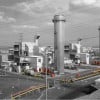
Iraqi power stations are using nearly 60 million liters of fuel per day, according to a report from Azzaman.
The Oil Ministry issued the statistics in response to complaints by the Ministry of Electricity, which has repeatedly blamed lack of fuel for power shortages.
Last month Iraq signed a multi-billion deal with Iran for the import of Iranian natural gas to feed two power plants in Baghdad and one in Diyala.
Besides major plants linked to the national grid, there are thousands of small generators across the country, which are put to work to once the national grid is off.
Private generators consume more than 8 million liters of gas oil per day, the Ministry added.
The fuel supplied to owners of private generators is subsidized since most households in Iraq either own one or are linked to medium size generators serving several households.
(Source: Azzaman)
(Picture: Taji Power Station)
Posted in Iraq Oil & Gas News 1 Comment
Iraqi Parties Circle Around Election Bill
Posted on 14 August 2013 .
By Laith Hammoudi of IWPR. Any opinions expressed are those of the author, and do not necessarily reflect the views of Iraq Business News.
Jasim Mohammed is sick and tired of the current political set-up in Iraq, and is not sure whether he will even bother to vote in next year’s parliamentary election.
“I will participate in the 2014 election only if someone I trust is standing,” Mohammed, who heads an NGO in Baghdad, told IWPR. “I don’t feel that the people we voted in represent us.”
Mohammed says that if people like him like him carry on backing the same old parties and politicians, they will be opening the way for them to “plunder the nation’s wealth”.
He is not alone in his disillusionment with the democratic process. Ten years after Saddam Hussein was toppled, elected politicians are unable to stop the daily violence or deliver basic services like electricity and water.
Some believe the electoral system itself is to blame and needs to be amended. This month, the Iraqi parliament, the Council of Representatives, is to hold a vote on a revised electoral law. But some commentators fear the proposed changes could make things worse, not better.
The legislation envisages a return to the controversial system employed for polls in 2005 but dropped for the 2010 election. Called the “closed list”, it is a version of proportional representation where voters simply pick the party they favour, and its leader then decides who will take up the seats it has been allocated nationwide. The alternative, “open list” method would allow voters to go for named candidates and avoid anyone they do not like.
Posted in Politics, Security 2 Comments
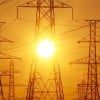
Iraq's Dysfunctional Elite
Posted on 14 August 2013 .
By Harith Hasan for Al-Monitor. Any opinions expressed are those of the author, and do not necessarily reflect the views of Iraq Business News.
Last month, demonstrators in the southern Iraqi cities of Nassiriya and Basra organized nightly rallies to protest the government’s failure to provide enough electricity for households during the notoriously hot summer.
With temperatures exceeding 113 degrees Fahrenheit during July and August, most households get less than 12 hours a day of electric power. The Iraqi government spent $28 billion to reform electricity services, which became one of the most critical problems in the country since the second Gulf War in 1991.
The failure to handle this problem is another cause for the increasing disillusionment with the government. Responding to the popular rage, Prime Minister Nouri al-Maliki said in a TV interview that he was manipulated by the minister of electricity and his staff, who provided him with incorrect information about their system's capacity. Although the minister of electricity position has been rotated among five people since 2006, none of them managed to make tangible improvements.
But this did not prevent political parties from competing to obtain this position, a contest driven less by a "commitment" to social welfare and more by the fact the ministry is contract-rich. During a TV interview, Khalaf al-Ileyan, whose party was "awarded" this ministry according to a 2006 power-sharing agreement, said that he was offered a $2 million "down payment" and a monthly $1 million if he accepted a nomination for this position.
This confession might be shocking, but in fact it reflects habitual relations within Iraqi elite. "Buying" a ministry is nothing new in Iraq. The ritual of power-sharing has become all about finding ways to distribute the growing oil revenues among political parties and transforming state institutions into fiefdoms of competing groups.
Initially, the power-sharing formula was presented as a method to create an inclusive system of government that departs from the legacy of exclusionary politics. In practice, power-sharing has become a power apportionment, what Iraqis call: Muhasesa. This is partly because it emphasized ethnic and sectarian categories in determining political weights, which turned institutions into instruments of political conflicts rather than being frameworks to solve them.
Posted in Iraq Industry & Trade News, Politics Comments Off on Iraq's Dysfunctional Elite