



Iraq to Import Electricity from Jordan "in the Coming Days"
Posted on 03 October 2023 .
By John Lee.
Iraq's Minister of Electricity has announced the successful completion of the electricity connection with Jordan, adding that imports from Jordan will start in the coming days.
Ziad Ali Fadel also confirmed that the electricity connection contracts with neighboring countries are progressing as planned.
He clarified that the Gulf-Saudi connection is also progressing smoothly, with no problems to report.
(Source: Ministry of Electricity)
Posted in Iraq Industry & Trade News Comments Off on Iraq to Import Electricity from Jordan "in the Coming Days"
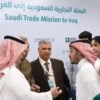
Saudi Export Trade Mission to Basra
Posted on 02 October 2023 .
By John Lee.
The Saudi Export Development Authority (SEDA) has organized a trade mission to Iraq under the banner "Made in Saudi Arabia."
The mission, held in Basra, aligns with the authority's goal of promoting non-oil Saudi exports, diversifying income sources, and expanding into promising regional and international markets.
28 Saudi companies and 130 Iraqi companies from various sectors, including construction materials, chemicals, polymers, energy, and packaging, participated in the trade mission. The aim was to explore new avenues for cooperation with the Iraqi side, supporting the entry of Saudi products into the promising Iraqi markets. The mission resulted in bilateral meetings, business matching sessions, agreements, and memoranda of understanding between Saudi and Iraqi entities.
Saudi non-oil exports to Iraq over the past five years (2018-2022) reached SAR 14.8 billion [$4 billion], with the construction materials sector being one of the highest exporting sectors during this period, totaling SAR 4.42 billion, followed by the "food products" sector at SAR 4.04 billion.
SEDA said its trade mission underscores its commitment to empower exporters and their products, facilitate connections between exporters and potential buyers, and stimulate the growth of Saudi non-oil exports. This initiative aims to open more export opportunities in international markets, contributing significantly to the national economy and helping Saudi non-oil exports reach at least 50% of non-oil GDP by 2030.
(Source: SEDA)
Posted in Iraq Industry & Trade News Comments Off on Saudi Export Trade Mission to Basra
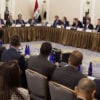
Sudani Discusses Investment Opportunities with US Chamber of Commerce
Posted on 25 September 2023 .
By John Lee.
Iraqi Prime Minister, Mr. Mohammed Shia Al-Sudani, held a meeting with members of the American Chamber of Commerce in New York on Thursday evening (local time). The meeting was attended by businessmen, investors, and representatives of major American companies.
During the meeting, he praised the efforts of Mr. Steve Lutes, the Deputy Head of the American Chamber of Commerce, for organizing the meeting to inform investors about the business environment in Iraq.
Mr. Al-Sudani highlighted that Iraq offers fertile ground for investment in various important sectors, with untapped natural resources. He emphasized the importance of investing in a way that benefits the Iraqi people and strengthens the strategic relationship with the United States.
The Prime Minister addressed several key points during his speech:
- The government is wisely investing revenue to activate non-oil sectors, acknowledging that depending solely on oil for budget enhancement is unsustainable.
- Efforts are underway to stop gas flaring in 2-3 years, with projects involving Total, Emirati, and Chinese companies.
- Iraq has announced 11 exploration fields in Anbar, Ninawa, and Najaf provinces, containing natural gas to be exploited for the first time in Iraq's history.
- Economic reform is a priority, and private sector collaboration with the government is essential for its success.
- Creating a favorable business environment for both foreign and American companies is a focus, aligning with the Iraq-US partnership vision.
- The Iraq-US relationship should extend beyond security.
- Iraq's business environment needs significant efforts to reduce bureaucracy and combat corruption.
- Every project related to a company will receive personal attention and obstacles will be removed.
- Reforms in the tax system, customs system, and economic laws are ongoing.
- A draft law for e-commerce regulation is in progress, and intellectual property protection is prioritized.
- Progress is being made on an e-payment law, and significant strides have been taken in financial and banking reforms.
- Iraq now has a transparent trade system compliant with global financial transfer standards.
- The Ministry of Commerce, in collaboration with the US Commercial Service and the Iraqi Embassy in Washington, is working on the third round of the Trade and Investment Framework Agreement (TIFA) meetings in early 2024.
- TIFA aims to address challenges in Iraq-US trade and investment relations.
- American companies are encouraged to share their challenges operating in Iraq for solutions.
- The private sector is supported through the Iraq Development Fund, with additional capital planned for 2024.
- Agreements with Arab and global investment funds, including the Saudi Investment Bank, are in progress.
- The government will provide sovereign guarantees for industrial and agricultural projects in Iraq.
- Agreements with German Hermes and Italian SACE will facilitate the establishment of important industrial facilities with 15% participation from Iraqi businessmen and 85% sovereign guarantees.
- Iraqi businessmen have selected factories during visits to Germany and Italy, and agreements are being finalized based on market requirements.
- A significant improvement in healthcare services is aimed for through a new healthcare law and collaboration with specialized companies.
- Six hospitals are offered for operations, with American healthcare providers expected to play a role.
- Iraq's pharmaceutical market is valued at around $3 billion annually, with only 10% produced domestically.
- The government has issued supportive measures for pharmaceutical producers, with over 245 requests to establish pharmaceutical production lines.
- Modern irrigation technologies are being employed to combat water scarcity in agriculture, requiring specialized companies to develop this sector.
- Contracts have been signed with Emirati, Chinese, and Iraqi companies to establish solar power stations, and an agreement with Total aims to generate 1,000 megawatts of solar energy.
(Source: Media Office of the Prime Minister)
Posted in Investment, Iraq Industry & Trade News Comments Off on Sudani Discusses Investment Opportunities with US Chamber of Commerce
Iraq-Kuwait Tension Escalates
Posted on 24 September 2023 .
From Amwaj Media. Any opinions expressed are those of the author(s), and do not necessarily reflect the views of Iraq Business News.
Deep Dive: Iraq-Kuwait tension escalates amid renewed focus on maritime boundary
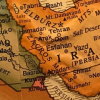
Kuwait is ramping up pressure on Iraq to safeguard a 2012 deal on the demarcation of boundaries in a small but vital waterway.
Tensions have escalated after a top Iraqi court earlier this month challenged the agreement, which regulates navigation in the Khor Abdullah passage.
The full article can be viewed here (registration required).
Posted in Iraq Industry & Trade News, Iraq Transportation News, Politics, Security Comments Off on Iraq-Kuwait Tension Escalates
US emphasises Urgency of Reopening Iraq-Turkiye Pipeline
Posted on 23 September 2023 .
By John Lee.
The United States has emphasized the urgency of reopening the Iraq-Turkiye Pipeline (ITP) as soon as possible.
Full statement from The White House:
Deputy Assistant to the President and White House Coordinator for the Middle East and North Africa Brett McGurk and Deputy Assistant and Senior Advisor to the President for Energy and Investment Amos Hochstein met last night with Prime Minister Mohammed Shia al-Sudani of Iraq to confirm the strong U.S. partnership with Iraq as outlined in the Strategic Framework Agreement between the two countries.
The United States took special note of Prime Minister Sudani's leadership moving Iraq's policy towards strengthening its own energy security, including with electricity grid connections to Jordan, Kuwait, and Saudi Arabia, as well as major energy deals with western firms to capture flared gas in southern Iraq for domestic use and future export.
Hochstein and McGurk also welcomed recent agreements between the Government of Iraq and the Kurdistan Regional Government regarding monthly budget allocations, and emphasized the urgency of reopening the Iraq-Turkiye Pipeline as soon as possible.
On regional matters, McGurk pledged full U.S. support to help finally resolve outstanding maritime boundary issues with Kuwait, particularly in relation to UNSCR 833. Sudani welcomed this support, and reaffirmed Iraq's longstanding and clear policy recognizing Kuwait's sovereignty and territorial integrity, all prior bilateral agreements between the two friendly countries, and adherence to international law, including UN Security Council Resolutions.
(Source: The White House)
Posted in Iraq Oil & Gas News Comments Off on US emphasises Urgency of Reopening Iraq-Turkiye Pipeline
Iran "Clinches Good Gas Export Agreements with Iraq"
Posted on 18 September 2023 .
From Tasnim, under a Creative Commons licence. Any opinions expressed are those of the author(s), and do not necessarily reflect the views of Iraq Business News.
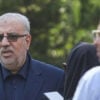
Iran's oil minister said his ministry has inked good agreements with neighboring Iraq in the field of exporting gas, collecting associated (flare) gas and also exporting technical-engineering services in the oil sector.
Javad Owji made the remarks on the sidelines of the Cabinet meeting on Wednesday and added, "Fortunately, effective measures have been taken at the ministry in the field of flared gases in western and eastern parts of the country."
He pointed to the Hoveyzeh Gas Refinery and stated that the refinery was recently put into operation in a ceremony attended by President Ebrahim Raisi.
Turning to the gas flares in eastern fields of Karun, Owji noted that 21 million cubic meters of gas will be added to the current gas capacity of the country with the collection of 52 flares, which is equal to one phase at the South Pars Gas Field.
Regarding the Arash Gas Field, an offshore natural gas field located in the neutral zone between Kuwait, Iran and Saudi Arabia, Owji said that negotiation is underway between the parties in order to resolve the existing problems.
Earlier this week, Iran's Foreign Ministry spokesman said the country's rights over joint Arash gas field will be pursued through expert-level talks.
Posted in Iraq Industry & Trade News, Iraq Oil & Gas News Comments Off on Iran "Clinches Good Gas Export Agreements with Iraq"
Saudi Ambassador says Builders will enter Iraq
Posted on 14 September 2023 .
By John Lee.
Saudi Arabian companies are said to be committed to supporting the housing sector in Iraq.
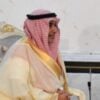
The Saudi ambassador to Baghdad, Abdulaziz Al-Shammari (pictured), told the state-owned Iraqi News Agency (INA) on Wednesday that Saudi companies will expand into Iraq with a view to building more housing.
He was speaking after attending a conference arranged by the Ministry of Construction, Housing and Public Municipalities.
(Source: INA)
Posted in Construction & Engineering In Iraq Comments Off on Saudi Ambassador says Builders will enter Iraq
KRG PM Welcomes Saudi Investment Delegation
Posted on 13 September 2023 .
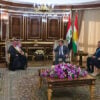
KRG Prime Minister Masrour Barzani received a delegation from Saudi Arabia on Monday, headed by Dr. Saad Al-Shahrani, Deputy Minister of Investment.
The meeting revolved around enhancing mutual ties, with a particular focus on Saudi Arabia's investments in the Kurdistan Region.
Prime Minister Barzani highlighted the enduring friendship between the Kurdistan Region and Saudi Arabia, offering insights into the KRG's strategies for economic diversification and broadening both local and foreign investment horizons.
Dr. Al-Shahrani expressed Saudi Arabia's aspirations to strengthen its relationship with the Kurdistan Region, with an emphasis on tourism, agriculture, and broader investment ventures.
(Source: KRG)
Posted in Agriculture, Investment, Leisure and Tourism in Iraq Comments Off on KRG PM Welcomes Saudi Investment Delegation
Iraqi PM says Development Road Project Prioritised
Posted on 13 September 2023 .
By John Lee.
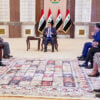
The Iraqi Prime Minister has said that Iraq stands firm on its position that it will not engage in any railway connections for cargo transport until the Faw Port and Development Road project are completed.
At a conference on Economic Integration in Baghdad, Mohammed Shia Al-Sudani continued:
"Progress is evident in these projects, and international partnerships are being sought to manage and operate the Faw Port effectively.
"The Development Road project will create industrial cities along its path, starting from the industrial city in the basic design of the Faw Port, which is the largest in the Middle East.
"There is no delay in the five projects related to the Faw Port, with the quay project at 73% completion, exceeding the planned progress.
"The railway connection to Iran for passengers, part of the required infrastructure, is being explored. Discussions with Saudi officials are also underway regarding railway connections to facilitate the transportation of pilgrims and travelers.
"Projects like the Grand Canal [Suez Canal?] and Belt and Road Initiative do not pass through Iraqi territory, making the Development Road the shortest and most cost-effective transit route, encouraging global partnerships with Iraq.
"The Development Road establishes economic models unprecedented in the region, necessitating an economic strategy. Transportation ministers from interested countries will be invited to a conference in Baghdad, a practical step in project implementation."
(Source: Media Office of the Prime Minister)
Posted in Construction & Engineering In Iraq, Iraq Industry & Trade News, Iraq Transportation News Comments Off on Iraqi PM says Development Road Project Prioritised
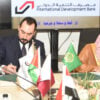
Iraq's Int'l Development Bank signs Agreement on Tourism
Posted on 12 September 2023 .
By John Lee.
Arab Tourism Organization and International Development Bank Sign Cooperation Agreement to Boost Arab Tourism Development
The Arab Tourism Organization (ATO) and Iraq's International Development Bank (IDB) have signed a cooperation agreement aimed at enhancing collaboration to harness opportunities for the development of the tourism sector.
The Arab Tourism Organization's President, Dr. Bandar bin Fahd Al Fahid, and the Chairman of the Board of the International Development Bank, Dr. Ziad Khalef Abdul Karim, represented their respective organizations in the signing.
Key initiatives to be pursued through this agreement include the issuance of the Arab Tourist Prepaid Visa Card, financing projects and investment opportunities for Arab investors, and the utilization of the Arab Tourism Organization's Tourism Development Fund.
The goal is to attract tourism investments to Arab countries by providing necessary financing for these projects.
Dr. Bandar bin Fahd Al Fahid, the President of the Arab Tourism Organization, emphasized that this memorandum of understanding aims to attract tourism investments to the Arab region. He praised the support of Arab governments, especially Saudi Arabia, in fostering the tourism industry through their keen interest and facilitation of the organization's activities in Jeddah.
He highlighted Saudi Vision 2030, which has made significant strides in the tourism sector, aiming to receive 100 million tourists and contributing 10% of the GDP to the national economy by the year 2030.
Dr. Ziad Khalef Abdul Karim, on behalf of the International Development Bank, mentioned that the bank uses the latest financial technologies and methods to provide innovative financial solutions that meet the needs of customers, including small and medium-sized enterprises and individuals, across the region.
It's worth noting that, by the end of 2022, the global tourism industry had welcomed 900 million tourists, achieving 63% of the 2019 pre-COVID-19 results. The Arab region has demonstrated a 100% recovery rate in tourism after the pandemic.
(Source: ATO)
Posted in Leisure and Tourism in Iraq Comments Off on Iraq's Int'l Development Bank signs Agreement on Tourism