

US emphasises Urgency of Reopening Iraq-Turkiye Pipeline
Posted on 23 September 2023 .
By John Lee.
The United States has emphasized the urgency of reopening the Iraq-Turkiye Pipeline (ITP) as soon as possible.
Full statement from The White House:
Deputy Assistant to the President and White House Coordinator for the Middle East and North Africa Brett McGurk and Deputy Assistant and Senior Advisor to the President for Energy and Investment Amos Hochstein met last night with Prime Minister Mohammed Shia al-Sudani of Iraq to confirm the strong U.S. partnership with Iraq as outlined in the Strategic Framework Agreement between the two countries.
The United States took special note of Prime Minister Sudani's leadership moving Iraq's policy towards strengthening its own energy security, including with electricity grid connections to Jordan, Kuwait, and Saudi Arabia, as well as major energy deals with western firms to capture flared gas in southern Iraq for domestic use and future export.
Hochstein and McGurk also welcomed recent agreements between the Government of Iraq and the Kurdistan Regional Government regarding monthly budget allocations, and emphasized the urgency of reopening the Iraq-Turkiye Pipeline as soon as possible.
On regional matters, McGurk pledged full U.S. support to help finally resolve outstanding maritime boundary issues with Kuwait, particularly in relation to UNSCR 833. Sudani welcomed this support, and reaffirmed Iraq's longstanding and clear policy recognizing Kuwait's sovereignty and territorial integrity, all prior bilateral agreements between the two friendly countries, and adherence to international law, including UN Security Council Resolutions.
(Source: The White House)
Posted in Iraq Oil & Gas News Comments Off on US emphasises Urgency of Reopening Iraq-Turkiye Pipeline
Iran "Clinches Good Gas Export Agreements with Iraq"
Posted on 18 September 2023 .
From Tasnim, under a Creative Commons licence. Any opinions expressed are those of the author(s), and do not necessarily reflect the views of Iraq Business News.
Iran's oil minister said his ministry has inked good agreements with neighboring Iraq in the field of exporting gas, collecting associated (flare) gas and also exporting technical-engineering services in the oil sector.
Javad Owji made the remarks on the sidelines of the Cabinet meeting on Wednesday and added, "Fortunately, effective measures have been taken at the ministry in the field of flared gases in western and eastern parts of the country."
He pointed to the Hoveyzeh Gas Refinery and stated that the refinery was recently put into operation in a ceremony attended by President Ebrahim Raisi.
Turning to the gas flares in eastern fields of Karun, Owji noted that 21 million cubic meters of gas will be added to the current gas capacity of the country with the collection of 52 flares, which is equal to one phase at the South Pars Gas Field.
Regarding the Arash Gas Field, an offshore natural gas field located in the neutral zone between Kuwait, Iran and Saudi Arabia, Owji said that negotiation is underway between the parties in order to resolve the existing problems.
Earlier this week, Iran's Foreign Ministry spokesman said the country's rights over joint Arash gas field will be pursued through expert-level talks.
Posted in Iraq Industry & Trade News, Iraq Oil & Gas News Comments Off on Iran "Clinches Good Gas Export Agreements with Iraq"
Saudi Ambassador says Builders will enter Iraq
Posted on 14 September 2023 .
By John Lee.
Saudi Arabian companies are said to be committed to supporting the housing sector in Iraq.
The Saudi ambassador to Baghdad, Abdulaziz Al-Shammari (pictured), told the state-owned Iraqi News Agency (INA) on Wednesday that Saudi companies will expand into Iraq with a view to building more housing.
He was speaking after attending a conference arranged by the Ministry of Construction, Housing and Public Municipalities.
(Source: INA)
Posted in Construction & Engineering In Iraq Comments Off on Saudi Ambassador says Builders will enter Iraq
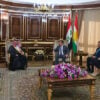
KRG PM Welcomes Saudi Investment Delegation
Posted on 13 September 2023 .
KRG Prime Minister Masrour Barzani received a delegation from Saudi Arabia on Monday, headed by Dr. Saad Al-Shahrani, Deputy Minister of Investment.
The meeting revolved around enhancing mutual ties, with a particular focus on Saudi Arabia's investments in the Kurdistan Region.
Prime Minister Barzani highlighted the enduring friendship between the Kurdistan Region and Saudi Arabia, offering insights into the KRG's strategies for economic diversification and broadening both local and foreign investment horizons.
Dr. Al-Shahrani expressed Saudi Arabia's aspirations to strengthen its relationship with the Kurdistan Region, with an emphasis on tourism, agriculture, and broader investment ventures.
(Source: KRG)
Posted in Agriculture, Investment, Leisure and Tourism in Iraq Comments Off on KRG PM Welcomes Saudi Investment Delegation
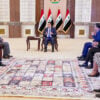
Iraqi PM says Development Road Project Prioritised
Posted on 13 September 2023 .
By John Lee.
The Iraqi Prime Minister has said that Iraq stands firm on its position that it will not engage in any railway connections for cargo transport until the Faw Port and Development Road project are completed.
At a conference on Economic Integration in Baghdad, Mohammed Shia Al-Sudani continued:
"Progress is evident in these projects, and international partnerships are being sought to manage and operate the Faw Port effectively.
"The Development Road project will create industrial cities along its path, starting from the industrial city in the basic design of the Faw Port, which is the largest in the Middle East.
"There is no delay in the five projects related to the Faw Port, with the quay project at 73% completion, exceeding the planned progress.
"The railway connection to Iran for passengers, part of the required infrastructure, is being explored. Discussions with Saudi officials are also underway regarding railway connections to facilitate the transportation of pilgrims and travelers.
"Projects like the Grand Canal [Suez Canal?] and Belt and Road Initiative do not pass through Iraqi territory, making the Development Road the shortest and most cost-effective transit route, encouraging global partnerships with Iraq.
"The Development Road establishes economic models unprecedented in the region, necessitating an economic strategy. Transportation ministers from interested countries will be invited to a conference in Baghdad, a practical step in project implementation."
(Source: Media Office of the Prime Minister)
Posted in Construction & Engineering In Iraq, Iraq Industry & Trade News, Iraq Transportation News Comments Off on Iraqi PM says Development Road Project Prioritised
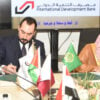
Iraq's Int'l Development Bank signs Agreement on Tourism
Posted on 12 September 2023 .
By John Lee.
Arab Tourism Organization and International Development Bank Sign Cooperation Agreement to Boost Arab Tourism Development
The Arab Tourism Organization (ATO) and Iraq's International Development Bank (IDB) have signed a cooperation agreement aimed at enhancing collaboration to harness opportunities for the development of the tourism sector.
The Arab Tourism Organization's President, Dr. Bandar bin Fahd Al Fahid, and the Chairman of the Board of the International Development Bank, Dr. Ziad Khalef Abdul Karim, represented their respective organizations in the signing.
Key initiatives to be pursued through this agreement include the issuance of the Arab Tourist Prepaid Visa Card, financing projects and investment opportunities for Arab investors, and the utilization of the Arab Tourism Organization's Tourism Development Fund.
The goal is to attract tourism investments to Arab countries by providing necessary financing for these projects.
Dr. Bandar bin Fahd Al Fahid, the President of the Arab Tourism Organization, emphasized that this memorandum of understanding aims to attract tourism investments to the Arab region. He praised the support of Arab governments, especially Saudi Arabia, in fostering the tourism industry through their keen interest and facilitation of the organization's activities in Jeddah.
He highlighted Saudi Vision 2030, which has made significant strides in the tourism sector, aiming to receive 100 million tourists and contributing 10% of the GDP to the national economy by the year 2030.
Dr. Ziad Khalef Abdul Karim, on behalf of the International Development Bank, mentioned that the bank uses the latest financial technologies and methods to provide innovative financial solutions that meet the needs of customers, including small and medium-sized enterprises and individuals, across the region.
It's worth noting that, by the end of 2022, the global tourism industry had welcomed 900 million tourists, achieving 63% of the 2019 pre-COVID-19 results. The Arab region has demonstrated a 100% recovery rate in tourism after the pandemic.
(Source: ATO)
Posted in Leisure and Tourism in Iraq Comments Off on Iraq's Int'l Development Bank signs Agreement on Tourism

IFC to Develop and Upgrade Baghdad International Airport
Posted on 07 September 2023 .
By John Lee.
The International Finance Corporation (IFC), a member of the World Bank Group, has signed an with the government of Iraq to act as lead transaction advisor for a public-private partnership (PPP) to rehabilitate, expand, finance, operate and maintain Baghdad International Airport (BIAP).
Under the agreement, the IFC, will act as lead transaction advisor for a public-private partnership (PPP) to rehabilitate, expand, finance, operate and maintain Baghdad International Airport, and bring its facilities, safety, and services in line with international standards.
Full statement from IFC:
IFC signed a flagship agreement today with the government of Iraq that will harness private sector capital and expertise to develop the country's main airport-opening the door for more private sector investment and establishing a competitive model for other critical infrastructure projects in the country.
Under the agreement, IFC, a member of the World Bank, will act as lead transaction advisor for a public-private partnership (PPP) to rehabilitate, expand, finance, operate and maintain Baghdad International Airport - the country's largest international airport - and bring its facilities, safety, and services in line with international standards.
This will be Iraq's first airport PPP project as well as IFC's first PPP mandate in Iraq. IFC will carry out detailed due diligence and recommend a suitable transaction structure for the project, building on a pre-feasibility study undertaken by the institution in 2019. Upon the government's approval, the project will move to tender stage to attract private investors and operators.
Iraq is in urgent need of infrastructure rehabilitation and enhancement. Strengthening private sector participation in the economy will be critical and this PPP will help lay the foundations for future projects to tap into private financing and expertise.
The project is also aligned with Iraq's 2030 Vision for Sustainable Development and government agenda, which both aim to introduce private sector participation for key infrastructure assets in priority sectors to create a more diversified Iraqi economy less dependent on oil revenues.
"This agreement marks the start of a series of partnerships with the private sector for critical infrastructure development across the country, as part of our 2030 economic vision for sustainable growth," said Iraq's Prime Minister Eng. Muhammad Shia' al-Sudani. "The Baghdad International Airport serves as a cultural symbol representing Iraq and its people. This initiative is an integral component of our comprehensive vision, which will encompass all airports to enhance transportation diversity and improve global connectivity."
"This agreement marks a new era in Iraqi history, allowing the country to leverage its unique geographical position, supporting trade, creating jobs, and fostering diversification," said Khawaja Aftab Ahmed, IFC's Regional Director for the Middle East, Pakistan, and Afghanistan. "PPPs help governments harness the private sector's expertise and efficiency, raise capital to build modern, sustainable infrastructure, and spur development. Attracting private sector participation will help manifest the government's vision and assist in meeting Iraq's huge developmental and financing needs."
Since 2005, IFC has committed over $1.2 billion to support Iraq's private sector, with its current committed portfolio standing at about $188 million in sectors such as energy, telecoms, and banking.
IFC has an impressive track record in PPPs with over $46 billion facilitated globally since 2004, improving access to infrastructure for more than 150 million people. IFC's PPPs in the Middle East include the groundbreaking Queen Alia Airport and the Tafila wind farm in Jordan, and the Madinah Airport and healthcare PPPs in Saudi Arabia.
Full statement from the Media Office of the Prime Minister, translated:
On Sunday, Iraqi Prime Minister Mr. Mohammed Shiaa Al-Sudani presided over the signing of a significant agreement with the International Finance Corporation (IFC) to develop and rehabilitate Baghdad International Airport. The agreement was signed by the Director-General of the Civil Aviation Authority on the Iraqi side.
The agreement encompasses the provision of a comprehensive investment portfolio by the IFC, covering the expansion, financing, operation, maintenance, enhancement of safety factors, and improvement of services at the international airport. These efforts aim to align the airport with global standards through collaboration with a specialized international company.
Mr. Al-Sudani emphasized that this agreement is one of several that will be established with the private sector. The private sector will play a pivotal role in developing critical infrastructure across various sectors in Iraq, in line with the economic vision extending to 2030. This vision seeks to enhance the necessary infrastructure for sustainable economic growth in Iraq.
The Prime Minister underscored the government's commitment to the importance of Baghdad International Airport, considering it a cultural and economic gateway that represents Iraq and its people. This initiative is part of a comprehensive vision that includes all airports and focuses on diversifying transportation modes and enhancing connectivity with regional and global partners.
The agreement includes provisions for the IFC, a member of the World Bank Group, to provide consultations on developing the role of the private sector and facilitating its entry into the public service arena in partnership with the public sector, addressing future challenges in various sectors.
It's worth noting that the International Finance Corporation boasts extensive experience in airport development globally and in the region. They have previously overseen the development and expansion of significant airports in Saudi Arabia, Turkey, and Queen Alia International Airport in the Jordanian capital, Amman.
(Sources: IFC, Media Office of the Prime Minister)
Posted in Iraq Transportation News Comments Off on IFC to Develop and Upgrade Baghdad International Airport

Saudi Airline announces Jeddah to Baghdad Route
Posted on 04 September 2023 .
By John Lee.
Saudi Arabian budget airline Flynas has announced that it will resume its direct flights to Iraq.
Starting on Friday 1st September, the company will operate three direct flights every week between Jeddah to Baghdad.
Flynas, formerly called Nas Air, was founded in Riyadh in 2007.
(Source: Flynas)
Posted in Construction & Engineering In Iraq Comments Off on Saudi Airline announces Jeddah to Baghdad Route

Saudi Export Mission to Erbil Strengthens Trade Ties with Iraq
Posted on 16 August 2023 .
By John Lee.
The Saudi Export Development Authority (SEDA), under the banner of "Made in Saudi Arabia, Exported to the World," has conducted a trade mission to Erbil, Iraq.
The mission, held on August 15, 2023, featured the participation of 34 Saudi companies and 140 Iraqi companies across diverse sectors including construction materials, food products, and packaging.
The mission aligns with the authority's non-oil export development efforts, aimed at promoting exporters and their products, enhancing the competitiveness of Saudi products, and expanding into international markets.
The mission comprised bilateral meetings, business discussions, agreements, and memoranda of understanding between the Saudi and Iraqi sides. Participants also benefitted from services offered by relevant government entities supporting the mission, including the Saudi Food and Drug Authority and Saudi Exports and Imports Bank. These opportunities provide companies with the chance to foster trade deals, boost exports, and explore new markets.
This trade mission extends from the Saudi Export Development Authority's previous engagements in Iraq. The authority has previously participated in significant events, such as the Baghdad International Fair and the Erbil International Building Exhibition. It has also organized several Saudi-Iraqi trade missions, with the most recent one taking place in Baghdad in June, underscoring its commitment to promote exporters and facilitate diverse promotional platforms for them to connect with potential buyers and partners in regional and international markets.
Notably, Saudi Arabia's non-oil exports to Iraq over the past five years (2018-2022) amounted to SAR 14.8 billion. The "Construction Materials" sector emerged as the top exporting sector during this period, with a value of SAR 4.42 billion, followed by the "Food Products" sector at SAR 4.04 billion.
This Saudi export mission, aimed at unlocking numerous export opportunities, reinforces the authority's dedication to promoting exporters and their products, and facilitating connections between exporters and potential buyers. This strategy stimulates growth in Saudi non-oil exports, contributing to increased international market presence, thus becoming a vital driver for the national economy. The objective is to raise the share of non-oil Saudi exports to at least 50% of non-oil GDP by 2030.
(Source: SEDA)
Posted in Iraq Industry & Trade News Comments Off on Saudi Export Mission to Erbil Strengthens Trade Ties with Iraq

Iraq Eliminates Trachoma as a Public Health Problem
Posted on 05 August 2023 .
Iraq eliminates trachoma as a public health problem
The World Health Organization (WHO) congratulates Iraq for having eliminated trachoma as a public health problem, making it the fifth country in WHO's Eastern Mediterranean Region to achieve this milestone.
"The success of Iraq's national trachoma programme has shown what can be achieved with national leadership and collaboration", said Dr Tedros Adhanom Ghebreyesus, WHO Director-General. "Freedom from trachoma will positively impact the lives of the most vulnerable populations now and in the future".
Iraq established its national trachoma programme in 2012 to coordinate the final domestic push against the disease. A trachoma surveillance system was developed to detect and manage cases within secondary and tertiary eye care facilities, as well as through school pre-enrolment and school eye screening programmes conducted in collaboration with the Ministry of Education. Thousands of refractionists, optometrists, ophthalmologists, specialist eye surgeons and other trained healthcare staff contributed to these efforts.
Post-elimination, Iraq and WHO will continue to closely monitor previously endemic areas to detect and if necessary, combat any resurgence of disease.
"WHO has validated Iraq as having eliminated trachoma as a public health problem, making it the eighth country in the Eastern Mediterranean Region that has eliminated at least one neglected tropical disease" said Dr Ahmed Al-Mandhari, WHO Regional Director for the Eastern Mediterranean. "This is a remarkable achievement, and it illustrates that with dedication countries can achieve success in eliminating diseases, even under challenging circumstances. Iraq's success in eliminating trachoma is also a true demonstration of our regional vision of Health for All by All."
Trachoma, the leading infectious cause of blindness worldwide, is still known to be endemic in six countries of WHO's Eastern Mediterranean Region, but there has been substantial progress in the number of people in the region requiring antibiotic treatment for trachoma elimination purposes, which has fallen from 39 million in 2013 to 6.9 million in April 2023.
Globally, Iraq joins 17 other countries that have been validated by WHO for having eliminated trachoma as a public health problem. These are Benin, Cambodia, China, Gambia, Ghana, Islamic Republic of Iran, Lao People's Democratic Republic, Malawi, Mali, Mexico, Morocco, Myanmar, Nepal, Oman, Saudi Arabia, Togo and Vanuatu.
Iraq is also the 50th country to be acknowledged by WHO for eliminating at least one neglected tropical disease (NTD), globally. This major milestone is the halfway mark to the 100-country target set for 2030 in the WHO road map for neglected tropical diseases. Since the beginning of 2023, 5 other countries have successfully completed the relevant validation processes for one NTD.
"The contribution that NTD programmes are making towards universal health coverage is impressive as by definition they extend outreach to pockets of underserved populations" said Dr Ibrahima Socé Fall, Director, Global NTD Programme, WHO. "Thanks to Iraq's dedication and commitment, the world is now closer to attaining the Sustainable Development Goals targets".
The disease
Trachoma is a neglected tropical disease. It is caused by infection with the bacterium Chlamydia trachomatis, which spreads from person to person through contaminated fingers, fomites and flies that have come into contact with discharge from the eyes or nose of an infected person.
Environmental risk factors for trachoma transmission include poor hygiene, overcrowded households, and inadequate access to water and sanitation.
To eliminate trachoma as a public health problem, WHO recommends the SAFE strategy1 a comprehensive approach to reduce transmission of the causative organism, clear existing infections and deal with their effects.
The 2021-2030 neglected tropical disease road map targets the prevention, control elimination and eradication of 20 diseases and disease groups by 2030. Progress against trachoma and other neglected tropical diseases alleviates the human and economic burden that they impose on the world's most disadvantaged communities.
(Source: WHO)
Posted in Healthcare Comments Off on Iraq Eliminates Trachoma as a Public Health Problem