


Minister for Electricity Suspended
Posted on 30 July 2018 .
By John Lee.
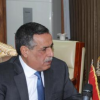
Prime Minister Haider al-Abadi suspended Electricity Minister Qassim al-Fahdawi (pictured) on Sunday for what he described as the "poor performance of the sector".
Protests against unemployment and poor public services turned violent earlier this month, with several protesters killed.
Many areas of Iraq are struggling to cope with insufficient electricity supply during the annual heatwave.
(Source: Office of the Prime Minister)
Posted in Iraq Industry & Trade News, Politics Comments Off on Minister for Electricity Suspended
Internet Cut "to Stop Protesters Posting Images"
Posted on 23 July 2018 .
By Amnesty International.
Internet Cut to Stop Protesters Posting Images of Security Force Attacks
Amnesty International has learned that the Iraqi authorities have disabled internet access shortly before the security forces have attacked - and in some cases killed - people protesting over unemployment and inadequate government services across the south of the country.
In the past week, witnesses in Basra governorate have reported to Amnesty that security forces have been using tear gas and live ammunition against peaceful protesters. At least eight people are reported to have died in the protests so far, according to the Iraqi Health Ministry. Witnesses also reported peaceful protesters being beaten with batons, cables and plastic hoses in violent attempts to disperse them.
Trusted sources have told Amnesty they believe internet access is being deliberately cut off to prevent protesters and human rights activists from sharing images of the excessive force being used by security forces. One source in Baghdad told Amnesty:
“When there is no internet, people are being beaten and killed because we can’t upload it. Iraqis now know the value of social media. We need it to raise our voice.”
Protests in Iraq erupted on Sunday 8 July and the internet was cut late at night on Thursday 12 July. Although access was mostly restored on Monday, the signal reportedly remains weak across the country and several social media platforms remain blocked.
Posted in Iraqi Communications News, Politics, Security Comments Off on Internet Cut "to Stop Protesters Posting Images"
Video: Tension grips Basra after Protester Killed
Posted on 13 July 2018 .
From AFP. Any opinions expressed are those of the authors, and do not necessarily reflect the views of Iraq Business News.
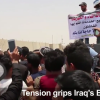
Dozens of people demonstrate in the southern Iraqi port city of Basra, four days after security forces opened fire killing one person during a protest against unemployment.
Posted in Politics, Security Comments Off on Video: Tension grips Basra after Protester Killed
Iraq at a Crossroads – Restoring Security and Economic Growth
Posted on 01 May 2018 .
By Dr. Layth Mahdi.
The opinions expressed are those of the author, and do not necessarily reflect the views of Iraq Business News.
Iraq at a Crossroads – Will the New Government Succeed in Restoring Security and Economic Growth
Iraq is experiencing a severe socio-economic crisis due to the country’s inability to develop and implement programs to drive economic growth. Iraq is still facing political instability, sever corruption and lack of vision from its leadership to resolve the country’s problems.
With the recent liberation of major cities from the insurgency, Iraq now stands at a critical junction in its history. Iraq has said it needs $88 to $100 billion, but it was promised only $30 billion during the Kuwait International Conference for the Reconstruction of Iraq.
The real success lies in Iraq presenting its cause to the International Community and gaining its confidence. Iraq has a chance to capitalize on the security situation and rebuild the economy and trust from its people.
In order to continue to build trust with Iraq’s allies and investors the new strong Government needs to focus on the following points:
- Reestablishing the national army and police as the sole enforcer of the law;
- Anti corruption measures to ensure the benefit of its population;
- Review Government policies and procedures to minimize bureaucracy and promote foreign investment.
With the poverty rate reaching over 40 percent and unemployment continues to rise, Iraq is in dire need of large-scale projects for sustainable development to be reached. There needs to be a focus on the rebuilding the agricultural and manufacturing sector to stop the increase in poverty and unemployment.
There also needs to be an investment in education, healthcare and basic services, support for small and medium businesses, and empowerment of youth whom suffer the highest unemployment.
Recently there has also been a significant increase of drug use where with drug related arrests more than doubling across the country. Prior to 2003 Iraq was considered drug-free however with the further deterioration of the agricultural sector and the increase in poverty and unemployment, some farmers may grow narcotic plants commercially as cash crops due to the increased in demand locally.
Any initiatives in place to curb drug use would fail if the problems of poverty and unemployment were not addressed properly.
There are new parliamentary elections on the horizon giving Iraq a chance to finally restore itself back to its glory. This will only be successful with the help of International Organizations, NGO’s and most importantly strong Government officials with the right vision.
Posted in Iraq Industry & Trade News, Politics 2 Comments
New Iraqi Budget, New Rules To Anger and Upset
Posted on 09 March 2018 .
This article was originally published by Niqash. Any opinions expressed are those of the author, and do not necessarily reflect the views of Iraq Business News.
By Mustafa Habib.
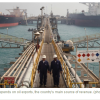
For the first time in over ten years, Iraq managed to pass a federal budget with MPs’ votes. In the process there have been last minute deals, Kurdish losers, angry militias and deeply rooted economic problems revealed.
After heated debates that dragged on for months, Iraq’s parliament passed the national budget for 2018. For the first time since 2003, the decision was made with a majority of votes in parliament in Baghdad, rather political deal making.
As the country’s Sunni Muslim and Shiite Muslim politicians brokered a deal though, Iraq’s Kurdish MPs were left hanging, after they exited the session in protest at the Kurdish share of the budget.
Laws on the federal budget say that a draft should be submitted to the Iraqi parliament no later than November 11 every year. However, this didn’t happen due to conflicts between the various political groupings in parliament and thanks to the country’s deepening financial crisis, started by a drop-in oil prices, then exacerbated by the security crisis caused by the extremist group known as the Islamic State.
Around 90 percent of funds coming into the Iraqi budget are dependent on the country’s oil revenues. If oil stays at US$46 a barrel and exports remain at 3.8 million barrels a day, then this would all funnel into US$88 billion budget. That still leaves a shortfall of US$10 billion, according to the recently passed budget.
As recently as last week, it had not looked at all certain that the 2018 budget would pass. A number of disparate groups were opposed to the draft budget, all for their own reasons. This included Sunnis, Shiites from southern oil-producing provinces and the country’s Kurdish ethnicity.
For months previously, the Sunni politicians had been calling for more money for reconstruction in Sunni-majority provinces where the extremist Islamic State, or IS, group had held sway. The salaries of state employees in these areas had been halted since late 2014 for fear that the cash would end up in the IS group’s hands.
Still, in many of the Sunni-majority provinces, it’s been months since displaced locals started returning home – but the salaries still have not started to be paid again. Sunni Muslim MPS were pressuring the government to restart these.
“We were able to convince the government to agree to pay out those stalled salaries and to offer locals loans, so they can rebuild their homes,” Ahmad al-Jibouri, an MP for Mosul, told NIQASH. “We were also able to convince the government to reappoint those individuals who were dismissed from the army and police and to give back state service jobs to locals in those areas too.”
Article 43 of the Iraqi budget now states that “an additional US$344 million is to be allocated to provinces and areas that fell under the control of the IS group, in order to help stabilize the area and for the reconstruction of infrastructure.”
The budget then details which province gets what: Ninawa, of which Mosul is the capital, will get US$152 million, Salahaddin and Anbar will each get US$84 million and Kirkuk in northern Iraq and Diyala will both get US$17 million.
This change saw the Sunni Muslim politicians willing to agree to the budget.
Meanwhile the Shiite Muslim MPs from southern oil-producing provinces came to agree to the budget for different reasons.
Laws from 2013, about the powers of the provincial authorities, allocate part of the revenue from the oil and gas produced there to the province itself. A province should be getting 5 percent of the money from each barrel of crude oil, 5 percent from each barrel refined in the province and 5 percent from natural gas revenues. However, the Iraqi government has not dispensed money in this way for years due to its own need for the cash.
This has had an impact. For example, the southern province of Basra should be one of the country’s wealthiest, going by how much oil and gas is produced here. However, the province also has one of the highest rates of locals living in poverty.
Shiite MPs from these provinces were dissatisfied by that distribution and wanted to force a change before they would agree to vote for the 2018 budget. The government then guaranteed in Article 2 of Chapter 2 of the budget that the provinces that produce the country’s oil would get one of those 5 percents.
For example, Basra extracts oil, refines it and also produces natural gas. According to the original rules, the province should be getting 5 percent from each form of energy. If the province extracts one barrel of oil and then refines it, it should be getting 5 percent plus 5 percent. However the new rules say the province will only get one of those payments.
At least that is better than nothing, says Ammar Tumeh, a Shiite Muslim MP.
“And the budget will also give the oil-producing provinces 20 percent of any budget surplus, should the price of oil go up, beyond the US$46 per barrel,” Tumeh adds.
Of the various interest groups competing to turn the budget to their advantage, the biggest losers were the country’s Kurds. Kurdish politicians withdrew from the final session to vote on the budget in protest over the percentage their semi-autonomous, northern region was supposed to get. The Kurds run their own semi-independent region in northern Iraq; it has its own military, parliament and laws. In the past the Iraqi Kurdish region had been supposed to receive 17 percent of the federal budget, based on how much oil revenue the region contributed to the national income and on the region’s population.
The topic has been a long-running cause of conflict between Baghdad and Iraqi Kurdistan and things recently worsened, after the ill-fated referendum on independence in the northern region in September last year. And the proposed budget didn’t make things any better as the first version of the document saw the Kurdish share of the federal budget drop to around 12 percent.
The new version of the budget does not apparently specify a percentage for the Kurds but analysts suggest that it may now be sitting around 14 percent. None of this matters, of course, if the Iraqi government doesn’t start paying the money to the Kurdish authorities and paying the salaries of Kurdish civil servants.
The fact that the federal budget was passed in parliament even after the Iraqi Kurdish MPs walked out was a source of consternation for those running the Kurdish region. The Iraqi Kurdish prime minister, Nechirvan Barzani, called the budget decision a collapse of the principles of partnership in power, upon which the modern Iraqi state was built.
Now that the budget has passed, it is also far from trouble free.
Another sticking point arose almost immediately. The new budget allocates US$2.5 billion worth of defence spending like this: US$600 million for the ministry of defence, US$146 million to the ministry of interior, US$80 million to the counter-terrorism forces and US$80 million for the formerly-volunteer, mostly-Shiite Muslim militias. The rest – over US$1 billion - will go towards armaments and weaponry.
But just hours after it was approved, some Shiite Muslim politicians were already complaining. The fighters in the militias, which started as a volunteer force assembled to combat the IS group and which have evolved into an official, albeit separate, part of the Iraqi defence forces, were only listed as contractors. Their salaries are paid by the government but the budget says they are not permanent government employees, unlike soldiers in the Iraqi army. Additionally the militia fighters were getting lower salaries than those the ministry of defence was paying out.
Keeping the heroes of the militias on a different pay level and defining them as contractors was “the ultimate betrayal,” said Qais al-Khazali, who heads one of the more extreme militias, the League of the Righteous. Despite their controversial nature, members of the militias are seen by many as heroes who stepped up to protect the homeland when the official army collapsed in the face of attacks by the IS group.
The new budget also presents further problems for the future. It outlines a number of austerity measures and new taxes of the kind that have not been seen in Iraq for decades.
For one thing, the government has decided to suspend new appointments in the civil service. This could have a dramatic impact because a lot of Iraqis are employed by the government – it is the only way that many locals will ever be employed as the private sector remains very small in comparison to the government sector.
A lot of young Iraqis see a government job as their only option to get work. But the number of new openings has been falling steadily since 2013. That year there were 100,000. In 2014, there were only 37,000, in 2015, 30,000 and in 2016, 32, 000. Last year there were only a few thousand and this year there will be none at all.
It’s a decision that threatens to increase the national rate of unemployment dramatically. In 2012, the rate was estimated to be around 12 percent. By 2017, it had risen to 30 percent, thanks mainly to the chaos caused by the security crisis and the displacement of millions of Iraqis from their homes. The rate is almost bound to increase further by the end of 2018, with this new directive.
There are also new taxes for the newly unemployable to think about paying. The Iraqi government wants to impose a sales tax on the costs of using mobile phones and on Internet fees. A special tax will be added whenever an Iraqi buys mobile phone units. So for instance, if somebody buys US§10 worth of mobile phone credit, they will need to pay US§12 in the future.
The tax of US$20 added to every ticket in Iraqi airports will also continue to be charged.
Another item in the Iraqi budget that does not bode well for the future is the amount of foreign debt that the government is continuing to take on.
(Picture Credit: Essam al-Sudani)
Posted in Politics Comments Off on New Iraqi Budget, New Rules To Anger and Upset
Iraq Increases Taxes amid Public Discontent
Posted on 07 March 2018 .
By Salam Zidane for Al Monitor. Any views expressed here are those of the author, and do not necessarily reflect the views of Iraq Business News.
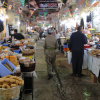
The Iraqi government sent to parliament a revised version of the 2018 budget bill for the fourth time Feb. 11. The budget proposal includes a new 10% tax on sales at commercial centers, restaurants and barbershops.
Iraq lacks the appropriate environment to collect new taxes because sales are made in cash, not credit cards. This reality will likely impose obstacles on tax collection as both citizens and shop owners can find ways to evade taxes. This is not to mention the influence peddling in the tax collection departments, where some officials could add the taxes to their personal accounts instead of state coffers.
The government's new tax policy comes as a result of Iraq's 2015 agreement for a $5.4 billion loan with the International Monetary Fund.
This deal includes a reform of public finances (including the tax system) to collect 2.3 trillion dinars ($1.8 billion) under the 2018 budget through taxes imposed on telecommunications services, hotels, refreshments, cigarettes and alcohol, among other items.
In an interview with Al-Monitor, Madhar Mohammad Saleh, financial adviser to the prime minister, attributed the government's new taxes to efforts to diversify the economy and end its reliance on oil. Saleh said, "Iraq ranks last in the world in terms of paying taxes — with the amount of tax paid equivalent to only 3% of GDP. Paying taxes is still alien to the Iraqi people."
He added, "Paying taxes is a national duty so that every citizen could contribute to the state budget and these funds could be used for national projects that are of paramount importance to Iraqis, such as hospitals and infrastructure, among other development projects. … The imposed taxes are very low and will not pose any burden to citizens. Politicians need to find solutions to financial problems as the situation in the country is already difficult."
The government began to impose taxes for the first time in the 2015 budget, namely Article 33, on prepaid mobile card and airplane tickets in the wake of the financial crisis that broke out in 2014, which is still ongoing. Those taxes were implemented because of low oil prices and the high cost of the battles against the Islamic State, which swept the north and west of Iraq.
Najiha Abbas, director of the General Tax Authority, said, "The proposed sales tax in the budget of 2018 is not imposed on traders and shop owners but are rather deducted from consumers." Abbas added, "Taxation will help diversify the economy and reduce the rate of the non-oil deficit and therefore make the country less reliant on oil."
The Finance Committee of the Iraqi parliament described the economic measures as "unrealistic and full of confusion."
"Imposing new taxes on the Iraqi people means further impoverishing them as the country’s economy is facing major obstacles in addition to the bad economic decisions that came to the detriment of citizens," parliamentarian Serhan Ahmed told Al-Monitor.
"These taxes will raise the prices of goods and will lead to economic stagnation and citizens are already tied up with loans. The oil funds, loans and grants have already gone to the pocket of the government, which is now seeking more funds through taxes," Ahmed said. He called upon parliament to cancel the article on taxation from the 2018 budget bill.
Shop, hotel and barbershop owners have largely objected to the 10% tax, which will adversely affect their incomes in light of the stagnation that has been gripping the country since 2014.
Selim Khadem, a barbershop owner in Baghdad, told Al-Monitor, "The government does not provide any service of essence to the citizens while it continues to collect billions of dollars from oil every year. Now they want more money, which explains the new taxes. If this system comes into force, I will have to sell my business as I cannot afford that the government shares my profits through sales taxes."
Khadem said, "Usually people pay taxes in exchange for good services provided by their state. In Iraq, however, people buy fake commodities at a very high price and now they will pay taxes."
Abdul Rahman al-Mashhadani, a professor of economics at Iraqi University in Baghdad, agreed with Khadem.
"This is a bad decision by the government. The country is already gripped by an acute financial crisis that has taken its toll on citizens, causing more poverty and unemployment. With these new taxes, the already shaky trust between the people and the government has been strained," Mashhadani told Al-Monitor. He said the new taxation system will serve as fertile ground for the rampant financial and administrative corruption due to the major imbalance in the tax system, stressing that Iraq needs a long-term strategic policy to reform its economy and not short-term palliatives.
The government has been facing many obstacles in collecting taxes, as it has said more than $8 billion a year from custom duties on imported goods have been wasted.
(Picture Credit: Adam Jones)
Posted in Construction & Engineering In Iraq Comments Off on Iraq Increases Taxes amid Public Discontent
Creating a New Entrepreneur Generation in Iraq
Posted on 24 October 2017 .
By Aziz Al Nassiri, CEO, RiTS.
Noah’s Ark Initiative: Toward the creation of a new entrepreneur generation in Iraq.
Noah’s Ark -- an initiative aimed at solving Iraq’s most pressing problem, youth unemployment -- was launched on 3rd August 2017.
The Ark is an organized Launchpad for small entrepreneurial business startups.
The concept is based on the following approach:
- Finding all Iraqi university graduates who have entrepreneurial tendency (12% of graduates),
- Educating, training, supporting and helping these entrepreneurs find project ideas of interest to them,
- Expose the entrepreneurs to crowdsourcing, with focus on the elite of professionals, academics, scientists, inventors, mentors, business people, and investors to support, counsel, mentor, fund, partner, be a supplier or customer. In particular, the Iraqi diaspora as well as people from around the world who are concerned about the future of Iraq, can play a pivotal role here,
- Provide complete business modelling expertise together with a variety of supporting functions through incubation, carried out by a choice of Iraqi and non Iraqi incubators available on deck. i.e The Ark is an ecosystem of all Iraqi entrepreneurship initiatives,
- Design, and establish blueprints for repeatable projects, e.g. model farms, 3D Printed buildings teams (Mosul!), river transport boats (Marshes!),Babylon tourism arcades, etc,
- Ensuring competitiveness of all projects by always basing them on the latest technology and science available. The aim is not to catch up with the neighbours; we should aim to leap ahead of them. Iraqi scientists and the diaspora have a major role to play here,
- Establishing a fair, corruption free, crowd funding based, loan arrangement for all projects.
In doing all the above we are helping to launch 100s, and 1000s of startups in a systemic way, each startup is carrying all the elements of success with the crowdsource joining in their journey to provide good income for their owners and employees.
A feature of Noah’s Ark is to carry a running total of the potential jobs each project is likely to need, as well as another running total of jobs actually created, for all projects.
Future Development
Furthermore, we intend to continue to develop Noah’s Ark for the benefit of Iraq’s economy. The platform already accepts registrations of companies and NGOs. In addition it provides a ”jobs” function whereby the startups and any Iraqi owned entity or simply operating in Iraq, can post their job vacancies.
Posted in Investment, Iraq Industry & Trade News Comments Off on Creating a New Entrepreneur Generation in Iraq

Iraqi Farmers fight against Imported Goods, Corruption
Posted on 19 September 2017 .
By Adnan Abu Zeed for Al Monitor. Any opinions expressed here are those of the author and do not necessarily reflect the views of Iraq Business News.
The Tureibil crossing, or more commonly known as the Karameh border crossing, between Jordan and Iraq reopened in early September in tandem with the opening of another border crossing with Saudi Arabia. This means that more foreign goods are likely to flow into the Iraqi market, which already lacks national products, especially food and agricultural goods.
The prospects for increased imports, which is not good news for the local production industry in Iraq, prompted parliament’s Agriculture, Water and Marshlands Committee on Aug. 14 to accuse the Ministry of Agriculture of mismanagement and confusion in supporting these foreign goods, which caused the local market to become flooded with imported products.
Mohammed Mansouri, an expert on local livestock, warns against “a catastrophe in the sector of livestock and agriculture in Iraq,” urging the government to work “on achieving food security.”
However, the failure of agricultural projects in Iraq is not only the result of poor planning and management, but also a “corrupt agenda seeking to keep this sector lagging so as to continue relying on imports,” said Ali al-Badiri, a member of the Agriculture, Water and Marshlands Committee, in a media statement Aug. 24. “Impeding the cultivation of wheat crops is a conspiracy, as this cultivation has become a threat to the investments of the corrupted,” he said.
In the same vein, Suhaila Abbas, the head of the Agriculture Committee of the Babil Governorate Council, told Al-Monitor, “Linking food security to importation is not due to technical problems such as drought or the rudimentary irrigation and land treatments techniques, as these can be addressed through development plans. This is, however, due to political reasons. Many of Iraq’s neighbors have an interest in keeping Iraq unable to become self-sufficient in terms of food, so it continues importing food products.”
Posted in Agriculture Comments Off on Iraqi Farmers fight against Imported Goods, Corruption

Corruption, Deceit Plague Private Education in Iraq
Posted on 08 April 2017 .
By Salam Zidane for Al Monitor. Any views expressed here are those of the author, and do not necessarily reflect the views of Iraq Business News.
It's said that some college degrees aren't worth the paper they're printed on. Some graduates in Iraq are finding that to be true. Others can't even get the paper.
Dozens of students protested March 8 in front of the private Mazaya College, calling on the Ministry of Higher Education and Scientific Research to accredit their university and issue diplomas.
Mohammed al-Ghazi, who graduated two years ago from the college in southeastern Iraq, said the school still refuses to grant him and others their degrees, instead saying the ministry is reviewing them.
“I spent millions of dinars [1 million dinars equals about $860] at Mazaya College to obtain a degree in computer engineering. After I completed my fourth year, I found out that the college wasn't accredited and its degree is worthless on the market,” Ghazi told Al-Monitor.
After the protests, the ministry decided March 14 that it will develop a special test for Mazaya graduates and that if they pass it, they will be considered qualified in their field of study and receive a certificate from the ministry. The ministry hasn't yet started the process, which it expects to be complicated and lengthy.
In December, Iraq and five other Arab countries were removed from the World Economic Forum (WEF) global education quality index because their schools don't meet basic education standards. The other countries are Syria, Yemen, Libya, Sudan and Somalia.
Arab countries that made the list, with their ranking, are: Qatar, 4; United Arab Emirates, 10; Lebanon, 25; Bahrain, 33; Jordan, 45; and Saudi Arabia, 54. The index includes 140 countries.
After 2003, when the Iraq war began, many international and foreign universities stopped recognizing Iraqi university degrees because their standards couldn't be verified. Iraqis are asked to take proficiency tests before being admitted to some universities abroad. In the United States, each institution develops its own standards and requirements; many use credential verification services.
Posted in Iraq Education and Training News Comments Off on Corruption, Deceit Plague Private Education in Iraq
Iraqi Entrepreneurship Centre
Posted on 09 March 2017 .
By Aziz Al Nassiri.
Proposition
Even though Iraq is an oil producing country, it is now with 35% of its population living below the poverty line. Unemployment running at 60% among the youth sector (17-25). Almost all important social indicators places the country among the bottom 5% of countries in the world. The country has been in a continuous state of crisis for the last 35 years. The reasons for the current economic stagnation are:
- Lack of economic policy
- Corruption at all levels and has become institutional within both public and private sectors
- The dominance of the state over the majority of economic activities
- Flight of investment capital outside the country and low level of external investment coming into the country
- A state of nil or negligible adherence to laws
Any effort to rejuvenate the Iraqi economy must involve the large scale creation of new job opportunities. Given the lack of funds available, it follows that the only means of increasing economic activities is through entrepreneurship. What is required is a massive number of entrepreneurial projects to be initiated, incubated and supported through a network of organizations dedicated to the cause of successful startups.
RiTS itself an entrepreneurial Iraqi company, having spent most of 2016 establishing Iraq’s first incubator dedicated to the graduates of Al Mansour University College. Then followed that by establishing Iraq’s first Crowdsourcing gathering, currently hosted on Linked in but shortly to go on the air as an independent self-contained resource that brings together Iraqi entrepreneurs and experienced professionals from around the world to combine their efforts, knowledge and money to support new startups in Iraq.
This initiative has already led to 2 new ventures being established. A new division within RiTS to produce 3D printed mechanical prosthetic hands for Iraqi disabled children [http://tinyurl.com/hjehpz9]. Also a joint venture involving migrant Iraqis residing in the USA to establish an offshore team of programmers established in Iraq servicing contracts with major US corporations.
In addition to the above initiatives, we have also carried out efforts to survey the Iraqi entrepreneurship scene. We followed this by holding meetings and discussions with as many players in the field as we can find. This also included meetings with relevant government entities at Ministries of Higher Education & Research, and Labour & Social Affairs.
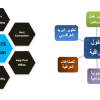
The conclusion we reached from all these interactions is that entrepreneurship in Iraq is at its embryonic stage. The oldest initiative [Fikra Space] was only started in 2014. Today we have a number of players working in this field, but they are all working as separate islands. In order to accelerate entrepreneurship we need to create an ecosystem that integrates all efforts, and to focus all our activities on a single objective. That of creating new job opportunities. This is a simple metric that can be easily measured and helps us plan the size and timescale of our activities as individual organizations.
Posted in Investment, Iraq Industry & Trade News Comments Off on Iraqi Entrepreneurship Centre