


Why are Kidnappings on the Rise in Baghdad?
Posted on 05 February 2017 .
By Mustafa Saadoun for Al Monitor. Any opinions expressed here are those of the author and do not necessarily reflect the views of Iraq Business News.
Officials in Baghdad agree crime is on the rise there, though they differ on the causes and offer little in the way of hard statistics to back up their claims.
Baghdad’s criminal court announced Jan. 17 that many areas in the capital have witnessed a significant increase in cases of kidnapping, theft, pickpocketing and robberies recently, stressing that organized gangs are behind some of these crimes. Examining Magistrate Alaa Abdullah said, “Palestine Street, in the center of Baghdad, came first in terms of registered crimes at the court during the current year, with more than 31 reported cases.”
Officials fear that kidnappings in particular are affecting investments in Iraq. The kidnappings have become a threat to businesses, their employees and their investors. This could lead businesses to move to other Iraqi cities that are seen as safer, or to leave or avoid the country altogether.
In one recent case, Haidar Hassoun, general manager of the Iraqi Media Foundation, was the victim of an attempted kidnapping Jan. 2 in northern Baghdad.
On Dec. 16, Ali Sajjad al-Khafaji, 14, was on his way home from school in the upscale Karrada area in central Baghdad when four people in a four-wheel-drive vehicle snatched him from the street. Although the family of the kidnapped youth paid a ransom of $41,000 to the kidnappers, their son's body was found Dec. 23 dumped in the Tigris River. He had been sexually assaulted and stabbed to death.
Some gangs hire a person called “Al-Allas," which means a bounty hunter. This person’s mission is to provide the names and details of wealthy individuals or families to gang members. Gangs ask for ransoms, but often end up killing the victims anyway.
Posted in Security Comments Off on Why are Kidnappings on the Rise in Baghdad?
KRG calls for Urgent Help to avert Humanitarian Catastrophe
Posted on 01 February 2017 .
KRG Minister of Interior calls for urgent direct assistance to avert humanitarian catastrophe
The KRG is calling for immediate, direct assistance to minimize a humanitarian catastrophe as a result of a lack of proper shelter and medical care for civilians fleeing Mosul.
The KRG has not only supported and hosted fleeing IDPs, but also provided leadership in planning humanitarian response and advocacy for resource mobilization. The purpose of this message is to alert the international community of an impending humanitarian catastrophe and to request additional resources to be provided immediately to deal with the increased burden.
The Kurdistan Regional Government (KRG) is struggling to absorb and care for tens of thousands of Mosul residents fleeing the ongoing operations to liberate the city from ISIS terrorists, in addition to the 1.8 million people who had previously fled. The dramatic increase in the volume of critically injured people has flooded Kurdistan Region's hospitals, and is overwhelming the Region’s already strained healthcare sector.
Conducting adequate security screenings for incoming internally displaced persons (IDPs), as well as maintaining internal security for cleared IDPs, is a responsibility that is growing rapidly in size and complexity and will soon surpass the KRG’s technical and personnel capacities.
Since the start of the operations on 17 October 2016, as of 28 January 2017, over 195,000 individuals have fled Mosul city and its periphery. The KRG’s latest data show that more than 96,000 individuals of these recently displaced people have arrived and are being cared for in Erbil and Duhok.
As military planning and preparations are underway to launch the offensive to liberate the west side of the Mosul city, it is estimated that half a million people are still living in ISIS-controlled Mosul and it is anticipated that the majority of them will flee and need the lifesaving assistance. Even, the eastern side liberated, displacement is still ongoing and on daily basis people are arriving KRI due to the dire humanitarian and security situations.
BACKGROUND:
The Kurdistan Region today hosts more than 1.8 million; 97% Syrian refugees and 40% internally displaced Iraqis, as a result of the war in Syria, the genocide by ISIS, and the ongoing operations to liberate territory from the terror group.
The displaced have arrived in Kurdistan Region destitute and often with both physical and emotional wounds. Prior to the Mosul operation, hospitals throughout the Region were flooded with refugees and IDPs, who treat those in need without discrimination and at no cost to the individual.
Posted in Healthcare, Politics, Security Comments Off on KRG calls for Urgent Help to avert Humanitarian Catastrophe

Improving Agriculture, Employment and Peace
Posted on 16 December 2016 .
By Dr. Layth Mahdi.
Prior to the 2003 Iraq had adopted an agricultural policy based on the financial, administrative, technical and technological support from the government for the development of the agricultural and industrial sectors. This policy led to the domestic production to provide 75% of the food requirement and a GDP contribution of 7.5%.
After 2003, Iraq suddenly shifted to a free market without any government plan or support. The four Ministries (Agricultural, Water & Resources, Industry and Trade) managing this transition did not take the necessary steps to accommodate for this new change. In addition, rising prices for inputs such as fertilizer, seeds and fuel led to reduction in productivity followed by very high unemployment and poverty. More than 50% of Iraq’s cultivable land is abandoned with farmers migrating from the rural areas into the urban cities seeking opportunity.
In 2014 the agricultural GDP dropped to its lowest point. The reason for this sharp economic and social decline is due to lack of leadership, vision, planning and management from the state Ministries and the deterioration of agriculture and industrial sectors. The lack of economic activities in the private sector have also had an impact on unemployment, as well as administrative and financial corruption in the government sectors.
The heavy reliance on oil as a basic rule of economic strength, is nothing but a form of non-sustainable development. Despite the large financial and labor availability along with the water sources, the agriculture sector seems to stay unproductive. The government has spent more than USD 2 billion for an Agricultural Initiative program (2008-2014) to reform and develop the agricultural sector resulting in lower domestic production and increased unemployment.
One example of the failed program is the government purchase of wheat crops. The government was offering farmers a subsidized price of USD 600/ton when the average global price is USD 400/ton. Due to the attractive price and corruption, neighboring countries have been smuggling wheat into Iraq where it is being sold as domestic produce.
Before 2003 the average local wheat production was 1.6 million tons and imported 2.1 million tons. Despite the significant decline in agriculture and security the Ministry of Agriculture has announced that Iraq produced 3.2 million tons of wheat during 2015 however the true domestic production cannot be verified.
The Ministry of Planning announced for 2015, that the population was at 36 million. The labor force between the ages of 14-60 years makeup 58% (21 million) of the population. The government estimates unemployment rate to be at 25% (5.25 million), however; the actual rate is more than 50% with more than 12 million people living below the poverty line ($ 2/day). Those underprivileged have no access to food other than through the Public Distribution System which lacks the necessary proteins and micronutrients.
Reducing Iraq’s unemployment will increase stability and security in the nation. The Strategic Framework Agreement (SFA) signed in 2012 agreed to expand U.S.-Iraq cooperation in the areas of health, agriculture, water, and private-sector development. Unfortunately the SFA was not properly implemented and the agricultural sector continued to decline.
With the guidance of foreign agencies, Iraq must rebuild its agricultural sector to decrease unemployment. A sustainable program needs to be developed that will train & encourage the Iraqi population to return to their farms. The abandoned farms require enhanced irrigation efficiency, improved agricultural services and implement laws favoring domestic produce.
Farming can provide over 1 million jobs for the poorly skilled population therefore strengthening the GDP and decreasing instability.
Posted in Agriculture, Politics Comments Off on Improving Agriculture, Employment and Peace
Deputy Prime Minister outlines KRG's Reform Initiatives
Posted on 07 December 2016 .
Kurdistan Region Deputy Prime Minister Qubad Talabani outlined his government's reform initiatives during speech to the sixth Kurdistan Oil and Gas conference, organised by CWC Group, in London on Monday.
Below is the transcript of Deputy Prime Minister's speech:
Distinguished guest, ladies and gentlemen.
I'd like to warmly thank CWC for inviting me back again this year. As we approach 2017 I want to outline to you our vision, our plans and our reform initiatives intended to address the many challenges Kurdistan faces today.
Last year, I had the pleasure to address you and I frankly presented to you the challenges of Kurdistan's fiscal and economic situation. I emphasized how Kurdistan was being tested by political, economic, humanitarian and security crises.
I stressed how the triple shocks of Baghdad cutting our budget in 2014, the war with ISIS, the subsequent influx of almost 2m refugees and IDPs into Kurdistan; and how our cumbersome and ineffective bureaucracy were all contributing to make our fiscal situation unsustainable and in need of major reform.
I then outlined some of the steps that we had undertaken, or had planned to undertake to address our fiscal imbalances and restore our economic growth, including our government's top three reform priorities at that time, which were to : Restructure government expenses, Reduce and eventually eliminate petroleum product subsidies, and carry out a major overhaul of our electricity sector.
But almost immediately after last year’s conference, we were dealt yet another devastating blow. Oil prices plummeted even further, and so, the combination of Baghdad cutting our budget, war, the burden of IDPs on our society and economy, our own visible deficiencies, and added to that $25/barrel oil prices left us with growing debts and monumental fiscal challenges.
In January this year, we had a monthly operational deficit of over $460m! So our plans had to be re-examined and we needed to act fast. And we did.
Urgent austerity measures and continued direct oil exports improved our Government’s immediate cash balance, while structural reforms began to tackle the longer-term challenge of transforming the public sector and promoting diversification of the Region’s economy.
Recognizing the need for further austerity to close the gap between cash revenues and expenditures on a monthly basis, we announced a new measure to withhold a significant percentage of government salaries, pensions and stipends—excluding Peshmarga and other security forces.
These cuts have been sustained since, reducing the average total monthly payment for salaries, pensions and stipends by more than one-third, from almost $750m to approximately $450m US.
Needless to say this decision was very hard to make, and understandably unpopular with our massive civil service workforce. We also reduced non salary operating expenses by over 50%.
My Government has also moved to increase non-oil revenues by raising fees, penalties, water charges and electricity tariffs for industrial consumers; as well as by slashing petroleum product subsidies.
The overall result has been an 80% drop in the consolidated fiscal deficit—measured on a cash basis--from 6.5bn US in 2014 to an estimated 1.3bn US in 2016.
But while our austerity program and shift to direct oil sales have substantially narrowed the gap between monthly operating revenues and expenditures, we still continue to struggle to pay monthly salaries, pensions and stipends on time.
Austerity is expected to continue in 2017 with the ultimate goal of generating an operating surplus in order to restore funding for critical public investments and over time to repay government debts, including advances from the banking system.
The lack of financing has exacerbated the social pressures inherent in any crisis response, while scarce technical expertise imposes important hurdles to program design and implementation. So along with the World Bank, we have prepared a comprehensive roadmap for structural reform in the Kurdistan region. Within that framework, we have focused on priority areas that include:
1. Institutional Modernization of our Ministry of Economy & Finance (MOEF) to equip the ministry to lead fiscal policymaking and become a driver for reform.
The program covers five reform streams: macro-fiscal, customs, tax, public financial management (PFM), and IT infrastructure and services. In the macro-fiscal area, the reform aims to establish a macro-fiscal framework to guide the formulation of annual budgets for the KRG. A key step will be to prepare a budget for 2017 that sets clear targets for non-oil revenues and resizes expenditure envelopes in line with progress achieved under the austerity program. For customs, we have begun to connect customs posts across the KR (Turkish border, airports and Iran border) to improve service standards, expedite customs clearance processes and provide real-time information on revenue collection. Attention is also being given to improved coordination with the Federal customs authorities.
In taxation, the priority is to improve tax administration by establishing a new service center for large taxpayers. This large taxpayer office (LTO) to be set up in 2017 will support a shift in procedure from presumptive taxation to self-assessment in line with international standards. The LTO is expected to promote modernization of the accounting industry in Kurdistan. The immediate goal of PFM reform is to strengthen control over public expenditures, while improving management of government liabilities.
As a key step, a new chart of accounts compatible with international standards (GFS) has been prepared and will be put in place in 2017-18. Regular annual and quarterly reports on the consolidated budget (including both MOEF and MNR operations) will be published starting by the end of 2016. Improvements in IT infrastructure and services within MOEF will drive the transition to automation and away from outdated manual procedures. As such, it will underpin the entire modernization effort by equipping the ministry with an international standard, integrated financial management information system (IFMIS).
2. Biometric Registration of government employees, pensioners and other citizens receiving monthly stipends (e.g., students, families of martyrs). Rightsizing government stands out as a long-term goal of the KRG’s reform program. Biometric registration represents a first step down this road that answers the question: who are we paying and how much? This will open the way to more complex questions of ‘why and to do what’ under subsequent civil service reforms. The registration process—encompassing government employees, pensioners and beneficiaries of stipends—is now underway after an intensive start-up phase with a three-month window to complete. After 2 weeks of actual operation, we have today registered over 150,000 government wage earners, so we are on track to meet our targets. The result will be an Identity Management System that drives broader reform of government payroll, and eventually human resources. Through this initiative, we will identify those who are unlawfully receiving more than one salary from the government, of which we likely have many.
We will also identify and eliminate ghost employees, of which we surely have many! This will pave the way to subsequent e-payroll and e-payment systems that will further enhance administrative performance and transparency, as part of the ultimate objective of transitioning to modern e-government services in Kurdistan.
3. On Electricity Sector Reform, we are executing a two-pronged strategy. The immediate goal is to cut costs and improve financial sustainability, while developing a medium-term reform plan also in cooperation with the World Bank. Starting in 2015, we have undertaken steps to curtail costs for electricity generation, including:
(i) a shift in supplying natural gas to the power stations in place of diesel fuel,
(ii) the introduction of more fuel efficient combined-cycle technology by IPPs, and
(iii) voluntary renegotiations to lower take-or-pay penalties in light of excess generation capacity.
As a result, total costs have been cut by as much as $1.5 billion in 2016. The immediate focus is now shifting to revenue improvement. Tariff adjustments for industrial consumers came into effect in 2016.
However, revenue performance remains very low, hampered by high losses (including theft) and poor collection. The government intends to turn the situation around in 2017 through a program centered on the introduction of smart metering and more robust billing and collection.
The medium-term reform plan aims to improve and sustain the quality of service for all electricity consumers through a transition to a modern institutional and regulatory framework that:
(i) clearly delineates generation from transmission and distribution;
(ii) strengthens financial discipline and energy accountability; and
(iii) promotes private sector participation and investment in downstream activities.
This transition will encompass a shift to fully cost-reflective tariffs that protect vulnerable groups in line with international practice. The KRG’s ultimate goal is to ensure consumers are provided with better electricity service without recourse to fiscal or quasi-fiscal subsidies.
4. We believe Enhanced Government Transparency and Citizen Engagement is key to strengthening credibility and build public support for the KRG’s programs. We recognize that enhancing government transparency and citizen engagement are key to building and sustaining popular support for our programs.
Governance is never a popularity contest, and this is particularly true in situations of crisis. Popular support has to be earned through government actions that strengthen credibility and promote participation. We are working to step up our citizen engagement and public communications efforts.
A cornerstone is the introduction of international audit of Kurdistan’s oil & gas operations. Contracts with international auditors have now been signed and initial work is underway. The audits will cover oil exports, IOCs, and domestic company operations (e.g., local sales of crude and refined products). To promote public engagement and awareness, an observatory encompassing key representatives of civil society will be established to follow the audit process and help disseminate the results. You will receive a special presentation on this initiative later on in the program.
Finally…
5. Reform of the social protection framework aims to deliver on the KRG 2020 Vision to ‘put people first’. It encompasses plans to:
(i) strengthen the labor market—including accelerating private sector job creation,
(ii) expand pensions and social insurance—including introduction of pensions for private sector workers and creation of unemployment insurance, and
(iii) improve the (non-contributory) social safety net—including using poverty as a main determinant of eligibility.
The Social Protection Strategy is a long-term one for KRG that will put in place systems to address the social impact of the current crisis and to respond more effectively to future shocks that may affect the Region. The new strategic framework has been developed in cooperation with the World Bank, which is now supporting the implementation phase. We know what needs to be done. Moreover, we know that we must lead these reforms. Unfortunately, the unconducive political climate in Kurdistan, while not an absolute obstacle to reform, certainly makes implementation more difficult.
To our international partners, we express deep appreciation for the financial and technical support provided to date, including for the Peshmarga. However, given the extent of the crisis and reforms required, further support is urgently needed in order to increase the odds of success, and alleviate social and other risks.
We welcome guidance and technical expertise from the international community, including learning from other country experiences. The KRG also remains fully open to engagement and cooperation with Baghdad in all areas, and reiterates its right to benefit from the program of international support currently being provided to Iraq.
So, looking at the broader picture, while the world is focused on war and turmoil in the Middle East, we are steadfastly addressing our own issues head on, all the while being in the eye of the storm.
While fighting a war, managing continued inflows of displaced people, and constantly navigating geo-political minefields, we are steadfastly tackling our own massive economic challenges, and forging ahead to secure Kurdistan’s political and economic viability.
As members of the international coalition support Kurdish and Iraqi forces engaged to defeat ISIS in Iraq, we must be clear that only by ensuring a politically and economically viable Iraq, and Kurdistan, can we cement military victory won on the battlefield.
This requires more strategic global engagement including by key partners such as the US and UK on Iraq and specifically in Kurdistan. It necessitates a more comprehensive and holistic approach, to include facilitating consensus among the leading political forces in the country and ensuring economic sustainability that in particular creates job opportunities for the youth in the private sector.
Ultimately, progress in diversifying the economies of Kurdistan, Iraq and the wider Middle East region will depend on progress in building a common economic space for all peoples living there.
In closing, we have proven to be resilient in the face of adversity; resolute in delivering on our plans and vision; and unrelenting on the battlefield.
We are thankful for the continued confidence you have in us. Especially you in the Oil & Gas Community who have invested in Kurdistan. Despite our financial pressures, we are doing all we can to ensure timely payments to you. Through credible reform efforts, we want to show you, by actions not words, that we are a worthy partner.
We seek your continued and increased investment. Our strong partnership with you in the oil & gas sector is crucial for Kurdistan’s continued progress and our mutual success. With your sustained support during these difficult times, together we will overcome today’s challenges, and forge a permanent foundation for peace and prosperity in the future.
Thank you.
(Source: KRG)
Posted in Iraq Banking & Finance News, Iraq Oil & Gas News, Politics, Security Comments Off on Deputy Prime Minister outlines KRG's Reform Initiatives
Police Overwhelmed as Drugs from Iran flood Basra
Posted on 24 October 2016 .
By Mustafa Saadoun for Al Monitor. Any opinions expressed here are those of the author and do not necessarily reflect the views of Iraq Business News.
In the oil-rich city of Basra in southern Iraq, drug-trafficking gangs are gaining power. Through certain areas on the Iraqi-Iranian border, drugs come in from Iran to be consumed in Basra or smuggled to other Iraqi cities.
On Oct. 4, forces from the anti-drug office of the Basra police were able to arrest one drug dealer. However, local authorities are unable to touch major drug-trafficking gangs, because the local police lack the expertise and means to do so and thus only arrests middlemen and drug users.
The drug trade has been linked to several problems such as armed conflicts between gangs, murders, kidnappings and armed robberies. For instance, on Oct. 8, the Basra police reported that a young man was shot dead while another was injured as a result of an armed brawl between drug gangs. On Oct. 17, the Basra police also arrested two drug dealers with a significant quantity of marijuana and three guns.
Back on Aug. 25, Basra Police Chief Abdul-Karim al-Mayahi noted at a press conference, “Drug use has skyrocketed in 2016, and control is needed over the borders of Basra province to prevent drugs from entering.” What began as a provincial matter turned into a national priority as efforts to fight it gained great momentum at the security and defense committee meetings held at the parliament on Oct. 3.
The number of drug abusers arrested in 2016 increased by about 300% compared to 2015, when 261 people were arrested for drug violations. That number jumped to 780 just in the first eight months of 2016. The amount of narcotic substances seized by authorities jumped by almost 12 times during the last fiscal year. The problem poses a threat to the citizens of the province, especially the young men targeted by drug-trafficking gangs.
In 2016, the provincial authorities convicted 47 individuals of drug-trafficking and gave them various sentences, including life imprisonment.
Posted in Healthcare, Security Comments Off on Police Overwhelmed as Drugs from Iran flood Basra
KRG PM Highlights the Role of Private Sector
Posted on 10 October 2016 .
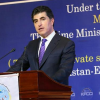
The Prime Minister of the Kurdistan Regional Government (KRG), Nechirvan Barzani, has praised the role of the private sector in stimulating Kurdistan’s economy, as the region is dealing with financial challenges.
During a speech at a conference organized by the Kurdistan Federation of Chambers of Commerce and Industry on Sunday, Prime Minister Barzani said that his government “believes that the private sector could play a major and important role in developing, reviving and diversifying the Kurdistan Region's economy.”
Below is the transcript of Prime Minister’s speech:
Ladies and gentlemen,
Good morning.
Welcome to the opening ceremony of the third conference of the Kurdistan Federation of Chambers of Commerce and Industry. A special welcome to Mr. Adnan Al-Qasar, the Honorary President of Arab Chamber for Commerce and Industry, and participants from neighboring and friendly countries. It is my wish to see this conference provide a favorable and successful platform to the participants. I commend the organizers of this conference in Erbil.
The role of the private sector in revitalizing the Kurdistan Region's economy, which is the title of this conference, is an important issue and has always been a priority of the Kurdistan Regional Government.
The Kurdistan Regional Government believes that the private sector could play a major and important role in developing, reviving and diversifying the Kurdistan Region's economy. Therefore, the government has provided incentives for local and foreign companies and created major job and investment opportunities in all sectors.
The Kurdistan Regional Government is also exploring more options to provide more opportunities and further empower the private sector. The government is considering to gradually privatize certain public services, which will provide more opportunities for the private sector. The privatization policy, especially during economic and financial challenges, will ease the burden on the regional government and help revive the economy of Kurdistan Region.
Lessons from the developed countries show that the private sector could play a major role in improving industry, agriculture, tourism and other sectors, and could become a cornerstone of a strong economy. In order to achieve that, the private sector needs the support and oversight of the government by having laws and regulations that encourage labor and investment, whether for major and strategic projects, or for medium and small businesses.
Posted in Iraq Industry & Trade News Comments Off on KRG PM Highlights the Role of Private Sector

Building Market Opportunity and Women’s Networks in MENA
Posted on 28 September 2016 .
By Madeleine White
Reflections on Trade+ Impact summit, in Ifrane, Morocco 19-23rd September 2016
Madeleine is co-founder of Nina magazine, Impact director of Enterprise development NGO Challenges Worldwide (a founder member of the Access to Finance for Rural Enterprise (ACRE) consortium). Madeleine contributed to discussions around the importance of impact investment and social enterprise within wider economic development at Trade+Impact, based on Challenges Worldwide role within the ACRE consortium, and Challenges Capital role as Syndicate manager.
Designed to increase the impact women-led social enterprises have in their communities, the inaugural Trade +Impact summit in Ifrane, Morocco focussed on addressing 2 key sectors: Craft/textiles (by hand) and Agribusiness for cosmetics. The idea of an event that linked real business being done and investments being made to wider discussion around inclusion and theory was an exciting one – and indeed had been 5 years in the pipeline.
Says Kathleen Holland, founder Trade +Impact:
“We were keen to establish a new way of collaborating, evidencing practical outcomes to discussion points that have been part of the Women’s Economic Empowerment discussion for several years. We picked Trade, Social Impact Investment, Skills Development (with a focus on technology), Networking and Advocacy as the pillars at the heart of this summit, as we felt they most closely addressed the challenges faced by women in these regions and sectors.”
Sponsored by the Moroccan government’s trade and investment arms, Invest in Morocco, as well as educational partners Al Akawayn University and trade partners Handicraft from Morocco - Trade+ Impact saw over 150 women from across five continents gather to explore their role in making change happen.
The idea behind targeting the sectors was that both agribusiness and craft sit amongst two of the top employers for women in Africa and the Middle East. Indeed, they are most often run by women-led social enterprises that positively impact their employees and communities. In West Africa alone 16,000,000 women collect and harvest the Shea nut, 10% of which goes directly into cosmetics.
Morocco was a great place to launch this concept and trade fair, as it straddles both the MENA region and Africa, two regions that are seen as having significant potential but are also still challenged by real barriers to growth, particularly in terms of equal access to economic opportunities for women.
As Microsoft Social Media lead Miri Rodrigues shared in her impassioned speech,
“We are all actors in creating a reality that people can understand and use. Own your story and use it to take your work to the world.”
I set to putting the final touches to a panel discussion and workshop around my own area of expertise, linking economic growth with social purpose and knowledge share (in terms of access with finance and investment) to intelligent design around innovative investment solutions.
However, as ever, it is important to contexualise the challenges from the outset. This was done throughout the event, but was discussed with particular focus on our panel, which focussed on Social Impact investment.
Posted in Construction & Engineering In Iraq, Iraq Industry & Trade News, Madeleine White Comments Off on Building Market Opportunity and Women’s Networks in MENA

Protesters Demand Jobs in Basra
Posted on 09 August 2016 .
By John Lee.
Hundreds of people protested in Zubair on Sunday to demand jobs.
Asharq al-Aswat reports that the protesters tried to block access to oil fields managed by BP and Eni, saying that the oil is "being stolen by thieves.”
Despite its oil wealth, the Basra region suffers from poor services and huge unemployment, while some locals report health issues as a result of living near the oil fields.
(Source: Asharq al-Aswat)
Posted in Employment, Iraq Oil & Gas News, Security Comments Off on Protesters Demand Jobs in Basra
Tensions Escalate between Protesters, Security Forces
Posted on 15 June 2016 .
By Omar al-Jaffal, for Al-Monitor. Any opinions expressed are those of the author, and do not necessarily reflect the views of Iraq Business News.v
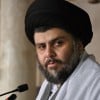
The anti-government movement led by Shiite cleric Muqtada al-Sadr (pictured) along with secular young people seems to be headed for violence and clashes with the Iraqi security forces, especially if Haider al-Abadi’s government fails to meet the protesters’ demands that include appointing a technocrat government and eradicating corruption.
The protesters have started preparing for a potential confrontation with riot police by buying gas masks, especially after security forces used tear gas to disperse protests May 21.
A number of young people posted photos on social media (the pages of which have been taken offline now) showing protesters wearing gas masks in a defiant message to the government after Iraqi riot police used tear gas to disperse a crowd May 27 as protesters tried to break into the Green Zone for the third time. They had already been successful on May 20 and in larger numbers on April 30 when they stormed the parliament building.
Protesters said that the security forces resorted to rubber and live bullets during the protests on May 21, claiming that four people were killed as a result of the security forces' brutality.
Al-Monitor interviewed a young man in his early 20s from Sadr City who had acquired a gas mask. Revealing only his first name, which he said was Haider, he said that he regularly participates in the demonstrations held in Baghdad every Friday.
Posted in Politics, Security 3 Comments
Politicians to Blame for Baghdad Terror Attacks?
Posted on 26 May 2016 .
By Omar al-Jaffal, for Al-Monitor. Any opinions expressed are those of the author, and do not necessarily reflect the views of Iraq Business News.v
Are Iraq's Politicians to Blame for Baghdad Terror Attacks?
On May 11, the Iraqi capital was the scene of three terror attacks, each bomb targeting different areas on both sides of the Tigris River that separates the city. The death toll has reached terrifying numbers with more than 100 people killed, including women and children, and around 170 injured. The Islamic State (IS) claimed responsibility for all three attacks.
The most deadly attack occurred in the Shiite-majority Sadr City east of Baghdad, where 64 people were killed and 87 injured, some of whom severely, security sources told Al-Monitor the day after the attack.
This bomb attack targeted the popular Arriba market, which is surrounded by a concrete barrier of 3 meters (roughly 10 feet) high that prevent cars from entering. However, witnesses told Al-Monitor that the explosion was caused by a car bomb close to the entrance gate where there is a lot of foot traffic.
Hakim al-Zamili, member of the Iraqi parliament’s Security and Defense Committee, said in a statement hours after the bombing, “The [series] of bombings that targeted the poor in Sadr City [came as a response] to their legitimate demands for removing the corrupt, the partisan and the incompetent persons in charge of security and [the politicians] clinging to their positions in power.”
Zamili hails from Sadr City and his family still lives there; he is one of the strongest supporters of the ongoing demonstrations against the government, which explains his angry statement against the government and security leaders.
Posted in Security Comments Off on Politicians to Blame for Baghdad Terror Attacks?