



Beyond Da’esh: An Inconvenient Truth
Posted on 12 March 2017 .
By Mark A. DeWeaver.
Last week I had the pleasure of attending the American University of Iraq’s fifth annual Sulaimani Forum. This time the theme was “Beyond Da’esh: Ending the Cycle of Conflicts, Toward Durable Solutions.” Speakers included Iraqi Prime Minister Haider al-Abadi, KRG Deputy Prime Minister Qubad Talabani, Yezidi author and Da’esh survivor Fareeda Abbas, and Francis Fukuyama, best known for his 1992 book The End of History and the Last Man.
The panel discussions covered a wide range of topics. We heard about the human cost of war (horrific), the progress of the Mosul operation (good), political and economic reform (urgently needed), and the latest moves in the regional “great game” (more inscrutable than ever with Trump as US president). Not surprisingly, there were more questions than answers. There was unanimous agreement on the need for reconciliation among factional rivals, better governance, and economic diversification. Exactly how these objectives might be realized was naturally less clear.
One issue in particular struck me as worthy of more attention. In his inaugural address, the Prime Minister noted that infrastructure worth US$ 35 billion has been destroyed as a result of the conflict. In addition to the destruction of buildings in places like Mosul, where entire neighborhoods are being razed to the ground, many roads and bridges have been damaged and there has also been widespread looting of industrial facilities, reportedly at the hands of both Da’esh and government-allied militia groups.
How is the reconstruction of all this infrastructure going to be paid for? The government has recently had notable successes in raising money through bond issues and import tariffs, but these new funds are needed to reduce the fiscal deficit resulting from the 2014 oil-price crash. At this point, the international market for Iraqi bonds may well be tapped out. There is also little room for further increases in domestic government debt, which has risen by 300% in just the past three years—from the equivalent of US$ 10 billion in 2014 to $40 billion today.
Barring a big jump in oil prices, the inconvenient truth is likely to be that it won’t really be possible to finance $35 billion in reconstruction costs. In which case, even if the laudable goals highlighted at this year’s Suli Forum can be achieved, large areas of Iraq—including Mosul, the country’s third largest city—will lie in ruins for years to come.
Posted in Investment, Mark DeWeaver on Investments and Finance Comments Off on Beyond Da’esh: An Inconvenient Truth
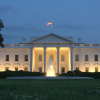
Al-Abadi to visit White House this month
Posted on 11 March 2017 .
By John Lee.
The White House has said US President Donald Trump will host Iraqi Prime Minister Haider al-Abadi in Washington later this month.
AFP describes the visit as a "fence-mending meeting", following the tensions between Washington and Baghdad since Trump introduced a ban on Iraqis visiting the United States; Iraqis were subsequently excluded from the new travel ban announced on Monday.
(Source: AFP )
Posted in Politics, Security Comments Off on Al-Abadi to visit White House this month

US Issues New Travel Ban
Posted on 07 March 2017 .
By John Lee.
United States President Donald Trump has signed a new executive order banning people from six mainly Muslim countries: Iran, Libya, Somalia, Sudan, Syria and Yemen.
Unlike the order signed in January, which was blocked by the courts, this new order removes Iraq from the list, but imposes additional vetting for Iraqis.
Importantly, green card holders are not barred from entry, and immigration officials will have the authority to issue waivers on a case-by-case basis.
With regard to Iraq, the order states:
"Iraq presents a special case. Portions of Iraq remain active combat zones. Since 2014, ISIS has had dominant influence over significant territory in northern and central Iraq. Although that influence has been significantly reduced due to the efforts and sacrifices of the Iraqi government and armed forces, working along with a United States-led coalition, the ongoing conflict has impacted the Iraqi government's capacity to secure its borders and to identify fraudulent travel documents. Nevertheless, the close cooperative relationship between the United States and the democratically elected Iraqi government, the strong United States diplomatic presence in Iraq, the significant presence of United States forces in Iraq, and Iraq's commitment to combat ISIS justify different treatment for Iraq. In particular, those Iraqi government forces that have fought to regain more than half of the territory previously dominated by ISIS have shown steadfast determination and earned enduring respect as they battle an armed group that is the common enemy of Iraq and the United States. In addition, since Executive Order 13769 was issued, the Iraqi government has expressly undertaken steps to enhance travel documentation, information sharing, and the return of Iraqi nationals subject to final orders of removal. Decisions about issuance of visas or granting admission to Iraqi nationals should be subjected to additional scrutiny to determine if applicants have connections with ISIS or other terrorist organizations, or otherwise pose a risk to either national security or public safety ...
"Additional Inquiries Related to Nationals of Iraq. An application by any Iraqi national for a visa, admission, or other immigration benefit should be subjected to thorough review, including, as appropriate, consultation with a designee of the Secretary of Defense and use of the additional information that has been obtained in the context of the close U.S.-Iraqi security partnership, since Executive Order 13769 was issued, concerning individuals suspected of ties to ISIS or other terrorist organizations and individuals coming from territories controlled or formerly controlled by ISIS. Such review shall include consideration of whether the applicant has connections with ISIS or other terrorist organizations or with territory that is or has been under the dominant influence of ISIS, as well as any other information bearing on whether the applicant may be a threat to commit acts of terrorism or otherwise threaten the national security or public safety of the United States."
The full executive order can be viewed here.
It comes into effect on 16th March.
Posted in Politics, Security Comments Off on US Issues New Travel Ban

Saudis make surprise trip to Iraq: Why now?
Posted on 03 March 2017 .
By Ali Mamouri for Al Monitor. Any views expressed here are those of the author, and do not necessarily reflect the views of Iraq Business News.
Saudi Foreign Minister Adel al-Jubeir made an unannounced visit Feb. 25 to Baghdad, seeking to re-establish long-severed ties with Iraq, perhaps with an eye toward the Saudi role in the region once the Islamic State (IS) is defeated.
This visit is the first by a top Saudi official since 1990, when then-Foreign Minister Saud al-Faisal came to Baghdad along with King Fahd to attend the Arab summit. Saudi Arabia did send its ambassador, Thamer al-Sabhan, to Iraq for the first time in June 2015 after 25 years of severed diplomatic relations. Sabhan, however, left Baghdad last year at the request of the Iraqi government and no replacement was appointed.
Jubeir said his country will appoint a new ambassador to Iraq soon and is looking forward to forming economic ties on different levels with Iraq.
“Saudi Arabia is looking to build special relations with Iraq, and there is a desire to work together in the war on terror,” Jubeir said during a press conference with his Iraqi counterpart, Ibrahim al-Jaafari.
The pertinent question, however, is what took so long? What made Saudi Arabia wait all these years since Saddam Hussein was overthrown in 2003 to seek special relations and cooperation with Iraq in the war on terror?
Why did the kingdom not take a similar stance when Iraq was most in need of help from neighboring countries when jihadi groups were spreading in the country between 2005 and 2007, and when IS took control of one-third of Iraqi territories and Baghdad was on the verge of falling in 2014?
Saudi Arabia might be thinking of arrangements for the post-IS period and is seeking to extend its influence in Iraq to find a balance with the broad Iranian influence.
Posted in Iraq Industry & Trade News, Iraq Oil & Gas News, Politics, Security Comments Off on Saudis make surprise trip to Iraq: Why now?
Trump's new Immigration Order "won't include" Iraq
Posted on 02 March 2017 .
By John Lee.
Various reports have suggested that President Donald Trump’s new executive order on travel and immigration won’t include a blanket ban on citizens from Iraq.
Sources familiar with the matter told ABC News that officials within the State Department expressed direct concerns to Secretary of State Rex Tillerson that keeping Iraq on the travel ban list could hinder the U.S. fight against ISIS.
Secretary of Defense James Mattis is understood to have voiced similar concerns directly to the White House.
The new order is expected next week.
(Source: ABC, AP)
Posted in Politics, Security Comments Off on Trump's new Immigration Order "won't include" Iraq
US Unlikely to take on Iranian Forces in Iraq
Posted on 01 March 2017 .
By Hamdi Malik for Al Monitor. Any opinions expressed here are those of the author and do not necessarily reflect the views of Iraq Business News.
Despite tough talk, US unlikely to take on Iranian forces in Iraq
US President Donald Trump and Iraqi Prime Minister Haider al-Abadi have spoken over the phone about the Iranian threat in the region, according to a White House statement issued Feb. 10.
On Feb. 1, Trump tweeted, “Iran is rapidly taking over more and more of Iraq.” Iranian influence in Iraq has risen since the fall of Saddam Hussein’s regime in 2003, and especially after the withdrawal of the last US troops at the end of 2011.
Since the new US administration took office on Jan. 20, it has adopted a strict stance toward Iran. As a result, disputes between the two countries have increased.
In response to Iran’s ballistic missile test and following the Iran-backed Houthis’ targeting of a Saudi warship off the Yemeni coast, former US National Security Adviser Michael Flynn officially warned Iran on Feb. 1 and condemned its activities that he said “undermine security, prosperity and stability … in the Middle East.”
On Feb. 4, Secretary of Defense James Mattis described Iran as “the single biggest state sponsor of terrorism in the world.” Vice President Mike Pence echoed Mattis in his speech at the Munich Security Conference on Feb. 18.
In response to the US statements, Iranian Foreign Minister Mohammad Javad Zarif tweeted on Feb. 3, “Iran is unmoved by these threats.” Islamic Revolutionary Guard Corps (IRGC) Commander Gen. Hussein Salami said on Feb. 2, “Our missiles, warships and launchers will increase by the day.”
The commander of the IRGC Ground Forces Brig. Gen. Mohammad Pakpour threatened the United States on Feb. 22 with “a painful slap in the face if it makes a faux pas.” Press reports noted that the United States is taking steps in the region to form an anti-Iranian military alliance including Arab states and sharing intelligence with Israel.
Posted in Politics, Security Comments Off on US Unlikely to take on Iranian Forces in Iraq
'Encouraging Initial Successes' for Western Mosul
Posted on 26 February 2017 .
Iraqi forces, backed by coalition strikes, are making gains in efforts to liberate western Mosul from Islamic State of Iraq and Syria terrorists, Defense Department spokesman Navy Capt. Jeff Davis told reporters at the Pentagon on Friday.
"The [Iraqis] have captured villages to the west of Mosul and they have penetrated the formal city limits from the south," he said, adding, "We've seen some encouraging initial successes."
About 75 percent of the Ghazlani military base southwest of Mosul has been secured, he said. In addition, Iraqi forces have a "strong foothold" on liberating the Mosul airport, Davis said. The Iraqis have cleared terrain to the south and west of Mosul, he said, gaining 24 square miles within the last day, for a total of 100 square miles since the offensive began five days ago.
The captain pointed out the total territory gained since Oct. 17, when the battle for Mosul began, is about 1,500 square miles. That figure includes recently cleared eastern Mosul, he said.
Tough Fight Expected
Resistance around western Mosul is "moderate," Davis said, with the terrorists using improvised explosive devices and indirect fire to "harass and slow down" Iraqi forces. The terrorists have pulled back into west Mosul, he said, noting that the coalition expects a "very challenging fight," since ISIS is entrenched in the area.
"That's dense urban terrain, more dense than what we saw in east Mosul in a place where they are well-dug in," the captain said.
Meanwhile, Iraqi forces continue defensive holding operations in eastern Mosul, he said, and the coalition continues to hit ISIS targets around Mosul. In the past 24 hours, Davis said, coalition forces conducted six strikes in a total of 80 engagements. Targets included ISIS tactical units, mortar systems, rocket launchers, anti-air artillery systems, fighting positions, vehicles and weapons caches, he said.
Syria Update
Coalition efforts are ongoing to support efforts to isolate the Syrian city of Raqqa, and operations for the city of Bab, Davis said.
Bab "does appear to be largely liberated," he said, explaining the Turkish military and vetted Syrian opposition forces are conducting operations in the vicinity of the city.
Yesterday, the 112th day of operations to isolate Raqqa, Syrian Arab coalition forces conducted offensive operations northeast of that key city, Davis said.
Those efforts resulted in the clearing of large swaths of terrain along two axes and the taking of 67 square miles, he said, along with the liberation of several villages.
30-Day Plan to the President
The Pentagon will meet Monday's deadline for the 30-day review that President Donald J. Trump ordered about the plan to fight ISIS, Davis said.
As the chairman of the Joint Chiefs of Staff, Marine Corps Gen. Joe Dunford, highlighted Thursday, the review is a "whole of government plan that deals holistically with ISIS," he said.
Davis described the plan as a "framework for a broader plan." However, he said, details of the strategy will remain private, explaining it is a "plan to attack an enemy and I don’t think we're going to want to telegraph too much of it."
(Source: US Dept of Defense)
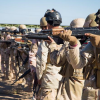
(Picture: Iraqi soldiers practice weapon safety during urban environment training at Camp Taji, Iraq, Feb. 20, 2017. The soldiers were part of the junior leader course led by coalition forces in support of Combined Joint Task Force Operation Inherent Resolve. Army photo by Spc. Christopher Brecht)
Posted in Security Comments Off on 'Encouraging Initial Successes' for Western Mosul
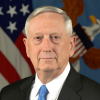
Mattis: "We’re not in Iraq to Seize anybody’s Oil"
Posted on 20 February 2017 .
By John Lee.
US Defense Secretary Jim Mattis has promised that the Trump administration will not try to take Iraq’s oil.
On Monday, during his first trip to Iraq as Pentagon chief, he told reporters:
“All of us in America have generally paid for our gas and oil all along, and I am sure we will continue to do so in the future ... we’re not in Iraq to seize anybody’s oil.”
President Donald Trump has said that the United States should have taken Iraq’s oil during the Iraq War, adding recently “maybe we’ll get another chance.”
(Source: Washington Post, New York Times)
Posted in Iraq Oil & Gas News, Politics, Security Comments Off on Mattis: "We’re not in Iraq to Seize anybody’s Oil"
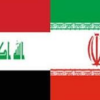
Iran chooses Quds Force stalwart as Ambassador to Iraq
Posted on 15 February 2017 .
By Omar al-Jaffal for Al-Monitor. Any opinions expressed are those of the author, and do not necessarily reflect the views of Iran Business News.
Iran has reportedly appointed Brig. Gen. Iraj Masjedi as its new ambassador to Baghdad, replacing Hassan Dana’i Fer, according to Iranian media reports on Jan. 15.
Masjedi is a prominent leader of the Islamic Revolutionary Guard Corps (IRGC) and serves as an adviser to Qasem Soleimani, the commander of the Iranian Quds Force. Masjedi confirmed the news himself in an official statement but did not say when he would officially assume his new position.
Saudi Minister of State for Gulf Affairs Thamer Sabhan, who served as the first Saudi ambassador in Iraq after 2003, attacked Masjedi on Jan.15, calling him “an internationally wanted war criminal.”
Faleh al-Fayyad, the national security adviser and head of the Popular Mobilization Units (PMU), was quick to reply on Jan. 22, saying, “Our relations with Iraq are not determined by other parties,” a jab at Saudi Arabia. Fayyad welcomed Masjedi as the new ambassador to Iraq and did not miss an opportunity to praise him, calling him “a brother.”
“We have good memories of Masjedi and his long history of supporting Iraq. There is no doubt that he will play an important role in improving relations and defending the interests of both countries,” Fayyad said.
Haidar al-Moul, a parliament member for the Shiite National Alliance, called, albeit reluctantly, the Iraqi Foreign Ministry to vet Masjedi and to investigate whether he is a war criminal.
He classed Masjedi’s presence as part of Iran’s military expansion in Iraq. Many media outlets reported that Masjedi is working on strengthening the military and political presence of the PMU and other armed factions.
There is not much information available on Masjedi, who has been described by the Washington Institute as a "seasoned Quds Force operative." "What is clear is his reportedly deep involvement in Quds Force activities in Iraq over the past several years, many resulting in the death, injury or kidnapping of US and coalition personnel as well as the assassination of Iraqi provincial officials who did not see eye to eye with Tehran,” the article read.
Posted in Iraq Industry & Trade News, Politics, Security Comments Off on Iran chooses Quds Force stalwart as Ambassador to Iraq
PMUs Threaten to Target Americans in Response to Travel Ban
Posted on 15 February 2017 .
By Hassan al-Shanoun for Al Monitor. Any opinions expressed here are those of the author and do not necessarily reflect the views of Iraq Business News.
Armed Iraqi factions threaten to target Americans in response to travel ban
US President Donald Trump's Jan. 27 executive order to ban nationals of Iraq and six other Muslim-majority countries from entering the United States for 90 days has caused a great uproar among Iraqis.
Although the travel ban has been temporarily halted by the US judiciary, the repercussions of the event are still ongoing in Iraq. Iraqis see the travel ban as an insult and a betrayal of the people standing against and fighting to defeat the Islamic State.
On Jan. 30, the Iraqi parliament voted to recommend that reciprocal measures be taken against the travel ban. The day before, Iraqi Shiite cleric and Sadrist movement leader Muqtada al-Sadr had called on Trump to tell American nationals to leave Iraq.
The Iraqi parliament also recommended calling upon the United Nations, international organizations, the Arab League and the Organization of Islamic Cooperation to take stands on the issue, calling upon the US Congress to review the executive order and demanding that the US administration restudy its decision.
Ibtisam al-Hilali, a member of the Reform Front, told Al-Monitor that the government and executive authorities need to carry out the parliament’s reciprocal measures if the US ban resumes.
Asked whether Iraq could influence the US decision, Hilali said, “Adopting diplomatic approaches is the best means to force the American side to renounce this rushed decision; otherwise the government and the relevant authorities should implement the parliament’s action to maintain Iraq's dignity.”
On Jan. 30, the US Department of Defense said it is cooperating with the White House and other institutions to put together a list of all Iraqi nationals who worked with the United States since its invasion of Iraq in 2003 to exclude them from the travel ban. These efforts, however, have not helped ease the issue in Iraq.
On Jan. 31, Prime Minister Haider al-Abadi announced that his government is discussing a set of options “in response” and expressed his hopes of getting Trump's order changed; Abadi described it as an insult to Iraq and Iraqis. However, he said he has no intention of taking reciprocal measures.
Posted in Security Comments Off on PMUs Threaten to Target Americans in Response to Travel Ban