


US mulls how best to Control pro-Iran Factions
Posted on 30 May 2017 .
By Adnan Abu Zeed for Al Monitor. Any opinions expressed here are those of the author and do not necessarily reflect the views of Iraq Business News.
US mulls how best to Control pro-Iran Factions in Mideast
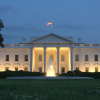
As the administration of US President Donald Trump looks ahead to a post-Islamic State (IS) status in the Middle East, it is clear there are concerns over the potential military role the armed organizations backed by Iran could play.
Stuart Jones, the top US diplomat for the Middle East, recently told the Associated Press the United States “is still forming a ‘comprehensive Iran policy’ that addresses Iran's support for Syrian President Bashar al-Assad's government and militant groups in Lebanon, Iraq and Yemen.”
Meanwhile, according to Kuwaiti Al-Rai newspaper, Trump promised Crown Prince Sheikh Mohammed bin Zayed of the United Arab Emirates, during the prince's May 15-17 visit to Washington, that the United States is working to impose sanctions on the Iranian allies who are involved in terrorism — including allies in the Iraqi and Lebanese governments.
A Saudi delegation to the United Nations earlier this month also expressed concern that Iranian militias continue to pose a threat to stability in the region.
It's evident the United States and the Gulf states are worried about the wide Iranian influence in these countries, be it through political leaders, armed organizations or militias. In Lebanon, the biggest player is Hezbollah, backed by Iran. In Iraq, there are armed parties and factions known for their close relationship with Tehran and for receiving financial and political support from it.
Rayan al-Kaldani, the leader of the Babylon Brigade, which is a part of the Popular Mobilization Units (PMU), told Al-Monitor, “The relationship between the PMU and Iran is not based on dependence, as the Gulf states like to promote.” He noted, “Tehran helped Iraq in its war on [IS], and this has been recognized by the Western parties themselves.”
Posted in Politics, Security Comments Off on US mulls how best to Control pro-Iran Factions

Academic says Visiting Iraq caused Problems entering US
Posted on 27 May 2017 .
By John Lee.
A British academic has said that visiting Iraq has caused him to have problems entering the United States.
Writing in Times Higher Education, Nick Petford, Vice-Chancellor of the University of Northampton, said:
"My forays [into Iraq] have not been without consequence. In March this year I fell foul of Donald Trump’s travel restrictions from Middle Eastern countries that included Iraq. On a trip to Miami, I was pulled out of the immigration queue by Homeland Security, held for five hours and questioned twice about why I had been to “Syria”.
"My UK ESTA travel authorisation was revoked and replaced by a temporary visa, probably because more paperwork was needed to kick me out than let me in. Whether I’ll be allowed back into the US any time soon is yet to be resolved."
But he says that this experience won’t stop him travelling to Iraq again. "Our rationale for working there and in other challenging territories is simple," he adds.
"Our mission requires it, and frankly the Iraqi people deserve our support given the UK’s historically interventionist stance. One area that we intend to focus on more with our Iraqi partners is healthcare. Another is MBA provision. There are also research opportunities that include exchange visits between staff and students."
Nick Petford's full article can be read here.
(Source: Times Higher Education)
Posted in Iraq Education and Training News, Iraq Transportation News, Politics, Security Comments Off on Academic says Visiting Iraq caused Problems entering US
Can US-Sunni Alliance lure Baghdad away from Tehran?
Posted on 27 May 2017 .
By Adnan Abu Zeed for Al Monitor. Any opinions expressed here are those of the author and do not necessarily reflect the views of Iraq Business News.
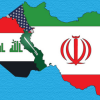
There are strong indications that Gulf states want to keep Iraq away from Iran's influence by including Iraq under the banner of a US-backed Sunni Arab alliance.
The United States sees Iraq as a vital location in need of a clear US policy, especially with the presence there of US military bases and about 8,500 US soldiers, as well as the US impact on the country's overall situation.
The most recent quest in this direction was the Arab Islamic American Summit held May 21 in Riyadh, attended by US President Donald Trump and Iraqi President Fuad Masum.
It also appears that Iraq’s participation in the Eager Lion maneuvers, an annual military exercise, launched May 7 in Jordan with the participation of more than 7,000 soldiers from over 20 countries, was part of the attempt to bring Iraq into the Sunni Arab axis.
The race to convince Iraq to abandon its well-known alliances with Iran and Iran's allies was already underway when Saudi Foreign Minister Adel al-Jubeir visited Baghdad on Feb. 25, declaring that “Saudi Arabia and Iraq face the [same] scourge of terrorism."
This rhetoric reflects Riyadh’s keenness on overcoming the obstacles to developing its relations with Baghdad. Those relations took a bad turn when the Saudi ambassador to Iraq, Thamer al-Sabhan, was expelled from Iraq in August after the Iraqis took offense at his statements about the “Iranian intervention in Iraq” and “Iranian-backed armed Shiite organizations fueling the tension with Sunnis.”
Jubeir’s hopes of extracting Baghdad from Tehran’s grip were revived when Iraqi Prime Minister Haider al-Abadi met March 20 with Trump in Washington.
Posted in Politics, Security Comments Off on Can US-Sunni Alliance lure Baghdad away from Tehran?
Fmr Iraq Reconstruction Chief Resigns over Govt "Lobbying"
Posted on 12 May 2017 .
By John Lee.
The former Special Inspector General for Iraq Reconstruction (SIGIR) has reportedly resigned from his job following allegations that he was also working for a private firm that provided services for the government of Iraq.
Stuart Bowen was most recently employed as the inspector general for the Texas Health and Human Services Commission, making him the state's top health care fraud investigator. Sources claim that his contract prohibited him from performing work that would require him to register with the federal government as a foreign agent.
According to the Texas Tribune, Denver-based lobbying firm Brownstein Hyatt Farber Schreck offered to pay Bowen $300 per hour for “business development strategy and consulting services”, in addition to a 15 percent “origination fee” for any work it engaged in with the government of Iraq. The firm denies that Bowen provided any legal or lobbying services.
The firm registered as a foreign agent for the government of Iraq in late 2016 and worked to establish contact between Iraqi government officials and the administration of President Donald Trump.
Bowen served as Special Inspector General for Iraq Reconstruction (SIGIR) from October 2004 to October 2013.
(Source: Texas Tribune)
Posted in Politics, Security Comments Off on Fmr Iraq Reconstruction Chief Resigns over Govt "Lobbying"

How Iraq plans to Secure Key Border Road
Posted on 06 May 2017 .
By Mustafa Saadoun for Al Monitor. Any views expressed here are those of the author, and do not necessarily reflect the views of Iraq Business News.
Iraq is trying to revive the Trebil border crossing between Iraq and Jordan, which was closed in 2014 after the Islamic State (IS) took control of Anbar province.
But the highway from Baghdad toward the crossing is not safe and has been the stage of terrorist attacks for a while, most recently the IS attack on an Iraqi security forces’ convoy April 22 in the Al-Sakkar area east of Rutba on the highway near the Jordanian border.
As a result, 10 security officers were killed and 20 others were injured. Following the incident, soldiers of the Eighth Brigade deployed in Rutba appealed to Prime Minister Haider al-Abadi for equipment and weapons to secure the international highway between Ramadi and Rutba to avoid surprise attacks by IS sleeper cells.
Due to the imminent threats to the road, which is one of Iraq’s vital economic lines as it connects Basra in the south to Jordan in the west, Iraq commissioned an American company to secure and rebuild the road. The contract also included reconstructing bridges, 36 of which are destroyed.
A government source close to Abadi told Al-Monitor on condition of anonymity, “In his recent visit to Baghdad, Jared Kushner, US President Donald Trump’s adviser and son-in-law, discussed with Iraqi officials the issue of securing the Baghdad-Terbil and the Safwan-Terbil crossings.”
Posted in Iraq Industry & Trade News, Iraq Transportation News, Security Comments Off on How Iraq plans to Secure Key Border Road
Washington sees Iraq as front for Iran Pushback
Posted on 14 April 2017 .
By Omar Sattar for Al Monitor. Any opinions expressed here are those of the author and do not necessarily reflect the views of Iraq Business News.
After the chemical attack in Khan Shaykhun on April 4, followed by the US airstrike on a Syrian air base April 7, tension between Iraq and the United States escalated significantly.
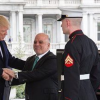
The United States has made it very clear to Iraq that it wants its ally in fighting terrorism to distance itself from Iran. During Iraqi Prime Minister Haider al-Abadi's visit to the United States last month, Abadi and US President Donald Trump discussed Iran, Saudi Arabia and the Popular Mobilization Units (PMU), which indicates that the United States is seeking to bring Baghdad and Riyadh closer and to curb the Iranian role in the region. The visit sparked much controversy in Iraq among Shiite parties.
Moreover, Trump explicitly criticized the Iran nuclear deal in front of Abadi. A few days later, Trump sent his senior adviser and son-in-law Jared Kushner to Iraq to discuss US support to Iraq in the fight against the Islamic State. The visit was read as a sign that the “Trump administration sees Iraq as a place to push back on the growing power of Iran across the region.”
Al-Monitor learned from a source close to the prime minister who asked to not be named that limiting Iran's role in Iraq was at the top of the list of the issues discussed between the two parties.
The National Iraqi Alliance said it was not aware of the details and meeting schedule of Abadi with the American administration. Other Shiite political parties expressed discontent with the visit, especially following the statement of Hisham al-Hashimi, an Iraqi security and political expert, in Asharq al-Awsat newspaper. Hashimi said he received information from the Iraqi delegation to Washington that “the American discussed with Abadi the danger of ‘believers in the velayat-e faqih [a jab at Iranians] and the need to keep them out of the PMU.”
Posted in Politics, Security Comments Off on Washington sees Iraq as front for Iran Pushback
Will US keep Military Bases in Iraq after IS?
Posted on 09 April 2017 .
By Mustafa Saadoun for Al Monitor. Any views expressed here are those of the author, and do not necessarily reflect the views of Iraq Business News.
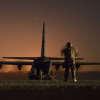
The subject of whether US troops should remain in Iraq once the Islamic State (IS) is defeated in Mosul is raising questions and fueling controversy among Iraqis.
On March 26, the Iraqi government officially announced it favors the idea of some US forces staying. Prime Minister Haider al-Abadi said in a Fox News interview that he supports retaining enough US troops to support Iraqi forces in a post-IS Iraq.
"We are concentrating on training, logistical support, and intelligence cooperation and gathering; these are three important elements for which I think we need some US troops to stay in Iraq to continue the task," he stated.
It appears that parliament's Security and Defense Committee has information that work has already begun on some US bases. Committee member Majid al-Gharawi told Al-Monitor, "The US troops, present in Iraq in rising numbers each day, are meant to stay in Iraq."
Gharawi, a political representative of the Sadrist movement, not surprisingly opposes the idea. "American forces in Iraq will be met by resistance at the hand of Iraqis. Any foreign military presence on Iraqi soil will not be tolerated," he said.
Jaafar al-Moussawi, the spokesperson for Sadrist movement leader Muqtada al-Sadr, concurred. He said, "Any continued presence of foreign forces in Iraq, whether they are American or not, without agreement by the Iraqi parliament is considered an occupation. Hence, it will face resistance by the Sadrist movement or the rest of Iraqis, as the movement's stance on a US presence hasn’t changed."
Before his interview on Fox, Abadi wrote a piece in The Washington Post March 23 saying he had met with US President Donald Trump earlier in the week. "My country needs more help from the US," he wrote. "President Trump and I discussed how to build upon the Strategic Framework Agreement our two countries signed in 2008."
Trump Orders Missile Attack on Syria
Posted on 07 April 2017 .
Trump Orders Missile Attack in Retaliation for Syrian Chemical Strikes
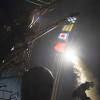
The United States fired Tomahawk missiles into Syria today in retaliation for the regime of Bashar Assad using nerve agents to attack his own people.
President Donald J. Trump ordered the attack on Al-Shayrat Air Base, the base from which the chemical attack on Syria’s Idlib province was launched. The missiles were launched from U.S. Navy ships in the Eastern Mediterranean Sea.
The attack is in retaliation for the Syrian dictator for using banned chemical agents in the April 4 attack.
“Bashar al-Assad launched a horrible chemical weapons attack on innocent civilians,” Trump said in a statement to the nation. “Using a deadly nerve agent, Assad choked out the lives of helpless men, women and children. It was a slow and brutal death for so many. Even beautiful babies were cruelly murdered in this very barbaric attack. No child of God should ever suffer such horror.”
Vital National Security Interest
Trump ordered the targeted military strike on the airfield that launched the attack. “It is in the vital national security interest of the United States to prevent and deter the spread and use of deadly chemical weapons,” the president said.
No one disputes that Syria used banned chemical weapons of the people of Idlib, he said, adding that this is a violation of the Chemical Weapons Convention. Syria also ignored United Nations Security Council resolutions.
“Years of previous attempts at changing Assad’s behavior have all failed and failed very dramatically,” Trump said. “As a result, the refugee crisis continues to deepen and the region continues to destabilize, threatening the United States and its allies.”
Trump called on all civilized nations to join the United States in seeking an end to the slaughter in Syria, and to end the threat terrorism poses in the blighted nation.
Details of Strike
Shortly after the president’s address, Pentagon spokesman Navy Capt. Jeff Davis issued a statement providing details of the strike. It took place at about 8:40 p.m. EDT -- 4:40 a.m. April 7 in Syria, he said.
Posted in Security Comments Off on Trump Orders Missile Attack on Syria
What role will Iran-linked militias play once IS leaves Iraq?
Posted on 03 April 2017 .
By Hamdi Malik for Al Monitor. Any opinions expressed here are those of the author and do not necessarily reflect the views of Iraq Business News.
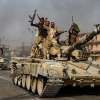
Iraqi Prime Minister Haider al-Abadi said recently that any group taking up arms in Iraq outside the state's official framework will be considered outlaws. However, it seems at least some of the factions fighting under the banner of the Popular Mobilization Units (PMU) in Iraq would not obey Abadi's order.
On March 22, Abadi spoke at a meeting of the Global Coalition to Counter ISIS (Islamic State, or IS) in Washington. Also during his trip, he told the media that IS will be eliminated from Iraq's cities "within weeks."
What will happen then? Hashim al-Musawi, the spokesman for Iran-controlled, Shiite Iraq militia known as the Islamic Resistance Movement in Iraq (al-Nojaba), announced earlier in the month the formation of the Golan Liberation Brigade. But the announcement appeared to be more a declaration that Iran-affiliated Iraqi militias will be ready to take on a greater role in the region once IS is gone. (In addition, Musawi threatened to take military action against Turkish forces stationed near Mosul if they refuse to leave Iraq.)
The brigade announcement carried great symbolism, as the press conference was held in the office of the Iranian news agency Tasnim, which supports the Islamic Revolutionary Guard Corps (IRGC) in Tehran.
Musawi also criticized the United States and Saudi Arabia, stressing that al-Nojaba “will not drop its weapons as long as the region is still threatened." Al-Nojaba will continue its endeavor to reclaim the Golan Heights in Syria from Israel, he added.
Three days after this announcement, a leader of al-Nojaba had something to say on the subject. The militia's secretary-general, Sheikh Akram al-Kaabi, said March 11, “The Golan Liberation Brigade's formation is not propaganda, but one of the Islamic resistance’s true objectives.” He added, “The resistance is capable of beating the 'axis of evil' and the Zionist entity," referring to Israel, Saudi Arabia and the United States.
This isn't the first time Iran-affiliated Iraqi parties have talked about taking action outside Iraq, in line with Iran’s foreign policy in the region.
Posted in Politics, Security Comments Off on What role will Iran-linked militias play once IS leaves Iraq?
Video: al-Abadi to meet Donald Trump
Posted on 20 March 2017 .
From Al Jazeera. Any opinions expressed are those of the authors, and do not necessarily reflect the views of Iraq Business News.
Iraq PM Haider al-Abadi to meet Donald Trump
Iraq's Prime Minister Haider al-Abadi is due to meet US President Donald Trump in Washington on Monday.
A key part of the talks will be the fight against the Islamic State of Iraq and the Levant (ISIL, also known as ISIS) group in Mosul.
Al Jazeera's Andrew Simmons reports.
Posted in Politics, Security Comments Off on Video: al-Abadi to meet Donald Trump