


Mansour Bank Opts for ICSFS Software
Posted on 05 November 2015 .
By John Lee.
ICS Financial Systems Limited (ICSFS), the global software and services provider for banks and financial institutions, announces that Mansour Bank for Investment, an Iraq-based bank and its partner, Qatar National Bank (QNB) (owns 51%), has selected its global awards winning flagship ICS BANKS to replace its core banking and IT systems.
The signing ceremony took place in Beirut, Lebanon where Chairman at Mansour Bank for Investment; Mr Mahdi Mohammed Jawad Al Rahim, General Manager at Mansour Bank for Investment; Mr. Abdal-Ahad Butres Toma and a number of experts and senior staff of the bank, accompanied with Executive Director for Business Development at ICSFS; Mr. Wael Malkawi, agreed to commence this project towards a real and comprehensive transformation that will enhance Mansour Bank’s performance. With this move, Mansour Bank for Investment will join ICS BANKS family in Iraq, as most of the Iraqi and international banks in Iraq are already banking on ICS BANKS.
Mr Mahdi Mohammed Jawad Al Rahim, Chairman, Mansour Bank for Investment, commented:
“Mansour Bank for Investment place technology and the development of human resources in the first place to ensure providing the most modern banking services to customers. We are pleased to confirm our partnership with ICS Financial Systems (ICSFS), for implementing the latest and best reached banking solutions from ICS BANKS, to meet our clients' various banking needs in the Financial Market; especially the Iraqi Market, as ICS BANKS has a proven track record in Iraq.”
Mr. Abdal-Ahad Butres Toma, General Manager, Mansour Bank for Investment, said:
“Our aim is to provide different banking services in the light of the current Laws and Regulations, and to be an active contributor in supporting the growing march of building Iraq’s economy. That is why we have chosen ICS BANKS from ICS Financial Systems. With its extensive experience in the Iraq’s banking and financial sector, we are very confident that by using ICS BANKS we will increase the efficiency of our various financial operations, improve our competitive advantage in the Iraqi financial market and achieve our major goals and future plans."
Posted in Iraq Banking & Finance News 1 Comment

Khudairi Group adds Hertz Equipment Franchise
Posted on 22 October 2015 .
Hertz Global Holdings has announced that Hertz Equipment Rental Corporation (HERC) has entered into a franchise agreement with the Khudairi Group for the exclusive license to provide rental equipment in Iraq using the "Hertz Equipment" brand and proprietary system.
This move will significantly add to HERC's existing network in the Middle East, with HERC Iraq offering one of the largest light-to-medium equipment fleets in the country, serving oil and gas, construction, industrial, and government customers through a branch network that will include locations in Erbil, Baghdad, Basra, and Sulaimani.
Larry H. Silber, President and Chief Executive Officer, HERC, said:
"This agreement reflects our long-term global-business strategy to license franchises, establish joint ventures and, where appropriate, open company-owned branches in emerging and growth markets where the equipment-rental model is poised for continuing expansion.
"We are especially pleased to partner with the Khudairi Group, which is one of Iraq's most prominent commercial organizations and brings more than one hundred years of demonstrated success to the HERC Iraq franchise."
Jay Early, International Vice President, HERC, added:
"HERC Iraq is well positioned to support the country's ongoing development, with oil-related and industrial projects, commercial construction and infrastructure work underpinning Iraq's revitalization.
"The Khudairi Group's experience working with firms engaged in engineering, procurement and construction (EPC), oilfield supply and service, and heavy machinery position HERC Iraq for immediate success. In addition, HERC Iraq's access to a multitude of clients across all sectors throughout Iraq create a solid platform for long-term growth.
"Our success in Saudi Arabia, our recent expansion into Qatar and our franchise in Iraq reflect our confidence in the ongoing development of key markets in the Middle East. With one of the largest and most diverse equipment line-ups in the industry, we are excited to play a role in the development of the region's important public and private projects."
President of the Khudairi Group, Subhi Khudairi (pictured), said:
"Our experience and expertise across the oilfield, construction, industrial and government sectors enables us to understand and meet customer requirements in these demanding markets.
"We are committed to providing best-in-class equipment backed with superior service and support with a highly trained and professional team across our locations."
HERC Iraq will offer for rent a diverse range of earthmoving, power, aerial, material handling, electrical and compressed-air equipment, beginning January 2016.
(Source: Hertz)
Posted in Construction & Engineering In Iraq, Iraq Oil & Gas News 1 Comment
Could Saudi-Iraqi ties be Key to Defeating IS?
Posted on 12 October 2015 .
By Mustafa al-Kadhimi for Al-Monitor. Any opinions expressed are those of the author, and do not necessarily reflect the views of Iraq Business News.
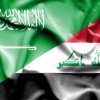
Iraqi-Saudi relations are the main key to the problems and solutions of the crises in the Middle East. The rupture and hostility between the two sides helped promote the positions of extremist groups, which are active in the region and are hostile to both countries. Today and despite the long delay, Iraqi-Saudi bilateral relations are taking a positive turn, as both parties seek to consolidate and strengthen them.
After 25 years of cold relations, which reached the point of a diplomatic rupture for a long period of time, the two sides announced the appointment of new ambassadors through a high-level representation. Iraqi Ambassador Rushdi al-Ani arrived in Riyadh Sept. 20, and the Saudi ambassador is expected to arrive in Baghdad within days. Ani hails from a Sunni family from the Anbar province, and he was a former Iraqi ambassador to Pakistan, which could help facilitate his new task in Saudi Arabia.
In April, Riyadh appointed Maj. Gen. Thamer al-Sabhan, former military attache at the Saudi Embassy in Lebanon, as its ambassador to Iraq. Sabhan took the oath of his new post on June 2. Saudi Arabia also announced that it will be opening a new embassy in Baghdad and a new consulate in Erbil, the capital of Iraqi Kurdistan, after the Eid al-Adha holiday on Sept. 24. The embassy and the consulate have yet to open their doors, as of the time of this writing.
The Iraqi Ministry of Foreign Affairs announced on Jan. 5, 2014, that it had completed the necessary procedures for Saudi Arabia to open its embassy in Iraq. The new Saudi ambassador enjoyed good ties with the United States, and he was awarded medals of honor by the Pentagon for his role in Operation Desert Storm and the liberation of Kuwait.
The Saudi position coincided with a similar initiative by the emir of Qatar, to send the first ambassador of his country to Iraq, after the rupture that occurred following Iraq's invasion of Kuwait in 1990. On Sept. 10, Sheikh Tamim bin Hamad Al Thani issued a decree appointing Zayed al-Khayareen as Qatar's “ambassador extraordinary and plenipotentiary to Iraq.”
Posted in Politics, Security 2 Comments
Why The Russians Won't Win Against Extremists in Iraq
Posted on 10 October 2015 .
This article was originally published by Niqash. Any opinions expressed are those of the author, and do not necessarily reflect the views of Iraq Business News.
Mid-East's New 'Cold War': Why The Russians Won't Win Against Extremists in Iraq
Since the announcement of a new military alliance including Russia, locals have been trading arguments. Could Iraq become the stage for a new “Cold War”? And how effective can this coalition really be?
For many Iraqis, the news that came last week of an alliance between Syria, Russia, Iran and Iraq was shocking. And it is not just in Syria that this Russian intervention is threatening to carve even deeper fault lines in the Middle East. In Iraq, locals are equally divided about the alliance, in line with existing allegiances.
That is, Iraq's Shiite Muslims who tend toward support for Shiite Muslim-dominated Iran, and thereby Bashar al-Assad of Syria and Russia like the idea. Whereas Iraq's Sunni Muslims tend toward support for the US and the Sunni Muslim Gulf Arab states like Saudi Arabia and Qatar and do not like the idea. The Russian intervention presents the country with a real dilemma.
It is true that in Iraq, political discourse is often limited to extreme views, and those views are usually right on the opposite side of the fence from one another with no real middle ground for negotiation. But as many analysts have said before, the Russian intervention seems even more dangerous than usual because it threatens to topple an already very delicate balance of foreign power in Iraq.
All Shiite Muslim political parties and military forces in Iraq have said they welcome the new Russian intervention in the Middle East. They say that US intervention hasn't been able to end the security crisis caused by the extremist group known as the Islamic State in Iraq, despite just over a year of effort.
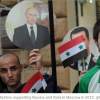
On an individual level, many local Shiites started calling the Russian President, Vladimir Putin, their hero and were posting footage of him with the Russian army onto social media. Others replaced their Facebook profile pictures with shots of Putin. There were also a lot of false rumours spreading about how Russians had entered Anbar and killed hundreds of Islamic State fighters.
Posted in Security 4 Comments

Private Sector Cash to Pump Iranian Gas to Iraq
Posted on 09 October 2015 .
The pipeline to carry gas to Iran’s western and northwestern regions as well as exporting it to neighboring Iraq will start soon with BOT (Build-Operate-Transfer) financing from Bank Pasargad, the bank’s CEO has said.
“We have increased our investment for the development of oil, gas, refining, and petrochemical industries. The contract to finance the Iraq gasline is worth more than 2 billion dollars which will generate 4.2 billion dollars a year,” Majid Qasemi told Shana.
The project includes laying 660 kilometers of pipeline and construction of five gas pressure boosting stations in two years.
Iran and Iraq have finalized the development plan for construction of the gas pipeline to carry gas to the neighboring Arab country, and its contract is in final stage of being drafted, the international relations director at the National Iranian Gas Company (NIGC) said in September.
“The Iraqi side has started the initial executive work too” Azizollah Ramezani said.
The pipeline will be fed by the massive offshore South Pars gas field in southern Iran which it shares with Qatar in the Persian Gulf and is estimated to contain 14 trillion cubic meters of gas and 18 billion barrels of condensate.
Iraq needs Iranian gas for power generation to solve a part of its load-shedding problem which is causing unrests in parts of the country during hot summer days.
Besides the gas supply, Iran will also provide neighboring Iraq with training programs for its technical, financial and executive manpower.
(Source: Shana)
Posted in Iraq Oil & Gas News 3 Comments

Qatar Announce Historic Iraq Embassy Opening
Posted on 14 September 2015 .
By Simon Kent.
Qatar's ruler, Sheikh Tamim bin Hamad al-Thani, has announced the appointment of an Ambassador and the forthcoming opening of a Qatari embassy in Baghdad.
It is a sign of thawing relations between the GCC nation and Iraq, which deteriorated after Iraq invaded Kuwait in 1990.
Relations did not significantly improve after 2003, as former PM Nouri al Maliki previously accused Qatar of funding terrorism, an allegation which is still raw. Last week, Iraq withdrew its ambassador to Qatar over a conference hosting the former Iraqi Vice President, whom the Iraqis say is guilty of terrorism.
However, under Prime Minister Haidar al Abadi, a number of initiatives have been launched to rebuild relations with neighbouring countries, notably Turkey and the GCC nations. The Ambassador appointed is Zayed al-Khayareen.
(Source: Reuters)
Posted in Politics 5 Comments
New US Humanitarian Aid for Iraq
Posted on 05 August 2015 .
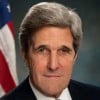
US Secretary of State John Kerry (pictured) announced today at the Gulf Cooperation Council Summit in Qatar that the United States is providing nearly $62 million in additional humanitarian assistance to Iraqis who have been affected by violence and are in urgent need of assistance from the international community.
This new funding brings the total U.S. humanitarian assistance for Iraqis in the region to more than $477 million since the start of Fiscal Year 2014.
This funding aims to assist millions of Iraqi civilians affected by the conflict – including more than 3 million internally displaced persons and 370,000 refugees who have had to flee their homes since January 2014 – providing them with critically needed relief commodities, shelter, clean water, psychosocial services, medical services, livelihoods support, cash assistance, child protection, legal documentation, and other essential goods and services.
A range of UN and international non-governmental agencies are receiving the funding, including the UN High Commissioner for Refugees (UNHCR), the UN Children’s Fund (UNICEF), the International Organization for Migration (IOM), and other international and nongovernmental organizations.
(Source: US State Dept)
Posted in Security Comments Off on New US Humanitarian Aid for Iraq

Penspen Expands in Iraq
Posted on 09 June 2015 .
Penspen, a leading global provider of engineering and management services to the energy industry, has underlined its commitment to growth in the Middle East with three new appointments and investment in a new office in Iraq.
Ahmed Al-Dadah and Na’el Barghouthi have this month joined the company from other engineering providers, whilst Michael Simm, EVP of Engineering and Project Management, has been newly appointed to the role of Regional Director for Penspen’s Middle East business.
A new Iraq office, located in Basra will expand Penspen’s geographical reach and become the fourth location in the region joining Abu Dhabi, Doha and Khafji.
Peter O’Sullivan (pictured), Chief Executive of Penspen said:
“This is an exciting time for Penspen as we continue our substantial growth in the Middle East. I am confident Michael, Na’el and Ahmed will play a key role in strengthening our 300-strong team in the region.
"Their industry expertise and leadership skills will drive our strategic objectives to grow our engineering, project management, field development and asset integrity businesses. ”
Ahmed Al-Dadah has been appointed to the role of Business Development Director for E&PM. He joins the company from Amec Foster Wheeler, where he spent 12 years working in various project delivery and business development roles. His experience includes working in the successful execution of study, pre-FEED, FEED, EPC phases across both new build and modifications projects
Na’el Barghouthi joins Penspen as Director of Asset Integrity, Middle East and Asia Pacific regions. Na’el’s career spans over 15 years working in the oil and gas industry with experience in management, offshore engineering and integrity. He has previously worked for Wood Group Kenny, GE Oil & Gas, Al Shaheen Holding Joint Venture, and Occidental Petroleum of Qatar.
Regional Director of the Middle East, Michael Simm, said:
“I’m delighted to welcome Ahmed and Na’el to the team. Their skills and experience in delivering key services that our clients require in today’s lower-oil price economy will be of great value in further expanding our Middle East presence.”
(Source: Penspen)
Posted in Construction & Engineering In Iraq, Iraq Oil & Gas News 9 Comments
Qatari FM arrives in Iraq
Posted on 29 May 2015 .
By John Lee.
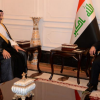
The Qatari Foreign Minister, Dr Khalid bin Mohamed Al Attiyah, arrived in Baghdad on Thursday on an official visit.
He is scheduled to meet a number of Iraqi government officials to discuss relations between the two countries, and the latest developments in the region.
He was met on arrival at Baghdad International Airport by Iraqi Foreign Minister Ibrahim Al Jaafari.
(Sources: Peninsular Qatar, QNA)
Posted in Iraq Industry & Trade News, Security 4 Comments
Kurds Struggle to Avoid Regional Conflicts
Posted on 07 May 2015 .
By Mohammed A. Salih for Al-Monitor. Any opinions expressed are those of the author, and do not necessarily reflect the views of Iraq Business News.
As a coalition of Sunni Arab states led by Saudi Arabia targets Shiite Houthi forces and their allies in Yemen, Iraqi Kurds are watching with concern and caution, wondering how the repercussions of the region's deepening sectarian conflicts might affect them.
Sandwiched geographically between opposing Shiite and Sunni regional powers such as Iran and Turkey, Iraqi Kurds wonder how long until they are dragged into the unfolding regional hostilities.
"If the struggle reaches its pinnacle and leads to an even deeper polarization, Kurds might be forced to become part of it," said Muthana Amin, a member of the Iraqi parliament from the Kurdistan Islamic Union. "If Kurds become part of this struggle, then we will be serving outside agendas and will end up empty-handed."
In recent years, Kurds have shown signs of division in face of regional polarization. The eruption of the Syrian revolution in 2011 divided the largely united Iraqi Kurds regarding the Kurdish response to Syrian events. The two major Iraqi Kurdish groups, the Kurdistan Democratic Party (KDP) and the Patriotic Union of Kurdistan (PUK), appeared to be aligning themselves with opposite regional camps.
The KDP, led by Iraqi Kurdistan President Massoud Barzani, adopted a pro-opposition stance, as did most of the Sunni states in the region, from Turkey to Saudi Arabia and Qatar. The PUK, led by former Iraqi President Jalal Talabani, refrained from supporting that policy and has been seen as closer to the Iran-led camp.
While most other regional actors possibly chose allies based on sectarian identities, Iraqi Kurdish politics are hardly defined in terms of Sunni-Shiite affiliations. In fact, both the KDP and PUK are heavily dominated by secular elites.
Posted in Politics, Security 2 Comments