



Qatar Airways Increases Flights to Iraq
Posted on 20 April 2015 .
Qatar Airways has has announced that it will double the frequency of flights to Basra and Najaf.
There will be eight flights per week to Basra from 16th May, and 8 per week to Najaf from 2nd June.
Qatar Airways Group Chief Executive, His Excellency Mr. Akbar Al Baker, said:
“Qatar Airways is committed to developing access to a number of destinations within our network which are popular with both our business and leisure travellers."
(Source: Qatar Airways)
Posted in Iraq Transportation News 2 Comments
Yemen War Fuels Iraqi Sectarianism
Posted on 19 April 2015 .
By Adnan Abu Zeed for Al-Monitor. Any opinions expressed are those of the author, and do not necessarily reflect the views of Iraq Business News.
Operation Decisive Storm in Yemen has stirred the Iraqi sectarian divide.
While the Shiite majority opposes the campaign, the Sunnis are voicing support for it. These differing positions, expressed for the Shiites by the National Alliance and for the Sunnis by the Union of Nationalist Forces, led to a disagreement at a meeting of Iraqi political forces held at the home of parliament Speaker Salim al-Jubouri on March 29, when the Sunnis rejected a Shiite alliance proposal to issue a statement condemning the Saudi-led military operation.
Vice president Osama Najafi, a Sunni, had on March 28 announced his support for the “Arab alliance, which aims to undermine the Houthi influence in Yemen.” In an April 1 TV interview, Ammar al-Hakim, a Shiite and head of the Islamic Supreme Council, described the military intervention in Yemen as “a costly adventure with uncalculated consequences.”
Laith Shubbar, an academic researcher and presidential adviser, told Al-Monitor, “This war has effectively contributed to fueling sectarianism not only in the Iraqi conflict, but in the entire region. The wars, disputes and media fuss plaguing the area clearly reflect ongoing sectarian mobilization, which distracts the people of the region with internal fighting and conflicts in a bid to weaken them.”
Operation Decisive Storm has also divided Iraq's religious institutions. The Sunni Association of Muslim Scholars announced its backing of the campaign in a statement issued March 29, referring to it as the “Arab effort aimed at supporting the Yemeni people and confronting the Iranian tide.” On the other hand, the cleric Muqtada al-Sadr, leader of the Sadrist movement, categorized the operation in a March 27 interview as “interference in the affairs of the Yemeni people.”
Posted in Security Comments Off on Yemen War Fuels Iraqi Sectarianism
New Privately-Owned Iraqi Airline
Posted on 16 April 2015 .
By John Lee.
A new privately-owned Iraqi airline carrier is expected to start international flights by July.
Deputy Transport Minister Bangen Rekani told Bloomberg that FlyBaghdad, owned by Iraqi investors, will operate two Airbus Group NV A320 narrow-body planes and a Bombardier Inc. CRJ-200 regional jet. Start-up costs of are estimated at $25 million to $30 million (30-36 billion Iraqi dinars), and the airline is expected to make a profit in its first year.
Airlines including Qatar Airways, Emirates and Etihad Airways have suspended flights to cities such as Baghdad and Erbil due to security concerns.
“Local carriers are making up for the gap left by the international ones,” the Deputy Minister added. “Travel in Iraq depends on security — if the situation improves the number of passengers will increase significantly.”
Iraqi Airways currently operates a fleet of about 30 aircraft. The country’s six airports are also served by four other small privately-owned carriers: Al Naser Airlines, ZagrosJet, Bawabat Al Iraq, and Al Burhan Airways.
Iraq is also studying the feasibility of setting up a low-cost airline and experts from the International Air Transport Association (IATA) are assessing the market, the Rekani said.
(Source: Bloomberg)
Posted in Iraq Transportation News 1 Comment
Asiacell: Customers Up, Profits Down
Posted on 12 March 2015 .
By John Lee.
Qatar-based Ooredoo has reported that its Iraqi subsidiary, Asiacell, substantially grew its customers during the year, increasing by 15% to 12.3 million compared to 10.7 million at FY 2013.
In its 2014 Full Year Results, it said Asiacell faced the challenge of the growing security issue in the country during the year, in addition to the heightened levels of competition in the market.
Consequently, revenue for FY 2014 was QAR 6,298 million (FY 2013: QAR 7,071 million), a decrease of 11%; EBITDA was down by 19% to QAR 2,939 million and EBITDA margin was reduced to 47% from 51%. Net Profit stood at QAR 1,031 in 2014 (QAR 1,734 in 2013).
Asiacell continues to operate Iraq's strongest network with the best coverage although continuity of service in some areas was affected during 2014. Strategic initiatives focused on data revenue and the B2B market.
Data initiatives implemented during the year generated strong growth in data revenue in advance of the launch of 3G. Asiacell's B2B customer base increased significantly during the year. The company continued to focus on a number of cost efficiencies. Asiacell monitors the political situation carefully and has a range of contingency plans in place to ensure the continued operation of the business.
(Source: Ooredoo)
Posted in Iraqi Communications News Comments Off on Asiacell: Customers Up, Profits Down

Shell Signs $11bn Petrochemical Deal
Posted on 28 January 2015 .
By John Lee.
Shell has reportedly signed a deal with Iraq worth $11 billion (12.8 trillion Iraqi dinars) to build a petrochemicals plant in Basra.
On Wednesday, Industry Minister Nasser al-Esawi [Nasser al-Issawi] told a press conference that the Nibras complex would make Iraq the largest petrochemical producer in the Middle East.
The news comes two weeks after Shell announced that it will not proceed with the proposed Al Karaana petrochemicals project in Qatar.
The Nibras project is expected to come on line within five to six years.
(Source: Reuters)
Posted in Construction & Engineering In Iraq, Iraq Industry & Trade News, Iraq Oil & Gas News 10 Comments

Iraq’s Media Cold War
Posted on 08 November 2014 .
This article was originally published by Niqash. Any opinions expressed are those of the author, and do not necessarily reflect the views of Iraq Business News.
Iraq’s Media Cold War: Why Arabs Don’t Understand Kurds, And Vice Versa
Although it has quite possibly never been more important, the potential for conflict and misunderstanding between Iraq’s Arab population and its Kurdish one remains high. Part of the reason for this is the lack of Arabic-language media in Iraqi Kurdistan and the lack of desire on the part of the Kurds to publish or broadcast in Arabic.
In the spring of 2014, Saleh al-Sughayer and his family holidayed in Erbil, capital city of the semi-autonomous northern region of Iraqi Kurdistan. He says that when he arrived he and his wife and children were surprised to find what they thought seemed like a whole other country.
They were equally surprised to see the Kurdish flag flying everywhere and to hardly see the Iraqi flag at all – despite the fact that, although Iraqi Kurdistan has its own military, government and judiciary, it is actually still part of Iraq.
Al-Sughayer and his family were not alone. A lot of Iraqi Arabs don’t know much, or enough, about their Iraqi Kurdish cousins in the north. The same may also be said of many Iraqi Kurdish when it comes to Arabs in the south. And all of it might partially be blamed on the media situation in Iraq.
Baghdad doesn’t pay a lot of mind to publishing news about what they do in Kurdish, which is closer to Persian than Arabic. There was a Kurdish language radio station in Baghdad broadcasting in the 1950s but this service faltered when tensions between the Kurdish and Arabs worsened in the 1960s and many of the Kurdish leaders fled into the mountains in northern Iraq.
So often the Iraqi Kurdish population don’t hear much about what’s going on in Baghdad outside of international media, the content of which is translated into Kurdish by Iraqi Kurdish media outlets.
Perhaps because they are the junior partner in the arrangement, the Iraqi Kurdish have been more interested in broadcasting their news in Arabic. The Al Hurriyah radio and television network was set up by one of Iraqi Kurdistan’s two biggest political parties, the PUK, or Patriotic Union of Kurdistan, in Baghdad in 2003 and it is still broadcasting today. The PUK and the region’s other major political party, the KDP, or Kurdistan Democratic Party, also publish two daily newspapers in Arabic.
Posted in Iraqi Communications News, Politics Comments Off on Iraq’s Media Cold War
Asiacell Revenues Down 10%
Posted on 28 October 2014 .
By John Lee.
In its results for the first nine months of 2014, Qatari telecom provider Ooredoo has reported that revenues at its Iraqi unit Asiacell are down 10 percent.
The company gave the following update on operations in Iraq:
"Asiacell continued to face the challenge of political and social instability during the period, allied to the effects of an increasingly competitive market.
"Consequently, revenue for the nine months of 2014 was QAR 4,804 million (9M 2013: QAR 5,309 million), a decrease of 10%; EBITDA was down by 19% to QAR 2,272 million and EBITDA margin was also down to 47% from 53%. Customer numbers increased by 16% to 12.3 million.
"Growing levels of insecurity have impacted corporate and data revenue moderately. Asiacell has continued to focus on a number of cost efficiencies during the period in the face of growing competition. Asiacell continues to monitor the situation carefully and has a range of contingency plans in place to ensure the continued operation of the business."
(Source: Ooredoo)
Posted in Iraqi Communications News Comments Off on Asiacell Revenues Down 10%
New US Airbase 'No Threat To Iran’
Posted on 03 October 2014 .
This article was originally published by Niqash. Any opinions expressed are those of the author, and do not necessarily reflect the views of Iraq Business News.
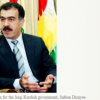
Spokesman For Iraqi Kurdish Govt: ‘New US Airbase in Erbil No Threat To Iran’
NIQASH interviewed Safeen Dizayee, the spokesperson for the government of semi-autonomous Iraqi Kurdistan. During a candid and wide ranging conversation, Dizayee spoke about why the US is building a new airbase in the region, where exactly Iraqi Kurdish oil is going and whether refugees in the region are being maltreated.
Over the past few months, Iraqi Kurdistan has come under attack from Sunni Muslim extremists in the group known as the Islamic State, it has become home to over a million refugees and it has also been subject to a “financial blockade” by the Iraqi government in Baghdad.
NIQASH held a wide-ranging conversation with Safeen Dizayee, the spokesperson for the Iraqi Kurdish government in the semi-autonomous northern region and a member of the region’s biggest political party, the Kurdish Democratic Party.
The conversation covered everything from the establishment of a new US air base in Iraqi Kurdistan to whether Iraqi Kurdish authorities were discriminating against Arab refugees. He also discussed whether Iranian and Turkish reactions to Iraq’s security crisis were adequate as well as where exactly Iraqi Kurdish oil was being exported to, and how much of it was going there.
Dizayee also commented on whether Iraqi Kurdish authorities might be getting any closer to resolving their long standing disputes with the government in Baghdad, especially now there is a new Prime Minister in charge.
The conversation has been split into three parts for ease of reading.
On US Plans To Build Air Base in Erbil
NIQASH: Apparently the US has also decided to build a military base – maybe more than one – in Iraqi Kurdistan. What can you tell us about this?
Safeen Dizayee: Discussions are continuing about the specifics of this issue. Nothing has happened on the ground as yet.
NIQASH: Would this base be a substitute to the nearest US base, the Incirlik Air Base in Turkey?
Dizayee: No. Incirlik Air Base is a NATO base and it will remain so. The prospective air base in Erbil is in order to confront the IS group in the nearby area.
NIQASH: Do you think that the Iranians will see this as a threat to their influence in the region?
Dizayee: Incirlik Air Base and other US military bases in the Gulf States - in places like Bahrain, Qatar, Kuwait and the United Arab Emirates – are also close to Iran. The base to be built in Erbil is all about fighting the IS group, not about confronting Iran, or any other country, in any way. We have stressed time and again that we don’t want Iraqi Kurdistan to become a battlefield for major powers in the region.
Posted in Security Comments Off on New US Airbase 'No Threat To Iran’
PM calls to end Boycott of Saudi Products
Posted on 20 September 2014 .
By John Lee.
Newly-appointed prime minister Haidar al-Abadi has called for an end to the boycott by a number of governorates of products from neighbouring countries, including Saudi Arabia.
He urged those provinces to instead develop their economies through regional cooperation, particularly with neighbouring states.
A number of provincial councils, including Baghdad, Basra and Najaf, had taken a decision to boycott products from Saudi Arabia, Turkey and Qatar and gave merchants a month to get rid of the products without affecting the sale of basic commodities.
Meanwhile, a number of other governorates called for boycotting Iranian products, in protest of Tehran’s meddling in Iraqi affairs.
(Source: Al Arabiya)
(Flag image via Shutterstock)
Posted in Iraq Industry & Trade News Comments Off on PM calls to end Boycott of Saudi Products
Bank Earnings Take a Hit
Posted on 19 September 2014 .
By Mark DeWeaver.
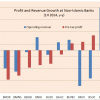
It’s been lackluster year for the ISX-listed banks. Total pre-tax profit for the 12 non-Islamic lenders that have reported so far fell 12% in the first half on a 3% decline in operating revenue, an 8% increase in operating expense, and a 21% increase in administrative expense.
Earnings dropped at 7 of the 12, with heavyweights Iraqi Middle East Bank (BIME), North Bank (BNOR), Qatar National Bank subsidiary Al Mansour Bank (BMNS), and Burgan Bank subsidiary Bank of Baghdad (BBOB) showing the steepest declines (see chart.)
Falling earnings are unsurprising given the deterioration in the security situation, the central government’s continuing failure to pass a 2014 budget, and, particularly for North Bank, the fiscal crisis in Kurdistan. Months before the fall of Mosul in early June, the banks’ trade finance businesses were already slowing as a result of disruptions to truck traffic from Jordan and Turkey.
At the same time, the budget delay has led to a slowdown in construction—another key sector for the banks—while in the Kurdish region the entire state sector appears to be running out of money.
The direct effect of lost business from branches in what are now ISIS controlled areas is probably quite small, however. For the 14 banks for which earnings breakdowns by province are available, Rabee Securities has calculated that the total contribution attributable to Mosul, Anbar, Kirkuk, Salah Ed Din, and Dyala came to just 2.2% of aggregate pre-tax profit. (Mosul Bank and Economy Bank, where the contributions were 30.9% and 29.6%, respectively, are important exceptions. So far neither has released first half results.)
This suggests that rolling back ISIS territorial gains is not necessarily a prerequisite for a recovery in bank earnings growth. Even with a continuation of the status quo, there could easily be a rebound next year if Parliament passes a budget, payments to the KRG are resumed, and progress can be made in reopening major highways and/or rerouting trade around danger zones.
The hit to bank earnings is likely to be only temporary.
Posted in Investment, Mark DeWeaver on Investments and Finance Comments Off on Bank Earnings Take a Hit