


Agricultural Licensing Rounds for Foreign Investors
Posted on 14 November 2016 .
By Salam Zidane for Al-Monitor. Any opinions expressed are those of the author, and do not necessarily reflect the views of Iraq Business News.
Iraq considers proposal of agricultural licensing rounds for foreign investors
On Oct. 23, the Iraqi parliament’s agricultural committee reported that Iraq imports more than 75% of its vegetables and animal products.
Meanwhile, agriculture experts conducted a study that they presented to the Cabinet on Oct. 22, calling for organizing agricultural licensing rounds to save the agricultural sector from its miserable situation and putting an end to the foreign currency pullout by inviting foreign companies to invest in agricultural land.
On July 19, the Ministry of Agriculture estimated the cultivated land in the country for 2015 at nearly 6 million acres, while the overall arable land is 52 million acres. Agriculture contributes about 7% to the gross domestic product (GDP), which has reached, according to the World Bank, $168.6 billion; this is considered to be a very low percentage, especially since Iraq is classified as an agricultural, oil-rich country.
The person behind the idea of agricultural licensing rounds and inviting international companies to invest in Iraq, agricultural expert Riad Farhan Abdul Karim, told Al-Monitor, “The country is suffering from the agriculture sector’s failure because it still follows methods used by the Sumerians, Babylonians and Assyrians when it comes to agriculture and irrigation. Developing this important sector is everyone’s responsibility.”
He said, “I have presented a comprehensive study to the government about agricultural licensing rounds. The government welcomed the idea and said it will be studying it in the coming days, but we are still waiting. For agriculture to prosper, we need to improve how workers do their jobs, increase land production and use modern methods. This can only be done by bringing in international companies.”
Al-Monitor contacted the Ministry of Agriculture, asking the status of the proposal in the Cabinet. A senior adviser in the ministry told Al-Monitor on condition of anonymity that it has received the proposal and asked the council of ministers to discuss it in the Cabinet. He said the ministry approved the proposal and that it now needs Cabinet approval; then it could be passed by the parliament.
Iraq succeeded in organizing licensing rounds for oil in 2009, when it was exporting 1.9 million barrels per day, in an attempt to increase production in 2017 to about 13 million barrels per day. So far, it has only produced 4.7 million barrels a day.
Posted in Agriculture, Investment, Tenders Comments Off on Agricultural Licensing Rounds for Foreign Investors
Trump Victory: "No Change" in Baghdad-Washington Ties
Posted on 09 November 2016 .
The Iraqi government has said that the election of Donald Trump as US president will not change its relationship with the United States.
Government spokesman Saad al-Hadithi told Rudaw:
“The Iraqi-American strategic agreement, including the economy and war on terror are all mutual files between the two countries and these ties will remain as they are and will not change anything between Iraq and the United States.
“There are common interests and mutual relations between Iraq and America and I don’t expect any of this to change with Trump’s victory.
“For the past eight years the democrats have been in power in the United States and today the republicans have won, but this is only the change of people and names and not policy. Politics will stay as they are now.”
He also told the Associated Press that Iraq is keen to develop its relations with the U.S. and "boost cooperation in the fight against terrorism."
(Sources: Rudaw, AP)
Posted in Investment, Iraq Banking & Finance News, Iraq Industry & Trade News, Iraq Oil & Gas News, Politics, Security Comments Off on Trump Victory: "No Change" in Baghdad-Washington Ties
Poll: Do Trump Supporters believe the Iraq Dinar Myth?
Posted on 27 September 2016 .
A recent poll found that support for popular conspiracy theories is strongest among Donald Trump supporters.
But is it also true that Trump supporters are more likely to believe that the Iraqi Dinar will re-value by something of the order of 1,000 times, turning a $1,000 'investment' into $1,000,000 overnight?
Please tell us your opinion in the following, entirely unscientific, reader poll:
[poll id="9"]
Posted in Iraq Banking & Finance News Comments Off on Poll: Do Trump Supporters believe the Iraq Dinar Myth?
Giuliani defends Trump ‘taking’ Iraqi Oil
Posted on 13 September 2016 .
By John Lee.
Rudy Giuliani, the former Mayor of New York, and current advisor to Republican presidential hopeful Donald Trump, has defended the Trump’s statement that the US should have taken Iraq’s oil.
When asked in an interview if that was legal, Giuliani, a lawyer, said: “Of course it’s legal. It’s a war. Until the war is over, anything is legal.”
But Giuliani went on to explain: “[Trump] didn’t say we should take [the oil] for ourselves necessarily. He said we should secure it, so it doesn’t get taken by terrorist forces.”
(Source: Rudaw)
Posted in Iraq Oil & Gas News Comments Off on Giuliani defends Trump ‘taking’ Iraqi Oil
Trump: If we took Iraq's Oil, we wouldn't have IS
Posted on 08 September 2016 .
By John Lee.
US Presidential candidate Donald Trump has said that the Islamic State group (IS, ISIS, ISIL, Daesh) grew because the United States failed to “take the oil” in Iraq after invading the country, allowing IS to use it to finance their operations.
He told NBC:
"I've always said, shouldn't be there, but if we're gonna get out, take the oil. If we would've taken the oil, you wouldn't have ISIS because ISIS formed with the power and wealth of the oil.
"It used to be to the victor belonged the spoils. Now, there was no victor there, believe me, there was no victor."
(Sources: Bloomberg, Fox News)
Posted in Iraq Oil & Gas News, Politics, Security Comments Off on Trump: If we took Iraq's Oil, we wouldn't have IS
Trump accuses US Soldiers of Stealing Iraqi Funds
Posted on 15 June 2016 .
By John Lee.
Donald Trump has accused US soldiers of stealing millions meant for the reconstruction of Iraq.
Describing Iraq as “crooked as hell,” the presumptive Republican nominee said:
“How about bringing baskets of money? Millions and millions of dollars and handing it out ... I want to know. Who are the soldiers that had that job? Because I think they’re living very well right now, whoever they may be.”
According to Politico, Trump "appeared to be referring to the many known instances in which members of the American military members skimmed U.S. government cash intended for reconstruction projects or otherwise engaged in theft or bribery".
(Sources: NY Daily News, Politico)
Posted in Politics, Security 7 Comments
Trump: "I would have kept Iraq's Oil"
Posted on 22 March 2016 .
By John Lee.
US Presidential candidate Donald Trump has said that America "should have never been in Iraq".
"It was one of the worst decisions ever made in the history of our country," he told The Washington Post. "We then got out badly, then after we got out, I said, 'Keep the oil. If we don’t keep it Iran’s going to get it'".
Refering to Iran's influence on Iraq, Trump said:
"Yeah, I would defend the areas [of Iraq] with the oil. And I would have taken out a lot of oil. And, uh, I would have kept it.
"I mean, I would have kept it, because, look: Iran has the oil, and they’re going to have the oil, well, the stuff they don’t have, because Iran is taking over Iraq as sure as you’re sitting there.
"And I’ve been very good on this stuff. My prognostications, my predictions have become, have been very accurate, if you look".
(Source: The Washington Post)
Posted in Iraq Oil & Gas News Comments Off on Trump: "I would have kept Iraq's Oil"
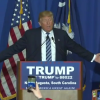
Video: Trump calls Iraq 'Harvard of Terrorism'
Posted on 17 February 2016 .
From AFP. Any opinions expressed are those of the authors, and do not necessarily reflect the views of Iraq Business News.
Republican presidential hopeful Donald Trump criticized American military policy in Iraq during a campaign rally on Tuesday, saying the US "shouldn't have been there" and referring to Iraq as the "Harvard of terrorism."

Lawmakers Focus on Eradicating Internet Porn
Posted on 23 August 2015 .
By Ali Mamouri for Al-Monitor. Any opinions expressed are those of the author, and do not necessarily reflect the views of Iraq Business News.
XXX trumps IS as Iraqi lawmakers focus on eradicating Internet porn
Abdul-Hadi al-Hakim, an Iraqi parliament member with the Citizen Coalition, announced July 28 that more than 150 parliament members' signatures had been collected to pass a bill calling on the authorities to block pornographic sites on the Internet.
Hakim said that most of the National Iraqi Alliance parliamentarians have signed the draft law, while most representatives of the Sunni National Forces Union and the Kurdistan Alliance refrained from signing.
Hakim justified the bill by stating, “Most problems youths face today are caused by surfing porn sites.” He added that pornographic sites have led to a 200% increase in divorce rates and a 50% decrease in marriage and contributed to the rise of sexual crimes, including rape and sexual harassment.
However, Hakim’s statement is based on mere speculation and not on scientific studies. In the same statement, he also invoked numerous other social problems to justify the bill, including early marriage, high unemployment and poverty rates and violence against women. It is worth mentioning that in 2014, Iraq came in last on a list of statistics issued by Pornhub, the largest pornography website on the Internet, which ranked the average amount of time spent on the site by visitors according to country.
Blocking pornographic sites is ineffective, as circumvention techniques are widely available to the public. For instance, the same Pornhub statistics showed that visitors from Iran and Saudi Arabia spend more time on the site than Iraqis, even though these states' religious regimes ban pornographic websites. Visitors in Iran registered an average of 7 minutes and 46 seconds per visit, while those in Saudi Arabia registered 8 minutes 23 seconds.
The announcement of the bill stirred controversy in Iraq. Some Iraqis welcomed the proposal and created a Facebook page to support the bill, while others believe it is an attempt to impose religious laws on the country and a preliminary step to gradually bring religious rule to Iraq, especially considering the bill was submitted at the initiative of Islamist members of parliament and justified from religious perspectives.
According to civil activists, this bill is not a priority in the midst of the current deteriorating security and political situation in Iraq. TV presenter Ali Wajih posted on Facebook on July 28, “Did our problems in Iraq end, and the only remaining one is porn sites? Isn’t our tragic situation in Iraq much worse than pornographic movies?”
Posted in Iraqi Communications News Comments Off on Lawmakers Focus on Eradicating Internet Porn
Iran to Trump Iraq on Exploration Terms?
Posted on 14 February 2014 .
By John Lee.
Bloomberg reports that Iran plans to offer international companies better oil contracts than Iraq, as it seeks long-term investment to revive its energy industry.
As Iran discusses limits to its nuclear program to remove Western sanctions against its financial and energy businesses, Mehdi Hosseini, of the Iranian oil ministry, said it is developing new hydrocarbon contracts that are “in line” with international practice and law, and that will offer more flexible terms than those used by Iraq. He added:
“We want oil companies to be involved in joint fields and high-risk fields ... We are looking at longer-term commitments so that our own companies can learn alongside foreign companies ...
Iran will give a preview of its new investor contract to a domestic audience in Tehran next week, and will introduce it at a conference in London in late June or early July. Hosseini commented:
“Any new model will have to be win-win for all parties involved ... The new contract is our own type. We haven’t given it a name.”
Iran will resume negotiations with world powers over its nuclear activities on 18th February, after reaching a preliminary deal in November. The nation needs as much as $150 billion in investment over the next five years to develop its oil and gas, and Iranian officials expect most of the money to come from foreign companies.
But Abdul Mahdy Al-Ameedi, director of the Iraqi oil ministry’s licensing department, told Bloomberg:
“Iraq’s contracts are the best in the world in terms of making high national profits ... The Iranians seek to copy our contracts and improve some terms by giving more privileges to companies to work in Iran. Nothing has happened so far, it’s just an idea.”
(Source: Bloomberg)
(Flag image via Shutterstock)
Posted in Iraq Oil & Gas News 2 Comments