



Iraq’s Oil Brinkmanship
Posted on 26 January 2014 .
By Denise Natali for Al-Monitor. Any opinions expressed are those of the author, and do not necessarily reflect the views of Iraq Business News.
As al-Qaeda continues to terrorize parts of Iraq, another battle looms over the country: control over Iraqi hydrocarbons and revenues. The Kurdistan Regional Government (KRG) is pressing ahead with its plans to independently export and sell Kurdish crude to Turkey, while Baghdad has threatened to cut the KRG’s budget and take legal action against Ankara. These tensions are occurring as oil-producing provinces are making their own oil and revenue demands, and threatening to boycott parliament and stage demonstrations.
While this type of brinkmanship is common to post-Saddam Iraqi politics, it underlines the new fault lines that have emerged between Baghdad and provincial and regional authorities. These lines indicate that a viable power-sharing arrangement will be determined by fair access and distribution of the country’s oil wealth.
The heightened energy rhetoric reflects the opportunity to maximize political interests and leverage by Erbil and Baghdad. The KRG calculates that the weakened Iraqi Prime Minister Nouri al-Maliki needs Kurdish backing in the forthcoming elections to win a third term. KRG support includes Peshmerga (Kurdish militia) security assistance against al-Qaeda threats, particularly in the disputed territories.
The KRG’s strengthened position also is shaped by its energy sector successes, including a newly-built pipeline that connects to the Iraqi-Turkish pipeline (ITP), oil contracts with major international oil companies (IOCs), and Turkish partnership. The KRG also is “fed up” with Baghdad and the numerous failed attempts to export its crude and secure consistent or full payment.
These developments have encouraged a more nationalist and less compromising KRG position. Whereas in 2010 the KRG recognized Iraqi State Oil Marketing Organization (SOMO) as having the sole right to export Kurdish crude, by 2013 it had denied SOMO’s role in Kurdish energy sector development. Instead, the KRG states that its newly created Kurdistan Oil Marketing Organization (KOMO) is now the region’s export agency. The KRG has also tendered sales of its crude in the Turkish port of Ceyhan via KOMO to affirm this right.
Posted in Iraq Oil & Gas News 5 Comments
Secret Deal sees Al Qaeda Leave Fallujah
Posted on 10 January 2014 .
This article was originally published by Niqash. Any opinions expressed are those of the author, and do not necessarily reflect the views of Iraq Business News.
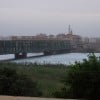
Out The Back Door: Secret Deal with Anbar Tribes Sees Al-Qaeda Leave Fallujah
A secret deal was done between the tribes of Anbar and Sunni Muslim extremists this week – the result has seen extremists withdraw from Fallujah. But questions remain: Will PM Nouri al-Maliki still react with military force? How did Al Qaeda manage to take over a city like Fallujah in just two days? And why did they react so diplomatically when asked to leave?
Sources from within the tribes in the city of Fallujah in Anbar province say that on Tuesday evening, a secret deal was done by the tribes of Anbar and members of the extremist group, the Islamic State of Iraq and Syria. Sources told NIQASH that the extremist group, also known as ISIS or Daash, said they would withdraw from the city so that the Iraqi army did not invade.
For several days now Iraqi Prime Minister Nouri al-Maliki has been threatening to send his troops into Fallujah to re-take the city; as Iraqi army troops massed on the outskirts of the city he even put out a call to locals to expel the extremist elements themselves - or face an attack by the Iraqi military.
The deal, done in the central city, was reached in order to prevent any further damage to the city. The city is mostly home to members of Sunni Muslim tribes who tend to be conservative when it comes to religion and to tribal customs. And despite their antipathy toward al-Maliki’s government –a Shiite Muslim-led coalition that Sunni Muslims say has alternately sidelined and targeted them – locals apparently do not want to see a repeat of 2004, when the US army stormed the city after the gruesome deaths of four contractors there.
Although it is unusual for ISIS to react in what may best be described as a diplomatic way, they apparently had good reason.
“Only several dozen Daash fighters actually entered the city in the first place,” says Ahmad al-Jumaili, one of the tribal leaders in Anbar. “They were only carrying light and medium sized weapons with them. And there is no way they could control a city like Fallujah where all the people of the city have at least one weapon in their homes.”
Basra "Threatens Autonomy"
Posted on 19 November 2013 .
By John Lee.
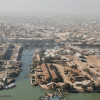
Local authorities in Basra province have reportedly threatened to break away from the central government and create an autonomous region of their own.
The idea was rekindled by MP Wail Abd al-Latif, who told Rudaw:
“Efforts toward making Basra an autonomous region is a project and not a trump card against the central government ...
“Starting this month, the committee assigned with making Basra an autonomous region will take new legal steps through forming a council made up of representatives from all the towns and sub-districts of Basra.”
He noted that this project has been in the making for a number of years and conforms fully to the Iraqi constitution.
Just days before drafting the final version of the Iraqi constitution in 2005, the issue of a southern Shiite autonomous region caused heated divisive debate among Iraqi politicians.
An autonomous Shiite region that includes several southern provinces is considered the brainchild of Abdul-Aziz al-Hakim, the former leader of the Supreme Islamic Council of Iraq (ISCI).
He proposed a Shiite autonomous region modeled after the Kurdistan Region, but divisions between Shiites and strong Sunni opposition defeated the project.
In 2010, 22 members from 35 Basra Provincial Councils signed a petition demanding Baghdad hold a referendum in the province in accordance with the Iraqi constitution, so that residents can choose if they want to remain under Baghdad or form their own autonomous government. But the demand fell on deaf ears at the prime minister’s office.
Abd al-Latif argued:
"If Basra became an autonomous region, it would be different from the Kurdistan Region, because the Kurdistan Region was a reality before the formation of the new Iraq and its achievements were incorporated into the Iraqi constitution ...
"The region of Basra would be compatible with the current Iraqi laws and constitution.”
Over the past several months the Sunni provinces of Anbar, Salahdeen and Diyala unilaterally declared autonomy from Baghdad.
(Source: Rudaw)
Posted in Iraq Oil & Gas News, Politics, Security 5 Comments

Parliament to Resume Debate on Electoral Law
Posted on 22 October 2013 .
By Reidar Visser.
The following article was published by Reidar Visser, an historian of Iraq educated at the University of Oxford and currently based at the Norwegian Institute of International Affairs. It is reproduced here with the author’s permission. Any opinions expressed are those of the author, and do not necessarily reflect the views of Iraq Business News.
It’s almost four years since Iraq’s general elections of 2010 and new elections are scheduled for early 2014. Iraq wouldn’t be Iraq if there wasn’t some kind of problem on the political horizon, and this time it consists of changes to the electoral law that need to be done in time in order that the electoral commission (IHEC) can starts its technical preparations for the ballot. The Iraqi parliament has given itself until 30 October to adopt the changes, and the debate is scheduled to start this coming week of 21 October.
The immediate reason there has to be changes to the election law is simple. A federal supreme court ruling from June 2010 decided that the current system of seat distribution using the largest remainder principle in a proportional system of 18 multi-member constituencies was “unconstitutional” and that a more proportional system would need to be adopted.
In line with this, the Iraqi parliament made changes to the local elections law before the provincial elections earlier this year, by introducing the Sainte Lague method for distributing seats.
The reason the current law was deemed unconstitutional was that its use of the largest remainder principle was found by the supreme court to be in conflict with one of the basic axioms of the Iraqi constitution, which says that no law that contradicts the principles of democracy can be adopted. This conclusion by the court is both esoteric and astonishing.
In what amounted to a mutual ball-gag between the Shiite Islamists and Kurds that crafted the new Iraqi constitution in 2005, “principles of democracy” as well as the “basic tenets of Islam” were given status as the unalienable main points of reference for all Iraqi legislation. This arrangement was useful there and then since the political process got moving (and quite a few American academics waxed lyrical about it); however, it was probably never intended to be taken very literally given the abstract nature of the concepts referred to.
And it seems truly wild for the supreme court to extrapolate from the very general “principles of democracy” – whatever those may be – to a level of detail where it is suggested that the Sainte Lague method for distributing seats is somehow “democratic” whereas the largest remainder method isn’t.
Should US go into Syria: What do Ordinary Iraqis Think?
Posted on 09 September 2013 .
By Mustafa Habib.
This article was originally published by Niqash. Any opinions expressed are those of the author, and do not necessarily reflect the views of Iraq Business News.
Iraqis know better than most that military intervention comes at a price. Ten years after foreigners invaded their country and toppled their dictatorship, the country still isn’t stable. So do they think the West should intervene in Syria?
It has been just over ten years since the US-led invasion of Iraq. But that event and its aftermath have been hanging heavily over the current debate in the West over whether it should intervene in Syria or not.
But how do Iraqis feel about a potential invasion or intervention in Syria? Most of them are well aware that the US military helped to oust a dictator, Saddam Hussein, a man who governed their country with iron and fire for over 24 years. However the destruction and virtual civil war that followed Hussein’s ousting is more than enough to make many of them unenthusiastic about the prospect of external intervention in Syria. And it seems that, no matter what sect or ethnicity they claim, most Iraqis are only too well aware of what comes after intervention.
“When foreign forces overthrew Saddam Hussein, I couldn’t hide my joy,” recalls Saeed Jabbar, a Baghdad university professor. “But we didn’t expect all the devastation and destruction that came afterwards,” he told NIQASH.
“Bashar al-Assad is clearly a dictator – but he should be removed by the Syrian people and not by external forces.”
In the west of Anbar province, where the population is mostly Sunni Muslim like former Iraqi leader Hussein was, a tribal leader there told NIQASH: “The people of Anbar have a clear position on Syria. They all believe that al-Assad and his regime should be toppled, just like Saddam Hussein’s was,” argues Ahmad al-Jumaili.
Time to Blow our Own Trumpet
Posted on 04 April 2013 .
By John Lee.
Iraq Business News is growing. Less than three months ago, the list of subscribers to our free weekly newsletter hit 13,000 -- last week we topped 15,000!
To put it another way, every working day forty new readers join the ranks of the best-informed business minds in Iraq. Many of these join on the recommendation of friends and colleagues, so a big thanks to all who spread the word.
Word of mouth is very important in many areas, and not least in finding the right person for the job. On our jobs page at the moment we have a vacancy for the position of Chief Financial Officer / Chief Operating Officer at major international bank in Baghdad. If that could be you, or someone you know, you can find more details here.
And if you'd like your job vacancy to be featured on our jobs page, you can get all the information you need right here. With nearly 280,000 pageviews last month, we think you'll find it a very efficient use of your advertising budget.
Posted in Blog, Employment, Iraq Banking & Finance News Comments Off on Time to Blow our Own Trumpet

Ex Central Bank Chief Accuses Govt
Posted on 09 November 2012 .
By John Lee.
Sinan al-Shabibi (pictured), the former head Iraq's Central Bank who was removed for suspected mismanagement and currency manipulation, has dismissed the charges against him as baseless and trumped up.
Speaking to AFP, he said authorities had compromised the bank's independence to access its reserves, adding that the government had been "spoiled" by a stable exchange rate for several years.
He said a warrant for his arrest had blown relatively minor foreign exchange fluctuations out of proportion.
While diplomats and analysts have interpreted the move as a power grab by Nouri al-Maliki, the premier's office has reportedly nsisted it was not behind the moves.
Speaking from Geneva, Shabibi said:
"Since 2009, they wanted to fire me, and they wanted money from the reserves ... I think the main problem... is basically the reserves, because they thought we have a lot of reserves, and they want to use it for financing ... The government wanted some money from the central bank... Of course, the law does not allow that, the central bank law.
"And of course, they say that there are differences in exchange rate policy. I don't think these differences require firing the central bank governor."
Asked if the warrants for him and other officials affected the bank's independence, Shabibi replied: "I'm sure, yes."
Posted in Iraq Banking & Finance News, Security Comments Off on Ex Central Bank Chief Accuses Govt

After a Futile and Counter-Productive Boycott, Iraqiyya Returns to Parliament
Posted on 31 January 2012 .
The following article was published by Reidar Visser, an historian of Iraq educated at the University of Oxford and currently based at the Norwegian Institute of International Affairs. It is reproduced here with the author’s permission. Any opinions expressed are those of the author, and do not necessarily reflect the views of Iraq Business News.
The return by the secular Iraqiyya coalition to parliament, announced yesterday, seems like a logical albeit long overdue move.
In the first place, to boycott parliament was in itself a tactic that above all signalled isolation: Iraqiyya was unhappy with the general direction of Iraqi politics but was evidently unable to change the political game, whether through its representatives in parliament or through its participation in cabinet.
More recently, there has been evidence that Iraqiyya was also hurting itself through its actions. Since the start of the boycott, the frequency of defections from the coalition in both Sunni and Shiite areas has increased. Still, it is noteworthy that Wataniyyun, one of the recent breakaway groups who promised to never rejoin Iraqiyya, yesterday hailed the decision of the leadership to return to parliament.
The lingering question is whether Iraqiyya will withdraw its ministers permanently from cabinet. In that respect, there have been even clearer indications of a substantial renegade trend headed by Iraqiyya ministers wanting to keep their cabinet jobs despite having been ordered to boycott by their party leaders. In particular, the ministers who have continued to attend meetings despite the official boycott are from the Karbuli bloc of Iraqiyya called Al-Hall as well as a Turkmen minister for the provinces.
At the same time, there are signs that Maliki and State of Law also have shortcomings with respect to their ability to benefit from the situation. For example, their deputy Fuad al-Dawraki yesterday expressed satisfaction of the return of the Iraqiyya “since it represents a certain component” of the Iraqi people. That is not only tantamount to falsely claiming Iraqiyya is a Sunni party; it also indicates the limits to the prospect of the (mainly Shiite) State of Law successfully co-opting breakaway elements from Iraqiyya as much-needed additional parliamentary support.
Posted in Politics Comments Off on After a Futile and Counter-Productive Boycott, Iraqiyya Returns to Parliament

Trump: US Should Stay in Iraq Taking Oil
Posted on 05 April 2011 .
Billionaire real estate tycoon and potential Republican presidential candidate, Donald Trump, has said that the United States should stay in Iraq in order to take Iraq's oil and cover the cost of the war, reports the Washington Post.
"In the old days when you had wars, you win, right? You win. To the victor belonged the spoils," Trump said in an interview with Bill O'Reilly on Fox News.
"You stay and protect the oil and you take the oil and you take whatever is necessary for them and you take what's necessary for us and we pay our self back $1.5 trillion or more. We take care of Britain, we take care of other countries that helped us and we don't be so stupid."
"You look at wars over the years… A country goes in, they conquer and they stay… So, in a nutshell, we go in, we take over the second largest oil fields and we stay," he said.
Donald Trump says he will decide by June whether to run for president.
(Source: Washington Post)
(Photo: Gage Skidmore)
Posted in Iraq Oil & Gas News, Politics 10 Comments

The Ongoing Govt-Formation Process: Phase 2 Completed
Posted on 14 February 2011 .
The following article was published by Reidar Visser, an historian of Iraq educated at the University of Oxford and currently based at the Norwegian Institute of International Affairs. It is reproduced here with the author’s permission. The opinions expressed are those of the author, and do not necessarily reflect the views of Iraq Business News.
The second government of Nuri al-Maliki that was confirmed by the Iraqi parliament on 21 December 2010 was in many respects an incomplete one. No security ministers had been nominated, and these portfolios, along with almost a dozen other ministries for which the parties in government had failed to nominate candidates, were left in the hands of caretaker ministers who were already heading other jobs. Notably, these arrangements included Prime Minister Nuri al-Maliki himself with respect to his continued control of the security ministries.
In today’s session in the Iraqi parliament, some further steps were finally taken after a long period of inaction, although the government-formation process remains far from complete. Altogether eight more ministers were confirmed. The Kurdish parties got trade and civil society as expected, and Iraqiyya got electricity, albeit with a new candidate (Raad al-Ani) instead of their previous nominee. Maliki’s own all-Shiite National Alliance took the portfolios of national dialogue (Amir al-Khuzai from Basra and of the Daawa party), municipalities (Adil Mahudar from Maysan, a Sadrist) and women’s affairs (Ibtihal Jasid). Additional ministries of state were given to the Kurds and Iraqiyya; the latter earmarked for tribal affairs and given to Jamal al-Batikh from Wasit and belonging to Ayad Allawi’s faction. It is noteworthy that among the State of Law candidates, both Khuzai and Mahudar had been floated as candidates back in December and it is unclear why it has taken so long to confirm them. It is also interesting that two ministries held by Sadrists as deputyships and expected by some to be filled by new Sadrist ministers have still not been distributed: Planning and public works, the first of which being considered as one of the key ministries on offer.
Thus, instead of completing his government, Maliki left key posts open (like security) and proceeded to create two new ministers of state with vague portfolios. But the enlargement of the executive branch of government does not stop with the now 40 plus ministers. Another item that got discussed today only to end with an impasse was the election of deputies to the president, Jalal Talabani. Despite the largely ceremonial powers of these posts (the presidency should not be confused with the powerful, veto-wielding presidency council which has now expired), Iraqi parties have put up an intense fight for them. A law passed in early January set a ceiling on a maximum three vice-presidents, but Talabani has recently begun calling for a fourth Turkmen deputy to be included alongside his current nominees for the post (Tariq al-Hashemi of Iraqiyya, Adil Abd al-Mahdi of ISCI and Khudayr al-Khuzai of the Daawa/Tanzim al-Iraq). This move met with resistance from both Maliki and those who thought more vice presidents would just be a waste of money, so on today’s agenda was only a motion for parliament to confirm Hashemi, Abd al-Mahdi and Khuzai. However, in today’s session, a temporary alliance that had warmed up to Talabani’s ideas for a Turkmen vice president – consisting reportedly of the Kurds, Iraqiyya and the Sadrists and hence somewhat reminiscent in composition of the opposition that Maliki was facing in early 2010 – tried to press for the vote on the presidential deputies to be conducted individually, with a tacit understanding that Khuzai might be voted out to leave room for a Turkmen. Maliki’s allies reacted to this, and with some reason since the relevant law just talks about a “nomination” (tarshih) by the president to be confirmed by parliament, which sounds pretty much like a singular bundle of names and a single vote. At any rate, on tomorrow’s parliamentary agenda is included a vote on an amendment to the law on the presidential deputies that will likely create a fourth deputy and thereby highlight the institution of the presidency as playground for those who want to highlight the consociational aspect of Iraqi democracy, i.e. ethno-sectarian quotas. It may well turn into a busy week with a second reading on the federal supreme court bill as well as continuing discussions of the budget (with or without oil-export controversy) scheduled for Monday and Wednesday. Additionally, the much-trumpeted strategic policy council – touted by the Obama administration as the cornerstone of the supposed power-sharing deal that was arrived at last December – may or may not come into existence over coming months, but probably not in the shape that had been envisioned initially.
The vice-president debacle was a sorry finale to a session that had started with a rather inappropriate lecture by Ibrahim al-Jaafari on the supposed Iraqi antecedents and inspirations for the events in Tunisia and Egypt. Those interested in real democracy should probably look elsewhere for inspiration right now! As we are nearing the one-year anniversary of the 7 March 2010 elections, the Iraqi government-formation process remains incomplete. At the same time, since all the parties except the Kurdish Gorran are included in government, there is the obvious lacuna of a healthy opposition. Little wonder, in that context, that political violence and extremism continue to thrive on the margins of a clogged parliamentary system.
Posted in Politics Comments Off on The Ongoing Govt-Formation Process: Phase 2 Completed