


Video: UNESCO calls for Saving Iraq Heritage Sites
Posted on 20 June 2014 .
From Al Jazeera. Any opinions expressed are those of the authors, and do not necessarily reflect the views of Iraq Business News.
The UN's World Heritage body UNESCO has called Iraqis to unite behind their heritage as fear mounts that protected sites may get damaged as Sunni rebels from the Islamic State of Iraq and the Levant fight for control in northern Iraq.
The appeal comes as members are holding 38th annual world heritage conference in Qatar, with endangered historical sites high on the agenda.
The northern Iraqi city of Erbil is one of up to 36 new places being considered for protection under UN Educational, Scientific and Cultural Organisation.
Al Jazeera's Caroline Malone reports:
Posted in Security Comments Off on Video: UNESCO calls for Saving Iraq Heritage Sites
Iraq could Take Lead in FDI
Posted on 25 May 2014 .
By John Lee.
Growth in foreign direct investment (FDI) to Egypt, Iran, Iraq, Lebanon and Jordan should overtake the "expansion of flows" to the Gulf Cooperation Council (GCC) by 2019, according to a new report from London's Centre for Economics and Business Research (CEBR) and the ICAEW.
The report focuses on the GCC member countries (United Arab Emirates, Bahrain, Saudi Arabia, Oman, Qatar and Kuwait), plus Egypt, Iran, Iraq, Jordan and Lebanon (abbreviated to GCC+5).
It emphasised that Iraq, Iran and Egypt, despite being among the most volatile economies in the region, are attractive due to the sheer number of potential consumers they represent.
For the vast majority of countries in the Middle East, commodities make up more than half of their total goods exports by value, say the authors. The sum is as high as 99.2% in Iraq, where many other export industries have been disrupted by conflict and ongoing violence.
In Iraq, economic growth is forecast to accelerate to 6.5 per cent this year, moving up to 8.6 per cent by 2016, despite increasing violence. Since the toppling of Saddam Hussein in 2003, western and Asian oil majors have vied for a slice of lucrative energy contracts.
The full report -- ICAEW Economic Insight: Middle East Quarterly briefing Q2 2014 -- can be downloaded here.
(Sources: ICAEW)
Posted in Investment, Iraq Industry & Trade News Comments Off on Iraq could Take Lead in FDI

Johnson Controls Wins Major Iraq Order
Posted on 20 May 2014 .
By John Lee.
Johnson Controls, a global multi-industrial company, will supply "YORK" HVAC equipment and building automation solutions for five, 400-bed hospitals in Iraq.
The order includes 21 YORK® YK centrifugal chillers, cooling towers, air handling units, and fan coil units. The technologies are designed to work together to deliver more energy and operational savings.
Claude Allain, vice president and general manager of the Middle East for Johnson Controls, said:
“Johnson Controls helps hospitals around the world deliver better patient care in more energy efficient facilities. Our technologies, including HVAC equipment, lighting and fire alarm systems, communicate with each other to keep patient rooms comfortable and safe ...
"These technologies save energy and reduce operating costs which allows these hospitals to put additional funding into other critical needs.”
Dr. Marcus Schumacher, vice president for operations and engineering, Middle East, added:
“Variable speed drives (VSDs) on these YORK® chillers reduce power consumption by 20 to 30 percent and increase product durability ...
"The chillers use advanced automatic tube cleaning technology that improves heat transfer and operational efficiency, run on environmentally friendly HFC-R134a refrigerant and can operate under extreme entering condenser water temperatures that would cause many other makes of chillers to shut down.”
Johnson Controls serves the market with offices in UAE, Qatar, Egypt, Turkey, Oman, and Bahrain. The company operates in Saudi Arabia and Lebanon through a joint venture, Al Salem Johnson Controls. Johnson Controls also maintains a wide network of distribution partners and is a preferred supplier for several real estate development and district cooling service companies.
(Source: Johnson Controls)
Posted in Healthcare, Iraq Industry & Trade News Comments Off on Johnson Controls Wins Major Iraq Order

NES Global Talent Opens Erbil Office
Posted on 13 May 2014 .
By John Lee.
NES Global Talent, the manpower solutions provider, has opened a second office in Iraq.
The new Erbil operation in Iraqi Kurdistan will act as a business hub for activity across the wider region, meaning it is on the ground to support its contractors and key clients and able to make the most of the opportunities available across Kurdistan.
Vikram Nanda, NES Global Talent Operations Manager in Iraq, said:
“Iraqi Kurdistan is one of the hottest spots globally for the oil and gas industry. The size of the oil market has attracted many leading operators and huge amounts of investment.
"Currently, the majority of companies are at exploration stage and once this turns to production the need for manpower will increase significantly. We will be best placed when this happens.
“In northern Iraq and Kurdistan we are seeing a great deal of growth in operation and drilling services, with in-demand disciplines including subsurface, project services and operations and maintenance while in southern Iraq, existing oilfields such as Rumaila are also going from strength to strength and creating more and more job opportunities.”
The Erbil office is managed locally by NES Global Talent Recruitment Manager Glyn Evans, who has more than 15 years’ oil and gas recruitment experience. The company plans to make more hires in Iraq and Dubai throughout the coming year.
Darren Grainger (pictured), Regional Director - Middle East at NES Global Talent, added:
“In northern Iraq and Kurdistan we are seeing a great deal of growth in operation and drilling services and as the skills shortage intensifies, the role of companies such as NES Global Talent becomes increasingly important.
“Our global network of offices has been opened strategically within oil and gas hubs, such as Dubai and Abu Dhabi in the United Arab Emirates, Iraq, Qatar and Saudi Arabia to mirror the geographical footprint of our key clients, meaning we can deliver the challenging staffing projects that others cannot.”
(Source: NES Global Talent)
Posted in Employment Comments Off on NES Global Talent Opens Erbil Office
Asiacell Profits Fall
Posted on 12 May 2014 .
By John Lee.
Mobile operator Asiacell has posted a 12.2 percent drop in annual net profit.
Reuters reports that the company, part of Qatar-based Ooredoo, made a net profit of 581 billion dinars ($498.62 million) in 2013, down from 662 billion dinars a year earlier.
Profit was impacted "non-recurring items - mainly related to tax in previous years - which totalled 74 billion dinars".
(Source: Reuters)
Posted in Investment, Iraqi Communications News Comments Off on Asiacell Profits Fall
Delegates From 40 Nations Attend Terror Summit
Posted on 18 March 2014 .
By Omar al-Jaffal for Al-Monitor. Any opinions expressed are those of the author, and do not necessarily reflect the views of Iraq Business News.
The Iraqi government held a conference on combating international terrorism on March 12-13 in Baghdad, in which it suspended its official work on the opening day of the conference.
Although the official reason for the suspension was “to complete the distribution of electoral cards for state employees,” some observers interpreted the move as aiming to evacuate Baghdad so that the guests could enjoy the conference without hearing loud explosions around the capital every day and to protect the conference site from a security breach.
The Iraqi security forces closed several main roads and the security checkpoints intensified car searches.
Participating in the conference were representatives from 40 countries, including members of the UN, the UN Security Council, the Organization of the Islamic Conference and the European Union. The head of Interpol was also present. During the conference, 20 studies by Iraqi researchers and 21 studies by foreign researchers were presented.
Saudi Arabia and Qatar, which Iraqi Prime Minister Nouri al-Maliki had accused in a TV interview on March 8 of supporting terrorism in Iraq, didn’t attend, despite being invited, according to the organizing committee. The Iraqi blocs that oppose Maliki didn’t attend either. Some deputies accused Maliki’s State of Law Coalition of monopolizing the invitation list.
Journalists complained that the conference was poorly organized and that they were kept near the conference hall in a small room without Internet access or a TV screen showing the conference proceedings. Some complained that TV stations close to Maliki were allowed to enter the conference room and talk with the attendees, while other stations were prevented from filming inside the conference hall.
In his weekly address on Oct. 23, 2013, Maliki called for an international conference to combat terrorism to “unify the efforts to confront it,” “to achieve security and stability in the region” and “to coordinate information and capacity between countries to encircle al-Qaeda in the region and outside it.”
Iraq’s call for an international conference to combat terrorism came after the security situation steadily worsened in the last two years.
EU Ambassador to Iraq Jana Hybaskova said, “Iraq is a country that has suffered from terrorism over the past 10 years and there are terrorist strongholds inside Iraq that threaten security and that have killed thousands of Iraqis.” In an interview with Al-Monitor, she said, “The EU has never stopped condemning and rejecting such acts and [the EU] will continue to support Iraq in its fight against terrorism and [help] it get out of this dark tunnel.”
She added, “We in the European Union emphasize the importance that Iraq recovers its vigor and strength because of its great position in the region and the world,” and stressed “the need to end all acts of terror in it.”
In his opening remarks at the conference, Maliki warned about the “sedition caused by terrorism,” which will “burn the countries.” Maliki said, “State sponsors of terrorism bear the responsibility for the harm that our countries are being exposed to,” and stressed that “Syria has turned into the biggest arena for terrorism, which is now affecting Iraq."
Maliki stressed that “the storm of destruction will blow on all countries in the region, even Europe and all countries of the world.” He asked the international community to cooperate with the countries in the region and take deterrent measures to combat terrorism.
He regretted that “some countries have turned some of their institutions into incubators for terrorism and for collecting money [for terrorism].” He added, “Our warnings about terrorism are not intended to scare the world, but they come from our own experience.”
He concluded his speech by calling for “the establishment of a general secretariat for the Baghdad International Conference to Combat Terrorism” and by saying that the secretariat “would develop a general strategy to pursue international terrorism.”
The topics discussed at the conference were: “the existing international frameworks for cooperation to fight terrorism in [the present and future]”; “experiences in fighting terrorism: lessons learned”; “the implications of terrorism on economic development and democratization”; “the development of the media and the Internet and their effect on terrorism”; “ideological and religious extremism and incitement to hate and violence, and the role of religious institutions in fighting terrorism”; “political changes, regional conflicts and terrorism”; and “the development of al-Qaeda: extensions and implications.”
The United States used the opportunity to talk about the Syrian crisis. Deputy Assistant Secretary of State Brett McGurk acknowledged that “the conflict in Syria has implications for stability in Iraq.” But he called on Iraq to “withdraw its fighters from Syria in line with the demands of the UN Security Council.”
The representative of the Organization of Islamic Cooperation, Yahya al-Rahi, said in an interview with Al-Monitor, “The OIC can contribute and support Iraq in rallying the international community to improve [Iraq’s] capabilities in the face of terrorism, because the latter is a threat to the whole world and no one will be safe from it.” He added, “So everyone must unite the global discourse to combat terrorism.”
In its concluding statement, the Baghdad International Conference to Combat Terrorism called for establishing an international day to commemorate the victims of terrorism, and stressed the need to activate the regional and international treaties on counterterrorism and develop national laws.
The conference recommended the development of national laws, including laws that fight terrorist recruitment and incitement, according to international decisions. The conference also called for spreading a pro-human rights culture and promoting the role of women according to Security Council Resolution 1325.
The concluding statement vexed some delegations because it didn’t include some of the topics discussed in the second day of the conference. The Lebanese delegation requested that the countries supporting terrorism be identified, in accordance with Maliki’s position. Maliki had accused Saudi Arabia and Qatar of supporting terrorism in Iraq.
Several State of Law Coalition deputies had asserted that the concluding statement would clearly condemn the roles of Saudi Arabia and Qatar in supporting terrorism in Iraq. But that didn’t happen.
Mohammad al-Sayyoud, a deputy in the State of Law Coalition, explained the reason for that to Al-Monitor: “The international community and the countries present at the Baghdad International Conference to Combat Terrorism pressured Iraq to postpone the announcement that Qatar and Saudi Arabia are terrorism-supporting countries.”
According to a member in the conference’s preparatory committee, Mohammad al-Ukaili, “The recommendations were the consensus in the UN and other international organizations.” He said, “There is a tentative agreement with the EU that there should be a general secretariat of the conference to be based in Baghdad.”
Speaking to Al-Monitor, he added, “The delegations that participated in the conference will examine the decisions and recommendations and then decide on the next date for when the conference will meet again in Baghdad.”
Political analyst Ahmad Hatef told Al-Monitor that the conference was a movement toward finding common ground aimed at activating mechanisms that may seem fragmented now. He said that activating those mechanisms would require more than one urgent deliberation and a conference regarding the outlines.
Hatef said, “We need to study how to form systematic cultural, military and technological defenses to counter the tentacles of the growing terrorism [threat],” and then to dedicate a conference for each proposal. He added that the present conference is a prelude for the countries to organize themselves, with the visions to be launched in the future.
Posted in Politics, Security 3 Comments
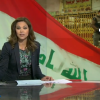
Video: Saudi, Qatar "at War Against Iraq"
Posted on 10 March 2014 .
From Al Jazeera. Any opinions expressed are those of the authors, and do not necessarily reflect the views of Iraq Business News.
The Iraqi prime minister has accused Qatar and Saudi Arabia of effectively declaring war on his country.
He says they're funding Sunni fighters in Anbar province, an area the Iraqi government is struggling to bring under control.
Al Jazeera's Imran Khan reports on the comments made as at least 47 people were killed by a suicide bomber in the city of Hilla. Al Jazeera also speaks to Nasser Bin Hamad Al Khalifa, Qatar's former ambassador to the United Nations and the United States:
Posted in Security 5 Comments
Ooredoo hits out at Iraq Delays
Posted on 06 March 2014 .
By John Lee.
Qatari telecommunications operator Ooredoo, which owns the Iraqi mobile phone company Asiacell, has hit out at prices quoted by the Iraqi government for a long-delayed auction for 3G spectrum licences.
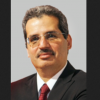
Company CEO Dr Nasser Marafih (pictured) told Arabian Business:
“The country needs it, the people need it. We are ready to deploy [it], but it has to be done at the right price. What they’ve put(the price) is not reasonable at all in our view ... That’s something that we’re discussing with the government.”
The awarding of licences for 3G has been delayed for several years, with recent reports suggesting that the process may be again postponed until 2015; it has also been reported that bidding for the licences will start at a minimum of more than $300 million.
In February last year, Asiacell raised $1.27 billion in a public float, while it holds more than a third of market share in the country.
(Source: Arabian Business)
Posted in Iraqi Communications News Comments Off on Ooredoo hits out at Iraq Delays
Commercial Law Development Program
Posted on 13 February 2014 .
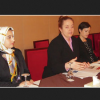
US Embassy officers have participated in the Commerical Law Development Program’s (CLDP) Vis Moot Court program at the Al-Rasheed Hotel.
On the margins of the moot court training, Embassy officers offered guidance and encouragement to law students as they prepare for upcoming competitions in Qatar and the final rounds in Vienna, Austria.
The Embassy’s EducationUSA Advisor and a consular officer also informed the law students about educational opportunities under the LLM and JD programs and U.S. visa application procedures.
(Source: Embassy of the United States)
Posted in 'Your Country' - United States, Iraq Industry & Trade News Comments Off on Commercial Law Development Program

Erbil Airport Sets New Records
Posted on 05 February 2014 .
Erbil International Airport continued to grow in 2013 as new milestones for passengers, cargo and aircraft movements were set.
The airport broke through the one million passengers a year milestone in late October and in total 1,193, 783 passengers passed through the airport, a growth rate of 26%.
June, 2013, broke new records for passenger handling with 122,028 passing through the airport. Since 2006, the average growth rate per annum is 28.2%.
Cargo tonnage continued its rise with 38,572 tonnes processed, a 40.4% increase on 2012.
Aircraft movement continued to rise also, with passenger movements up 35% and cargo movements up 29%.
2013 again underlined the role of EIA as an entry and departure point for Iraq, with 90.3% of passengers departing to, or arriving from, international destinations and only 9.7% travelling on domestic routes.
The top three international destinations are : Turkey, 27.2%, UAE, 16.8% and Jordan, 8.5%.

In all services from EIA access 18 countries and 30 different cities.
Posted in Iraq Transportation News Comments Off on Erbil Airport Sets New Records