


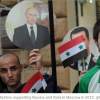
Why The Russians Won't Win Against Extremists in Iraq
Posted on 10 October 2015 .
This article was originally published by Niqash. Any opinions expressed are those of the author, and do not necessarily reflect the views of Iraq Business News.
Mid-East's New 'Cold War': Why The Russians Won't Win Against Extremists in Iraq
Since the announcement of a new military alliance including Russia, locals have been trading arguments. Could Iraq become the stage for a new “Cold War”? And how effective can this coalition really be?
For many Iraqis, the news that came last week of an alliance between Syria, Russia, Iran and Iraq was shocking. And it is not just in Syria that this Russian intervention is threatening to carve even deeper fault lines in the Middle East. In Iraq, locals are equally divided about the alliance, in line with existing allegiances.
That is, Iraq's Shiite Muslims who tend toward support for Shiite Muslim-dominated Iran, and thereby Bashar al-Assad of Syria and Russia like the idea. Whereas Iraq's Sunni Muslims tend toward support for the US and the Sunni Muslim Gulf Arab states like Saudi Arabia and Qatar and do not like the idea. The Russian intervention presents the country with a real dilemma.
It is true that in Iraq, political discourse is often limited to extreme views, and those views are usually right on the opposite side of the fence from one another with no real middle ground for negotiation. But as many analysts have said before, the Russian intervention seems even more dangerous than usual because it threatens to topple an already very delicate balance of foreign power in Iraq.
All Shiite Muslim political parties and military forces in Iraq have said they welcome the new Russian intervention in the Middle East. They say that US intervention hasn't been able to end the security crisis caused by the extremist group known as the Islamic State in Iraq, despite just over a year of effort.
On an individual level, many local Shiites started calling the Russian President, Vladimir Putin, their hero and were posting footage of him with the Russian army onto social media. Others replaced their Facebook profile pictures with shots of Putin. There were also a lot of false rumours spreading about how Russians had entered Anbar and killed hundreds of Islamic State fighters.
Posted in Security 4 Comments

WesternZagros Updates on Kurdistan Ops
Posted on 06 October 2015 .
WesternZagros Resources has announced its production of light oil in the Kurdistan Region of Iraq averaged approximately 5,000 barrels per day in the third quarter.
As previously disclosed, operatorship of the Garmian Block was to transition from WesternZagros to Gazprom Neft Middle East B.V at the end of the exploration period for the block pursuant to agreements entered into in 2012.
While the Company had been requested to continue operatorship for a period of time following the end of exploration, the co-venturers are now in the process of implementing this transfer of operatorship.
Garmian Block
Production from the Sarqala-1 well in the third quarter remained on target, averaging approximately 5,000 barrels of light oil per day ("bbl/d") and has averaged approximately 5,200 bbl/d since commencement of production from the well on February 11, 2015. Since the time of the first extended well test in 2011, the well has now produced 2.2 million barrels of oil with no formation water.
Hasira-1 has been successfully and safely suspended and future options to utilize the well bore are being evaluated.
CEO Simon Hatfield (pictured) stated:
"We are now ready to transfer operatorship to Gazprom Neft according to the original 2012 agreement ...
"WesternZagros took the initial exploration risk that resulted in the Sarqala light oil discovery and also started production to unlock the potential of the block.
"Now it is time to turn development operations over to a world-class operator with extensive technical, operational and regional expertise in crude oil production, refining and marketing. Gazprom Neft is a US$10 billion company that shares our vision of the Garmian Block's potential."
Operatorship is expected to transfer on or before the end of the first quarter of 2016. Pursuant to amendments to the Production Sharing Contract entered into in 2012, Gazprom Neft was to assume operatorship with the move from the exploration period to the development period in December 2013.
However, this action was deferred at the time and WesternZagros was asked by its co-venturers to remain as the operator during the interim period.
The current period is a convenient time to transfer operatorship while the Garmian Field Development Plan ("FDP") is under final review by the Kurdistan Regional Government ("KRG"). Based on the current anticipated timing of FDP approval, the Sarqala-2 development well will likely be spud in the first quarter of 2016. During this time, the co-venturers will finalize the transfer of operatorship and continue to evaluate lower-cost drilling rigs and support contracts to reduce capital costs.
Gazprom Neft Group consists of more than 70 production, refining and sales subsidiaries in Russia, neighbouring countries and further afield. It refines approximately 80 percent of all the oil it produces, one of the highest ratios of all Russian companies in the sector.
It is the third-largest oil company in Russia by refining volume and the fourth largest in terms of production. Gazprom Neft is the operator of two other blocks in the Kurdistan Region, where exploration drilling programs are ongoing, and is the operator of the US$4 billion, production-stage Badra Project in western Iraq.
Kurdamir Block
WesternZagros and its operator in the Kurdamir Block, Repsol S.A., continue to actively work with the KRG to advance the development plan for the Kurdamir oil and natural gas discovery. It is expected that these plans will be finalized in the first quarter of 2016.
Corporate
As the operatorship of the Garmian Block is transitioned to Gazprom Neft, WesternZagros is looking to apply its extensive core expertise in exploration and early-stage development, as well as its well-capitalized balance sheet, to assess other potential opportunities in the Kurdistan Region of Iraq, and elsewhere in the Middle East and North Africa.
(Source: GKP)
Posted in Iraq Oil & Gas News 5 Comments

IKCO Iraq "at Full Capacity"
Posted on 29 September 2015 .
By John Lee.
Iranian vehicle maker Iran Khodro (IKCO) has exported over 6,000 vehicles to the international markets in the first half of the current Persian calendar year surpassing the car manufacturer's export record throughout last year.
IKCO 's Deputy for Export and International Department, Saeed Tafazzoli said IKCO's main foreign site is located in Iraq (pictured) and is operating at full capacity. Other foreign sites are also operating "regularly" in Venezuela and Senegal.
He added that IKCO's after-sales services have been expanded in target counties: "The largest after-sales services networks are in Iraq, Russia and Syria which have largely imported IKCO 's vehicles. Meanwhile, about 150 active dealers are offering IKCO 's services in the international markets."
(Source: Zawya)
Posted in Iraq Industry & Trade News, Iraq Transportation News 5 Comments
Video: Anti-Daesh Coordination with Syria, Russia, Iran
Posted on 28 September 2015 .
From Iran’s PressTV. Any opinions expressed are those of the authors, and do not necessarily reflect the views of Iraq Business News.
Prime Minister Haider al-Abadi's spokesman says Baghdad will step up coordination with Russia, Iran and Syria in the field of military intelligence to share and analyze information.
Sa’ad al-Hadithi says the coordination committee would focus on monitoring the movements of terrorists. The move comes as Moscow is boosting its military presence in Syria, deploying more troops and warplanes to an air base.
Iraq and Syria have been engaged the fight against the ISIL for years now.
Posted in Security Comments Off on Video: Anti-Daesh Coordination with Syria, Russia, Iran
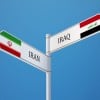
Major New Business Opportunities in Iran
Posted on 24 September 2015 .
The publishers of Iraq Business News are delightd to announce the launch of our new publication, Iran Business News, in response to the intense business interest in Iran in anticipation of the lifting of santions.
After years of negotiations, agreement has been reached between Iran and the P5+1 countries (China, France, Russia, the United Kingdom, the United States, and Germany) that will allow the gradual lifting of sanctions, finally opening Iranian markets to international commerce.
This is expected to have a dramatic effect on Iranian economy and society.
With a population of 74 million, and the second largest economy in the Middle East and North Africa (MENA) region, a sanctions-free Iran holds vast potential for growth and development, and international companies are already signing contracts.
As with Iraq Business News, our mission at Iran Business News is to provide our readers with the highest quality information on the business and economy of Iran, keeping them up to date and enabling them to make the right decisions.
You can check out Iran Business News by clicking here, and sign up for the soon-to-be-launched newsletter here.
To promote your business to the Iranian market, please contact our sales manager, David Jeffries: [email protected], +44 20 8150 5293.
(Iran-Iraq image via Shutterstock)
Posted in Blog, Investment, Iraq Banking & Finance News, Iraq Industry & Trade News, Iraq Oil & Gas News 5 Comments

Iraqis Main Buyers of Turksh Property
Posted on 23 September 2015 .
By John Lee.
According to data released by the Turkish Statistics Institute (TÜİK), Iraqi citizens purchased 763 houses in Turkey in July and August, making Iraq the biggest foreign buyer of houses in Turkey.
Iraq was followed by Saudi Arabia with 504 houses, Kuwait with 373 houses, Russia with 350 houses and the U.K. with 187 houses.
In those two months, 4,071 houses were sold to foreigners in total, mostly in Antalya (1,204), followed by Istanbul (1,143), and Bursa (289).
(Source: Hurriyet)
(Property image via Shutterstock)
Posted in Construction & Engineering In Iraq, Investment Comments Off on Iraqis Main Buyers of Turksh Property
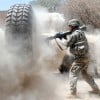
US Combat Troops in Iraq?
Posted on 16 September 2015 .
By Robert Tollast.
According to a report in Asharq al Awsat, later re-reported in Britain's Daily Mail and The Times of Israel, 160 US combat troops have been sent to the base of Al Assad in Anbar province.
Al Assad is a vast military complex in dangerous, contested territory west of Ramadi, and according to reports, the troops will be taking part in combat in the ongoing mission to recapture the city.
US advisers have been stationed at the base for some time, but combat troops (even in small number) would be a dramatic escalation.
Could this be true? As more incredible stories are confirmed in the region, from Russian forces going into Syria to Iran's President Rouhani again wishing Jews "Rosh Hashana," it seems possible.
What is more likely is that US forces may be sending in advisers to help call in air strikes or help with planning Iraqi army operations outside of the actual base--not combat in the traditional sense.
This is because the campaign to re-take Ramadi has stalled. Even though Obama authorised a Special Forces mission into Syria to capture a "high value" ISIS target, it is very unlikely that he would deploy US troops in combat, and certainly not without Congressional authorisation. If that happened, we could expect more than 160 troops deployed.
(Source: Asharq al Awsat)
Posted in Security 5 Comments

Australian Wheat Lowest in Iraq Tender
Posted on 01 September 2015 .
By John Lee.
Australian wheat was reported to be offered at the lowest price, in a tender for at least 50,000 tonnes of hard wheat for the Iraqi Grain Board. The tender closed on Sunday and offers must remain valid up to Thursday, according to Reuters.
- Australian wheat: 50,000 tonnes at $231.70 a tonne c&f free out;
- Russian wheat: $234.00 a tonne c&f free out;
- Canadian wheat: $247.20 a tonne c&f free out;
- US wheat: 50,000 tonnes at $265.00 a tonne c&f free out.
The tender sought wheat from the United States, Canada, Australia or Russia only.
(Source: Reuters)
(Wheat image via Shutterstock)
Posted in Agriculture 7 Comments
LukOil gets $1.5bn from West Qurna in 1H
Posted on 29 August 2015 .
By John Lee.
In its latest Half Yearly Report, Russia's Lukoil reports that in the first half of 2015, the Group accrued revenue from the West Qurna-2 project in the total amount of $1,535 million, consisting of cost recovery of $1,475 million and remuneration fee of $60 million, compared to the revenue of $1,179 million in the first half of 2014.
This revenue was classified as crude oil sales revenue. Attributable amount of 4,412 thousand tonnes, or 30,260 thousand barrels, of crude oil was included in Group's crude oil production for the first half of 2015 (1,781 thousand tonnes, or 12,218 thousand barrels in the first half of 2014) that represented approximately 52% of total production from the field (65% in the first half of 2014).
In the first half of 2015, the company received 4,769 thousand tonnes of crude oil from the Iraqi party as a debt settlement within the cost compensation. This crude oil at cost of $1,683 million was recognized in Cost of purchased crude oil, gas and products.
Subsequently, Lukoil sold this crude oil to third party customers or delivered it to its refineries.
During the first half of 2015, the cost compensation increased the Group's EBITDA by $1,072 million ($1,017 million in the first half of 2014).
The project's target production level is 1.2 million barrels per day and the total term of the contract is 25 years.
(Source: Lukoil)
Posted in Iraq Oil & Gas News Comments Off on LukOil gets $1.5bn from West Qurna in 1H
PM Reassures Lukoil amid Protests
Posted on 19 August 2015 .
By John Lee.
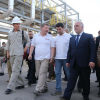
During a visit to the West Qurna II oilfield in Basra, Prime Minister Haider al-Abadi reiterated his government's commitment to ensuring the security of the southern oilfields and their workers.
He met with senior management of the Russian operator Lukoil, following protests by locals demanding jobs.
A Lukoil official told Reuters that operations were continuing as normal at West Qurna-2 with a steady output of 450,000 bpd, but said production might be disrupted if the situation was not resolved, while a senior official at the South Oil Company (SOC) said, "despite Lukoil's ongoing initiatives to hire more labourers from nearby areas, things have got out of control."
Al-Abadi promised, "we will use all our capabilities to stop them and [maintain] oil production."
(Sources: Office of the Prime Minister, Reuters)
Posted in Employment, Iraq Oil & Gas News, Security 8 Comments