



Russian Firm to Drill at West Qurna
Posted on 18 August 2015 .
Russian oilfield services group ERIELL has signed a contract with LUKOIL Middle East to drill 25 production wells at the West Qurna-2 oilfield.
“Company’s entry to the Iraq market marks the beginning of development of the Middle East region, which we deem extremely promising in terms of implementation of the ERIELL strategy of the contract portfolio geographical diversification”, says Vitaly Dokunikhin (pictured), executive director of ERIELL Group.
He believes that “operations at West Qurna-2 will allow us to gain experience required for further strengthening of the Company’s positions in other countries of the region”.
To implement this project, ERIELL will mobilize three ZJ70DBS drilling rigs with traveling mechanism for cluster drilling.
The contract provides for the project implementation within two years, including the mobilization period of 120 days. ERIELL Group proposes to commence drilling operations early in 2016.
(Source: ERIELL)
Posted in Iraq Oil & Gas News 8 Comments
Russian Landmarks Disappearing in Kurdistan
Posted on 16 August 2015 .
This article was originally published by Niqash. Any opinions expressed are those of the author, and do not necessarily reflect the views of Iraq Business News.
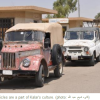
Russian Landmarks Disappearing: In Iraqi Kurdistan, The End of an Era For Soviet-Made Road Warriors
The Iraqi city of Kalar, south of Sulaymaniyah, has an odd nickname: “the Moscow of Iraq”. And some locals say that it got this name because there are so many Russian cars in the city. One of the most prominent of these is the UAZ-469, a sort of Russian military utility vehicle.
The utility vehicle, which arrived in the country during a time of particularly good relations between Iraq and Russia – at the timealmost every Iraqi household had Russian-made products - was particularly suitable for travelling on the plains and highlands here.
And as a result of its suitability for the terrain the UAZ-469 and its predecessor, the GAZ-69, were popular among locals for a long time, which was also the reason they continued to be sold here.
At a recent ceremony to celebrate renewed Russian-Iraqi Kurdish cooperation in May, Russian attendees were surprised and pleased to find the 70-year-old relics still on the roads.
But now, after being one of the only means of transport between various villages in this area for years, the Russian cars are disappearing. Local officials in the traffic department cannot confirm how many UAZ-469s or GAZ-69s are still on Kalar's streets but dealers say there are now only a few dozen left – the ones that are still here are still being bought and sold by locals. Prices vary but have been known to go as high as US$10,000 for one of the best kept examples in Kalar.
The cars hold a lot of memories for locals. “We used to all get in the car and drive around the city, singing out the windows,” says Araz Faeq, a teacher in his forties from Kalar. “When we were students we used to ride on the boot,” he recalls. “And there were a lot of these cars bringing guests to my wedding in my village.”
Posted in Iraq Industry & Trade News Comments Off on Russian Landmarks Disappearing in Kurdistan
Iraqis Weigh In On Iran Nuclear Deal
Posted on 24 July 2015 .
This article was originally published by Niqash. Any opinions expressed are those of the author, and do not necessarily reflect the views of Iraq Business News.
'The USA Sold Us to Iran': Iraqis Weigh In On Iran Nuclear Deal
Earlier this month news broke that a deal on Iran's nuclear programme had been reached, after months-long negotiations involving foreign ministers from seven countries – Iran, the US, the UK, Russia, China, France and Germany as well as the European Union's head of foreign policy.
The deal would curb Iran's nuclear programme and prevent the country from developing nuclear weapons quickly. In return long-standing international sanctions against Iran would eventually be lifted.
Around the world, opinions were divided as to whether the agreement was a triumph of diplomacy that would help achieve peace in the Middle East or whether it was, as one conservative US senator put it, “a historic defeat for the United States”.
Opinions were also divided in Iraq, which shares an almost 1,500 kilometre border and a chequered history of war, peace and political interference with Iran.
Just a few hours after the agreement was announced, Iraqis were heatedly discussing the topic on the streets, in cafes and on social media forums. The opinions expressed mostly seem to be indicative of the ethnic and sectarian fault lines already running through Iraqi society.
Those favouring the deal tended to be Shiite Muslims and they suggested that a better relationship between Iran, a Shiite Muslim theocracy, and the US would mean more stability in Iraq in general. The two nations – arguably Iraq's closest foreign allies – often jostle for power inside Iraq, using Shiite Muslim (Iran) or Sunni Muslim (the US) proxies. If they are on better terms, so the argument goes, maybe Iraq's sects will be on better terms and all forces could come together to combat the extremist group known as the Islamic State, which is currently causing Iraq's debilitating security crisis.
“It's a good deal,” argues Haider Kadhim, a shop owner in the upmarket Karrada area in central Baghdad. “I went to Tehran three months ago and I saw what suffering the economic sanctions have caused. It made me remember the problems that sanctions on Iraq caused here – poverty, disease, lack of services.
The fact that sanctions on Iran are lifted will be good for Iraq. They are our neighbours and we are close to them. If they're good, then we're good. And it will certainly increase economic cooperation and trade with them.”
However those opposed to the deal - most often Sunni Muslims - are arguing that the agreement gives Iran the right to interfere in Iraq without any US opposition. Washington has bought Iran's nuclear weapons, they complain, and in return they have sold Iraq to Iran.
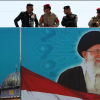
“The nuclear deal is against Iraq's interests; Iran and the US have allied to destroy this country,” says Safaa Abdel-Meguid, an employee with the Ministry of Electricity who lives in the mostly Sunni neighbourhood of Saidiya in southern Baghdad. “Ali Khamenei has already acknowledged that his country won't stop supporting Iraq, even after the deal – which basically means his country won't stop interfering in Iraq.”
Insults and accusations also flew, with anyone opposed to the agreement often accused of being a secret agent for Saudi Arabia and the Gulf states – these countries have already expressed concern about the agreement, believing that if Shiite-majority Iran has more power it will be to the detriment of their Sunni-Muslim-majority nations.
The same kinds of arguments and discussions played out everywhere in Iraq – from family dining tables to coffee shops to Facebook. The Iran agreement also brought back unpleasant memories for many Iraqis – of the nuclear programme that was initiated by former Iraqi ruler, Saddam Hussein, and the trouble it caused.
“This kind of controversy among Iraqis reflects the social divisions we already have” Majid Kathem, a professor of sociology and psychology who lectures at the University of Baghdad and the University of Mustansiriyah, told NIQASH. “It is the result of the sectarian problems between Sunnis and Shiites that have plagued this country for years. Which is why every time there is a contentious topic like this, Iraqis come down on one or the other side; they cannot agree.”
The nuclear deal also gave critics of the Iraqi government another opportunity to harangue local politicians and their lack of achievement. Iraq's Foreign Minister Ibrahim al-Jaafari, a Shiite politician, was the target of much criticism. His dismal performance on open files – such as the fight over water with neighbouring Turkey and the dispute over Kuwait's Mubarak al-Kabir Port - was compared with that of Iranian Foreign Minister Mohammad Javad Zarif, who was seen as triumphant after many long and difficult negotiations. There were a lot of jokes made about al-Jafaari too. Iraqis often laugh about the way al-Jafaari speaks Arabic. He uses a haughty style of Arabic that seems old fashioned to many. Jokes about him compared his way of speaking to Zarif's, whom Iraqis see as more plain spoken and direct.
As for Iraq's senior politicians themselves, their opinions were divided in the same way as their voters were. At a senior political level most of Iraq's leaders welcomed the agreement in various statements to the press – even if some were a little lukewarm with that welcome.
“The agreement will help in strengthening security and stability in the Middle East,” Iraqi President, Kurdish politician Fuad Masum, told local media.
“We hope that the agreement will spare the region the scourge and disaster of war and conflict,” Iraq's Prime Minister, Shiite Muslim politician Haider al-Abadi, added in a statement.
And, senior Sunni Muslim politician, Salim al-Jibouri, also the Speaker of Iraq's Parliament, noted: “We hope that this agreement achieves greater economic and trade cooperation and gives the people their chance to live in peace and security”.
Other politicians made comments that reflected their own political allegiances.
“Unfortunately the agreement did not discuss the issue of respect for other nations' sovereignty and Iranian interventions in the region,” Ayad Allawi, one of Iraq's three Vice Presidents said; although Allawi is a Shiite Muslim too, he leans towards the secular lobby and he is well known for his antipathy toward Iran. “However,” Allawi conceded, “the agreement remains significant.”
Meanwhile Nouri al-Maliki, former Prime Minister of Iraq and now another of the country's Vice Presidents, described the agreement as a “victory for those who love peace in this region and in the world”. By the end of his regime last year, al-Maliki was known for his close links with Iran. Unsurprisingly the same kinds of sentiment were expressed by most of the Shiite Muslim-majority political parties.
While influential cleric Muqtada al-Sadr, who leads the millions-strong Sadrist movement and who has been critical about Iran's policy toward Iraq in the recent past, kept out of it, one of his counterparts, cleric Ammar al-Hakim, who heads a major Shiite Muslim political party, the Islamic Supreme Council of Iraq, said in an official statement: “We congratulate the noble Iranian people, its wise leaders and brave negotiators... We believe the nuclear deal is key to solving many of the thorny problems in the region”.
As yet though, the true impact of the agreement on Iraq cannot be seen. For instance, the impact of the agreement on oil prices. These dropped after the agreement was signed, a negative for Iraq which needs prices to rise if it wants to overcome its current federal budget crisis.
There may yet be more aspects of the agreement that have an affect on Iraq but these terms have not yet been revealed, says Ahmad al-Allusi, a local political analyst based in Baghdad. “The talks focused on more than just the nuclear issue. And we will doubtless learn more in the coming days – we will learn whether the two sides have agreed to resolve other conflicts in a conciliatory manner, through negotiation, or whether they will simply maintain the status quo.”
Posted in Security 3 Comments
Iraq's Defunct Military Industry
Posted on 04 July 2015 .
By Omar al-Jaffal for Al-Monitor. Any opinions expressed are those of the author, and do not necessarily reflect the views of Iraq Business News.
The Iraqi Military Industry Commission (MIC) has a tragic story. Iraq developed its local military industry during the Iran-Iraq War, but in 1991, the international coalition — which was established in 1990 by a United Nations decision to force the Iraqi forces out of Kuwait and monitor Iraq’s activities in the military industry field — brought down most of the MIC’s important facilities, and the coalition’s inspection teams destroyed what was left of it under the pretext of destroying weapons of mass destruction.
However, after the end of the Gulf War in February 1991, the regime of late President Saddam Hussein restored some of these facilities and the MIC rebuilt the country’s infrastructure in terms of water, electricity, roads, bridges and military industry.
The MIC facilities were once again looted and vandalized by Iraqis following the US occupation in 2003. Hundreds of billions of dollars went down the drain.
Iraq has a relatively long history with the military industry, as the Ministry of Industry and Minerals owns several companies that manufacture guns, rockets and mortar bombs, which still exist today but are no longer operational. To develop these industries, Saddam's regime established the MIC in 1981; it was initially affiliated with the Ministry of Industry and Minerals.
The MIC helped the Iraqi armed forces in securing military gear and supplies during its war with Iran from 1980 to 1988. However, Saddam issued a decree in 1991 transferring the subordination of the MIC from the Ministry of Industry and Minerals to the Ministry of Defense.
The MIC continued its operations despite the devastation it sustained by the war with Iran and the economic blockade imposed by the UN Security Council on Iraq in 1990, until the overthrow of the regime by the United States in April 2003.
Posted in Construction & Engineering In Iraq, Iraq Industry & Trade News, Security Comments Off on Iraq's Defunct Military Industry
Lukoil: Grade Split Helps Exports
Posted on 26 June 2015 .
By Simon Kent.
Lukoil, the Russian energy giant with one of the biggest investments in southern Iraq at the vast West Qurna 2 oil field, have issued a statement in support of Iraq's move to split crude grades into Basra Heavy and Basra Light.
Previously, different grades arrived at Basra for blending, which not only caused delays but led buyers to complain about quality issues. With that process eliminated, buyers are happier and exports are moving faster, according to Lukoil.
At the company's annual general meeting in Volgograd, Ravil Maganov, Lukoil's Deputy President for Exploration and Production, explained the increased efficiency:
"All the problems with the restrictions were removed by the Iraqis. They created a separate system of transportation (for heavy oil)."
Maganov expressed further confidence that Lukoil would soon recoup investment in the 450,000 BPD field, and that new investment would continue.
(Source: Reuters)
Posted in Construction & Engineering In Iraq, Iraq Oil & Gas News 8 Comments
Gazprom: Badra Production Doubled
Posted on 25 June 2015 .
By Robert Tollast.
Russia's Gazprom Neft has announced that production at the Badra field in Wasit province is close to double last year's production, now reaching 28,000 bpd.
Gazprom Neft's commercial production and exports at Badra started in September last year, after the company signed a contract to develop the field in January 2010, as a result of the 2009 oil field bidding rounds. The field is operated by Kogas, Petronas, TPAO and the Iraqi Oil Exploration Company. Gazprom Neft is the lead operator.
When fully exploited, the field is expected to produce 170,000 bpd, and has an estimated 3 billion barrels of recoverable oil.
(Source: Gazprom Neft)
Posted in Iraq Oil & Gas News 7 Comments
Iraqis Demand Better Security for Pilgrims
Posted on 18 June 2015 .
By Adnan Abu Zeed for Al-Monitor. Any opinions expressed are those of the author, and do not necessarily reflect the views of Iraq Business News.
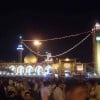
On May 15, the Shiite Endowment issued a statement that in one week, around 12 million Shiite visitors flew to Baghdad’s Kadhimiya district to commemorate the death of Imam Musa al-Kadhim, who died in the year 799.
On the night of May 14, rioters set fire to the property of the Sunni Endowment and other residences in the Adhamiya Sunni neighborhood, which faces the Shiite city of Kadhimiya.
Media reports showed video footage of groups of Shiites attacking the property of the Sunni Endowment and the houses of Sunni residents. A young man waved victoriously in front of the burned buildings, celebrating revenge on Sunnis.
In an article published May 15, Al-Mada Executive Editor-in-Chief Adnan Hussein called this young man a fool, writing, “The perpetrators of this act are mentally prepared at home, school and mosques to carry out such acts through political and media discourse and sectarian propaganda and are driven by radicalism and fanaticism.”
Violence during religious events has prompted dialogue about sensitive religious issues once considered taboo, and calls for reducing the number of visitors to holy Shiite places. The May 14 incidents, however, are the first of their kind.
Since 2003, Sunni members and supporters of the Islamic State have been attacking Shiite visitors heading to Kadhimiya or to other Shiite holy shrines. The most notable incident occurred in 2005, when rumors spread about a suicide bomber wearing an explosive belt among the Kadhimiya visitors, sparking panic.
People started pushing each other as they rushed to escape, and hundreds fell in the Tigris River. This incident caused thousands of deaths among the Shiite pilgrims.
Posted in Leisure and Tourism in Iraq, Security Comments Off on Iraqis Demand Better Security for Pilgrims
Russian Wheat Cheapest in latest Tender
Posted on 15 June 2015 .
By John Lee.
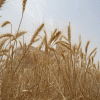
European traders said on Monday that Russian wheat was offered lowest at $231.00 a tonne c&f free out in the tender from Iraq's state grains board to buy at least 50,000 tonnes of hard wheat for shipment between 15th August and 13th September and delivery between 14th September and 28th October.
According to a report from Reuters, the tender closed on Sunday and offers must remain valid up to 18th June 18.
Russian wheat was also reportedly offered at $233.00 and $236.50 a tonne c&f free out, with one offer for US wheat at $285.42 a tonne c&f free out; the lowest offer for Australian origin was $267.50 c&f free out and the lowest from Canada was $266.00 a tonne c&f free out.
Iraq plans to become a net exporter of wheat by 2017.
(Source: Reuters)
Posted in Agriculture 3 Comments
PM Al-Abadi Receives Presidents of Big Russian Companies
Posted on 22 May 2015 .
By John Lee.
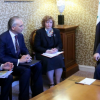
During his visit to Moscow, Prime Minister Haider Al-Abadi received the presidents of three major Russian oil and gas companies: Soyuzneftegaz group, Lukoil, and Gazprom.
At the start of talks with Abadi in the Kremlin, Russian President Vladimir Putin said Russia is expanding cooperation with Iraq in the area of military technology, describing Iraq as an "old and reliable partner in the region".
(Sources: Office of the Prime Minister, Reuters)
Posted in Iraq Oil & Gas News 2 Comments
Gazprom Increases Investment in Kurdistan
Posted on 20 May 2015 .
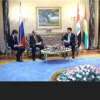
Kurdistan Region Prime Minister Nechirvan Barzani has received a delegation from the Russian Federation that included President Vladimir Putin’s Envoy to the Middle East and Deputy Foreign Minister Mikhail Bogdanov, Chairman of Gazprom Neft, Alexander Dyukov, and Deputy Energy Minister, Yuri Sentyurin.
The delegation highlighted historic relations between Kurdistan and Russia, and their intention to strengthen those relations, particularly in the economic and cultural fields.
The Chairman of Gazprom Neft, Mr. Dyukov, briefed Prime Minister Barzani on the activities and progress the company has achieved in the Kurdistan Region, expressing his satisfaction with the level of cooperation his company receives from the Kurdistan Regional Government, KRG, especially the Ministry of Natural Resources.
Mr. Dyukov announced that Gazprom Neft plans to raise the volume of his company’s investment in the Region.
Prime Minister Barzani expressed to the delegation his appreciation for their visit and for organizing the inauguration ceremony for introducing of the book, “The Nation of Epics: Kurdish Culture in the Eyes of Russian Scholars”, which was compiled and written by scholars from the Russian Institute of Oriental Studies and the Russian Institute of Oriental Manuscripts, and published by Gazprom Neft.
He reiterated that cultural relations will lead to strengthening political and economic relations. He expressed his appreciation to the Russian Federation for its readiness to further develop relations with Kurdistan Region.
Prime Minister Barzani also discussed the war against the Islamic State terrorist organization, also known as ISIS, and the courage and bravery of Peshmerga forces who counter this threat.
He pointed out that due to this brutal conflict the Kurdistan Region endures a heavy economic burden that has been made even more difficult due to inadequate receipt of agreed Budget share from the Iraqi Federal Government.
He emphasised this shortfall is occurring at the time when the KRG serving the needs of more than 1.5 million displaced people who fled to the Region seeking refuge from the conflict. The dramatic decline in oil prices has compounded the burden.
Prime Minister Barzani expressed his hope that the Russian Federation will assist the Kurdistan Region to effectively pass through this very difficult period.
(Source: KRG)
Posted in Iraq Oil & Gas News 5 Comments