



Iran "Ready to Dispatch Workforce to Iraq"
Posted on 03 October 2023 .
From Tasnim, under a Creative Commons licence. Any opinions expressed are those of the author(s), and do not necessarily reflect the views of Iraq Business News.
The director general of the Iranian Ministry of Labor, Cooperatives and Social Welfare for employment development affairs in a meeting with Iraqi officials voiced the country's readiness to dispatch competent Iranian workforce to the neighboring country in all occupational fields.
Reducing the unemployment rate, diversifying the country's revenues especially reducing the dependence of foreign exchange resources on oil, transferring technical and engineering experiences, preserving the dignity and identity of the workforce, organizing and using expert manpower instead of brain drain, and improving the state of trust among Iranian workforce in other countries are considered as the salient advantages of dispatching labor force abroad, Omid Malek emphasized.
Also, sending workforce and experts abroad can be effective in reducing brain drain to some extent, he added.
He referred to increasing the experience of workforce and also yielding the currency for the country as the other advantages of sending competent workforce to foreign countries.
Elsewhere in his remarks, Malek pointed to a webinar meeting held last month between senior officials of Iraqi Ministry of Labor and Social Affairs and Iran's Technical and Vocational Training Organization (TVTO) and also economic counselor of Iranian embassy in Iraq.
In this expert-level meeting, the two sides exchanged their views on the joint statement of cooperation between Iranian and Iraqi ministries of labor, cooperation and social welfare.
Posted in Employment, Iraq Industry & Trade News Comments Off on Iran "Ready to Dispatch Workforce to Iraq"
Iraq to insist that Local Transactions are in Dinars
Posted on 26 September 2023 .
By John Lee.
Iraq will require that all transactions inside the country are made using the Iraqi dinar from 2024, and not the US dollar.
Statement from the Central Bank of Iraq (CBI):
In a significant development, the Central Bank of Iraq, under the leadership of Mr. Ali Mohsen Al-Alaq, has revealed its plan to cease external transfers in the coming year, opting instead to rely on correspondent banks for international transactions. Currently, 60% of transfers (excluding those on the central bank's electronic platform) are processed through correspondent banks, with an impressive execution rate exceeding 95%.
This decision stems from an agreement reached between Iraq's Central Bank and the US Federal Reserve, aligning with the standard global practice of central banks focusing on oversight rather than executing financial transactions. During a meeting with the leaders and managing directors of accredited banks in Iraq, Mr. Al-Alaq emphasized the Central Bank's commitment to establishing direct communication channels between Iraqi banks and their foreign counterparts for correspondent banking, trade, and other financial operations, including transactions in multiple currencies such as the UAE Dirham, Turkish Lira, Indian Rupee, and Euro.
Furthermore, it was noted that the upcoming year will witness a transition of all domestic and non-travel-related trade transactions to the Iraqi Dinar, with the exception of those intended for travelers. The significant participation of most traders in official transfer channels, acquiring dollars at a rate of 1,320 dinars, has directly contributed to price control and the reduction of inflation. Inflation reduction is a critical indicator of the effectiveness of monetary policy. It is worth noting that the black market exchange rate, being linked to cash dollar transactions for non-legitimate purposes, is not a suitable benchmark for legitimate trade.
Mr. Al-Alaq underscored that the new system for external transfers and dollar sales offers risk protection for all parties involved. It has gained international recognition and aligns with anti-money laundering and counter-terrorism financing regulations, fostering essential direct relationships between Iraqi banks and internationally accredited financial institutions.
During the meeting, discussions also centered on the establishment of a "Leading Bank" and its societal significance, aligning with the directives and vision of the respected Prime Minister. Contributions from banks in the establishment of this institution, designed to serve as a gateway for individuals seeking to initiate small-scale production and commercial projects, are expected to contribute to local economic development and unemployment reduction, with direct support from the Central Bank.
(Source: CBI)
Posted in Iraq Banking & Finance News, Iraq Industry & Trade News Comments Off on Iraq to insist that Local Transactions are in Dinars

End Child Labour in Iraq
Posted on 14 June 2023 .
This year's World Day Against Child Labour links advancing social justice with tackling child labour, under the slogan 'Social Justice for All. End Child Labour!'
Social Justice in the World of Work means promoting productive and freely chosen employment; enhancing measures of social protection; promoting social dialogue; and promoting fundamental principles and rights at work. It also means that we need to protect the fundamental rights of every child against the worst forms of child labour.
In Iraq, as in many parts of the world, one of the root causes for child labour is poverty and economic deprivation, leaving families struggling to make ends meet. Years of conflict, displacement, and economic downturn has left many children in Iraq in or at risk of child labour. The UNICEF-supported 2018 Multiple Indicator Cluster Survey (MICS6) indicates that 5 per cent of children aged 5-14 years in Iraq are engaged in child labour, with higher rates among children living in low-income households and in rural areas.
"Children should learn and play not work. They deserve opportunities that allow them to thrive and build a promising future," said Ghulam Isaczai, the United Nations Resident Coordinator for Iraq. "To eliminate child labour, we must continue to work with the government and all relevant stakeholders to enhance policies, build capacities and institutions, to address root causes that force many young children into work", he added.
Iraq has ratified key fundamental conventions that protect children from all forms of child labour, namely ILO Convention No. 138 on Minimum Age, and ILO Convention No. 182 on Worst Forms of Child Labour that have been in force since 1985 and 2001. It is also a signatory of the United Nations Convention on the Rights of the Child.
In recent years, efforts by the Government of Iraq and social partners have been made to find practical solutions to directly address the needs of children. The institutionalisation of the ILO-supported Child Labour Monitoring System (CLMS) is one example. The system identifies vulnerable children from host, refugee and internally displaced communities at risk of or already in child labour and provides them with the needed protection and support. The ILO and UNICEF have built the capacities of government officials, civil society organisations, academic institution representatives and other stakeholders on ways to adopt and implement the CLMS across the country.
This, along with the nine child friendly learning spaces (CFLS) established or revived with ILO support, in close coordination with local authorities including the Ministry of Education and the Ministry of Labour and Social Affairs has provided thousands of children in or at risk of child labour with non-formal education, recreational activities and Mental Health and Psychosocial Support - leading to many out of school children returning to school or those engaged in child labour to be pulled out of work.
Part of the response to address the root causes of child labour, is ensuring that families of working children have opportunities to build new skills and access decent employment, so their children no longer have to work. Working closely with vocational centres in Dohuk and Ninewa, the ILO has provided hundreds of parents and caregivers of working children with vocational trainings covering different professions. Many caregivers have also been referred to the Ministry of Labour and Social Affairs' Employment Platform, so they can access employment support, including job placement.
Strengthening the social protection system in Iraq is pivotal in improving lives and ensuring that families are protected from childhood to old age. The ILO, UNICEF and WFP continue to work with the government of Iraq in reforming the social protection system to ensure that the vulnerable and the poor, including children, youth, women, elderly, informal workers, persons with disabilities and Internally Displaced Persons benefit from equitable access to an integrated social protection system.
A key milestone in recent months has been the adoption of the new Retirement and Social Security Law for Private Sector Workers, which expands the legal coverage of the social security system, covering all workers including informal workers, the self-employed and contributing family workers. It also introduces entitlements that include maternity and unemployment benefits.
The new law brings the social security system for private sector workers in closer alignment with ILO Social Security (Minimum Standards) Convention, 1952 (No. 102), which was officially ratified by the Government of Iraq in March 2023.
These efforts are steps in the right direction and will contribute to a long-lasting impact on families and their children. On this World Day Against Child Labour, we reinforce that social justice for children and their families remains a top priority and a responsibility of all partners to ensure that no one is left behind.
(Source: UN)
Posted in Employment, Iraq Industry & Trade News, Politics Comments Off on End Child Labour in Iraq

Advisor to Iraqi PM hits out against Immigration
Posted on 25 May 2023 .
By John Lee.
An advisor to the Iraqi Prime Minister has criticised immigration to the country.
Mudhar Muhammad Salih told the state-run Iraqi News Agency (INA) that foreign workers transfer $600 million annually out of Iraq, and work in sectors with "limited productivity", while unemployment in Iraq is 16 percent of the total workforce.
He continued:
"We find that the country is teeming with hundreds of thousands of foreign workers, most of whom work in the service sector, which is limited in productivity and weak in generating added value, which is easily compensated by Iraqi labor.
"This means transferring $600 million ... annually in exchange for widespread unemployment, which constitutes a drain on the country's financial resources and savings."
(Source: INA)
Posted in Employment, Iraq Industry & Trade News, Politics Comments Off on Advisor to Iraqi PM hits out against Immigration
Building a Social Security System that Protects Workers
Posted on 21 May 2023 .
Iraq invests in building a social security system that protects workers
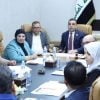
The Council of Representatives in Federal Iraq voted on Wednesday (May 17) to adopt the new Social Security Law for Private Sector Workers, which introduces far-reaching reforms to the social security system for private-sector workers.
The new law, which will replace Law No. 39 on Pension and Social Security for Private-Sector Workers of 1979, brings the social security system for private sector workers in closer alignment with ILO Social Security (Minimum Standards) Convention, 1952 (No. 102), which was officially ratified by the Government of Iraq in March 2023.
The law significantly expands the legal coverage of the social security system, covering all workers including informal workers, the self-employed and contributing family workers. It also expands the range of entitlements to include maternity and unemployment benefits for the first time. The law will also provide health insurance obtained from public, cooperative, and private providers.
A statement issued by the Labour and Civil Society Organizations Committee highlighted the law was "among the priority draft laws in the government programme, in response to the developments of the current situation as well as the future, and in line with the International Labour Organization's appeal to expand coverage to the private sector".
Under the European Union funded programme to reform social protection, and in line with the priorities of the Decent Work Country Programme for Iraq, the ILO has been working with its tripartite constituents - government, employer, and worker representatives - and the parliamentary committee in the review of the social security law. This has included bringing together legal as well as actuarial experts to assess the comprehensiveness, coherence, sustainability and alignment of the social security law.
The ILO has also been supporting the Government and tripartite partners to strengthen their capacity to implement the new provisions of the law and strengthen the efficiency in the delivery of social security and related employment services.
"The ILO welcomes the adoption of the new law, which is a key milestone in expanding the scope of support provided to workers by covering a wider range of risks," said ILO Coordinator in Iraq Maha Kattaa. "For example, unemployment benefits are crucial to prevent workers who become unemployed from falling into poverty, providing them with support while they seek new employment opportunities. Similarly, the introduction of maternity benefits will ensure women are supported before, during and after childbirth, thus potentially improving health outcomes."
"We look forward to strengthening collaboration with all parties to ensure the effective implementation of the law, and to bring millions of workers in the private sector under the umbrella of social security," added Kattaa.
Priority now will be placed on the Department of Social Security under the Ministry of Labour and Social Affairs to upgrade its procedures and systems to efficiently administer the reforms introduced under the law, with the support of the ILO.
The ILO and partners will also embark on an awareness raising campaign for workers and employers on their rights and responsibilities under the social security law, in efforts to support the expansion of coverage to more workers.
(Source: UN)
Posted in Employment Comments Off on Building a Social Security System that Protects Workers
UNDP partners with Private Sector companies in Karbala
Posted on 07 May 2023 .
UNDP partners with private sector companies in Karbala to boost youth employment
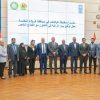
The United Nations Development Programme (UNDP) has signed a Statement of Intent with eight private sector companies in Karbala during the second phase of a Job Matching Project aimed at curbing youth unemployment in the governorate.
The Job Matching Project is designed to equip young individuals with the skills and knowledge that are required for today's labor market. The initiative empowers youth to kick-start their own ventures or secure job opportunities in private sector firms, supporting the Government of Iraq's priority to address unemployment and create work opportunities for young women and men. Additionally, the project seeks to foster the active engagement of the private sector in driving social development in Iraq toward economic empowerment and modern community solutions.
"This partnership with the private sector in Iraq is essential due to the significant role of these companies in developing innovative solutions to tackle development challenges. Together with the private sector, we can bring about transformative change by reducing the unemployment rate in Iraq through securing job opportunities," says UNDP Iraq Resident Representative Auke Lootsma.
"This Job Matching Project is an important example of innovative collaboration with the private sector. The government is grateful to UNDP for facilitating this partnership, which promises to create new avenues for economic growth and empowerment for the youth in the region." says Governor of Karbala Nsaif Jassim Al-Khattabi.
The impact of the Job Matching Project in Karbala has been implemented in two phases, with over 100 previously unemployed youth securing sustainable job opportunities with private sector companies. UNDP's Economic Diversification Programme supports the strengthening of business ecosystems, especially in high-impact labor-intensive economic sectors and provides support to the government of Iraq to implement its private sector development strategies.
UNDP would like to thank the eight private sector partners for their commitment to signing the Statement of Intent: Asiacell, Al- Qamar for Printing and Marketing Limited Company, Al-Hathaf General Contracting Limited Company, Al-Serraj Al-Munir for Real Estate, Agricultural and Industrial Investments Limited Company, Bareeq Al-Sabika Company for General Contracting, Emaar Albilad Intl. Company, Karbala International Group, and Zain Iraq Telecommunications Company.
(Source: UN)
Posted in Employment Comments Off on UNDP partners with Private Sector companies in Karbala
"Comprehensive Vision" for Development of Iraqi Agricultural Sector
Posted on 05 May 2023 .
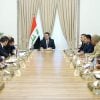
Prime Minister Mr. Mohammed S. Al-Sudani, presided over a meeting to discuss the "Comprehensive Vision for the Development of the Agricultural Sector."
The meeting was attended by the Higher Committee for Agricultural Development in Iraq, which includes the Prime Minister's Advisory Board and representatives from the Ministry of Agriculture, Ministry of Water Resources, Ministry of Planning, Ministry of Finance, the Central Bank of Iraq, Agricultural Engineers Association, Veterinarians Association, and Agricultural Associations.
During the meeting, the Prime Minister acknowledged the efforts of the committee in formulating the initiative and emphasized the importance of implementing the reforms that the government seeks to make in the agricultural sector. These reforms include strategic structural reforms and immediate reforms that consider the current challenges faced by the sector, such as water scarcity, unemployment, and global food security.
The Prime Minister highlighted the need for the initiative to create job opportunities for graduates of agricultural and veterinary colleges and other specializations. Additionally, the initiative should be applicable, feasible, and consistent with the plans of the ministries, covering all agricultural sectors, including livestock.
The new initiative reflects the government's reform approach, as it aims to restructure support for the agricultural sector. This includes subsidizing inputs such as supplies, vaccines, pesticides, and fertilizers, as well as subsidizing outputs by setting final prices for receiving crops such as wheat, barley, and others.
The initiative will also reconsider agricultural land management and establish a fund for agricultural development in Iraq. This is to ensure the availability of a sustainable specialized fund that guarantees continuous financing and support for agricultural projects through a specific mechanism.
Overall, the "Comprehensive Vision for the Development of the Agricultural Sector" is a significant step towards enhancing the agricultural sector in Iraq, creating job opportunities, and ensuring sustainable development.
(Source: Media Office of the Prime Minister)
Posted in Agriculture Comments Off on "Comprehensive Vision" for Development of Iraqi Agricultural Sector
A Roadmap for Successful Economic Development in Iraq
Posted on 03 May 2023 .
By Dr. Layth Mahdi. The opinions expressed are those of the author, and do not necessarily reflect the views of Iraq Business News.
Iraq: A roadmap for successful economic development
With every change of government, we hear similar political statements about rebuilding Iraq. I genuinely believe the Iraqi people are capable of developing an economy that can prosper and move away from being an oil dependent nation.
Despite previous initiatives, the Iraqi population continues to fall into poverty, with over half living below the poverty line and the illiteracy rate climbing to more than 25% over the last 20 years. The situation is even more dire in the southern Iraqi provinces, although they are the main producers of oil.
Fortunately, Iraq has been blessed with an abundance of natural resources that can easily finance its redevelopment. Iraq suffers from a lack of domestic expertise in program development, budget mismanagement, and insufficient global partnerships.
Sadly, many government officials view their role as a means of benefiting themselves rather than serving the country and its people. Fundamentally, there is a need to appoint a leader that will drive domestic cooperation between different government bodies.
Iraq needs to look to other developed countries and emulate similar development plans. There is a need to drive down corruption, but despite its presence, significant results can still be achieved.
A successful roadmap for reducing poverty and providing job opportunities is a government program that includes the following:
- A multi-faceted approach to education and training.
- Target future generations by providing youth with every opportunity to educate themselves through public education programs.
- Provide opportunities for often neglected Iraqi youth who show no interest or do not seek out higher education with an alternative means to success. This can be achieved via Vocational Education and Training (VET) programs offering the opportunity to learn specific and practical job skills.
- Job creation, private sector, and government initiatives.
To break the cycle of illiteracy and unemployment, the government must:
- Support agricultural programs especially in rural areas. If not, we will continue to see mass migration of our youth towards the main cities.
- Empower the private sector, which should be the largest employer in the country.
- Protect businesses from extortion.
- Revise government policies to enable and promote high levels of manufacturing and production.
- Promote small and medium business development.
- Education and job creation are the foundation of every successful nation.
Iraq must not repeat previous rebuilding programs that were merely politically motivated public relation initiatives.
There needs to be transparency, accountability and ultimately cooperation between domestic government bodies and international organizations to rebuild Iraq.
Without the right leader driven by a strong vision and motivation to build robust foundations, we would evolve into an idle society, stunting any future development of the country. Along the way, the only beneficiaries would be those who robbed the country of its wealth.
Posted in Iraq Industry & Trade News, Politics Comments Off on A Roadmap for Successful Economic Development in Iraq
Will Iraqi Lawmakers approve Record Govt Spending?
Posted on 27 March 2023 .
From Amwaj Media. Any opinions expressed are those of the author(s), and do not necessarily reflect the views of Iraq Business News.
Will Iraqi lawmakers approve record government spending, deficit?
After extensive discussions, Iraq's Council of Ministers has submitted a draft budget law for 2023 to the parliament. The move is the first major legislative effort by the administration of Prime Minister Muhammad Shia' Al-Sudani, who took office in Oct. 2022.
Iraq did not pass a budget last year amid the lengthy government formation process following the Oct. 2021 parliamentary polls. The budget bill provides the Sudani administration with a chance to address pressing concerns about the economy, unemployment, and relations with Erbil.
The full article can be viewed here (registration required).
Posted in Politics Comments Off on Will Iraqi Lawmakers approve Record Govt Spending?
Italy and ILO support Private Sector in Southern Iraq
Posted on 13 March 2023 .
Italy and the ILO support private sector development in Southern Iraq's green economy
A new agreement between Italy and the International Labour Organization (ILO) will enhance support to private sector development and decent job creation in Southern Iraq, with a focus on promoting sustainable green businesses.
Under the agreement, hundreds of young women and men looking to grow or develop their micro, small and medium-sized enterprises (MSMEs) will be provided with skills training in business management and financial literacy, as well as with access to much-needed financial services.
At the same time, better support to entrepreneurs and MSMEs - to unleash their full potential - will be provided by capacity-building of staff from non-financial and financial institutions, including partner banks, microfinance institutions and service providers.
The agreement between Italy and the ILO was officially launched on Thursday (March 9), at the Ministry of Labour and Social Affairs, one of the main partners that will work closely with the two counterparts to implement the project. The support from Italy will be delivered through the Italian Agency for Development Cooperation (AICS).
Minister of Labour and Social Affairs Ahmad Al-Asadi, Italian Ambassador to Iraq Maurizio Greganti, and ILO Country Coordinator in Iraq Maha Kattaa, attended the signing ceremony.
"We welcome this new initiative by Italy and the International Labour Organization, which is aligned with our Government's strategies to promote economic growth, private sector development, employment, and the green economy," said Minister Al-Asadi. "The Prime Minister launched last week the 'Riyada' initiative to support entrepreneurship and decent work creation among students and youth in Iraq, allowing youth to unleash their potential and encourage the establishment of small and medium enterprises. This is aligned with the government's approach to reduce unemployment and enhance the reality of investment in a way that contributes to promoting the private sector."
A thorough assessment of the business environment will be conducted, using ILO's assessment tool 'Enabling Environment for Sustainable Enterprises,' which provides evidence-based recommendations on how to improve the business-enabling environment. The assessment, which will be developed in consultation with ILO's tripartite constituents and national partners, will help define priorities for a business environment more conducive to sustainable enterprise creation, especially in relation to the development of the green economy.
"We are proud to partner with the International Labour Organization to enhance support for private sector development and job creation in Southern Iraq, with a focus on promoting sustainable green businesses. The partnership will provide critical skills training and access to financial services for entrepreneurs, as well as build the capacities of financial institutions to better support MSMEs, with a specific focus on climate-change resiliency," said Ambassador Greganti.
"Support to private sector and better jobs has been one of the main priorities of the Italian Cooperation in Iraq since many years and we are eager to work with ILO in support to the green economy priority. During the next three years we will support the implementation of this project, aiming at the strongest positive impact for entrepreneurs, employees and the sector of financial services that plays a key role in enterprise development," said Emilio Cabasino, Head of Office at the AICS office for Jordan and Iraq.
The ILO will train and certify trainers from across the spectrum on its well-established business management and financial literacy tools, so they can in return deliver the trainings to potential entrepreneurs.
It will work closely with the Central Bank of Iraq, its partner under financial inclusion initiatives, to further provide access to affordable loans, and build the capacities of partner banks to design products and services to meet their clients' needs.
"The generous contribution of the Italian Ministry of Foreign Affairs and International Cooperation, coupled with the involvement of AICS will support efforts to encourage more young women and men to establish green businesses and create decent green jobs that will promote sustainable development and inclusive growth," said Kattaa.
In addition, the project will collaborate with a range of partners to identify bottlenecks to the formal registration of businesses and seek practical solutions for reducing those barriers, while conducting at the same time awareness-raising campaigns to encourage the registration and formalization of businesses.
The project is part of broader efforts under the Iraq Decent Work Country Programme signed by the Government, employers' and workers' organizations and the ILO to promote employment opportunities and decent work. It is in line with the new government Riyada' initiative for development and employment, which was launched by Prime Minister Mohammed S. Al-Sudani earlier this week.
(Source: ILO)
Posted in Employment, Iraq Education and Training News, Iraq Industry & Trade News Comments Off on Italy and ILO support Private Sector in Southern Iraq