


UN Chief on Visit to Iraq
Posted on 02 March 2023 .
Guterres stresses UN commitment to Iraq during first visit in 6 years
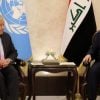
The Secretary-General of the UN, António Guterres, is in Iraq for the first time in six years, expressing support for the country's people, the new Government and its ambitious reform agenda.
"I am here in a visit of solidarity to underscore the commitment of the United Nations to support Iraq in the consolidation of its democratic institutions and advancing peace, sustainable development and human rights for all Iraqis," Mr. Guterres told journalists in Baghdad, after touching down late on Tuesday.
After "decades of oppression, war, terrorism, sectarianism and foreign interference" in Iraq's affairs - just days ahead of the 20th anniversary of the 2003 invasion - Mr. Guterres acknowledged that the challenges the country faces could not be brushed aside.
Opportune moment
And amid reports that Iraqi Prime Minister Mohammed Shia al-Sudani continues to face potential political obstacles in reviving national fortunes, the UN chief, in a joint press encounter with Mr. Al-Sudani, expressed his hope that Iraq "can break cycles of instability and fragility".
He added: "I applaud the Prime Minister for his commitment to address the most pressing challenges facing the country head on - including combatting corruption, improving public services, and diversifying the economy to reduce unemployment and create opportunities, especially for young people.
"Such structural change requires systemic reform, stronger institutions, greater accountability and better governance at all levels - and the United Nations stands ready to support these important efforts."
Referencing reported divisions over the sharing of Iraqi oil revenues between central government in the capital and provincial government in the north, Mr. Guterres encouraged all parties to build on "recent positive steps" between Baghdad and Erbil. "Sustainable agreements" and dialogue should be the long-term objective the UN Secretary-General said.
Dignity of Iraq's displaced
In earlier comments just after touching down, Mr. Guterres also spoke of his "enormous admiration" for the Iraqi people, highlighting how he had witnessed the courage of those displaced inside the country several times, on previous visits.
The UN Secretary-General also highlighted how Iraqi refugees in Jordan and in Syria had shown that they were able "to live in solidarity with each other, to help each other in the spirit that, in my opinion, is the best hope for the future of the country".
Iraq's efforts to repatriate its citizens from northeast Syria - including from the infamous Al Hol camp - had been "exemplary", Mr. Guterres said, before noting Prime Minister Al-Sudani's commitment to allowing the safe and dignified return of ethnic Yazidis to their homes in northern Iraq, after suffering genocide at the hands of Daesh in 2014.
Water emergency
Addressing another key challenge for Iraq, namely water scarcity, Mr. Guterres noted that the issue required international attention, before flagging the UN 2023 Water Conference from 22-24 March in New York.
The mighty Tigris and the Euphrates rivers were now running dry and the impact on agriculture has been dramatic, the UN chief said, adding that "it breaks my heart" to see farmers who have been forced to abandon lands where crops have been grown for thousands of years.
Iraq is one of the countries worst hit by climate change, which has driven displacement, threatened food security, destroyed livelihoods, fuelled conflict and undermined human rights, Mr. Guterres maintained.
When coupled with a volatile security situation and governance challenges, "it can put stability at risk... so now is the time for the international community to support Iraq in tackling its environmental challenges, diversifying its economy, and harnessing its potential for sustainable growth," the Secretary-General insisted.
(Source: UN)
Posted in Politics Comments Off on UN Chief on Visit to Iraq
Iraqi President meets British Academics
Posted on 25 January 2023 .
By John Lee.
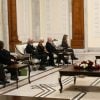
On Monday, January 23, 2023, the President of the Republic of Iraq, Abdullatif Jamal Rashid met with the Head of the Iraq Britain Business Council (IBBC), Baroness Emma Nicholson alongside her delegation from British universities, at the Baghdad Palace.
While speaking about Basra, Mosul, and Baghdad universities, His Excellency President Rashid said that Iraq's universities have historically had a good academic reputation. HE invited the delegation to visit Iraqi universities to examine their academic activities, and research programmes and find possible ways of cooperating with their respective universities.
One of the challenges we are currently facing is the increasing number of university graduates that are unable to find employment opportunities. The government has set plans in motion to address the unemployment crisis, including encouraging the private sector to create jobs for new university graduates, President Rashid said.
He also spoke about the importance of the English language among other skills, but more importantly, we need practical training more than theoretical aspects, including accountancy, business administration, and electrical and mechanical engineering.
Regretfully, the safety standards are not always met in Iraq, and this often leads to losses of lives, the President said, while noting the need to take advantage of safety standards in Britain.
Baroness Emma Nicholson thanked His Excellency President Rashid for the meeting and explained the works of the Iraqi-Britain Business Council in addition to the plans set in motion to support higher education in Iraq. The IBBC aims to raise the academic standards in Iraq by taking advantage of British experiences and helping bridge the gap between education and work.
Members of the IBBC delegation explained their plans to offer high-quality English language courses, vocational training, and information and communication technology courses approved by the British government to help Iraqi students develop the necessary skills. The academic programmes and experiences of the top British universities will be a welcomed addition to Iraqi universities.
(Source: Office of the President of Iraq)
Posted in Iraq Education and Training News, Iraq Industry & Trade News Comments Off on Iraqi President meets British Academics

Iraq to open First 7-Star Hotel
Posted on 20 December 2022 .
IRAQ IS ABOUT TO OPEN ITS FIRST 5-7 STARS HOTEL IN 40+ YEARS
It can be said that one of the most important reasons for the reluctance of the process of economic and social development in Iraq over the past decades is the weakness or absence of investment in both the public and private sectors.
The Iraqi economy has suffered over the past decades from several problems, and perhaps one of the most prominent problems is the absence or weakness of investment due to:
- Land allotment.
- Financing.
- Granting investment licenses.
- The political conditions that are always unfavorable.
- The regulatory and legislative regulations set by the state.
Therefore, economic stability in Iraq cannot be described in absolute terms, as the regime change in 2003, the subsequent rebuilding of security institutions and the political strife that followed in the new Iraq (as it is now called).
Here, Iraq stands before another challenge, which is the weakness of the financing capacity for free investments to be promoted by government and private banks.
 In all economies of the world, there are varying areas for the private sector, starting from various industries, through agriculture and trade, and ending with the service industry.
Despite the public sector's contribution to the process of economic development and in the areas of social development at that time, this contribution was not at the required level due to the economic stagnation that the country witnessed because of the economic blockade and the successive wars at the time, which led to the collapse of infrastructure, the rise in public debt in both the public and private sectors, and consequently the weakness of the state administration and the security apparatus, which led to a decrease in the investors' desire to invest and disrupted the creation of a qualitative leap in the country's economy.
 Therefore, Iraq today, with the help of the private sector, seeks to reduce the recurrent deficit in its public budget, due to funds directed to unsuccessful sectors, in addition to modernizing the national economy and opening the way for the private sector to activities that the state is unable to complete, and thus reducing the unemployment rate, which leads to achieving economic balance through private sector initiatives, by encouraging it according to financial privileges and tax exemptions, which in turn leads to achieving economic integration between the various sectors.
 Despite all the obstacles and difficult conditions that the country has been going through for decades, Iraq has recently witnessed an accelerating urban renaissance in the real estate investment sector (residential and commercial). Neighborhoods have been filled with residential complexes and commercial centers since 2014.
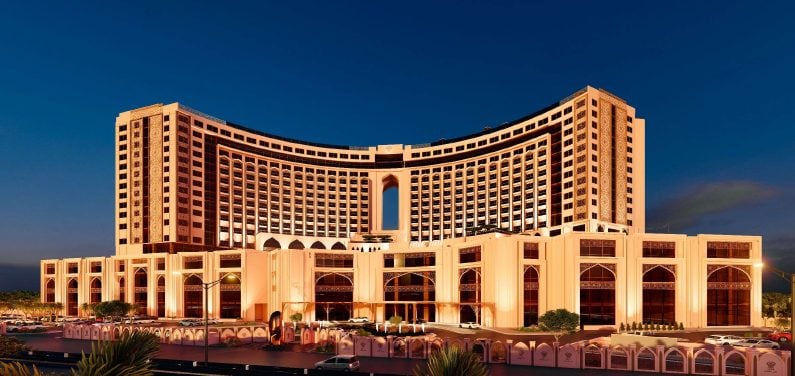
And it is now about to open its first 5-7 stars hotel in Baghdad; the capital, in 40 years.
Thus, crowning this era of investment in the new Iraq, where the hotel sector is one of the service activities that accompanied the movement of economic development in the country and contributed to the growth of the tourism sector and its promotion as one of the important tributaries for the development of the Iraqi economy.
 The cost of its construction has so far amounted to $258 million. The hotel (World Heart Hotel) is unique in its strategic location, with its panoramic view of the Tigris River and its scenic views that make it a prominent tourist destination in the center of Baghdad.
 The project is owned by the Ard Al-Manasek Company, which is also the construction contractor, while Al-Raif Group for Investment Management was awarded the marketing of the project locally and internationally. The work on the project started in 2014, according to studies and plans, but it passed through many obstacles that hindered the progress of the project's completion plan, including the latest war in Iraq in 2016 and the global pandemic (Covid-19) in 2020, but work is still continuing with major efforts to complete this project, which is considered the largest tourism investment project in Iraq. It will include 320 hotel rooms of various categories with ample spaces for guests, business meeting rooms, VIP halls and a 240-seats theater.
 For the greater enjoyment of the hotel guests, it will include a gym, spa, suspended swimming pool with an elegant and modern design, spacious areas to sit and relax, and a panoramic view of the Tigris River. The hotel also has a variety of dining options, as it will have 4 restaurants with international dishes (Iraqi, Lebanese, Turkish and Italian).
The project also includes a 150 units commercial center for international brands, and an apartment tower containing 54 apartments, that are considered the most luxurious of its kind in Iraq. Thus, it is possible to say that Iraq is entering a new era in the field of investment and keeping pace with the economic development taking place in the region.

Posted in Construction & Engineering In Iraq, Investment, Iraq Industry & Trade News, Leisure and Tourism in Iraq Comments Off on Iraq to open First 7-Star Hotel
Iraqi Youth Graduate from UNDP's Job Matching Project
Posted on 13 November 2022 .
Iraqi youth graduate from UNDP's job matching project
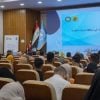
The United Nations Development Programme (UNDP) celebrates the graduation of the first wave of Iraqi youth from a Job Matching Project implemented in partnership with the Ministry of Youth and Sports, local government in Karbala Governorate, and several private sector companies. A total of 150 unemployed Iraqis in the governorate were enrolled in training sessions on interpersonal skills, followed by a 3-month on-the-job job training programme provided with partner private sector companies.
The Job Matching Project aims to build the capacities of youth and enhance their experience according to labor market needs, qualifying them to start their own projects or obtain job opportunities within private sector companies. The project also encourages the active participation of the private sector in achieving social development in Iraq, leading to economic empowerment opportunities, and promoting community innovation.
"Iraq is home to a large population of youth, a demographic which has recently experienced a rise in unemployment. This project has been successful in addressing this issue, which prompts us to announce the launch of a second version, which will be scaled up to additional governorates in the near future," says UNDP Iraq Resident Representative, Zena Ali-Ahmad.
"The future vision of the local government in Karbala is to support youth, build their capacities, and provide them with decent jobs. This will lead to enhancing the community stability. Therefore, we would like to express our gratitude to the UNDP for this innovative project and fruitful partnership." says Governor of Karbala, Nssaif Jassem Al-Khattabi
The Job Matching Project helped more than 50 unemployed youth to obtain sustainable job opportunities within private sector companies in Karbala, an important step towards achieving sustainable development and encouraging economic prosperity through providing livelihood opportunities for young people.
UNDP's Economic Diversification programme supports the strengthening of business ecosystems, especially in high-impact productive labor-intensive economic sectors. UNDP provides support to the government of Iraq to implement its private sector development strategies which include the improvement of access to markets and finance, establishment of small and medium enterprises and the promotion of skills development and job placement. UNDP also supports the government of Iraq in creating people-centered economic policies and legislations that contribute to an inclusive, gender-sensitive and diversified economic growth.
(Source: UN)
Posted in Employment Comments Off on Iraqi Youth Graduate from UNDP's Job Matching Project
Improving Employment Opportunities for people in Basra
Posted on 13 November 2022 .
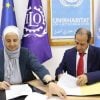
UN-Habitat and ILO work together to improve access to employment opportunities for vulnerable women and men living in Basra's underserviced settlements
UN-Habitat and the ILO in Iraq are collaborating to increase access to employment opportunities for young women and men living in underserviced settlements in Basra, where the unemployment rate is high and living condition is poor.
The collaboration is part of UN-Habitat's broader project, "Increasing Access to Employment Opportunities for Vulnerable Urban Population in Basra City in Response to the COVID-19 Crisis," funded by the European Union. The project targets around 21,000 people living in three underserviced neighbourhoods of Al-Ahrar, Al-Kubiyah, and Jurf Al-Melah, by providing basic services such as water, waste management and access roads in urban and informal settlements, creating job opportunities, and enhancing the skills and capacities of vulnerable urban populations and small and medium-sized enterprises (SMEs) in Basra City.
Under the new collaboration, Un-Habitat and ILO will work closely with local partners, namely the Directorate of Labour and Social Affairs, to enhance employment services for job-seekers by establishing an employment service centre linked to a digital employment platform. In addition, the Directorate staff will receive capacity-strengthening training to deliver these services, which include skills development, career and job search guidance, and job placement.
Another key aspect of the programme will be to equip young men and women with the necessary knowledge and skills in the construction sector and business development. This programme will include introducing ILO's "Start and Improve Your Business" (SIYB) training programme, designed to support small-scale entrepreneurs to start or grow their businesses. After the completion of the skill-improvement training, entrepreneurs will be referred to the employment service centre, which will help them connect with organizations offering a wide range of support to grow and sustain their small businesses.
"This collaboration will help mainstream decent work into project interventions, and ensure that young people are equipped with market-relevant skills that will help improve their access to employment opportunities," said Dr Maha Kattaa, ILO Country Coordinator in Iraq.
Mr Wael Al Ashhab, Head of UN-Habitat Iraq said: "I am glad to see the formalization of the cooperation between UN-Habitat and ILO in Iraq, which will magnify the impact of our interventions on the economic and social conditions of the targeted people in Basra, particularly unemployed young men and women."
This collaboration will utilize Employment Intensive Investment Programmes (EIIP) to improve access to services and create decent job opportunities. EIIP methods link infrastructure development with decent job creation and promote local resources such as labour and equipment. The programme will build the capacities of local contractors and young engineers on these methodologies and ensure the application of Decent Work principles through the developing different tools.
(Source: UN)
Posted in Employment Comments Off on Improving Employment Opportunities for people in Basra
Iraq's Unemployment Crisis puts spotlight on Foreign Workers
Posted on 30 October 2022 .
From Amwaj Media. Any opinions expressed are those of the author(s), and do not necessarily reflect the views of Iraq Business News.
Iraq's unemployment crisis puts spotlight on foreign workers
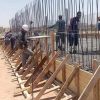
Iraq has a major unemployment problem. For the past decade, official unemployment rates have seen a continuous rise, reaching 14.2% in 2021.
The lack of jobs has sparked popular protests in the past, including contributing to mass anti-establishment demonstrations in Oct. 2019, and continues to spark social unrest.
Posted in Employment, Iraq Industry & Trade News, Politics Comments Off on Iraq's Unemployment Crisis puts spotlight on Foreign Workers

ILO partners to advance Financial Education among Iraqi Youth
Posted on 23 September 2022 .
The Ministry of Youth and Sports and the ILO partner to advance financial education among youth in Iraq
The International Labour Organization (ILO) and the Ministry of Youth and Sports (MOYS) in Iraq have signed a Memorandum of Understanding (MoU) to strengthen their cooperation in advancing financial education among youth in Iraq.
The new partnership focuses on training a pool of national trainers from the Ministry in various governorates on ILO's Global Financial Education Programme, designed to teach financial knowledge and management skills to vulnerable groups, particularly young women and men.
The trainers will in return train around 1,000 young women and men on the tool, with a focus on those who are looking to start or improve their businesses in various sectors. The selected youth will include forcibly displaced persons, returnees and host community members, with a focus on Ninewa.
The initiative is being carried out by the ILO under the PROSPECTS partnership which is supported by the Government of the Netherlands.
"The Ministry has undertaken an important approach related to raising financial awareness and education, which emphasises the need for young people wishing to engage in the labour market to become well-informed of the main principles governing financial management through planning for personal budgets or business budgets and ways to deal with their finances...The most recent of which is the agreement with the International Labour Organization to set up a financial education programme in which a group of youth from ten governorates are trained with the aim that they launch their own training initiatives targeting around one thousand young people," said Minister of Youth and Sports of Iraq, H.E. Adnan Dirjal.
The ILO Global Programme on Financial Education is a comprehensive programme that addresses limited levels of financial literacy around the world, through national policy dialogue and capacity building at all levels and has been implemented for more than ten years in multiple countries.
The ILO has adapted the programme to address the needs of the Iraqi context and has begun to roll out the programme at the national level.
"The Labour Force Survey of Iraq shows that more than one-third of the youth population in Iraq was not in education, nor in employment or training. In addition, the youth unemployment rate was more than three times that of the adult unemployment rate. These figures highlight the urgent need to attract more youth towards the private sector and entrepreneurship," said Maha Kattaa, ILO Country Coordinator in Iraq. "Our collaboration with the Ministry of Youth and Sports is a step in the right direction as it will enhance the capacities of young people in managing their finances, while supporting them to build sound relationships with financial institutions, which will help their businesses to grow."
PROSPECTS is a strategic four-year global partnership, that supports host communities and displaced populations in eight countries across East and North Africa and the Arab States and which also includes UNICEF, UNHCR, IFC, and the World Bank.
(Source: UN)
Posted in Employment, Iraq Education and Training News Comments Off on ILO partners to advance Financial Education among Iraqi Youth

Iraq Labour Survey: Key Stats and Download
Posted on 09 July 2022 .
Earlier this week, Iraq's Ministry of Planning, the Central Statistical Organization (CSO), together with the International Labour Organization (ILO) launched a national Labour Force Survey, the first of its kind to be conducted in Iraq in the last decade.
They have now provided a link to the report, which can be downloaded here.
Some key stats:
- employment rate:16.5%
- female unemployment rate: 28.2%
- male unemployment rate: 14.7%
- youth unemployment rate: 35.8%
(Source: UN)
Posted in Employment, Iraq Industry & Trade News Comments Off on Iraq Labour Survey: Key Stats and Download

Iraq's First national Labour Force Survey in a decade
Posted on 06 July 2022 .
Iraq's Ministry of Planning, the Central Statistical Organization (CSO), together with the International Labour Organization (ILO) have launched a national Labour Force Survey, the first of its kind to be conducted in Iraq in the last decade.
The survey presents estimates at the national, governorate, urban and rural levels and covers a broad array of indicators on the labour market and demographic characteristics of residents in Iraq.
The CSO and the Kurdistan Region Statistics Office (KRSO) conducted the Iraq Labour Force Survey in 2021, with technical and financial support by the ILO.
The main objective of the survey was to collect current data on the size and characteristics of the labour force, employment, unemployment and other labour market characteristics of the population, including working time, income from employment of employees at main jobs and informality of employment.
The survey was also designed to measure different components of labour underutilization, including time-related underemployment and potential labour force, and other forms of work, in particular, own-use production of goods and services, in line with the latest international standards adopted by the 19th International Conference of Labour Statisticians.
The findings of the survey were presented at an event in Baghdad on Tuesday (July 5), which was attended by the Minister of Planning Dr. Khaled Battal Al-Najem, and ILO Country Coordinator Maha Kattaa.
"The survey provides estimates at the national and governorate level and provides important indicators on the labour market and demographic characteristics of Iraq's residents," said Minister of Planning Dr. Khaled Battal Al-Najem. "The survey will pave the way for the quick identification of needs relating to the creation of employment for Iraq's citizens. It will also provide indicators that will help develop important long-term policies that address the needs of the labour market," Minister Al-Najem added.
"The findings show that 13 million women are in the age of the employment, yet only around one million are working. The findings also show that more than one-third of the youth population is not in education, nor in employment or training," said ILO Country Coordinator Maha Kattaa. "There is an urgent need to create more decent job opportunities that can attract women to the labour market, and attract youth towards the private sector and entrepreneurship, as the public sector cannot absorb the growing number of youth entering the labour market each year."
Main Findings
The Labour Force Survey, with a sample size of 16,400 households covering Iraqi and non-Iraqi households, presents estimates at the national and governorate level, covering Iraq's 18 governorates.
The survey was conducted in line with the latest international standards adopted by the 19th International Conference of Labour Statisticians.
The survey results reveal that the national labour force participation rate (LFPR) - the percentage of people who are active in the labour market, either employed or unemployed - stood at 39.5 per cent in 2021. According to the survey results, about 30.2 per cent of the total working age population were outside the labour force in 2021. The great majority of persons outside the labour force were female.
The female labour force participation rate was particularly low standing at 10.6 per cent in comparison to 68 per cent for males.
The data further show that the LFPR of young people (aged 15 to 24 years) was 26.5 per cent, and that of adults (aged 25 years and above) was 45.8 per cent.
The employment-to-population ratio - or the percentage of the working-age population that is currently employed - is often used as an indicator of the performance of the national economy in providing employment to its population. In Iraq, it stood at 33 per cent indicating that only about one-third of the working age population (15 years old and over) were employed in Iraq in 2021 The ratio is lower among women (7.6 per cent) compared to men (58 per cent), and lower for youth (17 per cent) than for adults (40.6 per cent).
The data show that the unemployment rate stood at 16.5 per cent, indicating that for every five employed persons there was roughly one unemployed person. The female unemployment rate (28.2 per cent) was about twice the male unemployment rate (14.7 per cent) and the youth unemployment rate (35.8 per cent) was more than three times that of the adult unemployment rate (11.2 per cent).
The survey presents results by geographical distribution, disaggregated by urban and rural, and by governorate. The data show that the labour force participation rate was higher in urban areas (40.3 per cent) than in rural areas (37.3 per cent). Similarly, the unemployment rate was higher in urban areas than in rural areas, standing at 17.6 per cent and 13.3 per cent respectively.
The survey measures informal employment, which is employment that is not covered or is insufficiently covered by formal arrangements and protections, and employment in the informal sector, which is employment in establishments that are not covered or insufficiently covered by formal arrangements. The results show that around 54.8 per cent of total employment was in the informal sector and the number of persons with informal jobs represented 66.6 per cent of total employment.
The results show that most employed persons usually worked between 30 and 59 hours per week at their jobs (61.1 per cent). The number of persons usually working short hours, that is less than 30 hours per week, was relatively low (20.5 per cent), but significantly higher among women (41.8 per cent) in comparison with men (17.7 per cent). At the other extreme of the distribution, the survey results show that some 17.9 per cent of employed persons usually worked long hours - more than 60 hours per week. The rate of those working long hours was much higher among men (19.8 per cent) than among women (3.1 per cent).
The survey finds that almost one-third of Iraq's extended labour force - the labour force and the potential labour force combined - was affected by some form of labour underutilization. The data reveals that the composite measure of labour underutilization, which combines unemployment, time-related underemployment and potential labour force, stood at 31 per cent. In general, labour underutilization affected women (49.5 per cent) much more than men (27.3 per cent), and youth (53.3 per cent) much more than adults (24 per cent).
The results show that women tend to be more concentrated in services (73.1 per cent) and agriculture (14.4 per cent) than men in the corresponding broad branches of economic activity (62.2 per cent and 7.7 per cent, respectively).
[Update: The original press release failed to provide a link to the actual survey; you can download it here.]
(Source: UN)
Posted in Employment, Iraq Industry & Trade News Comments Off on Iraq's First national Labour Force Survey in a decade

PM Candidate meets UK Officials
Posted on 24 June 2022 .
On the 20th June, Sheikh Mohammed Alkhouzai, Iraqi Prime Ministerial candidate, attended meetings in London to discuss the current social pressures and political issues in Iraq.
Sheikh Mohammed met with the Hon Matthew Offord MP, the Chairman of the United Kingdom Parliament's All Party Parliamentary Group on the Republic of Iraq at the Palace of Westminster. The meeting was positive with both sides agreeing to the importance of unity in national politics. The discussions covered topics such as security, the future of Iraq's economy and the role of international actors in the future of Iraq.
Sheikh Mohammed said:
"Iraq faces some real struggles in the near future. Electricity blackouts, water shortages and rising unemployment all at a time of soaring summer heat is going to create significant stress within communities. Now is not the time for siding with division; now is the time for cooperation and working together to solve these nation-wide issues. There must be political leadership to confront these harsh realities"
At the end of the meeting both Mr Offord and Sheikh Mohammed confirmed their desire to work together in the future and to support Sheikh Al-Khuzai's program to solve crises in Iraq.
Sheikh Mohammed then met with Chairman of the Royal United Services Institute (RUSI), The Rt Hon Sir David Lidington. Sir David is a former foreign Minister and former Deputy Prime Minister. Given the nature of RUSI's work the discussion was focused on the security of Iraq and the potential for unrest in the forthcoming summer months.
Sheikh Mohammed spoke passionately about the importance of both the tribal and religious leaders of the country, army officers and members of the judiciary, whose leadership are critical in the forthcoming months in ensuring the unity of the nation. He also spoke about the importance of creating new economic opportunities to deliver new jobs for the young adults of Iraq.
The discussion also centred on the role of foreign actors and his name being nominated for prime minister. Both men agreed that while Iraq is not currently able to build its future alone, its future and the road to get there must be decided by Iraq and the Iraqi people. While Sheikh Mohammed welcomed foreign investment he also said that he would not allow foreign countries to determine the future of the nation.
The end of the meeting came as both Sir David and Sheikh Mohammed agreed to work towards the potential of creating a bridge between RUSI and the leading actors that help to make up Iraqi political society.
Speaking about the meetings Sheikh Mohammed said:
"It is clear that senior people within the political sphere of the United Kingdom want to see a bright future for Iraq and are willing to help the nation achieve it. But, they will not waste their time on a country that is trying to tear itself apart. Strong leadership and a unified Iraq, based on our shared ambitions from Zakho to Fao is how we will build a better Iraq."
(Source: Mohammed Alkhouzai)
Posted in Politics Comments Off on PM Candidate meets UK Officials