


The’ Next Billion’ and the Power of Inclusive Prosperity
Posted on 08 May 2015 .

Madeleine White with Nouriel Roubini
By Madeleine White, capacity building specialist and co-founder of Nina Magazine
“Emerging markets will be a driving force in sustainable economic growth. If civil society is fully and inclusively engaged in the economy, the significant population growth rate will lead to greater consumption and therefore greater economic growth. Cash rich emerging markets with an inclusive approach to prosperity will be ideally placed to become economic trailblazers.”
Nouriel Roubini, global macroeconomic strategy expert and former senior White House economist
Vancouver, May 7th, The Next Billion Conference.
A unique opportunity, a global dialogue – with the aim of moving gender inclusion beyond the 'nice to have', to the 'must have', driven by a hard financial evidence. The conference aligned global thought leaders, policy makers and economists with key data. With women cited by experts as the largest emerging economy in the world, the question of the power of long term strategic investment in inclusion and diversity is beyond doubt. What is less clear though, is how to realise this potential for growth in terms of national and economic advantage – the Next Billion Conference was all about taking steps to make it happen…
To contexualise this in terms of Iraq. In March’s Middle East Congress, the region’s richest oil resources were cited as belonging to Iraq. At the moment 50% of its other richest natural resource - its people, are not engaging within the country’s economic activity. Less than 1% of managers in Iraq are women, just 17% of women are engaged as entrepreneurs or employees.
Alexander Meira da Rosa , VP for countries of the Inter-American Development Bank, was able to explain that the significant economic growth enjoyed by countries such as Brazil, which at one point had battled with a similarly challenging gender gap, was driven in part by the burgeoning economic participation of its women. By understanding that gender is an economic development issue and instituting a pro-women policy in dealings in partnership with government and private sector investors, he shared that regionally this gender gap had closed by 70%.
Indeed, the importance of partnerships was at the heart of most discussions. The idea of a collaborative national and international approach in terms of closing the gender gap - with policy advocacy, business profits and social impact forming a triangle of success, was championed by many speakers, including former US Ambassador for Global women’s issues, Melanne Verveer, and Accenture’s Marianne Schoenig. Other key points of peer-to-peer guidance, within this strongly evidenced-based dialogue, included:
- Women in leadership and on boards – the significant financial return was highlighted (40% greater profitability with women on the board)
- Women as successful entrepreneurs
- Access to finance needed to be improved– examples of significant return on investment by assessing risk levels of women-owned business and answering their specific needs, led to marked profitability for Itau Unibanco for example.
- By ensuring women-owned business were part of the inclusion and supply chain, stronger communities and more profitable business practices were shared by the corporations, including HP and Accenture.
- Unilever cited significant return on investment by providing a safe working environment for women; project Shakti which has created 50,000 rural women entrepreneurs in India, was given as an example of how women focused policy could drive corporate brand message and profits.
- The importance of a relevant, forward-looking education came up frequently with responsibility for individual learning and access to technology being particular priorities.
- Large corporations incorporating horizontal and vertical strategy in terms of work culture:
Posted in Employment, Iraq Education and Training News, Iraq Industry & Trade News, Madeleine White 7 Comments
Cabinet Approves 23 new Oil Wells
Posted on 30 April 2015 .
By John Lee.
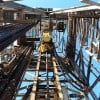
The Iraqi Council of Ministers has approved the expenditure needed to drill 23 oil wells in the West Qurna area.
The drilling had been recommended by the Economic Ministerial Committe, and is to be carried out by the South Oil Company (SOC) and the Russian company Lukoil.
(Source: AIN)
(Oil drilling image via Shutterstock)
Posted in Iraq Oil & Gas News 6 Comments
Lukoil "was asked to Reduce Iraq Output"
Posted on 17 April 2015 .
By John Lee.
Russian oil company Lukoil was asked to "sharply reduce" output at West Qurna-2 this year, reports Reuters.
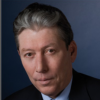
Ravil Maganov (pictured), head of the company's upstream division, told reporters:
"We've got the letter to curb our enthusiasm ... We were restricted to 250,000 barrels per day (bpd) due to weather and level of sulphur, we are dealing with the problem."
He said Lukoil's current production at the site was 380,000 to 390,000 bpd, adding that it is building a pipeline with a capacity of 1.6 million bpd to the port of Faw.
(Source: Reuters)
Posted in Iraq Oil & Gas News 5 Comments
Foreign Minister Arrives to Belarus
Posted on 09 April 2015 .
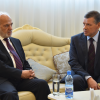
Foreign Minister Ibrahim Al Jaafari arrived in the Belarusian Capital, Minsk, on Wednesday on an official visit upon an invitation from his Belarusian Counterpart, Vladimir Makei.
Minister Jaafari stressed that the aim of the visit is to bolster Iraqi-Belarusian relations as part of the Iraqi foreign policy due to the joint interests in addition to working on opening the Belarusian Embassy in Baghdad.
Issues for discussion include terrorism and the necessity to support Iraq in its war against terrorism, and agreements are expected to be signed in the areas of agriculture and sports.
The Minister will meet a number of Belarussian officials; the Belarus President, Alexander Lukashenko, Chairman of the Republican Council, Michael Vladimirovic, Prime Minister Andre Kobykov, and Foreign Minister, as well as meeting the Iraqi community there.
(Source: Ministry of Foreign Affairs)
Posted in Agriculture, Iraq Industry & Trade News, Leisure and Tourism in Iraq, Security 5 Comments

Bashneft Completes Surveys at Block 12
Posted on 07 April 2015 .
Russia's Bashneft has completed field seismic surveys at Block 12 as part of the geological exploration programme approved by the Iraqi Ministry of Oil.
The Oil Exploration Company, an Iraqi company specializing in geological and geophysical exploration, which won the open tender in the spring of 2014, has been employed as a contractor to conduct seismic surveys at Block 12; during the six months, the company performed 3D seismic surveys covering an area of 849 sq. km and 2D seismic surveys along two lines with a total length of 192 linear kilometres.
Currently, seismic data processing and interpretation is underway; the data will serve as a basis for seismic and geological modelling aimed at identifying formations that are potentially oil- and gas-bearing. The start of exploration drilling at Block 12 has been scheduled for late 2016.
The five-year geological exploration programme at Block 12, which may be extended for two years, involves conducting 2D and 3D seismic surveys and drilling one exploration well. Investments in the geological exploration programme to be made during the five-year period are to total US$ 120 million.
Under the service contract, before the start of seismic surveys, Bashneft had conducted an environmental impact assessment and a survey of the site designated for seismic exploration in order to detect unexploded mines and shells. Given that operations in Iraq entail considerable risk, the Company gives priority to ensuring the safety of its employees and contractors working at Block 12.
Block 12 has an area of 7.68 thousand sq. km and forms part of the Western Desert, an unexplored region having the greatest oil potential in Iraq. The Block is located in the Najaf and Muthanna provinces, approximately 80 kilometres to the south-west of the city of Samawa and 130 kilometres to the west of the city of Nasriya.
Bashneft gained the right to operate hydrocarbon exploration, development and production at Block 12 following a licensing round in June 2012.
To implement the project, a consortium was established, with Bashneft being represented by its wholly owned subsidiary, Bashneft International B.v. , which owns a 70% stake in the consortium and acts as the operator of the project.
Bashneft’s partner in the consortium, Premier Oil, is represented by its subsidiary, Premier Oil Exploration and Production (Iraq) Ltd., holding a 30% stake.
On November 8, 2012, the consortium signed a 25-year exploration, development and production service contract (EDPSC) with the Iraqi state-owned South Oil Company; the contract may be renewed for five years.
(Source: Bashneft)
Posted in Iraq Oil & Gas News 7 Comments
Why Army is Stuck on Outskirts of Tikrit
Posted on 27 March 2015 .
This article was originally published by Niqash. Any opinions expressed are those of the author, and do not necessarily reflect the views of Iraq Business News.
The offensive to re-take Tikrit from extremists seems to have stalled as troops surround the city but cannot go further. The same thing is happening elsewhere. And there are three main reasons why.
While stopped on the edges of the city of Tikrit, Captain Ahmad Mahmoud says he told the soldiers under his command about the battle of Stalingrad, which started in Russia in 1942 between the attacking Germans and the Russians during World War II and did not end until early in 1943.
Despite the fact that the German army, led by Nazi commanders, had surrounded the city they were not able to take it from the Russians over months of prolonged, intensive and close fighting.
Mahmoud and his soldiers are part of a major military offensive in the province of Salahaddin which aims to take back territory currently controlled by the extremist group known as the Islamic State.
Earlier in March the Iraqi government sent the Iraqi army, alongside unofficial Shiite Muslim militias and with aid from local Sunni Muslim tribes, into the province of Salahaddin to take on fighters from the Islamic State, or IS.
At first progress of the offensive, ostensibly the Iraqi government's first major campaign against the IS group, was good and within a week the forces were able to re-take the areas of al-Dour, al-Alam and Albu Ajil. But when it comes to the major city of Tikrit, which has been mostly abandoned by residents to the IS fighters, progress has slowed.
And Mahmoud seemed to think the same thing was happening to the Iraqi army in Tikrit as had happened in Stalingrad. The city was surrounded but, as he told NIQASH during a telephone interview, “we are just not trained to fight this way, on the street.
Even the Shiite militias, who are known for their street fighting skills, haven't been able to break into the city and now the Islamic State is launching attacks on the surrounding troops, exhausting the men and inflicting casualties in a similar way to the Stalingrad scenario.”
Posted in Security 4 Comments
Slovakian Diplomat to head up UN Iraq Mission
Posted on 25 February 2015 .
Secretary-General Appoints Ján Kubiš of Slovakia as His Special Representative for Iraq
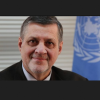
United Nations Secretary-General Ban Ki-moon today announced the appointment of Ján Kubiš (pictured) of Slovakia as his Special Representative for Iraq and Head of the United Nations Assistance Mission for Iraq (UNAMI).
Mr. Kubiš succeeds Nickolay Mladenov of Bulgaria to whom the Secretary-General is grateful for his dedication and leadership of UNAMI, serving in one of the most challenging United Nations duty stations and at a time of important political and security developments in the country.
Mr. Kubiš, who served as Special Representative and Head of the United Nations Assistance Mission in Afghanistan (UNAMA), from 2012 to 2014, brings with him several years of experience in diplomacy, foreign security policy, and international economic relations both internationally and in his own country.
Mr. Kubiš served as the Executive Secretary of the United Nations Economic Commission for Europe (UNECE) from 2009 to 2011, as Minister for Foreign Affairs of Slovakia from 2006 to 2009, as Chairman of the Committee of Ministers of the Council of Europe from 2007 to 2008, and as Secretary-General of the Organization for Security and Cooperation in Europe (OSCE) from 1999 to 2005.
Mr. Kubiš also served as the European Union’s Special Representative for Central Asia with the office in Brussels and as the Personal Representative of the Chairman-in-Office of OSCE for Central Asia, as the United Nations Special Representative of the Secretary-General for Tajikistan and Head of the United Nations Mission of Observers in Tajikistan from 1998 to 1999. He was previously the Director of OSCE’s Conflict Prevention Centre.
Mr. Kubiš worked at the Ministry of Foreign Affairs of the former Czechoslovakia from 1976 to 1992 and thereafter at the Ministry of Foreign Affairs of Slovakia. In 1993 he served as Permanent Representative of Slovakia to the United Nations Office and other International Organizations in Geneva.
Mr. Kubiš is a graduate in International Economic Relations of the Moscow State Institute of International Affairs and speaks Slovak, Czech, English, French and Russian.
Born in 1952, he is married and has one daughter.
(Source: UNAMI)
Posted in Politics, Security 6 Comments
Security Council Targets ISIL Financing
Posted on 13 February 2015 .
Security Council approves resolution targeting sources of financing for ISIL
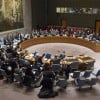
Urging global cooperation “to impair, isolate and incapacitate” terrorist threats, the United Nations Security Council today approved measures targeting sources of funding for the Islamic State of Iraq and the Levant (ISIL) and Al-Nusrah Front (ANF), condemning those buying oil from the groups, banning all trade in looted antiquities from Iraq and Syria, and calling on States to end ransom payments.
Unanimously adopting a Russian-led resolution, the Council reiterated its deep concern that oilfields, as well as other infrastructure such as dams and power plants, controlled by ISIL, ANF and other Al-Qaida-associated groups, “are generating a significant portion of the groups' income, alongside extortion, private foreign donations, kidnap ransoms and stolen money from the territory they control.”
As such, the Council, acting under Chapter VII of the UN Charter – which authorizes the use of force – condemned any engagement in direct or indirect trade, in particular of oil and oil products, and modular refineries, with ISIL, ANF and Al-Qaida affiliates, and reiterated that “such engagement would constitute support for such individuals, groups, undertakings and entities and may lead to further listings” by the relevant Sanctions Committee.
Today's resolution, which bolsters the Council's previous measures to cut off financing for ISIL and its affiliates, reaffirms the existing obligations of Member States to “freeze without delay” funds and other financial assets or economic resources of persons who commit, or attempt to commit, terrorist acts.
Coming in the wake of a spate of particularly vicious killings, including the beheading of a Japanese journalist and the immolation of a Jordanian pilot by ISIL in the past two weeks, the Council's resolution reaffirms its condemnation of kidnapping and hostage-taking committed by the groups, further strongly condemns abduction of women and children, and expresses “outrage at their exploitation and abuse, including rape, sexual abuse, forced marriage.”
Posted in Security 5 Comments
Iraq gets Next Batch of Russian Helicopters
Posted on 02 February 2015 .
By John Lee.
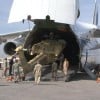
The Iraqi Ministry of Defence has taken delivery of another consignment of Russian Mi-28NE attack helicopters.
The shipment is part of a deal agreed in 2012, and reported to involve 28 Mi-35M and 15 Mi-28NE helicopters.
IHS Jane's 360 reports that helicopters from the previous consignments have been seen flying over Baghdad, but it is unclear if they have been used in action.
(Sources: Iraqi MoD, IHS Jane's 360, Sputnik)
Posted in Security 7 Comments
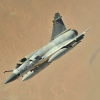
UAE Offers Mirage Fighters to Iraq
Posted on 19 January 2015 .
By John Lee.
Defense News cites a source within the government of the United Arab Emirates as saying that the UAE may sell up to 10 Mirage 2000-9s fighter jets to the Iraqi Air Force in March.
The decision comes following a visit by the Iraqi Prime Minister, Haider al-Abadi, to Abu Dhabi in December.
"The UAE is trying to fortify Iraq's security from north to south, specifically the areas from Baghdad to Erbil," the source said. "Mainly, Erbil because many UAE strategic interests are there with regards to oil and gas investments as well as others."
The source added that light Russian-made special operations forces tactical weapons will also be provided to the Iraqi Army, with details to be finalised during a further visit by Al-Abadi in March.
(Source: Defense News)
Posted in Security 6 Comments