


IMF reaches Agreement on Stand-By Arrangement with Iraq
Posted on 06 June 2017 .
IMF Team Reaches Staff-Level Agreement on Second Review of Stand-By Arrangement with Iraq
The Iraqi authorities and an International Monetary Fund (IMF) team reached a staff-level agreement on the second review of the Stand-By Arrangement (SBA) that was approved by the IMF Executive Board on July 7, 2016 (See Press Release No. 16/321).
The SBA aims to restore fiscal and external balance and to improve public financial management while protecting social spending.
Iraq completed the first review under the SBA on December 5, 2016 and received a disbursement of SDR 0.46 billion (US$0.6 billion) (See Press Release No. 16/540). Completion of the second review will release a further disbursement of SDR 0.6 billion (US$0.8 billion).
Mr. Christian Josz, Mission Chief for Iraq, issued the following statement today in Amman:
“The Iraqi authorities and the IMF team have reached agreement on a supplementary budget for 2017, objectives for the 2018 budget, and strengthened procedures to keep expenditure under control. Both the supplementary 2017 budget and the 2018 budget will keep the fiscal consolidation, necessitated by the fall in oil prices, on track, while protecting social spending.
“Once agreed prior actions have been implemented, the IMF Board could consider the second review of the SBA in August.
“During the discussions, the team met with Acting Governor of the Central Bank of Iraq (CBI), Dr. Ali Mohsen Ismail Al-Allaq, Deputy Chief of Staff of the Prime Minister, Dr. Naufel Al-Hassan, Chairman of the Board of Supreme Audit, Dr. Salah Noori Khalaf, Acting Deputy Finance Minister, Ms. Taif Same, Deputy Minister of Planning, Dr. Qasim Enaya, Deputy Minister of Electricity, Mr. Abdel Hamza, Financial Adviser to the Prime Minister, Dr. Mudher Saleh, and officials from the ministry of finance, Central Bank of Iraq (CBI), the Board of Supreme Audit, the ministry of oil, the ministry of planning, the ministry of electricity, and a representative from the Kurdistan Regional Government. The team would like to thank the Iraqi authorities for their cooperation and the open and productive discussions.”
(Source: IMF)
Posted in Construction & Engineering In Iraq, Iraq Banking & Finance News, Politics Comments Off on IMF reaches Agreement on Stand-By Arrangement with Iraq
Iraqi Marshes could be pulled from World Heritage List
Posted on 31 May 2017 .
By Hassan al-Shanoun for Al-Monitor. Any opinions expressed are those of the author, and do not necessarily reflect the views of Iraq Business News.
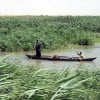
The Iraqi government is committed to keeping the Mesopotamian Marshes on the UNESCO World Heritage List. Located in the southern part of the country, the marshes were added to UNESCO's list in July 2016. Previously listed Iraqi World Heritage sites are the city of Ashur, the city of Hatra, the Erbil Citadel and the city of Samarra.
Although the Iraqi parliament voted to put an end to encroachments against the marshes May 14, many fear the possibility of Iraq's losing its position on the World Heritage List and being denied the international recognition that would have been of great benefit for the country, especially since previously agreed-upon service and construction programs were not established.
First off, there are concerns about the Water Resources Ministry's continuing to build settlement islands in the Chibayish marshes, south of Dhi Qar, which UNESCO considers to be a clear violation of the conditions the marshes need to meet in order to stay on the World Heritage List.
In this context, Ajial al-Musawi, the chairman of the Committee on Tourism and Antiquities in Dhi Qar’s provincial council, told Al-Monitor over the phone that UNESCO’s objection is to the nature of the mechanisms used in building these islands in the marshes since they pose a direct threat to biodiversity in the area.
Musawi said, “The government’s reluctance to implement the programs it promised worries us, and we fear the marshes would lose the chance to join the World Heritage List for good, especially since a UNESCO delegation is scheduled to visit us in the coming months.”
Posted in Iraq Public Works News Comments Off on Iraqi Marshes could be pulled from World Heritage List
Saudi Arabia, Iraq discuss Economic Cooperation
Posted on 23 May 2017 .
Prime Minister Haider Al-Abadi received the Saudi Arabian Minister of Energy, Industry and Mineral Resources, Khalid bin Abdul Aziz al-Faleh, and his accompanying delegation in his office on Monday.
During the meeting, they discussed boosting cooperation in the oil sector, industry, petrochemicals, electricity, minerals, trade and banks, as well as reviewed cooperation to support OPEC oil prices.
His Excellency Prime minister Dr. Haider Al-Abadi stressed the importance of expanding bilateral steady cooperation for the benefit of the two countries which would lead the region to a comprehensive development beneficial for all.
The Minister of Energy Khalid Al-Falih conveyed the greetings of the Saudi King and the officials in the Kingdom , their blessing for the achievement of Iraq's victories, pointing out that to the importance of Iraq's role in the region and the strenuous steps taken in all fields.
The Minister of Energy Khalid Al-Falih expressed the readiness of the Saudi companies to cooperate and invest in Iraq and Saudi's market desire to obtain Iraqi products.
(Source: Media office of the Prime Minister)
Posted in Iraq Banking & Finance News, Iraq Industry & Trade News 1 Comment
Soaring Temperatures Next Challenge for Mosul IDPs
Posted on 22 May 2017 .
It was hard enough coping with flight from conflict-hit areas during the winter months. Now, for the hundreds of thousands of Internally Displaced Persons (IDPs) from Mosul, summer heat is the new challenge.
Having survived ISIL, most families are now bracing themselves to battle their second most dangerous enemy – the sizzling sun and the sweltering temperatures that come with it.
With temperatures nearing 37° Celsius and rising, the coming months will be trying, according to the UN Migration Agency (IOM) communications officer Hala Jaber, reporting from the Qayara emergency site south of the embattled zone.
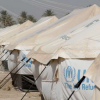
IOM’s emergency site at the former Qayara airstrip hosts over 52,000 displaced Iraqis or 8,746 families. The scorching heat is already having an impact on both health and living conditions for individuals living at the site.
From June onwards, temperatures in Iraq’s Ninewa governorate will hit, and on some days, surpass the 50° mark. The PVC tents that provided residents with much warmth during the cold winter months will be hard to tolerate in summer, as temperatures inside register at least 10° higher than outside.
“We are now sleeping outdoors to keep cool,” said Abu Omar, a displaced individual at the site. “It is literally impossible to bear the heat inside the tent.”
With the Qayara site at full capacity, IOM teams are in the process of ensuring that all IDP families are equipped with the basic materials that will help alleviate some of the summer’s discomfort.
Winter kits that have been modified for hotter days are being prepared for distribution to an estimated 7,790 families, in both Qayara and the neighboring Haj Ali camp.
Posted in Healthcare, Security Comments Off on Soaring Temperatures Next Challenge for Mosul IDPs
Iraq to Begin Snuffing Out Flares
Posted on 19 May 2017 .
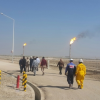
Oil-producing countries yet to address their gas flaring may begin to feel there are no more excuses.
In a remarkable and bold decision, the government of Iraq recently endorsed the “Zero Routine Flaring by 2030” Initiative, (ZRF), which means the country has committed to not routinely flare associated gas in any new oil fields and will work to end routine flaring in existing oil fields as soon as possible and no later than 2030.
Launched in 2015 by UN Secretary-General Ban Ki-moon and World Bank President Jim Yong Kim, the ZRF Initiative is designed to end a 150-year-old oil industry practice that is responsible for emitting more than 300 million tons of CO2 into the atmosphere.
Gas flaring also wastes a valuable source of energy that could be put to productive use, particularly in countries where many people lack access to electricity.
"Even in the most difficult circumstances we recognize that Iraq must ensure its resources are managed sustainably for future generations. Flaring is not only bad for the environment, it represents several billion dinars going up in smoke."
-- Dr. Hamed Younis Saleh, Deputy Minister of Oil for Gas Affairs
The latest satellite data released by the US National Oceanic & Atmospheric Administration and the World Bank-led Global Gas Flaring Reduction Partnership (GGFR) shows that Iraq’s gas flaring has increased dramatically. Just four years ago the country was flaring about 12 bcm of gas annually. However, in 2015 the country flared close to 16 bcm, making it the second-largest gas flaring country in the world.
Posted in Iraq Oil & Gas News Comments Off on Iraq to Begin Snuffing Out Flares
EGFI agrees Political Risk Insurance for Rumaila Power Plant
Posted on 09 May 2017 .
The Export Guarantee Fund of Iran (EGFI) has announced that it is to provide political risk insurance (PRI) to Iran's MAPNA Group for its Rumaila power plant project in Iraq.
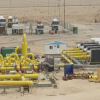
Rumaila, a natural gas combined cycle power plant with 12 gas and 6 steam turbines, is to be implemented at a cost of $2.5 billion by MAPNA Group in Basra, southern Iraq.
The project, which is one of the biggest in the region, aims to add 3000 MW of electricity to Iraq's national grid.
The work is planned to be finished within 5 years, with the first phase expected to be completed within 19 months. The execution of the project started following two years of close negotiations with the international consultants and the host government.
Rumaila is a long term investment project which is to be financed jointly by MAPNA and a Jordanian private company. The Iraqi government guarantees the PPA (Power Purchase Agreement).
EGFI says it has played a pivotal role in the project by providing MAPNA with a USD 300 million PRI policy which covers the project against political risks such outbreak of war, expropriation, confiscation and nationalization, foreign exchange transfer and breach of contract by the host government.
(Source: EGFI)
Posted in Construction & Engineering In Iraq, Iraq Banking & Finance News, Iraq Public Works News Comments Off on EGFI agrees Political Risk Insurance for Rumaila Power Plant

Investment Opportunity at Al Nassiriyah Power Plant
Posted on 04 May 2017 .
By John Lee.
Iraq's Ministry of Electricity (MOE) has announced an investment opportunity for the rehabilitation, operation and transfer (ROT) of the Al Nassiriyah Steam Power Plant.
(Source: National Investment Commission)
Posted in Construction & Engineering In Iraq, Iraq Public Works News, Tenders Comments Off on Investment Opportunity at Al Nassiriyah Power Plant

Back to the Future: The Restoration of Iraq, and British Expertise
Posted on 13 April 2017 .
By Ashley Goodall.
Back to the future. The restoration of Iraq and British expertise.
Iraq has been in the news for a generation and our perceptions have been coloured by conflict and the near destruction of the Middle East’s most wealthy and civilised country. In the 1970’s Iraq was not only a secular and relatively harmonious multi-cultural society, but highly educated, enormously wealthy and a centre for cultural tourism.
While the media is focussed on the awful impact of IS, and the conflict in Mosul is still raging, it’s fair to say large swathes of the country, especially the South, have been free from conflict and are relatively peaceful. Indeed, the conduct and effectiveness of the Iraqi army has given hope to a peaceful aftermath in Mosul and Anbar province, with prospects for an end to IS and reconciliation with the Sunni groups in the west.
Today, similar conditions exist for a return to that wealth and civilisation- as the country comes together, Daesh are being seen off, the oil price is rising, the IMF and ISF are loaning the country $14bn for infrastructure, and educated expat entrepreneurs are beginning to return home with investment and know how.
Now that the UK is going global we should consider Iraq a strong business opportunity. Iraq is open for Investment, from the most basic Infrastructure: roads, rail, ports, airports and water, to new private housing, schools and universities, with Iraq’s abundant energy, oil, gas and petrochemical industries, to professional services and cultural tourism. Iraq is effectively virgin territory for investors, construction and professional and telco and cultural tourism services alike - in fact, all the things the UK excels in.
The picture for British industry is even stronger when we recognise British companies already play a leading role in the business ecology: Shell and BP are key players in the economy and offer an umbrella for British engineering companies; Eversheds, EY and PWC provide legal and accountancy services to our companies and Standard Chartered are there to service our finances.
The Iraq Britain Business Council (IBBC) with its long term and trusted relationships in senior government circles can also guide and assist members on political issues and through its extended membership there is a wealth of knowledge to assist new members in doing business in Iraq.
Tawfiq Tabbaa, Managing Partner of Eversheds Iraq, has seen a 25 percent increase in business, and the prospects of acceleration as international business moves back to Iraq, including a budegoning tech sector and a requirement for professional services to service international and local companies.
Alistair Kett, a Partner at PWC, observes:
"To the casual observer, any headlines relating to Iraq will be dominated by the ongoing defeat of Daesh and the associated albeit complex security picture. A closer look, however, reveals a country that has started a huge transformation. With significant financing available for huge infrastructure projects and many recognised organisations already embedded in their design and delivery the economic and commercial potential of this market is clearly shifting quickly."
Mohammed Al Charchafchi, Chairman of Zain Iraq, indicates that:
"The Iraqi economy is recovering and is projected to grow at 7 percent in the next few years, one of the highest growth rates in the world, this also applies on the GDP per capita and the contribution of non-oil revenue to the GDP of the country. The growth is mainly driven by the increased production of oil, inflow of FDI, structural reforms by the government and implementation of the IMF terms.
And IBBC new member GE has recently won a $1.4-billion contract to build new electric power stations. Frederic Ribieras, VP Global Growth says:
"GE just signed several new contracts worth a total of $1.4 billion with the Iraqi Ministry of Electricity to add a further 2,000 MW via gas turbines, that drastically increases supply to Iraq’s grid. Thanks to GE’s global reach and relationships with various financing institutions and export credit agencies, GE also has been able to set up some $2 billion in credit to support the projects. This will enable the Iraqi government to improve its power supply without short-circuiting its finances."
As if that is not bright enough the Chinese intend to bring the New Silk road (OBOR) and its investment train through northern Iraq to provide access to China and the West, for Iraq’s petrochemical industries. And the Iraqis are surprisingly loyal to the UK.
So we see an immediate future where Iraq begins to re-take its place in the league of wealthier nations, keen to expand consumer and professional services, fuelled by oil and petrochemical wealth and servicing an educated and capable population with a government willing to reform and invest.
It’s time to go back to the future and back to Iraq with British expertise and investment.
Ashley Goodall is a consultant at the Iraq Britain Business Council (IBBC).
Posted in Construction & Engineering In Iraq, Investment, Iraq Industry & Trade News, Iraq Oil & Gas News 2 Comments
Baghdad Power Plant Starts Operations
Posted on 12 April 2017 .
By John Lee.
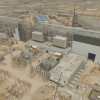
GE and Mass Group Holding (MGH) have successfully commenced simple cycle commercial operations of four advanced GE 9F gas turbines under phase I of the Ministry of Electricity’s (MOE) Baghdad Power Plant in Besmaya [Bismaya].
Located about 40 kilometers from Baghdad, the facility is the first one in the country outside the Kurdistan region to be developed by an independent power producer on a build-own-operate (BOO) basis for the Iraqi MOE.
The new project is being constructed by and will also be operated by MGH and will add 3,000 MW of power to the grid when fully operational. The second phase of the project is expected to start commercial operations in 2018.
Musab al Mudarres, an Electricity Ministry spokesman, said:
“The commercial operations of Baghdad Power Plant by Mass Group Holding using GE’s advanced equipment comes at a significant time, as we focus on strengthening Iraq’s electricity infrastructure to meet the growing needs of residents and various industries. We have set a new model in power generation with the Baghdad project. By accelerating public private partnerships, we aim to ensure the seamless supply of electricity to our people.”
Once complete, the Baghdad Power Plant will take the total power produced by MGH in Iraq to 7,000 MW. GE has already delivered advanced equipment for MGH’s power plants in Erbil, Sulaymaniyah and Dohuk, which together have an installed capacity of 4,000 MW.
“With a successful track-record of commissioning three power projects equipped with GE technologies already, we are committed to partnering with the government in building a strong efficient power infrastructure,” said Ahmad Ismail, Chairman of MGH. “The Baghdad Power Plant in Besmaya is truly path-breaking as it is the first of its kind by the private sector in central and south Iraq. By adding power to the national grid, we are contributing to the growth of the economy, and meeting the aspirations of the people.”
Posted in Construction & Engineering In Iraq, Iraq Public Works News Comments Off on Baghdad Power Plant Starts Operations
Why aren't Mosul Residents Returning to Liberated Areas?
Posted on 31 March 2017 .
By Suha Oda for Al-Monitor. Any opinions expressed are those of the author, and do not necessarily reflect the views of Iraq Business News.
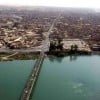
The Ministry of Displacement and Migration announced March 20 that the number of residents displaced from Mosul has risen to 355,000 since the start of the liberation in October 2016, with the number set to increase. Meanwhile, only 81,000 displaced residents have returned to liberated areas.
People are increasingly flocking to the Directorate of the National Security Service in the Bartala area in eastern Mosul to obtain security permits to travel or flee to other Iraqi provinces. Such permits prove to a certain point that their holders are not members of the Islamic State (IS) and do not work with it.
“Between 1,000 and 1,500 permits were being issued on a daily basis in January 2017 to citizens of the [eastern Mosul] areas, including large numbers of employees,” a security source from the Mosul Security Directorate told Al-Monitor on condition of anonymity.
During the years of IS control, most of the Mosul population opted to stay in their homes to show resistance against IS. Some residents even described those who left the city as “weak.” However, they now seek to escape as soon as the chance arises.
Ferial al-Mosuli, the director of a secondary school for girls, opted to stay in Mosul to prevent IS from seizing her house. “Many more people left Mosul after the liberation than during IS’ occupation because of the lack of clean water and electricity.”
Mosuli added, “We do not have enough teachers; most of them are still in [Kurdistan], and only 65 students are left in our school out of 700."
Some of the Mosul residents who lived in areas that are now liberated have chosen not to return to these areas, especially those working in the health and education fields, as they settled with their families in Kurdistan, Baghdad or outside Iraq.
Posted in Security Comments Off on Why aren't Mosul Residents Returning to Liberated Areas?