


Govt & Industry Leaders: Iraq’s Economic Capital Ready for Business
Posted on 03 August 2017 .
Advertising Feature
Key figures of the Iraqi Government and Ministries have confirmed their attendance at the annual Basra Oil, Gas & Infrastructure Conference due to take place on 30-31 October in Beirut, to highlight the current investment projects available in Basra’s multiple industries and facilitate a direct dialogue towards promoting further business in Iraq’s Economic Capital.
The official meeting is held under the high patronage of the Basra Governorate and the Basra Council, with the support and participation of Iraq’s Ministry of Oil, Basra Oil Company, and Lebanese Ministry for Energy & Water and the Petroleum Administration for the Lebanese Republic.
Distinguished Speakers include:
- E. Dhia Jaffar, Deputy Minister, Ministry of Oil, Federal Government of Iraq
- E. Cesar Abi Khalil, Minister of Energy & Water Resources, Lebanese Republic
- E. Thamir Ghadhban, Former Oil Minster & Advisor to Iraq’s PM, Federal Government of Iraq
- E. Engineer Mohammed Al Tamimi, First Deputy Governor of Basra Governorate of Basra, Federal Government of Iraq
- MP Dr Jamal Abdul-Zahra Muhammadawi, Member of the Parliament Representing Basra, Federal Parliament of Iraq
- Wissam Zahabi, Chairman of the Board, Petroleum Administration, Lebanese Republic
- E. Abbas Omran Mousa, Deputy Minister, Ministry of Transportation, Federal Government of Iraq
- Ali Shadad Al Fares, Head of the Energy Committee, Basra Council, Federal Government of Iraq
- Ihsan Abduljabbar Ismaael Al - Saade, Director General of the South Gas Company, Ministry of Oil, Federal Government of Iraq
- Nafaa Abdulsada Ali Al-Hmidawi, Director General of Training & Development Office, Ministry of Electricity, Federal Government of Iraq
- Naser Muhsin Muhan, Head of Licensing & Contracts, Basra Oil Company, Ministry of Oil, Federal Government of Iraq
View full list of speakers here: http://www.cwcbasraoilgas.com/speaker/
The Basra province in the south of Iraq is home to 70% of Iraq’s gas reserves and 59% of its oil, offering valuable investment projects in a variety of sectors and providing a secure environment for developers to enter and operate in Iraq. Its strategic location with access to Persian Gulf via the ports of Al Maqal and Umm Qasr, provides huge advantages in the development of Basra and its numerous industries: oil, gas, power, petrochemicals, infrastructure, construction, transport, logistics and others.
The renowned Conference will address opportunities, projects and tenders in each one of these industries through its 2 day Strategic Programme. With an easy to follow guide on which sectors are covered in each session, attendees can expect the following topics to be discussed:
- Current updates on Basra’s oil fields,
- Infrastructure Contracts
- Procurement processes for accessing tenders
- Developing the transport and logistics sector
- Ultimate gas utilization
- Electricity projects
- Reconstruction of Iraq Tenders
View the full programme here: http://www.cwcbasraoilgas.com/programme/
Posted in Construction & Engineering In Iraq, Iraq Oil & Gas News Comments Off on Govt & Industry Leaders: Iraq’s Economic Capital Ready for Business

ABB wins $30m Infrastucture Order in Basra
Posted on 02 August 2017 .
Swiss-based ABB has won an order to supply and install a substation at the 3,000 megawatt (MW) Rumaila power plant, located in the Basra region of southern Iraq.
The completed power plant will be operated by Shamara Holding Group (SHG), one of Iraq’s largest private industrial conglomerates and an independent power producer.
The Rumaila power plant is expected to increase power generation capacity by about 20 percent and address acute shortages of electricity, hampering economic growth in the country. The order was booked in the second quarter of 2017.
The 3,000 MW from the Rumaila power plant will add to Iraq’s current generation of 13,000 MW, which is short of the country’s peak load demand of about 23,000 MW. Iraq balances its high power demand and low supply capacity through load shedding, which means power is only available to its 34 million citizens for about 15 hours each day. The addition of new generating plants will increase electricity supply, and support economic growth.
ABB will design, engineer, supply and install the 400 kilovolt (kV) air insulated switchgear (AIS) substation, which will be equipped with technology and instrument transformers from ABB. The substation will also be equipped with advanced digital control, protection and telecommunication systems.
Claudio Facchin (pictured), president of ABB’s Power Grids division, said:
“Our advanced substation solution will help bring much needed electricity to the region by expanding capacity and strengthening Iraq’s power infrastructure, bringing much needed power to consumers.
“This project adds to our extensive installed base in the region and supports our Next Level strategic thrust on growing markets.”
(Source: ABB)
Posted in Construction & Engineering In Iraq, Iraq Public Works News Comments Off on ABB wins $30m Infrastucture Order in Basra
IMF Approves Payment of $825m to Iraq
Posted on 02 August 2017 .
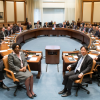
The Executive Board of the International Monetary Fund (IMF) has completed the second review of Iraq’s three-year Stand-By Arrangement (SBA), which is designed to support Iraq’s economic reform program and restore fiscal balance over the medium term.
The completion of the second review allows the authorities to draw the equivalent of SDR 584.2 million (about US$ 824.8 million), bringing total disbursements to SDR 1494.2 million about US$ 2109.7 million.
The SDR 3.831 billion arrangement (about US$5.34 billion at the time of approval of the arrangement) was approved in July, 2016 (See Press Release No. 16/321) and the first review was completed on December 5, 2016 ( See Press Release No. 16/540).
As part of the completion of the second review, the Board also approved Iraq’s request for waivers of non-observance and applicability of performance criteria, and modification of performance criteria.
Further fiscal consolidation was achieved in 2016, but at a slower pace than programmed because of weak control of investment expenditure and humanitarian needs. To move the program forward, the authorities are implementing strong corrective measures as prior actions and are committed to further fiscal measures in 2018 to ensure external and debt sustainability.
The Executive Board today also concluded the 2017 Article IV Consultation with Iraq. A respective press release will be issued separately.
Following the Executive Board’s decision, Mr David Lipton, First Deputy Managing Director, issued the following statement:
"The economic policies implemented by the Iraqi authorities to deal with the shocks facing Iraq—the armed conflict with ISIS and the ensuing humanitarian crisis and the collapse in oil prices—are appropriate. In the fiscal area, the authorities are implementing a sizable fiscal adjustment, mostly through retrenchment of inefficient capital expenditure while protecting social spending.
"The authorities are appropriately maintaining the peg of the Iraqi dinar to the U.S. dollar, which provides a key anchor to the economy. Performance under the Stand-By Arrangement has been weak in some key areas, but understandings have been reached on sufficient corrective actions to keep the program on track. Resolute implementation of the authorities’ program, together with strong international financial support, will be key.
"Further fiscal consolidation measures are needed in 2017-18 to keep the program on track. The composition of the fiscal adjustment should be improved over time by increasing non-oil revenue and reducing current expenditure. In addition, reforming the electricity sector and state-owned enterprises will make room for larger and more effective investment expenditure that supports growth and job creation.
"Significantly improving public financial management will be important. Arrears need to be assessed and paid following verification, and expenditure commitment and cash management should be strengthened to prevent the accumulation of new arrears.
"Measures to bolster financial sector stability include strengthening the legal framework of the Central Bank of Iraq, restructuring state-owned banks, and eliminating an exchange restriction and a multi-currency practice. Measures to prevent money-laundering, counter the financing of terrorism, and strengthen the anti-corruption legislation also need to be implemented.
"Implementation of the budget-sharing agreement with the Kurdistan Regional Government would put both the federal government and the Kurdistan Regional Government in a better position to address the shocks to the Iraqi economy."
(Source: International Monetary Fund)
Posted in Iraq Banking & Finance News, Politics Comments Off on IMF Approves Payment of $825m to Iraq
Iran says Gas Exports to Iraq set to Increase
Posted on 01 August 2017 .
Iran's deputy oil minister has said gas exports to Iraq has reached 7-8m cubic metres per day and will increase as demand is growing, the official Islamic Republic News Agency (IRNA) reported on July 28.
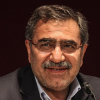
Hamid Reza Araqi (pictured), who is also the head of the National Iranian Gas Company (NIGC), said Iraq has suggested an increase in gas imports from Iran.
An increase in gas production, as well as boosting the country's capacities, will allow a rise in gas exports.
According to IRNA, Iran started exporting gas to Iraq on June 21 after a long pause.
The report cited security problems in Iraq as a result of armed insurgencies, had prevented gas exports before then.
The two countries have signed two contracts based on which Tehran is delivering gas to Baghdad and the Iraqi city of Basra in the south. IRNA also pointed out that Iraq continues to face severe electricity shortages and its power plants are in need of Iran's gas.
IRNA forecasts gas exports to Iraq will increase to 35m cu.m p/d in the future.
(Source: GardaWorld)
Posted in Iraq Oil & Gas News Comments Off on Iran says Gas Exports to Iraq set to Increase
Dana Gas Consortium wins Payment in KRG Dispute
Posted on 01 August 2017 .
By John Lee.
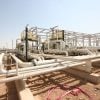
The London Court of International Arbitration ("Tribunal") yesterday released its First Partial Final Costs Award, dated 17 July 2017 in the Arbitration between Peal Petroleum Company Limited, Dana Gas PJSC and Crescent Petroleum Company International Limited (the "Consortium") –v- The Kurdistan Regional Government of Iraq ("KRG").
The Tribunal ordered the KRG:
- to pay US$ 14,046,485 to the Consortium within 28 days, together with interest at LIBOR + 2% from the date of the Award; and
- to bear 85% of the LCIA Arbitration fees and Tribunal's fees and expenses up to 27 November 2015 amounting to GBP 403,055.97.
The Costs Award relates to the legal costs incurred by the Consortium up to 27 November 2015. The legal costs incurred in the Arbitration after this date will be the subject of further Costs Awards from the Tribunal in due course.
This additional order of the costs follows the 1st, 2nd and 3rd partial final awards already received on, 2 July 2015, 27 November 2015 and 30 January 2017.
The quantification of the damages for the Delayed Development Claim by the "Consortium" will be determined by the Tribunal at a further hearing scheduled to take place in September 2017.
In a statement, Dana Gas said that it and its consortium partners have invested over US$1.2 billion so far and produced over 150 million barrels equivalent of gas and petroleum liquids, which has had a transformative positive effect on the local economy in the Kurdistan Region and in particular in providing gas to fuel affordable electricity supply.
They reiterate their continued commitment to the KRG and to the people of the Kurdistan Region and all of Iraq, and hope that any outstanding matters with the MNR will be resolved, amicably and in good faith, in the shortest possible time.
(Source: Dana Gas)
Posted in Iraq Oil & Gas News Comments Off on Dana Gas Consortium wins Payment in KRG Dispute
More than $700m to be spent in Western Mosul
Posted on 31 July 2017 .
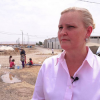
The United Nations Development Programme (UNDP) estimates that more than $700 million will be needed to rehabilitate Western Mosul, in addition to the $370 million required in the Eastern part of the city.
The Deputy Special Representative of the United Nations Assistance Mission for Iraq (UNAMI), and UNDP Resident Representative in Iraq, Ms. Lise Grande (pictured), told The Fiscal Times:
"Based on the first damage and loss assessments, we estimate that $470 million is needed to help restore the main electricity, water and sewage grids and rehabilitate key public facilities including hospitals, schools and houses in the most heavily damaged neighbourhoods in western Mosul.
"A minimum of $237 million is required in the moderately and lightly destroyed districts. This is double the amount we originally estimated for western Mosul and is in addition to approximately $370 million required for the stabilization of eastern Mosul."
She added that Eastern Mosul is already recovering, with 230 projects in progress under UNDP's Funding Facility for Stabilization (FFS).
Of the 54 residential neighbourhoods in western Mosul, 15 are heavily damaged, 23 are moderately damaged, and 16 are lightly damaged. UNDP is already active in the lightly damaged districts: 70 projects have started, and hundreds more are being planned.
Full interview available here.
(Source: UNDP)
Posted in Construction & Engineering In Iraq Comments Off on More than $700m to be spent in Western Mosul
Mansurya Power Plant to delivering up to 720MW
Posted on 20 July 2017 .
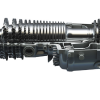
GE has said it is supporting Iraq to develop its electricity infrastructure, working closely with the Ministry of Electricity to set up the Mansurya Power Plant in Diyala. Earlier, while still in its construction phase, the facility had been partially damaged during the conflict in the area and progress towards project completion had stalled.
The site is now expected to generate up to 720 megawatts (MW) of electricity powered by four units of GE’s GT13E2 gas turbines, each with a capacity of up to 180 MW under International Organization for Standardization (ISO) conditions. Two units have already been successfully synchronized to the national grid and the GE team at site is working to commission the other two units.
Musaab al-Mudarris, the official spokesman of the Iraqi Ministry of Electricity, said:
“Our primary focus is on rebuilding and strengthening the country’s electricity infrastructure, especially in light of the surge in demand during the summer season. Several power plants, including Mansurya, were damaged, resulting in the need for the fast mobilization of advanced technologies to restore them and recommence operations.
"GE’s advanced technologies and technical support in rebuilding and powering-up the plant have come at a significant time. This will go a long way towards enhancing the well-being of our people and supporting local businesses and industries.”
During the rebuilding process, GE worked with the Ministry to provide gas turbines that offer industry-leading efficiency in their segment. The GT13E2 gas turbines are an excellent fit for the Mansurya plant in delivering efficient supply of electricity to meet peak summer demand. Moreover, if converted to combined cycle configuration, the power plant could operate at an efficiency of up to 55 percent.
Posted in Iraq Industry & Trade News, Iraq Oil & Gas News Comments Off on Mansurya Power Plant to delivering up to 720MW
Baker Hughes signs Contract for Natural Gas Liquids Plant
Posted on 18 July 2017 .
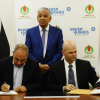
Following extensive discussions, the Iraqi Ministry of Oil and Baker Hughes, a GE company (BHGE) signed a contract for fast-track solutions to help the recovery of flare gas in line with the country’s strategy for energy sector development.
An advanced modular gas processing (NGL) plant has been recommended for Nassiriya as part of the initiative by Baker Hughes, which is the first and only company in the world to provide a full-stream offering covering products, services and digital solutions for the oil and gas sector, from upstream to midstream and downstream.
As per the agreement, Baker Hughes, will develop advanced solutions for flare gas at the Nassiriya and Al Gharraf oilfields, using modular gas processing technology developed in the United States, with the project to be undertaken in two stages. In the first stage, the advanced modular gas processing solution will be deployed to dehydrate and compress flare gas to generate over 100 million standard cubic feet per day (MMSCFD) of gas.
The Nassiriya plant will then be expanded to a complete natural gas liquid (NGL) facility to recover 200 MMSCFD of dry gas, liquefied petroleum gas (LPG) and condensate. The project will create direct and indirect jobs for Iraqis and help grow the local supply chain requirements that support Iraqi small and medium enterprises.
The modular solution will also support power plants with dry gas for efficient power generation, thus helping meet the growing demand for electricity using clean fuel. The project will also contribute to curtailing the amount of gas flared in the fields of Nassiriya and Gharraf that otherwise goes to waste.
The hundreds of thousands of tons per year of LPG and condensates produced will help meet the domestic demand for cooking gas. The surplus LPG and condensate will be exported, generating high revenue to the Iraqi government. Contributing to the social and economic development of Nassiriya, the project is aligned with the vision of the Ministry of Oil and the government.
His Excellency Jabbar Al-Luaibi, the Iraq Minister of Oil, said that the Ministry is moving ahead to implement its strategic plans to secure financial revenue to the treasury of the Iraqi state and to develop the oil industry. The statement came at the ceremony hosted by the Ministry to sign a contract for the project to invest in an optimum solution to recover flare gas in the fields of Nassiriya and Gharraf with Baker Hughes.
Rami Qasem, President, MENAT and India, Baker Hughes said:
“The Iraqi Ministry of Oil has outlined a clear vision and strategy to maximize the utilization of natural resources, especially gas. As a full-stream company that combines physical and digital strengths to increase reliability and uptime across the entire spectrum of oil and gas development, we bring advanced solutions that can support in transforming the industry and contribute to all-round development through our in-country investments in Iraq.
"We are committed to supporting the Ministry of Oil in its strategic goals, and in deploying advanced flare gas solutions and to build the country’s oil and gas infrastructure. From industrial to economic and environmental benefits our solutions will create long-term value for the country.”
Last year, BHGE had signed a first-of-its-kind partnership agreement with the Ministry of Oil to strengthen the performance of the Iraq energy sector by providing advanced equipment, technology upgrades, maintenance of the Ministry of Oil fleet and ensuring knowledge transfer, skills development and local jobs.
BHGE has also strengthened its localization initiatives in Iraq with the expansion of its technical services facility in the North Rumaila oilfield. It offers a wide range of testing, repair and refurbishment services for its customers in the country as well as undertakes fabrication and assembly of key products establishing BHGE as a complete technical solutions provider.
With three offices in Iraq - Baghdad, Erbil and the Basra – GE continues to deliver its latest technology and expertise to local customers. The company has more than 350 employees currently, nearly 95 per cent of them Iraqi professionals.
(Source: Baker Hughes)
Posted in Construction & Engineering In Iraq, Iraq Oil & Gas News 1 Comment
UNDP Improves Access to Safe Water in Sulaimaniyah
Posted on 16 July 2017 .
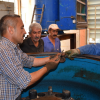
The United Nations Development Programme (UNDP) and Sulaimaniyah Governorate completed the rehabilitation of the main water network providing safe drinking water to hundreds of thousands of people.
UNDP’s Iraq Crisis Response and Resilience Programme (ICRRP) and Sulaimaniyah Governorate repaired key components of the main pipeline that transfers water from Dukan Lake to Sulaimaniyah Governorate. Pumping stations and a treatment plant were also rehabilitated to help alleviate water shortages and ensure an adequate supply of clean water to households in the Governorate.
At a ceremony on 5 July 2017 marking the completion of the project, Governor of Sulaimaniyah H.E. Omer Ahmed Amin, said:
“In Sulaimaniyah, one in every eight residents is an internally displaced person. The influx of displaced people is putting considerable pressure on public services, in particular water, electricity, health, and education. This project is providing a key service to all women, men and children in Sulaimaniyah.”
The Head of the Consular Office of Japan in Erbil, Mr. Moriyasu Katsumi, said:
“Japan is honoured to be a partner of this important project. We are delighted to see that all inhabitants of Sulaimaniyah, including internally displaced people and Syrian refugees, will equally benefit from improved access to the water supply.”
UNDP’s Programme Manager for ICRRP, Ms. Mizuho Yokoi, noted:
“Water is essential for life. We are glad we contributed to such an important basic service project focused on improving the well-being of vulnerable communities. We thank the Sulaimaniyah Governorate for their cooperation and the Government of Japan for the generous contribution which made this project possible.”
The first step to recovery, after a crisis, is ensuring people have access to basic services. UNDP’s ICRRP is supporting local authorities to deliver services that are fundamental to daily life. Over 2.4 million people in Iraq have access to improved basic services like water, electricity, health, education, sewerage and roads thanks to UNDP.
(Source: UNDP)
Posted in Construction & Engineering In Iraq, Healthcare, Iraq Public Works News Comments Off on UNDP Improves Access to Safe Water in Sulaimaniyah
A Stabilization Milestone is reached in Fallujah
Posted on 07 June 2017 .
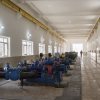
Marking a key milestone in Fallujah’s recovery, the Government of Iraq and UNDP’s Funding Facility for Stabilization (FFS) re-opened Al Azrakiyah Water Treatment Plant, which provides safe water to more than 60% of the city.
The rehabilitation of the plant was one of the key projects requested by the Anbar Command Cell, which is responsible for stabilizing newly liberated areas.
The team working on the plant repaired the destroyed pump station and supplied key equipment, including water pumps and generators. All of the plant’s buildings and more than 40,000 square meters of land was cleared of explosive hazards by the United Nations Mine Action Service (UNMAS).
Nearly one year after the liberation of Fallujah, the stabilization of the city is well underway. Hundreds of thousands of people have returned home, basic services including water and electricity have been restored, and the local economy is picking up.
Since August 2016, more than 100 stabilization initiatives have been supported in Fallujah through UNDP’s Funding Facility. Grids have been repaired, public infrastructure re-opened and thousands of people, many from destitute families, have worked on public schemes, earning income while they helped to rebuild the city.
UNMAS’ partner has cleared almost 2 million square metres of land and infrastructure contaminated with explosives including five power plants, 12 health facilities, 13 sewage sites, 19 water points, and 88 schools.
At a ceremony marking the re-opening of the water treatment plant on Thursday, Sohaib al-Rawi, Governor of Anbar, said:
“The newly rehabilitated Al Azrakiyah Water Plant is essential to the improvement of access to safe drinking water to Fallujah households. Water supply projects are critical to improve our communities’ access to safe water and functioning sanitation systems. These projects are vital for sustaining the lives and well-being of men, women and children in Anbar.”
Ms. Lise Grande, UNDP Resident Representative for Iraq said:
“This is a symbol of Fallujah’s recovery. When we first saw the destruction at Al Azrakiyah none of us believed the water plant could be rebuilt so quickly. Everyone has worked together to get the job done in record time. The impact is huge. More than 60 percent of the city will now have safe drinking water.”
Mr. Pehr Lodhammar, Officer in Charge of UNMAS, said:
“The identification and removal of explosive hazards is the first step before stabilization initiatives or humanitarian interventions can take place in liberated areas. In Fallujah almost two million square meters of contaminated areas were cleared allowing stabilization activites to begin, and enabling families to return to Fallujah and to resume their lives.”
Established in June 2015, FFS is working in newly liberated areas in Anbar, Salah al-Din, Ninewa Diyala, and Kirkuk Governorates. More than 1,000 projects are completed or being implemented across 23 locations. Since the start of the crisis, over 1.8 million people have returned to their homes.
(Source: UNDP)
Posted in Construction & Engineering In Iraq, Iraq Public Works News, Security Comments Off on A Stabilization Milestone is reached in Fallujah