


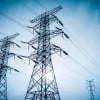
Iran Resumes Power Supply to Basra
Posted on 03 May 2016 .
By John Lee.
Iran has reportedly resumed electricity exports to Iraq following a hiatus over unpaid fees.
Power was restored following the visit of an Iraqi delegation to Tehran to settle the issue.
(Source: PressTV)
(Electricity image via Shutterstock)
Posted in Iraq Industry & Trade News 4 Comments
$375m Financing Deal for Power Sector
Posted on 28 April 2016 .
By John Lee.
Dimitris Tsitsiragos, the Vice President of the World Bank's private sector investment arm, told Reuters on Thursday that the bank had arranged $375 million in financing for an Iraqi power company.
The International Finance Corporation (IFC) will provide a debt and equity package of $250 million, with another $125 million from Lebanon's Bank Audi.
Mass Global Energy Sulimaniya will use the financing to add 500 megawatts of capacity to a 1,000-megawatt power plant (pictured) in Kurdistan, providing power to 3 million people.
It will also help complete a new power plant near Baghdad that will supply about half of the Iraqi capital's electricity requirements.
(Source: Reuters)
Posted in Iraq Banking & Finance News, Politics 5 Comments
China Reaches $20bn Trade with Iraq
Posted on 09 April 2016 .
By John Lee.
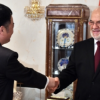
The Minister of Foreign Affairs, Dr Ibrahim Al-Jaafari, received a copy of the credentials of the new Chinese Ambassador to Iraq, Mr Chen Weiqing, at the ministry Headquarters..
"Last year, trade [between Iraq and China] reached $20 billion, and today Iraq represents the third largest partner in the Arab world," Mr Chen Weiqing revealed, affirming that China is continuing to provide assistance to Baghdad in various sectors, especially, the humanitarian and service sectors that include electricity and telecommunications.
He also asserted the keenness of the Chinese government on increasing the level of assistance this year to ¥160 million, with the first tranche to be delivered this month.
(Source: Ministry of Foreign Affairs)
Posted in Iraq Industry & Trade News, Security 10 Comments
Iran cuts Electricity to Iraqi Kurdistan
Posted on 05 April 2016 .
By John Lee.
Iran has cut electricity to the Penjwen district east of Sulaimani, as well as to neighboring villages in Iraqi Kurdistan, since Monday.
According to a report from eKurd, the supply was cut off after the Kurdistan Regional Government (KRG) failed to repay loans of $27 million to Iran.
Iran has provided the Penjwen district and nearby villages with electricity for nine years after the KRG and Iran signed an electricity agreement.
Negotiations are underway to return electricity to the area.
(Source: eKurd)
(Electricity image via Shutterstock)
Posted in Iraq Oil & Gas News 6 Comments
Gas Condensate Exports - a New Beginning for Hydrocarbon Industry?
Posted on 03 April 2016 .
By Rami Khrais for Al-Monitor. Any opinions expressed are those of the author, and do not necessarily reflect the views of Iraq Business News.
Do gas condensate exports represent new beginning for Iraq's hydrocarbon industry?
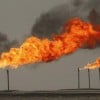
Iraq exported its first shipment of gas condensate on March 20, from the port at Khor al-Zubair to Fujairah in the United Arab Emirates (UAE). Hamed Zubai, undersecretary at the Iraqi Ministry of Oil, reported that the Iraqi Oil Marketing Co. had arranged for the 10,000-cubic-meter consignment, and the Basrah Gas Co. had successfully exported the shipment.
“Due to surplus exceeding local consumption, gas condensate exports will continue. In addition, the ministry seeks to export other types of associated gas-processing products,” Zubai said during a March 20 news conference. He did not mention potential export destinations.
“Exporting condensate opens the door for the state to secure added financial returns, driven by the fact that the global price per ton is around $350.” What does this development mean, and does it represent a new beginning for the gas industry in Iraq?
Whereas natural gas refers to gaseous hydrocarbons that accumulate in porous sedimentary rocks and consist mainly of methane, gas condensate refers to a natural gas liquid recovered from gas wells that consists mainly of pentane. Iraq is one of the world’s richest countries when it comes to natural gas.
Citing the Oil & Gas Journal, the US Energy Information Agency (EIA) reported that as of January 2015, Iraq had proven gas reserves of about 112 trillion cubic feet, ranking it 12th globally in total volume of reserves. The EIA estimates that about three-quarters of Iraq's natural gas resources are of the associated type, meaning that they are located deep underground and mixed with oil. In contrast, neighboring Iran and Qatar have nonassociated gas, which is not mixed with petroleum.
Posted in Iraq Oil & Gas News Comments Off on Gas Condensate Exports - a New Beginning for Hydrocarbon Industry?
Prime Minister Announces New 'Technocrat' Cabinet
Posted on 01 April 2016 .
By John Lee.
Prime Minister Haider al-Abadi nominated a new cabinet on Thursday, pledging to make political reforms to reduce corruption in response to sit-in protests in Baghdad led by Muqtada al-Sadr.
Sixteen ministries will be changed, and the parliament will vote in ten days to either approve, reject or amend the proposed cabinet.
No changes will be made in the defense nor interior ministries, as Abadi believes reshuffling them during a time of war could be problematic.
The proposals are:
- Ali Alawi - Minister of Finance.
- Nzar Salim - Minister of Oil.
- Sharif Ali bn Ali - Minister of Foreign Affairs.
- Ali Jabouri - Minister of Education.
- Ali Mubarak - Minister of Health.
- Hassan Janabi - Minister of Oil and Water Resources.
- Aqil Yousif - Minister of Youth and Culture.
- Hoshiyar Amin - Minister of Municipality and Reconstruction.
- Yousif Assadi - Minister of Transportation.
- Mohammed Nasrollah - Minister of Justice.
- Ala Dashir - Minister of Electricity.
- Wafa Mahdawi - Minister of Immigration and Displacement.
(Sources: Middle East Eye, Rudaw)
Posted in Politics 4 Comments

Oil Ministry Clarifies Gas Export Policy
Posted on 31 March 2016 .
The Ministry of Oil has confirmed that the gas recently exported from Iraq was what it described as "condensed liquids (C5) or 'natural gasoline,'" a by-product from the associated gas investment extracts used for the industrial purposes, and “not the dry gas which is used for the power generation”.
Hamid Y. Salih, the deputy minister for gas, stressed that it was important to distinguish between these gas condensed liquids and the other types of the gas fuel.
He said that power stations use the dry gas, and the Iraqi production of this type of fuel does not meet the needs of all the power stations at the current time, so the ministry of oil imports the rest from the nearby countries.
He added also that the ministry plans to increase production of dry gas to provide the necessary fuel for domestic use in the next few years.
Mr. Assim Jihad the spokesman of the ministry said that the ministry is keen to meet the need of the power stations of the different types of fuel such as the dry gas, the gas oil, the crude oil and the black oil, either from the national production or from the imported fuel by coordination with the associated committees with the ministry of electricity.
Mr. Jihad sad also that the ministry was keen to invest the associated gas with oil perfectly by transforming the flare gas into useful source of energy for the electric power stations and the petrochemicals factories, as well as producing liquefied gas or (cooking gas), and condensed gas or (natural gasoline) for industrial purposes.
(Source: Ministry of Oil)
Posted in Iraq Oil & Gas News Comments Off on Oil Ministry Clarifies Gas Export Policy

Social and Economic Inclusion Key to Stability in Iraq
Posted on 30 March 2016 .
World Bank Group President Jim Yong Kim (pictured) told a special session of the Iraqi parliament that the path to stability and shared growth in Iraq lay in empowering local governments, opening up and diversifying the economy, and improving the management of public finances by reforming the public sector and increasing accountability.
The speech came during a joint visit to Iraq by Kim and United Nations Secretary General Ban Ki-moon to show international support for Iraq as it confronts the triple challenge of defeating Da’esh, maintaining momentum on reforms, and coping with the financial impact of the fall in oil prices.
“Even in the face of substantial challenges, democracy is taking root in Iraq,” Kim told members of parliament.
“Iraq has chosen the path of political inclusion – a decision that created difficult challenges and holds great promise. It requires political compromises to build the broad coalitions needed to achieve national goals. As complex as it may seem, as difficult as it may be, political inclusion is part of the critical path to long-term stability.”
The World Bank Group president said that the new atmosphere of open competition among different perspectives and the difficulty of building the necessary coalitions to achieve national goals were a positive sign.
Kim drew on Iraq’s historical legacy for lessons on how the great civilizations had thrived by balancing central authority with local autonomy. “Let me suggest that the best way to protect and preserve the cohesion of the country is to do what your forebears did, “said Kim. “Empower all its regions, and to give more capacity to local governments, all the way to the municipal level.”
Posted in Iraq Banking & Finance News, Politics, Security Comments Off on Social and Economic Inclusion Key to Stability in Iraq

Siemens signs 'Landmark Agreement' with Iraq
Posted on 29 March 2016 .
Siemens has signed a Memorandum of Understanding (MoU) with the Federal Government of the Republic of Iraq to strengthen the collaboration with the Ministry of Energy as well as Ministry of Oil & Gas for modernizing the energy infrastructure and the Oil & Gas sector.
In the presence of the Prime Minister of Iraq, Mr. Haider al Abadi, the Memorandum of Understanding was signed by Qassim al-Fahdawi, Minister of Electricity, and Siegfried Russwurm (pictured), a Member of the Managing Board of Siemens AG, in Baghdad.
Under the terms of the agreement, Siemens will develop an enhanced energy concept to advise the Iraqi Government on the development and optimization of the country's power generation and grid infrastructure including power generation mix.
"With this important agreement we intensify the long lasting partnership between Siemens and Iraq," said Siegfried Russwurm. "With our broad portfolio and comprehensive expertise in power generation, transmission as well as in Oil and Gas sector we will assist and support the Iraqi Government to develop a sustainable and modern electricity system to ensure the country's economic and social development."
The parties also intend to explore potential scope of further cooperation in the power generation sector as well as in the field of Oil and Gas.
Siemens and Iraq envisage exploring financing solutions for projects to be developed as well as maintenance and rehabilitation of existing power plants/infrastructure in close collaboration with the Federal Government of Germany.
(Source: Siemens)
Posted in Construction & Engineering In Iraq, Iraq Oil & Gas News 4 Comments
Oil Minister to discuss Oil Pipeline Project with Jordan
Posted on 08 March 2016 .
By John Lee.
Petra reports that the Jordanian Minister of Energy and Mineral Resources, Ibrahim Saif, will meet his Egyptian and Iraqi counterparts in Cairo on Tuesday to discuss developments regarding the Basra-Aqaba pipeline project.
The project, agreed by the three countries in Amman in November 2015, will see oil and gas pipeline running from Iraq to the Red Sea port of Aqaba.
Jordan is to benefit from Iraqi crude oil and liquefied gas for electricity generation.
(Source: Petra)
(Aqaba port image via Shutterstock)
Posted in Construction & Engineering In Iraq, Iraq Oil & Gas News Comments Off on Oil Minister to discuss Oil Pipeline Project with Jordan