


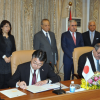
Japan to Finance Electricity, Sewerage Projects
Posted on 01 June 2015 .
By John Lee.
Finance Minister Hoshyar Zebari has signed a memorandum of understanding with the Japanese charge d'affaires in Iraq to finance two development projects using loans from Japan.
The first involves a loan of $450 million (525 billion Iraqi dinars) for reconstruction in the electricity sector, while the second is to finance the reconstruction of the sewerage system in the city of Erbil at a cost of $285 million.
(Source: Ministry of Finance)
Posted in Construction & Engineering In Iraq, Iraq Public Works News Comments Off on Japan to Finance Electricity, Sewerage Projects

Urgent Funding Needed for Health Care Projects
Posted on 31 May 2015 .
If urgently needed funds are not secured by the end of June 2015, more than 84% of health care projects serving populations in need in Iraq will be forced to close.
If this happens, more than 3 million refugees, internally displaced persons and host communities will not have access to the treatment and care that these projects provide.
The World Health Organization (WHO) calls on donors to urgently provide financial support to prevent further avoidable deaths and additional suffering for millions of the most vulnerable people in Iraq.
The closure of these projects means the suspension of critical services, such as trauma care, nutrition supplementation, primary health care, outbreak detection and management, immunization for children and reproductive health care in 10 out of 18 governorates in Iraqi. These governorates are: Missan, Basrah, Sulaymania, Ninwan, Najaf, Kirkuk, Karbala, Erbil, Diala, Dohuk, Baghdad and Anbar.
Deteriorating health situation
The recent escalation of violence in Ramadi has magnified the suffering of civilians, in particular, the sick, older people, children and pregnant women.
Since 15 May 2015, according to the United Nations, an estimated 55 980 people have been displaced and dispersed to over 65 locations inside Anbar, and to different northern, central, and southern parts of the country, bringing the number of people displaced to nearly 190 000. This population is in dire need of urgent humanitarian support, including access to health services.
Posted in Healthcare, Security 5 Comments

Iraq’s Missing Money
Posted on 21 May 2015 .
By Walid Khoudouri for Al-Monitor. Any opinions expressed are those of the author, and do not necessarily reflect the views of Iraq Business News.
Iraq is passing through a dangerous phase. There is a lot of waste and corruption and little transparency in state institutions. The security situation is deteriorating. And lately, there has been negative information about Iraqi officials responsible for the oil revenues during the last years. This has led to the dangerous situation that Iraq is [now] in.
It was shown that during the first week of May, the Iraqi parliament received, all at once, the final accounts of the eight years of the rule of former Prime Minister Nouri al-Maliki for the 2006-13 period to “review and approve them.” This means that the previous years’ accounts had not been reviewed or approved. And parliament is now being asked to approve them all at once after Maliki lost the prime minister post.
The move to approve all the past years’ final accounts is considered an illegal act according to the norms of parliamentary systems and traditions. The main role of the legislative branch is to review and approve the previous year’s accounts, and then approve the new year’s budget submitted to parliament by the government or the executive branch. This is already provided for in the Iraqi constitution.
Earlier this year, parliament member Magda Tamimi declared that she was preparing studies indicating that hundreds of billions of dollars are missing from the state’s annual budgets during Maliki’s reign. Tamimi has access to state financial figures because she has been a member of the parliamentary Finance Committee during the current and previous sessions. She is conducting a study on corruption in state institutions.
State budgets for the years between 2006 and 2013 were submitted, but not the budget for 2014. This is not strange, since the parliament at the time did not agree on the 2014 budget. And there was no budget for that year, which means that it is not possible to calculate and audit the budget of that year.
Posted in Politics, Security 3 Comments

Restrictions on IDPs Worsen Shiite-Sunni Divide
Posted on 13 May 2015 .
By Shelly Kittleson for Al-Monitor. Any opinions expressed are those of the author, and do not necessarily reflect the views of Iraq Business News.
Restrictions on Iraq's displaced people worsen Shiite-Sunni divide
Shiite Turkmen who fled Islamic State (IS, ISIS, ISIL) beheadings in northwestern cities have traveled several hundred kilometers to places of pilgrimage and camps in southern and central Iraq.
Sunni Arabs relatively close to the capital are instead being refused entry to Baghdad and go north, conditions allowing, though many are subsequently barred from the larger cities in the Kurdistan Regional Government (KRG).
In the Laylan camp for internally displaced persons (IDP), just southeast of Kirkuk in one of Iraq’s disputed territories, one Sunni family from Muqdadiyah recounts being shelled by government forces and having relatives "disappeared" by Shiite militias.
Four of the children were killed by Iraqi government airstrikes in the fall of 2014, their father told Al-Monitor, and shrapnel is still embedded in his remaining three sons’ bodies. They have not been able to get past checkpoints to reach health care facilities in Sulaymaniyah and Kirkuk, despite referrals from other facilities.
Al-Monitor was shown pictures of the family’s mutilated flatbed truck, hit while several children were in the vehicle. The family was forced to wait for six hours along the road by continued bombing, and several of the injured died during that time.
One of the girls in the tent with them, a 7-year-old relative named Nour, does not have ID papers. "Her father had them with him when he stayed behind to bury the bodies" of the relatives who had died of wounds from the airstrikes, said one man. "He was later taken by the Shiite militias along the road," he explained, rattling off the names of various groups within the Popular Mobilization Units active in the area.
Posted in Security Comments Off on Restrictions on IDPs Worsen Shiite-Sunni Divide
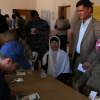
Medair Provides Health Support in Wana
Posted on 11 May 2015 .
This week, emergency relief organisation Medair is distributing essential health and hygiene items to more than 7,000 people in Wana, northern Iraq.
More than 1,400 families have returned to Wana since it was liberated from militants in February, and people are in urgent need of health and hygiene support.
Many arrived home to find their houses pillaged or destroyed, electricity access severed, and livelihoods wrecked. Medicines and equipment had also been looted and tampered with in the town’s health clinic.
Medair will distribute hygiene kits, including soap, shampoo, and feminine products, as well as run a health screening programme to address the outbreak of scabies in the town. Medair is also supporting the understaffed and under-resourced local clinic by providing health services, seeing approximately 90 patients a day from Wana and the surrounding villages.
“Wana is a tough place to live. Families are returning to looted homes in the best of cases, and homes that are completely destroyed in the worst,” said Chappy Rago, Medair’s Shelter Manager. “On top of this, humanitarian relief can be held back by the risks of going to areas so close to the front lines, which shift with the constantly fluctuating boundaries of the conflict. These are places that are hard to reach with lots of people in need.”
In August 2014, militants swept through Wana, forcing thousands to flee for safety, some of them becoming trapped in nearby Mosul. Now that Wana has been reclaimed, cleared of explosives, and the front lines are holding, families are beginning to return.
A local farmer told Medair he had escaped Mosul and recently returned to Wana after hearing it had been liberated.
“Mosul was occupied by ISIS when we fled Wana last year, but the whole area around us was closed off by fighting, so Mosul was the only place we could get to,” he said. “It felt like we were suffocating there. When we learned that our area had been liberated, we started making plans to come back. When I first returned to Wana, I saw that some of the houses had been blown up. There was death everywhere. Now it’s starting to feel more secure here ̶ liberated.”
(Source: Medair)
Posted in Security 2 Comments
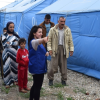
IOM Aids Construction IDP Camp
Posted on 10 May 2015 .
Over 500 families have moved into the newly opened Shekhan camp for internally displaced people (IDPs) in northern Iraq over the past week and hundreds more will move in in the coming days.
The camp has been constructed by a consortium of humanitarian partners with the support of multiple donors and will eventually provide shelter forsome 1,000 displaced families.
The International Organization for Migration (IOM), with funding from the Kingdom of Saudi Arabia, contributed the lead technical role in camp design and construction, and provided the internal electrical network, gravelled roads, prefabricated buildings for administrative offices and a health center, and private kitchens for each family, including sinks and electrical connections.
IOM will also staff and manage the camp primary health care centre, which will be handicap accessible, and will provide psychosocial support to displaced families, particularly women and children. Activities will include psycho-social consultations, individual and group counselling, and opportunities for sports and recreation, including a playground area.
IOM also provided transport for displaced families to get to Shekhan, in coordination with the Dohuk Governorate Bureau of Relief and Humanitarian Affairs (BRHA), and a UNHCR multi-functional team, which jointly carried out the process of family selection. Most of the families were living in unfinished and abandoned buildings in Dohuk Governorate.
Shekhan was built under the guidance of Dohuk Governorate BRHA. Partners included IOM and the International Humanitarian Partnership, Technisches Hilfswerk and Action Against Hunger. UNHCR held a coordination role. The camp is now fully operational and will be officially handed over to Dohuk Governorate BRHA in mid-May.
Dohuk hosts the most IDPs of all Iraq governorates. Shekhan camp is the 16th IDP camp in the area administered by Dohuk Governorate and two additional camps are under construction. But there is still insufficient housing for the displaced population.
Posted in Construction & Engineering In Iraq, Security Comments Off on IOM Aids Construction IDP Camp
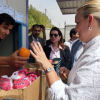
IDP Camp in Basra, a Story of Social Cohesion
Posted on 07 May 2015 .
The 5-Miles IDP Camp in Basra, a Story of Social Cohesion
The opening ceremony of new shops managed by internally displaced persons in the popular al-Asri market, 5 miles off the city of Basra, marks a story of success.
Following a fire in a community of displaced people in Tannoma District, 300 families (2,000 people) who had lost everything, settled down in a camp in the proximity of the market since August 2014.
The governorate and the United Nations provided basic services such as shelters, water and sanitation, and schools. The UN Development Programme (UNDP) helped boost job skills and entrepreneurship through training. As they regain their livelihoods, they now show signs of recovery.
“The reconstruction of the souk, which we are inaugurating today, will help the displaced restart their lives, and is pivotal to building social cohesion in the 5-Miles neighbourhood,” said Lise Grande, the UN Deputy Special Representative of the Secretary-General and UNDP Resident Representative in Iraq. “With the hope of resuming normal life, many go on with their new economic activities in the camp’s environment,” she added.
UNDP is spearheading the UN support programmes to generate employment and income for the displaced and their host community, addressing potential competition on the labour market and the stress on camp neighbourhoods. Country-wide the UNDP’s livelihoods programme has reached to some 14,000 vulnerable people in 2014.
Posted in Security 2 Comments
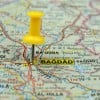
Ancient Market at Heart of Modern Baghdad
Posted on 04 May 2015 .
By Wassim Bassem for Al-Monitor. Any opinions expressed are those of the author, and do not necessarily reflect the views of Iraq Business News.
Souk al-Shorja is Baghdad's oldest market. It was established in the late Abbasid period about A.D. 750 and was first called Souk al-Rayahin then Souk al-Attarin. It is part of the historic area that includes the Abbasid palace on the Tigris River and the Khulafa mosque on al-Jumhuriya Street. "Shorja" means "salty water" in Arabic, and there was once a well where the market is now.
This market has remained throughout this period and later, and preserved the style of its shops, stores and squares that still swarm with shoppers and merchants.
Modern shopping malls in the Iraqi capital cannot compete with Shorja. It consists of a series of overlapping souks that preserved their traditional and popular character. It offers food and conventional household goods and more specialized items for religious occasions and holidays. Traditional spice dealers sell all kinds of spices, sugar, tea, grains and sweets.
There are several ways in to the market. Al-Monitor used the Rashid Street entrance, the narrow alleyways no more than three or four meters (10 or 13 feet) wide. Some of them are part of the market, which still preserves its old structure and has not seen any radical changes over the decades.
The activities in this market are not limited to wholesale and retail activities, but include various other transactions and importing and exporting business. It bustles with traders, shopkeepers, street vendors, shoppers, industrialists, brokers, owners of shipping companies and observers.
Posted in Iraq Industry & Trade News Comments Off on Ancient Market at Heart of Modern Baghdad
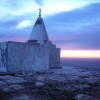
Yazidis Wary amid Stalled Sinjar Offensive
Posted on 15 April 2015 .
By Shelly Kittleson for Al-Monitor. Any opinions expressed are those of the author, and do not necessarily reflect the views of Iraq Business News.
The road to the front line runs close to the Syrian border, through Yazidi towns once occupied by the Islamic State (IS) and bombarded by airstrikes.
Peshmerga fighters allied with various other forces say they will move forward as soon as the president of the Iraqi Kurdistan Regional Government (KRG) authorizes them to do so.
Meanwhile, several members of the Yazidi ethno-religious minority expressed bewilderment to Al-Monitor about the halt of the offensive in late December 2014, after major gains were obtained with the help of US airstrikes, when over 3,000 square kilometers (1,864 square miles) in the Sinjar area were reportedly taken back from IS in less than 48 hours.
The Sinjar area in northwestern Iraq was hurled into the international spotlight last year when the peshmerga withdrew during an attack by IS, leaving the Yazidis, deemed "devil-worshippers" by IS, at the extremist group's mercy.
IS took many Yazidi women and girls captive and killed men en masse. Other Yazidis escaped to the mountains, where they subsequently suffered in the harsh summer heat and conditions, from which many had to be evacuated. Tented encampments still littered the mountains when Al-Monitor crossed through them on its way to the front line in late March 2015.
At the front line, Isa Zaway, commander of peshmerga Brigade 4, refused to say how much of the city of Sinjar had been retaken, but he did say that the “strategic points are under the control of the peshmerga.”
Taking Al-Monitor to a high point overlooking the city, which came under fire during the visit, Zaway noted that the peshmerga in the area worked “hand in hand” with the Kurdistan Workers Party, an officially designated "terrorist organization," and the People’s Protection Units, sharing information and weaponry.
Posted in Security 3 Comments

NIC Invites Bids for Renewable Energy Plants
Posted on 14 April 2015 .
By John Lee.
Iraq's Ministry of Electricity, in coordination with the National Investment Commission (NIC), have announced an investment opportunity to construct three solar power stations and one wind power station.
The plants will capacity of between 5 and 10 MW, and be situated in Diwaniya, Najaf and Missan (Maysan) provinces:
- Diwaniya: A solar power station on a 50-donum site at Dagharah;
- Diwaniya: A solar power station on a 50-to-60-donum site at Al- Suniyah;
- Najaf : A solar power station on a 200-donum site at Al- Haideriyah;
- Missan: A wind power station at Ali al- Gharbi.
Investors willing to invest in this opportunity should submit a letter of interest to the National Investment Commission by 13th May, providing a profile that contains the following:
- Project feasibility study that matches with the one arranged by the Ministry of Electricity (which can be obtained with the information confidentiality form when visiting NIC)
- Signing the information confidentiality form when visiting NIC
- Preliminary engineering plans
- Financial competency with the details of the project funding sources
- Duration and stages of project implementation
- Similar accomplished projects
The project will enjoy the following privileges:
- Tax and fees exemptions according to investment law provisions
- Ministry of Electricity, NIC and provincial governments shall undertake providing all facilitations to investor in order to obtain all licenses and approvals needed through the Ones Stop Shop in addition to providing facilitations during the implementation and operation stages
- The investor has the right to repatriate capitals, revenues and workers fees according to the CBI regulations after paying all financial dues.
For further information please contact:
- [email protected] –Attention: Mr. Ra’ad Qassem. Director General- Ministry of Electricity; or,
- [email protected] National Investment commission,
(Source: National Investment Commission)
(Renewable Energy image via Shutterstock)
Posted in Construction & Engineering In Iraq, Investment 8 Comments