



Qs and As Regarding the Al-Zaidi Govt's Views on Petroleum Issues
Posted on 06 October 2026 .
By Ahmed Mousa Jiyad. Any opinions expressed are those of the author, and do not necessarily reflect the views of Iraq Business News.
Qs & As Regarding Al-Zaidi Government' Views on Petroleum Issues
Interest in the Iraqi petroleum sector has intensified lately, particularly from energy-focused Western media sources. In response to my articles and presentations since the US-Israeli war against Iran, I have received, through emails and direct discussions on Zoom and Microsoft Teams, many questions and requests for comments and clarification. All of them want to know and understand what the current Al-Zaidi government intends to do on a variety of issues pertaining to the Iraqi petroleum sector. Western inquiries focus on upstream petroleum and the prospects of IOCs, while Iraqi concerns focus on oil export prices, discounts, and the impact and consequences of the continued war on Iran.
This brief article provides answers to the questions and requests, which focused on the following topics*:
- The new higher oil production target.
- The increasing presence of US companies in Iraqi petroleum projects.
- IOCs' dominant role in upstream petroleum.
- The availability of enough resources to support a two-digit production level.
- Matters relating to bureaucracy and transparency in petroleum contracting and awarding decisions.
- The ongoing US war on Iran and its impacts on Iraq.
- New pipeline proposals to diversify export routes.
- Monetising associated gas.
- The prospect of Turkish involvement in the Iraqi petroleum sector.
- SOMO's high discounts on its official selling price.
Before answering the questions, I expressed, through direct communications, my readiness and delight to cooperate and respond professionally and objectively to the related parties. I highlighted that I have an elaborate, well-organised and updated database that covers more than three decades of development in the Iraqi petroleum sector in particular and the national economy in general. I have published numerous articles in Arabic and English, and authored seven books in English documenting the development of the Iraqi petroleum sector. Links to my publications were provided for easy access when needed. Therefore, everything I say or write in due course is verifiable and evidence/fact based. Below are the questions (Qs) and my answers (As).
Q1. On the oil side, Al-Zaidi initially said that the country's goal is to grow oil production to 7 million barrels per day (mbd) from the pre-US-Iran war level of over 4 mbd, most recently upping this target to 8-9 mbd and giving a timeline of six years. Is this feasible?
A1. Based on available data, Iraq (excluding the KRG) currently has an installed oil production capacity of ca. 5 mbd, while actual utilised capacity fluctuates. During the period 2014-2025, the maximum actual production was in 2019: 4.576 mbd (Ministry of Oil (MoO) data) or 4.678 mbd (secondary sources used by OPEC). The annual average during 2025 was 3.775 mbd and 4.011 mbd according to MoO and OPEC data respectively.
Yes, but Al-Zaidi proposed escalating targets reaching 10 mbd within six years! In my view this is unrealistic and probably unattainable.
- Since the signing of the first bid round in 2010, Iraq's installed production has almost doubled, reaching ca. 5 mbd in 2025.
- From 2019, actual production, according to MoO data, declined from 4.576 mbd to 3.775 mbd at the end of 2025.
- Almost all of the production increase is attributable to oilfields offered under the first two licensing rounds.
- Apart from the impacts of COVID-19, geopolitics and market fundamentals, the absence of a coherent, integrated and comprehensive Energy Policy has contributed to complicating and hindering progress in actual oil production. The Al-Zaidi government demonstrates no resolute orientation in its programme to remedy the situation.
- So, if it took the country 15 years to increase its installed capacity from ca. 2.3 mbd to 5 mbd, how is it possible to reach 10 mbd in six years?
Q2. Al-Zaidi appears to know the path to achieve it - bring in US and other international operators to develop legacy and new fields. Does he?
A2. I am not sure he knows the path well! He has absolutely no experience in oil matters, let alone the political economy of international oil contracting with IOCs and the recent historical experience of US IOCs in Iraq.
Materially verifiable evidence suggests the US "Big" oil companies had the "lion's share" in Iraqi upstream petroleum through:
- The Memoranda of Cooperation (MoCs) concluded between IOCs and the Ministry of Oil during 2004-2008.
- The list of IOCs qualified to participate in the bid rounds (2009-2024).
- The companies that participated in the first two bid rounds (2009-2010).
Yet none of the US "Big" oil companies won a contract, as operator, in the open, competitive and transparent bidding events. Through the "back door", yes, but in only one case, which did not last long.
Q3. Foreign-operated fields in Federal Iraq (excluding Kurdistan, where 100% of working fields are in the hands of international oil companies (IOCs)) already account for 75% to 80% of total oil production in the country. Is this so?
A3. Correct, and it could be more than 80%. The number of oilfields operated by "National Efforts" is declining because some of them have been offered to IOCs, such as NOC's four producing oilfields (Kirkuk, Bay Hassan, Jembour and Khabaz) contracted to BP, the Ratawi/Artawi oilfield offered to TotalEnergies, the Himreen oilfield to HKN, and the Nassiriya and Balad oilfields offered to Chevron, among others.
Regretfully, there has been a tendency by the last three governments, of Al-Kadhimi, Al-Sudani and now Al-Zaidi, to offer nationally operated oilfields and exploration blocks to IOCs.
Q4. Does Iraq have a sufficient number of explored fields in place to offer to international oil companies to support 8-9 mbd of production? One could suspect the Majnoon/West Qurna 2 oilfields will be central in achieving this goal, but maybe you can point to other fields that may be instrumental in achieving it? Do you think the goal is realistic at all?
A4. To answer this question, we have to remember that after concluding the contracts for the fields under the first two bid rounds, Iraq's plateau production target/capacity (PPT) was to reach 12 mbd by ca. 2017. The PPTs were revised downwards, and the contracts were revised accordingly in 2014/15.
Iraq, in my humble view, has many options to reach the 10 mbd threshold. But is it advisable to develop a production capacity of such a level while ignoring, as has been the case since 2010, the required parallel expansion of export infrastructure and outlets, associated gas utilisation, international market conditions, OPEC/OPEC+ compliance, and the absence of a coherent, comprehensive national petroleum policy?
That said, Iraq could increase oil production through the following options:
- Expedite oilfield development under the contracts concluded in the first four bid rounds.
- Revise the amended contracts back to, or close to, their originally contracted PPTs.
- Quick and timely conversion of exploration block contracts into oilfield contracts for already discovered oilfields. Exploration Block 10 to the Eridu oilfield is the most obvious example, with its huge discovery and the high possibility of its boundaries extending beyond the contracted area. Another example is the Salman oilfield in Exploration Block 12.
- The agreement with BP could enhance NOC's oil production, gradually.
- The Majnoon and West Qurna 2 oilfields could have significant impacts, but there are legal hurdles in offering them to IOCs under a different contract type and basic fiscal conditions.
As it stands today, Iraq has enough oil.
But the country needs to do more: first, to utilise associated gas, and second, to develop the gas fields, namely Akkas, Mansuria and Siba. Moreover, Iraq is a relatively under-explored country, particularly in its western part.
Evidence suggests a high exploration success ratio. Hence, the focus should be on exploration activities, with priority given to areas with promising natural gas prospects. The required exploration could be done by Iraqi national efforts, with some external assistance when needed.
Q5. It appears from Iraqi news that Al-Zaidi is making strong efforts to cut domestic bureaucracy and simplify the approval process for IOCs, as well as to increase the transparency of tenders and other governmental dealings. More often than not, exemptions from existing regulations are being granted by the Cabinet of Ministers to speed up approvals. So, the question to you is whether you think bureaucracy is indeed becoming less of an obstacle for IOCs, and whether there is a need to implement a wider reform/overhaul of existing regulations/laws to avoid such individual/per-case exemptions, instead putting more robust legislation in place to replace these regulations and laws?
A5. The increasing number of exemptions could reveal different forms of high-level corruption, irregularities or favouritism. This pattern of exemption intensified under ex-PM Al-Sudani. For example, exempting an oil company (x), because it is American, from the qualification criteria and process usually applied by the Ministry of Oil is counterproductive and undermines an established system of qualification.
Moreover, there has been a dangerous lack of transparency, particularly during the last ten years. No basic information has been disclosed regarding the fiscal, economic and legal regime of any contract or agreement the government has signed. Neither the Ministry of Oil nor the related IOCs have disclosed the regime of the signed contracts during the last ten years.
Logically, it is rather unreasonable to expect less bureaucracy in a strictly non-transparent working environment. Lack of transparency covers corruption, inefficiency and rigid bureaucracy.
So far, the Al-Zaidi government, as far as the oil sector is concerned, has not publicly and openly disclosed the basic details of any contract or agreement, or even the status of previously concluded deals. The Oil Ministry website usually shows more photos and a few words on any meeting it reports on; absolutely no substance on the subject matter.
And by the way, Iraq is obliged under the provisions of the EITI to disclose contracts and agreements in the extractive activities of the petroleum sector. And the Minister of Oil is the chair of the Iraqi EITI!!!
Finally, laws in Iraq are promulgated and amended according to the Constitution and through an established process and procedure. But "exemptions" are usually pursued by the executive branch, for justifiable reasons or otherwise, though mostly on unjustifiable premises.
Q6. Another key issue is the Strait of Hormuz and the US-Iran war. While grand plans are announced in Baghdad and IOCs are invited to Iraq, the country is having major issues with oil production/exports. These issues may drag on for months, if not years, as the US-Iran confrontation may last a long time. So, this poses the question of whether you think Iraq and Al-Zaidi remain hostage to the situation in the Middle East, and whether, until there is permanent peace/stability in the region, IOCs may be slow or reluctant to commit billions of dollars of new investment to the country?
A6. Many important issues are relevant for consideration regarding this topic.
First, the Strait of Hormuz remains strategically important not only for seaborne oil transport but also for other petroleum and petrochemical products, LNG, and a wide range of trade and supply chains. It will open again, fully or partly. The question is not if but when, depending on the geopolitical and military standoff prevailing since the end of last February.
Second, I recently proposed a southern-bound joint pipeline: Basrah-Kuwait-Bahrain-Qatar-Saudi Arabia-UAE-Oman, with terminal options on the Gulf of Oman or the Arabian Sea. This new, outside-the-box pipeline could provide a "necessity option" for exporting oil through terminals bypassing, but in addition to, the Strait of Hormuz.
Third, it is helpful to know or remember some data on the current status of Iraq's export outlets. The highest volume through the southern export terminals and the SPMs was 3.627 mbd in December 2018; this tells a lot about the infrastructural limitations on the country's export capacity and, consequently, the time and magnitude of investment needed to expand that capacity if Iraq aims to boost oil production to a much higher level than it has today.
As for exports through Turkey, Iraq, under current domestic and regional conditions and geopolitics, is unable to provide the 758 tbd envisaged by the transitional commercial arrangement, let alone provide 1.5 mbd by next July!
Q7. The pipeline proposals to diversify routes and connect Basrah/southern fields to the existing Iraq-Turkey pipeline and the rebuilt Iraq-Syria pipeline may take several years to complete. So, do you think the diversification of export routes should be completed (or at least started) before major Western investment can start coming into oil developments and higher production?
A7. As I mentioned above, Iraq needs to formulate and implement a harmonised, integrated petroleum policy that coordinates the parallel development of the four sub-sectors of petroleum: upstream, midstream, downstream and international marketing.
Iraq should always have some sort of "Dynamic Oil Material Balance" covering and aiming at the optimisation of oil production, oil exports and domestic requirements (for the refining sub-sector, electricity generation and other uses), which should be reviewed regularly - weekly, monthly or quarterly.
An IOC's attention is usually and mainly "project-focused"; the Ministry's approach should be "sector-wide", i.e., covering the four sub-sectors. Hence, contractual provisions, particularly "Take or Pay", should always be kept in mind when considering upstream petroleum projects.
Q8. Another question is about monetising associated gas. Al-Zaidi has emphasised that a priority is ending Iraq's reliance on foreign natural gas imports, notably from Iran. Do you expect any quick progress on this plan? With decades of gas flaring, declarations on eliminating gas flaring do not appear that easy to implement - and may take years to complete, delaying the desired ramp-up in oil production. But maybe you have your own opinion on the associated gas programme to share...
A8. Gas flaring is, and has been, one manifestation of the MoO's failure so far. The MoO has not published data on associated gas production, utilisation and flaring on its website since the last quarter of 2016.
Data from the World Bank's Zero Routine Flaring Initiative still shows Iraq among the top four countries in gas flaring: Russia, Iran, the USA and Iraq.
Gas provisions in the contracts for oilfields offered under the second bid round were not properly observed, or were even ignored, by the MoO in many oilfields, particularly Majnoon, West Qurna 2 and Gharraf.
Moreover, there are cases indicating confusion and inconsistency in awarding associated gas projects to companies while the related oilfields are operated by other companies.
Basrah Gas Company (BGC), a joint venture comprising SGC, Shell and Mitsubishi, which is supposed to utilise associated gas from six oilfields (Rumaila, West Qurna 1, Zubair, and the three Missan Province fields of Buzorgan, Faqah and Abu Gharab), has not yet reached its contracted target, even after 11 years in operation that followed 7 years of negotiation to finalise the JV agreement.
Finally, by definition and logic, associated gas is a by-product of oil. The exact relationship depends on the Gas-Oil Ratio (GOR) of each type of crude oil. There is, naturally, a strong statistical correlation/regression between the two, with gas dependent on oil. Therefore, if Iraq is unable to utilise associated gas at the current oil production level, it will not be able to utilise the higher volumes of associated gas resulting from higher oil production levels. Unless current gas flaring is ended, new oil production capacity (over 5 mbd) would augment the malpractice of gas flaring and all the negative consequences such flaring causes.
Q9. A question about Turkey. Turkey has strong ambitions of becoming a large regional oil hub by securing 2 mln bpd or more of Iraqi oil transiting the country. It also wants a guaranteed supply of 1 mln bpd to Turkey's refineries. Ankara is ready to jump on this opportunity to increase its regional importance as an oil hub, after securing natural gas transits and imports/exports. Do you think the interests of Baghdad and Ankara align? Do you think that in the long term Turkey may rival the US and China in Iraqi oil and gas developments and influence?
A9. The one-year transitional commercial agreement concluded on 1 August includes a 750 tbd throughput, rising to 1.5 mbd once the comprehensive new agreement is reached by the end of the current transitional commercial agreement.
Many important issues will need to be resolved, depending on what the comprehensive new agreement covers. No specific information has been revealed so far, and there is a good deal of confusion and contradiction even in what has been revealed.
Iraq has to optimise the allocation of oil exports between the four outlet options: Turkey, Syria, the Strait of Hormuz and the southern joint pipeline mentioned earlier.
I do not believe that Turkey has the strength and capacity to rival the US or China in Iraqi oil and gas developments and influence. China already has a strategically consolidated position in the Iraqi petroleum sector; Turkish companies do not pose any challenge to the Chinese.
As for US companies, it is rather early to assess their possible standing in Iraqi petroleum, since what has been concluded so far is a few framework agreements, not definitive contracts. But again, Turkish companies are no match for US "Big Oil" capabilities.
Currently, Turkish involvement in Iraqi upstream petroleum development projects is confined to two fields, through TPAO: a minor (7.5%) participating interest in the Badra oilfield, and a 40% interest in the Siba gas field. But some Turkish companies have a role in the petroleum sector as service companies or sub-contractors, such as in drilling activities.
Nevertheless, in a comparative sense, Turkey has an edge in its negotiations with Iraq: the water issue, the Development Road, the PKK and Turkish military forces in northern Iraq, and trade relations, all in addition to oil matters, including direct links with the KRG.
Q10. Why does SOMO offer high discounts while international oil prices are soaring, markets are tight and seaborne oil trading has been seriously interrupted by the closure of the Strait of Hormuz?
A10. This is an important, timely and complex topic that was raised by different parties, especially from inside Iraq, including journalists, parliamentarians and oil professionals, among others.
To begin with, offering discounts or imposing premiums on oil prices is normal practice for all oil exporters, depending on how they assess market conditions, geopolitical risks, their pricing mechanism/setting formula, their market share and their need for oil export revenues, among other considerations.
The recent discounts in question are primarily related to geopolitical risks that have increased tanker insurance, fuel and operating costs to unprecedented levels. Moreover, "dark" transits of the Strait and "ship-to-ship" round-trip practices increase oil tanker costs, which are compensated for by further discounts.
That said, the main issues in the Iraqi case are the magnitude of the discounts, their duration, which markets they apply to, why, and what the fiscal consequences of these discounts are.
SOMO-based information indicates discounts increased from $14 a barrel to $25/b during July and August respectively, while international sources give a much higher threshold of $30/b for mid-August deals.
Trading sources and Reuters report that SOMO offered September crude at discounts of $15 to $20.80 per barrel to its official selling prices, and some cargoes were sold at even larger discounts. Vitol and ADNOC have been active in concluding Iraqi oil liftings at such discounts; they purchased a total of 70 million barrels for September loading.
The above discounts are themselves significant, as are their fiscal magnitude and ramifications for Iraq's oil export revenues, and assessing them requires real, full and accurate data. But SOMO does/did not disclose the relevant data needed on the following related matters.
First, the reference Official Selling Price (OSP) to which the above discounts applied.
Second, Iraq exports two types of crude from the southern export outlets: Basrah Medium and Basrah Heavy. While the exported quantities of the two types are published occasionally, their prices are not, either in aggregate or for different market destinations.
Third, SOMO announces, on a ministerial monthly basis, the OSP setting formula for the two Basrah crudes destined for the three major international markets: East Asia, Europe and the Americas. The price formula for each market has its own "marker crude", which differs from market to market. Data from international sources indicates a wide margin of variation between the prices of the marker crudes used.
Fourth, Iran has publicly and formally exempted Iraqi oil cargoes from fees or restrictions on transiting the Strait of Hormuz. This implies that SOMO is not compelled to offer discounts when a cargo exemption is on offer.
Fifth, SOMO did not release its Monthly Export Reports for April to July. The August Export Report shows the following: Basrah Medium 55,702,595 barrels; Basrah Heavy 14,052,339 barrels; Kirkuk and KRG oil exported through Turkey 3,932,683 barrels.
The monthly report says nothing about the export price, total revenues, or how much Basrah crude was sold at the reported discount of $25/b during August. If this discount applied to all Basrah crude exports, SOMO lost well over $1.7 billion in August.
The MoO's preliminary estimate of all oil export revenues was $4.5 billion in August, indicating the discount represents 37.8% of oil export revenues. The preliminary average oil export price during August was $64.29 a barrel, indicating SOMO's OSP for Basrah crude could have been $89.29 a barrel at most. Lost oil revenue of more than $1.7 billion in one month is a painful, unacceptable fiscal blow for Iraq.
Sixth, as mentioned above, Vitol and ADNOC have reportedly contracted to lift a total of 70 million barrels during September. Unless oil production and exports from the southern terminals increase above August levels, all oil exports from the south will be earmarked exclusively for Vitol and ADNOC.
The consequences will be both costly and damaging in the short and medium term.
Discounts, if continued at such hefty levels, will remain fiscally heavy, eroding oil export revenues and deepening the fiscal crisis for the current government.
SOMO will not be able to fulfil its "Term Contracts" with all or most of its ca. 40 International Oil Buyers (IOBs); that could damage its reputation as a reliable supplier and could reduce its market share.
Moreover, in-kind payment of IOCs' entitlements could very well be affected, causing further delay in the ramp-up of oil production.
Seventh, the magnitude of the discount in just one month has outraged many inside Iraq, prompting calls to question the MoO on why its affiliated company, the Iraqi Oil Tanker Co. (IOTC), has no capacity to transport Iraqi crude. It has also exacerbated the sharp differences of position that surfaced during August between the Ministries of Transport and Oil when a parliamentary committee debated this issue. More debate is probably forthcoming on two options: offering costly discounts vs. enhancing IOTC's fleet capacity.
*My answers reflect data and information as of mid-September.
Mr Jiyad is an independent development consultant, scholar and Associate with the former Centre for Global Energy Studies (CGES), London. He was formerly a senior economist with the Iraq National Oil Company and Iraq's Ministry of Oil, Chief Expert for the Council of Ministers, Director at the Ministry of Trade, and International Specialist with UN organizations in Uganda, Sudan and Jordan. He is now based in Norway (Email: mou-jiya(at)online.no, Skype ID: Ahmed Mousa Jiyad). Read more of Mr Jiyad's biography here.
Posted in Ahmed Mousa Jiyad, Iraq Oil & Gas News, Politics 0 Comments

Gharraf Oil Field Output Halted Under Force Majeure
Posted on 19 April 2026 .
By John Lee.
Production and export operations at the Garraf [Gharraf] oil field in southern Iraq have been suspended following a force majeure declaration by the Iraqi government, according to Japan Petroleum Exploration (JAPEX).
In a statement to the markets on Friday, the company said that there is currently no clear timeline for the resumption of production or shipments, preventing any near-term revenue expectations from the project.
JAPEX participates in the Garraf field through its subsidiary, Japex Garraf Ltd., in partnership with Malaysian operator Petronas.
The suspension affects both upstream production and associated export activities at the field.
(Source: JAPEX)
Posted in Iraq Oil & Gas News Comments Off on Gharraf Oil Field Output Halted Under Force Majeure
DQOC Boosts Production with Integrated Development Plan
Posted on 08 July 2025 .
By John Lee.
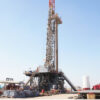
The Dhi Qar Oil Company (DQOC) has launched a comprehensive production plan to develop three key oil fields in Iraq's Dhi Qar province: Nasiriyah, Saba [Subba], and Garraf [Gharraf].
General Manager Sa'id Zgair Shalaka told the state-run Iraqi News Agency (INA) that the company has increased output from the Nasiriyah and Subba fields - both operated by national effort - with seven new wells added at Nasiriyah, raising production from 52,000 to 70,000 barrels per day (bpd).
In the Subba field, eight wells were linked and a new separation station was commissioned, increasing output from 8,500 to 30,000 bpd. Meanwhile, production at the Garraf field, operated under a licensing round, has reached approximately 180,000 bpd.
Regarding associated gas, Shalaka confirmed the completion of the first phase of a gas investment project at Garraf, with a current capacity of 37 million standard cubic feet per day (mmscfd), toward a total planned capacity of 140 mmscfd. The Nasiriyah field's gas is being developed, with 20-22 mmscfd currently utilised and a target of 30 mmscfd by year-end.
Project Director Jabbar Kareem Mazhar explained that the national teams completed the connection of seven wells at Nasiriyah using pre-fabricated 6-inch pipes over 16 km, and a 16-inch pipe over 1 km. The work included installation of wellhead manifolds and full integration with drilling operations.
The second phase, now underway, involves connecting four additional wells using approximately 15 km of piping. Surveying, route clearance, environmental and archaeological approvals, and material procurement have been completed. Field teams are currently carrying out welding, excavation, hydrostatic testing, and radiographic inspection.
(Source: INA)
Posted in Iraq Oil & Gas News Comments Off on DQOC Boosts Production with Integrated Development Plan
Iraq Expands Gas Projects to Curb Flaring
Posted on 09 June 2025 .
By John Lee.
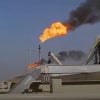
As part of Iraq's government-backed gas development programme, the Ministry of Oil has reported significant progress in reducing gas flaring and increasing gas utilisation.
It says the Ministry has raised associated gas capture from 53% to 70%, and dry gas production from 1,300 to 1,800 million standard cubic feet per day (mmscfd).
Key projects already completed or underway include:
- Halfaya Gas Project (Missan): 300 mmscfd
- Basra Gas Company (BGC) (BNGL1 and BNGL2): 200 mmscfd each
- Artawi [Ratawi] Gas Project (TotalEnergies contract): 600 mmscfd
- Faihaa Field Gas Project: 130 mmscfd
- Nahr Bin Umar Field (Basra): 300 mmscfd
- Gharraf and Nassiriya Fields: 200 mmscfd
- Akkas Gas Field (Anbar): 40 mmscfd
- Accelerated Artawi Project: 50 mmscfd
The government aims to end routine flaring by 2028 and increase gas output to 3,000 mmscfd by 2030, aligning with Iraq's environmental commitments under the 2016 Paris Agreement.
In liquefied petroleum gas (LPG), production rose from 2 million tonnes in 2024 to 3 million tonnes in 2025. Exports also surged from 250,000 tonnes in 2023 to 1 million tonnes in 2025. LPG systems were installed in over 41,000 homes and more than 38,000 vehicles.
To expand storage capacity, the Ministry completed 8 of 16 spherical LPG tanks, each with a 3,000-cubic-metre capacity, adding 24,000 cubic metres overall.
The Ministry reiterated its commitment to maximise national resource utilisation, enhance electricity supply, and boost petrochemical production. Gas field contracts under the 5th and 6th licensing rounds have been awarded to international companies, alongside dozens of investment agreements to develop both associated and free gas resources.
(Source: Ministry of Oil)
Posted in Iraq Oil & Gas News Comments Off on Iraq Expands Gas Projects to Curb Flaring
Report: Climate Change and Agriculture in Dhi Qar
Posted on 25 March 2025 .
From IMPACT. Any opinions expressed are those of the author(s), and do not necessarily reflect the views of Iraq Business News.
Iraq: Climate Change and Agriculture in Al-Dawaya and Al-Gharraf (March 2025)
This assessment was conducted in the Al-Dawaya and Al-Gharraf sub-districts of Thi-Qar [Dhi Qar] governorate, a region facing an unprecedented climate-induced crisis. Iraq's arid to semi-arid climate, exacerbated by rising temperatures, shifting rainfall patterns, and upstream water policies, has led to severe water scarcity.
The crisis, driven primarily by climate change, poor irrigation infrastructure, and long-standing issues of water and soil salinity, has affected all farmers and livestock owners in the area. According to official displacement and water shortage data, thousands of families have been forced to migrate, while many remain to cope with diminishing agricultural productivity.
Key stakeholders in this assessment include national and local government bodies-such as the Directorates of Agriculture and Water-international organizations, local NGOs, and the affected communities themselves. This multi-stakeholder process was coordinated under the broader humanitarian and development framework facilitated by IMPACT in partnership with ACTED and funded by ECHO.
The assessment was designed to address critical information gaps concerning the vulnerabilities of local agricultural communities, specifically the economic, social, and environmental dimensions tied to water scarcity, soil degradation, and limited fodder access.
The research employed a mixed-methods approach, integrating quantitative surveys (conducted remotely via phone interviews) with qualitative tools like key informant interviews, focus group discussions, and participatory mapping exercises. The study covered detailed household profiles, income and expenditure patterns, and infrastructural evaluations, complemented by remote sensing analyses.
While the remote data collection imposed some limitations on representativeness, the triangulation of multiple data sources ensured a robust understanding of the challenges and informed the subsequent identification of priority interventions.
Click here to download the full report
Click here to download the Key Findings Presentation
To browse our comprehensive library of reports on Iraq, click here.
Posted in Agriculture Comments Off on Report: Climate Change and Agriculture in Dhi Qar
Baker Hughes to Collaborate on Reducing Gas Flaring in Iraq
Posted on 25 April 2024 .
By John Lee.
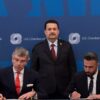
Baker Hughes has signed a memorandum of understanding (MoU) with the Halfaya Gas Company (HGC), with the objective of setting the basis to establish a collaboration for a gas flaring reduction project at the Nahr Bin Umar [Nahr Ben Umar] gas processing plant in southeastern Iraq.
The signing took place in Washington, D.C., in the presence of H.E. Mohammed Shia' Al Sudani, prime minister of the Republic of Iraq, during the prime minister's official visit to the United States to strengthen bilateral ties and facilitate new private sector initiatives, including enhancing the resilience and sustainability of Iraq's energy ecosystem.
According to a statement from the company, the MoU shall lay the groundwork for Baker Hughes and HGC to collaborate by leveraging Baker Hughes' proven technology and experience in developing and implementing deflaring solutions, including the supply of critical turbomachinery and process equipment, a pre-Front End Engineering and Design (FEED) study of modular gas processing skids, and supporting the project's selected FEED contractor in developing the plant design.
HGC is a special purpose company, owned by Raban Al Safina for Energy Projects (RASEP), that was established to deliver a new gas processing plant to serve the onshore Bin Umar field. In late 2023, the Iraq Ministry of Oil (MOO) awarded a build-own-operate-transfer (BOOT) contract to HGC. The field produces 40,000 of barrels per day and over 150 million of standard cubic feet per day of associated sour gas, currently flared or used (untreated) as a fuel gas for a nearby power plant. HGC's Bin Umar gas plant will convert waste gas into treated dry gas, Liquefied Petroleum Gas (LPG) and condensate for domestic use and export.
Through the deployment of Baker Hughes' portfolio of emissions abatement technologies, HGC will aim to reduce emissions and improve the efficiency of its gas processing plant by reutilizing the gas that would otherwise go to waste, supporting HGC and Iraq's overall prioritization of gas projects to meet the country's power needs and to curb flaring.
The collaboration builds on Baker Hughes' existing and successful work with Iraq's state-owned South Gas company for the construction of modular gas processing plants at the Nasiriya and Gharraf oil fields in the Dhi Qar province to capture and treat gas that would otherwise be flared.
(Source: Baker Hughes)
Posted in Iraq Oil & Gas News Comments Off on Baker Hughes to Collaborate on Reducing Gas Flaring in Iraq

Misuse of Public Funds at Dhi Qar Oil Company
Posted on 20 January 2024 .
By John Lee.
Iraq's Commission of Integrity has reported the detection of "excesses and waste" exceeding $33 million in two contracts for Dhi Qar Oil Company (DQOC) and several departments affiliated with the Ministry of Electricity in the province.
The department revealed excesses in the cost of a contract for the construction and maintenance of warehouses for the Garraf [Gharraf] oil field. The signed contract with a UAE company amounted to $27 million, while the estimated cost of the project did not exceed $12 million. The team also observed excesses of up to $18 million in a contract for the supply of oil pipes and covers for the Garraf field.
The Commission also pointed out the waste of 37,795,000 dinars [$29k] in the purchase of photocopying machines, printers, and archive devices at inflated prices. Additionally, there was an excess of around 52 million dinars in the purchase of medical waste incinerators and three basins.
The investigations also uncovered the waste of public funds in equipping a power generation station for the public company Al-Aur, amounting to $2 million, which has not been put into service for more than ten years.
(Source: Commission of Integrity)
Posted in Construction & Engineering In Iraq, Iraq Oil & Gas News, Security Comments Off on Misuse of Public Funds at Dhi Qar Oil Company
Iraq Affirms Commitment to Gas Projects and Expansion
Posted on 12 October 2023 .
By John Lee.
The Iraqi Ministry of Oil reiterated its commitment to executing strategic gas development and investment projects.
During a leadership meeting on gas projects held on Sunday at the ministry's headquarters, Deputy Minister for Gas Affairs, Azat Saber, emphasized the importance of accelerating new projects through national efforts and international collaboration, particularly in areas rich in gas hydrocarbon structures.
Saber highlighted ongoing initiatives, including the Al-Halfaya Complex project in Maysan, set to add 300 million cubic feet per day at the beginning of the next year. This gas will supply electricity power stations. Additionally, an agreement with TotalEnergies will add 600 million cubic feet, and gas processing complexes in Nasiriyah and Gharraf with a capacity of 200 million cubic feet each.
Furthermore, Basra Gas Company (BGC)'s gas investment projects have achieved production rates exceeding 1,000 million cubic feet, with future plans aiming for 2,000 million cubic feet.
Saber also mentioned support for gas storage and compression projects, essential for the gas sector, and emphasized adherence to the government program and directives from the Deputy Prime Minister for Energy and Minister of Oil to expedite gas investment projects within set timelines. This will support the national economy and secure gas supplies for electricity power stations and other gas-related uses. He expressed hope for adding new quantities to national production in the coming months.
Saber revealed the ministry's efforts to develop the Mansuriya field in Diyala Governorate through an agreement with a foreign company, which will be announced soon.
The meeting, attended by the general managers of companies and relevant departments, discussed various agenda items.
(Source: Ministry of Oil)
Posted in Iraq Oil & Gas News Comments Off on Iraq Affirms Commitment to Gas Projects and Expansion
Successful Trial Operation of Gas Power Plant at Garraf
Posted on 22 August 2023 .
By John Lee.
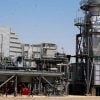
Under the guidance of Iraq's Deputy Prime Minister for Energy and Minister of Oil, Mr. Hayan Abdul Ghani, Dhi Qar Oil Company (DQOC) has completed the trial operation of a gas power plant at the Al-Gharraf oil field in Dhi Qar province.
This achievement aligns with the ministry's strategy to harness associated gas from oil production, aiming for integrated self-sufficiency in oil fields' operations. The gas power plant has a capacity exceeding 70 megawatts and will provide electricity for the field and its facilities.
The plant will be supplied with gas from oil operations within the field, reflecting DQOC's ongoing efforts to fully invest in this gas resource in collaboration with the operator.
This development is expected to contribute significantly to the oil field's electricity needs independently, reducing reliance on the national grid. In turn, the saved capacity of 70 megawatts will be channeled into the national grid to serve citizens. These initiatives are part of the Ministry of Oil's comprehensive plan to implement similar projects in other producing fields.
(Source: Ministry of Oil)
Posted in Iraq Industry & Trade News, Iraq Oil & Gas News 1 Comment
Iraqi Cabinet Approves Italian Firm for Nasiriyah Gas Project
Posted on 13 July 2023 .
By John Lee.
The Iraqi Cabinet has approved a recommendation from the Ministerial Energy Council directing the Ministry of Oil's Dhi Qar Oil Company (DQOC) to invite the Italian company Progetti Europa & Global S.p.A. (PEG) to install and operate a "wet oil processing unit" at the Nasiriyah Gas Isolation Station.
The plant will have a capacity of 50,000 barrels per day (bpd).
PEG will be engaged through a "direct contracting method", exempting the contract from the government contract execution instructions (2/2014), provided that the Ministry of Oil assumes responsibility for the legal procedures related to the matter.
The company is also involved in Iraq's $17-billion Develepment Road Project ("dry canal"), and was awarded a $320-million contract at Gharraf oil field in April.
(Source: Ministry of Oil)
Posted in Iraq Oil & Gas News Comments Off on Iraqi Cabinet Approves Italian Firm for Nasiriyah Gas Project