


Celebrating the Small: MSMEs in Iraq
Posted on 30 June 2020 .
In Iraq, a country most recognized for its oil production, it's the micro - small - and medium-enterprises (MSMEs) that bring life and colour to the streets. Despite being the 'small' players in business, the private sector (excluding oil) accounts for close to 60% of employment, with MSMEs active in the widest range of sectors and with the greatest opportunities for youth.
In Basra City and Al-Qurna, two cities in the largest oil producing region in the nation, the unemployment rate has risen to at least 30% in recent years. Largely attributed to the lack of government employment opportunities and the skills mismatch of the growing youth demographic, investment in micro- small- and medium-enterprises is bringing new hope and opportunities for economic development.
Since mid-2019, the United Nations Development Programming (UNDP), in partnership with the Norwegian Refugee Council (NRC), has provided targeted support to 319 new and established MSMEs across Basra City and Al-Qurna through business development training and cash-grants. The training worked to build skills that would enable enterprise growth, such as finance and accounting, marketing, human resources and employment management, as well as soft skills such as communication, leadership, negotiation skills, decision making and problem solving.
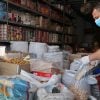
"I learned the importance of good leadership," says Labieb, 57, father-of-5 and owner of a cherry and nuts store in Basra City. "I also learned how to best deal with customers and be part of a team." Following completion of his training and receiving his cash-grant, Labieb was able to hire an additional staff member to manage increased stock and customers and enjoyed a 15% increase in profits.
But like most other cities around the world, the socio-economic impact of COVID-19 was also felt in Basra and Al-Qurna. Businesses took all precaution to prevent the spread of the virus, ensuring the safety of both staff and customers by wearing personal protective equipment (PPE) and adhering to the government curfews, with limited operating hours. By demonstrating solidarity, these business owners were not only able to continue making a livelihood for themselves and their employees, but to set an example for the community.
"As a business owner, I am empowered to build something successful - that I created the plan for, and that enables me to give back to the community," explains Hisham, 40, father-of-2 and owner of a small five-a-side football stadium in Abu Al-Khaseeb.
For Kawthar and Jenan, both mothers-of-five and owners of successful beauty salons in Basra and Al-Qurna respectively, hygiene and care are always a big part of their daily work. "After receiving the grant, I was able to hire three new staff members and saw my profits increase by 40% - this is because I put together a good business plan, but also because we take the necessary precautions to keep ourselves and others safe," says Kawther.
MSMEs continue to face challenges to their growth during COVID-19 pandemic, limiting their capacity to hire additional employees, but with the recognition and support they need, could MSMEs be the way forward for economic growth in Iraq?
Sustainable livelihoods through small business development and job placement in Basra
Together with NRC, and generous funding support from the Government of Japan, UNDP has supported 319 MSMEs through training and cash-grants and placed 125 individuals in jobs through private sector partnerships, since mid-2019.
(Source: UNDP)
Posted in Construction & Engineering In Iraq Comments Off on Celebrating the Small: MSMEs in Iraq
Iraq Stock Market Report
Posted on 27 June 2020 .
Advertising Feature
Rabee Securities Iraq Stock Exchange (ISX) market report (week ending: 25th June 2020).
Please click here to view a table of listed companies and their associated ticker codes.
The RSISX index ended the week at IQD581 (-2.0%) / $603 (+3.1%) (weekly change) (-11.9% and -14.0% YTD change, respectively). The number of week traded shares was 2.4 bn and the weekly trading volume was IQD2.3 bn ($1.8 mn).
Note: According to the Public Health Committee's decision to maintain curfew days on Thursdays, Fridays and Saturdays, trading on the ISX will be from Sundays to Wednesdays until a further announcement.

ISX Company Announcements
- ISX will suspend trading of Asiacell (TASC) starting Jul. 8, 2020 due to the AGM that will be held on Jul. 12, 2020 to discuss and approve 2019 annual financial statements.
- Iraqi for Seed Production (AISP) will hold a GA on Jul. 5, 2020 to elect 4 original and 4 alternative board members from the private sector. The company has been suspended from trading since Nov. 12, 2019 due to not disclosing its 2019 financial statements.
- Trust International Islamic Bank (BTRU) will resume trading on Jun. 28, 2020 after discussing and approving 2019 annual financial statements.
- In order to support the economy of the country by developing agriculture and supporting Iraqi farms and creating an agricultural renaissance, and in order to support and employ young people to eliminate unemployment, and to achieve sustainable development through cooperation between the private banking sector and the public sector, and to achieve government goals by benefiting from local funds and promoting the local product, the International Islamic Bank (BINT) contracted with the Ministry of Industry and Minerals / Electronic Industries Company to finance water pumps operating by the solar energy system type Lorentz German according to Islamic contracts (Murabaha contract) within the CBI's IQD1 trln initiative, where farmers will be financed with amounts that could reach IQD1.0 bn.
Posted in Investment Comments Off on Iraq Stock Market Report
A more Just, Prosperous and Resilient Iraq can Emerge: UN Envoy
Posted on 18 May 2020 .
Jeanine Hennis-Plasschaert briefed ambassadors on latest developments, including the appointment last week of new Prime Minister Mustafa al-Kadhimi, and the majority of his 22-member cabinet, following months of political infighting and stalemate.
Although the pandemic has quieted months of corresponding protests, which saw Iraqis taking to the streets to call for an end to corruption, unemployment and poor public services, the UN envoy hoped that the new government will be guided by their demands and aspirations, for the good of the country.
"I remain convinced that a more just, prosperous and resilient Iraq can emerge from the current compounded crises. But for that to happen, political will is fundamental", said Ms. Hennis-Plasschaert, who also heads the UN Assistance Mission for Iraq (UNAMI).
End climate of 'destructive petty politics'
"Iraq must move away from endless crisis management towards a more productive approach, building resilience at both the state and society level. Short-term political and private calculations do not serve Iraq's long-term interests, on the contrary. And yes, the challenges are many; but so are the opportunities."
The UN envoy noted that the new Prime Minister's priorities include tackling the pandemic, reforming the security sector, strengthening the economy, and fighting corruption, which she characterized as "perhaps the greatest source of dysfunction" in Iraq.
"These worthy aspirations must be turned into action urgently," she said.
"And let me emphasize: Iraq does not have the luxury of time. Nor can it afford destructive petty politics".
Economic woes worsen
Iraq has long battled political turmoil but also social, economic and security crises. COVID-19 has added to these challenges by bringing commercial activity to a standstill and putting the livelihoods of millions in peril.
Oil-dependent Iraq has also seen monthly revenues from this commodity drop from $6 billion to $1.4 billion between February and April. Additionally, the economy is projected to contract by nearly 10 per cent this year, with poverty rates rising to around 40 per cent.
As Ms. Hennis-Plasschaert pointed out, these developments are occurring at a time when it will become even harder for Iraq to access international funding. The need to broaden its revenue base could not be more apparent.
"Time and again, it has been made clear that Iraq should reduce its oil dependency; repair and upgrade critical infrastructure; temper its ballooning, inefficient public service; build viable and responsive state institutions; combat patronage and clientelism; fight corruption, and incentivize the domestic private sector while attracting foreign investment," she stated.
Insecurity a constant threat
Meanwhile, Iraq continues to bear the impact of domestic, regional and international security developments.
Ms. Hennis-Plasschaert reported that although "inflammatory rhetoric" and a "pattern" of attacks and counter-attacks have tapered off in recent weeks, they remain a constant threat.
"And I can only emphasize: the way armed elements, armed entities, with differing ties to the State, choose to act in this moment will determine how Iraqis - and, indeed, many others -- will perceive them," she added.
"Once again, Iraq cannot afford to be used as a theatre for different power competitions and/or proxy conflicts".
The UN official also warned against the resurgence of violent extremism, stating that the best way for the Government to counter ISIL and other groups is to provide for citizens by addressing the root causes of their grievances.
(Source: UN)
Posted in Iraq Industry & Trade News, Politics Comments Off on A more Just, Prosperous and Resilient Iraq can Emerge: UN Envoy
Govt to Establish Emergency Cell for Financial Reform
Posted on 14 May 2020 .
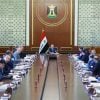
The Cabinet held its regular meeting in Baghdad on Tuesday under the chairmanship of Prime Minister Mustafa Al-Kadhimi.
At the start of the meeting, the Prime Minister told the Cabinet that this Iraqi government came to office to address the challenges facing the country, combat poverty, reduce unemployment among young people, and deliver a fair distribution of wealth.
He said ministers and government officials must not show favouritism or tolerate political interference, and that everyone must focus on implementing the government programme and on building Iraq's state institutions.
Prime Minister Al-Kadhimi paid tribute to Iraq's armed and security forces, saying that they had endured and sacrificed much, and that the authority of the military and security institutions must be restored.
The Prime Minister reaffirmed his commitment to protecting the right to protest, adding that he will not tolerate any act of aggression or violence against protestors, and that the government will work to fulfill their legitimate aspirations.
The Prime Minister concluded his remakes by saying that "we will not compromise on the dignity of our citizens, or the interests of our country.
Following discussions, the Cabinet decided the following:
- Establish the Emergency Cell for Financial Reform under the chairmanship of the Prime Minister, and with the membership of the Minister of Finance, the Minister of Foreign Affairs, the Minister of Planning, the Governor of the Central Bank, the Secretary General of the Council of Ministers, and other officials as nominated by the Prime Minister. The Cell's mandate is to ensure financial liquidity, agree measures to rationalise public spending, maximise resources, and propose mechanisms for reconstruction and investment projects from outside government funding streams
- Direct government entities to submit plans for the rationalization of their administrative structures
- Press ahead with the e-government programme and with the automation of procedures, especially in the areas of customs and tax collection
- Conduct a review of all draft laws related to combating corruption, strengthen the role of the Integrity Commission and the Federal Board of Supreme Audit
- Mandate the Ministry of Planning to conduct a review of the process of awarding government contracts and the basis for agreeing and selecting investment projects
- Provide the necessary staff to enable the Federal Service Council to carry out its duties
- Expedite the draft legislation of the general Federal Budget Law
- Expediate the completion of the draft oil and gas law
- Mandate the Ministry of Labour and Social Affairs to submit proposals within a month to increase the number of people entitled to social security benefits
- Authorise the Reconstruction Fund for Areas Affected by Terrorist Operations to establish mobile hospitals to quarantine and treat patients with Covid-19 in regions to be agreed with the Ministry of Health, and to fund this project through the grant from the German Development Bank
The Cabinet also discussed proposals for a freedom of information law and other policies.
Click here for details of the Iraqi government programme.
(Source: Govt of Iraq)
Posted in Politics Comments Off on Govt to Establish Emergency Cell for Financial Reform

Will Oil Price Crash the Iraqi Economy?
Posted on 04 May 2020 .
By Dr Amer K. Hirmis.
Any opinions expressed are those of the author, and do not necessarily reflect the views of Iraq Business News.
Will crashing oil prices mean the collapse of Iraq's economy? No.
Will the Iraqi economy (and people) suffer? Yes, a great deal...
Since the crash in Iraqi oil prices from US$61.0 (per barrel) at the end of January 2020 to US$20.7 by mid-April 2020, a crisis compounded by the spread of COVID-19 virus, political vacuum, failed ethno-sectarian polity, to mention but a few, the country has been grappling with quasi-existentialist questions?
- First, can/should Iraq as a country and an economy continue to be so massively crude oil-export-dependent?
- Second, can/should Iraq continue to have no real control of its economy, given that oil prices/production is overwhelmingly determined by OPEC + and others, operating in the oil global market, rather than sovereign Iraqi decision makers?
- Third, is the current oil prices crisis an existentialist reminder that the economy must be diversified from this point in time onwards in favour of other productive sectors by engaging the private sector in a significant way/scale, which has been undermined for over nearly 60 years now?
- Fourth, given the failed post-2003 (ethno-sectarian) political system, which has severely undermined the 'state of Iraq' in favour of self-serving plutocratic political class, what form of political system should Iraq have instead? What sort of polity would genuinely represent Iraqi people, listen to, and act upon professional independent economic advice, and initiate economic development for current and future generations?
As insinuated above, Iraq, of course, needs to address multiple major, well-recognised, challenges facing it at present: COVID-19 virus; filling the vacuum left by a resigned prime minister and his cabinet; regaining sovereignty as an independent country; reducing unemployment; stopping widespread violence against women, and applying the rule of law against those advocating marginalising women's position in society, economics and politics, alleviating poverty for a third of its population, etc. etc. To this add open interference by other countries in decision-making processes at all levels, undermining sovereignty and the livelihood of millions of Iraqis.
This note, however, focuses, albeit briefly, on the first three questions. Whilst the fourth question is critical in addressing the first three questions, it is outside the scope of this note, and more the province of specialist political scientists and professional politicians.
Please click here to download Dr Hirmis' full report in pdf format.
Dr Amer K. Hirmis is Principal at UK-based consultancy CBS Ltd. (2008-present). In October 2009, Amer began a 20-months assignment as Senior Development Planning Advisor to the Ministry of Planning in Iraq (funded under the DANIDA programme for 'peace and reconstruction' in Iraq). The posts Amer has assumed include Chief Economist and Head of Policy at the London Chamber of Commerce and Industry (1992-5), Economic Advisor to UK South West Regional Development Agency (1996-8) and Associate Director and then Head of Consulting and Research (Middle East) at the global firm DTZ (1998 to 2007).
Dr Amer K Hirmis is the author of 'The Economics of Iraq - ancient past to distant future'
[https://www.amazon.com/Economics-Iraq-Ancient-distant-future/dp/1999824105]
Posted in Amer K Hirmis Comments Off on Will Oil Price Crash the Iraqi Economy?
Public Sector Investment in Iraq - What Priorities for new PM?
Posted on 17 February 2020 .
By Dr Amer K. Hirmis.
Any opinions expressed are those of the author, and do not necessarily reflect the views of Iraq Business News.
Public sector investment in Iraq - What strategic priorities for the new Prime Minister?
Iraq is still in turmoil, four months since the Uprising, in October 2019. Meanwhile, Prime Minister (PM) Adel Abdul Mahdi resigned. Muhammad Tawfiq Allawi i has been appointed as PM-designate.
Mr. Allawi has already been rejected by the Uprising, as an affiliate to the failed post-2003 ethno-sectarian political system. Political uncertainty thus continues, and with it investment decisions in the public and private sectors.
Whoever the new PM may end up to be, two key challenges will face him; political and economic.
On the political front, the new PM will need to prove, by action, that he has the will and determination to serve the Iraqi people, rather than bend to ethno-sectarian interests that have shaped politics and the economy post-2003. A system that normalised pervasive corruption, sidelined the rule of law, freedom of thought and expression, peaceful gathering and the right to protest. A system that, inter alia, stalled economic development, leading to high unemployment, and marginalised, if not atomised, millions of Iraqis living in poverty.
On the economic front, the challenges are just as great as the political ones. The new PM will have only the near-term to rise to these challenges – possibly a major review of the current ‘Government Programme,’ the ‘Construction Council’ bill, and various economic “road maps” laid out by the current ‘Prime Minister’s Advisory Committee’ (PMAC), e.g. “vision 2030”, as well as comprehensive institutional reforms. He will need to draw together all these, and more, and produce a short-term realistic, rational and workable economic programme, on which more below.
Simply put, the Uprising anticipates economic reforms that create new jobs, use oil revenues for investment in productive sectors of the economy, across the country and substantially reduces the size of government employment, of which the pay roll easily absorbs over 50 percent of the national budget.
The Uprising also demands early general elections, ushering a process of defragmentation of the allegedly corrupt institutions, and observing good governance and the rule of law, amongst other reforms.
Please click here to download Dr Hirmis’ full report in pdf format.
Dr Amer K. Hirmis is Principal at UK-based consultancy CBS Ltd. (2008-present). In October 2009, Amer began a 20-months assignment as Senior Development Planning Advisor to the Ministry of Planning in Iraq (funded under the DANIDA programme for ‘peace and reconstruction’ in Iraq). The posts Amer has assumed include Chief Economist and Head of Policy at the London Chamber of Commerce and Industry (1992-5), Economic Advisor to UK South West Regional Development Agency (1996-8) and Associate Director and then Head of Consulting and Research (Middle East) at the global firm DTZ (1998 to 2007).
Dr Amer K Hirmis is the author of ‘The Economics of Iraq – ancient past to distant future’
[https://www.amazon.com/Economics-Iraq-Ancient-distant-future/dp/1999824105]
Posted in Amer K Hirmis, Investment, Politics 1 Comment
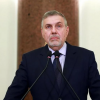
PM-designate pledges to form Non-Sectarian Govt
Posted on 03 February 2020 .
From Middle East Monitor, under a Creative Commons licence. Any opinions expressed here are those of the author and do not necessarily reflect the views of Iraq Business News.
Iraqi Prime Minister-designate Muhammad Tawfiq Allawi [Mohammed Tawfik Allawi] (pictured) has pledged to form a non-sectarian government.
Allawi said in a televised speech after receiving his official appointment letter from President Barham Salih that he was honoured to accept the assignment.
Allawi promised to form an Iraqi government that protects the peaceful protestors, prohibits the use of live ammunition, ends the misuse of non-lethal weapons such as tear gas canisters and to work with the judiciary to release all innocent detainees.
He also pledged to confine all weapons to state security institutions and take action to ensure respect for the rule of law.
Holding early elections, protecting the electoral process and standing against any interference in it, were among his other promises.
To improve the economy, Allawi said he would tackle unemployment by creating job opportunities and fighting corruption.
The Special Representative of the United Nations Secretary-General for Iraq, Jeanine Hennis-Plasschaert, welcomed Allawi's appointment and called to accelerate the achievement of fundamental reforms and the legitimate demands of the Iraqi people.
(Source: Middle East Monitor)
Posted in Politics Comments Off on PM-designate pledges to form Non-Sectarian Govt

Iraq: Asking the Right Questions about Civil Disorder
Posted on 01 February 2020 .
By Professor Frank R. Gunter, for the Foreign Policy Research Institute (FPRI). Any opinions expressed here are those of the author and do not necessarily reflect the views of Iraq Business News.
Professor Gunter, a Senior Fellow in the FPRI's Program on the Middle East, is a Professor of Economics at Lehigh University, and a member of the IBBC Advisory Council.
Iraq: Asking the Right Questions about Civil Disorder
Since October 1 of last year, over 600 Iraqis have been killed and thousands injured in protests throughout the country. The accompanying political and social chaos has strengthened efforts by other nations to interfere in Iraq with deadly effects.
What caused this sudden surge of violence? There are a wide range of political, economic, and social problems in Iraq, such as corruption, lack of public services, and mass unemployment.
But most observers focus on disputes among the Iraqi leaders or among various ethnic or religious groups as the causes of current civil disorder in Iraq.
Posted in Politics, Security Comments Off on Iraq: Asking the Right Questions about Civil Disorder
Video: Iraq Economic Crisis - 'Everyone is Suffering'
Posted on 31 January 2020 .
From Al Jazeera. Any opinions expressed are those of the authors, and do not necessarily reflect the views of Iraq Business News.
Many of Iraq's protesters have been driven by worries about the economy and high unemployment levels.
But months of demonstrations, along with a weak government, have pushed an already struggling economy to the brink.
On top of that, there is a threat of direct US sanctions if American forces are ordered out of Iraq.
Al Jazeera's Osama Bin Javaid reports from Baghdad:
Posted in Iraq Industry & Trade News, Politics Comments Off on Video: Iraq Economic Crisis - 'Everyone is Suffering'

Tabaqchali: US Sanctions and the Illusion of Power
Posted on 30 January 2020 .
By Ahmed Tabaqchali, CIO of Asia Frontier Capital (AFC) Iraq Fund. This article was originally published by the LSE Middle East Centre.
Any opinions expressed are those of the author, and do not necessarily reflect the views of Iraq Business News.
Demands for the expulsion of US troops following the killing of Iranian general Qassem Soleimani, have scaled down considerably since the initial strident calls. What started as high theatrics in parliament demanding an end to US presence, ended with a typical Iraqi fudge in that parliament passed a resolution requiring the government to cancel the request for global coalition support made in 2014, and for it to work towards ending the presence of all foreign troops.
These were further rolled back as reports emerged that the government’s vision of implementing the withdrawal of foreign forces was for the withdrawal of combat forces only and did not include those conducting training and logistical support. Threats of US sanctions have undoubtedly played a role in deflating the illusions of power, especially by those in the axis of resistance, and contributed to this climbdown.
Iraq’s economy is not only vulnerable to US sanctions, but to any disengagement from the US dollar-based global financial and economic system. In fact, the US could affect far worse damage to Iraq than it did to Iran without the need to implement sanctions, let alone sanctions that would ‘make Iranian sanctions seem somewhat tame’. This vulnerability stems from the failures of successive Iraqi administrations from 2003 to reconstruct the country following decades of conflict, or to create the foundations for a diversified economy driven by the private sector, and not by the state.
Instead, successive administrations have deepened the country’s dependence on oil, pursued policies that fostered a structural imbalance between the government’s current and investment expenditures, in which the public sector consumed an ever-increasing share of government revenues. The sole dependence on oil income for these revenues, and the dreadful twins of a dominant public sector and stunted private sector, are the primary reasons why the country is vulnerable to external shocks.[1]
The extent of the damage to the Iraqi economy would depend on the three broad categories of a US response to a hostile Iraq. The first category would be the imposition of primary US sanctions, and secondary sanctions on non-US entities that conduct commercial or financial dealings with Iraq. Their effects would be along the lines to those suffered by Iran due to the imposition in 2018 of similar US sanctions.
For Iran, these included a major drop in oil exports, a severe economic contraction, a significant drop in the value of the currency, a substantial rise in inflation, a lowering of living standards, and a rise in unemployment especially among the youth and the most vulnerable segments of society.
However, the consequences for Iraq would be on a much worse scale than those suffered by Iran. Firstly, because oil exports constitute the bulk of the Iraqi budget’s revenues (about 90 percent of the 2019 budget) unlike those for Iran’s budget (about 30 percent of its fiscal 2019–20 budget). The loss of this income for Iraq would severely restrict the government’s ability to pay for salaries and pensions, social security, goods and services, in addition to reducing any funds available for the reconstruction of the country, the development of its oil sector or the development of its power generation.
Secondly, Iraq depends almost completely on imports for its consumption of goods and services, unlike Iran which has a well-diversified economy, and a more developed industrial, agricultural and financial sectors. Iraq’s small industrial and agricultural sectors cannot meet even a small percentage of its domestic demand, while its under-developed financial sector cannot provide the financing for the development of these two sectors.
Thirdly, Iraq’s cash-reliant economy depends on access to physical USD notes for it to function. Such a disruption in the supply of USD notes would raise the price of the USD against the IQD, and with it a rise in the value of imported goods. In 2015 the country felt some of these effects due to a restriction in the supply of USD notes from the US Federal Reserve as a result of the US Treasury’s concerns that sanctioned entities (Iran & Daesh) had access to these notes. Any effects of a sizeable loss of access to USD notes would be significantly worse than in 2015. Making things worse is that Iraq cannot access USD notes from a third country, unlike Iran, whose need for notes is met through Iraq.
The second category of US responses would be the loss of waivers for the purchase of Iranian gas, which presents Iraq with a Sophie’s choice. Continue with the purchase of Iranian gas and suffer the consequences of US secondary sanctions, which would be only marginally less painful than any possible imposition of full sanctions, discussed earlier. Or, discontinue buying Iranian gas, lose about a third of Iraq’s domestic power supply and enrage a population that is already incensed over a chronic inadequate supply of power.
A less discussed point is that these waivers were granted on the conditions that Iraq develops a credible plan to reduce its dependence on Iranian gas, and in the long term end those imports. The US could still grant these waivers, but impose more stringent conditions on plans to reduce dependence and a tougher monitoring regime with associated penalties for failures in making progress.
The third category, and the most likely US reaction, would be to gradually end its treatment of Iraq as a close ally and therefore subject to increased US treasury scrutiny its financial system, which would negatively affect the functioning of the Iraqi Central Bank and the banking system. The most obvious result would be a disruption of Iraq’s cash-heavy economy, which relies on the access of physical USD notes for the conduct of commercial and financial transactions as discussed earlier.
Unlike the fictional Duchy of Grand Fenwick, in Leonard Wibberley’s satirical cold war novel The Mouse That Roared, Iraq cannot expect any sort of victory from a conflict or strained relationship with the US.
[1] An upcoming piece by the author examines the structural imbalances in the economy as a inevitable consequence of successive post-2003 political system, i.e, the “Muhasasa Ta’ifia”. This imbalance was first explored in: https://auis.edu.krd/iris/latest-iris-publications/iraqs-investment-spending-deficit-analysis-chronic-failures and subsequently in a series of tweets: https://twitter.com/AMTabaqchali/status/1181559159453564928?s=20 and https://twitter.com/AMTabaqchali/status/1182253543144771584?s=20
Posted in Investment, Iraq Banking & Finance News, Iraq Industry & Trade News, Politics Comments Off on Tabaqchali: US Sanctions and the Illusion of Power