


Kurdistan Welcomes British Business
Posted on 18 April 2014 .
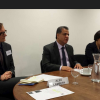
The Kurdistan Region is open for business and British companies are welcomed, Kurdish officials told members of British Expertise, a leading trade association at a seminar last week.
Minister Falah Mustafa, Head of the Kurdistan Regional Government's Department of Foreign Relations, and Bayan Sami Abdul Rahman, the KRG's High Representative to the UK, were joined by Alex Lambeth, Director of British Expertise, in highlighting the business opportunities and investor-friendly laws in the region.
The seminar was part of a series of meetings by Minister Mustafa who was in the UK on an official visit. The Minister was accompanied by Siham Mamand, the Assistant Head of the DFR, and High Representative Abdul Rahman during the visit which included meetings with British officials, parliamentarians, journalists and think tanks.
Minister Mustafa told the seminar at British Expertise, 'There is huge potential in many areas of the economy and we like to do business with the British. Foreign Secretary William Hague recognised this when he made the decision to increase the number of staff at the British Consulate in Erbil a few years ago while other British diplomatic missions were facing cuts.'
The minister outlined the key areas the KRG is promoting - tourism, agriculture and manufacturing - so that the economy is not over reliant on oil.
He also updated the meeting on political developments, relations with Turkey, the Syrian refugee crisis and the forthcoming Iraqi elections.
Ms Abdul Rahman spoke about the Kurdish economy's rapid growth over the past decade, which has been achieved thanks to high levels of security, clear economic policies that focus on services such as the provision of electricity, and the development of an oil and gas sector from scratch in the past seven years.
She urged Britain to make visas access easier for business visitors, to start direct flights and for British ministers to lead trade delegations to Kurdistan in the same way as other European countries do.
British Expertise members had a range of questions, including on Kurdistan's trade relations with Scotland and Northern Ireland, the KRG's procurement methods and the impact of Syrian refugees on the economy.
(Source: KRG)
Posted in Iraq Industry & Trade News 1 Comment

Iraqi Elections: all Talk, no Walk
Posted on 18 April 2014 .
By Mustafa al-Kadhimi for Al-Monitor. Any opinions expressed are those of the author, and do not necessarily reflect the views of Iraq Business News.
With the launch earlier this month of campaigns for the April 30 parliamentary elections, Iraq is back to debating the fact that none of the political blocs has put forward an electoral program or platform. The blocs, misunderstanding the concept of a political program, have instead reduced them to vague slogans.
The Iraqi political forces competing in the elections justify the absence of real programs by asserting that Iraq remains in transition, so there are real differences over the basis of the political process — such as the Constitution, government formation, the decision-making process and the relationship between the central government and the provinces and the regions.
They claim that this reality forces them to take positions on these particular issues, rather than presenting political programs. For example, some campaigns are sloganeering on amending the Constitution, while others' slogans invoke government formation by the political majority, decentralization and the war on terror.
Being in a transitional phase and disagreeing over political fundamentals do not, however, justify lacking an economic or development program or taking positions on such issues as housing, health, education, human development, and human rights and freedoms.
To be fair, a few political forces such as the Supreme Islamic Council have presented detailed programs, but the problem is then that the Iraqi voter is faced with a choice between a detailed program and lots of attractive slogans.
Posted in Politics Comments Off on Iraqi Elections: all Talk, no Walk
Alstom Wins €225m Equipment Deal in Anbar
Posted on 16 April 2014 .
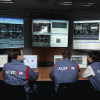
Alstom has been awarded a contract worth approximately €225 million to provide power generation equipment for the Al-Anbar gas-fired combined-cycle power plant being built in the Anbar province in Iraq.
A consortium of Metka SA and Metka Overseas Ltd is building the power plant for the Ministry of Electricity of Iraq.
The 1,642 MW power plant, due to be commissioned in 2016, will add much needed electricity to the Iraqi grid. Once in operation, it will be one of the largest and most efficient combined-cycle power plants in Iraq.
Under the scope of the contract, Alstom will supply four highly efficient GT26 gas turbines, four Heat Recovery Steam Generators (HRSG’s), two steam turbines and six air-cooled turbogenerators.
Commenting on the contract, Steve Meszaros, Senior Vice-President of Alstom’s Gas business said:
“The Middle East is the most promising market for gas-fired generation and we are extremely pleased at expanding our presence in this region. Alstom has been a steady partner in the reconstruction of Iraq’s energy infrastructure and we are confident that our superior technology will make Al-Anbar a flagship project for the country”.
Alstom is currently constructing the Al-Mansuriya (728MW) gas-fired power plant in the Diyala Governorate, northeast of Baghdad and has also recently signed the 740 MW Zubair contract with ENI Iraq B.V. These plants are based on the GT13E2 gas turbine.
Alstom has also supplied the gas turbine for the Al-Najaf power plant that went into operation last year. Alstom continues to support the rehabilitation of Iraq’s existing installed base including unit 1 of the Najaf gas-fired power station, 160 km south of Baghdad.
(Source: Alstom)
Posted in Construction & Engineering In Iraq, Iraq Public Works News 1 Comment
Gazprom Neft selects Pipeline Contractor
Posted on 16 April 2014 .
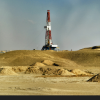
Gazprom Neft, operator of the Badra oilfield development project (pictured), has appointed a contractor to lay the pipeline connecting the field to the power station in Zubaidiah (Wasit Province). The tender was won by Pakistani company Techno Engineering Services (Pvt.) Ltd.
In line with the contract, Techno Engineering Services will produce the designs, supply the equipment and materials, and carry out construction of the pipeline. First gas transportation via the pipeline, which is almost 100 km in length and has a daily capacity of 4.4 million cubic metres (circa 1.6 billion cubic metres per year), is planned for 2015.
Under Gazprom Neft's contract with the Iraqi government for the development of the Badra oil field, investors are to be compensated for costs related to infrastructure construction.
Gas supply from the Badra oil field will enhance the Zubaidiah power station's daily power output and provide a 24-hour power supply to the city of Kut, which currently has electricity supplied for only 16 hours per day. Some of the extracted gas will be used to provide electricity to the Badra oil fields themselves.
In March Gazprom Neft completed testing on a second well at Badra. The laying and testing of the oil pipeline to the Gharraf oilfield was completed in February, connecting the section to Iraq's main pipeline system. The construction of the first phase of a central gathering station point with a capacity of 60,000 barrels per day is nearing completion. Work has also started on a gas treatment plant with the capacity to process 1.5 billion cubic metres per year.
(Source: Gazprom Neft)
Posted in Construction & Engineering In Iraq, Iraq Oil & Gas News 1 Comment
ABB's Ventyx Wins Power Deal
Posted on 15 April 2014 .
Ventyx, an ABB company, has announced that it has signed an agreement with the Ministry of Electricity (MOE) in Iraq to provide state-of-the-art energy management systems that will help improve the availability, performance and reliability of power supplies in Iraq from main control centers in Baghdad, Kirkuk and Basra.
The agreement is part of a major initiative to help rebuild a modern and reliable electricity transmission system for Iraq. The MOE is upgrading its existing Regional Control Centers (RCCs) by replacing legacy systems with an integrated solution that comprises Ventyx Network Manager SCADA EMS (supervisory control and data acquisition and energy management system) software.
Once upgraded, the control centers will provide operators with a system-wide view of the grid’s condition, enabling smooth operations as well as the rapid detection and correction of faults. The RCCs, jointly with the National Dispatch center (NDC), will be the backbone for the real-time monitoring, supervision and control of the country’s transmission grid.
By gaining greater visibility of its transmission network, MOE can reduce congestion and improve power availability and reliability – helping to avoid unplanned outages by rerouting power as needed. MOE will also be able to schedule planned outages, enabling its power plants to go offline for maintenance, as well as monitor “tie points” with surrounding nations so that power resources can be optimally shared between countries.
Ventyx will also provide extensive training, equipment maintenance and diagnostics services, as well as remote support services to ensure the smooth running of the transmission network.
Posted in Construction & Engineering In Iraq, Iraq Public Works News Comments Off on ABB's Ventyx Wins Power Deal
$46bn-Worth of Projects Boosts Kurdistan Region
Posted on 11 April 2014 .
MEED’s Kurdistan Projects conference 2014 shows why the region, long seen as a platform for doing business elsewhere in Iraq, has now become a hotspot for investments.
The Kurdistan Region of Iraq has long been considered as a business friendly environment for foreign companies and a gateway for doing business elsewhere in the country. But recent developments have seen an upsurge in business activity making it one of the fastest growing economies on earth.
The region’s projects market reflects the growing demand for all types of goods and services. There are approximately $46bn-worth of projects currently planned or under way in the energy, construction, tourism and basic infrastructure sectors that make the Kurdistan Region one of the most dynamic projects markets in the world.
MEED’s Kurdistan Projects conference scheduled to take place on 8-10 June at The Rotana, Erbil, will provide a comprehensive overview of the projects market by sector and outline where the main opportunities lie for investors, financiers, contractors, and suppliers.
“We are delighted to work with the Kurdistan Regional Government and major private sector investors on this ground breaking conference set to reveal opportunities across key sectors including: oil & gas, power, real estate, industry, hospitality & tourism, water & agriculture and banking & finance,” said Edmund O’ Sullivan, Chairman, MEED Events. “Being the only event catering to all major areas of the region’s economy and attracting all the region’s leading stakeholders, this is a must attend event for any organisation looking to expand existing business in the Kurdistan Region or enter this booming market to explore new business opportunities”.
Other healthy signs indicating Kurdistan’s steady march to progress has been the growing inflow of Foreign Direct Investment (FDI). Kurdistan is open for business and the National Investment Law of 2006 has attracted more than $20bn to the region already with the government actively encouraging further investment most notably in the Water, Agriculture, Industry, Tourism and Power sectors. As of June 2013 there are now in excess of 2,300 foreign companies registered in addition to the 15,000 local companies.
“It has been especially successful in opening up the power sector, with 75 per cent of electricity in Kurdistan currently coming from independent power projects. With ample opportunities in oil and gas, and demand continuing to grow for power and water, there will be increased opportunities for FDI in these sectors and across the board,” said Leo Koot, President, TAQA Iraq.
The cornerstone of the region’s economy is the untapped natural resources proving highly attractive for oil companies. The region is moving rapidly from exploration to production, and with political stability and security unrivalled elsewhere in Iraq, there are numerous openings throughout the hydrocarbons value chain.
Erbil has also been called “the next Dubai”, thanks to the huge construction boom currently under way. Its build-it-and-they-will-come attitude is now maturing as the Kurdistan region develops, with the Prime Minister releasing details on a plan to improve the quality of future property developments including the implementation of building regulations and an active building control department.
Tourism is likely to receive a major boost as Tourism Erbil has been named the Arab Tourism Capital 2014 by the Arab Council of Tourism. “Hotels are springing up in the city and further afield, and Kurdistan is taking advantage of its safe reputation to develop attractions and leisure projects that will attract more visitors,” continued O’ Sullivan.
MEED’s Kurdistan Projects conference 2014 is supported by the Kurdistan Regional Government and Department of Foreign Relations, UKTI, Taqa as Strategic Event Partner, as well as U.S.-Kurdistan Business Council (USKBC) and Kurdish Europe Dutch Business Community (KDBC). Drake and Scull has signed up as the event’s Conference Sponsor and Parsons is on board as the Networking Programme Sponsor. With massive interest in Kurdistan’s further development growing, organisers are encouraging early registration at www.kurdistanprojects.com.
About MEED’s Kurdistan Projects conference 2014
Kurdistan Projects 2014 is a ground breaking event detailing exclusive project opportunities across the Kurdistan Region, taking place in the heart of Erbil. This year’s edition includes n
Rebecca Cousins
Marketing Executive, Kurdistan Projects 2014
T +971 (0) 48180281
For media-related inquiries and assistance, please contact:
Anthon Garcia
PR Consultant, Kurdistan Projects 2014
M +971 50 139 8661
Posted in Construction & Engineering In Iraq Comments Off on $46bn-Worth of Projects Boosts Kurdistan Region
UNAMI Warns of Divisive Election
Posted on 02 April 2014 .
By John Lee.
In an interview with Agence France-Presse, United Nations envoy to Iraq Nickolay Mladenov has been sharply critical of Iraqi politicians and their campaigning platforms.
Mladenov has remarked that not enough Iraqi politicians are campaigning on issues of public concern, such as the supply of clean drinking water, a reliable electricity supply and reducing corruption. Recent years have seen protests in Iraq concerning all of these issues.
Instead Mladenov paints a disturbing picture which suggests Iraq's elections may end up as divisive as those which occurred in 2005, when Sunnis boycotted the elections and many parties coalesced around sectarian identity:
"Campaigning will be highly divisive. Everyone is ratcheting it up to the maximum, and you could see this even before officially the campaign started. I would hope that it would be more about issues, and how the country deals with its challenges, but at this point, it's a lot about personality attacks.The efforts to reach across the sectarian divide are very weak."
Mladenov also criticised the delay on the budget, saying how this could hurt investor confidence, delay projects and become increasingly politicised as the dispute continues.
This Iraq Business News writer feels that if elections are delayed in the Sunni majority provinces of Al-Anbar, Ninewa and Diyala it will hurt any attempt by Maliki to appease Sunni anger. Maliki's recent attempts to win support in Anbar have involved increasing the federal budget for the province and an effort to revive the anti-extremist Sahwa movement.
But it could be justifiably argued that prominent Iraqi politicians have made statements calling for national unity and arguing against purely military solutions to the security crisis.
Unfortunately these politicians (notably Ammar al-Hakim) are seen by many in Al-Anbar as being close to Iran in a regional sectarian conflict. Regardless of their ultimate loyalty, perception may be more important than reality. Mladenov's job would be made easier if the anti-sectarian voices could grow stronger, something he is rightly calling for.
(Source: AFP)
Posted in Politics Comments Off on UNAMI Warns of Divisive Election
Excess Electricity in Iraq?
Posted on 17 March 2014 .
By John Lee.
Iraq's Ministry of Electricity has announced that some power plants will be shut down due to a surplus of electricity generation, Azzaman reports.
The plants will undergo maintenance before coming on line to meet summer demand.
This may come as a surprise to some residents of major towns such as Baghdad or Basra, and in particular Nasiriyah which suffers frequent rolling blackouts.
The ministry claimed Iraq is now generating 16,000 megawatts on a good day, but that about 6500 MW is lost due to problems with the grid, attacks on infrastructure and other challenges.
In the past, the ministry has blamed other ministries such as the Ministry of Planning for delaying the laying of new power cables, and has even announced that Iraq's electricity problems have been solved.
So why does Iraq still suffer blackouts, and in some cases just 6 hours of electricity a day? The problems are many and much of the existing transmission and distribution system needs to be replaced.
Additionally, rises in family income mean more homes have electrical appliances such as air conditioning units. Demand has surged.
Some reports suggest up to a third of power is lost before reaching consumers, while newly built gas fueled power stations sometimes lack enough natural gas, and a dependence on heavy oil can cause excessive maintenance problems because it wears out equipment. Lower levels in the Tigris and Euphrates have also affected hydro-electric power generation.
Therefore, an increase in megawatts "on paper" does not always mean more homes with power in reality.
Iraq has allocated approximately $13 bn to repair its national grid and aims to generate 22,000 MW by 2015.
(Source: Azzaman)
Posted in Iraq Public Works News 4 Comments

Japan, UN Accelerate Economic Recovery in Iraq
Posted on 16 March 2014 .
JICA (Japan) and UNDP Partnership Reinforcement Agreement to Accelerate Economic Recovery in Iraq
Japan International Cooperation Agency (JICA) and UNDP announced a reinforcement agreement to strengthen their partnership and accelerate the implementation of infrastructure and economic development projects in Iraq to improve the economic recovery and living condition of Iraqi people in key sectors such as electricity, water and sanitation, oil, irrigation, transportation, industry, health and communication.
On 16th February 2014, JICA and the Government of Iraq signed a new loan agreement to recover the functions of the Iraqi port system by rehabilitation works in Khor Al-Zubayr Port following the support to Um Qasr Port. With this, 20 projects under Japanese ODA Loan with a total value of US$ 4.4 billion are implemented by Iraqi ministries. Most of the on-going 19 projects are now in their implementation phase and have started to deliver improved public service to the Iraqi people.
Under this partnership, UNDP has been working alongside JICA and the Government of Iraq (GoI) on project monitoring and capacity development. UNDP identifies bottlenecks, providing analyses and recommendations for action on cross-cutting issues to the Monitoring Committees in order to accelerate the projects’ implementation in an accountable, transparent, and efficient matter.
The data collected over the last four years show significant improvements in the management skills of implementing ministries in line with international business standards whereby the duration of some procurement process is shortened by 60%.
“Since 2009, JICA has been literally in close partnership with UNDP in Iraq. With extensive networks of UNDP National Staff members and their day-to-day monitoring of the project implementation, we have been able to grasp the field realities of the projects and jointly tackle emerging issues” said Mr. Shohei HARA, Chief Representative of JICA in Iraq. “JICA is aiming to support the GoI through our lending programmes, not only to develop tangible infrastructural projects that will have national impacts but also to develop the capacities of officials in Iraq and the GoI itself on project management.
Posted in Construction & Engineering In Iraq, Iraq Industry & Trade News 5 Comments
$4.7bn for Electricity Sector in 2014
Posted on 03 March 2014 .
By John Lee.
The Iraqi government has allocated $4.7 billion to build power plants and finance existing electricity projects this year.
Electricity ministry spokesperson Masaab Al-Mudarris told Zawya:
"As part of its 2014 plan, the Ministry of Electricity requested a budget of $12 billion to complete existing projects and to sign new contracts to compensate for the fluctuating shortage (of power), but the government only approved $4.7 billion."
Production capacity is currently 12,100 MW, with demand at 16,500 MW.
The Ministry of Electricity aims to produce an additional 7,500 MW by the end of 2014 and another 7,500 MW by the end of 2015.
According to Zawya, four new power plants were completed last year, but they are not yet operational due to gas shortages. The stations are:
- Rumaila, Basra (1,460 MW);
- Mansuriya, Diyala (730 MW);
- Akkaz, Anbar (250 MW); and,
- Alekiarp, Nineveh (750 MW).
(Source: Zawya)
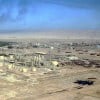
(Picture: Power plant in Bayji)
Posted in Construction & Engineering In Iraq, Iraq Oil & Gas News, Iraq Public Works News 6 Comments