



Barzani: Kurdistan will be Self-Sufficient in Fuel and Electricity
Posted on 09 August 2012 .
By John Lee.
The Prime Minister of the Kurdistan Regional Government (KRG), Nechirvan Barzani (pictured), has said that the policy of his government is to achieve self-sufficiency in fuel and electricity generation.
He said that the Baghdad government is cutting Kurdistan's share from the fuel produced at the Iraqi refineries.
"Therefore, in these two fields we will have our independence and will provide the demand of the [Kurdistan] region," Barzani said.
Kurdistan and Baghdad accuse each other of smuggling oil and dealing improperly with oil revenues.
(Source:AKnews)
Posted in Iraq Oil & Gas News, Iraq Public Works News, Politics Comments Off on Barzani: Kurdistan will be Self-Sufficient in Fuel and Electricity

Iraqi Government Acts to Defuse Power-Cut Rage
Posted on 09 August 2012 .
By Abu Iraq and Khalid Waleed.
This article was originally published by the Institute for War and Peace Reporting, iwpr.net, and it is reproduced by Iraq Business News with permission. Any opinions expressed are those of the author, and do not necessarily reflect the views of Iraq Business News
Iraq's government sacked a senior energy official and launched investigations into others after residents of the southern port city of Basra staged angry protests over prolonged power cuts.
"The electricity ministry ordered the dismissal of the director-general of power distribution in the southern region, and warned managers of electrical projects and networks in Basra that they could face penalties," a statement published on the ministry’s website said last week. "They are responsible for damaging three important transmission lines."
The announcement came in response to demonstrations that erupted in Basra as residents grew weary of the constant power outages as Ramadan, the Islamic month of fasting, got under way.
The lack of air conditioners and electric fans compounded the hardship of fasting in the soaring daytime temperatures of late July and August.
"Life has become unbearable – we can’t breathe since there’s no electricity [for cooling] in this summer’s extreme heat," Saad Hadi, a taxi driver who joined the protests, said. "Power cuts are nothing new, but with the summer heat and Ramadan, we can’t put up with it any longer.”
Posted in Iraq Public Works News, Politics Comments Off on Iraqi Government Acts to Defuse Power-Cut Rage

Weekly Security Update
Posted on 08 August 2012 .

By Gary Sandiford, Olive Group’s Dubai based assessments manager. Olive Group is a leading provider of security and technology solutions and has operated continuously in Iraq since 2003.
Overview
Olive Group's Iraq statistics are drawn from multiple sources, including media reporting and direct liaison with in country assets. Included within the statistics are a minority sub-set of serious incidents which may not be purely attributable to insurgent/terrorist groups, such as murder, kidnappings and organised crime activities.
The total reported incidents in Iraq for the week 30 July to 5 August 2012 was 159. This is on par with last week’s figure of 161, but still significantly above the current weekly average for 2012 of 107 . This high weekly total resulted from a high volume of small attacks, particularly in Baghdad and the north central region, rather than coordinated large scale attacks. Attacks largely focussed on small and poorly defended ISF checkpoints, suggesting that insurgents have adopted this inexpensive tactic in order to maintain a high operational tempo and keep security in the headlines during Ramadan. There were a number of more substantial incidents over the period, most notably a coordinated attack on the Hoot prison in Taji and an attack against the Counter Terrorism Directorate in Karada in central Baghdad. These attacks follow the recent Al Qaeda in Iraq (AQI) statement which threatened to target Iraq’s ‘Law and Order’ apparatus. The south central and south east regions, by contrast, have remained subdued.

Posted in Weekly Security Update Comments Off on Weekly Security Update
Russian Business Delegation Visits Anbar
Posted on 07 August 2012 .
By John Lee.
A Russian business delegation has visited the city of Ramadi to investigate investment opportunities in Anbar province.
Saadoun Obeid al-Shaalan, head of the provincial council, told NINA news agency:
"The delegation represents a group of leading Russian companies specialized in the manufacture of large power stations, the production and distribution of electricity, and the construction of vertical housing units."
The group promised to submit an action plan to the Investment Commission.
(Source: NINA)
Posted in Construction & Engineering In Iraq, Iraq Public Works News 2 Comments

Weekly Security Update for 2 August 2012
Posted on 02 August 2012 .

By Gary Sandiford, Olive Group ’s Dubai based assessments manager. Olive Group is a leading provider of security and technology solutions and has operated continuously in Iraq since 2003.
Overview
Olive Groups Iraq statistics are drawn from multiple sources, including media reporting and direct liaison with in country assets. Included within the statistics are a minority sub-set of serious incidents which may not be purely attributable to insurgent/terrorist groups, such as murder, kidnappings and organised crime activities.
The total reported incidents in Iraq for the period 23-29 July was 161. This is significantly higher than the previous seven day figure of 105, bringing the current weekly average for 2012 up to 106 incidents. This high figure is due in large part to the multiple attack of 23 July (initially reported in last weeks Weekly Security Update), which primarily targeted Baghdad and the north and north central regions. Following the 23 July attacks activity returned to what can be considered ‘normal levels’ in the provinces of Ninawa, Kirkuk, Salah al-Din and Baghdad. Diyala province continued to feature prominently in reporting, with further high profile attacks throughout the week. Anbar was also subject to unusually high levels of violence this week; as insurgents focused their efforts towards the end of the week. In contrast to the northern half of the country, areas south of Baghdad, with the exception of Diwaniyah city, reported very few violent incidents, with the south and south central regions only totaling seven between them. For the first week in 2012 to date, no significant incidents were reported in Basra province, the main issue being a series of peaceful demonstrations to protest the persistent electricity problems in the province.

Posted in Gary Sandiford, Security, Weekly Security Update Comments Off on Weekly Security Update for 2 August 2012

Japan to Fund Nassiriya Power Station
Posted on 31 July 2012 .
By John Lee.
The Ministry of Electricity announced that it has obtained long term funding from the Japanese International Cooperation Agency (JICA) for the Nassiriya power station.
According to the Kuwaiti News Agency (KUNA), JICA has approved a $2-billion loan for the project, which would be enough to cover the full cost.
AIN, on the other hand, reports that the ministry will receive funding from JICA towards the $2-billion project, but does not specify the amount.
The gas-fired power station is planned to have an output of 1,800 MW.
Update: JICA Refutes Reports of $2bn Iraqi Loan
(Sources: KUNA, AIN)
Posted in Construction & Engineering In Iraq, Iraq Public Works News Comments Off on Japan to Fund Nassiriya Power Station
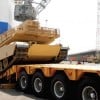
Iraq Needs Services, Not Heavy Weapons
Posted on 27 July 2012 .
By John Lee.
The second deputy speaker of the Iraqi parliament said Iraq needs to build and provide public services rather than buy heavy weapons, according to a report from AKnews.
Commenting on the visit of Iraq's Defense Minister Sadoun al-Dlemi [Sadoun al-Dulaimi, Sadun al-Dulaymi] to Russia to buy heavy weapons, Arf Taifur expressed his surprise at the timing of the visit because Iraq is witnessing sensitive and political problems.
He said the government must concentrate on providing more services and lift the burden on Iraqis by solving the electricity crisis, reducing unemployment, and looking after those affected by wars and terrorist attacks.
(Source: AKnews)
(Picture: M1A1 Abrams tank being delivered at Umm Qasr, August 2010)
Posted in Iraq Public Works News, Security Comments Off on Iraq Needs Services, Not Heavy Weapons

No Labour Laws in Iraq: Employers Pick Workers’ Reps
Posted on 26 July 2012 .
By Waheed Ghanim.
This article was originally published by Niqash. Any opinions expressed are those of the author, and do not necessarily reflect the views of Iraq Business News.
A fight between the major trade unions in Basra and that state’s authorities highlights the lack of real labour laws in Iraq. Saddam Hussein-era laws mean that here, the employer gets to elect the union representatives and ignore workers’ wishes.
The premises of the local federation of trade union organizations in Basra are located in a side street in the centre of the southern Iraqi city. A few meters away there’s a local fire station. And, as some local wits have been heard to say recently, it’s a good thing the fire engines are there. Because soon they may be needed to put out the raging fire caused by hostilities between the trade unionists and the state authorities.
According to their website the General Federation of Iraqi Workers (GFIW) “is the main national trade union centre in Iraq. It brings together workers, regardless of gender, age religion and ethnicity, in pursuit of commons aims of a free and democratic Iraq”.
The current scrap was sparked off in May this year when the executive of the General Federation of Iraqi Workers in Basra was dissolved. A new executive needed to be elected and Iraq’s Ministry of Labour set up a preparatory committee to organize the elections.
As four trade union organizations in Basra, including the GFIW, put it in a press release, this committee is made up of a group of individuals with “no trade union affiliations” who are “hatching a conspiracy” with the aim of holding “sham elections”.
Posted in Employment Comments Off on No Labour Laws in Iraq: Employers Pick Workers’ Reps

Polish Companies Ready to Invest in Kurdistan
Posted on 24 July 2012 .
By John Lee.
The KRG's Minister of Electricity, Yaseen Shekh Abubakir [Yassen Shekh Abubakir Mawati, Yasin Sheikh Abu Bakir Muhammad Mawati] (pictured), recently welcomed a delegation headed by Polish Ambassador to Iraq, Stanislaw Smolen, who said that Polish companies are ready to invest in the Kurdistan Region.
At the meeting both sides discussed increasing investment between the two countries especially in the electricity sector.
The minister asked Polish companies to invest in the region and also expressed his ministry's support to facilitate work for these companies.
(Source: AKnews)
Posted in Iraq Industry & Trade News Comments Off on Polish Companies Ready to Invest in Kurdistan

Big Business, Black Markets, Bribery: Oil Smugglers in Kirkuk
Posted on 24 July 2012 .
By Shalaw Mohammed.
This article was originally published by Niqash. Any opinions expressed are those of the author, and do not necessarily reflect the views of Iraq Business News.
Oil smuggling is virtually a tradition in the oil-producing areas of Iraq. And local authorities are trying to prevent it. But, as this tale of oil smuggling in Kirkuk shows, policing the smuggling gangs remains extremely difficult – not to mention confusing.
The epic tale of an oil smuggling gang in Kirkuk is nearly two years old now. The gang was making an estimated US$60,000 a day from their activities. And they were caught in the act over 24 months ago – yet they are, allegedly, all still free. As one member of the security forces says: “no one can arrest them”.
The story is not an uncommon one in Iraq, where oil smuggling has a long history and where authorities appear loathe to take responsibility for policing this particular crime. Most tales of oil smugglers see various authorities – from the judiciary to the police to the state to the local oil companies themselves – saying it’s the other group’s responsibility to secure the oil.
Oil smuggling became a growth industry when former Iraqi leader Saddam Hussein organized gangs to start smuggling oil to get around international sanctions against Iraq. Tankers would siphon oil from various sources and either sell them on the home market or on the black market in nearby nations; demand was there for oil to run home generators, for example, needed because of electricity cuts. And despite the best efforts to halt the practice, it has continued in various forms to this day.
An anonymous source tells NIQASH that this particular instance of oil smuggling began when Iraq’s own North Oil Company decided to build a pipeline from the Jabal Bur oil processing station to a nearby area, Kiwan, where the pipe could then connect to a larger network.
Posted in Iraq Oil & Gas News, Security Comments Off on Big Business, Black Markets, Bribery: Oil Smugglers in Kirkuk