


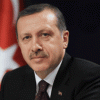
Turkey's "Brash Behaviour" Riles Iraq
Posted on 12 October 2016 .
By Fehim Taştekin for Al Monitor. Any opinions expressed here are those of the author and do not necessarily reflect the views of Iraq Business News.
Turkey has been officially uninvited — in no uncertain terms — to the liberation of Mosul, Iraq.
When rumors began piling up recently that Turkey — after launching Operation Euphrates Shield in Syria — also has plans to intervene on the Iraqi front with Operation Tigris Shield, diplomatic channels between Ankara and Baghdad caught fire.
Baghdad was already unhappy with Turkey, believing Ankara is more interested in the post-Islamic State (IS) future of Mosul rather than helping to liberate it. Baghdad was also concerned about Turkey training Sunni-dominated Al-Hashd al-Watani forces at Bashiqa training camp 25 kilometers (15 miles) from Mosul.
So when Turkey's parliament decided Oct. 1 to extend for a year its military operations in Iraq and Syria, the Iraqi parliament responded with a blunt, unfriendly warning.
The warning called for summoning the Turkish ambassador, branding Turkish forces in Iraq as occupiers, prosecuting those responsible and denouncing Turkish President Recep Tayyip Erdogan’s pronouncements. It also called for reviewing trade and economic relations with Turkey and initiating immediate action with the United Nations to expel Turkish troops.
Turkey's Foreign Ministry responded in similarly harsh language: “We denounce the decision of the Iraqi parliament. We strongly condemn the ugly accusations directed to our president.”
Tension between Ankara and Baghdad escalated after Iraqi Prime Minister Haider al-Abadi warned that the presence of Turkish soldiers in Iraq could lead to a regional war.
Turkey’s Deputy Prime Minister Numan Kurtulmus contributed to the squabble. “Where was the Iraqi government when [IS] occupied Mosul in one day?” he asked, referring to the takeover in June 2014.
Many people wondered what had prompted the Iraqi parliament's bad-tempered action.
Posted in Politics, Security Comments Off on Turkey's "Brash Behaviour" Riles Iraq

Asiacell: Revenue Down, Profit Up
Posted on 27 July 2016 .
In its results for the first half of 2016, Qatar-based Ooredoo said that its Iraqi mobile phone business Asiacell continued to be impacted by the security situation, the challenging economic environment and a decrease of customer purchasing power in Iraq.
Revenue stood at QAR 2.1 billion [$577 million], down 15% compared with QAR 2.5 billion in H1 2015. EBITDA remained relatively stable at just over QAR 1 billion, a 3% decrease compared to H1 2015 and EBITDA margin improved to 48% from 42% in H1 2015 due to Asiacell's successful cost reduction strategy.
Net Profit increased by more than 18% to QAR 74 million. Asiacell's customer base remained relatively stable at 10.8 million, approximately in line with the previous year.
Asiacell continues to see an increase in data revenue following its launch of 3G services in 2015, in a market still largely driven by voice services.
During the period, Asiacell enhanced its sales channels to drive the penetration of data services and continues to make progress in recovering its network in liberated areas.
(Source: Ooredoo)
Posted in Iraqi Communications News Comments Off on Asiacell: Revenue Down, Profit Up
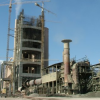
Iraq to Remove Ban on Iranian Cement
Posted on 24 May 2016 .
By John Lee.
The secretary of Iran's Cement Industry Employers Association has said that Iraq has promised to remove its ban on the import of Iranian cement.
Fars news agency quotes Abdolreza Sheikhan as saying that following several meetings between Iranian and Iraqi officials, Baghdad promised to give priority to Iranian exports, once general ban on cement import is removed.
He said Iraq's cement demand is currently met from domestic production.
Iran's cement and clinker exports fell by 20 percent in the Iranian year ended March 20, and stood at 15 million tons.
Iraq had previously accounted for 60 percent of Iran's cement exports.
Last year Baghdad increased tariffs on Iranian cement from $4 to $13.
Iran currently exports cement to some 24 countries including Azerbaijan, Turkmenistan, Afghanistan, Russia, Kazakhstan, Kuwait, Pakistan, Qatar, Turkey, the United Arab Emirates, Georgia, Oman, India, and China.
Last year, Sheikhan warned that Iran is gradually losing its domestic and foreign cement markets.
"Cement supply and demand is not balanced in the market and this has created problems for producers," he said.
(Source: Trend)
Posted in Construction & Engineering In Iraq 5 Comments
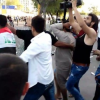
Journalists Targeted by Security Forces during Protests
Posted on 24 May 2016 .
This article was originally published by Niqash. Any opinions expressed are those of the author, and do not necessarily reflect the views of Iraq Business News.
Iraqi Journalists Targeted By Security Forces During Green Zone Protests
Last Friday demonstrators broke into Baghdad’s Green Zone a second time. Security forces were waiting for them - and the media, say local journalists who believe they were deliberately targeted by the military.
On Friday afternoon in Baghdad’s Tahrir Square, thousands of protestors gathered - as has become their habit over the past few months. As was also usual they chanted their demands for political reform and anti-government slogans.
After an hour or so, the protestors decided to cross the Jumhuriyah bridge, near the square, and break into the highly protected Green Zone area, which houses Iraq’s government buildings and many foreign embassies, again.
Last time the protestors made it into the Green Zone and stayed for two days. However this time, security forces guarding the Green Zone did not let the protestors through. Instead they used tear gas and rubber bullets – even some live ammunition was used and it is estimated four people lost their lives – to disperse the protestors; the demonstrations ended around two hours later.
This time though, members of the local media who had accompanied the demonstrations were among the security forces’ victims. A statement from the Metro Centre for Defending Journalists' Rights said more than 13 journalists were attacked while they were trying to cover the demonstrations.
Posted in Iraqi Communications News, Security 4 Comments

Al Jazeera Closure "a Blow to Free Speech", HRW
Posted on 03 May 2016 .
By Human Rights Watch.
The closure of Al Jazeera’s Baghdad bureau by the Iraqi Communications and Media Commission is nothing but an effort to clamp down on freedom of expression. The commission should promptly reverse its decision and allow the bureau to operate freely in accordance with international standards on freedom of the media and free speech, Human Rights Watch (HRW) said.
The commission, in a letter to the bureau, accused Al Jazeera of “incit[ing] sectarianism and violence.” The station’s Baghdad bureau chief, Waleed Ibrahim, said that commission officials later told him the order stemmed from their displeasure with the editorial policies of Al Jazeera’s headquarters in Qatar.
Iraqi authorities should immediately allow Al Jazeera to resume its work, or spell out exactly how and when the station incited violence, Human Rights Watch said.
“Iraqis have a right to hear a variety of perspectives on current events,” said Joe Stork, deputy Middle East director at Human Rights Watch. “Closing down a prominent international network on the basis of vague and unsubstantiated allegations smacks of political motivation to shut out uncomfortable criticism, and it’s an action that should be immediately reversed.”
Ibrahim told Human Rights Watch that the commission’s executive board called him into a meeting on February 21, 2016. At the meeting, he said, the board members accused Al Jazeera’s headquarters in Doha of being sectarian and encouraging what they said were “violations” in its Iraq coverage. Ibrahim said he refused to sign a letter that he agreed with the allegations, “but also explained that I do not have any control over the content coming out of Doha, only out of Baghdad.”
Posted in Iraqi Communications News, Security 3 Comments
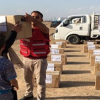
Qatar Donates $10m Urgent Relief Aid to Iraq
Posted on 25 April 2016 .
Due to the circumstances experienced by the brotherly Iraqi people and the blockade from which many Iraqi cities are suffering, HH the Emir Sheikh Tamim bin Hamad Al-Thani has instructed the provision of with $ 10 million to the brotherly Iraqi people.
The Foreign Ministry stressed, in a statement issued on Sunday, that the humanitarian assistance stems from the keenness of the State of Qatar to stand with the Iraqi people and alleviate their suffering, and in completion of the role being played in the emergency response to cope with the deteriorating humanitarian situation in Iraq.
The statement added that the agreement was signed on Sunday between Qatar Development Fund (QDF) and Qatar Red Crescent Society (QRCS) to carry out emergency relief for the benefit of the people of the besieged City of Fallujah in Iraq within the amount of $ 1 million, in coordination with international organizations and UN agencies.
The Qatari assistance to the brotherly Iraqi people includes a number of sectors such as food security and health care sectors. ORCS had since started drawing up an urgent intervention plan to execute several relief projects covering various areas of Anbar province.
(Source: Qatar Ministry of Foreign Affairs)
Posted in Security 3 Comments
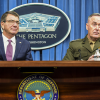
Defense Secretary Carter Urges GCC to Help Iraq
Posted on 20 April 2016 .
By Simon Kent.
US Defense Secretary Ash Carter has met with Gulf Cooperation Council Secretary-General Abdullatif al-Zayani and six of his counterparts from the GCC, to discuss the war against the so called Islamic State in Iraq.
The meeting comes ahead of a planned GCC summit this week, which Barack Obama will attend. But underlying the recent meeting were concerns that the GCC (Saudi Arabia, Kuwait, Bahrain, United Arab Emirates, Oman and Qatar) were not pulling their weight in the war.
In Iraq, one US frustration was the slowness to commit reconstruction funds, a pressing concern in Ramadi, the Sunni majority city which needs billions of dollars for reconstruction following more than a year of fighting against ISIS.
Carter was allegedly told that defense secretaries in the GCC wanted more assurance that the Iraqi government would be more inclusive of Sunnis in the political process before committing more aid. This is a worrying request since many Sunni sheikhs in Anbar and Salahaddin are already on the government side, while many Sunni politicians lack the appeal of tribal leaders and are widely seen by Sunnis as corrupt.
The US military is now apparently working on partnerships with GCC army Special Forces units, but it is unclear what the aim of such partnerships would be. GCC defense secretaries apparently expressed ongoing concerns about Iran.
(Source: ABC News)
Posted in Security 9 Comments
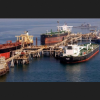
Iraq calls for Oil Production Freeze
Posted on 12 April 2016 .
By John Lee.
The head of Iraq’s State Oil Marketing Organization (SOMO) has said the world’s major oil producers must agree to freeze production, in order to shore up flagging oil prices.
Falah Alamri said:
“They should do this deal as this is the only way to support the oil price ... Everybody needs it and Iraq supports this deal ... A deal would now be effective.”
He was speaking ahead of a meeting of ministers from Opec and non-Opec countries, scheduled for Sunday in the Qatari capital Doha.
Iraq's crude oil output rose to 4.55 million bpd in March, up from 4.46 million bpd in February; an analyst told Bloomberg that the record output may be “Iraq trying to establish a high baseline going into any freeze.”
Mr Alamri also said that Iran has the right to increase production to pre-sanctions levels.
(Sources: FT, Bloomberg)
Posted in Iraq Oil & Gas News 6 Comments
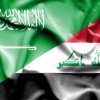
Why Iraqi-Saudi ties are Backsliding yet Again
Posted on 10 April 2016 .
By Mustafa Saadoun for Al-Monitor. Any opinions expressed are those of the author, and do not necessarily reflect the views of Iraq Business News.
Iraq is facing a new crisis with Saudi Arabia as a result of their differing points of view regarding regional issues, most notably those related to Lebanon-based Hezbollah, which was recently classified by the Arab League and the Gulf Cooperation Council (GCC) as a terrorist organization.
The crisis started March 11 when Iraqi Foreign Minister Ibrahim al-Jaafari dropped a bombshell during the Arab League meetings in Cairo. He said, “Iraq’s Popular Mobilization Units and Lebanon’s Hezbollah preserved the dignity of the Arabs. Those accusing them of terrorism are the terrorists.”
The Saudi delegation withdrew from the meeting, but returned after Jaafari finished speaking.
Tense Saudi-Iranian ties were already affecting the whole region. In a Jan. 19 article by Saudi Foreign Minister Adel al-Jubeir, Saudi Arabia accused Iran of “supporting all radical and violent groups, including Hezbollah in Lebanon, the Houthis in Yemen and sectarian militias in Iraq.”
At the March 11 meeting, Saudi Arabia was obviously angered by the Iraqi minister defending Hezbollah. However, Jaafari told the press later that day that his defense of Hezbollah “will not affect Iraqi-Saudi ties, and it is normal that two countries have different perspectives." Those divergent views will not harm bilateral ties between Arab parties, he added.
Posted in Iraq Industry & Trade News, Iraq Oil & Gas News, Politics, Security Comments Off on Why Iraqi-Saudi ties are Backsliding yet Again
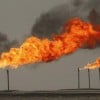
Gas Condensate Exports - a New Beginning for Hydrocarbon Industry?
Posted on 03 April 2016 .
By Rami Khrais for Al-Monitor. Any opinions expressed are those of the author, and do not necessarily reflect the views of Iraq Business News.
Do gas condensate exports represent new beginning for Iraq's hydrocarbon industry?
Iraq exported its first shipment of gas condensate on March 20, from the port at Khor al-Zubair to Fujairah in the United Arab Emirates (UAE). Hamed Zubai, undersecretary at the Iraqi Ministry of Oil, reported that the Iraqi Oil Marketing Co. had arranged for the 10,000-cubic-meter consignment, and the Basrah Gas Co. had successfully exported the shipment.
“Due to surplus exceeding local consumption, gas condensate exports will continue. In addition, the ministry seeks to export other types of associated gas-processing products,” Zubai said during a March 20 news conference. He did not mention potential export destinations.
“Exporting condensate opens the door for the state to secure added financial returns, driven by the fact that the global price per ton is around $350.” What does this development mean, and does it represent a new beginning for the gas industry in Iraq?
Whereas natural gas refers to gaseous hydrocarbons that accumulate in porous sedimentary rocks and consist mainly of methane, gas condensate refers to a natural gas liquid recovered from gas wells that consists mainly of pentane. Iraq is one of the world’s richest countries when it comes to natural gas.
Citing the Oil & Gas Journal, the US Energy Information Agency (EIA) reported that as of January 2015, Iraq had proven gas reserves of about 112 trillion cubic feet, ranking it 12th globally in total volume of reserves. The EIA estimates that about three-quarters of Iraq's natural gas resources are of the associated type, meaning that they are located deep underground and mixed with oil. In contrast, neighboring Iran and Qatar have nonassociated gas, which is not mixed with petroleum.
Posted in Iraq Oil & Gas News Comments Off on Gas Condensate Exports - a New Beginning for Hydrocarbon Industry?