


'Ghost' Soldiers Haunt Iraqi Army
Posted on 19 November 2014 .
By Adnan Abu Zeed for Al-Monitor. Any opinions expressed are those of the author, and do not necessarily reflect the views of Iraq Business News.
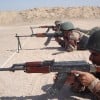
The Iraqi army includes “ghost” soldiers, a purely Iraqi term used to describe members whose names are registered in the wages and salaries lists, but who are not actually present in the military ranks. Their wages go to leaders who cover for their absence.
There are ghost employees in state departments as well; they are absent in reality, but present in terms of official staff who enjoy salaries and privileges.
Al-Monitor was unable to interview officers who benefit from these ghost employees. Instead, it met with former lawmaker and leader in the Mutahidoun bloc, Mohammed Othman al-Khalidi, in Baghdad. He confirmed this phenomenon saying, “The ghost employees were one of the reasons behind the shocking collapse of the Iraqi army before the Islamic State (IS) in Mosul.
Mosul, the second biggest city in Iraq, fell into the hands of IS on July 10, after a sudden withdrawal of Iraqi troops.
Khalidi described these unreal soldiers as “ghosts in the army’s ranks, who get paid for staying home. This pushed the competent authorities to resort to armed militias to fill the gap within an army that failed to defend its country.”
The Iraqi army was established in 1921, and in 2003 the leader of the US occupational authority in Iraq, Paul Bremer, reformed it. Back then, the army included around 400,000 soldiers, but today, there are only 170,000.
According to statistics, whose source he did not mention, Khalidi estimated that 30% of the army members were “ghosts.”
Asked about measures taken to limit this phenomenon, he said, “We asked to restructure the armed forces, as part of the National Guard project,” adding, “The partisan designations by political parties and forces allowed the presence of numerous ghosts in all state facilities, and not only in the military institution.”
Posted in Security Comments Off on 'Ghost' Soldiers Haunt Iraqi Army
Can IS Keep Control of Mosul?
Posted on 18 November 2014 .
By Mushreq Abbas for Al-Monitor. Any opinions expressed are those of the author, and do not necessarily reflect the views of Iraq Business News.
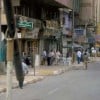
The most credible story available today about the Islamic State (IS) occupation of Mosul on June 9 reads that IS occupied Mosul several years before that date and has long ruled it as a state within the state.
Al-Qaeda and IS have been present in Mosul since 2006, when they took control of it by force, according to reports published by Western and Arab news outlets.
But IS is losing Mosul before officially leaving it. The residents of Mosul are starting to reject IS and its activities, after first turning to the group to free them of the Iraqi army and the central government’s practices.
At the beginning of November, the Mosul wali (leader), IS' Dar al-Ifta official Quasi Abdul Mohsen, issued a circular that caught the attention of IS-affiliated media outlets. The document was initially published via “media points” — basically booths placed across the city's neighborhoods in which TVs broadcast IS-related videos — and subsequently shared on news and social media pages with ties to IS.
The circular mainly focused on preventing the arrest of any citizen in Mosul in the absence of a warrant signed by the Sharia judge. It read that sanctions would be imposed in the event of any violation fo this dictate.
Throughout 2013, Mosul residents demonstrated against Nouri al-Maliki’s government, which lost the city long before the IS occupation. The people there were angry at the practices of the government and the military, complaining of random arrests without warrants. But these demonstrators were hit by a harsher reality.
The IS strategy to occupy cities originally relied on taking advantage of Sunni complaints about the security authorities in Baghdad. The group timed its occupation of vast areas of Iraq for the moment when Sunni anger against the government reached its peak.
Posted in Security Comments Off on Can IS Keep Control of Mosul?
Unemployment Increases in Kurdistan Region
Posted on 12 September 2014 .
By John Lee.
BasNews reports that the unemployment rate in Kurdistan has risen from 7 percent at the end of 2013 to 10 percent currently. The number unemployed is nearly 100,ooo, of which 52 percent are men.
The increase has been blamed on the general economic situation in Iraqi Kurdistan, and on the sanctions that Baghdad has put on the region.
The Statistics Director in Sulaimaniyah, Mahmud Osman, believes that the increase in unemployment is mainly due to the lack of job opportunities for university graduates, and the lack of availability of loans to youths.
According to the data of the Ministry of Planning, in the first six months in 2013, the unemployment rate stood at 5.2 percent.
Meanwhile, Iraqi social affairs Minister Naser Ruba’i revealed that 46 percent of Iraqi citizens are jobless.
According to data obtained by BasNews, there are approximately 3000 contractor projects, 70 percent of which have come to a halt due the recent violence in northern Iraq.
“In respect of the current economic crisis and IS attacks, markets and projects have stopped. The government must have a serious plan in order to survive the current situation that Kurdistan is going through”, said Yassin Mahmud, spokesperson for Kurdistan Investment Union.
According to Investment Unions official, 14 billion dollars [16.3 trillion Iraqi dinars] was invested in the region in 2013, but this has fallen to only 3 billion dollars [3.5 trillion Iraqi dinars] in the first 8 months of this year.
(Source: BasNews)
Posted in Employment, Iraq Industry & Trade News Comments Off on Unemployment Increases in Kurdistan Region
Volunteers Ill-Prepared to Fight IS
Posted on 06 August 2014 .
By Wassim Bassem for Al-Monitor. Any opinions expressed are those of the author, and do not necessarily reflect the views of Iraq Business News.
A popular mobilization is occurring in Iraq in response to the “righteous jihad” fatwa issued three days after the Islamic State (IS) occupied Mosul on July 10.
Saad Hamid is among the 200 individuals who volunteered to help the Iraqi army stop the IS advance. Enlisted in a one-month training program in al-Kafal village, south of Babylon, he was being trained to use weapons and in combat techniques before he was expected to join his peers on the battlefield.
Hamid enthusiastically relayed his impressions to Al-Monitor. He said that he was ready to fight IS and defend the country in response to the call to jihad. There are other reasons behind his haste to volunteer, however, including unemployment and difficult financial straits.
He told Al-Monitor, “I am reassured because I am receiving a fixed monthly salary to provide for my family, which includes my mother and three siblings.”
Like Said, the majority of volunteers are poor and trying to find a livelihood at any cost. Every volunteer receives a $400 monthly salary, which is raised to $600 once he enters the battlefield.
In a training camp in Babylon’s Hillah, in the former US Kaslo base, Hassan al-Jabbouri, 19, trained for a month and a half before joining the combat troops in mid-July in Jurf al-Sakhar, north of Babylon. The area is the site of attack-and-retreat battles between the army, security forces and volunteers on one side and armed groups on the other.
Despite Jabbouri’s enthusiasm and his belief that fighting IS is a national duty, he told Al-Monitor, “The majority of volunteers did not receive proper training and lack combat expertise. In addition to this, the majority of them are young and poor, and they see in volunteering a chance to secure an income.”
Posted in Security Comments Off on Volunteers Ill-Prepared to Fight IS
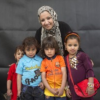
Suaad Allami, a Vital Voice of Leadership for Iraq
Posted on 21 July 2014 .
By Madeleine White, Managing Editor of NINA.
Suaad Allami, a Vital Voice of Leadership for Iraq and an Inspiration for Women Everywhere
It is interesting when you interview people. Sometimes you get to meet them physically, sometimes you get to speak by skype or by phone, other times answers are returned by Email. Each interview leaves an imprint of some kind.
As I sit and write this today I am overwhelmed by the sense of needing to convey in a thousand words or so the sheer force of personality, drive and compassion that has led to Suaad Allami, a leading Iraqi human rights lawyer to receive the Vital Voices Global Leadership Awards Fern Holland Award in Washington last month.
She was also one of just eight women globally to receive the Women of Courage Award from Hillary Clinton and Michele Obama in 2009. Still a practicing lawyer, Suaad founded Women for Progress in 2007 a “one-stop shop” for everything from legislative advocacy, vocational training, and domestic violence counselling to medical exams and literacy education and even child care and exercise opportunities.
She is known for her unwavering resolve to reintegrate women into Iraqi society and to engage them fully in reconstructing a stronger nation and of course I will tell you about this… but I also want to convey the Suaad that jumped out at me over our skype call. This was the Suaad Allami who was born and stayed in Sadr City, one of the poorest Baghdad suburbs. It was the woman shaped by the determination of illiterate parents to find her voice through education. It was the lawyer, who despite a ‘handicap’ of gender has risen to be one of Iraq’s great civil society leaders.
And there we have it, just there. The word I want to start with, that connects the themes and ideas that bind our discussion together. Leadership. We start with a bit of background.
“ You ask about my mother and her influence on me. As you know she was illiterate as indeed was my father. My mother though was very strong in her views about what this meant to her. She always told me not to be like a blind person. That’s what it meant to her to be uneducated. Both my parents were illiterate and both were determined my three sisters and I should have a good education.
As I got older I recognised that even though my parents were blind in one way, their values were incredibly strong. These values and morals underpinned our education, because they gave us the understanding of what vision means. Their desire to help us ‘see’ everything, contextualised our education in a way that inspired greater depth. Their ambition for us reached beyond the academic into the human. This shaped my learning and my work.”
Posted in Madeleine White Comments Off on Suaad Allami, a Vital Voice of Leadership for Iraq
Dep PM: "I was Mistaken" in Joining Govt
Posted on 08 July 2014 .
By Mustafa al-Kadhimi for Al-Monitor. Any opinions expressed are those of the author, and do not necessarily reflect the views of Iraq Business News.
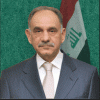
Iraqi Deputy Prime Minister Saleh al-Mutlaq (pictured), head of the al-Arabiya Coalition, has said that a political solution is the only way to unite the positions of Shiites and Sunni tribes and isolate armed groups and called the fall of Mosul a natural result of the faulty structure of the Iraqi army.
In an interview with Al-Monitor, Mutlaq said it had been a mistake to accept the post of deputy prime minister within the context of partisan and sectarian agreements.
He affirmed that the policies of oppression and marginalization from which the Sunnis suffered are what pushed them to call for their own region. He stressed that the United States is responsible for what is happening in Iraq, as it ousted a dictatorship full of flaws yet with functioning state institutions.
The text of the interview follows:
Al-Monitor: The surprising agreement among Sunni forces to enter parliament in a single coalition drew the attention of observers. How did that happen?
Mutlaq: We do not believe in any alliances that are built on sectarian, ethnic or doctrinal bases. The primary foundation of our alliance is nationalism and public interest as well as achieving the demands of citizens. We exerted as much effort as possible prior to the elections to find a cross-sectarian national front, yet other forces were — and still are — insistent on dividing the people of a single nation into various groups, sects and races.
Our final alliance was based on the importance of consensus and implementing the demands of the provinces that held sit-ins and demanded the preservation of their residents' dignity.
KRG Prime Minister Barzani Outlines Priorities
Posted on 20 June 2014 .
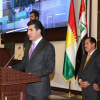
The eighth cabinet of the Kurdistan Regional Government was announced at a special session of the Kurdistan Parliament held on 18 June 2014. Prime Minister Nechirvan Barzani, Deputy Prime Minister Qubad Talabani, and all cabinet ministers were sworn into office.
In a speech outlining the programme of the eighth cabinet, Prime Minister Barzani stated that the new cabinet has been announced during a critical point in time. He emphasised that in 2003, the people of Kurdistan needed to act with one voice and work together in order to protect and preserve the achievements and interests of the Kurdistan Region.
He noted the need to have the same strategic posture at this difficult period for Iraq in order to not squander any achievements that have been made and to ensure the safety and security of those living in the Kurdistan Region and in parts of Kurdistan outside of KRG administration. For this reason the decision constitutes a historic responsibility for the people of Kurdistan.
The Prime Minister also said that the eighth cabinet is a broad-based government, reflecting the aspirations of the political forces in the Kurdistan Region. Achieving this task required patience during the process of forming such a cabinet in order to construct a real partnership that would respond to the current needs of the people and the political constituencies of the Kurdistan Region.
Prime Minister Barzani thanked the people of the Kurdistan Region for their patience during the government formation process, especially after Iraq’s federal government cut the salaries of KRG employees. He stressed that this unjust and unconstitutional decision has made the lives of the people in the Region more difficult and has also had a negative impact on Kurdistan’s economy and investment. He expressed his sorrow and sadness for the trouble that this situation has caused for the people of Kurdistan. However, he stated that in the coming years the resistance and fortitude of the people of the Kurdistan Region would usher in a new stage in which injustice would be confronted. This would help to settle these issues, and the Kurdistan Region would not face political or financial crises such as this again.
Posted in Iraq Industry & Trade News, Iraq Oil & Gas News, Politics, Security 2 Comments
Kurds Seize Control of Border Crossing
Posted on 20 June 2014 .
By Wladimir van Wilgenburg for Al-Monitor. Any opinions expressed are those of the author, and do not necessarily reflect the views of Iraq Business News.
Iraqi Kurdish peshmerga forces have seized most of the borders that divide the landlocked Kurds between Iraq and Syria, with increasing public support from both sides of the border. ]Kurds in several cities in Syria rallied in support of the Kurdish fighters that are engaging the Islamic State of Iraq and al-Sham (ISIS) both in Syria and Iraq, but unity between rival Kurdish parties is no guarantee.
Peshmerga forces affiliated with the Kurdistan Democratic Party (KDP) of Kurdistan Regional Government President Massoud Barzani secured most of the Iraqi-Syrian border areas of the province of Mosul on June 10 after the fall of the city to ISIS.
Importantly, they have secured most areas surrounding the previously Iraqi-controlled Rabia-Yaroubia border crossing. The Yaroubia crossing was captured by the Democratic Union Party (PYD), which is affiliated with the Kurdistan Workers Party (PKK), in October 2013 in cooperation with the Iraqi government to circumvent the Turkish and KDP border closures between Syrian and Iraqi Kurdistan.
Conflicting reports suggest the People’s Protection Units (YPG), the armed wing of the PYD, are still occupying the Iraqi side of the border crossing, with peshmerga fighters asking them to leave. Hashim Sitey, the local peshmerga commander in Rabia, told KDP-affiliated Rudaw on June 16 that they tried to ask YPG forces to surrender the crossing, but that they have so far refused.
Local authorities in Dahuk refused Al-Monitor permission to go to Rabia, citing security threats.
Many Kurds are dissatisfied with the ongoing power struggle between the PKK and Barzani’s KDP over power-sharing in Syria. Syrian Kurdish parties affiliated to the KDP have refused to recognize the newly established canton administrations by the PYD.
The KDP closed the Semalka border in October 2013 to pressure the PKK to share power with KDP-backed parties in Syria. The PYD now fears that the KDP will use its new gains to further pressure the PYD and called on the Kurdistan Regional Government (KRG) to fully open the Semalka border crossing.
Posted in Iraq Industry & Trade News, Security Comments Off on Kurds Seize Control of Border Crossing
Living Conditions in Iraq "Must Improve"
Posted on 24 May 2014 .
A new review has shown that the health of Iraqis will continue to deteriorate unless there is an improvement in living conditions.
Despite enormous investment in Iraq’s health system in the 10 years since the US-led invasion, the health condition of Iraqis has worsened.
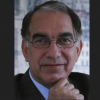
A review led by Professor Salman Rawaf (pictured) from Imperial College London concludes that continual investment in health services is crucial to elevate the health status of the Iraqi population, but that progress will be limited without improvements in housing, water and sanitation, electricity, transport, agriculture, education and employment.
Published in Journal of the Royal Society of Medicine the study involved several field visits to Iraq between 2011 and 2013. Professor Rawaf, from the School of Public Health at Imperial College London, said:
“There have been many attempts to come up with solutions that can help channel the resources needed to make Iraq’s health system more effective. But our review showed that strategists and planners have a blind spot when it comes to the work that needs to be done to improve all aspects of living which play a vital role in positively affecting the health status of the people.”
The authors found that housing conditions in Iraq are in a dire state for the majority of the population, with half a million people living in squatter settlements. While the government is building 25,000 housing units a year, the current need is for three million. The infrastructure for water and sanitation is too old and is a source of illness for many people. Even in oil-rich Basra the water supply is not suitable for human consumption.
The national electricity supply is limited to 40 per cent, forcing the public to purchase electricity privately or rely on noisy domestic power generators that increase CO2 emissions and noise pollution. Roads are in poor condition and road traffic injuries unacceptably high.
Posted in Healthcare Comments Off on Living Conditions in Iraq "Must Improve"

Iraqi Elections: all Talk, no Walk
Posted on 18 April 2014 .
By Mustafa al-Kadhimi for Al-Monitor. Any opinions expressed are those of the author, and do not necessarily reflect the views of Iraq Business News.
With the launch earlier this month of campaigns for the April 30 parliamentary elections, Iraq is back to debating the fact that none of the political blocs has put forward an electoral program or platform. The blocs, misunderstanding the concept of a political program, have instead reduced them to vague slogans.
The Iraqi political forces competing in the elections justify the absence of real programs by asserting that Iraq remains in transition, so there are real differences over the basis of the political process — such as the Constitution, government formation, the decision-making process and the relationship between the central government and the provinces and the regions.
They claim that this reality forces them to take positions on these particular issues, rather than presenting political programs. For example, some campaigns are sloganeering on amending the Constitution, while others' slogans invoke government formation by the political majority, decentralization and the war on terror.
Being in a transitional phase and disagreeing over political fundamentals do not, however, justify lacking an economic or development program or taking positions on such issues as housing, health, education, human development, and human rights and freedoms.
To be fair, a few political forces such as the Supreme Islamic Council have presented detailed programs, but the problem is then that the Iraqi voter is faced with a choice between a detailed program and lots of attractive slogans.
Posted in Politics Comments Off on Iraqi Elections: all Talk, no Walk