



Baghdad denies Russian Claims regarding KRG Oil Deals
Posted on 08 December 2017 .
By John Lee.
The Iraqi Ministry of Oil has denied reports that Russian Energy Minister Alexander Novak discussed Russian oil companies' operations in Iraqi Kurdistan with the Iraqi prime minister or oil minister during his trip to Iraq.
Novak had been quoted as saying that Baghdad had no problems with Russian companies doing business with the Kurdistan Regional Government (KRG).
Baghdad reasserted that while it welcomes foreign investment in the country, "oil is a sovereign resource and therefore all contracts … must be signed with the federal government and the Ministry of Oil.”
(Sources: Reuters, Rudaw)
Posted in Iraq Oil & Gas News Comments Off on Baghdad denies Russian Claims regarding KRG Oil Deals
Gazprom Neft commissions New Gas Plant at Badra
Posted on 06 December 2017 .
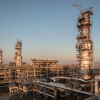
Russia's Gazprom Neft has launched the commercial operation of a 1.6 billion cubic metres capacity gas processing plant at its Badra field, Iraq.
Alexander Novak, Minister of Energy of the Russian Federation, was present at the opening ceremony for the new facility, together with the Minister of Oil of the Republic of Iraq, Jabbar al-Luaibi, and Gazprom Neft CEO Alexander Dyukov.
Dry feed gas, processed at the Badra field, is transported via a 100-kilometre pipeline to the Az-Zubaidiya power station, supplying electric power not just to provinces throughout Iraq, but also to the capital city of Bagdad.
In addition to this, gas will be used to meet the Badra project's own needs as fuel for the gas-turbine power plant. Five gas turbines are able to produce a total 123.5 MW of electric power, supplying oil and gas processing facilities, drilling rigs and oil-producing wells. A 10-MW overhead power line will soon begin feeding into the Gazprom Neft Badra accommodation complex, as well as into the town of Badra and neighbouring population centres.
Natural gas liquids (NGLs) produced at the Badra project's gas processing plant will be used to produce LPG to be supplied to the Iraqi state-owned Gas Filling Company. The plant also includes facilities for sulphur production and granulation.
Alexander Dyukov, Gazprom Neft CEO, made the following comment at the official opening ceremony of the gas plant:
"Gazprom Neft is continuing its development of the Badra field, in strict adherence to the field development plan. Today sees the full-cycle gas plant - built by our company using the most cutting-edge technologies available on the world market - going into commercial production.
"This is a unique enterprise for the region, at which Gazprom Neft has, since starting work, been able to monetize all of the hydrocarbons produced here, ensuring associated-petroleum-gas (APG) utilisation of at least 95 percent."

(Source: Gazprom Neft)
Posted in Iraq Oil & Gas News Comments Off on Gazprom Neft commissions New Gas Plant at Badra

Lukoil to submit West Qurna-2 Plan by end-Dec
Posted on 01 December 2017 .
By John Lee.
Russian oil company Lukoil has said it will present its plans t0 develop the West Qurna 2 oil field to the Ministry of Oil by the end of the month.
Company boss Vagit Alekperov (pictured) told reporters that his company is negotiating regarding production volumes, timelines, and investment.
(Source: TASS)
Posted in Iraq Oil & Gas News Comments Off on Lukoil to submit West Qurna-2 Plan by end-Dec

Gulf Keystone appoints New Non-Executive Director
Posted on 29 November 2017 .
Gulf Keystone Petroleum (GKP) has announced the appointment of Jacobus ("Jaap") Huijskes as a Non-Executive Director with immediate effect.
Jaap Huijskes was most recently a Director at OMV, the Austrian integrated oil and gas company listed on the Vienna Stock Exchange.
While at OMV, he was responsible for Exploration and Production (E&P) and oversaw the Company's expansion into new territories. He also played a key role in OMV's operations in the Kurdistan region of Iraq.
Prior to this, Mr Huijskes held a number of senior positions at Shell, including Executive Vice President of Upstream Major Projects and Project Director at the Sakhalin Energy Investment Company, which was set up to develop the Sakhalin-II oil and gas project in Russia. He holds a Masters in Mechanical Engineering from Delft University of Technology in The Netherlands.
Mr Huijskes is currently a director of the Dutch state-owned integrated oil and gas company, Energie Beheer Nederland. He was a member of OMV's Executive Board for E&P between 2010 and 2016.
Keith Lough, Gulf Keystone's Non-Executive Chairman, said:
"We are pleased to welcome Jaap Huijskes to the Board of Gulf Keystone Petroleum. He has an impressive industry track record in the oil and gas sector, including relevant experience in the Kurdistan region of Iraq."
(Source: GKP)
Posted in Iraq Oil & Gas News Comments Off on Gulf Keystone appoints New Non-Executive Director

SOMO Awards Diesel Tenders
Posted on 17 November 2017 .
By John Lee.
Sources have told Reuters that China's state-run Zhenhua Oil will supply diesel (500 parts per million (ppm) sulphur) to Iraq's State Oil Marketing Organization (SOMO) through a term contract for the first time.
It will supply 600,000 tonnes of the 2.37 million tonnes sought by SOMO in a tender for delivery in the 2018 calendar year.
The company is part of defence conglomerate China North Industries Group Corp (NORINCO).
BB Energy, Litasco (the international marketing and trading arm of Russia's Lukoil) and Lima Energy (a joint venture between Litasco and SOMO) will also supply about 25 percent each.
(Source: Reuters)
Posted in Iraq Oil & Gas News Comments Off on SOMO Awards Diesel Tenders
Russia begins Deliveries of T-90 Tanks
Posted on 16 November 2017 .
By John Lee.
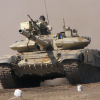
Russia has reportedly begun delivering T-90 tanks to the Iraqi military.
According to Almasdar News, 73 of the tanks are scheduled to arrive to Umm Qasr Port this year.
The T-90 is a third-generation Russian battle tank that entered service in 1993.
(Source: Almasdar News)
Posted in Security Comments Off on Russia begins Deliveries of T-90 Tanks
Key Town Retaken amid Regional Power Plays
Posted on 13 November 2017 .
By Shelly Kittleson for Al Monitor. Any opinions expressed here are those of the author and do not necessarily reflect the views of Iraq Business News.
Key Iraqi border town retaken amid regional power plays
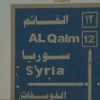
Iraqi Prime Minister Haider al-Abadi raised the Iraqi flag Nov. 5 after climbing a sandy berm from which Islamic State (IS) flags could be seen about 200 meters (656 feet) away on the Syrian side of the border.
Al-Monitor’s reporter was the only Western journalist reporting from the border area at Qaim with the Iraqi forces in the first few days after the town's liberation, according to several officers on the front. No Western media were present during the actual operation, they said, during which access to even the surrounding area was severely restricted.
The city of Qaim, along Iraq’s westernmost edge, was proclaimed liberated Nov. 3, even though some of the nearby areas were not cleared until the following day.
The Iraqi army, counterterrorism forces and local tribal fighters trained by the international anti-IS coalition and non-local Popular Mobilization Units took part in the fighting.
Al-Monitor saw no civilians in the central areas or near the Syrian border while driving through the dusty, heavily damaged wasteland of Qaim’s streets Nov. 5. In the days following the liberation, Al-Monitor visited the only three families said to have remained in one area of the city.
A Nov. 6 sandstorm covered Qaim with a copper-colored layer of dust, severely limiting the visibility in the town and along the entire road toward it from the Jazeera operations headquarters in Haditha, roughly 150 kilometers (93 miles) away along a road torn up by improvised explosive devices (IEDs) that dips through wadis and passes by destroyed bridges.
A long string of knocked-down electricity transmission towers, still seemingly fully intact otherwise, can be seen from the road. There is no cellphone reception of any kind in the area. Frequent firing could be heard from the Iraqi side of the border at Qaim toward al-Bukamal in Syria on Nov. 6.
Posted in Security Comments Off on Key Town Retaken amid Regional Power Plays
Baghdad "Looks to Take Control of KRG Oil"
Posted on 09 November 2017 .
By Adnan Abu Zeed for Al Monitor. Any opinions expressed here are those of the author and do not necessarily reflect the views of Iraq Business News.
The Iraqi State Organization for Marketing Oil (SOMO) announced Nov. 2 that it is arranging with Turkey to allow SOMO to sell Iraqi crude from the disputed territories through the pipeline from Kirkuk to the Ceyhan Turkish port.
The Kurdistan Regional Government (KRG) used to export about 500,000 barrels per day independently through Ceyhan before the Baghdad operation to retake the disputed areas in mid-October.
It was not long after the Iraqi army took over the oil fields in Kirkuk in a military operation to “impose security,” as described by Prime Minister Haider al-Abadi, that the federal government resumed oil pumping operations.
The operations started about a week after the clashes between governmental forces and Kurdish peshmerga forces. Meanwhile, the Ministry of Oil rushed to increase oil production, and on Oct. 23, the ministry requested the help of the British petroleum company BP in increasing production in Kirkuk oil fields to more than 700,000 barrels per day. The ministry also announced the formation of a ministerial committee to advance the oil industry in the province of Kirkuk.
Kirkuk has more than 35 billion barrels in oil reserves and a production capacity ranging from 750,000 to 1 million barrels per day. The federal government seems determined to control the oil sources, especially in Kirkuk and the disputed areas. In light of this, on Oct. 19, the Iraqi minister of oil warned all countries and international petroleum companies against signing contracts with any Iraqi party without first consulting the federal government.
Posted in Iraq Oil & Gas News, Politics Comments Off on Baghdad "Looks to Take Control of KRG Oil"
Rosneft in the Kurdish Region: Moscow's Balancing Act
Posted on 07 November 2017 .
By Ahmed Tabaqchali. Originally published by Iraq in Context; re-published by Iraq Business News with permission. Any opinions expressed are those of the author, and do not necessarily reflect the views of Iraq Business News.
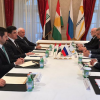
Between February 2017 and mid-October, Rosneft signed a number of deals with the Kurdish Regional Government (KRG) that established for it, and by extension for Russia, a major position as both an investor and stakeholder in the Kurdish Region of Iraq (KRI)’s hydrocarbon resources and infrastructure.
The move was interpreted, especially by the KRG, as implicit support for the KRG in its bid for independence, especially in light of the latest deal signed following the reassertion of Iraq’s federal control over Kirkuk and other disputed territories. While there is an element of truth to this thinking, the deals are part of a wider geopolitical positioning for Russia as a major gas supplier to Europe and as an emerging power in the Middle East.
The deals provide Rosneft, and by extension Russia, effective control of the KRG’s Oil & Gas infrastructure, and a controlling stake in the region’s finances in more ways than one.
Within the oil space it has established this in three ways. The first was by providing USD 1.5bn in financing via forward oil sales payable over 3-5 years. This would be payable in kind from the KRG’s exports, until recently at about 550,000-600,000 barrels per day (bbl/d). However, the loss of the Kirkuk fields takes away about 430,000 bbl/d of production or eventually about half of the KRG’s exports.
This leaves the KRG with a tiny revenue stream after payments to International Oil Companies (IOC)’s, from which to make payments on forward oil sales of up USD 3.5 bn including Rosneft’s USD 1.5bn. A complicating factor is the repayment of other KRG debt, estimated at over USD 21bn by end of 2017, which will have to be factored into debt payment sustainability.
Posted in Ahmed Tabaqchali, Iraq Oil & Gas News, Politics Comments Off on Rosneft in the Kurdish Region: Moscow's Balancing Act

Has the Race to Rebuild Syria Begun?
Posted on 06 November 2017 .
By Adnan Haj Omar, Editor-in-Chief of Arabisk London Magazine.
The operations to annihilate ISIL once and for all have finally reached their last stage. The latest round of peace talks in Astana has resulted in the finalisation of a de-escalation zone. The Kurdish issue has become a common denominator and a priority to be addressed by most of the regional powers involved.
The Syrian Army has regained control of numerous areas of the country, while attempts to reconciliation are ongoing in regions like Reef Dimashq and Reef Homs. In addition to that, the reopening of the Nasib border crossing with Jordan has now been put on the table.
In the light of these premises, it is impossible not to ask ourselves a few questions: Where does the reconstruction of Syria stand in all this? Has it really started thanks to the efforts carried out by both the Syrian government and its allies? Can the Damascus International Fair be considered the starting point of the reconstruction? Many more questions could be asked.
According to a report issued in July 2017 by the World Bank, called “Toll of War: The Economic and Social Consequences of the Conflict in Syria”, more than 20% of the Syrian homes have either been completely razed to the ground or heavily damaged, while statistics on the number of schools, hospitals, roads, oil and gas plants that have been entirely or partially destroyed are much higher. The report also estimates that the removal of 15M tons of rubble in Aleppo and Homs only will take years.
According to current estimations, the costs for the reconstruction of Syria range between 200 and 350 billion USD. If these numbers are correct, will the Syrian government, Russia, Iran and those countries that wish to take part in the process like Jordan, Lebanon and Iraq be able to sustain these costs, a big part of which will be investments? Or will they need a larger international cooperation which includes not only international institutions but also the governments of rich states, such as those of the GCC and the EU or the US?
Posted in Construction & Engineering In Iraq Comments Off on Has the Race to Rebuild Syria Begun?