


Progress on Masdar Solar Projects in Iraq
Posted on 16 August 2023 .
By John Lee.
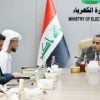
The Minister of Electricity presided over a significant meeting with a delegation from the UAE-based company Masdar.
The company is planning solar power projects in Maysan, Thi Qar, Anbar, and Kirkuk.
The minister highlighted the government's commitment to diversify energy sources and reduce reliance on gas and fossil fuels. He emphasized the ministry's dedication to addressing environmental pollution and climate change. He stressed the importance of long-term partnerships with the UAE, both governmental and investment-oriented, involving private and established companies.
The Minister expressed determination to implement these endeavors, especially with Masdar, a company with substantial regional and global presence. He discussed the possibility of identifying a starting point for renewable energy projects. Successes with companies such as TotalEnergies, PowerChina, and the Bilal Group, and their utilization of designated lands, were mentioned.
He revealed that the ministry, in coordination with the Ministerial Energy Council and the Cabinet, worked to remove obstacles through strategic decisions. Key points for discussion were identified:
- Ministry's role as the negotiating and communicating entity.
- Timeframes and communication records with supporting entities.
- A joint meeting between the Electricity Ministry, National Investment Commission, and the company to understand commitments and specifications.
The Masdar delegation appreciated the minister's transparency, commitment, and clarity. They conveyed the interest of the UAE Energy Ministry and government, expressing readiness to work cooperatively. They pledged adherence to investment regulations and established limits.
(Source: Ministry of Electicity)
Posted in Investment, Iraq Industry & Trade News Comments Off on Progress on Masdar Solar Projects in Iraq

Iraq may Import Gas from Qatar and Turkmenistan
Posted on 13 August 2023 .
By John Lee.
The Ministry of Electricity has reportedly confirmed the formation of a joint committee with the Ministry of Oil to discuss importing gas from Qatar and Turkmenistan.
State-run Iraqi News Agency (INA) quoted theh Minister of Electricity, Ziyad Ali Fadhil, as saying that the committee will go with a delegation to Turkmenistan, and study the possibility of contracting to import gas, while another will go to Qatar to discuss the possibility of supplying Iraq with liquid gas through one of the Iraqi ports.
(Source: INA)
Posted in Iraq Industry & Trade News, Iraq Oil & Gas News 1 Comment

Poland gives another $270k for Iraqi Stabilization
Posted on 02 August 2023 .
Poland reaffirms commitment to Iraq's stabilization with additional US$270,000 contribution
Iraq's post-ISIL stabilization efforts will continue to make a difference in the lives of the most vulnerable, as the Government of Poland reaffirmed its commitment with an additional inject of funding in the amount of 1.1 million Polish zloty (approximately US$ 270,000) towards UNDP's Funding Facility for Stabilization (FFS).
This is Poland's second contribution to the Facility, bringing its total contribution to 2.1 million Polish zloty (over US$500,000). With this additional funding, UNDP will support the rehabilitation of critical infrastructure in communities affected by the conflict, further bolstering Iraq's efforts towards long-term development.
"UNDP's work in Iraq is upheld by the principles of resilience, inclusivity, and sustainable development. We work alongside our partners, to ensure no one is left behind, as Iraq moves towards a brighter future. But our work is not yet over, the road to stabilization is only the beginning. This collective effort and investment must continue, as we rebuild communities, revive the local economy through livelihoods' support and empower Iraqis, especially women and young people, to become catalysts of positive change," says UNDP Iraq Resident Representative Auke Lootsma.
"To see lives transformed through this project has been extraordinary. It is our hope that this contribution is seen as a reflection of our support and partnership in the rebuilding of Iraq's future," says Ambassador Extraordinary and Plenipotentiary of the Republic of Poland to the Republic of Iraq, His Excellency, Mr. Marcin Kubiak.
"Together with UNDP and the Government of Iraq, we will continue to advocate and support this life-changing project for the benefit of the country and the people of Iraq," Ambassador Kubiak added.
Poland and the international community's support to Iraq's stabilization
At the request of the Government of Iraq, UNDP, in partnership with the international community, established the Funding Facility for Stabilization in 2015 to facilitate the return of Iraqis displaced by the conflict. The project continues to lay the groundwork for rehabilitation, provide capacity support and ensures safeguards are in place to prevent the resurgence of violence and extremism. Since its inception, the Facility has completed more than 3,600 projects across the five liberated governorates of Anbar, Diyala, Kirkuk, Ninewa, and Salah Al-Din.
The lives of over 8.3 million Iraqis were improved, and the return of 4.9 million people displaced by the ISIL conflict were facilitated, through the implementation of these essential projects, through the Facility, which includes the rehabilitation of schools, hospitals, water systems, electricity networks, roads, and homes, and the creation of short-term employment.
Poland's contribution has funded 61 projects, the majority of which are in the health sector. These life-saving projects have served over 250,000 people in need of some form of humanitarian health support or assistance.
"Since 2015, we have witnessed the life-changing impact of our joint efforts, as we restored homes, schools, and delivered other essential services, creating opportunities to help vulnerable communities rebuild their lives. The generous contribution from the Government of Poland reinforces this joint commitment to support the people of Iraq, in their journey toward peace and stability," says UNDP Iraq Resident Representative Auke Lootsma.
(Source: UN)
Posted in Iraq Industry & Trade News Comments Off on Poland gives another $270k for Iraqi Stabilization
Purchase Tariffs Reduced at 2 Iraqi Solar Projects
Posted on 24 July 2023 .
By John Lee.
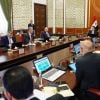
Iraq's Cabinet has this week approved an agreement between the Iraqi Ministry of Electricity and Al-Bilal Group, a limited general contracting company, which includes a reduction in the power purchase tariff for two solar power station projects in Karbala (300 MW) and Alexandria (Iskandariya) (225 MW).
The agreement reduces the price from $40.7/MW-hour to $39.5/MW-hour.
It also stipulates the implementation of 75 MW out of the total contracted capacity of 525 MW within a maximum period of 12 months from the signing of the power purchase contract and before the project's financial closure, with the possibility of future expansion for both sites.
According to a previous report from MEES, Norwegian company Scatec decided in April to cease its involvement with these projects.
(Sources: Ministry of Oil, MEES)
Posted in Iraq Industry & Trade News Comments Off on Purchase Tariffs Reduced at 2 Iraqi Solar Projects
Iraq Renews Deal to supply Lebanon with Oil
Posted on 22 July 2023 .
By John Lee.
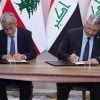
The governments of Iraq and Lebanon have signed a Memorandum of Understanding (MoU) wherein Iraq will supply Lebanon with quantities of fuel and crude oil.
The agreement, in line with Cabinet Decision No. 23265 in 2023, aims to support Lebanon's electricity sector and strengthen cooperation between the two countries, serving their mutual interests.
During the signing ceremony, Iraq's Deputy Prime Minister for Energy Affairs and Minister of Oil, Hayan Abdul Ghani, emphasized the renewal of the agreement for another year with an increased quantity of gas oil based on mutual consent.
Additionally, a new contract for crude oil will be arranged, and technical committees from both sides will define the appropriate mechanisms for executing the agreement, including quantity determination, transportation, loading, unloading, and other logistical and technical commitments. Subsequently, both countries' cabinets will approve the joint committee's recommendations.
Lebanon's Minister of Energy and Water, Walid Fayyad, praised Iraq's support to overcome his country's fuel supply crisis for power stations. This gesture of support is deeply appreciated by the Lebanese government and people.
(Source: Iraqi Ministry of Oil)
Posted in Iraq Oil & Gas News Comments Off on Iraq Renews Deal to supply Lebanon with Oil
New US Waiver letting Iraq pay Iran for Electricity
Posted on 20 July 2023 .
From Middle East Monitor, under a Creative Commons licence. Any opinions expressed are those of the author(s) and do not necessarily reflect the views of Iraq Business News.
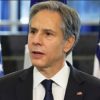
US Secretary of State, Antony Blinken, on Tuesday signed a new national security waiver letting Iraq pay Iran for electricity that, for the first time, allows such payments to go to accounts at non-Iraqi banks, a US official told Reuters.
The official, who spoke on condition of anonymity, said the US hoped the 120-day national security waiver would help stop Iran pressuring Iraq for access to the money, which previously could only be deposited into restricted accounts in Iraq.
Tehran has pushed Baghdad to secure US permission to release the funds by cutting Iranian natural gas exports to Iraq, limiting Iraq's ability to generate power and forcing unpopular electricity cuts during Iraq's sweltering summer.
Under US sanctions, Iraqi payments for Iranian electricity can only be released from the restricted accounts in Iraq - with US permission - for Iran to buy humanitarian goods.
The new waiver will allow Iraq to deposit its payments for Iranian electricity into restricted accounts at banks outside Iraq. For Iran to access those funds still requires US permission and they can only be spent for humanitarian purposes.
The US official said Washington hoped the new waiver would ease Iranian pressure on Iraq to access the money, in effect by transferring this pressure from Iraqi authorities to the nations where the third-party banks are located.
"We have to help the Iraqis with this perennial pressure from the Iranians to access the money," said the US official, saying Washington had expanded the waiver at Baghdad's request.
Posted in Iraq Industry & Trade News, Politics Comments Off on New US Waiver letting Iraq pay Iran for Electricity
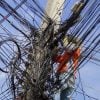
Iraq's Power Problem: Financial and Technical Challenges
Posted on 18 July 2023 .
By Noam Raydan for the Washington Institute for Near East Policy. Any opinions expressed are those of the author(s), and do not necessarily reflect the views of Iraq Business News.
Iraq's Power Problem (Part 1): Persistent Financial and Technical Challenges
Diversifying Iraq's energy supplies won't mean much if its power infrastructure is not rehabilitated, and the skewed cost-revenue ratio at the Ministry of Electricity is unsustainable.
Posted in Iraq Industry & Trade News Comments Off on Iraq's Power Problem: Financial and Technical Challenges

Iraq Water Crisis drying up Fish Farming in Basra
Posted on 16 July 2023 .
From Middle East Monitor, under a Creative Commons licence. Any opinions expressed are those of the author(s) and do not necessarily reflect the views of Iraq Business News.
Iraq is in the grip of a severe water shortage which has left crop growers and food producers, such as Iraqi fish farmer, Qasem Karam, facing the loss of their livelihoods, Reuters reports.
Walking over dusty land in the sweltering midday heat in the southern province of Basra, Karam points to his dried up carp ponds, once irrigated by the Shatt Al-Arab River.
"Everything is full of salt now because of water scarcity and pollution," he said, pointing at white patches of salt crust nearby.
"These ponds cost us a lot of time, money and effort. We had an economic plan, but it is all destroyed."
Upstream damming in Turkiye and Iran has hit water flows on the Rivers Tigris and Euphrates which form the Shatt Al-Arab river, plus dumping of waste-water and poor rainfall due to climate change have led to a drastic reduction in fish farming, experts and officials said.
Lower water levels have also increased evaporation and made the water more saline.
Karam and three other fish farmers Reuters spoke with said the loss of suitable water was driving them out of a once thriving and profitable business.
According to an official at Basra's agriculture directorate, Abbas Dakheel, only four authorised fish farms continued to work this year, as opposed to 15 in 2020.
"This water is green, dirty and polluted. No fish can live in this water," said Karam, kneeling down next to a pipe irrigating his pond.
He said that his fish were now either sick, failing to grow or dead, as a result.
Jumaa Shia, head of Basra's Directorate of Water Resources, said the city of 1.3 million needs to share its decreasing water resources among domestic users, agriculture, the oil industry and electricity generation.
To save water, authorities have taken measures, including closing down some 95 unauthorised fish farms in Basra.
Posted in Agriculture 1 Comment
Iraq to Barter Crude Oil for Iranian Gas
Posted on 12 July 2023 .
By John Lee.
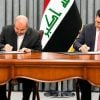
In an effort to address the electricity crisis and overcome financing and sanctions-related challenges, Iraq and Iran signed an agreement on Tuesday in Baghdad, involving the exchange of Iranian-imported gas for Iraqi oil.
Representing the Iraqi side, Mr. Ihsan Yaseen Al-Awadi, Chief of Staff to the Prime Minister, signed the agreement, while Mr. Mohammed Kazem Al-Sadiq, the Iranian Ambassador to Iraq, signed on behalf of the Iranian side.
The agreement was reached after several days of negotiations involving technical and expert committees from both countries.
It is part of the government's efforts to address the gas supply crisis for power stations, overcome financing issues, and navigate the complexities of US sanctions that have hindered the payment for gas imports from Iran. It is expected to provide greater flexibility in gas supply, power station operations, and stabilize electricity production.
In addition to this, the Ministry of Oil has been authorized to contract with gas-producting companies in the Kurdistan region to supply a number of power stations.
(Sources: Media Office of the Prime Minister, Ministry of Oil)
Posted in Iraq Industry & Trade News, Iraq Oil & Gas News, Politics Comments Off on Iraq to Barter Crude Oil for Iranian Gas
US Welcomes Iraqi Deal with France's TotalEnergies
Posted on 12 July 2023 .
By John Lee.
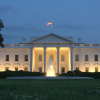
The US President has welcomed the finalization of Iraq's Gas Growth Integrated Project (GGIP) with French firm TotalEnergies.
In a statement, the White House said the project is a major step towards energy self-sufficiency and meeting its climate goals.
Full statement from the White House:
We welcome the finalization of Iraq's unprecedented Gas Growth Integrated Project (GGIP) with French firm TotalEnergies.
Formally signed this week, this massive deal, which will include participation from regional and American companies, is a major step towards both establishing Iraq's energy self-sufficiency and meeting its climate goals. Once the project is complete, Iraqis will benefit from increased domestic supply of electricity and reduced health problems associated with the harmful practice of gas flaring.
The United States fully supports Iraq's ongoing efforts to enhance domestic resilience, and diversify its energy supply, including through broader integration into the Middle East region. This energy and gas capture project, together with the ongoing programs to connect Iraq's electricity grid to the grids in the GCC and Jordan, will significantly enhance Iraq's energy security and the reliability of its electricity network for the benefit of the Iraqi people.
We will continue to work closely with Prime Minister Sudani and the Government of Iraq to help ensure Iraq's abundant natural resources benefit its people and address their needs.
(Source: White House)
Posted in Iraq Oil & Gas News Comments Off on US Welcomes Iraqi Deal with France's TotalEnergies