



New Petroleum Round faces Many Serious Problems
Posted on 30 January 2018 .
By Ahmed Mousa Jiyad.
Any opinions expressed are those of the authors, and do not necessarily reflect the views of Iraq Business News.
The New Petroleum Bid Round Faces Many Serious Problems
Since the last Ministerial reshuffle of August 2016, the Ministry of Oil has been persistently trying to offer most possible oilfields and exploration blocks to IOCs under new contracts that differ from those adopted by the Ministry in previous rounds. The latest attempt in this regard is the announcement by the Ministry that it has scheduled the date of a new round and has presented the timeliness of the necessary activities.
Briefly, as stated in this intervention, the timing of this round is rather unfortunate; many of the qualified IOCs by the Ministry are blacklisted; absence of transparency on the proposed contracts; method for evaluation and selection of different offers, by IOCs, have not been announced and finally, no feasibility study of any fields or block was available, let alone done. But, the fact that these fields and blocks are stranded on the borders they have special status and thus should deserve attention and prioritization.
At the outset a brief note is probably relevant. Since the national election date was initially proposed there has been a pattern of “pre-election rush” at the Ministry of Oil for announcing many recent events, creating what might be called “election-linked achievement bubbles”: Majnoon oilfield transition deadline was shortened from end June to end March 2018; concluding contract for East Baghdad oilfield; signing agreement on Nehr Bin Omar on associated gas utilization; singing agreement with BP on Kirkuk oilfield; setting earlier date for border fields and blocks bid round; and sudden announcement, on 28 January, for offering Faw refinery & petrochemical of 300kbd (without any FEED or any further basic information). What next!
In previous occasions I addressed, as mentioned below, all attempts by the Ministry in this regard, especially since its first announcement, in July 2017, on this new round. Therefore, the focus will now be on this new round and by using official statements, especially those issued by the Ministry of Oil.
First: Licensing Date and its Timetable
Petroleum Contracts and Licensing Directorate-PCLD of the Ministry announced recently that it will hold on May 7, 2018 this bid round according to a tentative schedule of activities.
The date is actually over two months earlier than envisaged based on previous announcement by the same entity; resulting into adoption of a brief, unrealistic and impractical timetable that could have negative consequences on the process itself, thus questioning the possibility of holding the round on the designated date.
It is worth recalling that the Minister and PCLD’s DG stated, in their press conference held at the Ministry on November 27, 2017, that "the final tender document will be announced on May 31, 2018, and then the bids from companies wishing to compete in the round will be received." The Ministry and PCLD announcement did not specify, then, the date of the round. Given the need to provide sufficient time for IOCs to study and evaluate the final tender protocol, the provisions of the contracts and determine their position to submit their bids individually or within consortium, the date of the round could (realistically and technically) be in mid-July 2018 the earliest.
It should be noted that the period between the "announcement of the final tender document of the contracts" and the day of "licensing round" were, for example, more than five weeks in each of the first and fourth bid rounds.
Apparently, the timeliness of activities necessary for holding this round was set at four months between the date of “Data Package” sale on 7 January and 7 May 2018; a very short period indeed compared with previous rounds considering the apparent difficulty and complexity of the new bid round.
Every bid round of the previous four was structured around one type contract only for all offered fields or exploration blocks in the related round; in this round there will, at least, three different types of contracts to be proposed by the Ministry and an unspecified number of "commercial models / contracts" expected from the IOCs!!
Each contract in the previous four licensing rounds involves only one field (with the exception of the three Missan oilfields) or one exploration block; in this bid round, most of what is announced includes more than one field or block, and in fact even more than what was announced in July 2017. The extreme example is Naft-Khana, comprising nine fields and exploration blocks; and this, as discussed later, necessitates the formulation of composite-complex contract that could actually comprises three or even four different contracts- perhaps a unique or the only one of its kind!
All the fields that were included in the first three bid rounds and all exploration blocks of fourth bid round are located inside Iraq; while all the fields and blocks offered in the new round are located along land borders with Iran and Kuwait, except one offshore block on Iraqi territorial waters in north Arabian Gulf. As highlighted below, border fields should receive special consideration seriously and fully.
Finally, international petroleum business environment and IOCs enthusiasm (on Iraq) in 2018 is very different from those prevailed during June 2009- May 2012 when the previous four bid rounds were held. That could prompt IOCs to propose more complicated contracts with less attractive terms for Iraq, thus make it imperative for the Ministry officials to be extremely careful and devote enough time to assess what IOCs propose. Probably, the current failure (but not yet ended) after many months of direct behind closed door negotiation, with ExxonMobil/CNPC regarding the package for developing Ratawi and Nahr Bin Omar oilfields and the linkage to CSSP and SIIP, provides indications on what IOCs are asking to have.
By comparative analysis, it becomes very clear that the proposed timetable is unrealistic, not practical and very well could derail the bidding event itself. It is therefore legitimate to pose a few questions about the rationale of such hastiness: Does the Ministry have the human, legal and institutional skills and capacity to carry out all the required activities within the times specified in the schedule? Has the three models of contracts been studied thoroughly enough to ensure and protect the rights and interests of Iraq, especially since all the fields and blocks are close to or cross the border with Iran and Kuwait? But the most compelling question is why and under whose directives the date was set at 7 May 2018.
The Ministry did not provide any clarification on why it went for an early bidding date and for such a tight compact timetable of essential activities.
A through daily follow-up of the Ministry news found no compelling reasons or urgency to hold the bidding at the specified date. But, what is surprising that the date was fixed, earlier than previously announced, soon after the date for the national election, on 12 May, was decided by the Cabinet (and now confirmed by the Federal Court and the Parliament).
Was the new timing for the bid round just unfortunate coincidence (though this reflects either political naivety or wrong decision-making or a combination of both) or a deliberate decision with motivations? If it was a bad unfortunate coincidence, why did the Ministry not change it? But, if it was intentional, what is the intention: score an achievement or impose a fait accompli or jump ahead- looking to the next cabinet reshuffle or to fulfill a pledge or "let it go" since everyone will be preoccupied with the election or.. or any other imaginable or possible explanations
Whether the timing is coincidental or intentional, holding the licensing round a few days before the national parliamentary (and possibly provincial) elections could contribute to maximize risk and uncertainty for and by all serious international companies, which could prompt them not to buy the Data Package and pay non-refundable $100,000 fee. In the case of limited purchase of the Package, that means the Ministry has actually contributed to its own failure and that may compel it to postpone the event to another date. But frequent postponement contributes to credibility erosion; as manifested by the refineries that have been re-announced several times over the past 15 months without any material luck!
Increasing risk and uncertainties that are associated with the date of the bid round could, in IOCs due diligence, come from the following possibilities:
- The period between bidding results (in case of winning) and the agreement on the final version of each contract, obtaining the final approvals by the Council of Ministers, the final signing of the contract and the entry into force of the contract usually takes more than two months, i.e., after the election;
- Elections may lead to a government change, which may have different agenda and position contrary to the outcome of the bidding and, possibly, dot not approve the contract;
- Similarly, the election may lead to change the Minister of Oil himself. The new Minister or his political bloc may have a position contrary to the position of the current Minister; that could prevent the finalization of the contract and therefore not to be referred to the Council of Ministers for approval;
- The formation of the new government takes usually a good deal of time depending on the actual election results and the need to formalize the political alliances, and this could take many months. This practically means that the current government becomes a caretaker government that, constitutionally, cannot take decisions binding the new government to such international contracts. Meaning, the current government cannot and should not ratify any contract resulting from the licensing round, especially with the existence of a new parliament; keeping in mind that all these contracts are for boarder fields- a highly sensitive and complex matter.
It is rather regrettable that the concerned parties, especially the Energy Committee of the Council of Ministers and the Oil & Energy and Legal Committees of the Parliament, have not taken the right action to prevent the Ministry from convening the bid round on the stated date or to postpone it to after the formation of the new government.
Second: Blacklisted Qualified Companies
Since the first bid round, PCLD of the Ministry has adopted a detailed method whereby companies are evaluated for the purpose of ascertaining their eligibility to participate in the field development and exploration projects as operator and non-operator. The evaluation methodology includes several details covering at least the last three years of four sets of indicators or standards:
- Financial and Economic Standard
- Legal Standard
- Technical and Training Standard and
- Health, Safety and Environment Standard.
The most questionable about this bid round is the list of qualified companies by the Ministry, which comprises many blacklisted IOCs contrary to its own declared and maintained policy that has been adhered to for many years in implementation of and in conformity with the official position of the Iraqi government, which considers all contracts signed by the KRG are illegal and contravening the Constitution. This means legally, logically and practically that any party that signs a contract that the sovereign authority considers to be contrary to the Constitution shall have knowingly committed a violation of the Constitution. As a result, the application of the "legal standard" directly leads to automatic disqualification of any company that has already committed a flagrant infringement of the Constitution.
PCLD had announced the companies eligible to participate in this round and in the light of available information, blacklisted qualified companies fall in two groups:
The first group comprises companies that signed contract(s) with KRG after had signed a contract through the bid rounds organized by the Federal Ministry of Oil. These companies are ExxonMobil (USA), Total (France) and Gazprom (Russia).
Although these three companies are still working in the oilfields contracted within the first and second licensing rounds, the application of the legal standard should prevent them from participating in this round.
In fact, these companies were excluded from contributing to the development of the field part within the "Nassiriyah Integrated Project-NIP" and were allowed to contribute to the refinery part only (though NIP project was abandoned by the Ministry!)
The second group companies that have signed contract with KRG but have not a contract within the licensing rounds organized by the Federal Ministry. These companies are: Dana Gas and Crescent Petroleum-CP (both in the UAE) and Sinopec (China).
It is worth mentioning that the Ministry of Oil terminated on 8 May 2009 the memorandum of understanding with Crescent Petroleum signed on 28 September 2005 after the company signed a contract with KRG. Then the Ministry qualified Crescent Petroleum (!!) for the ill-fated offering of 12 new oilfields announced in October 2016, only two months after the current Minister took the helm of the Ministry, (https://www.iraq-businessnews.com/2016/10/27/jiyad-min-of-oil-should-withdraw-plan-to-offer-12-new-oilfields/ )
Moreover, the Ministry had introduced the following provision in the contract for bid round four giving related Iraqi contracted entities (NOCs) the power to terminate the contract if, “Contractor, a Company or their Affiliates: either violating in any material respect a Law, including, without limitation, any directive or instruction of the Government (including the Ministry of Oil); or entering into any contractor agreement relating to the exploration, appraisal, development or production of Hydrocarbons in the Republic of Iraq, that has not been approved by, or consented to by, the Government;”
I have already made it clear that granting contracts for field development or exploration blocks to companies that are still operating contrary to the Constitution is only equivalent to rewarding those companies for their violations of the Constitution and the declared policy of the federal government; that should not be allowed (https://www.iraq-businessnews.com/2017/12/26/majnoon-development-plan-important-move-in-the-right-direction/).
The application of the legal standard should prevent these companies from participating in this round. Therefore, I call upon the Parliament/House of Representatives to take a decision, similar to that of January 8 regarding KAR Company, to compel the Ministry disqualify the above six blacklisted companies from participating in the new round.
Finally, it is worth mentioning that PCLD list comprises Shell and Petronas; both formally exited, recently, Majnoon giant oilfield. Probably, we have to wait until 5 February to know whether Shell and or Petronas buys the Data Package or not, and if either does then we should explore to know and explain why. And for Shell does this return has anything to do with its interest in Azadegan oilfield on the Iranian side of the borders?
Third: Transparency Considerations and the Proposed Contracts
According to the proposed timetable for the licensing round, PCLD will, on February 5, “convene a Roadshow to discuss the general principles of the contract and the commercial models submitted by companies”. However, PCLD did not specify the location of the workshop; the number of submitted models; when they were submitted; by which company and whether those models related to the fields or blocks or the offshore one or all of them.
In addition, there is a complete blackout on the type and components of the contract(s) that will be presented by the Ministry in the planned roadshow. Moreover, what complicates the matter even more are the ambiguity and strange statements. For example, the Minister said, "The contracts that are hoped to be concluded with the international companies in this round are an important step towards adopting a new commercial model and financial terms different from the previous contracts. The commercial models, by the companies wishing to invest, will be studied and analyzed then negotiated and select the contract which achieves our objectives”
How can the Ministry achieve its objectives without specifying and disclosing what are those objectives? How can it achieve these goals by relying on models proposed by the IOCs themselves? And when will the "study and analysis of business models provided by companies wishing to invest," be done knowing that there are 9 groups of fields and blocks; 3 or 4 types of contracts and 21 companies eligible to participate in the round?
As mentioned above, by covering areas for three different types of already producing (brown) fields with discovered by not developed (green) fields and exploration blocks in a single contract necessitates the formulation of a complex difficult contract, largely due to the significant differences between the financial terms, contractual provisions and technical and geological requirements of these three covered areas.
Finally, and this is very important, the contracts of this bid round should reflect the special status and the prioritization of developing fields straddled along borders with Kuwait and Iran, especially with regard to the possibility of joint development through the formula known as Unitization of the concerned field. This is in addition to the need to include in the contracts many of the conditions, provisions and practices recognized by international contracts of border fields.
In the case of complex contracts covering three types of fields and blocks concurrently, they become even more complex and difficult when adopting Unitization formula (by virtue of being structurally tripartite), which requires high skill capacity, professional negotiation, relevant experience and an integrated team covering all technical, legal, contractual, economic and geopolitical operational aspects (https://www.iraq-businessnews.com/2017/07/21/important-oil-projects-dubious-non-transparent-contracts/).
Can the Ministry study and analyze the commercial models that will be submitted by the companies during the period specified in the timetable, which is only ten days? Very doubtful! And the strangest of all, is what the Minister says, "the Ministry was keen to optimize its preparation for this bid round”!!!
In the light of the foregoing, the extent of absent transparency is evident, especially with regard to the types of contracts and their basic financial conditions; but this is, regrettably, not unusual practice at the Ministry. For example, the Ministry did not announce any information on its recent signed deal with Jinhua, a Chinese company, to develop East Baghdad Oilfield or the contract with Orion- a US company.
The Minister of Oil said that "the contract to develop East Baghdad Oilfield is different from previous service contracts, where some important changes were made to the contract formula that serves the public interest." So far, neither the Minister nor the Ministry clarified what these "important changes" are and what the material evidence and the economic feasibility which prove in figures that these amendments "serve the public interest." The same applies to the agreement signed by the Ministry on January 8, 2018 with the US company Orion to utilize associated gas from Nahr Bin Omar oilfield in Basrah province, as well as the contract / agreement signed with the GE-US company in July 2017 related to associated gas from Nassiriyah and Gharraf oilfields in Dhi Qar province, among others. As usual, the Ministry did not provide any information about these agreements nor about the contracts or agreements that were signed.
Moreover and worst still, all the above mentioned contracts and agreements were negotiated and concluded without following the usual official contracting procedure that requires public tendering, open bidding and transparent selection.
Strangely enough, this is happening even after the Extractive Industries Transparency Initiative suspended, recently, Iraq's membership for non-compliance. EITI presented detailed two reports (in both Arabic and English) highlighting what provisions did Iraq not comply with and what it should do to restore its membership in the organization (https://www.iraq-businessnews.com/2017/11/06/eiti-suspends-iraq-membership-a-serious-setback/ )
This clearly indicates the lack of proper understanding of the Ministry leadership of what transparency in the oil sector entails and what requirements that should be clearly disclosed in accordance with EITI Standard.
In conclusion, due to the importance and urgency of the matters I suggested:
- The Ministry of Oil announces immediately the postponement of the bid round to a later date to be announced after the formation of the new government;
- If the Ministry fails to do so, the Council of Ministers or the Parliament should oblige the Ministry, by issuing binding instructions, to postpone the round;
- The Council of Ministers and the Parliament should oblige the Ministry of Oil to implement the policy of the federal government by preventing blacklisted companies from participating in this round;
- The Ministry of Oil must adopt a realistic and practical timetable that allows its concerned entities, especially PCLD, to study thoroughly and develop the "complex contract" for the border fields;
- The Ministry should adopt and exercise full transparency by early disclosure of the basic terms of the contracts proposed by it and by the oil companies and provide (in numbers rather than rhetorical statements) how could these conditions serve the national interest of Iraq.
Earlier Arabic text was posted on http://www.akhbaar.org/home/2018/1/239828.htm
Please click here to download the full article in pdf format.
Mr Jiyad is an independent development consultant, scholar and Associate with the former Centre for Global Energy Studies (CGES), London. He was formerly a senior economist with the Iraq National Oil Company and Iraq’s Ministry of Oil, Chief Expert for the Council of Ministers, Director at the Ministry of Trade, and International Specialist with UN organizations in Uganda, Sudan and Jordan. He is now based in Norway (Email: mou-jiya(at)online.no, Skype ID: Ahmed Mousa Jiyad). Read more of Mr Jiyad’s biography here.
Posted in Ahmed Mousa Jiyad, Iraq Oil & Gas News Comments Off on New Petroleum Round faces Many Serious Problems

JGO wins Security Contract in Central Iraq
Posted on 14 September 2017 .
By John Lee.
Janus Global Operations (JGO) has announced that it has been selected by "an integrated oil and gas multinational corporation based in Malaysia", to provide security and risk management services for the company’s operations in central Iraq.
Some 600 JGO U.S. and foreign national employees will be responsible, during the two-year contract, for security and risk management for the Malaysian International Oil Company’s (IOC) oil exploration and development program in central Iraq, to include the company’s base camp, facilities, and also mobile security for company personnel.
Matt Kaye (pictured), JGO’s chief executive officer, said:
“We’re proud that the Malaysian IOC has selected JGO for this security responsibility.
“JGO has worked in Iraq with commercial and government clients for more than 13 years on demining and unexploded remnants of war clearance, munitions management, security and risk management, and other tasks critical to clients’ operations.”
The Malaysian IOC has a 10-year relationship with JGO, Kaye added.
Although not named in the announcement, Malaysia's state-owned Petronas is the operator of the Garraf [Gharraf] oil field in Dhi Qar Governorate, in which it holds a 45-percent stake. The company also has interests in Iraq's Majnoon, Halfaya and Badra fields.
(Source: JGO)
Posted in Iraq Oil & Gas News, Security Comments Off on JGO wins Security Contract in Central Iraq
Important Oil Projects -- Dubious, Non-Transparent Contracts
Posted on 21 July 2017 .
By Ahmed Mousa Jiyad.
Any opinions expressed are those of the authors, and do not necessarily reflect the views of Iraq Business News.
Developing Border Oilields and Utilizing Associated Natural Gas: Important Projects, Dubious and Non-Transparent Contracts
Information from and about the Ministry of Oil has been published and circulated extensively, in the last few days, concerning two important subjects or projects, each of which could have immense direct and effective impacts on the Iraqi economy and on the national interest.
The first concerns the development of border fields with Iran and Kuwait, and the second is related to utilizing associated natural gas from Nassiriyah and Gharraf oilfields in Thi Qar province.
After thorough reviewing all information from the mentioned sources and analyzing what relates to both projects, I made a few remarks, diagnosed some flaws, inaccuracies and inconsistencies, and then proposed some practical suggestions and alternatives that I hope will attract the attention of the Ministry; especially those related to the necessity of utilizing “National Efforts” in developing border fields.
The extent and implications of lacking competitiveness and transparency, which consequently lead to questioning the integrity of the contractual process, have also been clearly identified.
It should be recalled that the Iraqi Constitution emphasizes two basic principles directly related to these two projects: the first concerns achieving "the highest benefit for the Iraqi people" and the second “using the most advanced techniques of the market principles". In the light of what was presented and analyzed below, it is clear that the Ministry did not comply with these Constitutional requirements and obligation.
The paper discusses the border fields/ blocks first then addresses the utilization of associated gas.
Please click here to download the full report.
Mr Jiyad is an independent development consultant, scholar and Associate with the former Centre for Global Energy Studies (CGES), London. He was formerly a senior economist with the Iraq National Oil Company and Iraq’s Ministry of Oil, Chief Expert for the Council of Ministers, Director at the Ministry of Trade, and International Specialist with UN organizations in Uganda, Sudan and Jordan. He is now based in Norway (Email: mou-jiya(at)online.no, Skype ID: Ahmed Mousa Jiyad). Read more of Mr Jiyad’s biography here.
Posted in Ahmed Mousa Jiyad, Construction & Engineering In Iraq Comments Off on Important Oil Projects -- Dubious, Non-Transparent Contracts
Baker Hughes signs Contract for Natural Gas Liquids Plant
Posted on 18 July 2017 .
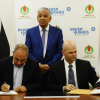
Following extensive discussions, the Iraqi Ministry of Oil and Baker Hughes, a GE company (BHGE) signed a contract for fast-track solutions to help the recovery of flare gas in line with the country’s strategy for energy sector development.
An advanced modular gas processing (NGL) plant has been recommended for Nassiriya as part of the initiative by Baker Hughes, which is the first and only company in the world to provide a full-stream offering covering products, services and digital solutions for the oil and gas sector, from upstream to midstream and downstream.
As per the agreement, Baker Hughes, will develop advanced solutions for flare gas at the Nassiriya and Al Gharraf oilfields, using modular gas processing technology developed in the United States, with the project to be undertaken in two stages. In the first stage, the advanced modular gas processing solution will be deployed to dehydrate and compress flare gas to generate over 100 million standard cubic feet per day (MMSCFD) of gas.
The Nassiriya plant will then be expanded to a complete natural gas liquid (NGL) facility to recover 200 MMSCFD of dry gas, liquefied petroleum gas (LPG) and condensate. The project will create direct and indirect jobs for Iraqis and help grow the local supply chain requirements that support Iraqi small and medium enterprises.
The modular solution will also support power plants with dry gas for efficient power generation, thus helping meet the growing demand for electricity using clean fuel. The project will also contribute to curtailing the amount of gas flared in the fields of Nassiriya and Gharraf that otherwise goes to waste.
The hundreds of thousands of tons per year of LPG and condensates produced will help meet the domestic demand for cooking gas. The surplus LPG and condensate will be exported, generating high revenue to the Iraqi government. Contributing to the social and economic development of Nassiriya, the project is aligned with the vision of the Ministry of Oil and the government.
His Excellency Jabbar Al-Luaibi, the Iraq Minister of Oil, said that the Ministry is moving ahead to implement its strategic plans to secure financial revenue to the treasury of the Iraqi state and to develop the oil industry. The statement came at the ceremony hosted by the Ministry to sign a contract for the project to invest in an optimum solution to recover flare gas in the fields of Nassiriya and Gharraf with Baker Hughes.
Rami Qasem, President, MENAT and India, Baker Hughes said:
“The Iraqi Ministry of Oil has outlined a clear vision and strategy to maximize the utilization of natural resources, especially gas. As a full-stream company that combines physical and digital strengths to increase reliability and uptime across the entire spectrum of oil and gas development, we bring advanced solutions that can support in transforming the industry and contribute to all-round development through our in-country investments in Iraq.
"We are committed to supporting the Ministry of Oil in its strategic goals, and in deploying advanced flare gas solutions and to build the country’s oil and gas infrastructure. From industrial to economic and environmental benefits our solutions will create long-term value for the country.”
Last year, BHGE had signed a first-of-its-kind partnership agreement with the Ministry of Oil to strengthen the performance of the Iraq energy sector by providing advanced equipment, technology upgrades, maintenance of the Ministry of Oil fleet and ensuring knowledge transfer, skills development and local jobs.
BHGE has also strengthened its localization initiatives in Iraq with the expansion of its technical services facility in the North Rumaila oilfield. It offers a wide range of testing, repair and refurbishment services for its customers in the country as well as undertakes fabrication and assembly of key products establishing BHGE as a complete technical solutions provider.
With three offices in Iraq - Baghdad, Erbil and the Basra – GE continues to deliver its latest technology and expertise to local customers. The company has more than 350 employees currently, nearly 95 per cent of them Iraqi professionals.
(Source: Baker Hughes)
Posted in Construction & Engineering In Iraq, Iraq Oil & Gas News 1 Comment

Ergil Complete Gharraf Maintainance
Posted on 17 September 2015 .
By Simon Kent.
Turkish oil and gas services company Ergil have announced the completion of a project with Petronas, to provide pipeline maintenance via "pigging" at the Gharraf oil field in Thi Qar province.
Gharraf is operated by Petronas, Japex and North Oil Company, and the services Ergil provided installing "pig launchers" and "pig receivers" were provided to the 13km Gharraf-Badra pipeline.
"Pigs" are devices inserted into oil and gas pipelines to remove sediment and scaling, and are considered a more efficient and environmentally friendly way of cleaning pipes compared to flushing them with chemicals and water.
As of February 2015, there is now a Thi Qar oil company who are also working on the Gharraf field.
(Source: ERGIL)
Posted in Iraq Oil & Gas News 5 Comments
Oil Minister Announces 3 New Companies
Posted on 02 February 2015 .
By John Lee.
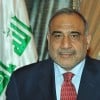
Oil Minister Dr. Adel Abdul Mahdi [Adel Abdel Mehdi] (pictured) has announced the establishment of three new oil companies.
The Dhi Qar Oil Company has been set up to put the extraction and production of oil from fields in Dhi Qar under their direct supervision of the people of the province. This follows the successful developement of the fields at Nasiriyah and Gharraf.
The Ministry is also setting up a new oilfield services company and a new crude oil pipelines company.
(Source: Ministry of Oil)
Posted in Iraq Oil & Gas News 12 Comments

IOCs seek Independent Water Facilities
Posted on 05 November 2014 .
By John Lee.
International oil companies (IOCs) in southern Iraq are seeking to push ahead with their own water injection facilities to meet production targets, according to a report from Platts.
Malaysia's Petronas, operator of the Gharraf [Garraf] oil field, is the latest to ask the Ministry of Oil for permission to build a standalone facility, as the new multi-billion dollar Common Seawater Supply Facility (CSSF) project remains stuck in the conceptual design phase.
The $5 billion first phase of the CSSF, which will provide 4 million bpd of treated water for the management of reservoir pressure, is not expected before the end of 2018 at the earliest, assuming the two contracts for design work are signed immediately.
Platts reports that project management consultants CH2M Hill had been hoping to award the front-end engineering and design (FEED) in the second quarter of 2013 and start the project in the third quarter of 2017, but the company is still waiting for details from the oil ministry, and its subsidiaries South Oil Company (SOC) and State Company for Oil Projects (SCOP), specifying the amounts of water required for each field and the time schedules.
This has been held up by delays to final agreements with the oil companies on their revised plateau targets. For the largest fields -- West Qurna-1 and Rumaila -- new deals were only reached in September, while negotiations are still going on with Shell for the Majnoon oil field.
Complicating matters further is the fact that only two firms are in the running for each of the main FEED contracts -- the US' Parsons for the water treatment plant and Austria's ILF Consulting Engineers for the pipeline contract.
The total cost of the various water schemes is put at more than $10 billion (12 trillion Iraqi dinars).
(Source: Platts)
Posted in Iraq Oil & Gas News Comments Off on IOCs seek Independent Water Facilities
Gazprom Neft selects Pipeline Contractor
Posted on 16 April 2014 .
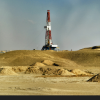
Gazprom Neft, operator of the Badra oilfield development project (pictured), has appointed a contractor to lay the pipeline connecting the field to the power station in Zubaidiah (Wasit Province). The tender was won by Pakistani company Techno Engineering Services (Pvt.) Ltd.
In line with the contract, Techno Engineering Services will produce the designs, supply the equipment and materials, and carry out construction of the pipeline. First gas transportation via the pipeline, which is almost 100 km in length and has a daily capacity of 4.4 million cubic metres (circa 1.6 billion cubic metres per year), is planned for 2015.
Under Gazprom Neft's contract with the Iraqi government for the development of the Badra oil field, investors are to be compensated for costs related to infrastructure construction.
Gas supply from the Badra oil field will enhance the Zubaidiah power station's daily power output and provide a 24-hour power supply to the city of Kut, which currently has electricity supplied for only 16 hours per day. Some of the extracted gas will be used to provide electricity to the Badra oil fields themselves.
In March Gazprom Neft completed testing on a second well at Badra. The laying and testing of the oil pipeline to the Gharraf oilfield was completed in February, connecting the section to Iraq's main pipeline system. The construction of the first phase of a central gathering station point with a capacity of 60,000 barrels per day is nearing completion. Work has also started on a gas treatment plant with the capacity to process 1.5 billion cubic metres per year.
(Source: Gazprom Neft)
Posted in Construction & Engineering In Iraq, Iraq Oil & Gas News 1 Comment

Gazprom Connects Badra to Main Pipeline
Posted on 06 March 2014 .
Gazprom Neft has completed laying, testing and connecting a 165 km oil pipeline from the Badra field, which the Company operates in Iraq, to the Gharraf oilfield (Nasiriyah district, Iraq).
With infrastructure already in place at Gharraf, completion of the pipeline from Badra means that the field is now connected to the main Iraqi pipeline system.
The new infrastructure for transporting raw materials from Badra has the capacity to transport 204,000 barrels per day, around 10 million tonnes per year, and can now supply oil to the export terminal at the city of Basra.
The Badra-Gharraf pipeline has two underwater transits, including one crossing the river Tigris, and passes over dozens of canals and irrigation systems. For increased operating security, a system to detect leaks and shut off damaged sections and a power supply system running on solar cells will work along the entire length of the pipleline.
Automated systems ensure constant monitoring of the oil transit and real-time management of the pipeline from the Badra field. Gazprom Neft has successfully completed hydrodynamic testing of all sections of the pipeline and the system has been checked for robustness and integrity.
Gazprom Neft produced its first oil at Badra in December 2013 as part of operating tests on well BD4. Work is currently continuing at the site to develop the infrastructure necessary to launch production, which is scheduled for the first half of 2014.
The construction of a central gathering station (CGS) with a capacity of 170,000 barrels per day is under way. The first CGS line will be coming into operation imminently, with a capacity of 60,000 barrels per day. Work has also started on a complex gas treatment plant (UKPG) with the capacity to handle some 1.5 billion cubic metres per year.
(Source: Gazprom Neft)
Posted in Iraq Oil & Gas News 2 Comments

STX Wins More Iraq Business
Posted on 21 January 2014 .
Korea's STX Heavy Industries has announced another major contract win in Iraq.
The $99.5-million deal will see the company build a new gas treatment facility at the Gharraf [Garraf] oilfield.
Malaysia’s state oil firm Petronas holds 45 percent of the Gharraf project, Japan Petroleum Exploration (Japex) 30 percent, and Iraq’s North Oil Company (NOC) 25 percent.
STX said that the project is expected to be completed by the end of November 2015.
Earlier this month, the company announced a $449m order to build a 550km pipeline in the Akkas gas field.
(Source: ConstructionWeekOnline)
Posted in Construction & Engineering In Iraq, Iraq Oil & Gas News 4 Comments