



IBBC hosts member event at Al Majal business park
Posted on 19 August 2021 .
From the Iraq Britain Business Council (IBBC).
On Monday 16th August The Al Majal Business Park, Burjessia, generously held a lunch for IBBC members and friends, on behalf of IBBC. The lunch was hosted by Mr Richard Cotton and Mr Mohanad Al Khattab and around 40 guests attended.
Richard Cotton brought greetings from Baroness Nicholson and Christophe Michels (MD) which was succeeded by a presentation given by Al Majal. Following an excellent lunch in the dining room, members and quests mingled over coffee in the delightful coffee shop.
IBBC members appeared to be in optimistic mood, with companies having maneuvered their ways through Covid and now looking forward to an upturn in business supported by the rising oil price and improving business operating conditions.
In broader discussions, whilst business opportunities seem to be improving, many sectors are entering a mature phase and prices for services are being driven down by competition. For example, security vehicle hire, logistics camps room rates and professional services hourly rates are all down to about a third of what they were three or four years ago. Progressive companies are meeting this challenge by training up the Iraqi work force and percentages of expats in all companies are hugely down and probably running at no more than 10 per cent of the work force and work permits for expats are increasingly difficult to obtain.
Members report the banking sector remains extremely inefficient and unfit for purpose and the public sector bureaucracy remains a difficulty for many businesses. The Chinese have taken over much of the oil and gas sector to such an extent that the Government is trying to now limit that involvement and encourage other nationalities to remain, for example, Total from France appears to be currently winning work.
Governance issues remain challenging, but it now seems universally accepted that western companies, policed by their own governments will not tolerate subterfuge. Water and electricity supplies remain a challenge despite increasing capacity in the latter, but waste management and environmental issues are slowly rising up the agenda.
Companies feel increasingly relaxed about personal security, but all the major companies still insist on assisted travel which though as stated above is much cheaper than it was is still a huge unproductive cost for the country.
(Source: IBBC)
Posted in Investment, Iraq Industry & Trade News Comments Off on IBBC hosts member event at Al Majal business park

Iran "Suspends" Export of Electricity to Iraq
Posted on 11 August 2021 .
By John Lee.
Iraq's Electricity Minister has reportedly said that Iran has suspended exports of electricity to Iraq on Tuesday.
According to Basnews, the decision is due to reduced water levels feeding hydro-electric plants in Iran.
Iraq had just received a waiver from the US allowing it to continue importing electricity from Iran.
(Source: Basnews)
Posted in Iraq Industry & Trade News, Politics Comments Off on Iran "Suspends" Export of Electricity to Iraq

Iraq gets New Waiver to Import Iranian Electricity
Posted on 09 August 2021 .
By John Lee.
The US State Department has reportedly granted a new sanctions waiver allowing Iraq to continue importing electricity from Iran for another 120 days.
(Source: S&P Global)
Posted in Construction & Engineering In Iraq Comments Off on Iraq gets New Waiver to Import Iranian Electricity

Iraq and Lebanon sign Fuel Barter Deal
Posted on 29 July 2021 .
By John Lee.
Iraq and Lebanon have finalised an agreement under which Iraq will provide the Lebanese Electricity Corporation with 1 million tonnes of heavy fuel oil over a one-year period.
Lebanon's caretaker Energy Minister, Raymond Ghajar, signed the deal in Baghdad at the weekend.
The oil will be paid for in goods and services.
(Sources: Govt of Iraq, NNA)
Posted in Iraq Oil & Gas News Comments Off on Iraq and Lebanon sign Fuel Barter Deal
Power On: A Neighborhood Transformed
Posted on 24 July 2021 .
From UNDP:
How restoring electricity has transformed the lives of residents in Mosul.
Posted in Iraq Industry & Trade News Comments Off on Power On: A Neighborhood Transformed

"Cautious Steps" toward Privatizing Iraq's Electricity Sector
Posted on 21 July 2021 .
By Adnan Abu Zeed for Al Monitor. Any opinions expressed here are those of the author(s) and do not necessarily reflect the views of Iraq Business News.
Iraq takes cautious steps toward privatizing electricity sector
With the increasing power cuts in Iraq, calls are mounting to expand privatization as a permanent solution.
Posted in Investment, Iraq Industry & Trade News Comments Off on "Cautious Steps" toward Privatizing Iraq's Electricity Sector
Iraq, Jordan sign Agreement on Electrical Interconnector
Posted on 19 July 2021 .
By John Lee.
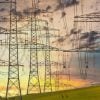
Iraq and Jordan have reportedly signed an agreement to implement the electrical interconnector between the two countries.
The Iraqi and Jordanian Ministers of Electricity met to discuss the details of the project on Thursday.
(Source: Shafaq, Basnews)
Posted in Iraq Industry & Trade News Comments Off on Iraq, Jordan sign Agreement on Electrical Interconnector
Oxfam Supports New Agribusinesses in Iraq
Posted on 13 July 2021 .
From Oxfam's Iraq Response Innovation Lab:
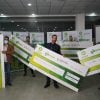
Iraq Response Innovation Lab recently supported 5 innovative projects in the agricultural sector to launch.
These 5 projects were all incubated for 10 months and received trainings on Business Models, Business Plans, Budgeting alongside technical training. The incubation started with 60 applications received online.
The first phase of the incubation included training for business model creation, prototype development, and value proposition development for each project. 20 projects participated in the first phase of the training. 12 projects then proceeded to pitch their projects and prototypes in front of a panel of judges that evaluated the projects based on applicability and impact.
The second phase included training on Business plan training so that each project would create a one-year business plan for their newly established enterprise. All 5 rewarded projects generated their business plans at the end of this phase.
Currently, we are in the third phase of the incubator which includes asset acquisition and grant distribution to the funded projects. A fourth phase is yet to come which will include further training to help transform these innovative products into established enterprises with their own brands, systems, and integration with the local supply chain.
The agribusiness incubator was launched as a response to the many challenges that the agriculture and food sector is facing in Iraq. This incubator aims to reduce the divide between agriculture and innovation and to encourage entrepreneurs alike to venture into the world of agribusiness. With innovation as a tool, established enterprises will be able to tackle issues such as water scarcity, energy deficits, and food security with their innovative products and services.
Below is a list of the projects that recently signed their contracts and are receiving seed funding from Oxfam's Iraq Response Innovation Lab
Golden Mushroom
 The Golden mushroom farm is an unconventional farm based in Mosul - Iraq that will be using animal and plant waste as the main source of soil to produce and cultivate mushrooms. The city of Mosul has suffered in many aspects because of the war and ISIS occupation This leads to an increase in prices, lack of quality and lack of diversity in products. Innovators in the city have presented ideas on how to reduce the damages that inflicted the city, and the Golden Mushroom was one of the teams that wanted to present an innovation that would support the city in producing a food source that would be healthy, locally made, organic, and would have a high nutritious value.
Golden Mushroom, currently in phase 3 of the incubation will focus on procuring the needed equipment, asset acquisition, and preparing the first batch of production for distribution.
The expected impact from this project is to establish a farm that not only will provide mushroom for the city of Mosul but to promote for organic and environmentally friendly agricultural practices by avoiding using the chemicals and relying on solar system instead of generators. It will also Improve agriculture supply chain in the city by being the main local supplier of Mushrooms to assist with products diversity and food security of the city instead of importing from other places.
Fish and Vegetables of Tigris
 Fish and Vegetables of Tigris is based in Mosul - Iraq. Mosul was a city that thrived on fishing and had a steady production of vegetables. This all changed when ISIS took over the city and when war was launched to remove ISIS from the city. The project is to recycle water, use the fish organic waste as a natural fertilizer that would support the production of vegetables. The innovation is by introducing an integrated fish farming technology. The reason for selecting this technology was because it tackles the issue of food security of the city in more than one way. This solution uses the technology to improve vegetable production and it enables for fish farming to take place.
Some of the impacts that are expected from this project is to reduce water waste and electricity usage by using recycling techniques and soler system. Also, the agriculturally based community in Mosul will become familiar with the integrated fish farm method since this method has never been used in Iraq. The project should have positive impacts on the economical state of people in Mosul because it is going to produce two main food products that local people in Mosul highly depend on.
Field Farmers School (F.F.S) Biological Control
 The project is a farmer school that works on giving guidance training and agricultural consultancies in an innovative way by using organic farming and bio pesticides. And it is based in Diwaniyah -Qadisiya Governorate. Even though Diwaniya is an agricultural city and many of the inhibiters are farmers or involved in farming, there is extremely limited access to training and to new practices in farming. The innovation is by introducing bio pesticide and organic farming to the farmers in the city. This will be in the form of a school that works on providing guidance to the farmers on how to use environmentally friendly practices and how to use innovative agricultural practices that would help them have better production. Integrating practical teaching methods to the farmers.
Some of the impacts that are expected from this project is promoting for organic and environmentally friendly agriculture by using bio pesticides and thus reducing health risk that farmers face due to excessive usage of chemical pesticides side by side increasing the efficiency of farming and agriculture community since farmers will have access to learn, gain and share the knowledge that were lacking.
Alrbye Alddayim
 It Is based in Anbar, western of Iraq. The project will be a barley sprouting farm that works on producing and distributing barley through the governorate of Anbar. The company will aim to produce animal feed in a cost effective around the year process. It employs an agricultural technology that is cost and resource affective to a governorate that struggles with access to electricity and water. The project will also be promoting green, environmentally friendly methods by limiting water consumption and using solar energy. It will be using these techniques to fill the gap of access to animal feed at a reasonable price without having to venture into difficult terrain that have dangerous war residue.
The expected impacts vary from herders being able to herd the cattle safely to reducing water consumption due using water system that reduce watering process, herders will have access to feed the animals healthy green feed that have grown without chemical pesticides and fertilizers thus improving the health situation of the community.
Towards a Green Desert
 Towards a green desert is a project based in Anbar - Iraq. The governorate of Anbar is one of the biggest lands of Iraq. Even though it is classified as Arid or semi-arid, farms and farmers are located across the governorate different areas. These farms face a challenge with irrigation and watering in general. The project is an automated system for irrigation, this system that controls the irrigation schedule and needs for the farming activities, and particularly where water scarcity is most seeing. The system consists of sensors, control system and mobile application, this system will allow the farmers to control the water for irrigation needs and controlling the entire system remotely.
Some of the impacts of this project include, introducing the concept of IoT into agriculture in the governorate of Anbar, improving the efficiency of farms and reducing production cost by reducing water waste and by monitoring water needs and usage in farms.
The above projects, currently in phase 3 of the incubation will focus on procuring the needed equipment, asset acquisition, and preparing their launch as newly established agribusinesses.
Iraq Response Innovation Lab will continue to support these newly found companies with additional training during the first period of their establishment as means to support entrepreneurs to overcome the challenges they normally face in the first year of their establishment. We are committed to support innovations from Iraq, to Iraq, and by Iraq.
Posted in Agriculture, Investment, Iraq Education and Training News, Iraq Industry & Trade News Comments Off on Oxfam Supports New Agribusinesses in Iraq
Iraq Invests in Clean Energy
Posted on 12 July 2021 .
By Salam Zidane for Al Monitor. Any opinions expressed here are those of the author(s) and do not necessarily reflect the views of Iraq Business News.
Iraq invests in clean energy
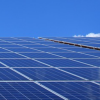
Iraq is investing in clean energy to produce electricity, especially solar energy, which is almost available throughout the year in various regions of the country.
Posted in Investment, Iraq Industry & Trade News Comments Off on Iraq Invests in Clean Energy

Egypt to supply 700MW of Electricity to Iraq
Posted on 12 July 2021 .
By John Lee.
Egypt has reportedly agreed to supply 700MW of electricity to Iraq via Jordan.
The country's Electricity Minister is quoted as saying that the $2.2-billion project will begin within 18 months.
(Source: Energy and Utilities)
Posted in Iraq Industry & Trade News, Politics Comments Off on Egypt to supply 700MW of Electricity to Iraq