


Cabinet commits resources to Dhi Qar province
Posted on 07 October 2020 .
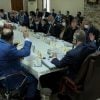
The Iraqi Cabinet held an extraordinary meeting in the city Nasiriyah in Dhi Qar province on Monday under the chairmanship of Prime Minister Mustafa Al-Kadhimi.
At the start of the meeting, the Prime Minister said that the people of Dhi Qar had sacrificed much for Iraq, but they have suffered from the consequences of past marginalisation. He affirmed that this government is determined to address the challenges facing the province.
Following discussions, the Cabinet approved several measures to improve services and boost investment in Dhi Qar, including:
- Establish Dhi Qar Reconstruction Council to oversee the implementation of key projects in the province
- Establish a working group to review all delayed and incomplete projects in Dhi Qar to ensure that work on these projects is resumed, giving a priority to projects that have direct impact on the lives of citizens. The working group will be chaired by the Secretary-General of the Council of Ministers, with the membership of the Governor of Dhi Qar, the Deputy Minister of Planning, the Deputy Minister of Construction, Housing and Municipalities, and representatives from the Ministries of Finance, Electricity, Oil and Education
- Grant the Governor of Dhi Qar the necessary powers to oversee the construction of new roads, rehabilitation of water purification plants, and the rehabilitation and maintenance of hospitals and health centres
- Direct the Ministry of Oil to allocate 500 million dinars annually to the Heart Centre in Dhi Qar and to the local Health Department
- Direct the Ministry of Communications to allocate 10 billion dinars to Dhi Qar
- Direct the Ministry of Health to provide hospitals in the province with medical equipment and supplies
- Direct the Ministry of Education and Scientific Research to follow up on the progress of Al-Shatra University Project which was established in 2013
- Direct the Agricultural Bank, the Housing Fund and the Industrial Bank to simplify the procedures for granting loans to the people of Dhi Qar because of the exceptional circumstances facing the province
- Expedite the completion of Dhi Qar Industrial City and Dhi Qar Refinery
- Expedite the construction of school buildings and hospitals with a high completion rate
The Cabinet also approved several technical and administrative measures related to Dhi Qar aimed at delivering tangible and rapid improvement across a number of key public services.
(Source: Govt of Iraq)
Posted in Construction & Engineering In Iraq, Healthcare, Investment, Iraq Industry & Trade News, Iraq Oil & Gas News, Iraq Public Works News, Politics Comments Off on Cabinet commits resources to Dhi Qar province

Iraqi to Build Nuclear Reactors, Combat Electricity Woes
Posted on 04 October 2020 .
By Joe Snell for Al Monitor. Any opinions expressed here are those of the author(s) and do not necessarily reflect the views of Iraq Business News.
New Iraqi committee to build nuclear reactors, combat electricity woes
Iraq's Prime Minister Mustafa al-Kadhimi ordered on Sept. 24 the formation of a committee tasked with overseeing the building of nuclear reactors for research purposes, according to the Iraqi Commission for Control of Radioactive Sources.
Posted in Construction & Engineering In Iraq, Iraq Industry & Trade News, Security Comments Off on Iraqi to Build Nuclear Reactors, Combat Electricity Woes

Iraq, Jordan to Connect Electrical Networks
Posted on 28 September 2020 .
By John Lee.
On Sunday, Iraq and Jordan reportedly signed a contract to connect their electricity networks and sell electrical energy between the two countries.
According to INA, the deal will see Jordan providing Iraq with 1000 gigawatt hours per year as a first stage.
The 300-km line will connect the new Risha substation, currently under construction in Jordan, to the al-Qaim substation in Iraq, with a length of about 300 km, with work to be completed within 26 months.
(Source: INA)
Posted in Iraq Industry & Trade News Comments Off on Iraq, Jordan to Connect Electrical Networks
US Grants Iraq New 60-day Waiver to Import Iranian Gas
Posted on 24 September 2020 .
By John Lee.
The United States has reportedly granted Iraq a 60-day extension to a sanctions waiver allowing it to import Iranian gas.
According to the report from AFP, Iraq relies on gas and electricity imports Iran to supply about a third of its electricity sector.
(Source: AFP)
Posted in Iraq Industry & Trade News, Iraq Oil & Gas News, Politics 1 Comment
Key Speakers to address Iraq Petroleum Virtual Event
Posted on 17 September 2020 .
Iraqi Government and Oil and Gas Industry Thought Leaders to Speak at Iraq Petroleum Virtual Event
- Annual Conference set to navigate the future of the oil and gas industry in Iraq
- Conference will include online conference sessions available live and on demand for all attendees
- Delegates will gain insights into the latest policy and project announcements in the oil and gas sector in Iraq as well as the key recovery strategies post pandemic
- Virtual Event will take place on 20 - 21 October through an interactive platform
CWC and Global Future Energy's Iraq Petroleum Virtual Conference will include 6 content-rich panel sessions, enabling the oil and gas industry stakeholders to connect and engage with each other virtually to address current issues and facilitate practical solutions to advance the industry in these challenging times.
The Iraq Petroleum Virtual Conference constitutes of Ministerial Panel, Leader's Session, a Spotlight Session on Kurdistan Iraq Economic Relations and executive panels delivered by thought industry experts. The conference will provide exclusive information, maps and updates on unrivalled opportunities and upcoming projects.
Iraq Petroleum attendees will gain all necessary tools to swiftly adapt their businesses to the post-lockdown environment. In light of the unprecedented circumstances and arising opportunities, the decision-makers and influencers from across the industry will get together to unlock new business opportunities on all levels of the energy industry at Iraq's most-established and longest-running energy event, the Iraq Petroleum Conference, and discuss:
- Iraq's potential as a game changer in the global energy markets; how could Iraq reach its full potential?
- How could Iraq build a new breed of NOC-backed by trading houses?
- How could Iraq expand its crude oil market beyond the current buyers?
- Iraq's next chapter of upstream investment: How to reform Iraq's upstream service contracts; what is the way forward?
- Post pandemic lessons: How to accelerate the digital transformation of Iraq's energy sector?
- Iraq's Electricity: Revolutionizing the Industry; What are Iraq's priorities post pandemic?
- Do International Oil Companies plan to build portfolios in Iraq through investments in various parts of the value chain?
- What are Iraq's projected gas plans in 2020-2030?
Over the past decade, the CWC Iraq Portfolio has hosted over 100+ Ministers and Senior Officials at various events. Now in its 14th year, Iraq Petroleum will again provide the only platform for oil and gas stakeholders in Iraq to convene. These high-calibre events are held with the support and participation of the new Federal Iraqi Government, the Federal Ministry of Oil, Federal Ministry of Electricity, the Iraqi Federal Parliament, REFAATO as well as considerable sponsors including Lukoil, Mitsubishi and ILF.
Speakers will include:
- HE Ihsan Abduljabbar Ismaael Al-Saade, Minister of Oil, Federal Government of Iraq
- HE Nafaa Abdulsada Ali Al-Hmidawi, Senior Deputy Minister, Ministry of Electricity, Federal Government of Iraq
- Matthew M. Zais, PhD Principal Deputy Assistant Secretary, Office of International Affairs, US Department of Energy
- HE Matthew H. Tueller, U.S. Ambassador to Iraq, United States Embassy, Iraq
- Husam Hussein Weli, Director General, South Refineries Ministry of Oil, Federal Government of Iraq
- Dr Khalid Al-Yaqoobi, Director General, President of Iraq Office, Iraq Presidency, Federal Government of Iraq
- Egor Zubarev, Managing Director, LUKOIL Mid-East Limited
- Zaid Elyaseri, Head of Country, BP Iraq
For further information, visit https://www.cwciraqpetroleum.com/
To access the full programme, please click here.
Posted in Iraq Oil & Gas News 2 Comments

$8bn New Iraqi Energy Agreements with US Firms
Posted on 24 August 2020 .
The following commercial agreements worth as much as $8 billion were reached during a signing ceremony between U.S. energy companies and the Government of Iraq on August 19, 2020:
- Honeywell and the Ministry of Oil agreed to advance the development of the Ar Ratawi [Artawi] gas project, which will further enable Iraq to capture, process, and utilize indigenous gas resources to meet domestic energy demand.
- General Electric and the Ministry of Electricity committed to three agreements that will help increase reliable access to electricity in Iraq, including efforts related to GE's existing generation maintenance program, addition of combined cycle units at the Dhi Qar and Samawah power plants, and collaboration on strengthening Iraq's electricity grid and interconnection with neighboring countries.
- Stellar Energy and the Ministry of Electricity concluded a front-end engineering and design agreement that will help advance deployment of turbine inlet air chilling technology on more than 30 turbines, which will increase power sector efficiency by as much as 30 percent.
- Baker Hughes and the Ministry of Oil agreed to further collaboration on flare gas-to-power opportunities, and deployment of U.S. oil field services and equipment.
- Chevron and the Iraqi Ministry of Oil outlined a framework for entering into exclusive negotiating on an exploration, development, and production contract in the Dhi Qar Province.
US Secretary of Energy Dan Brouillette (pictured) said:
"As two of the top oil producers in the world, the United States and Iraq share an appreciation for how energy shapes our economies and can strengthen our respective security.
"That is why I was thrilled to join Prime Minster Kadhimi, Minister Ismael, and Minister Hantoush today for an event featuring this prestigious Iraqi delegation and our great American energy companies. Together, we laid the groundwork for commercial partnerships worth up to $8 billion.
"These deals are key to Iraq's energy future, and I am confident that the same companies that have empowered the United States to become energy independent will deploy their deep expertise to help Iraq achieve its full potential in the energy sector."
(Source: US Dept of Energy)
Posted in Iraq Oil & Gas News 6 Comments
Fixing Iraq's Power Sector
Posted on 21 August 2020 .
By Luay al-Khatteeb for The Middle East Institute. Any opinions expressed here are those of the author(s) and do not necessarily reflect the views of Iraq Business News.
Iraq's long-running electricity dilemma is now a daily source of public misery.
The struggle of the power generation and distribution system to keep up with relentless demand caused by almost free electricity, especially as temperatures soar to record levels of over 120 degrees, is likely to get worse without reforms.
While the problems facing this critical sector may be numerous and complex, they can be solved.
During my tenure as Iraq's minister of electricity, from October 2018 through April 2020, we were able to put in place plans to make the sector sustainable and briefly reverse its downward spiral.
Posted in Iraq Industry & Trade News, Iraq Public Works News, Politics Comments Off on Fixing Iraq's Power Sector
GE Wins $1.2bn Iraq Electricity Contracts
Posted on 20 August 2020 .
From GE:
With growing demand for electricity, especially to meet the requirements during peak summer, the Government of Iraq is accelerating its focus on strengthening the nation's power infrastructure through two new agreements signed with GE.
A long-term partner committed to meeting the future electricity needs of the nation, GE signed the agreements, valued at over US$1.2 billion, with the Iraqi Ministry of Electricity to execute the power sector projects that will secure reliable power supply across the country.
Accordingly, GE Gas Power will undertake contracts valued at US$500 million for the upgrade and maintenance of key power plants in the country, which are mission-critical to sustain the power supply of over 6,000 MW and scale up operational efficiency.
Further, GE's Grid Solutions, having secured a contract valued at US$727 million in a landmark agreement, will reinforce Iraq's transmission network and interconnection with the electricity grid of Jordan.
In addition to delivering the scope of services, GE will also work with multiple export credit agencies to facilitate the discussion of financing over US$1 billion for the projects.
In the presence of HE Mustafa Al Khadimi, Prime Minister of Iraq, senior officials of the Iraqi and US governments, the agreements were signed by HE Majid Al-Emara, Iraq's Minister of Electricity and Michael Eshoo, Vice President & CFO, GE Gas Power.
A clear action plan for successful power generation
HE Majid Al-Emara, Iraq's Minister of Electricity, said:
"Our primary focus is to deliver uninterrupted electricity, especially during summer months, to meet the needs of our people and industry. To achieve this, we have already rolled out a clear action plan. Bringing world-class technology, especially to upgrade our power plants, and to ensure their seamless operation is a critical part of this strategy.
"The new agreements with GE, a leader in power technology, is an ideal fit for our requirements, and builds on the strong partnership we have with the company to deliver more power for the nation."
Scott Strazik, CEO for GE Gas Power, said:
"GE has a long history in Iraq, and we continue to deliver on our promise to the nation and its people. In recent years, we have further accelerated our project execution to scale up and rebuild the country's electricity infrastructure. As demand for power increases in tune with a growing population and to support industries and developmental projects, identifying gaps and addressing them is our focal area.
"We are thankful to the Iraqi government for their confidence in our capabilities to deliver power where and when needed. The new agreements will contribute to a more reliable and stronger power infrastructure, which is the top priority of the government."
Heiner Markhoff, Vice President and CEO of Grid Solutions at GE Renewable Energy, said:
"This agreement is about more than electricity generation. It is about putting in place the necessary grid infrastructure and a sustainable approach to progress that will allow Iraq to truly drive forward positive change throughout the nation.
"We are incredibly proud to be able to continue to support the growth of a reliable and sustainable electricity infrastructure in Iraq. This partnership will be able to bring power to millions of people and enable economic development in the country."
Upgrades, maintenance and service
The service agreement is a mission-critical Maintenance & Upgrade Program between the Ministry of Electricity and GE Gas Power to execute the maintenance program across multiple sites in Iraq. GE will deploy its latest technology at the sites to be identified by the Ministry such as parts, repairs and services for power plants in Basra, Mosul, Baghdad and Karbala among others, which will maintain the supply of over 6,000 MW of power. This builds on 1.575 GW of new capacity that GE added since December 2019, and the sustained delivery of 4.325 GW to meet peak summer demand.
The reinforcement of Iraq's transmission network
The agreement signed by GE's Grid Solutions with the Ministry of Electricity will reinforce Iraq's transmission network and interconnection with the electricity grid of Jordan, which will contribute significantly to decongesting the grid and securing reliable power supply. GE will execute the design, supply, installation testing and commissioning of high voltage substations and specific overhead transmission lines. This is a key initiative that will reinforce the smooth operations and delivery of uninterrupted power of the national grid across Iraq, including the liberated areas, which were adversely impacted during the strife supporting their reconstruction.
Committed partner in the progress of Iraq
GE is a committed partner in further strengthening the country's energy infrastructure to meet the needs of the future. Building on its presence in the country for over 50 years, GE not only partners on short-term power generation to meet the peak summer demand but also on large-scale projects that will generate substantial power to meet residential and industrial needs. GE has also helped secure over US$2.4 billion in financing for energy sector projects in collaboration with export credit agencies, commercial banks and other organizations. With more than 300 employees, including FieldCore, a GE company, in Iraq currently, nearly 95 percent of them Iraqi professionals, GE's teams are deployed in the toughest locations, bringing power where it is needed most.
(Source: GE)
Posted in Iraq Industry & Trade News, Iraq Public Works News 1 Comment
Joint Statement on US-Iraq Strategic Dialogue
Posted on 20 August 2020 .
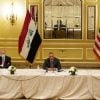
The text of the following statement was released by the Governments of the United States of America and the Republic of Iraq:
The Government of Iraq, led by Foreign Minister Fuad Hussein, and the Government of United States, led by Secretary of State Michael Pompeo, held a meeting of the Higher Coordinating Committee today in Washington, D.C. as described in the 2008 Strategic Framework Agreement for a Relationship of Friendship and Cooperation between the United States of America and the Republic of Iraq (SFA). The two sides reaffirmed their commitment to a robust and productive bilateral relationship. Separate sessions covered economics, energy, health and environment, political and diplomatic issues, security and counterterrorism, and education and cultural relations.
In the economic session, Iraq outlined its ideas for economic reform plans that would unleash faster growth and a more vibrant private sector. The United States reiterated its support for Iraq's economic reforms and identified areas of cooperation that could help Iraq implement its plans. Both countries discussed coordination with international financial institutions to help Iraq recover from low oil prices and COVID-19 and put the country on a more sustainable fiscal path. Both nations plan to cooperate on e-government, financial sector reforms, and private sector partnerships to boost U.S.-Iraq trade and investment. The two governments look forward to holding a Trade and Investment Framework Agreement (TIFA) Council meeting later this year to follow up on the June 2019 meeting.
In the energy session, the United States and Iraq discussed the Government of Iraq's efforts to increase domestic electricity and gas production, reduce wasteful gas flaring, and implement energy market reforms. The two governments plan to hold an Energy Joint Coordination Committee meeting soon to discuss these topics in more detail. On the sidelines of today's meeting, the Government of Iraq signed substantial energy agreements with U.S. companies, including General Electric, Honeywell UOP, and Stellar Energy, as well as Memoranda of Understanding with Chevron and Baker Hughes, as concrete examples of the U.S.-Iraq energy partnership. Iraq and the United States noted ongoing cooperation with the International Energy Agency (IEA) to develop plans for electricity tariff reform in Iraq. The two governments plan to continue cooperation with the Gulf Cooperation Council (GCC) member-states and Gulf Cooperation Council Interconnection Authority on Iraq/GCC electricity connections and energy investment. The United States welcomed the progress in the talks between the Iraqi Federal Government and the Kurdistan Regional Government with regard to budgetary and energy issues.
In the health and environmental session, the United States and Iraq noted their ongoing partnership to combat COVID-19 and their intent to sign a Memorandum of Understanding to expand bilateral health trade. The two governments also discussed ongoing cooperation on environmental, water, and scientific issues and plan to hold a separate Joint Coordination Committee meeting on those topics.
In the political and diplomatic session, the United States reaffirmed its respect for Iraq's sovereignty, territorial integrity, and relevant decisions of the Iraqi legislative and executive authorities. The two sides discussed how the United States could best support the Iraqi government as it prepares for parliamentary elections, including by increasing support for the United Nations Assistance Mission for Iraq. Both nations reiterated their support for freedom of expression and media freedom, and the necessity to hold accountable the perpetrators of violence against peaceful protesters. The United States supports Iraq's efforts to improve relations with its neighboring states and plans to assist the Iraqi Government in this endeavor. The United States reaffirmed its continued commitment to supporting Iraq in advancing durable solutions for internally displaced persons that are voluntary, safe, and dignified, and to help those communities that have been targeted for genocide by ISIS. The two sides recognized the need to improve access for humanitarian organizations.
In the security and counterterrorism session, the United States and Iraq reaffirmed their commitment to achieving common objectives through bilateral security coordination and continued cooperation between the Iraqi Security Forces and the U.S.-led Global Coalition to Defeat ISIS. The two delegations praised the growing capabilities of the Iraqi Security Forces and their joint success in the fight against ISIS, which has enabled the Global Coalition to transition to a new phase focused on training, equipping, and supporting the Iraqi Security Forces. The Iraqi government expressed its gratitude to the Global Coalition and asserted its willingness to facilitate this transition and confirmed its obligation as host country to provide protection for the Coalition's personnel and diplomatic facilities in Iraq. Adapting to the requirements of this new phase, the Global Coalition has been able to depart from some Iraqi military bases and reduce combat forces in Iraq. The two sides plan on separate technical talks to manage the timing and transition to the new phase, including any associated redeployments from Iraq. The U.S. and Iraqi delegations recognized the progress of the Iraqi Federal Security Institutions and the Kurdistan Regional Ministry of Peshmerga Affairs in coordinating their efforts to combat ISIS remnants and discussed ways to further this cooperation.
In the education and culture session, the two governments discussed both past and current U.S. support for Iraq's efforts to strengthen higher education in cooperation with American universities in Iraq, through the Fulbright program, and through the U.S. Embassy's Higher Education Partnership initiative. The United States and Iraq identified additional ways to support Iraq's plans to address higher education reform priorities and strengthen U.S.-Iraqi university partnerships. The two sides also reviewed progress in the return of the Baath Party Archives to Iraq as an important artifact of Iraq's history. The two delegations discussed their mutual efforts to preserve Iraq's rich cultural heritage and religious diversity and reaffirmed their commitment to cooperating in the return of Iraqi cultural property illegally imported into the United States to their rightful place in Iraq.
(Source: US State Dept)
Posted in Construction & Engineering In Iraq Comments Off on Joint Statement on US-Iraq Strategic Dialogue

Unpaid Salaries fuel Protests in Iraqi Kurdistan
Posted on 19 August 2020 .
By Joe Snell for Al Monitor. Any opinions expressed here are those of the author and do not necessarily reflect the views of Iraq Business News.
Outraged after months of not receiving salaries, regular electricity outages and a failure to provide local business bailouts, protests erupted last week in northern Iraq against the Kurdistan Regional Government (KRG).
Posted in Politics Comments Off on Unpaid Salaries fuel Protests in Iraqi Kurdistan