



PM meets Trump: What Outcome for Iraqi Economy?
Posted on 18 August 2020 .
By Dr Amer K. Hirmis, Capital Business Strategies Ltd. - UK.
Any opinions expressed are those of the author, and do not necessarily reflect the views of Iraq Business News.
Iraq's PM meets the President of the United States...
What outcome...for the Iraqi economy?
Introduction
This Thursday, August 20th, the "President Donald J. Trump will welcome Prime Minister Mustafa Al-Kadhimi of the Republic of Iraq to the White House...As close partners, the United States and Iraq will look to expand (their) relations across a range of issues, including security, energy, health care, and economic cooperation." [1]
The question is: what does each side expect, indeed wish, the outcome of the talks and negotiations should be?
Here, some aspects of the potential for 'economic cooperation' between Iraq and the U.S., in the near/medium term are covered.
A likely U.S. perspective
Contextualising the US perspective, one could speculate that its strategic interests in Iraq, and the Middle East generally, can no longer be secured by exchanging oil for political support and the export of arms. The last 100 years have shown that this is not a sustainable position, and it must change. Stability in Iraq, though, is critical for securing US's strategic interests. Having invested enormous human, financial and political capital in Iraq, the US would encourage the establishment of a diversified, "free-market", economy based on increased employment in productive sectors (thus alleviating poverty), good governance and rule of law. The US could help in tackling pervasive corruption (a major economic cost and hazard to doing business in Iraq) in part by deploying advanced technology.
More specifically, The US recognizes the existentialist economic challenges facing Iraq in light of these three crises: the post-2003 disastrous economic policies that nurtured widespread corruption, increased the economic power of (Iran-backed) influential personnel within/without the state apparatus and the (armed and well-financed) Hashd militias; the COVID-19 pandemic; and, finally, the severe decline in oil prices, in March/April of this year.
The US also recognizes that Iraq should enact fundamental economic reforms, which, from a US view point should consider:
- The 2008 Strategic Framework Agreement (SFA) with Iraq. The fourth point in the Preamble emphasizes "the building of a diversified and advanced economy that ensures the integration of Iraq into the international community." This is echoed in Section V of the SFA. Section V (point no. 7) which goes further to say "Facilitate the flow of direct investment into Iraq to contribute to the reconstruction and development of its economy." The US would assert that the 2008 SFA is a reasonable and rational vehicle to do so, providing there is a strong political will, and public acknowledgement of the constructive part both parties should play, without which democracy in Iraq will not take root in the long-run;
- Making use of US economic advisors to work directly with the Government of Iraq to help advance international support for Iraq's reform efforts, including from the international financial institutions. They know that Iraq may not concur on all parts of this point; there is already a wealth of research by economic experts pointing to what needs to be done to initiate economic development in Iraq. The time now is for action - i.e. policy implementation, and soon. Iraq might argue that this (al-Kadhimi's) government needs to demonstrate its worth for the people of Iraq, given the planned general elections in June 2021;
- The enactment of 'firm plans for fundamental economic reforms' soon; the enactment of these plans by parliament is a pre-requisite for US involvement in investment projects in Iraq. Arguably, Iraq must soon create the conditions for foreign investment to take place on a wider scale, and reverse the recent decline of FDIs in Iraq, as the 2019 UNCTAD report indicated. The conditions for doing business in Iraq must change soon, and become favourable - these, as the 2020 World Bank's 'Doing Business in Iraq' report shows, are diverse. To pick one example, the US side might point to the weakness of the banking system, let alone its near-impossible conditions for extending credit to potential investors. These huge problems facing investment in Iraq are also well-known to, and appreciated by, the Minister of Finance, Ali Alawi, and senior civil servants, including those working at the PM Office; and,
- Petrochemicals and electricity might be priority investment fields from a US perspective, as they might be able to make a swift impact on the domestic market, though this would require dealing with reported corruption within this sector including in the areas of illegal connections to the grid, and contracts awarded for distribution/transmission of electricity. This means that Iraq would need to swiftly deal with the 'deep state' that engenders corruption in this and other sectors of the economy.
Finally, the US side might argue that its support must not be one-sided. It must be reciprocated by effecting tangible changes in the economy and political system, amongst other things. Otherwise 'the potential for investment projects involving world-class U.S. firms in the energy and other sectors' might not proceed.
To survive, it is imperative for any economic/political relationship to be based on some common ground - in this case, a real commitment for change to initiate economic development in Iraq must be demonstrated by Iraq and the U.S. So what would Iraq's government hope to get out of the negotiations?
A likely Iraqi perspective
The Iraqi Prime Minister, Mustafa al-Kadhimi, and the team accompanying him are fully aware of the challenges they face: be they political, economic, social or environmental.
Soon after being appointed, al-Kadhimi set out his 'Government Programme' on May 6th, in which Article 3.1 states that in the short term, the government intends to handle the ramifications of the oil price crises by rationalizing public expenditure and stemming unnecessary expenditure. It also intends to develop the tax and tariff collection system. (see: https://www.pmo.iq/press2020/6-5-202002.htm). The Programme goes on to say (in Article 3.2) that a 'Development and Investment Board' would be established, this will provide a comprehensive plan for investment in infrastructure etc. al-Kadhimi's team might also point out that since his government is fully aware of the weaknesses of the banking system, the CBI (Central Bank of Iraq) has been asked to handle this problem within a specific timescale! Finally, the Programme also points out that a comprehensive reform of the administrative system will be undertaken, youth employment in the private sector will be encourages, etc.
More recently, on August 3rd, al-Kadhimi has pointed out that a 'White Paper' is being prepared dealing with the wider economic issues. His Finance Minister, Ali Alawi, had in several occasions indicated the government's awareness of the problems and promised that these will be dealt with appropriately! (see: https://www.france24.com/en/20200622-without-urgent-reform-iraq-economy-will-face-irreparable-shocks-minister-to-afp).
So the Iraqi side has a number of aspirational objectives to cover in their talks with the American side. They will, however, be well advised to be open about the long term problems Iraq's economy has been suffering from (what is called 'structural problems' to do with the GDP's composition). They should declare their vision/solutions which they might have in mind and the extent to which they think the U.S. side could, in the long-run, assist in transforming/diversifying the economy.
- One such chronic problem that the Iraq economy has been afflicted with is the historically acute negative balance of trade (when excluding the export of crude oil), as shown in the Figure below.

- Although inextricably linked to various (structural) aspects of the Iraqi economy, especially the recurrent deficits in the 'Federal Budget', the government might be well advised to bring this issue in the talks with the U.S. This provides a glaring example why it is imperative for Iraq to diversify its economy and why it will need U.S. assistance deploying the 2008 SFA, though the SFA itself might itself need to be reviewed, to be more specific in the capital investment field.
- The Iraqi delegation might be candid enough to go as far as admitting that the recurring budget deficit is not entirely due to excessive reliance on oil exports, it is perhaps mainly because Iraq hardly exports anything else of high-value-added that other countries might have a comparative disadvantage in and would otherwise import goods/services from Iraq.
- Now that is has been acknowledged by many experts that both the high rate of increase of Iraq's population and the likely decline in oil prices as it becomes less in demand as an energy source, in the coming few decades, al-Kadhimi's wisdom (or perhaps his survival instinct) might lead him to believe that this is a strategic priority for Iraq, and that if the U.S. is genuine in its desire to assist Iraq, this is where the emphasis should be - rectify the balance of trade (excluding oil) over the next 20-30 years, driven by the private sector with an enabling public sector.
Would al-Kadhimi opt for this direction of travel, and, if he did, will he adjust his thought process to make this the major strategic economic objective for Iraq?
The Joint-Statement
It is anticipated that the 'joint Statement' it issues will be drafted in the most diplomatic, courteous, and respectful manner. It is likely to postulate the existence of good relations between the U.S. and Iraq, with the former offering support and assisting to the Iraqi people to achieve their aspirations in establishing democracy, rule of law, good governance, and alleviating poverty, amongst other things (to be said in the Statement). It will probably acknowledge that the coming months will be critical in deciding the short-to-medium-term events in Iraq, given the depth of the resentment to al-Kadhimi's government in some quarters whose interest are seen to be seriously threatened.
The Joint Statement doubtless will touch on the security partnership, the anticipated elections in June 2021, humanitarian aid, the significant progress made towards eliminating the ISIS threat, over the coming months, etc.
The two sides will reaffirm the 'importance of the strategic relationship and their determination to take appropriate steps to enhance it in the interest of both countries and to achieve security, stability, and prosperity in the region.'
The time-honored dictum, though, will ring loud - that a combination of polity and economics that serves the people will thrive, and so will the country that upholds it. The polity and economics that does not serve the people will soon perish. The long history of Iraq, since early Mesopotamia, provides witness to the truthfulness of this dictum.
Both the current Iraqi and U.S. governments have now a new opportunity to choose one path or the other. We should find out soon!
Please click here to download Dr Hirmis' full report in pdf format.
* Amer K. Hirmis, August 17, 2020
Dr Amer K. Hirmis is Principal at UK-based consultancy CBS Ltd. (2008-present). In October 2009, Amer began a 20-months assignment as Senior Development Planning Advisor to the Ministry of Planning in Iraq (funded under the DANIDA programme for 'peace and reconstruction' in Iraq). The posts Amer has assumed include Chief Economist and Head of Policy at the London Chamber of Commerce and Industry (1992-5), Economic Advisor to UK South West Regional Development Agency (1996-8) and Associate Director and then Head of Consulting and Research (Middle East) at the global firm DTZ (1998 to 2007).
Dr Amer K Hirmis is the author of 'The Economics of Iraq - ancient past to distant future' [https://www.amazon.com/Economics-Iraq-Ancient-distant-future/dp/1999824105] [Chapter 6 of the book is entitled 'Monetary and Fiscal Policies'].
END
[1] (https://www.whitehouse.gov/briefings-statements/statement-press-secretary...-iraq/. The Press Statement was issued on August 7th).
In their June 2020 meeting, the respective teams preparing for the visit jointly stated that "The two countries reaffirmed the principles agreed upon by the two sides in the Strategic Framework Agreement (SFA), as well as the principles in the exchange of diplomatic notes and the letters of the Republic of Iraq to the United Nations Security Council...The United States reaffirmed its respect for Iraq's sovereignty, territorial integrity, and relevant decisions of the Iraqi legislative and executive authorities." (see: https://www.state.gov/joint-statement-on-the-u-s-iraq-strategic-dialogue/ This was released on June 11, 2020).
Posted in Amer K Hirmis, Politics 3 Comments

No quick fix for Iraq's Electricity Crisis
Posted on 14 August 2020 .
By Omar Sattar for Al Monitor. Any opinions expressed here are those of the author and do not necessarily reflect the views of Iraq Business News.
No quick fix for Iraq's Electricity Crisis
The heat wave in Iraq has raised the ire of citizens in the central and southern areas, pushing many to take to the streets once again.
The popular protests in the squares had settled down due to the coronavirus pandemic, but the searing hot weather and declining hours of electricity supply have forced the new government to once again face the protesters.
Posted in Construction & Engineering In Iraq, Iraq Industry & Trade News Comments Off on No quick fix for Iraq's Electricity Crisis
IBBC hosts Panel to review the Govt's first 3 mths
Posted on 13 August 2020 .
On Monday 10th August-a distinguished online panel of academics and an IBBC advisory panel reviewed the GOI's approach to decisions and progress.
Dr Munqith Dagher-senior associate at CSIS and CEO of IIACSS, gave a new revealing and informative presentation on public perceptions of the new GOI, and its future prospects and opportunities.
Dr Rana Khalid, head of research IRAQI FORUM POLICY MAKERS CORPORATION, commented on the benefits of expanding the private sector in Iraq.
Mr Hani Akkawi, of CCC and advisory panel member, made a heartfelt plea for the people of Iraq and Lebanon in these challenging times, and went on to articulate how the private sector can benefit Iraq and the actions required to encourage investment and expansion.
Professor Frank Gunter of Lehigh University, and author of IBBC's Iraq 2020 Report, summarised the issues facing the Government, outlined solutions, and summed up the overall situation.
Aziz Shwan Ahmed of the advisory panel completed the initial presentations with an unarguably good case for improving the power and electricity supply system as a matter of priority, be enhancing distribution networks, creating jobs, and increasing private sector contribution in the economy
Please view the panel discussion here
(Source: IBBC)
Posted in Iraq Industry & Trade News Comments Off on IBBC hosts Panel to review the Govt's first 3 mths
300MW Power Station opened near Erbil
Posted on 08 August 2020 .
By John Lee.
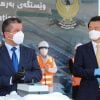
A new 300-megawatt steam power plant has been recently opened in Khabat, on the outskirts of Erbil.
The plant, built in partnership with South Korean companies POSCO and the Korean National Oil Company (KNOC), adds 10 percent to the region's electricity capacity.
Speaking at the opening ceremony, KRG Prime Minister Masrour Barzani said that Kurdistan's gas production will also increase in the near future as part of the KRG promise to provide 24 hours electricity.
(Source: KRG)
Posted in Iraq Industry & Trade News Comments Off on 300MW Power Station opened near Erbil

Why Electricity is key to Peace, Stability and Prosperity
Posted on 02 August 2020 .
By Ali Al-Saffar, Middle East and North Africa Programme Manager at the International Energy Agency (IEA), for 1001 Iraqi Thoughts. Any opinions expressed are those of the author(s), and do not necessarily reflect the views of Iraq Business News.
Powering Iraq: Why Electricity is key to Peace, Stability and Prosperity
It does not have to be this way. Iraq's chronic electricity shortages should not be this bad. The country has allocated around $20 billion to capital investments in the sector since 2012, increasing generating capacity by 13 gigawatts (GW) in the process.
And yet the gap between the electricity supplied and what is needed continues to grow, resulting in poorer service provision and a rising cacophony of legitimate public anger.
Why is Iraq's electricity sector underperforming? What can be done to remedy the most immediate shortages? And what can be done to give Iraq the electricity sector the country needs and its people deserve?
Posted in Iraq Industry & Trade News, Politics Comments Off on Why Electricity is key to Peace, Stability and Prosperity
Iraqis face Record-Breaking Heat, Electricity Cuts
Posted on 01 August 2020 .
By Adam Lucente for Al Monitor. Any opinions expressed are those of the author(s), and do not necessarily reflect the views of Iraq Business News.
Iraqis face record-breaking heat, electricity cuts
Iraqis are contending with record-breaking temperatures and a poorly functioning electricity system as a heat wave sweeps across the country.
On Tuesday, the Iraqi capital, Baghdad, recorded an all-time high temperature of 125 degrees Fahrenheit (51.7 Celsius), according to the weather forecasting service AccuWeather.
Posted in Agriculture, Healthcare 1 Comment

Three Iraqi Start-Ups get Seed Funding
Posted on 31 July 2020 .
By Ali Al-Makhzomy, for The Station. Re-published with permission by Iraq Business News.
Five One Labs recently hosted an online Start-up Showcase to celebrate the graduation of their first-ever Arabic incubator program in c.
Over 90 attendees joined the event from Iraq, Germany, USA and other places.
Ten of the entrepreneurs gave brief overviews of their businesses, and then answered audience questions. At the end of the event, Five One Labs announced that three startups would receive seed funding:
- Al-Ruaa for CNC, a company providing services, workshops, maintenance, installation and providing spare parts for the CNC machines, came in first place and won $15,000;
- For second place, EcoLift, a company providing an alternative power system (potential energy recovery system) to power elevators instead of using electricity, was awarded $10,000;
- And finally, Mosul Solar, a company providing and installing solar cells for houses, was awarded $5000.
Posted in Investment, Iraq Industry & Trade News Comments Off on Three Iraqi Start-Ups get Seed Funding
US Praises Deal to Import Electricity from GCC
Posted on 19 July 2020 .
The text of the following statement was released by the Governments of the United States of America, the Republic of Iraq and the Gulf Cooperation Council (GCC):
The Government of Iraq, Gulf Cooperation Council, and United States have renewed their full support for the Gulf Cooperation Council Interconnection Authority (GCCIA) project to connect the electricity grids of Iraq and the GCC. The United States is committed to facilitating this project and providing support where needed.
This project will provide much-needed electricity to the people of Iraq and support Iraq's economic development, particularly in the southern provinces.
The Government of Iraq, Gulf Cooperation Council, and United States look forward to increased close economic and energy cooperation between the United States, Iraq, and the GCC countries, as a basis for peace, development, and prosperity in the region.
The Government of Iraq, Gulf Cooperation Council, and United States called for the speedy and full implementation of the pledges made in 2018 by the international community at the Kuwait International Conference for the Reconstruction of Iraq.
(Source: US State Dept)
Posted in Construction & Engineering In Iraq Comments Off on US Praises Deal to Import Electricity from GCC
Iraqi PM Pushes Electricity Projects
Posted on 14 July 2020 .
By John Lee.
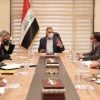
Prime Minister Mustafa Al-Kadhimi has held a meeting with the Ministers of Electricity and Oil to discuss electricity supply in Iraq, and directed that all electricity projects, especially those agreed with Siemens, be implemented without delay.
He added that Iraq has spent billions of dollars on the electricity sector in recent years, but because of corruption, waste and mismanagement, it failed to build a modern power grid that meets the needs of its citizens.
the PM said he is determined to address the problems in the electricity sector, implement plans for its development, and tackle corruption in all its forms in this critical sector.
(Source: Govt of Iraq)
Posted in Iraq Industry & Trade News 1 Comment
GE completes Major Work at Bismaya Power Plant
Posted on 02 July 2020 .
By John Lee.
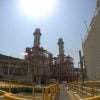
GE Gas Power has reported that it has successfully completed services on four 9F.03 gas turbines, two steam turbines and six generators at Iraq's Besmaya Power Plant safely and on time, while continuing to execute wider operations and maintenance (O&M) works at the site despite the many challenges posed by the COVID-19 pandemic.
These service activities reduced the risk of unplanned downtime of power generation equipment at the site, enabling the plant to reliably supply up to 3 gigawatts (GW) of electricity to the national grid to help meet the peak summer demand for power.
Owned by Mass Group Holding (MGH), Besmaya is Iraq's largest power plant. Phases 1 and 2 of the project can generate up to 3 GW and Phase 3, which is currently under construction, is expected to add up to another 1.5 GW. The facility is the first one in the country outside the Kurdistan region to be developed by an independent power producer on a build-own-operate basis for the Iraqi Ministry of Electricity.
GE has supplied eight gas turbines, four steam turbines and 12 generators that are covered by a 20-year service agreement and is also responsible for O&M services for Phases 1 and 2 of the project to ensure smooth operations at the site. Additionally, GE won a contract to supply four 9F.04 gas turbines and four generators for Phase 3. Much of the electricity generated at Besmaya is fed to the capital Baghdad and surrounding areas and its uninterrupted operations are critical to power local healthcare facilities, homes, businesses and more.
Ahmad Ismail, Chairman of MGH, said:
"At MGH, we are committed to strengthening Iraq's power sector further.
"The logistical and mobility constraints resulting from the COVID-19 outbreak led to several unexpected difficulties in carrying out the required service works at Besmaya including delays in the arrivals of parts and challenges in access to technical experts.
"However, the determination, flexibility and efficiency GE displayed by being able to draw on local teams on the ground, remote support from experts and access to a global supply chain, enabled us to keep the plant operational with high levels of reliability and efficiency and to deliver on our commitments."
Beginning February 2020, over 110 GE and FieldCore (a GE-owned field services execution company) staff members liaised closely with MGH to execute the services safely and as per schedule. The works conducted included the first phase of Hot Gas Path inspection services of the gas turbines, steam turbine minor inspections and generator MAGIC (Miniature Air Gap Inspection Crawler) inspections.
Experts based in the Middle East and Europe liaised with the local site team through digital tools, video conferences and phone calls on a daily basis to remotely support mechanical and commissioning works, identify and transport stocks of parts that needed to be replaced and keep track of overall project progress. To reduce the risk of exposure to COVID-19, additional hygiene, health and safety measures were implemented at the site, including more frequent disinfection and cleaning activities, thermal screenings of everyone entering the site, distribution of additional mandatory personal protective equipment such as gloves and masks, COVID-19 prevention training sessions, accommodation for staff on-site, as well as other precautions.
Joseph Anis, President and CEO of GE Gas Power, Middle East, North Africa and South Asia said:
"As we work through these exceptional times, our resolve to support the Ministry of Electricity and people of Iraq by providing the electricity needed to power everyday life, growth and progress remains unchanged. Our top priority remains the safety of our people, while continuing to deliver results for our customers and the communities we serve.
"I would like to thank the supportive staff at GE and MGH who stayed away from their loved ones for months, working long hours to secure reliable power supplies during this unprecedented period and for the hot summer months ahead. Together, we are honored to make a positive difference to the lives of millions of Iraqi citizens."
GE and FieldCore have up to 300 people across Iraq. The company has supported the development of the country's energy infrastructure for over 50 years and since 2011, helped to bring up to 15 GW of power online across Iraq, including up to 1.4 GW in conflict affected areas such as Diyala and Mosul.
The company has also helped bring over US$2.4 billion in financing for energy sector projects in Iraq in collaboration with export credit agencies, commercial banks and other organizations.
(Source: GE)
Posted in Iraq Industry & Trade News Comments Off on GE completes Major Work at Bismaya Power Plant