


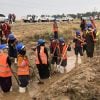
Norway Renews Commitment to Stabilization in Iraq
Posted on 01 December 2020 .
Norway renews commitment to stabilization with new $7.7m contribution
The Government of Norway has contributed NOK 70,000,000 (US$7.7 million) to the United Nations Development Programme (UNDP) Iraq's Funding Facility for Stabilization (FFS), which supports stabilization and the return of internally displaced persons (IDPs) from the five governorates liberated from the Islamic State of Iraq and the Levant (ISIL, also known as Da'esh).
This is Norway's twelfth contribution to FFS, bringing the country's total contribution to $56.2 million.
"We are grateful to Norway for this timely additional contribution to the FFS, which was recently extended until 2023 due to the urgent priorities that remain in liberated areas. Under this extension, we will see a greater focus on areas with the hardest-to-return populations to facilitate more returns, as well as additional emphasis on sustainable livelihood activities and sustainability concerns," says the UNDP Resident Representative for Iraq, Zena Ali Ahmad.
"Since 2015, Norway has been an invaluable partner to UNDP Iraq, and we are extremely grateful for its continued commitment to peace and stability in Iraq, as the country continues to reel from the devastation of the ISIL conflict," she adds.
Norwegian Ambassador to Jordan and Iraq, Ambassador Tone Allers said: "I am highly impressed by the work that the UNDP is doing in Iraq. The FFS secures not only a lasting development and stabilization of Iraq through the rehabilitation of areas demolished in the ISIL conflict, but also ensures the possibility for many Iraqis to return to their homes in a safe, sustainable and dignified manner. I have myself seen how critical this is for bringing peace and a better future to the Iraqis, and Norway is proud to continue our support for the UNDP and FFS in this work."
Established in June 2015, FFS works in the five liberated governorates of Anbar, Diyala, Kirkuk, Ninewa and Salah Al-Din. To date, UNDP has mobilized $1.3 billion from 27 donors and partners, and from the Government of Iraq, and has provided more than 10 million Iraqis with improved infrastructure and services, under critical sectors such as electricity, housing, health, water, education, sewerage, livelihoods, municipalities, roads and bridges, capacity support and social cohesion. It has assisted 4.7 million IDPs to return home.
(Source: UNDP)
Posted in Iraq Industry & Trade News, Politics Comments Off on Norway Renews Commitment to Stabilization in Iraq
JICA, UNDP Renew Partnership on Iraq Infrastructure Projects
Posted on 15 November 2020 .
JICA and UNDP Iraq Renew Partnership Agreement to Accelerate Infrastructure Projects
The Japan International Cooperation Agency (JICA) and UNDP Iraq have signed a renewed partnership agreement to monitor and support the acceleration of the implementation of socio-economic infrastructure projects in Iraq.
The projects are implemented by the Government of Iraq (GoI) with loan assistance from JICA with the aim of improving the economic recovery and living conditions of Iraqi communities, focusing on key sectors including electricity, water and sanitation, oil, irrigation, transportation, industry, health and Fcommunication.
JICA Chief Representative Kei Toyama states:
"Since 2009, UNDP has been an important partner for JICA in Iraq. Our partnership has contributed to the strengthened monitoring mechanism of GoI, addressing challenges faced by those projects. We look forward to further acceleration of GoI's project implementation under our joint supports under this 10th agreement."
According to Resident Representative of UNDP Iraq Zena Ali Ahmad:
"The signing of this renewed agreement between UNDP and JICA demonstrates the steadfast commitment of the Government and people of Japan to sustainable development in Iraq and its communities, and we look forward to seeing the results that this strengthened partnership will bring, particularly amidst the challenging context of the COVID-19 pandemic."
As a result of the socio-economic impacts of COVID-19 Iraq needs continued and focused support from the international community. With the signing of the renewed agreement, the GoI, JICA and UNDP commit to projects that will boost public services and private sector development in Iraq.
(Source: UN)
Posted in Construction & Engineering In Iraq, Iraq Industry & Trade News Comments Off on JICA, UNDP Renew Partnership on Iraq Infrastructure Projects
KRG DPM Talabani to Speak at Virtual Kurdistan Iraq Economic Forum
Posted on 11 November 2020 .
Kurdistan's Deputy Prime Minister HE Qubad Talabani to Speak at the Virtual Kurdistan Iraq Economic Forum
- Inaugural Conference set to navigate the economic future Kurdistan and Iraq
- Conference will include online sessions available live and on demand for all attendees
- Delegates will gain insights into the latest policy and project announcements, crucial for successful investment decisions in the region as well as the key recovery strategies post pandemic
- Virtual Event will take place on 17 - 18 November through an interactive platform
CWC and Global Future Energy are hosting the Kurdistan-Iraq Economic Forum with the support of the KRG High Commission to the UK.
Sponsored by Chevron, the Forum aims to be the first gathering dedicated to the economic diversification of the Region, and will include 6 panel sessions, enabling senior decision makers across multiple industries to engage with each other virtually to address current issues and facilitate practical solutions to advance the economy in these challenging times.
Confirmed speakers include:
- HE Qubad Talabani, Deputy Prime Minister, Kurdistan Regional Government of Iraq HE
- HE Safeen Dizayee, Head of the Department of Foreign Relations, Kurdistan Regional Government, Iraq
- HE Karwan Jamal, Kurdistan Region High Representative to the UK, London
- HE Dr Amanj Raheem, Cabinet Minister, Member of the Oil & Gas Council, Kurdistan Regional Government, Iraq
- HE Kamal Muslim Saeed, Minister of Trade & Industry, Kurdistan Regional Government, Iraq
- Matthew M. Zais, Ph.D., Principal Deputy Assistant Secretary, Office of International Affairs, US Department of Energy
"The Kurdistan Region has an opportunity to become an important commercial centre in Iraq and the region in order to attract foreign investments to implement strategic projects" said Prime Minister Barzani last month at the Supreme Economic Council meeting in the presence of Deputy Prime Minister Qubad Talabani and a number of ministers and governors.
In light of the current unprecedented circumstances, decision-makers and influencers from various industries will gather to unlock new business opportunities on all levels of the economy by addressing the following themes:
- Extending the Value Chain beyond Producing Oil: How the Oil Sector Could Enrich Economic Diversification?
- Kurdistan plans to privatize the electricity sector, opportunities for investors
- Diversifying the energy mix to increase the role of gas and renewables
- How to grow non-oil sectors that will provide a sustainable source of growth?
- Fiscal reforms packages to support the recovery of post pandemic
- Maximizing strategic alignment with the major companies to support in building the region's infrastructure
- Promoting the growth of the economy through innovations in procurement and financial supply chain management processes
Over the past decade, the CWC Iraq Portfolio has hosted over 100+ Ministers and Senior Officials at various events. The Inaugural Kurdistan Iraq Economic Forum will bring together the international commercial executives interested in investing in Kurdistan. CWC, now a brand of Global Future Energy, will again provide the only international platform for high level stakeholders in the Region to convene.
For further information, visit https://www.kurdistan-economic.com/
To access the full programme, please click here.
Posted in Construction & Engineering In Iraq, Investment, Iraq Industry & Trade News, Iraq Oil & Gas News 1 Comment
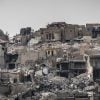
Iraq: $660m needed for Priority Stabilization Needs
Posted on 11 November 2020 .
$660m required to cover priority stabilization needs in areas liberated from ISIL
Support to Iraq's displaced populations through the rehabilitation of critical infrastructure and services damaged in the ISIL conflict, livelihoods creation, local capacity development and social cohesion will continue under a three-year extension of the United Nations Development Programme (UNDP) in Iraq's flagship programme, the Funding Facility for Stabilization (FFS)
The extension, which was endorsed by the Government of Iraq and international partners at the FFS Steering Committee held today in Baghdad, requires $660 million through FFS to cover the remaining priority needs of areas liberated from ISIL - Anbar, Diyala, Kirkuk, Ninewa, Salah Al-Din.
The estimate was based on a comprehensive needs assessment undertaken by UNDP this year in consultation with the Government of Iraq, within the mandated sectors and parameters of FFS.
To date, UNDP has mobilized $1.3 billion from 27 donors and partners, and from the Government of Iraq, and has provided more than 10 million Iraqis with improved infrastructure and services, under critical sectors such as electricity, housing, health, water, education, sewerage, livelihoods, municipalities, roads and bridges, capacity support and social cohesion through local community reconciliation activities. It has assisted 4.7 million internally displaced persons (IDPs) to return home.
The extended programme will include:
- A focus on areas that have experienced difficulties in returns;
- Rehabilitation of infrastructure that supports productive sectors like agriculture and small business;
- Sustainable livelihood activities that promote employment opportunities;
- Strengthened mainstreaming of human rights principles, environmental sustainability, conflict sensitivity and gender in all sectors of work;
- A clear exit strategy in its final year 2023, handing over ownership of the implementation of immediate stabilization activities to the Government of Iraq.
Speaking on behalf of the Secretary-General of the Council of Ministers Secretariat (COMSEC), the Deputy Secretary-General of COMSEC Dr. Farhad Neamattallah Hussain reiterated the Government of Iraq's commitments to supporting the return of displaced Iraqis.
"We welcome the decision to extend FFS, which has made a tremendous impact on stabilizing the areas liberated from ISIL. However, more work remains to be done. There is still an urgent need to deliver on the stabilization needs of displaced communities, and to bolster social cohesion and community reconciliation efforts to ensure people can both rebuild their lives, and peacefully co-exist.
"With assistance from UNDP and the generous support of the international community we are committed to making this happen," added Dr. Hussain.
"Today's extension of FFS marks a critical milestone for Iraqis who are still displaced across the country", says Resident Representative of UNDP Iraq, Zena Ali Ahmad.
"We will continue to work alongside the Government of Iraq to create the necessary conditions for safe and dignified returns, with a greater focus on the hardest-to-return populations. The extension of FFS emphasizes the strong partnership between UNDP, the Government of Iraq, and the international community, who, through their generous support since the progamme's inception in 2015, have been instrumental in bringing millions of displaced Iraqis home. We are extremely grateful for their commitment and are proud to continue working together to bring stability, peace, and prosperity to Iraq under this programme extension," she adds.
To guide its programming and deliver on stabilization priorities, FFS will continue to use its proven agile and transparent mechanisms such as special anti-corruption measures, ability to conduct rapid assessments, dedicated service center to fast-track procurement, multi-layered monitoring, and the use of local labor.
FFS was established in 2015 as a mechanism to channel funds for the Iraqi Government's immediate stabilization priorities, to support the return of IDPs from the five liberated governorates. With much appreciation for the continued trust and confidence of partners, UNDP aims to continue delivering at scale to support returns and protect the stabilization gains in the areas liberated from ISIL.
(Source: UN)
Posted in Construction & Engineering In Iraq Comments Off on Iraq: $660m needed for Priority Stabilization Needs
Why you should come to IBBC Conference: Opportunity in Adversity
Posted on 10 November 2020 .
Why you should come to the IBBC Conference in Dubai, entitled 'Opportunity in Adversity'
On 19th November the Iraq Britain Business Council (IBBC) is holding its Autumn conference in person at the Address hotel Dubai Marina.
Some would say it's a brave decision, considering COVID, but others are keen to take up the challenge and opportunity to engage, meet, listen to expert business voices of Iraq and overall have proper opportunities for networking.
Not only do we have a good level of members signed up to attend, but also one of the strongest line ups of speakers, ready and willing to address the opportunities for Iraq in 2020.
The backdrop to this conference is not just COVID, but the election of a new American President, rising oil prices, a fundamental change in the way oil and gas companies are globally which will also affect their work in Iraq, a Government willing and able to make significant changes, in the way finance operates, investors can start up and a white paper that will impact a range of activity and on-going digital modernisation.
All these topics will be covered, and we are expecting significant speakers and attendees from our membership and the Ministry of Oil, the Deputy Minister of Electricity, and online from the World Bank, Central Bank payments director and Ministry of Communications, Mastercard and Zain Cash to name a few.
You can hear about one of the biggest changes as the oil and gas companies redefine themselves as Energy companies, and vertically integrate fuel with electricity generation. BP, Shell, Siemens and Ministry of Electricity will address this and other matters on the Energy panel.
On the Finance panel, we are looking at how to operate successfully in the present very challenging financial situation of the country. New proposals by the Government's white paper will also be discussed and how these align with the need of private sector.
Finally, the Tech Forum with the World Bank on the digitisation of Iraq, the progress that is being made with GOI, and to hear from Mastercard and GSMA and Thinkbank on consumer online behaviour and attitudes.
Now is a great opportunity for change and we believe Iraq won't let the opportunity go to waste. Iraq is at a critical inflection point and the Government understands the importance of encouraging the private sector as a vehicle to solving investment, jobs and diversifying the economy at this time, which is why we are expecting a strong attendance from members and speakers alike from sectors crucial to Iraq's future.
As we look to the coming year, we see a Government making good decisions, investing in large projects, understanding the importance of diversifying its economy and also providing work and opportunity to its young population.
Now is the time to turn up, attend and make plans for the future of Iraq, and we look forward to welcoming you.
Please register here:
https://iraqbritainbusiness.org/event/ibbc-autumn-conference-at-the-address-hotel-dubai-marina
Posted in Investment, Iraq Banking & Finance News, Iraq Education and Training News, Iraq Industry & Trade News, Iraq Oil & Gas News, Politics, Security Comments Off on Why you should come to IBBC Conference: Opportunity in Adversity
English-language Summary of Iraq's White Paper
Posted on 05 November 2020 .
By John Lee.
The Government of Iraq has issued an English-language summary of its recently-approved white paper on economic reforms:
The Iraqi government has formally adopted the White Paper for Economic Reforms prepared by the Crisis Cell for Financial and Fiscal Reform.
The White Paper seeks to put Iraq's economy on a path that allows the state to take appropriate steps in the future to develop it into a diversified, dynamic economy. Dr. Ali Allawi, Deputy Prime Minister and Minister of Finance
The White Paper is a comprehensive programme that sets out a clear roadmap to reform the Iraqi economy and address the accumulated, decades-old serious challenges that confront it.
Iraq's Deputy Prime Minister and Minister of Finance, Dr. Ali Allawi said that the White Paper seeks to put Iraq's economy on a path that allows the state to take appropriate steps in the future to develop it into a diversified, dynamic economy that creates opportunities for citizens to live a decent life.
And although the current severe fiscal crisis that Iraq is going through is related to the recent sharp decline in oil prices and to the repercussions of the Coronavirus pandemic, the White Paper makes it clear that the causes of Iraq's economic and financial woes date back several decades.
The White Paper identifies the expansion of the role of the state as a key cause of the crisis.
The roots of the crisis
The White Paper provides a detailed outline of the factors that have distorted the Iraqi economy, undermined its capacity to provide a decent life for large number of Iraqis, and its failure to keep pace with the economic developments that the world has witnessed.
The expansion of the role of the state
The White Paper identifies the expansion of the role of the state and emergence of a command economy in Iraq as a key cause of the crisis.
From the nationalisation of vital economic sectors in 1970s, to the commandeering of all economic levers by the state to support the war effort in the 1980s, through the period of sanctions imposed on Iraq in the 1990s, these shocks, as well as the absence of strategic planning, mismanagement, maladministration, patronage and misguided political ideology, all led to an expansion of the role of the state in all aspects of economic life in Iraq.
The Iraqi economy continued to be directed by the state after the events of 2003 because of the failure of the new political system to create a free and diversified modern economy as outlined in Iraq's Constitution, and instead continued to rely on the state as the almost only driver of economic activity in the country.
The expansion of the role of the state, and the associated increase in the number of those employed in the public sector and the cost to Iraqi exchequer of their salaries and pensions, came at the expense of the government's ability to invest in basic infrastructure in Iraq.
To illustrate the point, the White Paper points out that from 2004 to 2020, state expenditure on the salaries of civil servants and on public sector pensions increased by 400% in real terms, as the total number of public sector workers during the same period increased by threefold.
The cost of salaries and pensions of public sector workers is expected to be around 122% of Iraq's oil revenue in 2020. The White Paper for Economic Reforms
And between 2006 and 2018, average public sector salaries increased by 134%, more than the increase in labour productivity, which rose by only 12%, or the cost of living, which rose by 28% during the same period.
Over the past 17 years, government spending on the salaries of state employees, and on public sector pensions became the fastest growing expenditure item in Iraq's successive federal budgets during this period.
There are currently around 4,500,000 public sector employees and 2,500,000 pensioners.
Decline of the private sector
The expansion of the state's role, in addition to the complex administrative system and the state's weakness in imposing the rule of law, the militarisation of society, and the influence of non-governmental actors in public institutions, led to the decline of the Iraqi private sector.
With the exception of a number of small and medium-sized companies operating in the oil and telecommunications sectors, and very small companies operating in the fields of trade, retail, transport, construction, hospitality and textiles, there is almost a complete absence of private sector companies in manufacturing.
In addition, most of the larger private sector companies depend on providing services to the state and on government contracts.
The White Paper also identified other factors that led to the deteriorating economic situation in Iraq is, most notably:
- The collapse of oil revenues
- The impact of Covid-19
- Mismanagement and lack of planning
- The weakness of financial institutions
- The absence of modern coherent systems for managing state revenues
- An ineffective and outdated banking sector
- Complex and antiquated government procedures
- Destruction of infrastructure and the costs of the war against Daesh terrorists
Two strategic goals
The White Paper identifies two overarching strategic objectives.
- The first is to initiate an immediate reform programme to address the budget deficit to create a fiscal space to give time for the process of implementing the other wider reforms over the medium term.
- The second objective is to put the economy and the federal budget on a sustainable path, after which Iraqis can decide and choose the economic direction of the country.
The White Paper anticipates that the short and medium-term objectives and associated reforms will require between 3 to 5 years to implement.
The reform pillars
The White Paper identified five key pillars for the reform programmes:
1- Achieving sustainable financial stability
Key reforms include:
- Reducing the deficit from 20% to 3% of GDP and expenditure on salaries from 25% to 12.5% of the federal budget
- Collecting electricity tariffs from all users based on the real price of fuel on global markets
- Recovering and returning Iraq's smuggled and stolen money
- Increasing revenues from customs and taxes
- Reforming Iraq's Pensions Fund and move to gradually end federal budget support
- Reforming financial management systems
- Reviewing the current exchange rate of the dollar against the dinar
2- Implementing strategic reforms and creating sustainable job opportunities
Key reforms include:
- Modernising and rehabilitating the financial sector
- Modernising and rehabilitating the banking system, supporting the development of private banks, reforming government banks and introducing and activating the Core Banking System in Al-Rafidain and Rasheed Banks
- Expediting the development of e-banking services
- Establishing new trading markets, such as a commodity market and a currency exchange market (Forex)
- Supporting the sectors that drive the economy, such as agriculture, oil and gas
- Introducing a private sector support fund, simplifying procedures, and providing other non-financial aid
- Creating job opportunities in the private sector and supporting small and medium enterprises
- Adopting a national strategy for education and training that links educational outcomes with the future need for the labour market
3- Improving basic infrastructure
Building Iraq's digital infrastructure is a key aim of the White Paper.
Key reforms include:
- Increasing the effectiveness and improving the performance of all parts of Iraq's electricity sector
- Developing Iraq's digital infrastructure, including the introduction of advanced technology (4G) at the beginning of next year, and preparing for the introduction of (5G) technology
- Modernising the legal and regulatory framework of the transport sector, and encourage private investment in transport
- Developing industrial cities and free zones in Iraq
4- Providing basic services and protecting vulnerable groups during and after the reform process
The reforms aim at establishing a unified and financially sustainable pension system for all Iraqis whether they are working in the public, private, cooperative or mixed sector. The White Paper for Economic Reforms
Key reforms include:
- Improving water supply for both drinking and irrigation and complete sanitation projects and networks
- Building 1,000 new schools during the period of the reform programme
- Reforming the social security system
- Establishing a unified and financially sustainable pension system for all Iraqis whether they are working in the public, private, cooperative or mixed sector
- Completing and implementing the draft health insurance law to ensure that all Iraqis have access to essential health services
5- Improving governance and introducing changes to the legal framework to enable institutions and individuals to implement reforms
- Reviewing and amending the official guidance in relation to government contracts
- Introducing e-governance systems to strengthen oversight of government contracting and the collection of taxes and customs
- Working with specialist investigative international organisations to return the large sums of money smuggled out of Iraq
- Introducing an electronic governance system in the field of government contracting and tax and customs collection
- Completing the project establishing the National Information Centre to facilitate the introduction of government e-services to citizens, and automate the procedures for obtaining key documents such nationality and passports and accessing pensions and social security
- Introducing electronic signature and transactions throughout the public administration system and phasing out paper transactions
A detailed implementation plan of White Paper will be published later to outline the required process, identify key stakeholders and establish timelines and monitoring mechanisms.
Click here to download the full white paper (Arabic only)
Click here to read analysis from Ahmed Tabaqchali
Click here to read analysis from Ali al-Mawlawi.
(Source: Govt of Iraq)
Posted in Investment, Iraq Industry & Trade News, Politics Comments Off on English-language Summary of Iraq's White Paper
Why IBBC Autumn Conf will be Different and Full of Promise
Posted on 02 November 2020 .
From the Iraq Britain Business Council (IBBC).
Why IBBC Autumn conference will be different and full of promise: Opportunity in Adversity
To be honest, the idea of holding a conference in the year of COVID, might look fool hardy, but sometimes you have to face down challenges and move forward, just like the Government of Iraq is doing. There is no more important time to look to the future to overcome challenges and to equip yourself with insights, intelligence and new relationships that can make the all the difference to your future business.
Iraq has had its fill of challenges, but has navigated them with a formidable resilience, and now finds itself with a Government that is measured, determined and actively promoting the country, while walking a delicate line between geo politics and a subdued oil price.
On 19th November, IBBC is hosting many of the key companies and officials who make decisions on Iraq's future business. We know the Iraqi deputy minister for Electricity, the KRG Minister for Trade and the UEA Under Secretary Foreign Trade and Industry will be present, but we are also confident other significant Iraqi minsters are likely to attend, and our leading members, including BP, Shell, Siemens, GE and International Islamic bank- and many more, will also be speaking and attending.
Now is a great opportunity for change and we believe Iraq won't let the opportunity go to waste. Iraq is at a critical inflection point and the Government understands the importance of encouraging the private sector as a vehicle to solving investment, jobs and diversifying the economy at this time, which is why we are expecting a strong attendance from members and speakers alike from sectors crucial to Iraq's future : Energy, Infrastructure and Logistics, Finance and Tech. On the Tech front speakers from The World Bank, Mastercard, Zain cash will discuss Digitising Iraq and Online consumer behaviour and expectations, in Infrastructure, Basra Gateway, Garda world and G4S join the discussion, and in Finance, we are hosting investor experts including Capital Bank, Belle Finance, Stirling Education and Management Partners.
While IBBC works for it's members, the conference is open to all interested parties, to meet, share and exchange business contacts at the Address Hotel, Dubai Marina, and find the opportunities that adversity brings. As we look to the coming year, we see a Government making good decisions, investing in large projects, understanding the importance of diversifying its economy and also providing work and opportunity to its young population.
Now is the time to turn up, attend and make plans for the future of Iraq, and we look forward to welcoming you.
Please register here:
https://iraqbritainbusiness.org/event/ibbc-autumn-conference-at-the-address-hotel-dubai-marina
Posted in Iraq Industry & Trade News Comments Off on Why IBBC Autumn Conf will be Different and Full of Promise
Iraq Insider: Q3 2020 Non-Oil Economy Review
Posted on 25 October 2020 .
From the Iraq Energy Institute (IEI). Any opinions expressed here are those of the author(s) and do not necessarily reflect the views of Iraq Business News.
For Q3 2020, our first non-oil economy part examines Iraq's current challenges and economic potential at the macro and micro level. With the oil economy review, there two reports provide a detailed overview of developments in oil and gas, agriculture, industry, electricity and health, looking at Iraq's key vulnerabilities amid the COVID-19 crisis and where Iraq has received substantial international assistance.
Here we examine Iraq's current policy options, however limited, and prospects for stabilisation, in light of the new white paper on economic reform presented by the Iraqi cabinet on 13 October.
Additionally, we look at Iraq's continuing policy of trying to balance regional relations during a time of renewed proxy conflict, the regionally shared challenge of collapsed oil prices and the global pandemic.
Iraq's policy of regional outreach is finally starting to show positive results but remains vulnerable to the rapidly shifting geopolitics of the region. Arising from Baghdad's regional posture, we examine some of the most interesting developments, particularly in the energy sector.
Posted in Iraq Oil & Gas News Comments Off on Iraq Insider: Q3 2020 Non-Oil Economy Review
Iraq's Future Isn't Oil, It's Sustainable Electricity
Posted on 23 October 2020 .
By Luay al-Khatteeb, for Foreign Policy. Any opinions expressed here are those of the author(s) and do not necessarily reflect the views of Iraq Business News.
Iraq's Future Isn't Oil, It's Sustainable Electricity
As the country continues to grapple with the aftermath of the Islamic State insurgency, revolutionizing the country's energy sector could be the key to long-term security.
Posted in Iraq Industry & Trade News, Iraq Oil & Gas News Comments Off on Iraq's Future Isn't Oil, It's Sustainable Electricity
Iraq to Release Frozen Iranian Funds
Posted on 14 October 2020 .
The Governor of the Central Bank of Iran has said his negotiations with Iraqi officials have yielded "positive" results, as the Arab country has given its approval to the release of Iran's frozen assets for the purchase of basic commodities.
In remarks on Monday, Abdolnasser Hemmati said he held a trilateral meeting with Governor of the Central Bank of Iraq (CBI) Mustafa Ghalib Mukheef and Chairman of Trade Bank of Iraq (TBI) Salem Jawad Abdul Hadi Al-Jalabi during his visit to Baghdad.
The Iraqi authorities have agreed to release Iran's frozen funds for the purchase of basic commodities after extensive talks on trade exchanges, Hemmati said, noting that the Islamic Republic of Iran holds remarkable financial sources in Iraqi banks earned by the export of electricity and gas.
Under the new agreement, the main obstacle to the release of Iran's assets in the executive sphere has been removed, as the Central Bank of Iraq and the TBI face no more restrictions, he added.
Hemmati also pointed to his meeting with Iraqi Prime Minister Mustafa al-Kadhimi following the tripartite negotiations with the bank authorities, saying the Iraqi premier has hailed the agreement on the release of Iranian assets and promised to pursue the implementation of the deal on a weekly basis.
The top Iranian banker expressed hope that the new deal with Iraq would result in positive steps in the promotion of economic and banking interaction between the two "friendly and brotherly" neighbors.
The assets held in Iraq belong to the Central Bank of Iran, which is the main supplier of the basic demands in various sectors such as industry, agriculture and healthcare, he explained, saying Tehran would begin to withdraw money from those funds according to its needs, the government's official website reported.
The commodities that are categorized as basic needs are exempted from the cruel and unilateral sanctions imposed by the US, the Iranian official noted.
(Source: Tasnim, under Creative Commons licence)
Posted in Iraq Banking & Finance News, Politics Comments Off on Iraq to Release Frozen Iranian Funds