



Linxon Wins $80m Order for Substations in Iraq
Posted on 01 July 2020 .
By John Lee.
Linxon has won an order of around $80 million to the Ministry of Electricity in Iraq for delivery of four turnkey 132/33 kV GIS substations. The contract forms part of the Electricity Sector Reconstruction Project (Phase 2) financed by Japan International Cooperation Agency (JICA).
The delivery includes all needed equipment (High Voltage 132 kV GIS, 132/33 kV power transformers, 33 kV switchgear, control & protection system, communication system etc) as well as design, civil construction works, installation and commissioning. The delivery time is 18 months and the project will start around July, 2020.
Frédéric Tréfois, CEO of Linxon, said:
"We are honoured to have received this mandate and are grateful for the collaboration and support by JICA in financing this project.
"This type of EPC (Engineering, Procurement and Construction) project truly demonstrates the confidence of our clients in our comprehensive offering and our ability to deliver enhanced value.
"We have a good relationship and long-standing experience working with the Ministry of Electricity in Iraq in helping the country to ramp up it's electricity capacity. I am proud of the Linxon team demonstrating resilience and winning this award during the current situation".
JICA is the agency implementing Japan's Official Development Assistance (ODA). JICA works proactively to address development challenges in Iraq by utilizing Japanese ODA loans. The Electricity Sector Reconstruction Project supports construction of power transmission and distribution facilities in Iraq, where the demand for electricity is especially high.
Linxon is a joint venture company set up in 2018 by SNC-Lavalin and ABB to deliver turnkey electrical AC substation projects.
(Source: Linxon)
Posted in Iraq Industry & Trade News Comments Off on Linxon Wins $80m Order for Substations in Iraq
Siemens Wins 400kV Substation Contract in Iraq
Posted on 25 June 2020 .
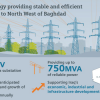
Siemens Energy and the Iraqi Ministry of Electricity have signed a contract for the Al Hamudhia substation, which will provide reliable and efficient power supply to the cities of Ramadi, Fallujah, Saqlawyah, Khalediyah and surrounding areas in Al Anbar governorate, North West of Baghdad.
Located about 20 kilometers away from Ramadi city, the turnkey 400- kilovolt (kV) Al Hamudhia substation will support greater grid connectivity and allows for a higher utilization of the Al Anbar power plant's generated power, supporting anticipated energy demand growth of 10% annually.
Ammar Mohammed Kadhim, General Director of Planning and Studies Department, Iraqi Ministry of Electricity and the Head of the Japanese loan team "IQP22" projects at the Ministry, which are being financed by the Japan International Cooperation Agency (JICA), said:
"A top priority for the new government of Iraq is rebuilding the country's power infrastructure. Upgrading and strengthening the Iraqi power grid is crucial to this ambitious plan, which will ultimately support Iraq's economic, industrial and infrastructure development.
"We're already working on comprehensive grid projects across the country in collaboration with international partners, like Siemens, to deploy the most reliable and advanced technologies."
The new substation will connect up to 750 Megavolt Amperes (MVA) to the national grid, helping decrease bottlenecks and transmission losses. Construction of Al Hamudhia station is expected to start in July 2020, and is scheduled for completion in July 2022.
Mahmoud Hanafy, Senior Vice President, Transmission Solutions at Siemens Energy, Middle East, said:
"The new substation will support in providing reliable power to the homes and industries in the governorate of Al Anbar.
"Our grid technology enables more reliable, sustainable, efficient and flexible power systems. From transporting electricity from power plants to the distribution stations, all the way to the citizens, our ability to optimize flexibility and efficiency will contribute to boosting the transmission infrastructure of Iraq."
Part of the JICA's projects in Iraq, the 400-kV Al Hamudhia's scope of work includes the design, construction, equipment supply, erection, testing and commissioning and training of personnel. The project will be completed by Siemens Energy's engineers in collaboration with specialized local Iraqi subcontractors.
The company is currently building 13, 132/33-kilovolt substations as part of the Siemens Roadmap for the Electrification of Iraq. These projects aim to strengthen the country's electricity transmission and distribution network - with a particular focus on the governorate of Basra as well as the other governorates that are located in the middle and south of the country. Siemens is also supplying 35 power transformers to support the Iraqi power grid.
In April 2019, Siemens and the Government of Iraq signed an agreement to implement Phase 1 of the Roadmap, which is designed to meet the country's reconstruction and power sector goals, and includes the addition of new and highly-efficient power generation capacity, rehabilitation and upgrade of existing power plants and the expansion of transmission and distribution networks. Following Siemens Roadmap for the Electrification of Iraq agreement, 791 MW of electricity has already been added to the country's grid.
(Source: Siemens)
Posted in Construction & Engineering In Iraq, Iraq Industry & Trade News 1 Comment
Govt to graduate Students based on Half-Term Results
Posted on 25 June 2020 .
The Iraqi Cabinet held its regular meeting in Baghdad on Tuesday under the chairmanship of Prime Minister Mustafa Al-Kadhimi.
At the start of the meeting, the Prime Minister outlined the challenges facing the country in relation to Covid-19 and the Iraqi government's efforts to combat the pandemic and provide support to health institutions and medical teams.
The Prime Minister called on all Iraqis to follow the directions of the Higher Committee for Health and National Safety, and to follow official health advice for their own safety and that of all Iraqis.
The Cabinet discussed recent protests in relation to grievances to do with the Ministries of Defence, Education and Electricity. The Prime Minister directed ministers to engage in a dialogue with the protesters in order to reach realistic solutions commensurate with their demands and with the difficult challenges facing the country.
The Cabinet discussed current economic and financial challenges, and the necessary measures to encourage and promote investment in Iraq's economy as a key driver of growth and of job-creation.
Following further discussions, the Cabinet decided to:
- Allow students at stage 3 of intermediate education to progress to stage 1 of secondary education based on their half-term exam scores
- Authorise the Minister of Health and Environment to take all necessary measures to combat the coronavirus pandemic
- Consider combatting the pandemic a competency of the federal government, and falls within the general policy of the state
- Provide the necessary support to expedite the completion of hospitals in Dhi Qar and Maysan provinces
(Source: Govt of Iraq)
Posted in Healthcare, Iraq Education and Training News, Politics Comments Off on Govt to graduate Students based on Half-Term Results

KRG Council of Ministers reviews Public Expenses
Posted on 21 June 2020 .
Prime Minister Masrour Barzani on Wednesday chaired a cabinet meeting via video conference to discuss expenses and the need to adapt to the current budget while protecting public entitlements.
In the meeting attended by Deputy Prime Minister Qubad Talabani, the Council of Ministers stressed continued commitment to reducing salaries of senior officials, including those retired with high pay brackets. These meetings will continue until next Sunday.
During the meeting, the Cabinet extended the deadline to pay public water and electricity bills with 15% discount until September 1, 2020.
The Council of Ministers also debated the ongoing disputes with the federal government and agreed that a delegation will return to Baghdad next week as part of continued efforts to reach an agreement within the framework of the Iraqi constitution.
(Source: KRG)
Posted in Politics Comments Off on KRG Council of Ministers reviews Public Expenses
Iraqi Cabinet outlines Funding for Investment Projects
Posted on 18 June 2020 .
The Cabinet held its regular meeting in Baghdad on Tuesday under the chairmanship of Prime Minister Mustafa Al-Kadhimi.
At the start of the meeting, the Prime Minister thanked health teams for their sacrifices on the front line during the Covid-19 pandemic.
The Cabinet received a briefing from the Minister of Health on the latest developments and the ongoing national effort to combat the pandemic.
Following discussions, the Cabinet decided to:
- Implement a previous decision by the government to award, free of charge, plots of land for health staff who have direct contact with Covid-19 patients
- Direct the Ministry of Higher Education and Scientific Research to allocate additional places on postgraduate courses, outside its current plan for the 2020-2021 academic year, for health staff wishing to pursue further studies
The Cabinet discussed other items on its agenda, and decided to authorise the Minister of Finance to negotiate and sign loan agreements to ensure funding for several investment projects in the electricity and health sectors, as follows:
- A loan to complete a project for the Ministry of Electricity to install (8) turbine refrigeration units and (32) other refrigeration units at a cost of 70,800,000 euros from Siemens
- A loan for the installation and operation of (9) gas turbines for the Wasit power station for the amount of 36,000,000 euros from Siemens for the Ministry of Electricity, funded by Standard Chartered Bank and with a guarantee from the Swedish Export Credit Agency (EKN)
- A loan for the rehabilitation of health services infrastructure in the amount of 185,000,000 euros for the Ministry of Health funded by the German Development Bank (KFW)
- A loan for the rehabilitation of electricity infrastructure in the amount of 400,000,000 euros, for the Ministry of Electricity, funded by the German Development Bank, KFW
- A loan for the multi-annual maintenance project - the fourth stage in the amount of US$120,000,000 implemented by GE with funding from an international bank and guaranteed by UK Export Finance (UKEF)
- A loan for Babylon's 400 KV Power Plant Rehabilitation Project, in the amount of 38,000,000 euros, implemented by Sweden's ABB company, funded by JPMorgan Bank and guaranteed by the Swedish Export Credit Agency, EKN
The Cabinet also approved a draft law to ratify the agreement on air transport services between the Republic of Iraq and the United Arab Emirates, and to submit it to the Council of Representatives.
(Source: Govt of Iraq)
Posted in Iraq Industry & Trade News Comments Off on Iraqi Cabinet outlines Funding for Investment Projects

Experts Discuss IBBC's 'Iraq 2020: a Country at the Crossroads'
Posted on 17 June 2020 .
IBBC Advisory Council's discussion goes public on the white paper 'Iraq 2020: a country at the crossroads.'
Today over 300 people signed up the IBBC Advisory Council's public discussion on the white paper - Iraq 2020: a country at the crossroads, sponsored by Iraq Business News ( IBBC media partner) and in conjunction with Chatham House and IRIS at AUIS.
With a full panel of 6 advisors and commentators, including Ms Maya Gebeily of Agence-France Presse, Mr Ahmed Tabaqchali of IRIS at AUIS, and the key advisory panel members led by Professor Frank Gunter of Leigh University, Dr Renad Mansour, Fellow at Chatham House, Mr Hani Akkawi of CCC and Professor Mohammed Al-Uzri, University of Leicester University. Mr Christophe Michels, MD of IBBC chaired the discussion.
The key points were delivered by Professor Gunter, including, the necessity to provide: 1. Strong cross-party political support to GOI for its initiatives; 2. Transparency to build support and trust among the people and to stop corruption up and down the system. 3. GOI acceptance of the limits of its ability to control and centralise economic activity- and afford to make space for the Private sector.
Dr Mansour made critical points about the importance of the political economy and the requirement to listen and understand the needs of the protestors and conversely the protestors ability and requirements of government to make changes, along with the difficulty in enacting reforms while the public sector has too much invested in its continuation.
Mr Hani Akkawi, made an unmissable point about the opportunity for areas of industry to be returned to the private sectors, such as electricity, water, fertiliser and transport, that would not only raise finance, but help efficiency and productivity.
Underpinning the report are 5 key action points and a further 38 recommendations that the GoI may be able to make to address the economic crisis that faces the country, including; business deregulation, inclusion of the informal business sector into legal acceptance, ending subsidies on electricity and water production, am improved banking system with credit for private sector businesses, an anti-corruption drive and dealing with COVID-19 without jeopardising the private sector.
Please see the full webinar here
Click below to read the full paper:
Iraq 2020: a country at the crossroads - English
Iraq 2020: a country at the crossroads - Arabic
For further information please contact [email protected]
WEBINAR PARTNERS:


Posted in Investment, Iraq Industry & Trade News, Politics Comments Off on Experts Discuss IBBC's 'Iraq 2020: a Country at the Crossroads'

Swedish Company to build Power Substations in Iraq
Posted on 11 June 2020 .
By John Lee.
Linxon Sweden AB has signed a contract with the Iraqi Ministry of Electricity to build 132-KV power transmission stations in Baghdad, Kut and Diwaniya.
The contract was signed in Stockholm in the presence of the Ambassador of the Republic of Iraq in Stockholm, Mr. Ahmed Al-Kamali.
Linxon is a joint venture company set up by SNC-Lavalin and ABB to deliver turnkey electrical AC substation projects.
(Source: Iraq Ministry of Foreign Affairs)
Posted in Iraq Industry & Trade News Comments Off on Swedish Company to build Power Substations in Iraq

Tabaqchali: Making Space for the Private Sector
Posted on 06 June 2020 .
The Iraq Energy Institute (IEI) has published an interview with Dr Ahmed Tabaqchali, CIO of Asia Frontier Capital (AFC) Iraq Fund; it is re-published with permission by Iraq Business News:
In the latest instalment in our series on sustainable job creation in Iraq, we spoke to Ahmed Tabaqchali, visiting fellow at the American University of Sulaimani's Institute of Regional and International Studies (IRIS). Mr. Tabaqchali is also CIO of Asia Frontier Capital's Iraq fund and Board Member of the Credit Bank of Iraq. Additionally, he has decades of experience in finance, having also worked with the National Bank of Kuwait's investment arm.
In our last interview, we spoke with World Economic Forum contributor and distinguished economic historian Ewout Frankema, who discussed the role of the state in job creation.
This month we take a different tack and hear Mr.Tabachali's views on the role of finance and markets, Iraq's early efforts mobilizing financial technology (FINTECH) for the unbanked and kickstarting small and medium-sized enterprise (SME) growth.
AT: In terms of strategy, everything the new government will have to do has to go through parliament, including accessing foreign loans and reforming the public sector. When it comes to Iraq it is not a question of how strong the institutions are or how competent individuals are, it is a question of passing this through parliament with all of its political fragmentation, between the different pollical parties and within each party between its leadership and members, all of which makes reaching a consensus to embark on real, and thus difficult, reforms very hard. However, the scale of the crisis, brought by COVID-19 both socially and economically, might act as a catalyst for real change.
What is the current risk with having so much of the hiring in the public sector and what might be done to minimise this problem?
AT: Some things have to be done now that are comparatively easy and have been done in the past. Ad hoc measures such as freezing new hiring, cutting staff through attrition, putting a cap on benefits and letting this cascade through every department. This worked last time to a limited extent. But these changes are small scale, easily reversible and they do not solve the wider problem.
One problem is that you cannot have every ministry manage its own human resource processes, there is a need to have a central human resource structure. One course of action could be to separate benefits from salaries and link them to performance. This may sound horrendously complicated but on the public sector side, there is a little alternative. I don't subscribe to the idea that this is a crisis that will pass, it is a multi-year crisis, a lot of oil demand will come back, but I cannot see a recovery anywhere near the pre-COVID situation.
Iraq is now not only battling a difficult internal situation but a weakened global economy. We are not just talking about a major disaster in one sector only. Consider such effects on hospitality and tourism; that will affect entire countries dependent on tourism, and then consider the knock-on effect on other sectors: what does that do to worldwide aggregate demand? What does that mean to Iraq? It means that oil prices will recover but they won't be anything sustainably higher than $50 or $55. This points to the need for a complete change in mentality within the Iraqi governing elite and indeed, society at large.
Within Iraq, the government has very limited space to manoeuvre. If you look at Central Bank data on bank lending to the government and on T-Bill issuance, we survived in 2014-2017 through using reserves, via indirect monetary financing, and government bank lending. But while some of that has been paid off, CBI data as the end of November 2019 show that total domestic debt has increased to the prior crisis' peak. So, I cannot see that being repeated, not in the same way as then. This time, I struggle to see the state banks' lending beyond a few billion. The reserves are there but not un-limited and then there are conditionality constraints on any upcoming IMF loans. So, there will be no waiting out this crisis, there has to be decisive reform.
What danger is there to the SME sector, in terms of constrained available credit from banks, given this lending is important for start-ups?
AT: For the private sector banks, if you look at the end of 2018's data, there is something like a $9 bn deposit base, 70% of which is in current accounts, so they can't lend more than one-third of this, maximum. So, you can't look to the private sector for state loans. That leaves the state banks, and they are so undercapitalized, burdened by un-resolved legacies of the prior regime, they function by a miracle or by pushing the accounting rules' envelope. For example, you have an asset that is no longer a creditworthy asset, but you leave it on the books without making realistic downward adjustments to its value and without taking sufficient provisions. So that room for manoeuvre is very limited. Iraq has the foreign deposits at the Ministry of Finance, there is about $6bn there so there are some available funds here and there to meet immediate needs, but how far will you go with that? The need for the state to access domestic debt will eventually place restrictions on available funds for the SME sector.
Iraq is sliding towards a danger zone, a crunch point with foreign reserves where there is a risk of currency devaluation.
AT: Yes. And one problem here is that the last government, to appease the October demonstrations, hired additional employees and lowered the retirement age, adding at least another $6bn to the salary and pensions outlay which is now baked into the current budget. So, the $44bn in salaries and pensions in 2019, is more like $50bn for 2020. Similarly, the $73 bn spent on current expenditures, which also includes transfers to SOE's, social security and subsidies for fuel and energy, is now more like $80 bn in current expenditures. How much can you cut from that without real restructuring?
So Iraq is facing an emergency situation to mobilise the private sector and there is a risk state banks may have limited room for lending to SMEs. One thing Iraq can do perhaps is maximise export finance and partnerships with foreign banks for SME lending, such as the recent scheme with Commerzbank. And of course, the Iraqi government has its own fund for this, the One Trillion Dinars initiative.
AT: There is no doubt that these initiatives are vital for new business ventures. The issue is structural impediments that are limiting these schemes. Access to finance is very crucial for start-ups to work, but in order for these organizations to operate you need to remove the stifling regulatory environment. The arbitrary nature of taxes, the expenses involved in just setting up and the many bureaucratic steps required to get started. So at the moment many of these start-ups are informal. The only way for these schemes to work is for them to start in the informal sector.
But they can't make the transition to formality because the process to attain that status is so complicated and expensive, to start and to maintain. We always talk of mobilizing the private sector, but we are throttling it on a daily basis. Look at the UAE for example, they have the Free Zones, a very low time required for company registration, but with Iraq it is a stifling number of procedures.
The solution as far as the Iraqi government are concerned sadly seems to be another level of bureaucracy. In order to mobilise more start-ups, the government following the October demonstrations allowed for 18-35-year-olds to have fast-track separate set of regulations for start-ups in certain industries. So, the same bureaucracy will handle two parallel categories. You open up the door for even more corruption with more bureaucracy.
Every country, of course, has bureaucracy. But we have absurd requirements on top of the usual. Even just very small things, like paying a bill, can be a nightmare. And this is the legacy of formal socialism.
You are saying that in Iraq, socialism is not simply a term to be used as a political label, it is a word that is formally used in laws that are still on the books from decades ago.
AT: That's right. So what Iraq needs is a change in the political economy. Look at the informal sector -it is mostly in retail, such as hawking goods, and in hospitality such as restaurants, and not in productive sectors. It's informal because it is so expensive to start up formally. Change the regulations so it is more like the UAE, give them a year's amnesty before you implement a much easier, formal registration process. These businesses hide because the only way they can operate is by bribing various officials. An amnesty would free them from harassments and un-necessary expenses during the transition to sensible regulations. The government needs to do something that is drastic, and very different from the past, to mobilise the private sector.
You can't have a top-heavy, authoritarian socialist bureaucracy creating jobs or opening up the private sector. During the Kuwait conference, Iraq's National Investment Commission came up with the One-Stop-Shop initiative - more bureaucracy on top of the bureaucracy. Why not follow the Kurdish Region of Iraq's approach? Just get a visa on arrival for certain nationalities. That is the direction we need to be going in.
There has been a growing relationship between telecoms and banks in Iraq to provide services such as mobile wallets. Some of it is Iraqi initiative, some of it is fostered by development agencies. Perhaps one danger now is that if public sector payments are digitized, the salaries are still in jeopardy. How important have these FINTECH developments been?
AT: This is where we will see a lot of growth and excitement. One barrier to further progress is not technological. We have decent internet so the issue is firstly, we need to increase the number of areas where these innovations can be used. Right now they are quite limited. I am thinking of using a mobile e-wallet but I have to go to an official shop in town and register, supply the required set of documentation, and once you use it, the places you can use it in are rather limited. A part of the potential in this technology is that it will make it difficult to cover up small scale corruption, which is easy with cash. But there is still a chicken and egg situation in terms of outlets where e-wallets can be used.
So we could say in the long run, the public demand for convenience may crowd out the demand for corruption?
AT: Yes, and in the long run, it can have a huge effect on the "unbanked" and that will have huge potential for job creation. I have some relatives in government who started receiving their salaries through their banks, and their usage followed the same patterns seen by those in the private sector who were provided with Bank cards as I learned from speaking to bankers. At the beginning where there was an ATM when salaries were dispersed the ATM would just empty as people used it as a cash-out outlet. But in time they started leaving money in the bank and starting using the cards for making purchases. So, the cards have been extremely useful in the transition away from cash.
Similarly, for the government's initiative when the card/ e-wallets were linked to a Mastercard, people started keeping some funds on the card. In the process they were creating deposits, giving the bank the ability to lend as these deposits grow and become sticky. So, there is convenience and value there, and that could spark wider financial development. But there needs to be a bigger deposit insurance scheme in banks, more than the very small $25,000-dollar limit recently introduced. But in the long term, this is extremely exciting. And these are the reforms that need to be pushed, and they should be COVID-inspired reforms because this is how Iraq gets out of its nightmare.
Would you say then, this is not about what the government needs to do but in some ways, about what the government should not do?
AT: I agree although of course there is a vital role for the government in general. The government should ensure there are law and order. Without that, a business cannot run, they need reliable mechanisms of exchange, debt and credit, and the enforcement of contracts. That is only done through law and order. It doesn't have to copy a Western model either, but what is needed is the monopoly of violence by the state, and its monopoly to enforce the law, i.e. when rules of the game are predictable, enforceable, and applicable to all. Other competencies of the government are in infrastructure. Roads and electricity are enablers, as well as education and healthcare. Healthcare is a great equalizer, at least with decent healthcare you are helping the most vulnerable, and in the process building the state's legitimacy. And if the government focuses on these and opens up the private sector, it will flourish.
(Source: IEI)
Posted in Investment Comments Off on Tabaqchali: Making Space for the Private Sector
Iraq Signs 2-Year Electricity Import Deal with Iran
Posted on 04 June 2020 .
Iran signed an agreement on exports of electricity to neighboring Iraq, covering 2020 and 2021.
The two sides signed the agreement during a visit to Baghdad by Iran's Minister of Energy Reza Ardakanian, stressing their determination to broaden cooperation in the energy sector, despite American pressure on the Iraqi government to reduce economic ties with its neighbor.
Ardakanian in an interview highlighted the achievements of his one-day visit to Baghdad, where he signed the contract with the Iraqi Electricity Ministry.
The new agreement, he said, covers 2020 and 2021, while the previous deals had lasted for one-year periods.
He said Baghdad paid Tehran about $400 million - half of Iraq's due debts to Iran for electricity supply - thanks to the Iranian Embassy's follow-up efforts in the Iraqi capital.
The minister also noted that he discussed with Iraqi officials a three-year cooperation plan earlier signed between the countries' private sectors to reconstruct Iraq's electricity industry.
He further announced plans for a visit by Iranian technical teams to Iraq next week to pen two important agreements on reducing power grid losses and repairing electricity equipment, according to Press TV.
Heading a delegation of electricity experts, Ardakanian visited Iraq on Wednesday and held meetings with senior officials, including Prime Minister Mustafa al-Kadhimi, President Barham Salih and Electricity Minister Majid Mahdi Hantoush.
The Iraqi Prime Minister's office said in a statement that Kadhimi had, in his meeting with Ardakanian, stressed Baghdad's willingness to develop the best of relations with its neighbors.
The two sides exchanged views on cooperation opportunities in the energy sector and boosting bilateral ties between the two neighboring states, according to the statement.
Kadhimi also underlined the need for maximum efforts to resolve complicated problems gripping the region.
Separately, the Iraqi president's office released a statement on Ardakanian's meeting with Salih, saying the latter called for bilateral interactions, especially in the fields of electricity and water.
The two officials, the statement read, also explored ways to enhance bilateral relations in all sectors in line with mutual interests.
Iraq and Iran share a 1,400-kilometer-long border. Except for gas and power, Iraq depends on Iran for everything from food, fruits and vegetables to machinery and home appliances.
Iranian energy accounts for between 30 and 40 percent of the electricity consumed in Iraq.
Over the past months, Washington has been pressing Baghdad to stop buying natural gas and electricity from Tehran as part of its "maximum pressure" campaign aimed at choking off Iran's revenue.
Illegal US sanctions are preventing Iran from repatriating its money.
Last month, Iraq's former electricity minister Luay al-Khatteeb said Iran will remain a key source of energy to the Arab country for years to come until suitable alternatives materialize.
(Source: Tasnim, under Creative Commons licence)
Posted in Construction & Engineering In Iraq Comments Off on Iraq Signs 2-Year Electricity Import Deal with Iran
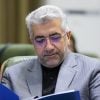
Iranian Minister in Iraq for Talks on Energy Cooperation
Posted on 03 June 2020 .
Iran's Minister of Energy Reza Ardekanian has paid a visit to Iraq for talks on energy cooperation.
During his trip to Baghdad, Ardekanian will hold talks with his new Iraqi counterpart and the other senior officials of the Arab country to weigh plans for the promotion of cooperation in the electricity industry.
The Iranian and Iraqi energy ministers are expected to discuss the expansion of Tehran-Baghdad cooperation in the energy industry, a plan to synchronize the power grids of Iran and Iraq, the training programs, and development of the electricity networks of the two neighbors.
In a ceremony in November 2019, Iran connected its national grid to Iraq.
Power cuts in Iraq have often prompted protests against the authorities. Iran supplies enough gas to power 2,500 megawatts (MW), as well as providing Iraq with 1,200 MW in direct power supplies.
(Source: Tasnim, under Creative Commons licence)
Posted in Iraq Industry & Trade News Comments Off on Iranian Minister in Iraq for Talks on Energy Cooperation