



Video: Workers Risk Health in Iraq's Gold Smelters
Posted on 13 June 2022 .
From Al Jazeera. Any opinions expressed are those of the author(s), and do not necessarily reflect the views of Iraq Business News.
Iraq's smelters: Workers risk their health for gold and silver
Decades of instability and corruption in Iraq have led to high unemployment.
That is forcing some people to resort to dangerous work to make a living - including panning for precious metals in wastewater.
Al Jazeera's Mahmoud Abdelwahed reports from the Iraqi capital Baghdad:
Posted in Healthcare, Iraq Industry & Trade News Comments Off on Video: Workers Risk Health in Iraq's Gold Smelters

Tensions Simmer on Iraqi Streets as Food Prices Rise
Posted on 12 June 2022 .
From Amwaj Media. Any opinions expressed are those of the author(s), and do not necessarily reflect the views of Iraq Business News.
Tension simmers on Iraqi street as food prices rise
Already faced with chronic issues such as persistently high unemployment and a lack of access to basic services, Iraqis are now hit by skyrocketing prices for food staples.
Observers blame the jump in prices on both the Russia-Ukraine war and endemic corruption.
The rising consumer price inflation has sparked street protests in different parts of the country.
The full report can be viewed here (registration required).
(Photo Credit: Fared Baram/ NRC)
Posted in Agriculture, Iraq Industry & Trade News, Politics Comments Off on Tensions Simmer on Iraqi Streets as Food Prices Rise

IOCs in Iraq need Oil Wealth to Trickle Down
Posted on 05 June 2022 .
From Amwaj Media. Any opinions expressed are those of the author(s), and do not necessarily reflect the views of Iraq Business News.
Why foreign oil companies in Iraq need oil wealth to trickle down
Iraq's oil wealth is among the greatest on the planet.
Total proven crude reserves are estimated at 150 billion barrels, and daily output is over 4.6 million barrels-making it the fifth-largest producer in the world.
But much of this wealth does not trickle down, and that is perhaps paradoxically particularly the case in the oil-rich south.
Posted in Iraq Oil & Gas News, Politics Comments Off on IOCs in Iraq need Oil Wealth to Trickle Down

The Economics of Iraq: Ancient Past to Distant Future
Posted on 10 May 2022 .
Iraq Business News Expert Blogger, Dr Amer K. Hirmis, has just published a book that takes readers 6000 years back to early Mesopotamian polity, culture, and religious codes which shaped the economy, and continue to shape much of the body of Iraq's polity, economy and society today.
Economic inefficiency, inequality and lack of sufficient employment are common threads that run throughout Mesopotamian/Iraqi economic history. The persistence of poverty, high unemployment, conscious discrimination against women, and a polity dictating blind allegiance and obedience from the subjects to the ruler, denied the Iraqis achieving economic development, the ultimate aim of which is the sustained improvement of the well-being of the people. Even when economic growth was attained, it was desperately non-inclusive.
With a novel approach to economic development, this book examines Iraq's economy over the past 100 years. It establishes the historical roots in the consumption patterns, nature of the producers, the economic structure, trade, monetary and fiscal policy and resource allocation. In all these areas the echoes from the ancient past are striking. The principles of Sumerian taxes are still applied in present-day Iraq.
The book proposes a set of conditions, which will need to be created for Iraq to achieve economic development and functional democracy, in the distant future.
Posted in Amer K Hirmis, Iraq Industry & Trade News, Politics Comments Off on The Economics of Iraq: Ancient Past to Distant Future

Illicit Activities, Instability in Iraq's Southern Border Area
Posted on 02 April 2022 .
By Harith Hasan, for Carnegie Middle East Center. Any opinions expressed here are those of the author(s) and do not necessarily reflect the views of Iraq Business News.
Eden Denied: Environmental Decay, Illicit Activities, and Instability in Iraq's Southern Border Area
Iraq's Basra Governorate, on the border with Iran, has endured environmental degradation due to conflict and a reduction of water flows into the Shatt al-Arab waterway.
The ensuing decline in agriculture has led to rural migration, unemployment, poverty, a flourishing of informal and illicit economies, and the growth of violent groups.
Iran's dominant influence in Iraq has sustained this situation.
Unless these problems are addressed, instability in Basra will increase and will have long-term consequences for Iraq and the Middle East.
Posted in Iraq Industry & Trade News, Iraq Public Works News, Politics, Security Comments Off on Illicit Activities, Instability in Iraq's Southern Border Area

Partnership Supports Private Sector Development in Kurdistan
Posted on 01 March 2022 .
New partnership supports private sector development in Iraq's Kurdistan Region
The United Nations Development Programme (UNDP) in Iraq and the Kurdistan Regional Government's Ministry of Planning (MoP) have today signed a new Memorandum of Understanding (MoU) that will boost the private sector by encouraging the growth of micro, small and medium enterprises (MSMEs).
The MoU provides a general framework for cooperation between the two parties to conduct a survey of MSMEs, funded with the generous support of the American people through the United States Agency for International Development (USAID) in all governorates of the Kurdistan Regional Government (KRG): Dohuk, Erbil, Halabja and Sulimaniyah.
The survey, which follows a similar survey conducted in Federal Iraq across Baghdad, Basra and Ninewa, will build a comprehensive understanding of MSME structure, development trends and operations, MSMEs a sustainable economic base in the Kurdistan Region of Iraq.
"Micro, small, and medium enterprises are the lifeblood of a healthy economy. They are also exceptionally vulnerable to risk. The U.S. Government, through USAID, is proud to contribute to this important research that sheds light on the opportunities and challenges of this critical sector and promote sustainable economic growth in the Iraqi Kurdistan Region," says USAID Mission Director to Iraq John Cardenas.
"The KRG is very grateful to USAID and UNDP for their assistance in conducting a Micro, Small and Medium Enterprises (MSMEs) Survey, which will be held for the first time throughout the Kurdistan Region. This will help identify deficiencies and provides recommendations for developing these institutions to provide job opportunities for young people in the private sector and reduce the unemployment rate, especially among young people." says Minister of Planning of KRG, Dr. Dara Rashid.
"This partnership is critical to enhancing livelihoods creation through strengthening the development of MSMEs in the Kurdistan region. We have already derived some extremely valuable insights through the Federal Iraq survey which has helped us develop a roadmap on the way forward - ensuring business owners and those thinking of starting their own business have the necessary support and encouragement they need," says Resident Representative of UNDP Iraq Zena Ali Ahmad.
"This memorandum is another testament to the excellent cooperation between UNDP Iraq and the Kurdistan Regional Government - a key partner across many of UNDP's initiatives - as well as the partnership with our generous donor, USAID. We are extremely grateful for its ongoing commitment to fostering private sector growth in both Federal Iraq and the Kurdistan Region of Iraq," she added.
(Source: UN)
Posted in Iraq Industry & Trade News Comments Off on Partnership Supports Private Sector Development in Kurdistan

Video: Prof. Frank Gunter discusses his New Book on Iraq
Posted on 20 January 2022 .
From the Iraq Britain Business Council (IBBC):
Professor Frank Gunter of Lehigh University gave a webinar on the recently published 2nd edition of his book -- 'The political economy of Iraq, restoring balance in a post-conflict Society' -- interviewed by Lizzie Porter, Senior correspondent at Iraq Oil Report, for the IBBC.
In a wide-ranging talk, the key themes that Professor Gunter articulated included three main observations, mainly the challenges and solutions to be faced, which are namely the regulatory hostility to the private sector, the growing demographic time bomb of unemployment and under-employment, especially among young people, and the issue of corruption.
Iraq is deemed by the World Bank as 172 out of 190 in difficulty of doing business and the regulatory environment and corruption. The Government of Iraq (GoI) could tackle this firstly by focusing on elementary schools to iron out its acceptability at an early stage, strengthening and consolidating the commission of integrity, as well as reducing the bureaucratic burden of decision making to businesses.
The GOI could also easily adopt the World Bank's commercial code, or that of the Emirates. Many questions and issues were aired, including the cost of corruption, and the opportunity to create a free zone to trial a new commercial code, and the establishment of a sovereign wealth fund or an Energy fund. Iraq does not have the luxury time to implement the necessary changes as the unemployment drum is beating fast, with all the attendant political and economic issues it may bring if Iraq fails to develop the private sector fast enough.
For a full view of this interesting discussion please see the video below:
Posted in Iraq Industry & Trade News, Politics Comments Off on Video: Prof. Frank Gunter discusses his New Book on Iraq
Drivers of Informality in Iraq's Labour Market
Posted on 01 December 2021 .
New Report Identifies Drivers of Informality in Iraq's Labour Market
A new diagnostic report examining the drivers of informality in Iraq's labour market highlights the multiple and wide-ranging factors contributing to informality and the burdens imposed on the formalisation of enterprises and workers in the country.
Iraq's private sector, which accounts to roughly 40 per cent to 50 per cent of employment, is mainly informal. Compared to the public sector, employment in the private sector has lower average wages, job security, benefits, and often lacks formal contracts.
Some of the barriers identified in the report include gaps in the legal framework for employment and enterprises, in terms of labour and social security coverage and protection, barriers related to the structure of the labour market and macro-economic conditions, limited awareness among workers and enterprises of their rights and obligations, and the lack of incentives by workers and employers to formalise. The report also highlights a gap in up-to-date and representative data on the labour market that can feed into decision-making processes.
The report was launched in Baghdad on Saturday (November 27), during an event which brought together key stakeholders, including representatives from the Government and social partners, UN and development partners, and civil society organisations.
"The formalisation process is a long road, which requires all of society's efforts. With all the resources, both financial and human resources in Iraq, we are confident that this will be a successful road," said Ms. Irena Vojáčková-Sollorano, UN Deputy Special Representative and Resident Coordinator and Humanitarian Coordinator for Iraq, during the event.
Findings from a second assessment examining more specifically the state of small-scale enterprises and vulnerable workers eight months into the COVID-19 pandemic were also presented, further highlighting the significant vulnerabilities resulting from high levels of informality in Iraq. It found that the vast majority of surveyed enterprises were economically and operationally affected by the pandemic and relevant containment measures, with many closing down and others being forced to adapt.
This also had a direct effect on workers themselves: indeed a significant share of surveyed workers had faced temporary or permanent unemployment, a fall in their income, and a reduction in working hours. The high level of informality entails that most of these affected enterprises and workers were not able to access government support to weather the economic impact of COVID, including due to the lack of social security coverage.
Both reports were developed in partnership between the Government, the International Labour Organization (ILO), and in collaboration with the United Nations Development Programme (UNDP), the International Organization for Migration (IOM), UN Women, the European Union (EU), the Fafo Institute for Labour and Social Research (Fafo) and the Cash and Livelihoods Consortium for Iraq (CLCI), which is comprised of the Danish Refugee Council (DRC), the International Rescue Committee (IRC), Mercy Corps, the Norwegian Refugee Council (NRC) and Oxfam.
They are part of efforts to promote a transition from the informal to the formal economy in Iraq.
"The evolving impact of the COVID-19 crisis on Iraq's labour market has highlighted the critical need to adequately address the underlying challenges faced by informal enterprises and workers in the economy," said the partners in a joint statement. "Through this collaboration, we seek to address the root causes of these challenges and find practical solutions that would pave the way for a transition to greater formality, which will ultimately lead to better working and living conditions for workers and their families."
For workers, this means providing them with adequate labour and social protection, which would involve extending legal coverage to those excluded or insufficiently covered and providing them with an adequate level of legal protection. For employers, it includes the extension of the scope of labour and social security regulation as well as laws relating to economic units, the registration of enterprises, and their compliance with legal requirements.
The report also presents a National Framework, in line with ILO's Transition from the Informal to the Formal Economy Recommendation, 2015 (No. 204).
"This report highlights the need for a National Framework for the transition to the formal economy, which provides a road map for a national strategy that would guide the Government and its partners to promote decent work and strength the formal economy," said Mr. Raed Jabbar Bahedh, Director General of the Department of Labour and Vocational Training at the Ministry of Labour and Social Affairs.
The informality diagnostic report lays out a set of recommendations to address barriers to formalization and promote the transition to formality. They focus on four key aspects, namely mainstreaming data collection on informality; strengthening governance and coordination between government ministries, agencies and programmes to promote an integrated approach to formalization; reducing barriers to formalization; and strengthening incentives to formalize, such as through providing better access to services that promote decent jobs and business development.
Posted in Employment, Iraq Industry & Trade News, Politics Comments Off on Drivers of Informality in Iraq's Labour Market
Workshop to Facilitate Job Creation in Iraq
Posted on 20 November 2021 .
Workshop: National Employment Policy to facilitate job creation and decent work in Iraq
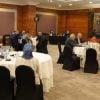
A committee, composed of government officials, social partners and other relevant stakeholders met in Amman to discuss the development of a comprehensive national employment policy for Iraq that will facilitate job creation, decent work and social protection for all workers in the country.
Organised by ILO, the week-long event brought together representatives of various ministries, including His Excellency Minister of Labour and Social Affairs, Adel Al-Rikabi. It was also attended by representatives of the General Federation of Iraqi Trade Unions and academics.
"One of our main challenges in Iraq is unemployment and the lack of clear plans to address these challenges," said Minister Al-Rikabi. "It is important to ensure not only the development of a modern policy for employment but also its implementation, based on your visions and ideas."
The event focused on the employment policy-making process; elements of a policy implementation strategy; relevant monitoring and evaluation systems and impact assessment techniques. It examined some of the major challenges facing Iraq and the role of social dialogue in improving labour market conditions and promoting decent work for all.
"The participation from multiple sectoral stakeholders and the dialogue process will be critical to ensuring national ownership of the employment policy. Having the tripartite inter-ministerial committee present with us here today is the right start," said Acting Decent Work Team Director and Senior Employment Policy Specialist at the ILO Regional Office for Arab States, Tariq Haq.
The ILO is providing technical support, including policy advice and capacity building to the Government of Iraq and its social partners across the different phases of the process; from the design and implementation to the monitoring and evaluation of the national policy. It is also working with the Central Statistical Organization and the Kurdistan Statistical Organization on the development of a national Labour Force Survey, the first to be implemented in over a decade.
The survey results will feed into the development of the national employment policy, focusing on the immediate needs of livelihoods and employment creation in addition to the longer- term structural and decent work needs of Iraq's labour market.
"The national employment policy will be based on a clear understanding of the strengths, challenges and needs of Iraq's labour market, to promote employment, especially among women and youth," said ILO Country Coordinator in Iraq, Maha Kattaa. "The national Labour Force Survey will provide the basis to formulating this employment policy."
The development of the national employment policy is part of broader efforts being implemented under the Iraq Decent Work Country Programme, in partnership between the ILO, the Government and social partners. The programme focuses on supporting private sector development and job creation; strengthening social protection and addressing child labour; and strengthening labour governance and social dialogue.
(Source: UN)
Posted in Employment Comments Off on Workshop to Facilitate Job Creation in Iraq

Expanding Basic Services to Poor Neighbourhoods in Basra
Posted on 17 September 2021 .
The European Union supports UN-Habitat to expand basic services to poor neighbourhoods in Basra City
The last 18 months have highlighted the importance of access to safe potable water, sanitation, waste management, and hygienic conditions to prevent and protect human health during disease outbreaks.
Nearly 1.8 billion people world-wide live in inadequate housing, in overcrowded conditions with lack of access to clean water. The absence of basic services leaves families with increased exposure to disease outbreaks, including COVID-19.
On 13 September, UN-Habitat, in cooperation with the European Union, brought together the Governor's Assistant for Administrative Affairs, Governor's Assistant for Labor and Social Affairs Departments and Head of DOLSA, the Head of Basra Municipality and representatives from the directorates of Water, Sewage, Planning, Physical Planning, Electricity, Labour and Social Affairs, Health and Environment to discuss upgrading under-serviced neighbourhoods in Basra city, within which some of the poorest families in Basra live as well as provide vocational training and waste management solutions.
The purpose of the meeting was to confirm two of the three neighbourhoods within which UN-Habitat will work for the coming three years. The committee has agreed on the general approach to the project and two of the three locations, Al-Ehrar and Al-Kubyah neighbourhoods, and a third will soon be identified.
Mr. Arab Al-Jabri, Governor's Assistant for Labor and Social Affairs Departments and Head of DOLSA said in his opening remarks:
"With the help of this organisation, we can find solutions for these crises, creating work opportunities, in addition to other problems. We are calling on the local authorities, and Water, Municipality, Environment, Health, to help them move forward in their aim. We wish them success in elevating the problems, most important the unemployment among the young, the housing crises, and infrastructure. We hope all Directorates respond to their needs."
In her opening remarks, Ms. Barbara Egger, Head of Cooperation for the European Union Delegation to Iraq, said:
"Through this project, the European Union is providing critical urban planning support to help the governorate of Basra, in consultation with the people of Basra, to oversee, prioritize, plan and implement priority interventions for improved service delivery and generation of employment.
"The ownership and leadership of the Basra Governorate, Basra municipality and various technical directorates is key, and we continue to count on sustained close collaboration. We look forward to the next steps in implementation and to the continued focus on sustainability and community engagement.''
UN-Habitat has worked in Basra for many years, both through normative and operational projects. In 2007, UN-Habitat supported the development and implementation of new laws, policies and programme for solid waste management.
More recently, in 2019, UN-Habitat implemented a pilot project in Al Qibla informal settlement to improve living conditions and in 2020, conducted a comprehensive urban assessment of Basra City and published the Basra Urban Profile. One of the key findings of the Basra Urban Profile shows that upgrading of basic services in Basra would considerably reduce environmental problems faced in the city.
Mr. Wael Al-Ashhab, Head of UN-Habitat Iraq, said during the meeting:
"Under this project, UN-Habitat will implement a number of activities that contributes to improve the overall living conditions and environment in Basra city. We very much look forward to working very closely with our counterparts in Basra Governorate, Municipality, and relevant Directorates and count on your support to ensure success of this very important project."
Mr. Moeen Saleh Al-Hassan, Governor's Assistant for Administrative Affairs, said at the close of the meeting:
"I reiterate my appreciate to the European Union for their time and effort and welcome any project by the European Union. We thank the European Union for working in Basra, and we will work together to ensure the success of the project."
The United Nations Human Settlements Programme (UN-Habitat) would like to thank the European Union for supporting the project titled "Increasing Access to Employment Opportunities for Vulnerable Urban Population in Basra City in Response to the COVID-19 Crisis". This project will provide support for vulnerable populations in underserviced neighbourhoods in Basra City which aim to increase access to employment opportunities in basic services and waste management sectors for unemployed youth, women and vulnerable urban population.
(Source: UN)
Posted in Iraq Public Works News Comments Off on Expanding Basic Services to Poor Neighbourhoods in Basra