


Covid-19: Iraq Extends Nationwide Curfew
Posted on 01 June 2020 .
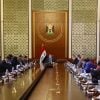
Prime Minister Mustafa Al-Kadhimi chaired on Saturday a joint meeting of the Higher Committee for Health and National Safety and the parliamentary Covid-19 crisis cell.
At the start of the meeting, the Prime Minister paid tribute to Iraq's health teams for being on the frontline during the current health emergency, and to Iraqi security forces for supporting Iraq's national effort to combat Covid-19.
The Prime Minister thanked Iraqi families for observing the curfew and complying with other restrictions during this very challenging period.
Following discussions, the joint meeting agreed a number of measures, including:
- Extending the nationwide curfew in Iraq until 06/06/2020. Grocery stores, bakeries and pharmacies are exempt, provided that no more than five customers are allowed into such premises at any one time, and that both staff and customers wear face masks
- Restaurants to remain closed, but are allowed to offer home delivery service
- All ministries will remain closed during this period, except for the ministries of Health, Electricity, Agriculture and Water Resources, as well security ministries and municipality services
- The wearing of face masks in public remains compulsory, with fines for those who fail to comply
- Domestic flights remain suspended, as are flights to and from Iraq
- The security forces are directed to strictly enforce these measures in cities and towns, and within neighbourhoods
The joint meeting underscored the importance of all citizens continuing to follow official health advice and physical distancing guidelines, and to comply with the curfew to keep themselves, their families and communities safe.
(Source: Govt of Iraq)
Posted in Healthcare, Iraq Industry & Trade News 1 Comment
Iraq pushes for Rescheduling of Reparations to Kuwait
Posted on 27 May 2020 .
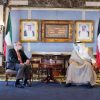
Iraq's Minister of Finance, Ali Allawi, arrived in Kuwait on Saturday for talks with senior officials.
Mr. Allawi held discussions with the Prime Minister of Kuwait, Sheikh Sabah Al-Khalid Al-Sabah, on bilateral relations and delivered a written message from Prime Minister Mustafa Al-Kadhimi.
He also held talks with the Minister of Finance, Barrak Al-Shitan, the Minister of Oil, Khaled Al-Fadhel, the Deputy Foreign minister, Khaled Al-Jarallah and other senior Kuwaiti officials.
The discussions focused on taking forward and implementing the decisions of the International Conference for the Reconstruction of Iraq held in Kuwait in February 2018, linking the electricity grids of the two countries, and rescheduling Iraq's compensation payments to Kuwait.
The two sides also discussed encouraging Kuwaiti investment in Iraq, especially in the commercial and industrial sectors, and in infrastructure.
Mr. Allawi earlier visited Saudi Arabia where he held talks with Saudi officials on deepening economic and commercial and cooperation.
(Source: Govt of Iraq)
Posted in Construction & Engineering In Iraq Comments Off on Iraq pushes for Rescheduling of Reparations to Kuwait

KRG "to Privatise Electricity Sector"
Posted on 21 May 2020 .
By John Lee.
Kurdistan's Council of Ministers has reportedly approved a proposal from the KRG's Ministry of Electricity to privatize the Region's electricity sector.
Ministry official Mohammed Ahmed told Rudaw on Wednesday:
"The government and the people will both benefit from it as it will help reduce a significant amount of stolen electricity."
(Source: Rudaw)
Posted in Investment, Iraq Industry & Trade News Comments Off on KRG "to Privatise Electricity Sector"
$33.6m from World Bank for Coronavirus Outbreak
Posted on 13 May 2020 .
In response to the COVID-19 outbreak in Iraq, the World Bank has recently approved the re-allocation of U$33.6 million under the current Emergency Operation for Development Project (EODP-US$750 million) to support the Ministry of Health's efforts in preventing, detecting, and responding to the COVID-19 pandemic.
This fast track emergency response comes in two phases. The World Bank initially mobilized US$7.8 million from resources that were immediately available under the EODP to help finance the supply of essential medical equipment and supplies and strengthen intensive care unit (ICU) capacity at public hospitals for improved COVID-19 case management.
Through cooperation with the United Nations Office for Project Services (UNOPS), ventilators, ICU beds, ECG machines, mobile X-ray machines and defibrillators will be delivered to designated sites in four to eight weeks.
In a follow-up step, the World Bank also approved the Government of Iraq's request to re-allocate an additional US$25.8 million under the project to supply additional quantities of equipment and consumables and support the training of health workers and front-line responders on their use. The expedited procurement procedures of UNOPS will ensure the timely delivery of medical supplies to the Ministry of Health.
"The pandemic is expected to particularly hit poor and vulnerable households. The World Bank stands ready to support Iraq's efforts to contain the rapid spread of the virus and strengthen the capacity of the Ministry of Health to address the additional strain the pandemic poses on the Iraqi health system," said Saroj Kumar Jha, World Bank Mashreq Regional Director.
The reallocation of funds does not affect the initial scope of the Emergency Operation for Development Project which aims to support Iraq in the reconstruction of damaged infrastructure and the restoration of public services delivery in targeted municipal areas. As a matter of fact, and through the procurement of goods, works and consulting services using World Bank's procurement and financial management regulations, over 3 million people in five governorates liberated from ISIS are already benefiting from improved health services through the rehabilitation of damaged clinics and the supply of 14 mobile clinics and 82 ambulances, restored electricity connectivity by 35%, improved key municipal services with the provision of purified drinking water and waste collection schemes, and restored access through the reconstruction of 400 km of roads and 25 critical bridges. The project is also contributing to promoting state/citizen trust-building and reconciliation through the training of 79 non-governmental organizations and over 1,000 young men and women on peaceful dialogue and reconciliation in their communities.
The Emergency Operation for Development Project was initially approved in July 2015 in the amount of US$350 million. An additional financing to the project in the amount of US$400 million was later on approved in October 2017 to allow the geographic scale-up of existing project activities to additional cities liberated from ISIS.
World Bank Group COVID-19 Response
The World Bank Group, one of the largest sources of funding and knowledge for developing countries, is taking broad, fast action to help developing countries strengthen their pandemic response. We are increasing disease surveillance, improving public health interventions, and helping the private sector continue to operate and sustain jobs. Over the next 15 months, we will be deploying up to $160 billion in financial support to help countries protect the poor and vulnerable, support businesses, and bolster economic recovery, including $50 billion of new IDA resources in grants or highly concessional terms.
(Source: World Bank)
Posted in Healthcare Comments Off on $33.6m from World Bank for Coronavirus Outbreak
US Welcomes New Iraq Govt; Extends Iran Sanctions Waiver
Posted on 07 May 2020 .
By John Lee.
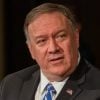
US Secretary of State Mike Pompeo (pictured) has welcomed the formation of a new government in Iraq following months of instability.
In a phone call with the new Prime Minister, Mustafa Kadhemi, he said that the US would not enforce sanctions on Iraq buying electricity from Iran for 120 days "as a display of our desire to help provide the right conditions for success".
The full statement via Spokesperson Morgan Ortagus said:
"Secretary of State Michael R. Pompeo spoke today with Iraqi Prime Minister Mustafa al-Kadhimi. Secretary Pompeo welcomed Prime Minister Kadhimi's new government, which was confirmed by the Council of Representatives.
"They discussed the urgent hard work ahead for the Iraqi government, implementing reforms, addressing COVID-19, and fighting corruption. In support of the new government the United States will move forward with a 120-day electricity waiver as a display of our desire to help provide the right conditions for success.
"The Secretary and the Prime Minister also discussed the upcoming U.S.-Iraq strategic dialogue and how they look forward to working together to provide the Iraqi people the prosperity and security they deserve."
(Source: US State Dept)
Posted in Iraq Oil & Gas News, Politics 1 Comment
Parliament Approves Kadhimi Government (Full Listing)
Posted on 07 May 2020 .
By John Lee.
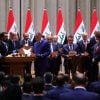
Iraq's Council of Representatives (Parliament) on Thursday approved fifteen candidates nominated by Prime Minister Mustafa Al-Kadhimi for membership of the Council of Ministers (the Cabinet).
Reuters reports that voting on the oil and foreign ministries was delayed as the parties failed to agree on candidates.
The parliament rejected Kadhimi's picks for justice, agriculture and trade; and, according to Xinhua, also rejected his nominees for culture and migration.
Members of the new Iraqi Cabinet are:
- Prime Minister and Commander-in-Chief: Mustafa Al-Kadhimi
- Minister of Defence: Juma'a Enad Saadon Khattab
- Minister of Interior: Othman Ali Farhood Musheer al-Ghanimi
- Minister of Health and Environment: Hassan Mohammed Abbas Salman
- Minister of Finance: Ali Haidar Abdulameer Abbas Allawi
- Minister of Communication: Arkan Shihab Ahmed Kadhim
- Minister of Construction and Housing: Nazineen Mohammed Wassaw Sheikh Mohammed
- Minister of Education: Ali Hameed Mukhlif
- Minister of Higher Education, Science and Technology: Nabil Khadim Abd Al-Sahib
- Minister of Electricity: Majid Mehdi Hantosh
- Minister of Industry and Minerals: Manhal Aziz Mahmoud
- Minister of Labour & Social Affairs: Adil Hashush Jabir Jassim
- Minister of Planning : Khalid Battal Najim Abdullah
- Minister of Youth and Sport: Adnan Dirjal Matar Jasim
- Minister of Transportation: Nasir Hussein Bander Hamad [Nasser Hussein Al-Shibli]
- Minister of Water Resources: Mehdi Rasheed Mehdi
Prime Minister Al-Kadhimi will submit to Parliament nominees for other Cabinet posts at a later date.
During the parliamentary session in Baghdad, the Prime Minister told MPs that the new government will create a consultative framework that brings together all blocs, parties, women organisations, the protest movement, professional bodies and trade unions so that together, Iraqis can overcome current crises and challenges.
A new programme for government
The Prime Minister also set out the key priorities of his government which include mobilising all resources to combat the coronavirus pandemic, preparing for early elections, submitting a special draft budget law to address the economic crisis, ending internal displacement in Iraq and protecting the country's sovereignty and security.
Prime Minister Al-Kadhimi called on all Iraqis to work together, saying that the challenges facing Iraq are great, but they are not greater than our ability to address them.
Click here for details of the Iraqi government programme.
(Sources: Govt of Iraq, Reuters, Xinhua)
Posted in Politics Comments Off on Parliament Approves Kadhimi Government (Full Listing)

US Renews Waiver for Iraq to Import Electricity from Iran
Posted on 28 April 2020 .
By John Lee.
Washington has renewed a waiver for Iraq to continue importing Iranian electricity, a US State Department official said.
"The Secretary granted this brief extension of the waiver to allow time for the formation of a credible government," the official said, referring to US Secretary of State Mike Pompeo, and added that the waiver would expire on May 26, according to Reuters.
Washington has repeatedly extended the exemption for Baghdad to use crucial Iranian energy supplies for its power grid, for periods of 90 or 120 days.
Earlier this month, Iraq's president named intelligence chief Mustafa al-Kadhimi as prime minister-designate, the third person tapped to lead Iraq in just 10 weeks as it struggles to replace a government that fell last year after months of deadly protests.
"Once that government is in place, the Secretary will reassess whether to renew the waiver and for how long," the US State Department official said.
The official added that the waiver applied only to electricity and referred to the Treasury Department for transactions related to Iranian natural gas imports.
Electricity Minister Luay al-Khatteeb told S&P Global Platts last week that Iraq needs three to four years to complete projects that would provide the necessary natural gas for its power stations.
(Sources: Tasnim, Reuters, S&P Global)
Posted in Iraq Oil & Gas News Comments Off on US Renews Waiver for Iraq to Import Electricity from Iran
Siemens and Partners Inaugurate Health Clinic in Baiji
Posted on 24 April 2020 .
Siemens, Lions and their partners inaugurate the rehabilitated health clinic in Baiji, Iraq
- Al-Tawheed Center in Salah ad-Din Province was renovated by Iraq's Ministry of Health
- Siemens donated advanced medical and power equipment to NGO Lions Foundation Germany to support the rehabilitation of the clinic
- Clinic is open to the public and has the capacity to treat up to 15,000 patients a year
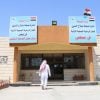
As the world continues to grapple with a global pandemic, Siemens and Siemens Healthineers, the Iraqi Ministry of Health, the Office of the Governor and the Directorate of Health in Salah ad-Din Province, and the German NGO Stiftung der Deutschen Lions (Lions Foundation Germany) inaugurated the reopening of a health clinic in Baiji, Iraq.
Iraq's Ministry of Health has repaired Al-Tawheed Center, which was damaged by Islamic State militants, and the clinic is fully renovated and equipped to provide much-needed medical care to residents of the province, approximately 200km north of Baghdad.
Siemens donated equipment including a digital x-ray, a dental treatment center, state-of-the-art laboratory equipment including a hematology blood analyzer, a power transformer and other devices to Lions Foundation Germany, which carried out the rehabilitation in cooperation with Lions Club Amman Philadelphia of Jordan. The center started accepting patients earlier this year and has the capacity to treat about 15,000 people a year.
Musab Alkateeb, CEO, Siemens in Iraq:
"Siemens has a long relationship with the city of Baiji and its people, and this clinic is a testament to our focus on delivering, together with our Iraqi and international partners, significant improvements to the country's critical infrastructure, from reliable electric power to high-quality healthcare."
After the arrival and installation of the donated equipment at PHC Baiji last year, Siemens provided training to clinic staff to use the state-of-the-art medical equipment and supporting systems. Lions will monitor usage over the next three years.
Dr. Wolf-Rüdiger Reinicke, Past Council Chair of Lions Germany, said:
"This health clinic demonstrates our commitment to the Iraqi people, and we are proud of our partnership with the Lions from Amman Philadelphia, Iraq's Ministry of Health and Siemens that helped return this important facility to the community. We were encouraged that the smart clinic was completed on schedule, and we are devoted to our role in helping it run smoothly and providing the best services possible to all residents in the area."
Siemens has been working in Baiji for almost 20 years, since the company delivered power generation turbines that helped run the country's biggest refinery, a concrete plant and thousands of homes in the province.
That power plant was also damaged, and in September, Siemens and Orascom Construction signed an agreement with Iraq's Ministry of Electricity to rebuild Baiji 1 and Baiji 2 plants in northern Iraq.
The facilities will have a combined generation capacity of 1.6 gigawatts when completed and are a major step in Siemens roadmap for rebuilding Iraq's power sector that has already added more than 700 megawatts to Iraq's grid.
(Source: Siemens)
Posted in Healthcare Comments Off on Siemens and Partners Inaugurate Health Clinic in Baiji
Iraq Reduces Energy Imports from Iran by 75%
Posted on 23 April 2020 .
From Middle East Monitor, under a Creative Commons licence. Any opinions expressed here are those of the author and do not necessarily reflect the views of Iraq Business News.
Iraq reduces energy imports from Iran by 75%
Iraq has reduced its electricity and gas imports from Iran by 75 per cent after achieving a strong level of self-sufficiency in its own energy production, Al Arab news website reported on Monday.
A spokesman for the Ministry of Electricity, Ahmed Al-Abadi, said that the current electricity production in Iraq covers most of the country's needs.
He explained that most governorates have electricity supplies all day, every day, apart from Salahuddin and Ninawa, which have power for around 20 hours per day.
Al-Abadi noted that the improvement in electricity supply is largely down to the new electricity plants coming into operation.
Iraq, he added, uses 13,400 Megawatts, of which 4,500 Megawatts used to be imported from Iran.
Posted in Iraq Oil & Gas News Comments Off on Iraq Reduces Energy Imports from Iran by 75%
Challenges facing Iraq's Next Government
Posted on 20 April 2020 .
By Dr. Layth Mahdi.
The opinions expressed are those of the author, and do not necessarily reflect the views of Iraq Business News.
America and Britain have failed in introducing democracy into Iraq because they handed power to politicians, most of whom do not have the qualification or experience to be in their positions. They are now paying the price for their mistakes.
17 years ago, Iraq was ruled by a dictator who had an agricultural, industrial, health, educational, military, and police system. Today, Iraq is a failed state with diminished local production, also experiencing domestic security and political instability.
Since 2003, all the elected government officials have been unable to address issues concerning mismanagement and corruption. They have failed to prioritize the Iraqi interests and meet the needs of its people. Likewise, the failed parliament has become hated and unwelcome by the Iraqi people because many political parties and blocs are corrupt, competing amongst each other for power. Members of parliament do not have the vision, knowledge and creditability to establish clear political, economic or social programs in rebuilding Iraq.
The popular protests that started in October of last year were a result of continued political failure and mismanagement of the country since 2003. The mass protest movement started with demands to improve social and economic conditions. Following the brutal suppression by the government the protests grew against government corruption, the constitution, control of militias and Iranian interference. As the protests gained momentum, they started to become more organized and unified amongst the provinces. The protest movements are now demanding to dissolve the parliament, form an interim government, and hold early elections with the aim of bringing about a fundamental change in the political system.
The Iraqi government made a mistake in not taking advantage of international experts working in the Provincial Reconstruction Team (PRT) and the Iraqi-American Strategic Framework Agreement (SFA) signed in 2008 to develop the Iraqi socio-economic programs.
The Iraqi politicians in power since 2003 and until now have not offered anything to future generations, and they are the least responsible for their people. They have destroyed the economy, spreading ignorance and not educating and empowering their people.
Iraq suffers from widespread and persistent corruption across all levels of government and sectors. According to the World Bank's governance indicators, from 2003 until 2013, Iraq has consistently scored in the bottom 10 percentile for control of corruption, rule of law and political stability which created successive living and economic crises for citizens. The Transparency International Organization reports that 300 billion dollars has been looted since 2003 and local Iraqi sources state that another 350 billion dollars have been mismanaged and stolen within more than 5000 projects funded between the period of 2003-2014 in the sectors of housing, health, education, roads, bridges, and electricity. The report claims most of these projects were fake and not implemented because of poor planning.
Today, Iraq needs a strong prime minister who is able to make important decisions to meet these challenges. The Prime Minister-designate Mr. Mustafa Al Kadhimi has recently been appointed to form new cabinet. To succeed in his mission, he MUST create a team with strong political and economic credentials to present radical solutions to a transitional program that includes:
- Restore the security and political stability;
- Strengthen the integrity of national sovereignty;
- Implement reform programs to fulfill the demands of the demonstrators and respond to their legitimate aspiration;
- Development of the economy and international relations.
Since 2003 the GoI has continuously failed its citizens and contributed to the deteriorating economic and security situation. The corruption and lack of security control cannot continue as the population has reached a tipping point. History has proven that the GoI cannot independently rebuild Iraq, they must collaborate with international agencies as they do not process the expertise. If Iraq continues on the same path then we can only expect a continued path towards a failed state.