


Iraq Condemns Israeli Military Action Against Iran
Posted on 13 June 2025 .
By John Lee.
The Government of Iraq has issued a strong condemnation of what it described as military aggression by Israel against the Islamic Republic of Iran, calling the act a clear violation of international law and the United Nations Charter.
A statement from Government Spokesman Basim Alawadi urged the international community to go beyond verbal condemnations and take practical, deterrent actions.
US Secretary of State, Marco Rubio, denied US involvement in the incident, saying:
"Tonight, Israel took unilateral action against Iran. We are not involved in strikes against Iran and our top priority is protecting American forces in the region. Israel advised us that they believe this action was necessary for its self-defense. President Trump and the Administration have taken all necessary steps to protect our forces and remain in close contact with our regional partners. Let me be clear: Iran should not target U.S. interests or personnel."
On Wednesday, the US Department of State ordered the departure of non-emergency government personnel from its embassy in Baghdad, citing "heightened regional tensions."
Full statement from the Media Office of the Prime Minister:
The Government of the Republic of Iraq strongly condemns the military aggression launched by the Zionist entity against the territory of the Islamic Republic of Iran. This act represents a blatant violation of the fundamental principles of international law and the Charter of the United Nations, and constitutes a serious threat to international peace and security, particularly as it occurred during the ongoing negotiations between the United States and Iran.
The international community must not remain a bystander in the face of this flagrant breach of international law. Invoking the use of force to impose new realities poses a serious threat to the foundations of the modern international order.
The Iraqi government stresses that mere statements of condemnation are no longer sufficient. The international position must be translated into practical and deterrent actions.
Accordingly, the Government of Iraq calls on the United Nations Security Council to convene immediately and take firm and tangible measures to deter this aggression, prevent its recurrence, and restore the authority of the international legal order. Should existing mechanisms prove incapable of fulfilling this role, the international community must begin a serious dialogue on developing alternative frameworks that ensure accountability, enforce justice, and safeguard global peace.
The Iraqi government reaffirms its unwavering commitment to the principles of sovereignty, non-use of force, and the peaceful resolution of disputes. It also expresses its solidarity with the Iranian people and with all peoples and nations who believe in a just international order based on respect for rules rather than their violation, and on the rule of law, not the law of the jungle.
Basim Alawadi
Iraqi Government Spokesman
June 13, 2025
(Sources: PMO, US State Department)
Posted in Security Comments Off on Iraq Condemns Israeli Military Action Against Iran
Iraqi Oil and the Iran Threat Network
Posted on 04 May 2025 .
By Michael Knights, for the Combating Terrorism Center (CTC) at West Point. Any opinions expressed are those of the author(s), and do not necessarily reflect the views of Iraq Business News.
Iraqi Oil and the Iran Threat Network
Iran-backed terrorist groups and militias are developing significant new strands of threat financing using Iraq's oil sector, which combine to provide billions of dollars of illicit value each year.
Iraq is thus emerging as Iran's best bet for neutering the Trump administration's renewed maximum pressure campaign.
Click here to read the full report.
To browse our comprehensive library of reports on Iraq, click here.
Posted in Iraq Oil & Gas News, Politics, Security Comments Off on Iraqi Oil and the Iran Threat Network
100 Days of Trump: What it means for Iraq
Posted on 30 April 2025 .
By Padraig O'Hannelly.
As Donald Trump completes his first 100 days in as US President, what effect have his policies had on the Iraqi economy?
Firstly, it's worth noting that the main implications of Trump's policies for Iraq have been the indirect results of decisions not directly targeted at Iraq. Increased tariffs and the resultant drop in oil prices, the slashing of foreign aid across the board, and Trump's 'maximum pressure' policy towards Iran have been the three biggest consequences for Iraq since the change of regime in Washington on 20th January.
Tariffs and Oil Prices
While the United States applied an additional duty rate of 39 percent to imports from Iraq from 5th April, as part of its wider 'reciprocal tariffs' (sic) policy, the new rate does not apply to US imports of oil, which account for almost all of Iraq's exports to the US.
However, Trump's approach to tariffs in general, combined with his unpredictable nature, has led to fears of a significant slow-down in international trade, and undermined the confidence of investors and consumers worldwide. As a result, the price of Brent crude has fallen from around $75 at the start of the month to $65 today; in mid-2024 it was as high as $85.
These drops imply reduced oil revenue for Iraq. Iraq's National Development Plan 2024-2028, launched last summer, but withheld from the public until late December, assumes a price of $74 this year, for example.
 (Source: National Development Plan 2024-2028)
But as our Expert Blogger Ahmed Tabaqchali notes, Iraq has the capacity to support its spending plans by selling government debt, and this in turn can help develop the country's bond market, contributing to the evolution of the capital markets in Iraq. So while reduced oil revenue is a negative for Iraq, many expect short-to-medium-term development to continue as planned.
Foreign Aid
By some estimates, more than half of the humanitarian plans in Iraq were funded by the United States, so it should be no surprise that Trump's freezing of foreign aid and shutting down of the United States Agency for International Development (USAID) would have a major impact on a wide range of valuable initiatives throughout the country.
According to the Washington-based Enabling Peace in Iraq Center (EPIC), "in fiscal year 2023, U.S. assistance to Iraq amounted to $592.7 million." It says the halt in funding and the stop-work order for USAID has already disrupted lifesaving programs in Iraq.
Our Tenders page on Iraq Business News has seen only a small drop in activity, as many international NGOs have been able to continue with their work, but many programs have been cancelled or scaled back.
Sanctions on Iran
The removal of Iraq's waiver from US sanctions on Iranian energy imports has created immediate economic strain, but it has also accelerated efforts to reduce dependence on Iran. The sudden change of policy risks widespread blackouts, particularly during the extremely hot summer months, but it should also be noted that Iran was already expected to have difficulty supplying Iraq this summer, as it struggles to meet domestic energy demand.
To mitigate the effects of this decision, Iraq has prioritised alternative supply projects, including a gas deal with Turkmenistan, increased electricity imports from Turkiye, and the creation of a floating platform for LNG imports. Iraq also plans to have completely stopped the flaring of associated gas by early-2028.
While the cancellation of the waiver will undoubtedly cause hardship over the coming months, the import of gas and electricity from Iran was always regarded as a temporary solution, and pulling forward projects to replace Iranian supply could be considered a worthwhile investment.
Trump withdrew the US from the Joint Comprehensive Plan of Action (JCPOA) in 2018. Discussions continue regarding a possible new deal between US and Iran, and the final shape of any such deal will have implications for Iraq's economy and politics.
Iraqi dinar
Finally, for the benefit of those who've bought Iraqi dinars (IQD) in the hope of stratospheric upward revaluations, it should be mentioned that has, of course, not happened.
There has been a noticeable increase in interest in this "dinar RV" theory since Trump was elected in November, but not a shred of evidence to support the idea, and no indication from the President that he has any interest in the topic.
In an entirely unscientific online survey we ran in January, more than half of respondents said they expected the Iraqi dinar to revalue by at least 1,000x in the first 100 days of Trump's term, as if this was something that the President could magically bring about, even if he wanted to.
Doubtless the adherents to this theory will find a way to explain why it has not happened as they hoped, consider it a 'delay', and focus on some future timeframe when their faith will be rewarded.
© Iraq Business News
Posted in Investment, Iraq Industry & Trade News, Politics 1 Comment

US Firm to Pay $21m for Inflated Charges on Iraq Contract
Posted on 14 April 2025 .
By John Lee.
DynCorp International LLC has agreed to pay $21 million to settle allegations under the False Claims Act that it knowingly submitted inflated subcontractor costs to the U.S. State Department while delivering services under the "CIVPOL" contract, which was intended to train Iraq's civilian police forces.
The lawsuit, filed in 2016, accused DynCorp of passing excessive and unsubstantiated charges for lodging, security, translation, and logistics services from one of its subcontractors onto the U.S. government. The company, which was headquartered in Irving, Texas, and Falls Church, Virginia, was acquired by Amentum in 2020.
U.S. authorities said the settlement underscores a zero-tolerance stance toward fraud by federal contractors, particularly in conflict environments. The resolution follows a coordinated investigation by the Department of Justice, the U.S. Attorney's Office for the District of Columbia, and the U.S. Department of State's Office of Inspector General.
DynCorp did not admit liability, and the allegations remain unproven.
Full statement from US Department of Justice:
DynCorp International LLC (DynCorp) has agreed to pay $21 million to resolve False Claims Act allegations that it knowingly submitted inflated subcontractor charges under a State Department contract to train Iraqi police forces, known as the "CIVPOL" contract. DynCorp was a government contractor headquartered in Irving, Texas, and Falls Church, Virginia. Amentum, another government contractor with headquarters in Chantilly, Virginia, purchased DynCorp in November 2020.
The State Department awarded the CIVPOL contract to DynCorp in April 2004 to provide training for civilian police forces in Iraq. DynCorp was also tasked with supplying support for this effort, such as lodging for contractor personnel and various labor services. In a lawsuit filed in July 2016, the United States alleged that one of DynCorp's main CIVPOL subcontractors charged excessive, uncompetitive, and unsubstantiated rates for hotel lodging and guard, translator, driver, and supervisor services, and that DynCorp, contrary to its obligations as a government prime contractor, knowingly passed on those charges to the State Department for reimbursement.
"Federal contractors have a duty be fair and honest when doing business with the government," said Principal Deputy Assistant Attorney General Yaakov Roth of the Department of Justice's Civil Division. "The Department will not tolerate those who use times of conflict and strife to enrich themselves at the expense of the American people."
"As the Trump Administration zeroes in on fraud, waste, and abuse, this office will continue to seek settlements with outside entities that are taking advantage of their U.S. government contract by either not providing what they promised or misusing the funds in other ways," said Interim U.S. Attorney Edward Martin Jr. for the District of Columbia. "This contractor was supposed to train civilian police forces to help the State Department provide some stability for a strategic partner. When you are given a government contract, you are taking money from the American people and this office will make certain you deliver on your promises."
"State Department contractors and subcontractors have a unique opportunity to serve their country and contribute to the safety and security of Americans across the globe," said Assistant Inspector General Robert J. Smolich for Investigations at the Department of State Office of Inspector General. "Today's settlement sends a clear message that those who seek to exploit State Department contracts in order to defraud American taxpayers will be held accountable for their actions."
The resolution obtained in this matter was the result of an effort by the Civil Division's Commercial Litigation Branch, Fraud Section, the U.S. Attorney's Office for the District of Columbia, and the U.S. Department of State's Office of Inspector General.
Trial Attorneys Ben Young and Jeff McSorley and Assistant U.S. Attorney Darrell Valdez for the District of Columbia represented the United States in this matter.
The case is captioned United States v. DynCorp International LLC, Case No. 1:16-cv-01473 (D.D.C.).
The claims resolved by the settlement are allegations only and there has been no determination of liability.
(Source: US DoJ)
Posted in Iraq Industry & Trade News, Security Comments Off on US Firm to Pay $21m for Inflated Charges on Iraq Contract
Knights: "The Danger of Letting Iraq's PMF Authority Law Pass"
Posted on 12 April 2025 .
By Michael Knights, for the Washington Institute for Near East Policy. Any opinions expressed are those of the author(s), and do not necessarily reflect the views of Iraq Business News.
The Danger of Letting Iraq's PMF Authority Law Pass
The Trump administration needs to quietly but firmly signal Baghdad that enshrining the militia umbrella group as a de facto "Iraqi IRGC" would pose an unacceptable threat to U.S. interests.
Posted in Politics, Security Comments Off on Knights: "The Danger of Letting Iraq's PMF Authority Law Pass"
Despite Tariffs, US brings largest Trade Delegation to Iraq
Posted on 09 April 2025 .
By John Lee.
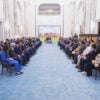
Prime Minister Mohammed S. Al-Sudani received a delegation from the U.S. Chamber of Commerce on Wednesday, including American investors and corporate executives, accompanied by the U.S. Chargé d'Affaires in Iraq.
The meeting focused on strengthening economic ties and promoting Iraq as an attractive destination for foreign investment.
The Prime Minister outlined steps taken by the Iraqi government to facilitate business entry, noting the country's broad and diverse market, legal reforms, and investment incentives. He emphasised Iraq's stability, skilled labour force, and ongoing development across various sectors.
According to a statement from the US Embassy, almost 60 U.S. companies are part of the delegation, aiming to. "strengthen U.S.-Iraq private sector ties and foster fair and balanced trade between the U.S. and Iraq."
The U.S. Chamber and the Federation of Iraqi Chambers of Commerce earlier signed a memorandum of understanding (MoU) to "strengthen ties between the US and Iraqi private sectors." It added: "This partnership will foster long-term economic collaboration."
Last week, the US imposed additional tariffs of 39 percent on imports from Iraq (excluding oil).
Full statement from the Media Office of the Prime Minister:
Prime Minister Mohammed S. Al-Sudani Welcomes a Delegation from the U.S. Chamber of Commerce
Prime Minister Mohammed S. Al-Sudani welcomed today, Wednesday, a large delegation from the U.S. Chamber of Commerce, which included a number of corporate executives and American investors, in the presence of the U.S. Chargé d'Affaires in Iraq.
The Prime Minister reviewed the facilitations and measures taken by the government to support the entry of businesspeople and companies into the Iraqi market, which now holds numerous promising opportunities. He noted that Iraq offers a broad and diversified market for various goods, products, and services.
Prime Minister Al-Sudani emphasized that the Iraqi people have made significant achievements in defeating terrorism and laying the foundations for national development. He stressed the importance of maintaining and strengthening bilateral relations with the United States, particularly since Iraq today stands as a distinguished democratic model in the region.
Key highlights from the Prime Minister's remarks:
- Due to the war in the 1980s, the sanctions in the 1990s, and the fight against terrorism over the past two decades, development in Iraq has been delayed across all sectors.
- Iraq is a fertile ground for investment opportunities in all fields.
- The country today enjoys political, security, societal, and economic stability, and is witnessing an unprecedented development boom.
- Iraq has a skilled labor force and promising expertise across various fields.
- The government has worked to improve the business environment and made serious efforts to reform laws to facilitate company registration and operations.
- Iraq's investment law offers numerous incentives to investors, and the government is working on a legislative package to further encourage foreign investment.
- Iraq's trade balance is not in deficit, but structural reforms are needed to reduce reliance on oil.
- Iraq is an industrial and agricultural nation and represents the shortest commercial route between East and West, connecting to Europe through Türkiye.
- The Development Road Project will become the shortest and most cost-effective economic corridor linking Asia and Europe.
- Iraq possesses untapped mineral wealth and ranks first globally in sulfur reserves and second in phosphate reserves.
- Iraq produces 4 million barrels of oil per day, but flares associated gas while simultaneously importing gas to power electricity stations.
- The government has set a vision for strategic projects and signed contracts with international companies to stop gas flaring by early 2028.
- Iraq ranks among the top ten countries in the world in natural gas reserves.
- Some portray a negative image of Iraq, which is not only unfair but also inaccurate.
- Iraq has welcomed numerous investment companies to carry out projects in energy, housing, industry, and agriculture, with the total value of investment licenses reaching $88 billion.
- Sovereign guarantees have been granted to the private sector to support the implementation of projects in various sectors.
(Sources: PMO, U.S. Chamber of Commerce, US Embassy in Baghdad)
Posted in Investment, Iraq Industry & Trade News Comments Off on Despite Tariffs, US brings largest Trade Delegation to Iraq

Tabaqchali: Tariffs, Oil Prices, and the Budget
Posted on 07 April 2025 .
By Ahmed Tabaqchali, Chief Strategist of AFC Iraq Fund.
Any opinions expressed are those of the author, and do not necessarily reflect the views of Iraq Business News.
Tariffs, Oil Prices, and the Budget
The market, as measured by the Rabee Securities U. S. Dollar Equity Index (RSISX USD Index), was up 1.6% for the month, and 0.2% for the year. The market continued with the process of consolidating its gains that started in December, following a blistering 35.9% rally since late August, and just as in the past two months, spent the month in a tight range of -2.3% and +1.8% around its prior month's close. While, this consolidation could continue over the next few weeks, the market's technical picture continues to be positive, and the likely consolidation or pullback should be within its multi-month uptrend (chart below).
Nevertheless, the process of consolidation could extend towards the lower band of the uptrend, due to the uncertainty over the health of the global economy following the unveiling of the U.S.'s radical tariffs on its trading partners. The tariff's direct impact on Iraq is almost zero, since oil constitutes almost all of its exports to the U.S., which are exempt from reciprocal tariffs, however, the impact will be indirect and felt through a lower oil price as a consequence of expected lower global demand for oil.
Rabee Securities U.S. Dollar Equity Index and Daily Turnover
 (Source: Iraq Stock Exchange, Rabee Securities, AFC Research, daily data as of March 27th. Note: daily turnover adjusted for block trades1)
This lower global demand for oil, was compounded by supply increases as a result of the unexpected OPEC+ announcement in the wake of the U.S.'s unveiling of tariffs, that the group will triple its planned production increase in May. The actual increase will in fact be much less as a function of over-production by some group members, and the tripling of production, so far, is planned only for May.
Nevertheless, the clear implication is that the group's planned unwinding of prior production cuts will proceed even in the face of the expected weaker demand for oil -versus the market's prior expectations that OPEC+ will delay the unwinding of production cuts when demand is weak. This might seem illogical at first sight, but it will soften the tariffs and potential counter tariffs blow to the world economy, make up for the potential loss of Iranian oil from the U.S.'s tough measures, and help in stimulating the eventual global recovery.
However, it's negative for medium-term oil prices which, as measured by Brent crude futures contracts as of April 4th, have shifted (orange line, chart below) to the lower end of a three-year range -marked on the upper end by those of supply fears following the invasion of Ukraine (red line, chart below), and on the lower end by those following the emergence from COVID-19 at the end of 2021 (grey line, chart below).
Market Expectations for Future Oil Prices
As measured by Brent Futures Contacts (USD per barrel)
 (Source: Investing.com, AFC Research, as of April 4th; U.S. Energy Information Administration (EIA), as of March 31st)
This decline in expectations for future oil prices (orange line, chart above), has negative implications for Iraq's oil export revenues which in 2025 could translate to IQD 17.3 tn (USD 13.3 bn), or 16%, in less oil revenues than in 2024.2 Notwithstanding this, it was argued here in "Market Review for 2021 and Outlook for 2022" when expectations for future oil prices at the time were at the lower of this range (grey line, chart above), that they were positive for the country's financial position in that they provide the government with the wherewithal to continue with expansionary economic policies. While prices at the upper end of the range allow for the accumulations of budget surpluses, and at the lower end require the issuance of domestic debt to fund budget deficits, yet the overarching theme was, and remains, is that over the next few years, the direction is for decreasing oil prices. Thus, as reasoned in "What Next after Two Gangbuster Years", this implies increased debt issuance to augment government spending, that will play a big role in developing the country's bond market, which, in turn, with the growth of the equity market, will contribute to the evolution of the country's capital markets.
The government is yet to submit the updated budget tables for 2025 as part of the expansionary three-year 2023-25 budget. However, the projections should be for slightly increased expenditures and decreased revenues in 2025 over 2024 in line with the changes of 2024 over 2023; and as such would lead to a deficit of Iraqi dinar (IQD) 65.0-67.0 tn (USD 50.0-51.5 bn, based on the official exchange rate of USD = IQD 1,300). However, in practice, there is a world of difference between budget projections and actual budget executions, mostly due to the historically low execution rates of investment spending and the plodding pace of the Iraqi bureaucratic machine. In both 2023 and 2024, the budget called for a deficit of around IQD 64.0 tn (USD 49.3 bn), however, the actual budget execution was vastly different. Actual deficits were significantly lower than projected, and were financed by the cash balances at the Ministry of Finance's (MoF) account at the Central of Iraq (table below).
Actual Budget Data 2022-2024
 (Notes and data sources3)
Accordingly, estimating actual budget execution for 2025 can be made by using current market projections for oil prices2, and assuming actual expenditures would be 10% higher than those for 2024, which implies a budget deficit of IQD 35.8 tn (USD 28.0 bn). This would be easily financed through the issuance of domestic debt, increasing domestic sovereign debt from IQD 83.1 tn (USD 63.9 bn) at the end 2024 up to IQD 118.9 tn (USD 91.5 bn) by the end of 2025 -a better outlook than initially estimated a few months ago, primarily due to better than expected budget performance in 2024.
The 2025 budget, like that of 2023 and 2024, should continue to support the two key dynamics driving the transformation of the Iraqi economy, and subsequently the equity market. The first is the cumulative positive effects of the relative stability that the country has enjoyed over the past few years, which created a stable and predictable macroeconomic framework for businesses and individuals to operate in and to plan for capital investments on a scale last seen in the 1970's and early 1980's before the onset of the decades of conflict. The second is the significant structural fundamental development accelerating the adoption of banking and bringing about a transformation of the sector and its role in the economy.
The equity market, as measured by the Rabee Securities U. S. Dollar Equity Index (RSISX USD Index), having surpassed its 2014 peak by 7.1% by the end of March, has the potential to rally further reflecting the powerful dynamics discussed here over the last few months. However, significant risks remain given Iraq's recent history of conflict, extreme leverage to volatile oil prices, as well as the risk that the widening of the current Middle East conflict will not be contained and evolve to destabilise the region
Notes:
- Daily market turnover is first adjusted by removing block, pre-arranged trades conducted during the special session following the regular trading session; subsequently, it is adjusted further by removing high-volume trades during regular market hours that show a pattern consistent with those of pre-arranged trades. High-volume trades are defined as those that are significantly higher than a given stock's average daily turnover; and as such are subjective. Moreover, trading volumes, and trading turnovers are used interchangeably here, and defined as the values of trading turnovers in Iraqi dinars (IQD).
- The figure is highly dependent on actual oil exports, which can vary depending on Iraq's compliance with production agreements made by OPEC+, which in turn are likely to change further in 2025 depending on evolving oil market dynamics.
- Budget data, budget specifics, and sources are based on "Iraq's 2024 budget: Not what it appears when it first meets the eye", Ahmed Tabaqchali, The Atlantic Council, November 6th, 2024. Data for budget execution for 2024 has been updated since then using actual MoF data up to November 2024 and making estimates for December 2024.
Please click here to download Ahmed Tabaqchali's full report in pdf format.
Mr Tabaqchali (@AMTabaqchali) is the Chief Strategist of the AFC Iraq Fund, and is an experienced capital markets professional with over 25 years' experience in US and MENA markets. He is a Visiting Fellow at the LSE Middle East Centre, Senior Fellow at the Institute of Regional and International Studies (IRIS), and a Senior Non-resident Fellow at the Atlantic Council.
His comments, opinions and analyses are personal views and are intended to be for informational purposes and general interest only and should not be construed as individual investment advice or a recommendation or solicitation to buy, sell or hold any fund or security or to adopt any investment strategy. It does not constitute legal or tax or investment advice. The information provided in this material is compiled from sources that are believed to be reliable, but no guarantee is made of its correctness, is rendered as at publication date and may change without notice and it is not intended as a complete analysis of every material fact regarding Iraq, the region, market or investment.
Posted in Ahmed Tabaqchali, Investment, Iraq Industry & Trade News, Iraq Oil & Gas News 1 Comment
Can Iraq's Gas Projects Survive Trump's Iran Crackdown?
Posted on 06 April 2025 .
By Simon Watkins for OilPrice.com. Any opinions expressed are those of the author(s), and do not necessarily reflect the views of Iraq Business News.
Can Iraq's Gas Projects Survive Trump's Iran Crackdown?
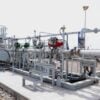
With US waivers on Iranian energy imports revoked, Iraq is under pressure to rapidly develop its own non-associated gas fields..
Posted in Iraq Oil & Gas News Comments Off on Can Iraq's Gas Projects Survive Trump's Iran Crackdown?
Trump Hits Iraq with New Tariffs
Posted on 04 April 2025 .
By John Lee.
The United States will apply an additional duty rate of 39 percent to imports from Iraq, as part of President Trump's wide-ranging new tariff regime announced on Wednesday.
The new rate, which comes into effect on Saturday, 5th April, does not apply to imports of oil, gas and refined products, according to a report from Reuters.
A statement from President Trump said:
"It is the policy of the United States to rebalance global trade flows by imposing an additional ad valorem duty on all imports from all trading partners except as otherwise provided herein ... These additional ad valorem duties shall apply until such time as I determine that the underlying conditions described above are satisfied, resolved, or mitigated."
See also:
Country-by-country list of new reciprocal tariffs
(Sources: White House, Reuters)
Posted in Iraq Industry & Trade News 1 Comment

Video: Iraq's Economy between US, Iran: Perceptions & Realities
Posted on 01 April 2025 .
By John Lee.
The London School of Economics (LSE)'s Middle East Centre has hosted a talk by Ahmed Tabaqchali, exploring the economic and financial interactions of the Iraqi economy with the outside world, particularly the use of the dollar in relation to Iran and the US.
While the US' Iraq policy is still fluid, there have been signs that America's 'maximum pressure campaign' towards Iran will have spillover effects in Iraq, with the Trump administration viewing policy towards Iraq solely through the lens of a perceived threat of Iranian dominance in the country. Iran's economic footprint in Iraq, both perceived and real, will be an issue for Iraq and its relationship with the US and the West.
According to Tabaqchali's data, in 2024 China imported about 95 percent of Iran's 1.55 mbpd of oil exports, worth $36 billion; $3bn of LPG, and $11 billion in other imports, for a total of $50 billion, using an extensive global financial web. In the same period, Iraq imported $3 billion in gas and electricity (which Iran does not receive and which are governed by waivers for humanitarian goods), and $7.7 billion of private sector imports. "So," argues Tabaqchali, "which is the lung here?"
The session, chaired by Toby Dodge, ended by a lively 40 min Q&A session.
Click here to view the full discussion.
(Source: LSE)
Posted in Iraq Banking & Finance News, Iraq Industry & Trade News, Iraq Oil & Gas News, Politics, Security Comments Off on Video: Iraq's Economy between US, Iran: Perceptions & Realities