


New Iraqi Cabinet Named
Posted on 26 October 2018 .
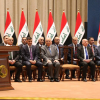
During a special session in Baghdad, Iraq’s parliament approved candidates nominated by Prime Minister Adil Abd Al-Mahdi for membership of the Iraq’s new Cabinet.
Prime Minister Adil Abd Al-Mahdi outlined to parliament the key priorities of the new Iraqi government which include the delivery of good public services, protecting Iraq’s national security and fighting extremism, boosting economic development, the reconstruction of Iraq’s towns and cities, combating corruption, protecting minorities, empowering women, and enhancing Iraq’s international standing.
Members of the new Iraqi Cabinet are:
Prime Minister and Commander-in-Chief: Adil Abd Al-Mahdi
Minister of Agriculture: Saleh al-Hassani
Minister of Communications: Naem al-Rubaie
Minister of Construction and Housing: Benkeen Rekani
Minister of Electricity: Luay al-Khatteeb
Minister of Finance: Fouad Hussein
Minister of Foreign Affairs: Mohamed Ali Alhakim [Mohammed Ali al-Hakim]
Minister of Health:Alaa al-Alwan
Minister of Labour and Social Affairs: Bassem al-Rubaie
Minister of Industry and Minerals : Saleh al-Joubouri
Minister of Oil: Thamer al-Ghadban
Minister of Trade: Mohammed Hashim
Minister of Transport: Abdullah al-Maliki [Abdullah Luaibi?]
Minister of Water Resources: Jamal al-Adilee
Minster of Youth and Sports: Ahmed al-Oubaidi
Prime Minister Adil Abd Al-Mahdi will present to parliament nominees for other Cabinet posts, and announce other appointments at a later date.
(Source: Iraqi Govt)
Posted in Iraq Oil & Gas News Comments Off on New Iraqi Cabinet Named
Iraq committed to Mitigating Climate Change
Posted on 24 October 2018 .
Iraq is committed in its efforts to achieve climate security. Mitigation efforts, employing local and international resources, that ensure food and water security are met and are a priority for the government due to them being major effects of climate change. This was stated at the stakeholders consultation on Iraq’s nationally determined contributions to the UNFCCC stakeholders’.
In Collaboration with the Ministry of Health and Environment, the United Nations Development Programme (UNDP) organized a two-day workshop attended by senior-level representatives from the Ministry of Oil, Ministry of Electricity, Ministry of Trade, Ministry of Finance, Ministry of Transportation, Ministry of Housing, Ministry of Agriculture, Ministry of Planning, Ministry of Science and Technology, Ministry of Reconstruction and Municipalities and Baghdad Mayorality. In addition to Leading and research NGOs, including the National Center for Climate Change and the Centre of Earthquake Prediction.
Deputy Minister of Health and Environment, Dr. Jassim Al Fallahi highlighted the progress on Nationally Determined Contributions (NDCs) that is critical for effective follow up of the implementation of the Climate Agreement signed at the 2015 Paris Summit. Saying: “The sacrifices of the youth that had made Iraq secure today would not be allowed to go in vain. we are committed to redoubling our reconstruction efforts that are fully sustainable. Several Ministries have lined up projects that are designed to reduce emissions from their inception”. Said Mr. Al Fallahi.
UNDP Country Director a.i, Mr. Gerado Noto, said “The collaboration and partnership amongst Iraqi institutions in the development of the NDCs is a clear signal that Iraq is serious in responding to the global call of action, for addressing the cause of climate change”. Adding that: “Environment protection is core to UNDP’s development mandate. UNDP plays a strong role in forging connections between development and environmental sustainability, for achieving the sustainable development goals”.
UNDP is also engaged in supporting Iraq by implementing the first full-size Global Environment Facility GEF project on Catalyzing the Use of Solar Photovoltaic Energy in Iraq. The objective is to reduce Green House Gas emissions, by catalyzing the application of distributed solar power, to meet the energy needs of small businesses, residences, and small-town services.
(Source: UN)
Posted in Iraq Industry & Trade News Comments Off on Iraq committed to Mitigating Climate Change

Siemens, GE must share Iraq Electricity Deal
Posted on 21 October 2018 .
By John Lee.
Both Germany's Siemens and US-based GE have signed deals with the Iraqi government on Sunday to provide major additional power generating capacity to Iraq.
Following a hotly-contested competition, the two rivals are to share the work, with GE supplying 14 Gigawatts (GW), and Siemens 11 GW.
(Sources: GE, Siemens)
Posted in Iraq Industry & Trade News Comments Off on Siemens, GE must share Iraq Electricity Deal

Petroleum Policy Proposal for the New Govt
Posted on 21 October 2018 .
By Ahmed Mousa Jiyad.
Any opinions expressed are those of the authors, and do not necessarily reflect the views of Iraq Business News.
Petroleum Policy Proposal for the New Government: Contents, Justifications and Indicators
Petroleum (oil & gas) sector remains, in the next four years as it has been in previous eight decades, the basic pillar for the Iraqi economy.
Thus, it is preferable, if not imperative and mandatory, that the next government presents coherent, well-defined policy, with clear objectives and effective means that demonstrates it serves the national interest. Based on such a policy, the government will be monitored, evaluated and hold accountable periodically according to indicators that are measurable, comparable and verifiable.
This essay aims to present a proposal for why and how the new Iraqi government should have a well-defined petroleum policy document-PPD and what such document comprises; a proposal that helps in monitoring, analysing and evaluating actions and activities of the new government in the sector-wide petroleum.
The essay covers the most important and vital issues that PPD should cover: Structure and governance of the petroleum policy; its main components and indicators (the longest and detailed part in the proposal); Federal Oil and Gas Law; National Oil Company Law; Relation with KRG; Transparency retreat in the oil sector; Corruption problems in the sector; Oil smuggling; Organic linkage between petroleum policy and the general economic and development policy of the government; and finally Futile duplication of the past.
Also the essay emphasises the important role that Iraqi petroleum experts and specialists in undertaking independent, professional and timely monitoring, analysing and evaluating of the PPD at all its phases.
The preparation of this proposal is based on continuous follow-up and use of official information, indicators and standards in the international oil industry. Emphasis was given to practical operational aspects; evidence-based approach not unrealistic assumptions or theoretical abstractions; and starting from the notion that petroleum policy constitutes an obligation to be implemented by the new government, not a guiding document or formality requirements to approve the new cabinet.
First: Petroleum Policy: structure and governing framework
None of the previous governments had or submitted specific Petroleum Policy Document-PPD; this time it must be different. So far, there seems to be a “new” political equation: the prime minister designate requested, and granted, a free-hand in forming his cabinet; in return, he will be responsible for presenting and executing his “government programme”. Both, the cabinet and the programme are subject to parliamentary approval. Hence, the government will, and should, be under scrutiny and accountable for executing the approved programme and, accordingly, its commitments regarding petroleum (oil and gas) would constitute its petroleum policy.
- It is preferable that petroleum policy be presented as a separate document- PPD in its own right (or what is usually called a White Paper) or within the government program. It may be referred to in the government program but then outlined in details later in a specific document;
- Since the government program (prepared by the executive branch) is subject to the approval of the legislature (i.e. the parliament), then PPD must be subject to the same approval process and requirements;
- The PPD should cover the activities of the three basic sub-sectors of the petroleum sector: The first includes exploration, development and production activities for oil and gas (Upstream); the second includes activities related to storage and tank farms, pipelines, pumping stations and export facilities (Midstream); the third covers crude oil refineries, gas industries and petrochemical (Downstream). It should be noted, though, that petrochemical industry falls within downstream sub-sector, but in Iraq it falls within the functions and mandate of the Ministry of Industry and Minerals-MIM not the Ministry of Oil-MoO.
- PPD should have sets of important measures and quantitative indicators or thresholds that are measurable and verifiable covering all the activities of the oil sub-sectors mentioned above in addition to descriptive indicators. This effectively means:
First, identify and quantify the baseline-indicators at the beginning of PPD implementation (e.g. first December 2018 or January 2019);
Second, targets indicators (estimated at three levels: minimum, possible and ambitious) that the government is committed to achieve on an annual basis;
Third, financial, human, institutional and legal requirements needed for realization of these goals;
Fourth, potential challenges and risk mitigation categorized on the basis of their likelihood of occurrence (high, likely and unlikely) and their impacts (very effective, moderate, not effective).
- Since the government will be hold accountable before the parliament for implementing its oil policy, this requires that both authorities should have active role and a specific task for "following-up and monitoring" the implementation of PPD at least once a year. In performing this role, the Energy Committee in the General Secretariat of the Council of Ministers is responsible for "follow-up" the implementation of the oil policy by the MoO, while Oil and Energy Committee in Parliament has the task of "monitoring/ oversight" the implementation of the Government/MoO’ PPD.
Monitoring and follow-up reports be presented, discussed and published periodically as a binding and agreed-upon coordination action between the two authorities; different from the parliamentary controversial practices known as "summons".
- The policy is to be reviewed and evaluated on the base of the indicators and thresholds already detailed in the PPD and the above-mentioned "follow-up and monitoring" reports. In case of significant failure or deviation (compared with the minimum values of the adopted indicators), this might justify or recommend a call for vote of no-confidence measures against the entire government or dismissal of the Minister of Oil.
Second: Components, Contents and Indicators of PPD
It is possible, but actually necessary and practical, to determine the most important parts of the PPD in each of the three sub-sectors of the petroleum sector; these are discussed now.
- Exploration, Development and Production (Upstream sub-sector)
In this sub-sector, PPD includes the following:
- Enact voluntary moratorium on developing any new oilfield except for the border fields (as discussed below) at least during the term of the new government. Similarly, no producing, discovered but not commercially developed or newly discovered oilfield be award to IOCs during the next four years.
The premises for such moratorium are:
- According to MoO’ official data and information, Iraq's oil production reached 4.460 million barrels per day (mbd) during August 2018 and the production capacity could exceed 5 mbd at the end of this year and could reach 8 mbd by 2025;
- As the new government is limited by four years, it can add 1.5 mbd more and thus should focus efforts to arriving at about 6.5 mbd by or before the end of its constitutional term;
- Oilfields contracted during first and second bid rounds can achieve the required increase, especially the final stages of development to reach plateau production in the contracts of those fields begins or completed during the term of the government;
- There is no indication that international oil market, OPEC market share and Iraq quota within OPEC compel Iraq to have production capacity beyond 6.5 mbd during the next four years;
- In the event that a rate above 6.5 mbd is needed, the development activities of these oilfields could be "accelerated" within the limits of 8 mbd first and then reinstate the contracted plateau production targets fully or partially as recent information indicates to such eventuality;
- Earmark any development of oilfields, not contracted before August 2016 and those discovered to date or in the future, exclusively by the National Effort-NE, but with the support of known service companies when necessary and through conventional services contracts, i.e., not through contracting IOCs or licensing rounds.
The justifications for this restriction and focus on the national efforts are:
- Most important oilfields classified as big, giant and supper giant have been already awarded to IOCs to the extent that almost 50% of Iraq (excluding KRG) proven oil reserves are now contracted to IOCs;
- National effort activities are crucial pillars for the development of human, institutional, knowledge and organizational capacities in this vital sub-sector of the Iraqi oil industry.
- Iraqi workers and staff are the backbone for executing national effort activities. Thus, expanding national effort activities could first, contribute, modestly at the start though, in address unemployment problem among young people technically qualified as evidenced by the demonstrations in southern provinces since last July; second, expedite the development of “Iraqi human capital” by extensive training to address skills and human capacity gaps;
- As claimed by the Ministry of Oil (though without providing credible and verifiable evidence) the cost of development through national effort is much less compared to those carried out by the IOCs;
- Certainly, "decision-making" is exclusively Iraqi under the national effort, while it requires "unanimity by Joint Management Committee-GMC", which include IOCs, in each field under licensing rounds;
- Location, work procedures and activities of the national effort are local, while IOCs offices are located outside Iraq. Thus, this undermines their transparency and, thus, requires extra efforts, by the Iraqi authorities, to verify the credibility and accuracy of costs claimed by IOCs. Available evidences suggest that has been a source of contentions and disagreements between MoO and IOCs, which had its bearings on the projects themselves.
- Focus on and give priority to end Associated Gas Flaring
Latest statistical information, for August 2018, from MoO indicates 60.4% of total produced associated gas was flared in the southern provinces (Basra, Maysan and Dhi Qar). As for all Iraq (excluding Kurdistan), it exceeds 56%.
Since associated gas flaring represents a blatant waste of an important economic resource in addition to the enormous environmental damage at the time Iraq imports gas from Iran, oil policy of the new government must include and ensure the follows:
- Compel IOCs contracted under second bid round to fully comply with their contractual obligations, particularly paragraphs relating exclusively to the maximum benefit from associated gas;
- No exemption of any of these companies from their contractual obligations through contracting gas matters, by MoO, to other companies outside the consortium that was originally contracted to develop these oilfields (case in point is what happened recently regarding gas in Gharraf oilfield);
Such action by MoO is highly questionable on legal and cost premises. Relieving related IOCs from their contractual obligation to treat associated gas means giving further concessions and represents a costly overstepping on Iraqi interest.
And by offering that task to another company under totally different contract with, most probably, terms favourable to the new companies would only exacerbates further losses for Iraq. Such eventuality becomes highly probable since these new contracts were negotiated and concluded behind closed doors and their texts have not been disclosed publically and transparently.
But if gas treatment were taken without the consent of the originally contracted IOCs, that could constitute a breach of contract by the MoO, which could compel the concerned contracted party i.e., IOCs to invoke the international arbitration clause that may result in substantive claim for compensation that Iraq has to pay, if warded by ICC in Paris.
- Full implementation of the instructions by the General Secretariat of the Council of Ministers on this subject as codified in Recommendation No. 51 of 2018 relating to the work-plan on the requirements of the World Bank loan in this area;
- Determine reduction threshold of associated gas flaring commensurate with the need to expedite the implementation of Iraq obligations under the World Bank initiative known as "Zero routine gas flaring by 2030”;
- Commitment of the government, especially the ministries of oil and electricity, to provide gas required to generate electricity in specific quantities and timelines (preferably on monthly base)
- Sovereign Border Fields-SBF’ development has special importance and sensitive because of the possibility for joint development through "Unitization" approach with the neighbouring countries, particularly Kuwait and Iran.
International experience tells, unitization modality has many advantages in developing these fields attributing to many rationales, economic and operational considerations and prudent management of oil reservoirs.
In anticipation of high probability of adopting unitization with neighbouring countries, oil policy document should include the following:
- Any activity relating to the development of these fields should be limited to the national effort exclusively until a unitization development agreement is reached with the concerned State i.e., Iran and Kuwait;
- In the case the concerned State accelerates the development of the border field unilaterally then Iraqi side should give priority to the development of the Iraqi side of that field;
- The Iraqi government takes the initiative in urging the neighbouring countries (especially Iran and Kuwait for the time-being) to finalize all necessary agreements for the commencement of important border fields’ actual development through the widely practiced internationally of unitization agreements.
- The last (fifth) bid round.
After a comprehensive evaluation of the contracts and results of this round by a group of well-known Iraqi oil experts, they concluded that these contracts serve the interests of foreign oil companies at the expense of the Iraqi national interest. That also contravenes the principle of achieving "the highest benefit to the Iraqi people" enshrined in the Constitution.
For the above reasons, the current government has not ratified any of these contracts and the next government should;
- Do not approve these contracts and returns them back to the MoO unratified;
- Since most of the contracts of this round relate to border fields and exploration blocks, then their development has to be considered through unitization approach.
- The government refrains from and prohibits negotiating with foreign companies and concluding agreements and contracts with them behind closed doors without transparency and without disclosing the text of these contracts. Also the next government should not ratify any of these contracts which were not ratified before October 2, 2018.
The reasons for this prohibition are:
- As the next government will be responsible for implementing its “government program”, the verification of the program implementation requires full transparency and disclosure and this is not possible when negotiations and contracts are confidential;
- It cannot be ascertained that contracts signed in secrecy achieve "the highest benefit for the Iraqi people" affirmed by the Constitution;
- International experience shows that when business contracts are concluded in secrecy or are not fully transparent, there is something important that the contracting parties want to conceal. Consequently, international evidences indicate to strong correlation between contracts’ lack of transparency and corruption;
- Since everyone recognizes the widespread corruption in Iraq, especially among leaders and decision makers at all levels, the lack of transparency in the negotiation and signing of contracts in the oil sector inevitably lead to corruption, and there are too many accusations in this area;
- Iraq has an international obligation with EITI to disclose, publish and make these contracts accessible to the concerned public to ensure that these contracts serve the interest of the citizen.
- The next government undertakes to accelerate the implementation of the long-delayed Common Seawater Supply Project (CSSP) as soon as possible, especially the first phase of the project with National Effort participation of no less than 51% in the construction work.
The justifications are based on the following:
- Since 2010 the MoO has been discussing with some international oil companies about this vital project and it is about time to commence earnest action i.e., the implementation;
- Water must be injected to sustain oil production and compensate for the decrease in the natural pressure of the reservoir. This requires the injection of large quantities of water in proportion to oil production from the concerned fields;
- Since the development of oilfields contracted under first bid round (Rumaila, West Qurna 1, Zubair and the three Maysan fields– Buzergan, Fakkah and Abu Garab) enter or complete the final development phase during the term of the next government, Iraq could in fact face very awkward situation for the following reasons: These fields constitute the backbone of oil production in Iraq. Because they have been producing for many decades, their reservoir pressure is decreasing rapidly and at high rates, which means there is urgent need for water inject. Moreover, implementation and completion of water injection project takes several years.
- The need for water injection is not confined to the above brown fields; green fields of second bid round too need such facility, especially Halfaya and West Qurna 2, Majnoon and Gharraf; the same applies to Al-Ahdab oilfield;
- For cost considerations, acquiring operational and technical experience and the possibility of implementing the project in two or more phases in the future, it is preferably involve the national efforts by no less than 51% in the execution of this project.
- Refrain from calling for renegotiation contracts of the four licensing rounds.
PPD of the new government ought to states clearly the futility of renegotiating the contracts of the first four licensing rounds. This position is based on the following arguments:
- Most specialized studies proved the service contracts of those four bid rounds give Iraq the best financial return compared to any other contracts, especially production sharing contracts-PSCs concluded by KRG;
- Any renegotiation will surely give IOCs unique opportunity to obtain further concessions that could inflict huge financial damage to Iraq's interest during the duration of the contracts;
- The former Minister of Oil, Abdul Karim Luaibi, gave significant concessions to the oil companies without Iraq getting anything in return; hence Iraq lost many powerful arguments and thus erodes its negotiating strengths;
- The final phase of developing the fields, under contracts of the first and second licensing rounds, will be commenced or completed during the period of the new government; this means reaching the beginning of the plateau production stage, which means high percentage of the capital costs for the bulk of developing these oilfields was recovered and consequently any renegotiation of these contracts or change their terms would only serve the interest of the IOCS at the expense of Iraq, a further flagrant violation of the Constitution.
- In the light of the above, the oil policy document should clearly state the preference of service contracts before PSCs, as well as asserting that any form of PSCs and revenue/profit sharing contracts contravenes the principles of the Constitution.
Such assertion implies and could leads to:
- Allow MoO to focus and devote efforts to monitor the implementation of the development of the concerned oilfields within the contractual terms and effective control of the development costs to ensure reaching the plateau production targets;
- Provide stability and certainty necessary for productive contractual relations between the IOCs and the Iraqi producing companies contracted with them;
- Block attempts to convert existing service contracts into PSCs;
- Prevents adopting or call for adopting any form of PSCs or contracts based on returns/profits sharing for the development of fields not currently contracted.
- Restrict exploration activities to National Efforts only and when necessary in cooperation with foreign companies under limited technical services contracts. This recommendation is based on the following:
- According to official statistics of the Ministry of Oil, proven oil reserves are currently stands at 153 billion barrels. If we assume that production by the end of this year is 5 million barrels per day-mbd, then reserves/production ratio is more than 84 years;
- There is very high probability that this proven reserve would increase significantly after the completion of the development phase of the oilfields under licensing rounds and the completion of exploration contracts, implying there is enough time to enhance petroleum reserves;
- The confinement of exploration activities to the national effort only constitutes very important incentive to develop technical, knowledge and technological capabilities of the Iraqi cadres rather than relying entirely on foreign companies.
- Intensify the development of Iraqi manpower, address skills gaps and expand the use of advanced information technology. Why?
- Rapid and intensive development of Iraqi human resources in various related petroleum activities is one of the most important requirements for the development of the oil industry, which suffers from many skills and knowledge gaps;
- Under the contracts of the first four licensing rounds IOCs allocate a total of $62.2 million annually (this amount has dropped to slightly now because of the withdrawal of some IOCs) for human resources capacity development. These annual funding are non-recoverable and thus must be used in full, effectively and efficiently;
- It is assumed that the use of these annual amounts to increase Iraqi staff contribution in the advanced positions and leadership in the management of these fields and also to increase the share of Iraqis working in those fields no less than 85% as established in the signed contracts;
- Finally, it is necessary to provide a detailed annual disclosure of how these funds were used, their results and actual impacts in raising and developing performance, efficiency and bridging various skills and knowledge gaps, both human and systemic in the upstream sub-sector.
II-Pipelines, Storage and Export Outlets and Installations (Midstream sub-sector)
As mentioned earlier, the development of some of the oilfields contracted under first and second licensing rounds begins or reaches the final stages, which means increase oil production towards their plateau levels; this requires further necessary capacities of pipelines, storage and locations of tanks-farms, warehouses and oil export facilities, among others.
Accordingly, PPD should state accurately and quantitatively the following indicators:
- Currently total available capacities (i.e., before the new government assumes its functions officially) for pipelines, storage and export facilities of crude oil (baseline survey indicators);
- Projects currently under construction and their timelines of completion of pipelines, storage and crude oil export facilities (baseline survey indicators);
- The target capacities committed by the new government to achieve and the timeliness of pipelines, tanks and crude oil export facilities (target indicators);
- The above target indicators should not include those located within the areal limits for the oilfields established under the contracts when such facilities are within the contractual obligations of the concerned IOCs;
For Iraq’ domestic economic development considerations, the next government should commit that no state owned company, wholly or partly, establishes, buys or owns, in whole or in part, any storage capacities outside Iraq;
For reasons of national security, the next government pledges not to privatize any of the crude oil export facilities in the Arabian Gulf and not to offer any new facilities associated with crude oil export to private investment, whether Iraqi or non-Iraqi;
The government should work to achieve "export flexibility" through multiplicity of export outlets, especially the rehabilitation and activation of Kirkuk pipeline through Turkey; through Syria- when security conditions improved and Jordan. And that the government should seriously consider feasible alternatives - both economically and strategically - to intensifying access to Asian markets by sea or by pipelines through Iran.
SOMO, Iraq’s only oil marketing company, occupies an important and critical position that goes beyond, in real terms and economic role, the oil sector to the entire Iraqi economy. Thus, petroleum policy document should include the following:
- Providing and ensuring the necessary operational flexibility for SOMO; this helps SOMO carry out its "marketing" function efficiently and effectively according to market requirements and conditions, on one hand, and the crude-mix (depending on API, sulphur content, etc.), market destination, oil lifting as per payment in kind to IOCs in relation to upstream development projects, strategic positioning, among others;
- SOMO should not involve in activities outside its primary marketing mission and function without the approval of the government and parliament. The most important of these activities are characterized by high risk or speculation or may result in losses or financial burdens or international obligations; examples of these activities are "spot trading", "hedging", " profits sharing" and "possession of physical assets e.g., storage capacities outside Iraq";
- Compel SOMO to comply with all standards and requirements of transparency and disclosure of all its activities, and to publish comprehensive monthly reports.
- Oil refining and gas processing (Downstream Sub-sector)
Refining sector and gas processing suffer from many well-known chronic problems. The new government must carefully diagnose and determine what it will do to address them in its petroleum policy document- PPD, especially since the studies and statistical information indicate large and chronic gaps between refinery configuration, i.e., the quantity and quality of domestically produced petroleum products, and local demand patterns.
Iraq has to import large quantities of petroleum products to fill supply-demand deficit caused by the outdated refineries and used technology. The most important evidence of this is the proportion of fuel oil production, which during the first half of this year accounted for 45% of the total production of Iraqi refineries. What is urgently needed should be highlighted in the PPD is a set of quantitative indicators on what the Ministry of Oil should undertake as follows:
- Specify the designed and actual operational capacities of each of the currently operating refineries and indicating the quality and quantity of all petroleum products produced therein (baseline indicators);
- Disclosing the quantity, quality and value of all exported and imported petroleum products at end of third quarter 2018 (baseline indicators);
- Determine the design capacities and expected operational capacities of the new refineries that will be constructed during the term of the government and the quality and quantity of all petroleum products to be produced by these new refineries (target indicators);
- The new government firmly commits itself to complete the construction of Kerbala refinery during the period of its mandate and give this grassroots refinery a priority to complete it as soon as possible;
- The government is committed not to offer or accept, under Refinery Investment laws, the construction of any new refinery that does not comply with the minimum standard- European standards No. 5;
- The Government shall emphatically refrain from purchasing or participating in the purchase, construction or participation in the construction of any refinery outside Iraq;
- The government undertakes not to allow any form of competition between the Ministries of Oil and Industry and Minerals in the field of petrochemical industries because this causes serious damage to the Iraqi economy and waste of efforts and financial resources (such as the case of the FAO refinery, which was offered without FEED studies and its impact on Nebras petrochemicals project). The Ministry of Oil is responsible for the refining sector while the Ministry of Industry and Minerals is concerned with the petrochemical industries;
- Terminating Maysan Investment Refinery contract, offered, suspiciously, several years ago to Satarim- a financially bankrupt non-qualified technically and non-specialized in terms of experience company. So far, no material evidence that suggest and any progress in construction of this refinery!
- Stop boring repetition of re-announcing many new refineries for investment, for which FEED studies have not been prepared (refineries such as Wasit, Diwaniyah and Muthanna); none of these had attracted any serious investors, indicating apparent lack of interest in these refineries. Therefore, the new government should not wait any further and commit itself to start the construction of at least one modern refinery of those which Iraq paid millions of dollars to many international consulting companies to prepare feasibility and FEED studies for them. Alternatively, the government should technologically upgrade some of currently operating refineries. Otherwise, Iraq will continue importing oil products, estimated at an annual cost up to three billion dollars (though the Ministry of Oil does not publish detailed and regular information on the quantities, values and sources of all imported oi products);
- Urge Basra Gas Company-BGC to accelerate the development of its production capacity to reach the level of production specified in the contract and commensurate with the increase of associated gas from oilfields, Rumaila, West Qurna 1 and Zubair. This in turn will contribute to reducing gas flaring on the one hand and increase export revenues of liquefied gas and condensates produced by BGC.
- As BGC is a joint company owned by the Iraqi government through the South Gas Company-SGC by 51% of its shares; therefore, PPD should determine BGC production capacity during the term of the new government.
- Finally, BGC should also publish information about the locally marketed products that have been exported and the revenues generated.
Third: Federal Oil and Gas Law-FOGL
There are at least four drafts for this law, all of which have become obsolete and un-implementable. Therefore, the next government has two alternatives: either abandon all existing drafts of the law or introduce a new draft law that is completely and radically different from any of the old versions of the law. If the second alternative is chosen, the 10-year experience with the above four versions suggests that this requires intensive, complex and long efforts and may do not work in the end.
Fourth: Iraqi National Oil Company-INOC Law
The appeal against this law submitted to the Federal Supreme Court-FSC by Iraqi citizens proved that the formal submissions (presented on 3 October, 2018) to FSC by the legal representatives of the Prime Minister and the Ministry of Finance confirm the unconstitutionality of many articles of INOCs law.
These formal submissions together with the appeal request may convince FSC to accept the challenge of the law, wholly or partially. Hence, the new government has two options: Either completely disregard this law or introduce a new draft law that is fundamentally and completely different from the law being contested.
But, it is rather strange, unfortunate and a move to impose a fait accompli on the next government, the cabinet decided, 9 October 2018 to nominate the current oil minister as the chairman of INOC, while the appeal is still before the FSC!! Moreover, that decision prompted the “Chairman” of INOC to issue directives on 18 October that were revoked, by him, on 20 October due to sever criticisms, by many including this writer (http://www.akhbaar.org/home/2018/10/250241.html), exposing the shallow premises of these directives and their highly possible detrimental consequences.
Fifth: The relationship with KRG
The relationship between the federal government and KRG has a long, complex and difficult history since 2003. In view of the evidence and known positions, it is expected that the new government will attempt to solve the problems related to the oil issue with the Kurdistan Regional Government, but it must also insist on preserving the supreme national interest, which was raised during the past years and still can be summarized as follows:
- The unconstitutionality and illegality of all contracts signed by KRG with many IOCs (note that this is the subject of a lawsuit filed with the FSC by the Ministry of Oil against KRG many years ago; currently waiting for experts witnesses for professional opinion)
- Restrict all oil exports to SOMO and consider any export of crude oil outside SOMO smuggling and illicit trade (this is what all previous federal governments, including the current one, have officially stated);
- SOMO should continue boycotting any company or oil tankers that transport or buy smuggled Iraqi oil through KRG (this is what SOMO has done);
- Never allow the control of KRG on any oil and gas fields that are belonging to the northern federal oil and gas companies (NOC and NGC) (and this is what was achieved after the defeat of Daesh and the restoration of control by the federal authority on Kirkuk at the end of last year);
- Not to allow KRG authorities to undertake (or conclude agreements with foreign companies for) any exploration or development activity in the shared or disputed areas (and this is a declared position of the federal government);
- The Ministry of Oil should not deal with and blacklist any foreign oil company currently or in the future involve in any exploratory or developmental activity in the Kurdish region (this prohibition is still in force despite the current oil minister violating it in favour of a UAE company for reasons that must be investigated officially);
- The Ministry of Oil should continue on its arbitration case that it submitted to the International Chamber of Commerce in Paris against the Turkish companies and government for violating international agreements signed between the two countries, especially those relating to Kirkuk-Ceyhan oil pipeline (Iraqi Oil Ministry estimates winning the lawsuit and with significant compensation award);
- Oblige KRG to fully comply with the provisions mentioned in the federal budget laws since 2004 concerning the settlement of receivables of oil export revenues and others by KRG to the Federal Ministry of Finance (as mentioned in the annual budget laws and detailed in reports by the Supreme Auditing Board);
- The demonstrations in Basra and other southern oil-producing provinces will not allow the new government giving KRG more than what it entitles on population basis and providing that KRG delivers all oil produced in the region to the federal government to be exported by SOMO (the new government should not ignore demonstrators sentiment particularly when raised a banner reading " Basra Oil for Basra”);
- Finally, Iraq cannot and should not bear all the burden of OPEC decisions when reducing production. It is assumed that Iraq's relationship with OPEC occupies important space in the oil policy of the new government.
But on the other hand, there are many factors and considerations that may lead us to believe that the new government does not implement or succeed in implementing the above tasks for the following reasons:
- The role of what is known as "weighted and influential personalities", that has good relations with Kurdish leaders, in the internal political landscape and the relationship between the two governments. For example, if Adel Abdul Mahdi becomes a Prime Minister his positions (as a friend of the Kurdish people as Massoud Barzani calls him) and his well-known views could compel him to oppose all or some of the above components of the oil policy of his government;
- Election results, held a few days ago, in the Kurdish region are still subject to disagreement and opposition, and there is considerable scepticism about their transparency and credibility, which means that their results will not be recognized and could inevitably affect both the parliament and the composition of the provincial government.
- The election of the President of the Republic of Iraq has deepened the divide and tensions within the "Kurdish House" and may push KRG (dominated and controlled by Barzani family) to harden their positions with the federal government;
- Absent transparency and the fate of oil export revenues continue to be pursued by KRG despite the "formal" reports that were issued before the elections in the region;
- KRG debt accumulation and the practices of “mortgaging” future oil sales had gradually pushed KRG into "debt trap" and KRG might use it debt as negotiation issue with the federal government;
- The improvement in international oil prices may make KRG feel it is not anymore under "financial pressure", thus reducing the need for quick resolution of outstanding issues mentioned above with the federal government.
Sixth, Transparency Shrinking in the Oil Sector
As the PPD covers many topics and includes a wide range of indicators for goals that the new government commits itself to accomplish, the document requires to adopt and determine all quantitative and descriptive standards of transparency in the extractive sub-sector and the rest of petroleum sector, which MoO must implement and comply with them fully.
The core standards of transparency are availability, accessibility, regularity, accuracy and comprehensiveness of data, information, contracts, financial flows, activities, achievements, negotiations and concluded agreements, MoUs and alike, among others.
The above should cover all entities, departments and companies of the Ministry of Oil and foreign companies contracted with, as far as it relates to projects in Iraq. Moreover, MoO is committed to follow-up the consequences of the dissemination of such information from opinions, studies and reports.
Seventh: Problems of Corruption in the Oil Sector and Oil Smuggling
It is not new to say that corruption has become a widespread and institutionalized phenomenon in Iraq and in the MoO where there is a large number of explicit or implicit accusations and sometimes even with names and sums indicating the involvement of senior officials in the Ministry. But it is rather strange to observe that no official in the ministry or its companies, who have been charged or suspected of corruption, has taken legal action against those who accused them!!
There have also been increasing cases of “stealing” oil and oil products from pipelines leading to known a phenomenon of "oil smuggling", especially in the province of Basra with the involvement of officials in such illegal activities.
Because of the negative and catastrophic effects of various forms of corruption and oil smuggling on this sector and on the national economy, PPD of the new government must take a decisive, clear and strong position to combat and eliminate these negative phenomena and identify means and indicators to assess its performance.
Eighth: The Organic Relationship Between Petroleum Policy and the Broader Economic and Development Policy of the New Government
Because the Iraqi economy is structurally dependent largely, if not entirely, on the oil sector, oil policy has an effective impact on the economic development policy of the country as a whole. Reconstruction, debt repayment and provide basic needs and services, that previous governments have failed to provide, make it imperative on the new government to coordinates and integrates fully and effectively its petroleum policy with the national development plan.
However, National Development Plan (NDP) 2018-2022 is, as its predecessors, indicative and non-binding, while the government program is binding according to which the new government will be assessed and held accountable. This practically means what matters is the details of the government program, its consistency and harmony of various policies, tools and entities responsible for implementing the program.
Ironically, the parliament has voted, recently, to create a new parliamentary “Committee for Strategic Planning”, while the government’ NDP is only indicative and without any strategic vision, let alone planning!!
Ninth: Avoid Duplication and Populism
The current government program (2014-18) on petroleum focused only on "increasing oil and gas production to improve financial sustainability" in brief very general terms without quantitative indicators that can be used to measure performance.
But the tasks of the new government should be detailed and their implementation is measured by many indicators with credible verification. Hence, the new government should avoid copy & paste the “format” of previous government programme relating to the petroleum sector.
At the same time, Iraq should not be seen as a testing ground for utopian ideas that are not well thought out and are not economically and socially feasible and move away from populist ideas and practices. The demonstrations in the southern provinces clearly indicate the gravity of the situation; deeds more are needed than word and results matter most than promises.
Tenth: The Role of Iraqi Petroleum Experts and Economists
In the light of the importance of oil policy, as outlined above, and its effective impacts on the Iraqi economy it becomes extremely important that all faithful Iraqis who are keen on preserving the interest of the country and the good use of its petroleum wealth, especially oil experts and specialists and economists, to stand together firmly and forcefully to follow-up, remain vigilant and expose all attempts to harm or compromise the interests of the Iraqi people; hard and challenging times are ahead of us, unfortunately!
* Arabic earlier version of this essay has been circulated widely and posted on many websites and e-media, http://www.akhbaar.org/home/2018/10/249826.html
Norway
21 October 2018
Mr Jiyad is an independent development consultant, scholar and Associate with the former Centre for Global Energy Studies (CGES), London. He was formerly a senior economist with the Iraq National Oil Company and Iraq’s Ministry of Oil, Chief Expert for the Council of Ministers, Director at the Ministry of Trade, and International Specialist with UN organizations in Uganda, Sudan and Jordan. He is now based in Norway (Email: mou-jiya(at)online.no, Skype ID: Ahmed Mousa Jiyad). Read more of Mr Jiyad’s biography here.
Posted in Ahmed Mousa Jiyad, Iraq Oil & Gas News 1 Comment

GE Wins 14GW Iraq Power Contract
Posted on 21 October 2018 .
GE (NYSE: GE) signed Principles of Cooperation (POC) with the Iraqi Ministry of Electricity to develop the country’s power sector.
The plan is expected to generate up to 14 gigawatts (GW) of power, create up to 65,000 direct and indirect jobs, support the government to realize savings and recoverable losses of up to $3 billion per year, establish a local technology center and support water and healthcare access.
The POC was signed by Minister Qasim Al Fahdawi, Iraq’s Minister of Electricity, and Joseph Anis, President & CEO of GE’s Power Services in Africa, South Asia and the Middle East. The comprehensive plan builds on GE’s legacy of continuous presence and commitment to bring progress to the people of Iraq over the past 50 years, and is comprised of the following key tenets:
- Supporting the path to energy security with 14 GW. As an immediate priority, GE will deploy proven fast power technologies and undertake upgrades at existing power plant sites to bring approximately 1.5 GW of additional power online by 2019 – the equivalent electricity needed to supply up to 1.5 million Iraqi homes, as well as undertake maintenance and rehabilitation services to secure the availability of another 7 GW that are currently operating. In addition, the agreement includes upgrades and services for existing power plants; the conversion of simple cycle power plants to combined cycle, which can help bring new power online without consuming additional fuel or releasing further emissions; as well as the establishment of new power plants with efficient, reliable power generation technology. Furthermore, GE will develop substations and overhead lines across the country, and a centralized energy management system covering generation, transmission and distribution. These initiatives will add up to 14 GW of power and strengthen grid connectivity.
- Realizing $3 billion in savings and recoverable losses annually. Overall, GE’s activities will help the Government realize savings and recover losses of up to $3 billion per year. Repairs, maintenance, upgrades and other services will help to reduce the operating costs of existing power plants. To further improve the transmission and distribution of power, GE will undertake comprehensive decongestion network studies, as well as advisory services to reduce collection recoverable losses. In addition, GE is offering its unique solution for integrating the capture of flared gas and power generation using GE’s advanced Gas to Power technologies. In July, Baker Hughes, a GE company signed a contract with the Iraqi Ministry of Oil for a modular natural gas plant solution for flared gas recovery in the Nassiriya and Al Gharraf oilfields.
GE will assist the Government of Iraq to unlock financing for these projects through its extensive relationships with Global Export Credit Agencies and financial institutions.
As part of the proposals included in the POC, as well as GE’s commitment to a shared future and the progress of the Iraqi people, the company also expects to:
- Build local capabilities. GE plans to establish a local Technology Center comprising of a Repairs Center, a Monitoring & Diagnostics Center and a Training Center.
- Contribute towards providing critical services to local communities. GE intends to supply three trailer-mounted mobile water treatment units to help deliver drinking water to contribute to the everyday needs of the people of Basra. The company also plans to provide neonatal intensive care equipment and advanced medical care training for nursing staff at a neonatal intensive care center to meet the need for specialized healthcare services.
Mussab Almudaris, official spokesperson of the Iraqi Ministry of Electricity, said, “Our focus is on rebuilding Iraq to provide stable, sustainable development for our people, and developing the electricity sector is a critical component of these efforts. GE’s action plan is an ideal fit for our needs, offering a holistic package that brings industry-leading technologies, financing and social services to meet our most critical immediate and long-term needs.”
Russell Stokes, President & CEO of GE Power said, “Our presence in Iraq is based on a history of trust, partnership and success that spans over 50 years. We are honored to support the government’s focus on rebuilding Iraq, and we are proud of our legacy of delivering power where needed in the country. We understand how important it is to deliver power immediately and our holistic action plan brings together advanced solutions, financing, local investments, trainings and social services that are expected to benefit families, businesses and industries across Iraq.”
GE employs up to 300 people in Iraq and has three offices in the country – in Baghdad, Basra and Erbil. Today, GE and its partner CFMI power more than 90 percent of the aircrafts operated by Iraqi Airways, the company’s technologies contribute up to 55 percent of the current electricity production in Iraq and nearly 4,000 GE Healthcare products are deployed in hospitals and clinics across the country.
(Source: GE)
Posted in Iraq Industry & Trade News Comments Off on GE Wins 14GW Iraq Power Contract
Siemens Wins 11GW Iraq Power Contract
Posted on 21 October 2018 .
Siemens in landmark MoU to repower Iraq, support economic prosperity
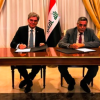
Siemens and the Ministry of Electricity of the Republic of Iraq have entered a milestone agreement to seek the implementation of the company’s roadmap for repowering Iraq. Signed by Qasim Al-Fahdawi, Minister of Electricity, and Joe Kaeser, President and CEO of Siemens AG, the Memorandum of Understanding (MoU) will examine a series of short, medium and long-term plans to meet the reconstruction goals of Iraq and support the country’s economic development.
“Our commitment to the Iraqi people stands strong. We promised them to achieve affordable and reliable power supply, help with anti-corruption, build schools and hospitals and create thousands of jobs. Education, training and developing local skills and talent are key elements for us to contribute to building the New Iraq. Today’s agreement on the Siemens roadmap is a significant step towards fulfilling that promise,” said Joe Kaeser. “We are ready to start and look forward to working closely with the Iraqi government to immediately produce noticeable improvements for the Iraqi people.”
In September, Siemens announced the donation of a smart health clinic that would be powered by solar energy and equipped with Siemens medical devices. The clinic would have the capacity to treat up to 10,000 patients per year. This was in addition to pledging to fund the first modular “School of the Future” in Iraq, provide a USD 60 million software grant for universities in the country, and train more than 1,000 Iraqis in vocational education.
Under the “Roadmap for the Electrification of the New Iraq”, Siemens is ready to add 11 gigawatts (GW) of power generation capacity over four years to ensure 23 million Iraqis across the country have reliable and sustainable electricity 24/7. This would boost current generation capacity by almost 50 percent. The economic viability of the plan is secured by billions of US dollars in potential fuel savings and revenue generation for the electricity sector, supporting the development of the future Iraq. The company also envisions the creation of tens of thousands of jobs over the course of the projects. The roadmap emphasizes people at its core – and is the result of a 12-month study to develop a comprehensive and tailored redevelopment plan. It focuses on energy, education, compliance and financing, aiming to advance sustainable economic development, national security and quality of life for the people of Iraq.
Siemens’ Iraq Roadmap outlines eight objectives to benefit the people of Iraq, the country’s national security and its economic development. These include reducing energy losses, introducing smart grids, strengthening the transmission grid, modernizing existing power plants, adding new generation capacities in deprived areas, connecting Iraq to the Arab Gulf region, putting Iraq’s national resources to work, and investing in its people.
Modernizing the country’s energy infrastructure is intended to be completed in stages, from immediate improvement for up to 300,000 people, which can be operational within three months, to medium and long-term projects that require between 10 and 24 months’ completion time and beyond. The company will also assist Iraq’s government in securing appropriate finance packages provided by international commercial banks, Export Credit Agencies and supported by the German Government.
The roadmap lays out plans to use Iraq’s valuable natural resources more efficiently by utilizing flare gas capture and treatment technologies to deliver a domestic source of fuel to Iraq’s power generation sector, as well as create a long-term source of revenue for the government to finance power generation, transmission, and distribution projects.
As part of its commitment to driving sustainable growth, Siemens intends to support social development in Iraq with a series of training and education programs. This includes technical and vocational training as well as transparency and anti-corruption education, in order to build a pool of highly skilled, local talent with a culture of compliance. Under the patronage of the German Federal Ministry for Economic Cooperation and Development (BMZ), Siemens aims to provide vocational training, starting with 1,000 young Iraqis.
Siemens initially presented the Roadmap to the Government of Iraq during the Iraq Reconstruction Conference in Kuwait, in February 2018. At the same time, the company signed a declaration of intent with BMZ with both parties agreeing to jointly contribute to the reconstruction and development of Iraq in areas including technical and vocational training, as well as transparency and anti-corruption.
(Source: Siemens)
Posted in Iraq Industry & Trade News Comments Off on Siemens Wins 11GW Iraq Power Contract
Siemens may have to share $15bn Power Deal with GE
Posted on 18 October 2018 .
By John Lee.
Germany's Siemens may have to share a $15-billion contract to supply power-generation equipment to Iraq with US rival General Electric (GE).
The Financial Times reports that although it appeared that Siemens would win the deal, the Trump administration successfully intervened on behalf of GE.
Last month German business newspaper Handelsblatt reported that Chancellor Angela Merkel had personally intervened with Prime Minister Haider al-Abadi to persuade the Iraqi Government to award the contract to Siemens.
(Source: Financial Times)
Posted in Iraq Industry & Trade News Comments Off on Siemens may have to share $15bn Power Deal with GE
Electricity Generation in Iraq -- Problems and Solutions
Posted on 14 October 2018 .
The Al-Bayan Center for Planning and Studies has just published a new report by Hayder al-Khafaji on electricity generation in Iraq:
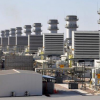
Meeting energy needs in a manner that achieves security for Iraq has become a major source of concern for the electricity sector in the country; with the industry claiming that it lacks the capacity to meet current peak demand, especially with production running at about 50% of the country’s requirements.
There is little doubt that over the coming years peak demand for electricity will greatly exceed the capacity of existing power stations. In view of the aforementioned, the need for the construction of new power stations has never been more pressing, however, it will not be without certain obstacles, most significantly the availability of fuel and other unforeseen technical problems, such as breaches of the contracts for the construction of new power stations.
Iraq’s electricity generation problems are not new. Historically, the country has suffered from severe power shortages since 1990, which were further compounded after 2003 by the unworthiness of the old power generation plants and the acts of sabotage during the intervening years.
All this culminated in prolonged power cuts lasting anything between 14-20 hours a day; forcing ordinary people to rely on private neighbourhood generators and/or small household generators, both of which have added a considerable financial burden on people.
Please click here to download the full report.
(Source: Al-Bayan Center)
Posted in Construction & Engineering In Iraq, Iraq Industry & Trade News 1 Comment
12 Projects to Improve Essential Services in Iraq
Posted on 13 October 2018 .
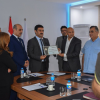
The Federal Republic of Germany, UNDP’s Iraq Crisis Response and Resilience Programme (ICRRP), along with the administrative authorities of Halabja and Sulaimaniyah Governorates and Garmiyan and Raparin Administrations today initiated 12 projects to improve essential services for an estimated 680,000 people.
The projects target critical needs in the electricity, water, roads, and sewerage sectors and provide jobs for 819 people - including host community members, Syrian refugees and IDPs.
At the ceremony to launch the projects, the Deputy Governor of Sulaimaniyah, H.E Mr. Ahmed Ali Ahmed, said:
“Today we are signing agreements with UNDP to launch infrastructure projects with a total budget of close to US $2.5 million across Sulaimaniyah Governorate and Garmiyan and Raparin Administrations. This generous support from the Federal Republic of Germany, and collaboration with UNDP, comes as the KR-I continues to suffer from a severe economic crisis that began in 2013.
"Many challenges and increased pressure due to the large number of IDPs and refugees who are settling in the Kurdistan Region will be addressed through these fundamental basic-services projects, including improved electricity, water, roads, and sewerage systems.”
The Deputy Governor of Halabja, H.E Mr. Kawa Ali Kareem, added:
“On behalf of the inhabitants of Halabja Governorate, including the IDPs, refugees and host communities, the office of Governor of Halabja expresses sincere gratitude and appreciation to the Federal Republic of Germany and UNDP’s Iraq Crisis Response and Resilience Programme (ICRRP) for supporting implementation of four important basic services projects that will improve internal roads and sewerage systems.
"Implementation of these infrastructure projects will benefit close to 107,000 community members and create over 255 temporary job opportunities in Halabja alone.”
The construction of effective wastewater and sewerage networks across Sulaimaniyah City, Qaladiza, Hajiawa and Khurmal Sub-Districts, and Hawari-New Neighbourhood in Kifri City, will reduce environmental pollution and the spread of diseases amongst vulnerable populations during periods of high rainfall. In Sulaimaniyah City, the construction of an electricity distribution network will provide regular electricity supply to hospitals, schools, and water supply stations – benefitting the whole community.
In 2018, with continuous funding from the Federal Republic of Germany, ICRRP and governorate authorities in the Kurdistan Region or Iraq have supported 28 projects benefiting over 1,240,121 host community members, IDPs and refugees and providing livelihood opportunities for 1,273 individuals.
UNDP’s Iraq Crisis Response and Resilience Programme (ICRRP) promotes the recovery and resilience of communities vulnerable to multi-dimensional shocks associated with large-scale returns and protracted displacement of Iraqis and Syrian refugees. This is achieved through a medium-term, programming integrating crisis management capacity building, rehabilitating basic service infrastructure, livelihood recovery and social cohesion.
(Source: UNDP)
Posted in Construction & Engineering In Iraq, Iraq Public Works News Comments Off on 12 Projects to Improve Essential Services in Iraq
GCC "could Export Electricity to Iraq"
Posted on 09 October 2018 .
By John Lee.
The Gulf Cooperation Council (GCC) is reportedly in discussions with Iraq to connect electricity grids.
An official at the UAE's Ministry of Energy and Industry told Reuters that the GCC could export its surplus electricity to Iraq.
(Source: Reuters)
Posted in Construction & Engineering In Iraq, Iraq Industry & Trade News Comments Off on GCC "could Export Electricity to Iraq"