


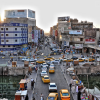
Basra Protests: Oil Minister Orders More Jobs
Posted on 12 July 2018 .
By John Lee.
Protestors took to the streets of Basra for the fourth day on Wednesday, protesting the killing of a demonstrator by security forces, and demanding jobs and public services.
According to AFP, protesters also blocked the road leading to the oilfields of West Qurna, while international oil companies (IOCs) have reportedly moved senior staff out of the area for their security.
On Tuesday, the Cabinet approved measures to improve the delivery of essential public services in Basra province, with a focus on improving the supply of electricity to homes and businesses.
It also "instructed Iraq’s embassies, consulates and all border entry points to apply new visa and residency fees for foreign nationals seeking to enter Iraq".
The Cabinet voted to establish a specialist committee staffed by teams from the Planning and the Construction & Housing Ministries to assess the value of resuming several incomplete or suspended projects, and instructed the Ministry of Finance to speed up the allocation of funds for projects that are deemed suitable for completion.
Meanwhile, Oil Minister Jabar Ali al-Luaibi [Allibi, Luiebi] ordered "secondary contractor companies in West Qurna oil field to provide new jobs for the citizens of the neighbor towns near to the field", and to "provide additional jobs for the citizens of Shatt Al-Arab district and the other towns".
"Otherwise", he added, "the Ministry will take the appropriate procedures towards the companies that violates the directions".
(Sources: AFP, Iraqi Cabinet, Ministry of Oil)
(Picture credit: Ahmed Mahmoud)
Posted in Construction & Engineering In Iraq, Iraq Industry & Trade News, Iraq Oil & Gas News, Iraq Public Works News, Politics, Security Comments Off on Basra Protests: Oil Minister Orders More Jobs
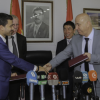
UNDP supports Basic Services in Erbil
Posted on 10 July 2018 .
The United Nations Development Programme (UNDP) and Erbil Governorate have launched eight infrastructure projects to improve services that are fundamental to daily life, such as electricity, water, roads, and sewerage, for over 284,000 people across the Governorate of Erbil.
With the continuous support from the Government of Germany, UNDP’s Iraq Crisis Response and Resilience Programme (ICRRP) and the Erbil Joint Crisis Coordination Centre (E-JCC) will construct or upgrade six critical infrastructure projects, namely constructing roads, improving lighting, repairing the water network, and upgrading the electricity grid. This initiative directly supports residents of Sarbasty, Farmanbaran, Baharka, Naly, Shamamik, and Krechyan quarters of Erbil Governorate.
With continuous funding from the Government of Japan, ICRRP and the E-JCC are supporting two projects benefiting over 210,000 host community members and displaced people. The supply and installation of 40 transformers, already completed, has improved access to reliable electricity for people living in the targeted quarters of Erbil city and the districts of Soran, Koyia, Shaqlawa and Salah Al Din sub-district.
In addition, the supply and installation of a mobile substation for Ifraz Water Treatment Plant, which is the main water source in Erbil Governorate, is expected to increase the supply of water in Darashakran and Kawergosk sub-districts, as well as in Kawergosk refugee camp, Darashakran refugee camp and in the nearby villages.
At a ceremony marking the launch of the projects, the Governor of Erbil, H.E Mr. Nawzad Hadi, said:
“We highly appreciate the support from the Governments of Germany and Japan, and collaboration with UNDP, to improve the delivery of basic services and boost livelihood opportunities for displaced populations in Erbil. Today we are signing the agreements with UNDP to launch infrastructure projects with a total budget of up to US $3 million. These contributions are essential for coping with the current crisis and ongoing recession and will meet current community needs.”
The Consul and Head of the Consular Office of Japan in Erbil, Mr. Katsumi Moriyasu, said:
“Japan is very active in extending humanitarian and stabilization assistance to IDPs, refugees and host communities in Iraq and the Kurdistan Region. Its contributions in those areas so far reached US$460 million since 2012. As well, Japan is determined to stay as a close partner of Iraq and Kurdistan Region with respect to their reconstruction and socio-economic development.”
The Head of Development Cooperation at the Embassy of the Federal Republic of Germany, Mr. Johannes Schneider, noted:
“Thanks to UNDP and the ICRRP the enormous challenges in the response to the Iraqi Crisis are being addressed in a timely and effective manner. The programme ensures that anybody in need, independent from his or her ethnic or religious background can benefit from the support. Germany is happy to have contributed to this program with a total amount of €59.5 million so far.”
Deputy Special Representative of the Secretary General, Marta Ruedas, notes that:
“Supporting Iraq’s livelihoods and basic service delivery bolsters Iraq’s path to recovery from the recent conflict. UNDP is committed to working closely with the Erbil Governorate on these critical infrastructure projects that support both displaced populations and host communities”.
UNDP’s Iraq Crisis Response and Resilience Programme (ICRRP) promotes the recovery and resilience of communities vulnerable to multi-dimensional shocks associated with large-scale returns and protracted displacement of Iraqis and Syrian refugees.
This is achieved through a medium-term programming integrating crisis management capacity building, rehabilitating basic service infrastructure, livelihood recovery and social cohesion.
(Source: UNDP)
Posted in Construction & Engineering In Iraq, Iraq Public Works News Comments Off on UNDP supports Basic Services in Erbil
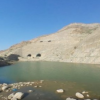
The Secret History behind Iraq's Stalled Water Project
Posted on 09 July 2018 .
This article was originally published by Niqash. Any opinions expressed are those of the author, and do not necessarily reflect the views of Iraq Business News.
By Histyar Qader and Awara Hamid.
The Secret History Behind The Stalled Project To Solve Iraq’s Water Problems
Despite ever-increasing water supply problems, the construction of one of the biggest dams in Iraq remains on hold. One of the main reasons for the delay seems to be political paranoia.
It would have been the largest dam in Iraq when the project was first proposed. But over 60 years have passed since the Bekhme dam was planned and in that time, the project has seen various political regimes come and go as well as war and peace.
It would have been a major undertaking, with a final height of around 230 meters, and offered extra water supplies to the people of Iraqi Kurdistan. Recent events, where Turkey cut off the flow of the Euphrates river and levels dropped noticeably, and Iran cut off water from the Little Zab, mean that a dam like this one is more necessary than ever. But, after all this time, will it ever happen?
The Bekhme dam was first on the Iraqi government’s agenda in 1937 and a US company developed a design for the dam in 1953; that is, during Iraq’s monarchy. In 1979, a Japanese firm adapted the original designs and in 1986, two more companies, one from Turkey and the other from the former Yugoslavia, began work on that plan.
Work continued until 1991, and around a third of the required work had been done, when the whole thing came to a grinding halt, due to the second Gulf war. This is when the Iraqi government headed by Saddam Hussein withdrew from the northern area, leaving the Kurds to govern themselves.
Should the giant dam have been completed, the authorities in the semi-autonomous northern region of Iraqi Kurdistan say that it would have held between 14 and 17 billion cubic meters of water, at a depth of 179 meters. It would have helped irrigate more than 560 hectares of agricultural land and produced electricity too.
“The three dams – Dokan, Darbandikhan and Dohuk – collect seven to eight billion cubic meters of water but the whole region needs 10 billion,” explains Akram Mohammed, the head of the regional department for dams in Iraqi Kurdistan. “There is a plan to build 250 more small and medium-sized dams but only 14 have been completed so far. If we continue at this pace, we are going to face serious water shortages soon.”
The Bekhme dam project was suspended in 1991. But it was not just a political problem, due to the Iraqi government pulling out of Kurdish areas. Over time, the machinery and materials used for the dam-building “disappeared”. Locals say the goods were smuggled across the border into Iran and never returned.
After Iraqi Kurdistan’s second-ever parliament was formed, and governed between 2005 and 2009, local politicians did try to revive the project. They were unsuccessful but up until today, the MPs involved can’t explain exactly why.
Jamil Mohammed was a member of the committee that debated the subject at the time but he told NIQASH that “we did not come to any conclusions”. He couldn’t give any further information, he said.
Several problems with the Bekhme dam project have been flagged, including geographical ones, downstream issues and the destruction of Iraqi heritage, once the area has been flooded.
“The Bekhme dam issue was only discussed once during that administration,” says Abdulrahman Ali, who is on the agriculture and irrigation committee in the Kurdish parliament and a senior member of the opposition Change movement. “I followed up on this issue personally but the response was that this was a political issue. That’s why it remains unresolved up until now.”
The nature of those problems is a little more difficult to trace back. Money was not the issue apparently. In 2005, as the Iraqi Kurdish authorities resumed contact with the Iraqi government, Baghdad promised to put US$5 billion into the dam’s completion.
“During the al-Maliki government, we followed up on the amount of money for the project and we note that the Iraqi ministry of water resources did discuss the issue with authorities from the Kurdish region,” says Mahmoud Raza, an MP in Baghdad. “The plan for the dam changed several times. But the Kurdish authorities wouldn’t agree to it being built.”
Apparently the problem was the level of water in the dam and its size. There was concern about how much water the dam would collect and whether this would block the flow of water into the rest of Iraq.
Alternative plans were suggested by the Kurdish authorities but these were not viable, Zafer Abdullah, an adviser to Iraq's ministry of water resources, told NIQASH. “Other plans involved reducing the water level in the dam and the size of the reservoir,” he said. “At that time, the Kurdish presidency was against the dam being constructed and some said there were political reasons behind this.”
At the start nobody had any problem with the dam being built. But later on the issue was politicized - when it was suggested that the Barzan area be submerged.
“It was the Kurdish leadership who would not accept the construction of the dam, despite the fact that the Iraqi government gave them three alternative designs for the project,” Mohammed, head of the regional department for dams in Iraqi Kurdistan, confirms.
Over the course of two weeks researching this story, NIQASH tried to contact the Kurdish government’s spokesperson, Safeen Dizayee, several times to ask why but had no response.
A large part of the “political” reason behind the lack of progress on the Bekhme dam also has to do with the fact that around 54 villages in the area would be submerged, says Karwan Karim Khan, mayor of Khalifan, where the Bekhme dam would be located.
Some of these villages are located in the Barzan area, the historic home to the Barzani tribe, from which one of Iraqi Kurdistan’s ruling families originates. The Barzanis head one of Iraqi Kurdistan’s most popular political parties, the Kurdistan Democratic Party, or KDP, and until he stepped down recently, Massoud Barzani was president of Iraqi Kurdistan.
At one stage a petition was launched, collecting signatures of those opposed to the destruction of these villages due to the dam, and Kurdish authorities used this to justify the ongoing suspension of the project.
“We signed the petition because the Bekhme dam could cause many problems – one of which is that we would be forced to leave our homes,” says Hasso Mohammed Amin, a 52-year-old resident of one of the villages that could end up submerged, Dola Teshwu. “ We wanted the project suspended or its size reduced,” he notes.
The nature of those problems is a little more difficult to trace back. Money was not the issue apparently. In 2005, as the Iraqi Kurdish authorities resumed contact with the Iraqi government, Baghdad promised to put US$5 billion into the dam’s completion.
“During the al-Maliki government, we followed up on the amount of money for the project and we note that the Iraqi ministry of water resources did discuss the issue with authorities from the Kurdish region,” says Mahmoud Raza, an MP in Baghdad. “The plan for the dam changed several times. But the Kurdish authorities wouldn’t agree to it being built.”
Apparently the problem was the level of water in the dam and its size. There was concern about how much water the dam would collect and whether this would block the flow of water into the rest of Iraq.
Alternative plans were suggested by the Kurdish authorities but these were not viable, Zafer Abdullah, an adviser to Iraq's ministry of water resources, told NIQASH. “Other plans involved reducing the water level in the dam and the size of the reservoir,” he said. “At that time, the Kurdish presidency was against the dam being constructed and some said there were political reasons behind this.”
“It was the Kurdish leadership who would not accept the construction of the dam, despite the fact that the Iraqi government gave them three alternative designs for the project,” Mohammed, head of the regional department for dams in Iraqi Kurdistan, confirms.
Over the course of two weeks researching this story, NIQASH tried to contact the Kurdish government’s spokesperson, Safeen Dizayee, several times to ask why but had no response.
A large part of the “political” reason behind the lack of progress on the Bekhme dam also has to do with the fact that around 54 villages in the area would be submerged, says Karwan Karim Khan, mayor of Khalifan, where the Bekhme dam would be located.
Some of these villages are located in the Barzan area, the historic home to the Barzani tribe, from which one of Iraqi Kurdistan’s ruling families originates. The Barzanis head one of Iraqi Kurdistan’s most popular political parties, the Kurdistan Democratic Party, or KDP, and until he stepped down recently, Massoud Barzani was president of Iraqi Kurdistan.
At one stage a petition was launched, collecting signatures of those opposed to the destruction of these villages due to the dam, and Kurdish authorities used this to justify the ongoing suspension of the project.
“We signed the petition because the Bekhme dam could cause many problems – one of which is that we would be forced to leave our homes,” says Hasso Mohammed Amin, a 52-year-old resident of one of the villages that could end up submerged, Dola Teshwu. “ We wanted the project suspended or its size reduced,” he notes.
“At the start nobody had any problem with the dam being built,” Abbas Ghazali Mirkhan, an MP with the KDP and also a resident from the area where the dam is meant to be being built, told NIQASH. “But later on the issue was politicized - when it was suggested that the Barzan area be submerged and the Barzan villagers be displaced.”
“When the budget was first allocated for the dam project in 2005 and the plan designed by foreign advisers, Massoud Barzani had no problem with it,” Mirkhan continued. “But when it turned out there were political motivations behind the project, Barzani and the local population collected signatures for a petition against it and the project was suspended.”
And by this, he means that the Barzanis clearly felt that the dam was a personal attack on their heritage, possibly a politically motivated one by Baghdad.
Whatever the reason back then, work on the Bekhme dam seems unlikely to resume any time soon, no matter how much its needed. The Iraqi government has basically given up on it now, insiders say.
“There’s no hope in reviving those talks with the Kurdish authorities about the Bekhme dam,” Abdullah, the ministry of water resources adviser, concludes. “We are now relying on the Tharthar dam [further south] to secure our water supply.”
Posted in Agriculture Comments Off on The Secret History behind Iraq's Stalled Water Project

UKEF Financed 3 Iraqi Projects last year
Posted on 21 June 2018 .
By John Lee.
UK Export Finance (UKEF) has published its annual report and accounts for 2017 to 2018, in which it lists three export projects supported in Iraq:
- Enka UK Construction Ltd received letter of credit guarantees and supplier credit totalling £87,910,650 for the construction of a gas-fired power plant for Iraq's Ministry of Electricity;
- GE Global Services GMBH received buyer credit and direct lending totalling £87,211,216 for the construction of a gas-fired power plant for Iraq's Ministry of Electricity;
- Fortress Diagnostics Ltd received export working capital of £112,258 to supply healthcare equipment to Iraq's Ministry of Health.
(Source: UK Govt)
Posted in Investment, Iraq Banking & Finance News, Iraq Industry & Trade News Comments Off on UKEF Financed 3 Iraqi Projects last year

“Forget the Donations, Stupid”: New Dynamics in Funding Reconstruction
Posted on 15 June 2018 .
By Ahmed Tabaqchali (pictured), CIO of Asia Frontier Capital (AFC) Iraq Fund.
This article was originally published in the Marsh to Mountain blog. Any opinions expressed are those of the author, and do not necessarily reflect the views of Iraq Business News.
“Forget the Donations, Stupid”: New dynamics in funding the reconstruction of Iraq
Key Takeaways
In the months following the Kuwait Conference a sea change has taken place in Iraq’s financial health that has yet to be reflected in perceptions.
Higher oil prices, as a result of the changed dynamics of the oil market and the robust health of the global economy, has had a transformative effect on Iraq’s finances.
By end of 2018, based on realized oil prices of 2017 and average year-to-date for 2018, Iraq is on its way to have a cumulative two-year budget surplus of $18.8bn instead of the initially projected cumulative deficit of $19.4bn.
This would allow it to start the reconstruction process on its own resources. Coupled with a potential surplus of $9.3bn in 2019 would give the country a great deal of flexibility to fund further reconstruction over the near-term.
The surplus of $18.8bn by end of 2018 would equal a stimulus of 14.5% of non-oil GDP once reconstruction projects are underway, which would further accelerate economic activity.
However, this three-year window of opportunity faces the twin headwinds of Iraq’s corrosive corruption and all of prior governments’ failures to spend oil wealth on rebuilding the country’s infrastructure, spending it instead on expanding the state’s role in the economy.
-------------------------------------------------------------------
A great deal has changed since the Kuwait Conference on the reconstruction of Iraq, which was marred by misconceptions of international observers who bemoaned that it failed to achieve its objective in raising enough donations. These were not helped by an Iraqi side that went to the conference looking for donations (investments in Iraqi speak) by focusing its efforts solely on presenting a shopping list of projects that needed $88bn in funding over five years.
These misconceptions were addressed in a prior article[1] which highlighted that over five years, Iraq should be able to fund $77bn out of this $88bn through a combination of $50bn from its oil revenues and $27bn in borrowings. Crucially, this level of direct funding and borrowing would be consistent with maintaining macroeconomic stability, which means that funding the reconstruction would not distract from the government fulfilling its traditional role in the economy, and so the reconstruction will contribute to sustainable economic growth.
This ability to fund the $77bn was derived from the IMF estimates for Iraq’s budget for 2018-2022 based on updated market-implied future Iraq oil prices, i.e. the implicit price of oil from the futures markets. In February, the implied price for Iraqi oil was $60/bbl for 2018, declining to $51 by 2022. These are in sharp contrast to the IMF’s estimates in August 2017 which used Iraqi oil prices of $45.5 in 2018, increasing to $47.2 by 2022. The 2018-2022 estimates made in 2017 would have made it impossible for Iraq to fund any portion of the needed funding as it would have needed to borrow to balance its budget during these years[2].
Iraq’s high dependence[3] on oil means that its budget and GDP are highly sensitive to the volume of oil it exports and to oil prices. The massive change in oil prices over the last few years, as seen from the five-year Brent crude price chart below, played havoc with Iraq’s budget during the ISIS conflict 2014-2017. They forced the government into a sharp fiscal retrenchment by cutting costs and cancelling all investment spending, while increasing military spending which had substantial negative knock-on effects on the economy[4]. The significant effects of oil price changes extend to planning for funding the reconstruction directly by Iraq, and indirectly by its stakeholders who need to take into account these effects in relation to their level of contributions and expected investment returns.

Brent Crude Jun 2013-Jun 2018, Source: Financial Times[5]
The fundamentals of the oil market went through major changes over the last four years, from expectations of supply scarcity versus increasing demand up to mid-2014; fears of increasing supply overwhelming decreasing demand from mid-2014 into late-2016; easing somewhat to hopes for a rebalance by mid 2017; and finally, into growing demand exceeding declining supply. Overlay the robust health of the global economy and it is expected the oil market will continue to tighten in the immediate future. This outlook is complicated by disruptive technologies such as those behind the Shale oil boom in the US, and by geopolitics affecting major suppliers such as Iran and Venezuela. These are balanced somewhat by OPEC’s actions and shifting perceptions of either its increasing dominance or increasing irrelevance. These perceptions came into sharp focus with the OPEC & non-OPEC supply cut agreement in late 2016 that started the recovery process. Recently there is news that talks have been underway to increase supply as prices have risen too high in response to threats to Iranian and Venezuelan supplies.
These would make budget planning, let alone long-term reconstruction planning, for Iraq an exercise in folly if it were to use the latest market implied future prices or to accept the prevailing wisdom at any given time as a basis for planning. This pretty much explains the conservative assumptions used by the IMF -which the world financial community depends on in assessing Iraq’s financial soundness and its credit worthiness. These assumptions served as the basis on which Iraq and the IMF identified creditors and donors for Iraq to cover its estimated budget deficits for 2017-2022 as part of the IMF’s 2016 Standby agreement. Moreover, the IMF updated these assumptions with new estimates for forward oil prices as part of its Kuwait Conference presentation.
A recent article[6] noted “using realized prices of Iraqi oil of $49.1/bbl for 2017, and assuming Iraqi oil prices of $60/bbl for 2018, then declining to $51/bbl in 2022, would produce a cumulative surplus of $47.4bn for 2017-2022 instead of the earlier assumed cumulative deficit of $17.6bn”[7]. While using higher estimates for oil prices would result in a cumulative surplus of $78.2bn. In the first scenario Iraq could fund the reconstruction by a combination of $50bn from its oil revenues and $27bn from borrowings, and the final $11bn from aid/donations, which is in-line with the assumptions made by the IMF at the Kuwait conference. While, in the second scenario Iraq could fund the reconstruction by a combination of $80bn from its oil revenues and $8bn from borrowings which is a vastly different proposition.
Given the impossibility of forecasting future oil prices, especially up to 2022, this article will consider the data for 2017-2019 given the higher degree of predictability in this short timeframe.
The IMF updated its global growth projections to +3.9% for both 2018 & 2019, up from its previous projections of 3.7% for both which was made in late 2017 as part of its World Economic Outlook (WEO) in April[8]. It believes that the upswing that began in 2016 has accelerated since then but it expects that it will taper off afterword’s. These coupled with changed dynamics in the oil supply/demand imply higher oil price assumptions for the period, which for the short-term has positive implications for oil exporting nations in MENA as outlined in its Regional Economic Outlook (ROE) May[9].
For Iraq, these would have huge implications for its economic profile for 2017-2019 and thus to its ability to start funding the huge reconstruction demands. The table below looks at the original IMF estimates for Iraq’s budget 2017-2019[10] versus updated estimates for 2017-2019 based on the latest actual data for 2017 and updated estimates for oil prices.

For sources & assumptions see endnote[11]
The updated assumptions for 2017-2019 imply a cumulative surplus of $28.1bn vs earlier assumptions of a cumulative deficit of $22.8. Although Iraq has identified funding sources for each year during the budget planning stages, it is likely that it would have not utilized them due to the higher revenues as a result of the higher than planned oil prices. These unused funding sources could be as high as $14.3bn by end of 2018[12].
Irrespective of the above, the upcoming government should have a cumulative surplus of $18.8bn by the end of 2018 which can be used to start the reconstruction process, which coupled with the likely surplus of $9.3bn in 2019 would give the country a great deal of flexibility to fund further reconstruction over the near-term. This flexibility would be augmented by $30bn, over five years, in investments and trade credit guarantees that Iraq received during the Kuwait Conference in February[13].
The effect of this spending flexibility on economic activity is enormous, in that should the surpluses be spent on reconstruction from 2019 over a two-year period, this would be equivalent to an economic stimulus of 14.5%[14] of 2018’s non-oil GDP over this period. This is a major economic stimulus by any account that would be magnified over the next five-years should the $30bn in pledges that Iraq received materialize.
However, the risk, and the likelihood, is that the upcoming government would succumb to public pressures to use some of this extra fiscal flexibility on populist measures. Such pressures have already been applied by parliament as it amended the budget by removing the 3.8% tax on salaries and pensions to appease an angry electorate in an election year. The elections marked by the continued pro-reform demonstrations since 2015, and the large active non-participation movement imply that the upcoming government would increase spending on populist measures to pacify the electorate and provide a visible peace divided. In fact, the updated estimates for 2018 & 2019 in the table above reflect the expectations of higher expenditures, which would narrow the surplus for these two years, which in turn would detract from the funds available for infrastructure investment.
A further risk is the country’s corrosive corruption which would find breathing space as a result of higher oil revenues, especially if they are spent on populist measures, in the process relieving public pressures on the government to reform and to expose corruption. Moreover, the practice post-2003 of using state contracts as a means of reinforcing political influence on selected players in the private sector could continue, further entrenching corruption, with the government ability to fund the reconstruction and ability to award contracts.
Even, if the government would not succumb to populist measures, it would still need to resort to borrowing to continue funding the reconstruction. This is especially true given the high level of government expenditures, especially its public-sector payroll and social security spending. Moreover, higher oil prices for 2017-2019 will likely lead to the government to slow the pace of fiscal consolidation in response to public demands. This therefore means that budget surpluses will decline in time, especially as oil prices are likely to moderate in the coming years[15].
Borrowing, especially from the commercial debt markets, imposes a much-needed discipline on the government to adhere to sound fiscal policy and to continue the path of reducing its role in the economy and encouraging the development of the private sector[16]. Combined with the IMF’s 2016 Stand-By Agreement (SBA) this should help ensure sustainable macroeconomic stability.
Iraq’s ability to assume debt that is sustainable and within the confines of maintaining macroeconomic stability is much higher than assumed by many who merely look at the headline figure. An upcoming report by the author looks into the composition and background of Iraq’s debt[17]. The IMF estimates the total debt to be $122.9bn by end of 2017[18], made up of external debt of $73.7bn and domestic debt of $49.2bn.
However, $41bn out the external debt is to non-Paris Club creditors, mostly the GCC nations, that date back to the pre-2003 regime which are under negotiations to reduce them on the same terms as applied by the Paris Club of creditors. Should this happen they would likely be reduced by 90% to $4.1bn[19]. Therefore, including the unused borrowing for the 2017 deficit, this means that actual debt by end of 2017 is more likely to be $76.2bn[20] than the headline figure of $122.9bn. This would imply debt/GDP ratios of 39% for 2017 and 34% for 2018[21], giving Iraq plenty of scope to assume debts of up to $40bn and still keep debt/GDP ratio under 50% for 2018[22].
A sea change in Iraq’s position has taken place since the months leading up to the Kuwait Conference, but perceptions have not. Iraq’s position was that of a country with a debt/GDP ratio of 63.8%/65.3% for 2017/18, that needs to borrow to fund its budget deficit for the next few years and thus needs aid/donations to fund an urgent and massive reconstruction. The sea change, based on the IMF’s May REO, is that Iraq now has a debt/GDP ratio of 58%/54.7% for 2017/18, a budget surplus and can start to fund its reconstruction. This article further shows that Iraq can start funding its reconstruction in 2018 with $18.8bn in cumulative surpluses based on current oil prices. If the argument above on the underlying nature of its debt were to unfold then Iraq can add to this by accessing $40bn in the debt markets- which is far more than its immediate needs for reconstruction.
The underlying positive for Iraq that is fortunately to a large extent free from any government planning, or mismanagement, is that the reconstruction along the lines described by the joint study of the World Bank Group (WBG) and Iraq’s Ministry of Planning (MoP), on its own, will generate substitutional non-oil economic activity[23]. This activity can over the course of the next five years provide the non-oil economy with sufficient momentum for Iraq to escape its high oil dependence, which no government has attempted before. The silver lining of the trauma caused by the ISIS conflict, coupled with collapsing oil prices was that Iraq, in spite of all the improbable odds, united and climbed its way out of the abyss and of total disintegration. Given Iraq’s ability to start self-funding the reconstruction, a similar silver lining is that the recovery from the same trauma, in the form of reconstruction, could lead the country’s evolution away from pure oil dependence.
Disclaimer
Ahmed Tabaqchali’s comments, opinions and analyses are personal views and are intended to be for informational purposes and general interest only and should not be construed as individual investment advice or a recommendation or solicitation to buy, sell or hold any fund or security or to adopt any investment strategy. It does not constitute legal or tax or investment advice. The information provided in this material is compiled from sources that are believed to be reliable, but no guarantee is made of its correctness, is rendered as at publication date and may change without notice and it is not intended as a complete analysis of every material fact regarding Iraq, the region, market or investment.
[1] https://www.iraq-businessnews.com/2018/02/22/its-not-the-donations-stupid-key-points-from-kuwait-conf/ - _edn3
[2] IMF’s estimates and presentation in the Kuwait conference are at: Session 3 after clicking on the pdf icon of the presentation. Presentation starts at minute 8.20 on the youtube link on the link below: -
IMF’s earlier estimates are from Country Report No. 17/251
[3] 2017 estimates: Oil exports accounted for 99% of all exports, Oil revenues accounted for 87% of government revenues which in turn accounted for 32% of total GDP. Moreover, Oil GDP accounted for 38% of total GDP and indirectly accounts for the bulk on non-Oil GDP as the government’s orders drives non-Oil GDP (source: Country Report No. 17/251).
[4] A report by the author discusses this dynamic and the government response https://www.iraq-businessnews.com/2017/07/17/economic-consequences-post-mosul/. Some highlights of which are “The government maintained overall spending on salaries and pensions, but it introduced new and increased existing consumption taxes on a large number of consumables while it also increased utility prices, Non-oil investments bore the brunt of the cuts as the government sharply curtailed all capital spending and investments.”
[5] https://markets.ft.com/data/commodities/tearsheet/summary?c=Brent+Crude+Oil
Iraqi oil sells for about $5/bbl discount to Brent.
[6] https://www.iraq-businessnews.com/2018/05/23/market-review-elections-the-economy-and-the-stock-market/
[7] The deficit of $17.6bn was based on IMF estimates made in 2017 (Country Report No. 17/251). The IMF has since then updated its revenue estimates higher based on higher oil prices which imply a much lower cumulative deficit than the one used here, but these estimates were only up to 2019 and hence old estimates are still used. Updated data is at: World Economic Outlook April 2018 & Regional Economic Outlook May 2018 in the two footnotes below.
The estimates depend on IMF projections which assume that the government spending would continue to be constrained but this is unlikely given public demands for an ease as a result of higher oil prices. This will be balanced in this report’s higher oil price assumptions such that the surpluses would be the similar as will be seen later in this report and in the author’s other recent publications.
[8] https://www.imf.org/en/Publications/WEO/Issues/2018/03/20/world-economic-outlook-april-2018
[9] http://www.imf.org/en/Publications/REO/MECA/Issues/2018/04/24/mreo0518 (data only until 2019)
[10] IMF Iraq Country Report No. 17/251 (http://www.imf.org/~/media/Files/Publications/CR/2017/cr17251.ashx). The IMF assumptions are used throughout for assumptions made in 2017, instead of available Iraq budget figures for 2017 & 2018, to ensure consistency with other estimates used throughout. Moreover, the data from the IMF country report 17/251 are used instead of the IMF updated data (footnotes above) as the updated figures provide only headline numbers without specific details that are needed for a full analysis.
Note: figures are rounded, and so total figures might not add up fully.
Below are the main differences between IMF projections and those of Iraq’s budgets for 2017 & 2018, and Iraq’s actual 2017 budget spending.
Iraq’s budget vs IMF projections for 2017
- Iraq’s budget
- Total revenues of $66.8bn made up of oil revenues of $57.5bn based on oil price of $42/bbl, and total exports of 3.75mbbl/d. These exports include the KRG’s exports of 0.55mbbl/d.
- The agreement with the Kurdistan Regional Government (KRG) was for it to export 0.55mbbl/d through Iraq’s State Oil Marketing Organization (SOMO). In return the KRG would receive 17%, less sovereign expenses, of the federal budget. However, neither have fulfilled their obligations, yet, both of Iraq’s budget and the IMF budget assumptions include the KRG’s oil exports and its share of expenditure.
- Expenditures of $82.2bn, creating a deficit of $18.3bn.
- Total revenues of $66.8bn made up of oil revenues of $57.5bn based on oil price of $42/bbl, and total exports of 3.75mbbl/d. These exports include the KRG’s exports of 0.55mbbl/d.
- IMF projections:
- Total revenues of $69.2bn made up from oil revenues of $61.3bn based on oil price of $45.3/bbl and total exports 3.8mbbl/d, and non-oil revenues of $7.5bn
- Expenditures of $79bn, creating a deficit of $9.8bn
Iraq’s preliminary budget vs IMF projections for 2018
- Iraq’s budget
- Total revenues of $77.5bn made up from oil revenues of $65.2bn based on oil price of $46/bbl, and total exports of 3.888mbbl/d. These exports include the KRG’s exports of 0.55mbbl/d.
- Expenditures of $88.1bn creating a deficit of $10.6bn
- IMF Projections
- Total revenues of $73.9bn made up from oil revenues of $64.3bn based on oil price of $45.5/bbl, and total exports 3.9mbbl/d and non-oil revenues of $9.3bn
- Expenditures of $83.4bn creating a deficit of $9.5bn
Iraq’s actual 2017 budget revenues and expenditures based on Ministry of Finance (MoF) data
- Oil revenues of $55.3bn, which exclude the revenues from the KRG’s direct exports of 0.55mbbl/d (included in the IMF projections in the table used and in Iraq’s budget planning). These revenues would have been higher than planned by the government which assumed an oil price of $42/bbl total, including KRG, exports of 3.75mbbl/d vs the realized price estimated at $49.2. They are also higher than the IMF est.’s which assumed a $45.5/bbl on total exports of 3.8mbbl/d.
- If the KRG’s exports of 0.55mbbl/d were sold at the same price, then total revenues would have been $73.6bn vs the Iraq budget plans of $57.5bn or the IMF’s estimate of $61.3bn. This reflects the budgets sensitivity of $1.4n to every $1 change in oil prices.
- Non-oil revenues of $9.9bn for total revenues of $65.4bn (ex-KRG oil revenues).
- Expenditures, which excluded the KRG’s share of the budget, were $63.8bn or showing a surplus of $1.6bn.
- If the KRG’s planned $6.4bn expenditures were to be included, total expenditure would have been $70.2bn vs the planned $82.2bn, which would have resulted in a surplus of $3.4bn.
Note: Revenues for 2017, and likely for 2018, benefited from higher than planned oil prices. But, expenditures in 2017, and likely in 2018, were lower than planned. The under execution of the budget expenditure, especially on capital spending, is an ongoing feature of Iraqi governments due to the country’s weak institutional capacity and which possess a risk to the reconstructing effort.
Sources for this footnote:
http://www.bayancenter.org/en/2018/03/1461/
(http://www.imf.org/~/media/Files/Publications/CR/2017/cr17251.ashx).
[11] Sources: IMF Iraq Country Report No. 17/251, IMF World Economic Outlook (WEO) April 2018 database, IMF Regional Economic Outlook (REO) statistical appendix, Iraqi Ministry of Finance (MoF).
Assumptions:
- Updated figures for 2017 are from MoF which show revenues and expenditures for 2017 excluding those for the KRG. However, MoF and IMF estimates and planed budget include those of the KRG (see details in footnote 9).
- Iraqi oil price averaged $63.5 for Jan-Jun, while Jun’s average was $69.9. The YTD average is used as an estimate for the full year.
- Total updated revenues for 2018 & 2019 include higher non-oil revenues as the IMF in May’s REO increased its growth rate for non-oil GDP to +4.4%/+5% for 2018/2019 up from 2.4%/3.7%
- Revenues are estimates based on updated oil price assumptions while expenditures are the updated IMF’s estimates.
- Updated Expenditures reflect expectations that the government will ease back on its tight fiscal consolidation, however, they might very well be off-set by the historic tendency for lower budget executions.
[12] The IMF (Country Report No. 17/251 P: 28) notes “The program is fully financed through the next twelve months, but there is a financing gap of $7.1bn in late 2018 and 2019. The authorities have contacted one donor to fill the 2018–19 financing gap, for which there is good prospect”. The financing gap is made up of $5bn and $2.1bn respectively 2018 & 2019. Which implies that Iraq has achieved full financing for 2017’s $9.8bn deficit, $4.5bn out of 2018’s $9.5bn deficit., and $1.3bn out of 2019’s $3.4bn deficit.
Since the actual budget achieved a surplus for 2017 and would likely achieve a surplus in 2018, then Iraq has borrowed $14.3bn ($9.8bn + $4.5bn see above) to fund a deficit that did not materialize and so the funds could either not be drawn which would lower overall debit or used to fund reconstruction projects.
However, it should be noted that “fully financed” does not imply that the all of the funds were delivered to Iraq but that funding agreements were made.
[13] https://uk.reuters.com/article/mideast-crisis-iraq-reconstruction/factbox-pledges-made-for-iraqs-reconstruction-in-kuwait-idUKL8N1Q55RY
[14] This would be about 8.4% of 2018’s updated GDP estimate, but as it would be spent on reconstruction it would be a stimulus of about 14.5% of non-oil GDP. It would have an added significance in that the planned for deficits would have been accompanied by restricted capital spending and continued fiscal consolidation by the government, the reversal of which alone would have expansionary effects.
[15] The major shortcoming of the successive governments since 2003, was to use most of the oil revenues on expanding the public payroll and social security spending as main vehicle for transfer of oil wealth. As a result very little of oil revenues went towards reconstructing and building the country’s physical capital that would contribute towards diversification away from oil and to economic sustainability. The upshot is high oil dependence with the resultant vulnerability to external forces, import dependence, weak/small private sector and a skewed labor market.
Without a fundamental change of track, such as that agreed by the IMF’s 2016 SBA, the fruits of the country’s expanding energy production profile as a result will perpetuate this process. However, this is unsustainable given Iraq’s large rapidly growing population whose needs for public sector jobs cannot be met under any optimistic scenarios for increased oil production or prices.
The upshot, is the fundamental change of track along the SBA guidance will take a number of years to unfold, and as such the public-sector payroll and social security spending will continue to account for the bulk of government expenditure and thus the need for accessing the debt markets to fund reconstruction down the road.
[16] As can be seen from the author’s report on Iraq’s debt (link on next footnote) that Iraq’s only debt on truly commercial terms are two Eurobonds worth $3.7bn: A $2.7bn bond issued in 2006, due in 2028 with a 5.8% interest rate; and a $1.0bn bond issued in 2017, due in 2023 with a 6.5% interest rate. However, the third $1bn bond issued in 2017, due in 2022, is guaranteed 100% by the U.S. government, with a 2.1% interest rate, and as such does not constitute debt on commercial terms.
Therefore, should Iraq access the commercial debt markets these would require fiscal discipline to assure the markets that debt would be serviced. Some of the requirements would take into account, debt repayments as a percentage of exports, currency stability and the level of foreign reserves in relations to months of imports, balance of payments, budget balance as a percentage of GDP. They would also take into account other liabilities and contingent liabilities such as the state guarantees discussed in footnote #22 below. All of these requirements will affect the amount of debt raised and the interest rate it would carry, which would place a much-needed significant fiscal discipline on the government. Coupled with the huge demands for reconstruction they should help ensure that Iraq’s governments pursue sound fiscal policies while following sustainable macroeconomic stability.
[17] http://www.bayancenter.org/en/2018/08/1592/
[18] Updated figures in REO show that the updated figure for 2017 is $114.6bn of which foreign debt is $68bn. However, the older assumptions of 2017 are used as they are part of longer term projections, and crucially they served as the basis for Iraq securing finding for the expected deficits as explained in an earlier footnote.
[19] The IMF notes: “These arrears can be tolerated under the Fund’s policy on Arrears to Official Bilateral Creditors because the Paris Club Agreement was found to be adequately representative (i.e., Paris Club creditors provided most of the financing contributions required from official bilateral creditors in the context of that agreement) and the authorities have since been making best efforts to conclude agreements with non-Paris Club creditors on Paris Club comparable terms. Negotiations to implement debt relief on the same terms as with the Paris Club creditors, i.e. an 89.75 percent net present value reduction, are ongoing.”.
It should be noted that the use of 90% haircut in this article is an over-simplification. During the negotiations the US forgave 100% of its $4bn in debt, while the rest cut it by 80% over three stages of 30%, 30% and 20% with the residual 20% to be paid over a number of years up to 28 years. Therefore, the net-present value (NPV) of the debt is equivalent to 10.25% of the original debt. Therefore, the use of 90% (89.75% to be precise) hair cut glosses over these details in order to simplify the conclusion in that ultimately the remaining debt by Iraq is 10.25% of the original debt as of the current time.
In the current environment of the rebuilding of the relationship between Iraq and the GCC it is very likely that these negotiations will lead to a grand bargain in which both sides agree to the same 90% debt reduction in exchange for investment opportunities and long-term agreements.
[20] $122.9bn less: (1) 90% of $41 or $36.9bn, (2) Unused deficit funding of $9.8bn
[21] The IMF’s updated GDP figures for 2017/2018 are $197.7bn/ $223.3bn and debt/GDP ratios of 58%/54.7%
[22] It should be noted that the government has issued 11 state guarantees that affect the total amount of debt that it can take as these are contingent liabilities. These are a total of $36bn made of which the largest is $32.4bn in guarantees of service payments to independent power producers (IPPs) in the electricity sector for the 14 years of the contacts. This makes it essential for the government to continue with the electricity sector reform and ensure the collection of tariffs-the failure of which will make the state liable to fulfil its guarantees to the IPP’s which would add to the debt.
Separately, the IMF aware of all of the above liabilities, in its presentation in the Kuwait Conference, had argued that Iraq should be able to borrow up to $36bn over the next five-years while its debt to GDP would be around 50% by 2022-23. These were made under lower oil price assumptions, with more fiscal discipline in expenditures, over a longer time frame, but without the benefit of the 90% haircut to the $41bn in debt.
[23] The IMF has attributed reconstruction for increasing its non-oil GDP growth rates to +4.4%/+5% for 2018/2019 up from prior +2.4%/+3.7%.
These figures could be higher should the full $88bn in reconstruction spending be embarked upon over the next five years as that would be a stimulus equivalent to about 14% of non-oil GDP in each year over the five-year period. While, it is ambitious to assume that all of that amount would be properly spent, yet even half that amount would create the conditions for self-sustaining economic activity for the non-oil sector.
Please click here to download Ahmed Tabaqchali’s full report in pdf format.
Mr Tabaqchali (@AMTabaqchali) is the CIO of the AFC Iraq Fund, and is an experienced capital markets professional with over 25 years’ experience in US and MENA markets. He is a non-resident Fellow at the Institute of Regional and International Studies (IRIS) at the American University of Iraq-Sulaimani (AUIS). He is a board member of the Credit Bank of Iraq.
His comments, opinions and analyses are personal views and are intended to be for informational purposes and general interest only and should not be construed as individual investment advice or a recommendation or solicitation to buy, sell or hold any fund or security or to adopt any investment strategy. It does not constitute legal or tax or investment advice. The information provided in this material is compiled from sources that are believed to be reliable, but no guarantee is made of its correctness, is rendered as at publication date and may change without notice and it is not intended as a complete analysis of every material fact regarding Iraq, the region, market or investment.
Posted in Ahmed Tabaqchali, Investment Comments Off on “Forget the Donations, Stupid”: New Dynamics in Funding Reconstruction
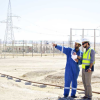
ABB Wins Orders from Iraq's Min of Electricity
Posted on 04 June 2018 .
Swiss-Swedish group ABB has won orders from the Ministry of Electricity in Iraq to deliver five fixed and 15 mobile 132-kilovolt substations that will help strengthen the power grid and provide electricity in central Iraq.
The government of Iraq is rebuilding the country and investing in its grid as part of its ambitious plan to develop its power infrastructure to meet electricity needs. The substation projects are supported by Swedish government financing.
As part of the projects ABB will also deliver key products like gas- and air-insulated switchgear, power transformers and capacitor banks to improve power quality and advanced IEC 61850-based automation, protection and telecommunication systems for control and monitoring of substation assets. The 15 mobile substations will enable fast electrification in some of the mostneedy areas.
Patrick Fragman, head of ABB’s Grid Integration business, a part of the company’s Power Grids division, said:
“The substations will help to improve the electricity supply by expanding capacity and strengthening Iraq’s power infrastructure. These projects add to our extensive installed base in the region and support our focus on growing markets, reinforcing ABB’s position as a partner of choice in enabling a stronger, smarter and greener grid.
”ABB is the world’s leading supplier of air-insulated, gas-insulated and hybrid substations with voltage levels up to 1,100 kV. These substations enable the efficient and reliable transmission and distribution of electricity with minimum environmental impact, serving utility, industry and commercial customers as well as sectors like railways, urban transportation and renewables."
(Source: ABB)
Posted in Iraq Industry & Trade News, Iraq Public Works News Comments Off on ABB Wins Orders from Iraq's Min of Electricity
Cabinet endorses Institutional Performance Management System
Posted on 29 May 2018 .
Iraq’s Institutional Performance Management System endorsed for implementation across Iraq’s Public Sector
The Council of Ministers has endorsed “Iraq Government-Wide Institutional Performance Management System” for immediate application across public sector institutions in Iraq. The system is a non-prescriptive business excellence framework for organizational management, designed to help organizations to become more competitive.
It provides a framework that allows public sector institutions to determine their current level of excellence and identify areas for improvement.
With the technical assistance provided by Iraq Public Sector Modernization Program under UNDP, who shared international best practices and standards, the system was developed by the Council of Ministers Secretariat (CoMSEC), in consultation with key Iraqi stakeholders, including the Federal Board for Supreme Audit (FBSA).
The system design was guided by the “European Foundation for Quality Management (EFQM)” standards. It was first piloted during the second half of the 2017 in the ministries of Electricity, Youth & Sports and Trade. Lessons learned from the pilot were used to further refine the model for the implementation throughout the public sector.
UNDP Iraq supported the Government of Iraq’s preparedness to implement this innovative performance management system through a major capacity development program, which concluded on the 22nd of March, 2018. This program benefited a total of 142 staff from 21 federal ministries and CoMSEC who received training in the fundamentals and procedures of the institutional performance management.
The Government of Iraq’s institutional capacity was further strengthened through the specialized training of a team of 20 Iraqi staff from CoMSEC and FBSA who will be leading the implementation of the new performance management system. This team has successfully completed the European Foundation for Quality Management (EFQM) Assessor Training (EAT), the internationally recognized standard for performance management.
With this training, the team will be equipped with the skills and knowledge required to effectively assess the public sector institutions in the year 2018 and beyond. Effective public sector management allows the Government to set clear goals, monitoring the activities of the ministries in order to better allow it to expand on successes and correct deficiencies. This helps ensure that all Iraqis are better served by their government.
This nationally-owned and -led initiative falls within the framework of UNDP Public Sector Modernization Program support to Government of Iraq to reinforce its mechanisms for accountability and efficiency, IPSM works to support more efficient, accountable and participatory governance at national and sub-national levels in Iraq.
(Source: UNDP)
Posted in Iraq Education and Training News, Politics Comments Off on Cabinet endorses Institutional Performance Management System

Australia Increases Support for Stabilization in Iraq
Posted on 14 May 2018 .
Australia Substantially Increases Support to Stabilization in Iraq
The Government of Australia has contributed an additional USD 13.5 million (AUD 18 million) to the UNDP Funding Facility for Stabilization (FFS), which finances fast-track initiatives in areas of Iraq liberated from the Islamic State of Iraq and the Levant (ISIL). This brings Australia’s total contribution since 2015 to USD 16.5 million (AUD 22 million).
UNDP Resident Representative for Iraq, Ms. Marta Ruedas, said:
“The progress being made is clearly visible across the country. Roads are being repaired, hospitals are reopening, electricity is being restored and people are returning to work. More than 60 percent of the almost 6 million people who fled during the conflict have returned home.
"UNDP deeply appreciates the timely and flexible funding provided by the Government of Australia, and while there remains a great deal of work to do, this generous contribution will help liberated areas get back on their feet.”
The Australian Ambassador to Iraq, H.E. Dr. Joanne Loundes, said:
“Australia is committed to the stabilisation and redevelopment of Iraq. On top of restoring essential public services and rehabilitating critical infrastructure in liberated areas, the FFS prioritises projects that meet the needs of the most vulnerable, including women.
"Gender equality and women's empowerment is a core part of Australia’s foreign policy, economic diplomacy and development work and I welcome the opportunity to support work that directly contributes to this objective.”
At the request of the Government of Iraq, UNDP established the Funding Facility for Stabilization in June 2015 to facilitate the return of displaced Iraqis, lay the groundwork for reconstruction and recovery, and safeguard against the resurgence of violence and extremism.
The Facility currently has more than 2,000 projects underway in 31 liberated cities and districts, helping local authorities to quickly rehabilitate essential infrastructure. Over 95 percent of all stabilization projects are carried out by local private sector companies, providing a key source of employment for local people.
(Source: UNDP)
Posted in Construction & Engineering In Iraq, Iraq Public Works News Comments Off on Australia Increases Support for Stabilization in Iraq
Siemens to add 700 MW to Rumaila Power Plant
Posted on 24 April 2018 .
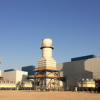
Germany's Siemens has won a contract to add 700 megawatts (MW) to the Rumaila Gas Power Plant, which currently has a power generation capacity of 1500 MW.
Siemens will supply its highly-efficient SST-5000 steam turbines, ensuring the additional power supply comes at no extra fuel requirement while increasing the overall power plant efficiency to more than 50 percent by converting the facility into combined cycle mode.
This upgrade delivered by Siemens equipment will supply around one million Iraqis with clean and efficient electricity
Siemens was awarded the contract by Sinohydro, the Chinese state-owned hydropower engineering and construction company. The developer is KAR Electrical Power Production Trading FZE.
Previously, Siemens had supplied five of its SGT5-4000F gas turbines to the plant, which was one of the first large-scale gas-fired facilities installed and commissioned in Iraq in 2013. The upgrade works are scheduled for completion by 2020.
(Source: Siemens)
Posted in Construction & Engineering In Iraq, Iraq Industry & Trade News Comments Off on Siemens to add 700 MW to Rumaila Power Plant

Electronic Vote Counting sparks Controversy
Posted on 20 April 2018 .
By Omar Sattar for Al Monitor. Any opinions expressed here are those of the author and do not necessarily reflect the views of Iraq Business News.
Electronic Vote Counting sparks Controversy ahead of Iraqi Polls
This year, for the first time, Iraq’s general elections will be conducted via a modern electronic system. The initiative is intended to reduce the possibility of fraud while expediting results in the May 12 elections, according to the Electoral Commission, which announced the completion of the new system April 9.
Yet the supposed advantages of electronic vote counting and sorting have not prevented some of those on the country’s electoral lists from expressing anxieties about the new scheme. It is feared that Iraq’s lack of experience, capacity and modernization when it comes to such a system might bring the results into doubt and under dispute, especially among losing parties or those with fewer seats in the new parliament.
In a meeting with Al-Monitor, the vice president of Iraq’s Electoral Commission, Rizkar Haji, discussed the details of the electronic system. He said, “This system was prepared by the previous commission [whose members were replaced in November], which contracted with the South Korean company Miru [Systems] to import equipment for the electronic counting, as well as 40 Korean experts to implement and maintain the devices.”
He said voters this year will “use a special [rubber] stamp instead of the customary pen to indicate their chosen candidate or list, and the devices will only read this stamp.” He said the electronic counting and sorting system is integrated into a box that receives ballots "and sorts them immediately.”
Haji said continuing technical training courses have been held to “prepare Iraqi cadres for working with modern Korean systems. Around 100 employees have been trained so far, with dozens more expected to be trained before the election.”
With regard to the possibility that the counting machines will malfunction, be misused or be subject to power outages, Haji said, “The devices are equipped with batteries to power them for 12 hours without electricity, while boxes at the 58,000 polling stations contain flash drives that record results immediately for backup, comparing them with the results from counting and sorting devices.”
He said the Electoral Commission is “wired to satellites that send results from each electoral center to the headquarters of the commission’s president in Baghdad, ensuring speed and enabling the announcement of results within hours.”
Haji said the electronic aspect will not be limited to vote counting and sorting. There will also be special hardware (imported from the Spanish company Nidra) that reads each voter’s card and records fingerprints to prevent the repetition of votes and to establish the actual number of voters.
The Electoral Commission did acknowledge that some pressure had been exerted by political parties to cancel the electronic count and return to manual counting and sorting. Although these entities were not named, the most prominent bloc adopting a stance against the electric method is the State of Law coalition led by Vice President Nouri al-Maliki. In a statement March 30, the coalition declared the need for “manual counting after the closure of booths in the presence of local and international observers, to not give any opportunity for skepticism about the integrity of the elections.”
The leader of the Supreme Islamic Council, Jalal al-Din al-Saghir, told Al-Ghad Press agency April 14 that fraud in the parliamentary elections is inevitable. He questioned the accuracy of the electronic count, emphasizing the possibility of cheating in the calculation of results.
In any case, a judgment about the efficacy of the electronic counting devices has not yet been issued by the Electoral Commission's specialized technical committees, which ensure that the equipment has been manufactured specifically for Iraq.
However, Basil Hussein, the deputy head of the Iraqi Center for Strategic Studies and an expert on electoral issues, told Al-Monitor that the center “has obtained information suggesting that the equipment imported by the commission suffers from a lot of stalling, contains batteries that are no good and cannot operate for long hours. It has not yet been subjected to tests by the committee and the only test it will undergo will be just days before the election.”
The commission said earlier this month that it will test the Miru system later in the month and could resort to a manual system as an alternative in case the electronic system does not work properly.
In terms of the possibility of fraud, Hussein said:
“The most worrying element is that the results will be sent via a satellite headquartered in an Arab country [the satellite server is in the United Arab Emirates], without any encryption. After 200 hours, they will then be sent encrypted to Baghdad, meaning that there is a vast window of time to penetrate the results. This raises a lot of questions about the purpose of spending $100 million on buying these miserable devices and around $166 million on electronic servers, while leaving 200 hours without any oversight of the election results.”
(Picture: Hand of a person casting a vote into the ballot box during elections, from Roibu/Shutterstock)
Posted in Politics Comments Off on Electronic Vote Counting sparks Controversy