


GE "Helps Najibiya Power Plant Reduce Downtime"
Posted on 06 April 2018 .
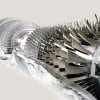
GE Power has installed its Advanced Gas Path (AGP) gas turbine upgrade solution at the Iraqi Ministry of Electricity’s (MOE’s) Najibiya Power Plant.
The solution is expected to enable the MOE to increase the duration between the maintenance inspections of the gas turbines. This will decrease the downtime of the turbines and improve the availability and performance of the plant, allowing each gas turbine to feed power into the national grid for longer periods, helping to meet the country’s growing energy needs. It will also help the MOE to lower annual operations and maintenance costs.
Mussab Almudaris, official spokesperson of the Iraqi Ministry of Electricity, said:
“We are focused on enhancing access to electricity for our people and one of the critical means to achieve this goal is to make the best possible use of existing power generation infrastructure. GE’s upgrade technology at the Najibiya Power Plant is helping us to do just that, supporting the delivery of electricity for longer periods of time from the same turbines. This was a much-needed solution, particularly with Ramadan, the month of fasting, and the hot summer months right around the corner.”
Operational since 2015, the Najibiya Power Plant is equipped with four GE 9E gas turbines, and runs primarily on heavy fuel oil (HFO) to generate a total of up to 500 megawatts (MW) of power that is fed into the national grid. The site is located in the southern governorate of Basra, close to the Iraq-Kuwait border – one of the hottest inhabited locations in the world, where temperatures often exceed 50 degrees Celsius.
The power generated at the facility is largely supplied to residents, businesses and industries in the area, and vital for the local population to cope with the extreme temperatures in Basra, helping to operate fans and air conditioners.
Joseph Anis, President & CEO of GE’s Power Services business in Africa, India and the Middle East, said:
“Access to uninterrupted electricity is a cornerstone of modern civilization and essential to a high quality of life ... GE’s Advanced Gas Path solution can help each turbine at the Najibiya Power Plant run for up to an additional three months per year when the plant is powered by heavy fuel oil, substantially increasing the amount of electricity available for both domestic and commercial use.”
In addition to providing the AGP solution, GE Power has also signed a five-year agreement in 2015 for the supply of parts, repairs and services at the Najibiya Power Plant. Furthermore, GE Power is providing round-the-clock on-site monitoring services for the gas turbines at the facility, whereby parameters such as the units’ temperature, vibration, speed and other indicators are continuously tracked and any disturbances immediately reported so the underlying issue may be identified and fixed to prevent faults and unplanned downtime.
Najibiya Power Plant is one of 8 sites where GE is installing a total of 36 AGP units under the Power Up Plan II. To date, over 130 GE turbines have been installed across Iraq and GE-built technologies generate up to 50 percent of Iraq’s power. The company has supported the development of the energy, healthcare and transportation sectors in Iraq for over 40 years and employs up to 300 people in the country, more than 95 percent of whom are Iraqi nationals.
(Source: GE)
Posted in Construction & Engineering In Iraq, Iraq Industry & Trade News, Iraq Oil & Gas News Comments Off on GE "Helps Najibiya Power Plant Reduce Downtime"
Al-Nukhba-OFS joins the IBBC
Posted on 04 April 2018 .
The Iraq Britain Business Council (IBBC) has announced that Al-Nukhba-OFS FZCO has become the latest member to join the Council.
Al-Nukhba OFS is one of Iraq’s preeminent organisations, involved in numerous sectors of the economy with many years of experience and has developed strong relationships with a host of international companies.
Al Nukhba OFS started its business in 2005 as an investor in the Basra area in the specialized fields and expanded business areas in water and wastewater treatment plants and pre-drilling oil field services, logistics & custom clearance and oil field services.
Al Nukhba OFS provides services such as end-to-end logistics solutions and services along with of value added services to customize your supply chain to meet your precise goals and requirements. Their dedicated teams select and apply the exact resources you need to improve your business’s performance and provide flexibility for a dynamic marketplace.
Al Nukhba OFS has relationships with major companies for energy projects and has a contract with the Ministry of Electricity, Iraq and hold an exclusive HCL distribution contract with the Ministry of Industry & Minerals for AL Furat Factory. Al Nukhba is cooperating with major power companies i.e. Ansaldo Energia to develop the power sectors in Iraq and have strong support from Wood Group P&W through their Iraq Agent for the development of power section as well.
Al-Nukhba OFS are associated with numerous notable companies, such as Baker Hughes, ENKA, Eni, Scania, Daewoo, Petromid, KOGAS, Techno Engineering, TAAZ, Oilserv. Al-Nukhba OFS have successfully completed a number of projects for them, including mobilization/maintenance of RIG, Logistics and other life support services, Surveillance, Fuel & Manpower supply, Distribution & Warehousing, Camp & Site Preparation/Maintenance besides 4PL logistics and other subcontracting jobs and provide immigration services too.
Al-Nukhba OFS currently act as an agent, supplier and distributor for:
- Parker Trade Link International (A Supply Chain Management Company)
- Chesterton
- Bentonite, Calcium Carbonate and other minerals for all varieties
- Power Generator
- Nystrom Building Materials
(Source: IBBC)
Posted in Construction & Engineering In Iraq, Iraq Industry & Trade News, Iraq Oil & Gas News Comments Off on Al-Nukhba-OFS joins the IBBC
KRG, Pearl agreement to boost Electricity Generation
Posted on 22 March 2018 .
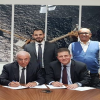
The Kurdistan Regional Government (KRG) and Pearl Petroleum have signed an agreement to increase production of gas from the Khor Mor field later this year, to boost much needed electricity generation for the people of the Kurdistan Region and Iraq as a whole.
The 10-year gas sales agreement will enable gas production from Khor Mor field to increase by 25% later this year, from 320 million cubic feet per day currently to 400 million cubic feet per day.
Dr Ashti Hawrami, KRG Minister of Natural Resources, said:
“We are pleased to see the further commitment of expansion and investment by the companies and the anticipated growth in gas supplies will make a positive contribution to the growing domestic needs for more electricity.”
As part of a final settlement of arbitration in August 2017, Pearl Consortium, which is led by Crescent Petroleum and Dana Gas, committed to expanding their investment and operations in the region.
The companies plan a multi-well drilling program in the Khor Mor and Chemchemal fields, as well as installation of new gas processing and liquids extraction facilities. The overall aim is to increase gas production by a further 125% within two years, to 900 million cubic feet per day.
KRG also welcomes Dana Gas and Crescent Petroleum’s expansion of their local training and employment programs, as agreed in the arbitration settlement. The companies employ close to 500 full-time local personnel representing over 80% localisation, and have training programmes to increase this figure further.
See also the Dana Gas press release on the Gas sales agreement (external link)
(Source: KRG)
Posted in Iraq Oil & Gas News Comments Off on KRG, Pearl agreement to boost Electricity Generation

INOC Law: Dysfunctional, Unconstitutional and Disintegrative
Posted on 12 March 2018 .
By Ahmed Mousa Jiyad.
Any opinions expressed are those of the authors, and do not necessarily reflect the views of Iraq Business News.
The Parliament voted in its session No. 14 of March 5, 2018 on a law reinstating the Iraqi National Oil Company-INOC.
Briefly, the law passed hastily at a critical pre-election time with clear populist politics orientations and motivations.
The law suffers from serious gaps and inconsistencies between the functions of the company and its organisational structure and composition of its management; creates two competing entities for the management of the petroleum extractive sector; it is a blatant afoul to the Constitution; converts sovereign revenues into commercial proceeds for a public company; assigns tasks that are not at all related to its nature as an oil company and, the most dangerous assertion, it legalises the breakup of the country.
Views expressed by its proponents manifest a tactic of known populist politics taking advantages of the national election campaign and thus contributing to the timing and passing of this damaging law; INOC deserves much better law than this.
The executive authority (the Council of Ministers) should act immediately to stop the promulgation process of the law; ask the State Consultative Council to examine the due legitimacy of the law and finally, challenge the constitutionality of the law before the Supreme Constitutional Court.
This was premised on the following assessment:
At the outset, it is necessary to make a caveat. The "final version" of the law was not published on the website of the Parliament; what was published on March 7 is the text of the "first reading" before the vote. The "final version" was posted to me by three parliamentarians; it is the version that was adopted in this evaluation after ensuring that the three copies were identical.
First, the text of the law is completely different from the draft law submitted by the government in April last year; so why and why now?
In the substantive, this is an imposed law by the parliament on the government, which turns the constitutional process upside-down and, thus, the legislative branch breaches the prerogatives of the executive branch. This would surely prompt the latter to invoke its constitutional rights before Supreme Constitutional Court; and it should do so..
Moreover, one could questions the motives and the timing as the country is in the height of the national election and thus, it is the time for populist politics by the proponents of the law. They, i.e. the advocates of the law, assume that those in government are preoccupied with the election campaign and thus would dare to object to such populist appealing politics that is translated into specific provisions, i.e. Article 12, as discussed latter.
Second, the law attaches INOC to the Council of Ministers-CoM and gives its chairman the status of a Minister. In spite of INOC importance, there are serious concerns on this setup:
- There are absolutely no compelling and convincing justifications to or merits in attaching INOC, which is an oil producing company, to the highest executive authority in the country; it was never directly attached to CoM since its creation in the sixties;
- INOC, according to this law, deals with only one sub-sector of petroleum and, thus, this formula may cause damage and conflict in the management of upstream petroleum between two entities, each is headed by a minister. Case to remember is the trade of accusations and blame-game on power shortage and outage between the Ministries of Oil and of Electricity regarding the supply of fuel to power plants;
- The proponents of the law argued for the need to separate the “regulator”, i.e. MoO from the “regulated”, i.e., INOC. That is really absurd; how is it logically, organisationally and operationally possible to have a healthy and functional regulator-regulated relationship when the two entities have an unequal “legal” status and, moreover, when the regulated is attached to higher authority than the regulator!? Illogical and inconsistency and the outcome could very well be a chaotic relationship that could impact negatively the entire petroleum sector.
Ironically, the proponent of this arrangement consider this as “checks and balances”; they really and apparently do not understand what checks and balances entail and between what authorities.
Third: Among the objectives of INOC is, "investment in processing oil and gas industry"; this means investment in refining, gas utilisation and petrochemicals. Leaving rhetorical phrases that dominate the law, there is too much ambiguity regarding the above objective.
- Does the law consider INOC as “investment agency” and it should or could invest in the above mentioned activities/industries? Will it invest in the current or future projects or in its own projects? How it could do that while the law provide nothing in its structure and tasks on these activities;
- Currently, refining activities and gas processing are within the domain of MoO, while petrochemicals fall within the Ministry of Industry and Minerals-MIM. Yet, there are no representatives for the refining sub-sector, i.e. the three state refining companies: North-NRC, Central-MRC and South-SRC in INOC Board of Directors-BoDs;
- It is also strange that the two state gas companies, i.e. North Gas and South Gas were excluded from the list of companies owned by INOC and they are not represented on INOC BoDs. Obviously, gas related activities remain with the Ministry of Oil and this generates further complications, which the law ignores to address: I- it split the upstream petroleum activities between MoO and INOC; II- while INOC, under this law, is responsible for all fields contracted under the licensing rounds, the above split leaves in limbo all free gas fields contracted under third bid round; all gas utilisation provisions under second bid round and all gas discoveries under fourth bid round; III- the organic direct linkage between oil and gas issues since all current gas production is associated gas, which could have detrimental impacts on gas utilization and leaves gas flaring accelerating at a faster pace;
- Under current modalities, SOMO, the oil marketing company, is responsible for imports and exports of all petroleum products though it could assign some of these tasks to other entities, e.g. export of fuel oil through IOTC. Now, with SOMO been part of INOC and the latter is not part of MoO would create further hurdle especially for exporting excessive fuel oil, LPG, naphtha and condensate/NGL
Fourth, among the means INOC has to achieve its objectives is to "manage and operate the main oil pipeline network and ports of export." However, the state Oil Pipelines Company is not mentioned in the list of companies owned and associated with INOC; the same applies to southern oil export terminals, i.e. al-Basra Oil Terminal-BOT, Khor al-Amaya Oil Terminal-KAOT and the four single point moorings (SPMs). How could INOC manage and operate the pipelines of another company and ports of export it does not own?
To operationalise that, INOC has to conclude arrangements with MoO, but the law avoids specifying such requirements.
Fifth, the law did not specify INOC “organizational structure” except the composition of its BoDs, which was assigned that task when drafting INOCs’ bylaws.
But the law returns to restrict BoDs by stating, "INOC Board of Directors can, with the approval of the Council of Ministers, introduce any change to its organizational structure”.
Sixth, BoDs functions did not include any reference to the contracts (in terms of type, the power to sign and ratify, and the manner and stages of the contracting modality and other legal, procedural and operational aspects) to be concluded by INOC for the development of petroleum fields. This is a fundamental flaw, whether by intention or omission, and leaves the door open to conclude contracts afoul to the Constitution.
Seventh, SOMO occupies critical and significant importance, but this law is rather ambiguous about it. The article specifying the functions of the Chairman of BoDs does not include any mention of SOMO, while the law links this company to the Chairman where it mentions, "directly responsible for supervising the oil marketing company".
Apart from the ambiguity of the law, this could create managerial complexities that could undermine SOMO operational flexibility in a highly competitive and volatile international oil market; the history of SOMO justifies very clearly such flexibility and thus it would be a grave mistake to ignore the obvious lessons of the distant and recent past!!
Probably, a way out from this impasse could be through:
- Appointing SOMO’ DG as INOC Deputy Chairman for SOMO matters;
- Any decision by INOC BoDs regarding SOMO should be subject to the agreement and approval of SOMO DG;
- In case of disagreement, that should be resolved by debating the matter before and by the decision of the Council of Ministers.
Eighth: The law included a paragraph akin to that has been repeated in the budget laws since 2015 that "obliges INOC to review the concluded service contracts and modify them to ensure the interest of the Iraqi people."
This rigid and politically motivated mind-set seems to be unaware that these contracts have been amended already and to the detriment of the Iraqi interests and any further amendments would be even more devastating.
It is also apparent that the advocates behind inserting this paragraph are behind leaving the mention of the contracts type (discussed above).
It is strange that this text was included in the specific paragraph on "the management of service contracts that were concluded in the bid rounds ", while the law mentions nothing at all to the, illegal as officially declared by the government, production sharing contracts of the KRG!!!
Ninth, the law comprises too many generalities that are not directly related to the nature of national oil company work; undefined terms for BoDs; complete exclusion of KRG petroleum, though the "Undersecretary of the Ministry of Natural Resources in the Region" is includes in INOC BoDs among others.
Tenth, but the most ridicule, disintegrative, destructive and unconstitutional aspects of this law is those covered by Article 12. Moreover, the proponents of this law have actually expressed confused inaccurate and shallow understanding of basic issues and known terms and concepts they themselves use such as “Alaska model”, “checks and balances”, “renter state”, “role and functions of INOC”, “oil and gas ownership”, “societal forces” among others.
This (Article 12) must be completely deleted from the law for the following reasons:
- It considers revenues generated from the export and sale of oil and gas as "financial revenues for INOC”. This is a flagrant violation of the Constitution, which states that oil and gas belong to the Iraqi people and not a financial return to one public company. Moreover and as mentioned earlier, gas industry and gas companies were excluded from INOC so what are the legal premises that make gas revenues income to INOC?
- Currently, as have been the case since early years of the Iraqi state, petroleum export revenues are, legally considered sovereign revenues, and in the international standards they are managed by sovereign entities namely the Ministry of Finance and Central Bank of Iraq. Thus, such revenues acquire good degree of sovereignty protection under international financial law and international banking and financial institutions. By considering these state sovereign revenues of oil exports as financial revenues for a public company deprives these revenues of the sovereign status and thus exposes them to all forms of seizure and confiscation in implementation of any judicial action in any place where the proceeds exist. This exposes oil export revenues to many high risks.
- The law gives the unelected limited number of INOC BoDs the supreme powers and authority to effectively determine the contribution of oil export revenues in the annual state budget and thus decides the welfare and development of the entire economy! This means that INOC BoDs becomes more important than the Ministry of Finance, the Central Bank and the Cabinet in determining the level of budget expenses; hence the Fiscal Policy, the Monetary Policy and Development Policy all became captive to INOC BoDs. What a non-sense!!
- The Law authorizes INOC BoDs to establish, finance and manage financial entities that are not related to the nature of its activities as an extractive oil company. These entities are the “Citizens Fund”, “Generations Fund” and “Reconstruction Fund”. It is rather strange that these entities, which are usually the functions and powers of the government, especially the Council of Ministers and related ministries, become the exclusive authority of INOC BoDs under this law!
The proponents of this article seem to repeat the same misguided views they insisted on more than ten years ago when they inserted the same funds into the ill-fated oil and gas law and thus contributed to the demise of that law. Strangely enough they argue that these measures by INOC BoDs would end the “renter state”! What a gross misunderstanding of a deep and complex macro structural issue, which what renter state really means, and what it entails of structural changes in the real economy sectors.
Undoubtedly, these three funds are important and urgently needed but INOC has absolutely nothing to do with them. They should be considered and debated thoroughly, explore best possible way to create, manage and fund them through well-articulated legal and institutional framework and transparent governance; as I have debated them previously.
- This article provides the legal cover for disintegrating the country by legalising the breakaway of the producing provinces. “One of the architects behind the new law” was reportedly said the following on the importance of Citizens Fund, “If Basra decides for tomorrow to be independent and sell their oil and gas without INOC. INOC is a window for upstream and marketing, okay? If they decide that fine, it's your decision, but you will not get your share in that fund. Basra people will not [receive] it, because you are not delivering oil and gas to INOC.” What a shocking, irresponsible and misguided statement!!
First, Basra oil company-BOC produced, in January 2018, 73.6% of total Iraqi production; Basra people would be better-off to keep this percentage against losing their share in the Citizens Fund, which is almost nothing compared with what they will keep. Moreover, their action according to this law is fully legal. The same applies to Missan province, which produces 10.6% of total Iraqi oil production, and so on;
Second, if Basra, Missan and any other oil producing provinces apply this law and keep the revenues of “their” oil what will be left to INOC BoDs?? Nothing, and that terminates the existence of INOC!!
Third, if the above occurs then the constitutional basic principle of “oil and gas are owned by all people of Iraq” would be grossly and emphatically violated.
Fourth, in consequence to the above, the country will practically disintegrate and most likely severe civil war irrupts and regional conflicts escalate.
Hence, the unconstitutionality of this law becomes apparent and why it is very doubtful, therefore, that the proponents of this article have never understood the Constitution correctly though they keep referring to it!!!!
- Also this Article 12 provides the legal cover for formalised corruption and Kleptocracy by assigning to the above three Funds at least 10% of the revenues of the oil exports at the discretion of INOC BoDs. Apart from the high likelihood of abusing such significant funds, a newly reinstated INOC does not and would not have the capacity to manage these funds and thus could derail the company from performing its core functions and duties as an oil company concerns with the development of the upstream petroleum.
In the light of the above it is vital and absolute urgency that:
- The Executive Authority (Council of Ministers) to immediately move to interrupt the process of promulgating this law with the President of the Republic (to hold his approval of the law) and with the Ministry of Justice (to suspend publishing the law on the Official Gazettes- Alwaqee Aaliraqiya);
- The Council of Ministers should request the State Consultative Council to review and identify the illegality of the law;
3 - The Council of Ministers should challenge the constitutionality of the law by launching an appeal before the Supreme Constitutional Court.
INOC deserves much better law than this as this law would disintegrate the country and thus must be revoked.
Norway
12 March 2018
Earlier Arabic text was circulated 8 March 2018 among my network and posted on many websites including: http://www.akhbaar.org/home/2018/3/241534.html
My previous writings on INOC law can be accessed as below:
For Effective and Relevant Law for Iraq National Oil Company-INOC (in Arabic, with Tariq Shafiq), Posted on 19 May 2017 on IBN website https://www.iraq-businessnews.com/2017/05/19/for-effective-and-relevant-law-for-iraq-national-oil-company-inoc/ ) and on many other websites.
The New INOC Law: Brief and Dysfunctional, Posted on 24 April 2017 on IBN website https://www.iraq-businessnews.com/2017/04/24/the-new-inoc-law-brief-and-dysfunctional/ the Arabic text was published by Assabah Aljadeed (NewSabah) Newspaper, Baghdad on 26 April 2017 http://newsabah.com/newspaper/119474
Proposed INOC Law Could Disintegrate Petroleum Sector and Damage the Iraqi Economy, Posted with updated 16 & 22 March 2016 on IBN, https://www.iraq-businessnews.com/2016/03/16/proposed-inoc-law-could-disintegrate-petroleum-sector/ Also posted on the Iraqi Al-Akhbar http://www.akhbaar.org/home/2016/3/208752.html and http://www.akhbaar.org/home/2016/3/209136.html
Article-by-article analysis of INOC Law. Expert Opinion submitted before the Experts’ Hearing Session, Oil and Energy Committee, Iraqi Parliament. 3rd July 2011, Posted on: http://iraqog.com/oil/oillaw/jiyadjuly2011.htm; and https://www.iraq-businessnews.com/2011/07/07/detailed-analysis-of-draft-inoc-law/
INOC Law: Shaky Premises and Doubtful Prospect, MEES v54:n20, Monday 16 May 2011.
Remarks on the Proposed INOC Law. Presentation delivered before MENA 2009 Oil &
Gas Conference, Imperial College, University of London, UK. 28th- 29th September 2009.
http://www.targetexploration.com/MENA09.pdf and published on MEES 52:40, 5 October 2009.
Technical assessment of the INOC Law. Posted on Iraq Oil Report http://www.iraqoilreport.com/the-biz/technical-assessment-of-the-inoc-law-2121/
The new draft INOC law takes us back to square one” posted on Energy Intelligence http://www.energyintel.com/n/portal/iraqs-second-oil--gas-bid-round.aspx
Please click here to download the full article in pdf format.
Mr Jiyad is an independent development consultant, scholar and Associate with the former Centre for Global Energy Studies (CGES), London. He was formerly a senior economist with the Iraq National Oil Company and Iraq’s Ministry of Oil, Chief Expert for the Council of Ministers, Director at the Ministry of Trade, and International Specialist with UN organizations in Uganda, Sudan and Jordan. He is now based in Norway (Email: mou-jiya(at)online.no, Skype ID: Ahmed Mousa Jiyad). Read more of Mr Jiyad’s biography here.
Posted in Ahmed Mousa Jiyad, Iraq Oil & Gas News Comments Off on INOC Law: Dysfunctional, Unconstitutional and Disintegrative
Iraq to continue Importing Electricity from Iran
Posted on 12 March 2018 .
By John Lee.
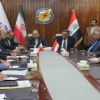
Iraq’s Minister of Electricity Qassim Mohammad al-Fahdawi has met with a visiting delegation from Tehran headed by Iran's Minister of Industry, Mine and Trade, Mohammad Shariatmadari.
They renewed for an additional year a contract under which Iran sells electricity to Iraq.
Through four major supply lines, Iran sends 1,000 megawatts of electricity to Iraq.
(Sources: Ministry of Electricity, Rudaw)
Posted in Iraq Industry & Trade News Comments Off on Iraq to continue Importing Electricity from Iran
Locals Criticise Uncoordinated, Propaganda-Happy Reconstruction Efforts
Posted on 12 March 2018 .
This article was originally published by Niqash. Any opinions expressed are those of the author, and do not necessarily reflect the views of Iraq Business News.
By Kamal al-Ayash.
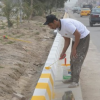
The authorities are spending a lot of money on reconstruction in the Anbar province. But locals are complaining, saying basic needs are not being fulfilled and the rest is just window dressing.
When you arrive in the major Anbar cities of Fallujah or Ramadi, you would be forgiven for thinking that reconstruction is well under way. But if you head out of the city centres and check the residential neighbourhoods you will see disconnected power lines and broken water pipes, as well as those who live here working outdoors, trying to fix such things.
Many Anbar locals, who were displaced by the extremist group known as the Islamic State, have now returned to their homes.
“In January 2018, for the first time in more than three years, there were more returnees than internally displaced people,” the United Nations’ International Organization for Migration reported recently. Thanks to improving conditions, Anbar province has seen the largest number of returnees in Iraq, the organization noted.
Many of those who returned say they came back because the Iraqi government told them there would be a swift return to normality and reconstruction. However many of the locals who have come back have found that although there is reconstruction, the authorities undertaking it seem to have some misplaced priorities and that they must provide for themselves, rather than wait for the government to fix things.
Ahmad Abdul-Hamid, 43, has just finished fixing up his barber shop in Fallujah. He was ready to open again but found he could not get to his premises because the municipal authorities were removing and replacing the sidewalks. This kind of work is impressive and shows that the authorities care about the citizens, Abdul-Hamid says, but their timing was off. They should ask the people here what they need and want, and prioritize that, he argues.
“The sidewalks that are being removed and replaced have no real impact on our lives. It wouldn’t have mattered if they had not been reconstructed for years,” Abdul-Hamid said, adding that he would have preferred to see the water and sewage networks fixed first, because these are things that actually endanger people’s lives.
“The money seems to be being spent in an unplanned, uncoordinated way,” Abdul-Hamid complains. “It should be used to compensate those who are still living in tents, in the middle of the rubble that was once their home.”
Locals say it is true that dozens of reconstruction projects have been completed. But they believe that at least some of these have been finished at the expense of their own basic needs.
Another Fallujah local, Jihad al-Dulaimi, 44, tells NIQASH that when he asked the city council for new wiring for power cables so he could fix his own electricity supply, he was told that there was no budget for this. Al-Dulaimi was angry and replied that they had somehow got enough funds to renovate their own council offices.
“Working in this way, the government is disregarding the real needs of the people here,” he says. “We don’t want to see huge sums spent on projects that are clearly not urgent and which could be postponed.”
Al-Dulaimi also questioned why efforts were being made to build a new park when bridges were still damaged and new sidewalks painted, when the streets were impassable.
Many Fallujah residents share that opinion. They believe that officials are embarking on easy-to-complete projects that make them look good, just in time for federal elections in May.
It’s not that we are not appreciative, says Mahdi al-Halbusi, a 51-year-old living in Ramadi, but “it feels like the authorities are decorating the outside of a house, in which nobody can live because the insides are so damaged”.
He and his family returned to Ramadi over a year ago and he feels as though a lot of the completed projects have just been attempts at image making. “Nothing has really changed, the situation is still tragic, since we returned,” he says.
Al-Halbusi says he likes walking around some areas, where there are new, coloured pavements and where the government offices and other nearby buildings look so nice. But that feeling gives way to dismay as soon as he enters any of the residential areas.
“I used to think my mother was the only person who would prepare the house for visitors by putting away our everyday things and bringing out the best,” he jokes. “After the visitors left, we would go back to normal, with everything back in its usual place. That is exactly what it feels like in this city now.”
Posted in Construction & Engineering In Iraq Comments Off on Locals Criticise Uncoordinated, Propaganda-Happy Reconstruction Efforts
Govt-Wide Institutional Performance Management in Erbil
Posted on 08 March 2018 .
Launching the capacity building program on "Government-Wide Institutional Performance Management"
The first in a series of capacity building workshops has been concluded in Erbil, Iraq.
With the ultimate aim of helping Iraq reinforce its accountability and efficiency mechanisms, the workshop’s objective was to improve the Iraq public sector readiness to apply a new model of performance management entitled “Iraqi Government-Wide Institutional Performance Management Model”.
The model was developed by the Council of Ministers Secretariat (CoMSEC), with UNDP technical support, in consultation concerned public sector instititions in Iraq, and is based on the “European Foundation for Quality Management (EFQM)” standards”.
It was endorsed by the government in March, 2017 for piloting in three ministries for validation: Youth & Sports, Electricity and Commerce. Lessons learnedduring the piloting phase completed in Nov, 2017 were taken into account to further develop the model, which will be scaled up in May, 2018 across public sector institutions.
This series of capacity building workshops target the “Performance Management Teams” at the participating public sector Institutions, who will be entrusted with applying the “Iraqi Government-Wide Institutional Performance Management Model” at the ministries they represent.
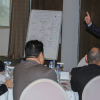
The first workshop targeted 31 participants from the Ministries of Agriculture, Water Resources, and Industry and Minerals, and CoMSEC. Participants discusssed the fundamentals of institutional performancemManagement and went through the “Excellence Journey”. The workshop implementation strategy was based on the fundamentals of adult learning, where peer and experiential learning combined with high degree of participates’ involvement took place. The workshop activities were divided between methodological presentations and practical exercises. The contents built on the insight and experience available in the European Foundation for Quality Management (EFQM)”.
Addressing the workshop participants, the Head of Control and Audit Directorate at CoMSEC, Mr. Riyad Fadil, emphasised the fact that the government is closely monitoring the development and deployment of the model and looking forward to seeing the results of replication across all public sector institutions at the federal Level. He also added that, “Our team is ready and willing to provide all the support possible to advance this initiative further”.
The Iraq Public Sector Modernization Program Manager, Mr. Hisham EL Azzouni, highlighted that “This is a nationally-owned and led initiate that is currently supported by UNDP". He also added that “The model isn’t an end in itself, but a mean for improving the performance of public sector in Iraq”. He also assured the participants that IPSM-UNDP will spare no effort to make the model a reality and will provide GoI with the support they need in this regard.
The implementation of this program comes within the framework of IPSM-UNDP support to GoI to have more efficient, accountable and participatory governance at national and sub-national levels. The program aims also at improving the administrative systems at federal and sub-natopnal level, coupled with strengthening the sub-national governance and decentralised service delivery systems through enhanced participatory processes.
(Source: UNDP)
Posted in Iraq Education and Training News, Politics Comments Off on Govt-Wide Institutional Performance Management in Erbil

KRG "could Suspend" Erbil Domestic Flights
Posted on 06 March 2018 .
A Kurdistan 24 press quoted Talar Faiq, the Director-General of Erbil International Airport (EIA) as saying that the KRG could suspend domestic flights between the Kurdistan Region’s airports and the rest of Iraq due to financial issues and Baghdad’s international flight ban.
“Since the Iraqi government’s ban went into effect late September 2017, Iraqi Airways has not paid for its landings at the EIA [for flights originating from Baghdad and other Iraqi airports],” Faiq said. “Baghdad owes the EIA an amount of 37 million USD for landing at the airport,” the Director-General added.
The EIA had previously warned that Baghdad’s ongoing embargo on the airports in the Region might lead to the suspension of domestic flights, as the expenditure at the local airports would be higher than the revenues generated.
It would be difficult to handle its $2.3 million monthly expenses which include employee salaries, allowances, fuel, utilities, electricity, cleaning, and maintenance due to decreased income following the international flight ban,” the EIA said in a statement. “The flight ban also forces the EIA to suspend contracts with French and German companies worth USD 35 million [to renovate and expand the airport],” the statement added.
(Source: GardaWorld)
Posted in Iraq Transportation News, Politics, Security Comments Off on KRG "could Suspend" Erbil Domestic Flights
Report: Shaping Iraq's Oil and Gas Future
Posted on 28 February 2018 .
By John Lee.
A new report for the Atlantic Council argues that gas, being less politically fraught than oil, has the potential to serve as a key area of cooperation between Baghdad and Erbil and could help improve the reliability of electricity supply.
In Shaping Iraq's Oil and Gas Future, Ellen Scholl recommends that:
- Baghdad and Erbil must get the incentive structure right. Part of the incentive structure should include supportive gas pricing.
- Institutions should mirror ambition.
- Baghdad and Erbil should take a comprehensive approach to developing and integrating infrastructure throughout the supply chain, including mid- and downstream infrastructure.
The full report can be downloaded here.
(Source: Atlantic Council)
Posted in Iraq Oil & Gas News Comments Off on Report: Shaping Iraq's Oil and Gas Future

Natural Gas Must Be an Asset for Iraq
Posted on 20 February 2018 .
By Alessandro Bacci.
Any opinions expressed are those of the author, and do not necessarily reflect the views of Iraq Business News.
On February 27-28, 2018, the C.W.C. Group, an energy and infrastructure conference, exhibition and training company, will organize in Berlin, Germany, the twelfth edition of Iraq Petroleum, which is one of the major events concerning Iraq’s oil and gas sector.
One of the main topics of Iraq Petroleum 2018 will be the development of Iraq’s natural gas reserves with the specific goal of strengthening energy-intensive industries to diversify the Iraqi economy.
In Iraq, natural gas might really be the key driver to develop additional industrial sectors. In fact, natural gas may be used for power generation (electricity), petrochemicals, fertilizers, and other heavy industries in which gas is the primary feedstock.
In this regard, some analysts might object that the development of these new industrial sectors would not really change the picture for Iraq because its economic development would still be too linked to the oil and gas sector—in practice Iraq’s economy would continue to be overaffected by the price of oil and gas.
This observation is by no means wrong, but it’s also true that, apart from increasing oil exports (and in this regard, it will be important to see how Iraq will deal in the future with OPEC’s quota restrictions) to improve its economic standing Iraq does not have many alternatives to developing its natural gas resources and then using them to add other industrial sectors to the economy.
Please click here to download the full report.
Alessandro Bacci is an independent energy consultant in relation to business strategy and corporate diplomacy (policy, government, and public affairs). Much of his activity is linked to the MENA region, an area where he lived for four years. Alessandro is now based in London, United Kingdom (www.alessandrobacci.com). A multilingual professional, Alessandro holds a Bachelor of Laws and Master of Laws from the University of Florence (Italy), a Master in Public Affairs from Sciences Po (France), and a Master in Public Policy from the Lee Kuan Yew School of Public Policy (Singapore).
Posted in Alessandro Bacci, Iraq Oil & Gas News Comments Off on Natural Gas Must Be an Asset for Iraq