


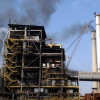
MHPS to Upgrade Hartha Power Station
Posted on 26 January 2018 .
By John Lee.
Iraq's Ministry of Electricity has reportedly awarded a contract to Japan's Mitsubishi Hitachi Power Systems (MHPS) to refurbish the Unit 1 of the Hartha thermal power station (pictured) in Basra province.
According to Energy Business Review, the power station is claimed to account for approximately 25 percent of Basra's total power generation capacity.
It's original equipment was developed by Mitsubishi Heavy Industries (MHI).
Funding will be provided by Japanese Official Development Assistance (ODA) through the Japan International Cooperation Agency (JICA).
Mitsubishi Electric will be responsible for the generator-related work, while the Turkey's Gama Power System will be responsible for installation and other work.
The work is scheduled to be completed in 2020.
(Source: Energy Business Review)
Posted in Iraq Industry & Trade News Comments Off on MHPS to Upgrade Hartha Power Station
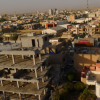
Kurdish Investors put their Money Elsewhere
Posted on 19 January 2018 .
This article was originally published by Niqash. Any opinions expressed are those of the author, and do not necessarily reflect the views of Iraq Business News.
By Sarchin Salih.
Kurdish Crises Drive Kurdish Investors to put their Money Elsewhere
It’s not only Iraqi and international investors getting their money out of Iraqi Kurdistan. Financial and political problems are also leading locals to invest further south.
Ahmad Ali is an Iraqi Kurdish businessman who’s been living in the Erbil province, in Iraqi Kurdistan, for years. In the past Ali often looked at the semi-autonomous northern region of Iraqi Kurdistan as the best place to invest his money. Not anymore.
Currently Ali is looking into building a mall and supermarket in the Kirkuk province, outside of Iraqi Kurdistan’s official borders, at the cost of US$50 million. He is also working on a residential project in the southern province of Dhi Qar.
“As an investor, I look for the best opportunities. I don’t care about geography,” Ali told NIQASH. “At the moment southern and central Iraq are the best places to put my money.”
The market in Iraqi Kurdistan is dead right now, Ali says, thanks to the financial and political crisis here.
“The last few years we have dealt with a financial crisis, a slowdown and a significant decline in investment,” Yassin Mahmoud Rashid, the spokesperson for the Kurdistan Investors' Union, told NIQASH. “About 20 percent of investors have now left this market thanks to a decline in demand and the losses being incurred by some projects.”
In the past the Iraqi Kurdish government had guaranteed investment projects a steady supply of electricity and tax cuts for certain time periods, Rashid pointed out.
Posted in Investment Comments Off on Kurdish Investors put their Money Elsewhere

Anbar eyes Political Battle as Displaced Return
Posted on 17 January 2018 .
By Shelly Kittleson for Al Monitor. Any opinions expressed here are those of the author and do not necessarily reflect the views of Iraq Business News.
Two months after government forces retook Iraq’s last major city from the Islamic State (IS), the country is preparing for parliamentary elections slated for May.
Anbar, its largest and westernmost region, is where IS took control of its first Iraqi city in January 2014. Fighters from the international terrorist group are reportedly still hiding in parts of its vast desert.
How the shift from fighting a terrorist group with roots in the area to competition at the political level plays out will affect the years to come.
Provincial Gov. Mohamed al-Halbusi, who took office in the fall, told Al-Monitor that voter turnout had been very low in the province for many years due to the fear of insurgents but that he expected this to change in the upcoming elections.
Local officials, security forces and a tribal leader echoed that sentiment to Al-Monitor over a number of days in the province in early January. “About 85%” of the province’s inhabitants are home, Halbusi said, and “I think about 60% of them will vote.”
However, with many of the displaced still not back in their homes, some have called for the elections to be postponed.
Recent reports of forced returns from internally displaced person (IDP) camps scattered around the Sunni-dominant Anbar region and elsewhere in the country have also raised concern.
In an interview in Ramadi, provincial police chief Gen. Hadi Rizej Kessar told Al-Monitor, “We decided to close all IDP camps and send families back to their homes because the security is now good. But if we have some families that remain in the camps, we can arrange for them to vote inside the camps.”
Posted in Politics, Security Comments Off on Anbar eyes Political Battle as Displaced Return
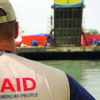
US Helps Meet the Needs of Minorities in Iraq
Posted on 16 January 2018 .
Continued U.S. Assistance to Better Meet the Needs of Minorities in Iraq
The United States Agency for International Development (USAID) and the United Nations Development Programme (UNDP) have agreed to increase assistance to Iraqis, particularly religious and ethnic minorities, to enable them to return to their homes in areas liberated from ISIS.
Following Vice President Pence's remarks in October of last year, USAID renegotiated the terms of its agreement to contribute to the UNDP Funding Facility for Stabilization (FFS) so that $55 million of a $75 million payment will address the needs of vulnerable religious and ethnic minority communities in Ninewa Province, especially those who have been victims of atrocities by ISIS.
The modified agreement ensures that the U.S. contribution will help the populations of liberated areas in Ninewa Province resume normal lives by restoring services such as water, electricity, sewage, health, and education.
The $75 million contribution is the first tranche of the $150 million announced for the FFS by U.S. Ambassador to Iraq Douglas Silliman in July 2017; fulfillment of the rest of that pledge will depend on UNDP's success in putting in place additional accountability, transparency, and due-diligence measures for the FFS.
USAID is also proceeding with a process called a Broad Agency Announcement to solicit innovative ideas that support the resettlement of ethnic and religious minorities in their ancestral homes in Iraq. The results of that competition will be available by early Spring.
(Source: UN)
Posted in Construction & Engineering In Iraq Comments Off on US Helps Meet the Needs of Minorities in Iraq
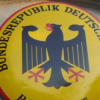
Germany now UNMAS’ Largest Contributor in Iraq
Posted on 14 January 2018 .
Germany now UNMAS’ largest contributor for clearance of explosive hazards in Iraq
The United Nations Mine Action Service (UNMAS) welcomes an additional contribution of € 17 million ($20.2 million) from the Government of Germany towards survey and clearance of explosive hazards in support of humanitarian and stabilization initiatives.
The overall contribution, totalling € 44.2 million ($52.5 million) since 2016, makes the Government of Germany the most significant donor to UNMAS in Iraq.
The recent contribution of € 10 million to enable Humanitarian efforts and additional € 7 million to enable Stabilization initiatives is timely as the Government of Iraq seeks to facilitate the return of over more than three million people to their homes in liberated areas.
UNMAS will focus on risk education and clearance of public spaces to support the safe, dignified and voluntary return of Iraqis as well clear critical infrastructure providing electricity, water, health and education services. Activities will be focussed in Anbar, Salahadin, Kirkuk and Ninewa Governorates.
The conflict with ISIL in Iraq has resulted in complex and extensive explosive hazard contamination and has displaced more than three million people since 2014. Explosive hazards present a significant risk for individuals returning to their communities, as well as those providing the initial response, especially in urban areas where explosive items are buried in rubble and debris from collapsed buildings. Humanitarian actors are challenged to safely provide assistance and people have been forced to abandon their homes due to explosive hazards.
Posted in Security Comments Off on Germany now UNMAS’ Largest Contributor in Iraq
US gives Additional $75m for Iraq Stabilization
Posted on 11 January 2018 .
U.S. Ambassador to Iraq Douglas Silliman has announced that the U.S. government is providing $75 million in additional funding to help stabilize Iraq following its full liberation from ISIS.
The United States plans to provide a total of $150 million for stabilization efforts in 2018, which will bring the total U.S. contribution to $265.3 million since 2015.
Ambassador Silliman said:
“Our commitment to the Iraqi people does not end with the eradication of ISIS. Communities in the liberated areas now face the daunting challenge of rebuilding their lives and restoring their cultural heritage.
"These funds will help restore basic services like water and electricity so that Iraqi families of all ethnic and religious backgrounds can return to their homes – safely, voluntarily, and with dignity.”
The funds will be provided through the U.S. Agency for International Development to the United Nations Development Program (UNDP). The UNDP stabilization program is supported by 24 international donors and managed in close cooperation with the Government of Iraq at the federal and local levels.
Strengthened by this new funding, the stabilization program will continue to help the populations of liberated areas return to their homes and resume normal lives by restoring services such as water, electricity, health, and education.
The stabilization program also supports temporary cash-for-work employment and grants to small businesses to jump-start local economies. Part of the additional U.S. funding announced today will address the needs of vulnerable ethnic and religious minorities, especially those who have been victims of ISIS atrocities.
(Source: US Embassy)
Posted in Construction & Engineering In Iraq, Security Comments Off on US gives Additional $75m for Iraq Stabilization
Kuwait Gas-Supply Pact -- Iraq "has Much to Gain"
Posted on 09 January 2018 .
By Salam Zidane for Al Monitor. Any views expressed here are those of the author, and do not necessarily reflect the views of Iraq Business News.
Iraq has much to gain from gas-supply pact with Kuwait
Kuwait will begin importing natural gas from neighboring Iraq this year, a development welcomed in Baghdad as it could improve Iraq's relations with the Gulf countries — relations that ruptured when Iraq invaded Kuwait in 1990.
Most of Iraq’s gas is associated petroleum gas, also known as flare gas. Associated petroleum gas is a byproduct of oil production, as opposed to natural gas that comes directly from gas reservoirs in the ground.
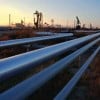
The Iraqi Ministry of Oil has decided to export associated petroleum gas from international oil companies operating in southern Iraq to Kuwait via a gas pipeline near Basra. Kuwait would then turn it into dry gas, condensates and liquid gas, among other types. According to the Ministry of Oil, Iraq flares 1.5 billion cubic feet of gas daily.
Ministry spokesman Assem Jihad told Al-Monitor, “Iraq will export to Kuwait the associated gas, part of which is flared on a daily basis. Processing natural gas is a complex and expensive industrial process that requires building plants through local and foreign companies.”
Jihad said, “Iraq is set to supply Kuwait with 50 million cubic feet of gas daily, which will gradually increase to 200 million cubic feet [depending on] international prices. The gas will be exported through the three-decade-old pipeline linking the two countries. The pipeline, however, needs maintenance. Iraq will take care of maintenance over the 30 kilometers [19 miles] of pipeline stretching within its territory, while Kuwait will handle its part of the pipeline.”
Iraq has lost billions of dollars annually as a result of wasteful gas flaring and its importation of diesel fuel for electricity. That's not to mention the low levels of energy efficiency because many Iraqi power stations run on dry gas, which is not produced locally.
What has compounded the problem is the reluctance of some oil companies to exploit associated gas despite the increase in Iraq's crude oil production from an average of about 1 million barrels per day in 2003 to roughly 4.3 million per day in December, which increased gas flaring from 700 million cubic feet to 1.5 billion cubic feet daily.
Kuwait will lay the pipeline to the neighboring Rumaila oil field, the largest in the world, under the supervision of the BP oil company. The agreement is likely to be implemented soon, since Kuwait has a demand for natural gas that exceeds its supply by an estimated 500 million cubic feet daily. Kuwait has been unable to curb this deficit in part because of tension among Gulf countries that has prevented Qatari gas from flowing into Kuwait via Saudi Arabia; Reuters reports that much of the shortfall is being covered by imports of liquefied natural gas.
The Iraq-Kuwait associated petroleum gas deal should help Iraq pay off the remaining reparations for the invasion of Kuwait, amounting to $4.5 billion.
Iraq's parliamentary Oil and Gas Committee criticized the government's energy policy for relying on the development of oil production and neglecting natural gas processing, which could put an end to the country's electricity crisis and launch petrochemical industries. Committee member Zaher al-Abadi told Al-Monitor, “Iraq is losing billions of dollars in flaring gas, while the Ministry of Oil is standing idly by.”
Oil expert Hamza al-Jawahiri, who is knowledgeable about the agreements between international oil companies and the Ministry of Oil, and between the ministry and various countries, said Kuwait will process the natural gas in Iraq and then transport it to its cities.
“As per the agreement, Kuwait will bear the expenses of building plants, processing and piping the gas,” he said. The gas will be processed in Iraq by separating impurities and non-methane hydrocarbons and fluids to produce dry natural gas.
Jawahiri added that Kuwait signed an agreement months ago with Basrah Gas Company, which is part of the latest gas export agreement, noting that other sources of gas will include rich oil and gas fields in southern Iraq. Basrah Gas is a consortium of three businesses including the majority shareholder South Gas Co., Shell and Mitsubishi. The consortium exploits gas from three oil fields.
Shaalan al-Daraji, Basrah Gas chief information officer, told Al-Monitor the company’s plan, which runs until 2021, aims to end the flaring of gas in the Zubair, Qurna 1 and Rumaila oil fields. “The company currently produces 700 million cubic feet of gas daily and has a strategic plan to stop gas flaring in oil fields," Daraji said.
Iraqi Prime Minister Haider al-Abadi expressed great support for the Kuwait agreement, which could end Iraq’s long-standing estrangement with the Gulf countries, as Kuwait has asked the United Nations Security Council to lift sanctions on Iraq.
Posted in Iraq Oil & Gas News Comments Off on Kuwait Gas-Supply Pact -- Iraq "has Much to Gain"
Albilal Group joins IBBC
Posted on 22 December 2017 .
The Iraq Britain Business Council (IBBC) has announced that one of Iraq’s most significant companies, Albilal Group, has joined the trade organization.
Not only is Albilal a major EPC to many IOCs in Iraq, but also to the ministries of Electricity, Oil & Gas, Water and Infrastructure.
ABG was established since 1993 with main offices in Iraq and branch offices in UAE, Jordan and Egypt. As a $309m turnover company, they are now one of the most trusted and largest local companies in Iraq. Akeel Abdul Razzak, President & CEO of Albilal explains:
“The key to our success is the quality and expertise of our core staff, with both expat managerial excellence and over 3000 local Iraqi project deliverers”.
Albilal believes in training and development of personnel and this has seen us through the last difficult years in Iraq, to emerge resilient, sustainable and more capable as an organization.
ABG’s network of clients and partners includes many international and national firms working across the country in numerous several sectors. Albilal has 13 years of experience working in the Oil & Gas sector, with base camps located in all major Oilfields in southern region of the country. in the Power sector, the group earned significant stripes constructing 14 power plants and 71 substations across the country.
ABG is considered a 1st degree civil, mechanical and electrical construction company classified by the Ministry of Planning and Chamber of Commerce, making them one of the top companies in Iraq that is licensed and that has the ability to conduct mid to large scale projects. Albilal Group has received numerous awards over the years, two of which being for Reliability, Quality of Service and High Safety, it’s also ISO certified (ISO 9001, 18001, and 14001).
The group is delighted to be working currently on various essential projects in Iraq, covering Oil & Gas and Power and are set for an expansive 2018 and remains at the forefront of development in the key growth market of Iraq.
Christophe Michels, MD of IBBC says:
“2017 has been an exceptional year for IBBC both in the volume and quality of attendees to our conferences in UK and Dubai, the very well attended and successful trade missions to Baghdad and Basrah and for the number of International and Iraqi companies that have joined our network”.
"Albilal joins new IBBC members Chevron, Al Burhan, Shamara and Ratba groups, Leicester and Northampton University, Serco, Rolls Royce, MenziesAviation and Xreach.
"All in all we are seeing confidence and opportunity return to Iraq, especially across the sectors of Infrastructure, Oil and Gas, Power and Education, with the promise of Tech and Professional services to follow in the coming year.”
(Source: IBBC)
Posted in Construction & Engineering In Iraq, Iraq Industry & Trade News, Iraq Oil & Gas News Comments Off on Albilal Group joins IBBC
Netherlands increases Support to Newly Liberated Areas
Posted on 18 December 2017 .
The Government of Netherlands has contributed an additional USD 14.2 million (EUR 12 million) to UNDP’s Funding Facility for Stabilization (FFS), which finances fast-track initiatives to stabilize areas liberated from the Islamic State of Iraq and the Levant (ISIL).
The Netherlands is currently the fourth largest donor supporting stabilization work in Iraq, with a total contribution of over USD 42 million.
“Now that combat operations against ISIL are over, the highest priority in the country is stabilizing the areas that have been liberated,” said Lise Grande, UNDP Resident Representative for Iraq. “There are urgent needs everywhere. This contribution from the Netherlands means that we can accelerate progress in the most sensitive areas, including Mosul.”
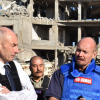
“Today, in the Old City of Mosul, I have seen firsthand the devastating destruction that ISIL has left behind. But I have also seen how life in other areas is coming back, thanks to the courageous work of the Iraqi people and local authorities, supported by UNDP’s critical rehabilitation projects.” said H.E. Matthijs Wolters, the Ambassador of the Kingdom of the Netherlands to Iraq, who visited several areas in Nineveh Governorate last week accompanied by senior officials from the United Nations Development Programme’s (UNDP) Funding Facility for Stabilization in Iraq and the UN Mine Action Service (UNMAS), to assess progress achieved on stabilization efforts across the province, particularly in the areas of education and health.
“The Netherlands stood with Iraq in its war to uproot ISIL. Today, we also stand with Iraq in peace, as a focus country for Dutch development aid. We are proud to support UNDP’s impressive stabilization effort in Iraq.”
At the request of the Government of Iraq, UNDP established the Funding Facility for Stabilization (FFS) in June 2015 to facilitate the return of displaced Iraqis, lay the groundwork for reconstruction and recovery, and safeguard against the resurgence of violence and extremism.
The Facility currently has 1,500 projects underway in 23 liberated cities and districts, helping local authorities to quickly rehabilitate essential infrastructure. More than 95 percent of all stabilization projects are done by the local private sector employing local labour. In Mosul, FFS is implementing 548 projects; 105 electricity, water, sewage, health, education and livelihoods projects are already completed.
“I recall well my own mother’s stories of the devastation of her hometown of Rotterdam, during World War II,” said Ambassador Wolters to a group of graduate students whom he met as part of his visit to the Women’s Education Faculty in Mosul University, drawing parallels with the current destruction of Mosul. “Rotterdam has recovered, and today it is a vibrant city. In the years to come, I am hopeful that Mosul will follow in Rotterdam’s footsteps.”
(Source: UN)
Posted in Construction & Engineering In Iraq, Security Comments Off on Netherlands increases Support to Newly Liberated Areas
Germany is Top Contributor to Stabilization in Iraq
Posted on 17 December 2017 .
The Government of the Federal Republic of Germany has contributed an additional US$ 94 million (€80 million) to two major UNDP programmes that are helping to stabilize newly liberated areas – the Funding Facility for Stabilization (FFS), which finances fast-track initiatives in areas liberated from the Islamic State of Iraq and the Levant (ISIL) and the Iraq Crisis Response and Resilience Programme (ICRRP), which promotes recovery and resilience-building.
This latest instalment brings Germany’s total contribution to both programmes to $263.2 million, making it the top supporter of UNDP’s work in this area.
UNDP Resident Representative for Iraq, Ms. Lise Grande, said:
“Nothing is more important right now in Iraq than stabilizing the areas which have been liberated from ISIL.
“The task is huge. Electricity grids need to be rehabilitated, water systems repaired, rubble removed and schools and hospitals opened. Germany’s support comes at just the right time. Three million Iraqis are still displaced. Helping to improve conditions in their home towns is the first step in giving people confidence in their future.”
Ambassador of the Federal Republic of Germany in Iraq, H.E. Dr. Cyrill Nunn, lauded UNDP’s stabilization programmes in Iraq as one of the most effective and efficient mechanisms in Iraq to lay the ground for the safe return of internally displaced persons, giving hope to those who strive for a normal life again.
“I am happy to see Iraqi youth today taking the lead in shaping the future of their country. Germany is committed to support recovery in Iraq, but we firmly believe that it is the people of Iraq who will ultimately determine how successful and sustainable that recovery will be,” stressed Ambassador Nunn on his first visit to Mosul, on 12 December 2017, to review progress of stabilization work in Mosul, especially focusing on health and education projects.
Posted in Construction & Engineering In Iraq, Healthcare, Security Comments Off on Germany is Top Contributor to Stabilization in Iraq