


IBBC completes Successful Trade Mission to Baghdad
Posted on 01 November 2017 .
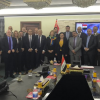
Baroness Nicholson of Winterbourne, President of the Iraq Britain Business Council (IBBC) and UK Prime Minister’s Trade Envoy for Iraq, led a delegation of 25 IBBC member company representatives on a Trade Mission to Baghdad organised by IBBC Managing Director, Mr Christophe Michels and IBBC Co-Chairman and Iraq Representative, Mr Rasmi Al-Jabri.
Delegates included representatives from Penspen Ltd, Kuwait Energy, Serco, Wood, Ratba’a Contracting Co., Management Partners, Gulftainer, HWH & Associates, Al-Burhan Group, CCC, Dar Group, Restrata, Rolls Royce and new member XReach Ltd.
The delegation met with a number of ministers and high ranking officials to discuss future policies and opportunities for growth as well as focusing on business opportunities for IBBC member companies.
They also discussed the upcoming IBBC Autumn Conference in Dubai to be held on 12 November which will be attended by a powerful Iraqi Government delegation led by the Minister of Electricity. To register, please follow the link: http://www.webuildiraq.org/ibbc-conference/autumn-conference/

During the visit, delegates had meetings with:
- Mr Qasim Al-Fahdawi, Minister of Electricity
- Mr Abdul Kariem Al Faisal, Chairman of the PM’s Advisory Committee
- Dr Mahdi Al Alak, Secretary General of the Council of Ministers
- Dr Ann Nafi Aussi Balbool, Minister of Housing, Construction and Public Municipalities
- Mr Dara Rasheed, Deputy Minister of Housing, Construction and Public Municipalities
- Mr Istabrak al Shouk, Deputy Minister of Housing, Construction and Public Municipalities
- Mr Imran Abass, Deputy Minister of Transport
- H.E. Mr Fayyad Naama Deputy Minister for refining operations, Ministry of Oil

The above meetings were joined by a number of Director Generals heading up the different departments in the various ministries.
On Sunday 29 October, IBBC Member Al Burhan Group, generously invited delegates for dinner at the Al Burhan Centre near the Baghdad International Airport.
The delegation was also invited for a Dinner at the British Embassy in Baghdad on Monday 30 October, where members delegates met with Representatives of the Foreign and Commonwealth Office, the Department for International Trade, the World Bank, the EU and the Prime Ministers Advisory Council.

(Source: IBBC)
Posted in Investment, Iraq Industry & Trade News Comments Off on IBBC completes Successful Trade Mission to Baghdad
Opportunity for UAE Business: Key Iraqi Ministers come to Conference
Posted on 31 October 2017 .
Rebuilding Iraq is central to the agenda of the Iraq Britain Business Council (IBBC) autumn conference at The Address, Dubai Marina on 12th November.
The opportunity for businesses in the region to engage in Iraq is reflected by the attendance of a number of high profile Iraqi Ministers: from Electricity, Transport, Oil, Construction and Housing, to the Governor of Basrah and International financiers, including the IMF and World Bank.
Vikas Handa, the IBBC UAE representative agrees:
“Iraq is the second largest oil producer in OPEC and has one of the biggest programmes for new power generation projects in the region; Iraq presents massive opportunities for housing, Infrastructure and FMCG businesses. The event is designed to discover the opportunities and projects live and intended in Iraq, for business people to meet the decision makers, to obtain insights and to network”.
UAE is increasingly seen as the regional hub for corporate operations in Iraq and the place where business decisions are determined.
We can confirm this as a range of leading international companies are attending, including GE, Siemens, BP, Wood, Serco, Shell, Petronas, Gulftainer, Zain, KCA Deutag, the International Islamic Bank and more. There will also be plenty of networking and engagement on the sidelines beyond the main stage.
The IBBC Dubai conference is also the location for the Governor of Basrah to outline his vision for the future, and it is expected ministers will outline the latest thinking on the evolving situation in Iraq and the opportunities this brings.
To register, please follow the link: http://www.webuildiraq.org/ibbc-conference/autumn-conference/
(Source: IBBC)
Posted in Construction & Engineering In Iraq, Investment, Iraq Banking & Finance News, Iraq Industry & Trade News, Iraq Oil & Gas News Comments Off on Opportunity for UAE Business: Key Iraqi Ministers come to Conference
Japan Lends $502m to Iraq for Development
Posted on 30 October 2017 .
JICA to Support Reconstruction in Power Supply and Iraqi Government’s Fiscal Reforms: Signing of Two Japanese ODA Loan Agreements for Iraq
The Japan International Cooperation Agency (JICA) and the Iraqi Government have signed two loan agreements at Ministry of Finance in Baghdad.
These two ODA (Official Development Assistance) loans, amounting to JPY 57,220 million (approximately USD 502 million) in total, will be used for Phase 3 of the Electricity Sector Reconstruction Project and the Fiscal Reform Development Policy Loan (II).
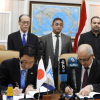
The loan agreements were signed by Dr. Maher Hammad Johan, Acting Deputy Minister of Finance and Yuho Hayakawa, Chief Representative of JICA Iraq Office, in the presence of H.E. Mr. Fumio Iwai, Japanese Ambassador to Iraq. These concessional ODA loans aim to support the Government of Iraq and Iraqi people in efforts to reconstruct the country with significant challenges.
The first loan, amounting to JPY 27,220 million (approx. USD 239 million), is used for the Electricity Sector Reconstruction Project (Phase 3). The Ministry of Electricity implements the project which reconstructs and develops fixed and mobile substations in conflict-affected Anbar as well as Baghdad and surrounding areas. The project is expected to contribute to restoration and stabilization of electricity supply to millions of people in conflict-affected areas. Prior to this Phase 3 project, JICA is already funding preceding Phase 1 and Phase 2 projects in various governorates.
The second loan, Fiscal Reform Development Policy Loan (II) amounting to JPY 30,000 million (approx. USD 263 million), supports the budget of the Government of Iraq with urgent needs for enormous financial resources. It aims to promote on-going administrative and financial reforms of the Government through (i) expenditure rationalization, (ii) energy efficiency and (iii) transparency and governance of state-owned enterprises. This is a part of phased co-financing supports with the World Bank and other partners since 2016. The previous phase of this loan, of which amount is JPY 25,000 million (approx. USD 219 million), was already fully disbursed in June 2016. JICA is also implementing technical cooperation for strengthening debt management capacity of the Iraqi government officials, which is required under the reform program.
Both loans are very concessional with the interest rate of JPY LIBOR+0.05% and the repayment period of 15 years including 5-year grace period.
JICA is a development assistance agency under Japanese Government and provides financial and technical cooperation for developing countries. Since 2003, it has provided assistances for Iraq through ODA loans which amount to JPY 683 billion (equivalent to USD 6.0 billion) and technical cooperation including training programs in which more than 8,000 Iraqi officials have participated. JICA supports Iraq’s efforts for urgent reconstruction, stabilization of people’s daily lives and sustained socio-economic development of the country.
(Source: JICA)
Posted in Construction & Engineering In Iraq, Iraq Banking & Finance News, Iraq Public Works News, Politics 1 Comment
Investment Opportunity: Factory to Produce Electrical Cables
Posted on 26 October 2017 .
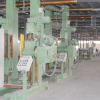
Ur State Company, one of the companies of the Ministry of Industry & Minerals is pleased to announce the availability of an investment opportunity to participate in a percentage of production medium voltage cables products and invites Iraqi, Arab and foreign companies with experience and specialization in the field of investment to participate and contract in the above participation contract in accordance with the provisions of Article 15 paragraph (3) of the public companies Law No. 22 of 1997 amended and the instructions attached to it and the instructions of the Council of ministers Decree No. 492 of 2013 through the partner supply and installation of the complete factory to produce medium voltage cables products and according to the specifications and quantities shown in the attached documents .
Companies wishing to participate in the above participation contract, in accordance with the terms and conditions attached to the declaration, should come to the company headquarters located in Nasiriyah, or Baghdad office, which belong to our company located in Karrada area , Albou Jomaa , 139, Abu Nawas St., adjacent to Diana Tourists hotel , mobile no. 07901794527 by sending authorized person with an official signed letter authorizing him to purchase the declaration documents for the amount of (250000) two hundred and fifty thousand dinars non- refundable and are provided with a receipt bill.
Offers shall be presented in three closed and separate envelopes, the first one for the technical offer, the second for the commercial offer and the third for the participating company commitments and documents, provided that the envelopes are sealed and stamped and write on it the contents of the envelope (technical, commercial, closing date and company name ).
The first envelope of the technical offer includes:
- Presenting statement documentation of the participating company and attach C.V for it and its assisting companies, its nationalities and its business history.
- Submit a list of similar previous works carried out by the company in the field of investment for last five years provide that it is certified by the beneficiary if any.
- Determine the production capacity of the project
- Presenting the details of machines and production lines (numbers, specifications and originators) and equipment and networks of industrial services required of electricity, industrial water and compressed air … etc.
- Determine the period of implementation and submit a schedule that includes the implementation of the work for all parts of the project.
Posted in Construction & Engineering In Iraq, Investment, Tenders Comments Off on Investment Opportunity: Factory to Produce Electrical Cables
How Turkey's Nuclear Plant could curb KRG Ambitions
Posted on 19 October 2017 .
By Dr. Olgu Okumuş for Al-Monitor. Any opinions expressed are those of the author, and do not necessarily reflect the views of Iraq Business News.
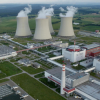
On Sept. 28, when Russian President Vladimir Putin and Turkish President Recep Tayyip Erdogan jointly stated their support for the sovereignty and territorial integrity of Iraq, they also made a point of stressing their countries' continued commitment to two joint mega energy projects: the Turkish Stream gas pipeline and the Akkuyu nuclear power plant.
The success of these projects would diminish the importance of the Kurdistan Regional Government (KRG) as a regional economic actor, pushing the significance of its oil and gas resources into the background.
Given the KRG's apparent hope to leverage such resources as part of a continued drive for independence — a drive Erdogan has said would lead to "even more serious mistakes” by the KRG — Erdogan and Putin’s joint statements are worthy of increased scrutiny.
This was the second visit by the Russian leader to Turkey since the improvement in relations that has taken place after ties suffered a major blow when Turkish forces shot down a Russian jet in November 2015. Putin’s first visit, in October 2016, was also energy-inspired, as it occurred at Erdogan’s invitation to participate in the 23rd World Energy Congress.
Last week’s meeting was labeled a "solely pragmatic meeting” by the Kremlin, because it covered several essential bilateral trade issues, such as Turkey’s purchase of Russia’s S-400 missile system, Russia’s embargo on Turkish tomatoes and the two countries’ joint energy projects. At the leaders' press conference, they stressed their discussions on energy projects, while also commenting on international security issues such as Syria and the KRG independence referendum.
Turkey needs a cooler relationship with the KRG. Since January 2013, the Turkish-British joint venture Genel Energy’s truck-based deliveries from the KRG have been bypassing the Baghdad-controlled Kirkuk-Yumurtalik oil pipeline; the oil has instead been going to Turkey’s Ceyhan port on the Mediterranean Sea. This had already prompted concerns about the KRG’s drive for economic and political independence, and pushed Ankara into the middle of an international diplomatic crisis.
Posted in Politics Comments Off on How Turkey's Nuclear Plant could curb KRG Ambitions
IBBC Autumn Conference 2017: ‘Together We Build Iraq’
Posted on 10 October 2017 .
IBBC Autumn Conference 2017: ‘Together We Build Iraq’
12 November 2017, The Address Dubai Marina, Dubai
The Iraq Britain Business Council (IBBC) is pleased to invite you to the IBBC Autumn Conference at The Address Hotel Dubai Marina, United Arab Emirates, on Sunday 12 November 2017.
This years’ event follows IBBC’s successful inaugural conference of 2016 held in the UAE, a hub for global and regional companies that operate in the Middle East.
The theme of this year’s Autumn Conference is ‘Together We Build Iraq’ and will focus predominantly on the ongoing effects and needs of Iraq’s reconstruction and the opportunities of investment available to British and International companies during this process. There will also be panels discussing the Power and Oil & Gas sectors.
The five conference sessions will focus on:
- Strengths and Weaknesses of the Economy in Iraq
- Reconstruction and Infrastructure – The Built Environment
- Enabling Reconstruction
- Power
- Oil & Gas
The IBBC Autumn Conference 2017 will be chaired by Vikas Handa, IBBC UAE Representative and will be led by the following confirmed speakers:
- Baroness Nicholson of Winterbourne, The Prime Minister’s Trade Envoy to Iraq, Azerbaijan & Turkmenistan and President of IBBC
- H.E. Mr Qasim Al-Fahdawi, Minister of Electricity
- H.E. Mr Kadhim Finjan Al Hamimi, Minister of Transport
- H.E. Mrs Ann Nafi Aussi Balbool, Minister of Construction, Housing and Public Municipalities
- H.E. Dr Sami Al Araji, Chairman of the National Investment Commission
- Marwa Alnasaa, Resident Representative for Iraq, International Monetary Fund (IMF)
- Dr Jaafar Dhia Jaafar, CEO, URUK Engineering
- Zaid Elyaseri, Iraq Country Manager, BP
- Peter Mohring, Managing Director – Aviation & Defence, Serco
- Zeeshan A. Sheikh, EMENA Infrastructure & Natural Resources, International Finance Corporation
- Suha AlKifaee, Managing Director, IIB
- Zaid Al-Ansari, Executive Country Manager-Iraq, GE
- Tarek Hamade, Environment & Infrastructure lead for the Middle East, Wood plc
- Tawfiq Tabbaa, Managing Partner – Iraq, Eversheds Sutherland
- Salem Chalabi, Partner, Stephenson Harwood Middle East LLP
- Nikolay Dimitrov, Business Development Manager (Middle East and Africa), KCA Deutag
- Anne Kerr, Global Head – Urbanisation, Mott MacDonald
- Iain Rawlinson, Group Commercial Director, Gulftainer
- Phill Sherwood, Executive Director, AMAR International Charitable Foundation
- Danielle Montgomery, Managing Director, Middle East, North Africa and Turkey, OPIC
A pre-conference reception and networking event will be held on Saturday 11 November at 18:00 at the Address Dubai Marina.
IBBC warmly thanks the International Islamic Bank, which has generously agreed to be the event’s Gold Sponsor, in addition to Silver sponsors Serco & Gulftainer. Completing the sponsorship line-up are Wood plc, which will serve as the Reception sponsor, and Coffee Break Sponsors KCA Deutag & Eversheds Sutherland.
Sponsorship opportunities are still available. Please email [email protected] for details.
Registration is now open. The registration fee for non-members is £700. IBBC members and members of partner organisations are entitled to special discounted rates. To request the discount codes or if you need assistance, please email the team at [email protected] or phone +44 (0) 20 7222 7100.
The IBBC team looks forward to seeing you in Dubai for the Autumn Conference.
Download the latest Agenda Here.
Posted in Construction & Engineering In Iraq, Investment, Iraq Banking & Finance News, Iraq Industry & Trade News, Iraq Oil & Gas News Comments Off on IBBC Autumn Conference 2017: ‘Together We Build Iraq’
Stabilization in Mosul: 300 Projects Underway
Posted on 09 October 2017 .
Stabilization in Mosul: 300 projects underway and 10,000 people put to work
Three years of ISIL occupation and fierce fighting to retake the Mosul caused widespread destruction.
In 10 months, nearly one million Iraqis fled the city. 700,000 are still displaced. Mosul is one of the largest stabilization challenges the people of Iraq and the UN have ever faced. US$700 million is needed for West Mosul alone.
At the request of the Prime Minister of Iraq, UNDP established the Funding Facility for Stabilization (FFS) in June 2015 to help rapidly stabilize newly retaken areas.
Iraq and the United Nations Development Programme (UNDP) are changing the way stabilization is done. Iraqi officials assess what needs to be done. They ask UNDP, and UNDP responds.
More than 1,100 projects are underway in 23 cities, restoring water and electricity, repairing schools, hospitals, and transport networks, and putting tens of thousands of people back to work. 95% of all stabilization work is contracted through the local private sector.
Local companies are rebuilding their own cities employing local labour. Stabilization is about speed and functionality.
The top priority now is Mosul. 300 projects are already underway, many started even as the fighting was continuing. 10,000 people of Mosul are working on stabilization, so that residents can return home safely, with dignity, and build back their cities.
Increased stability in Iraq can lay the foundations for longer term reconciliation and generate much-needed hope for the millions of Iraqis affected by this conflict.
(Source: UNDP in Iraq)
Posted in Construction & Engineering In Iraq, Employment, Healthcare Comments Off on Stabilization in Mosul: 300 Projects Underway
IMF Staff Concludes Visit on Iraq
Posted on 29 September 2017 .
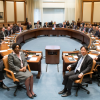
The Iraqi authorities and the staff of the International Monetary Fund (IMF) held discussions in Amman from September 17 to 28, 2017 on the third review of Iraq’s 36-month Stand-By Arrangement (SBA).
The IMF Executive Board approved the SBA on July 7, 2016 (See Press Release No. 16/321), and completed the second review on August 1, 2017 (See Press Release No. 17/311).
At the end of the mission, Mr. Christian Josz, Mission Chief for Iraq, issued the following statement:
“The Iraqi authorities and IMF staff started discussions on the third review of the SBA and made good progress towards reaching agreement on a draft 2018 budget in line with the SBA. These discussions will continue during the upcoming IMF and World Bank Annual Meetings from October 13–15, 2017 in Washington, DC.”
“During the visit, the team met with the Acting Governor of the Central Bank of Iraq (CBI), Dr. Ali Mohsen Ismail Al-Allaq, Acting Deputy Minister of Finance, Dr. Maher Johan, , and officials from the Prime Minister’s office, ministries of finance, oil, planning, and electricity, the State Oil Marketing Organization, the Central Statistical Organization, the Central Bank of Iraq, and the Board of Supreme Audit. The team would like to thank the Iraqi authorities for their cooperation and the open and productive discussions.”
(Source: International Monetary Fund)
Posted in Iraq Banking & Finance News, Politics Comments Off on IMF Staff Concludes Visit on Iraq
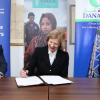
Crescent Petroleum, Dana Gas support Healthcare Centre for IDPs
Posted on 22 September 2017 .
By Robert Cole, AMAR Foundation.
Crescent Petroleum, one of the Middle East’s oldest and largest upstream oil companies, and Dana Gas, one of the largest private sector natural gas companies in the region, have joined forces to fund the running costs of a healthcare centre and vocational training centre for displaced people in the Kurdistan Region of Iraq for the next three years, the two companies today announced.
The three-year commitment will fund the entire running costs of AMAR International Charitable Foundation’s Primary Healthcare Centre and vocational training centre in Khanke Camp, which serve the whole community, including 16,000 Yazidi residents.
The healthcare centre plays a vital role in providing healthcare to those who would otherwise be unable to access medical support. In the second quarter of 2017, the clinic saw 26,404 cases, conducting 5,411 maternal health consultations and 2,034 child consultations.
Commenting on the donation, Crescent Petroleum’s CEO Majid Jafar said:
“At Crescent Petroleum, we aim to empower local communities by not only providing energy solutions to fuel their development, but also by responding to their social and economic needs. Internally displaced people (IDPs) are among the world’s most vulnerable populations but they are often overlooked by international relief efforts, and we are committed and honoured to assist their healthcare needs in partnership with AMAR Foundation.”
The natural gas produced by the companies from the Khor Mor field supplies more than 1,750 MW of affordable electricity to the Kurdistan Region, giving schools, hospitals and other vital entities a non-disruptive water and electricity supply for millions of people.
The Duhok Health Directorate has seen the population of the region more than double over the last two and a half years due to the massive influx of IDPs from the Sinjar and Mosul regions, putting increasing pressure on healthcare access.
Patrick Allman-Ward, Dana Gas’ CEO, said:
“Our corporate social responsibility programme has been at the heart of Dana Gas’ operations since its inception in 2005. Providing financial support to those in need is not only a moral obligation, it also has a positive impact on the communities where we operate.”
AMAR’s Chairman and Founder, the British Conservative Peer, Baroness Nicholson of Winterbourne, said she was “overwhelmed” by the generosity of Dana Gas and Crescent Petroleum:
“AMAR builds, staffs and runs five state-of-the-art heath centres on an extremely low budget. The generous donation from Crescent Petroleum and Dana Gas means we can continue with the marvellous work being done in Khanke by our locally trained doctors and nurses for the next three years.”
PLEASE CLICK HERE IF YOU CAN HELP – ANY AMOUNT LARGE OR SMALL.
(Source: AMAR Foundation)
Posted in Healthcare, Iraq Oil & Gas News Comments Off on Crescent Petroleum, Dana Gas support Healthcare Centre for IDPs
Iran, Iraq to Synchronize Power Grids within Months
Posted on 20 September 2017 .
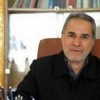
Iran’s Deputy Energy Minister for Electricity and Energy Affairs Houshang Falahatian (pictured) has stated that the power grids of Iran and Iraq will be interconnected in mid-November 2017.
“Iran is ready to take a serious part in reconstruction of the Iraqi electricity grid once terrorists have been eliminated from the area” Falahatian added.
He also emphasized Iran’s readiness to engage “seriously” in three sectors including reconstruction of Iraq's production, distribution and transmission lines, and the participation of the Iranian private sector.
Falahatian also said pointed out the need to synchronize the electricity grids of the two countries, saying that the plan is to connect the two countries’ power grids in mid-November this year, which could play an important role in increasing the amount of electricity exchanges.
In case of any request from the Iraqi government, the possibility exists to reconstruct the Iraqi distribution and transmission networks within two years.
(Source: GardaWorld)
Posted in Iraq Industry & Trade News Comments Off on Iran, Iraq to Synchronize Power Grids within Months