


S. Korea to Train Public Employees in Iraq
Posted on 16 September 2017 .
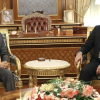
KRG Prime Minister Nechirvan Barzani received Mr. Park Young-Kyu, the Consul General of Korea, and his accompanying delegation, in Erbil.
Mr. Park conveyed a letter from Mr. Moon Jae-In, President of the Republic of Korea, inviting stronger relations between Erbil and Seoul.
He expressed Korea’s readiness to cooperate with the Kurdistan Region on technology development and discussed the Korean International Cooperation Agency’s (KICA) capacity to help with electricity production and distribution.
He also expressed his government’s interest in helping to strengthen the public sector and said next month they will open a center to train public employees.
Prime Minister Barzani expressed his appreciation for President Moon’s letter and stressed the KRG’s desire also to strengthen bilateral relations between Erbil and Seoul.
Prime Minister Barzani said that the KRG will welcome Korean companies to invest in the Kurdistan Region and share their expertise, especially in the field of e-governance.
(Source: KRG)
Posted in Iraq Industry & Trade News Comments Off on S. Korea to Train Public Employees in Iraq

Dual Nationality allows Iraqi Officials to Escape Abroad
Posted on 13 September 2017 .
By Rabih Nader for Al-Monitor. Any opinions expressed are those of the author, and do not necessarily reflect the views of Iraq Business News.
The Lebanese authorities arrested a former Iraqi minister who was wanted by Interpol at the airport in Beirut Sept. 8. The identity of the minister has not been released yet, but Lebanese officials have said that he holds British citizenship.
Many officials with dual nationality accused by the Iraqi authorities of corruption have fled the country in order to escape prosecution. Basra Gov. Majid al-Nasrawi is a case in point; he left Iraq on an Australian passport Aug. 18 in defiance of an arrest warrant over suspected corruption.
Several other officials have also left the country, including former Ministers Abdul Falah al-Sudani (trade), Hazim Shaalan (defense) and Ayham al-Samarrai (electricity).
For two years, the Iraqi parliament has not been able to pass a bill bringing an end to officials holding dual citizenship, despite its inclusion in a list of parliamentary reforms announced by speaker Salim al-Jabouri in August 2015, as part of a package of government measures following widespread demonstrations in Baghdad to demand reform.
The bill, which has been suspended since the last parliamentary term, deals with the rules on Iraqi officials holding two nationalities. It is based on Article 18 of the Iraqi Constitution, which demands that holders of senior and “sovereign” offices give up their “acquired citizenship.”
However, the constitution charges the legislature with the task of working out the details and drawing up a law on the issue, something the Iraqi parliament has so far failed to do.
Amal al-Bayati, a member of the Council of Representatives, told Al-Monitor that Iraqi holders of foreign citizenship often escape justice because they can use it at the first sign of trouble. “The number of dual citizens in parliament is very high, which poses major difficulties when it comes to passing this law,” she said.
Posted in Politics, Security Comments Off on Dual Nationality allows Iraqi Officials to Escape Abroad
Japanese Loan Boosts Output at Hartha Power Station
Posted on 11 September 2017 .
Unit No.4 of the Hartha Thermal Power Station has re-started operations and is supplying 200MW of electricity to the grid, following rehabilitation works funded with the Japanese ODA loan.
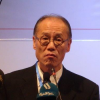
A completion ceremony was held on 7th September, attended by Mr. Adel Kadhim Jaryan, Deputy Minister of Electricity, Representatives of Basra Governorate, officials of Ministry of Electricity, H.E. Mr. Fumio Iwai (pictured), Japanese Ambassador to Iraq, and Mr. Yuho Hayakawa, Chief Representative, Japan International Cooperation Agency (JICA) Iraq Office.
JICA described the re-start as "well ahead of the original construction schedule, thanks to outstanding endeavours jointly made by Ministry of Electricity and the Contractor (Joint Venture of Mitsubishi-Hitachi Power Systems [MHPS] and [Turkish firm] GAMA)."
The Hartha Thermal Power Station (HTPS), with four units of 200 megawatts (MW) each, was originally built to generate 800 MW in total. The power station, one of the largest in Basrah Governorate, was built in 1982 by the Japanese companies with Japan’s financial assistance. However, due to aging as well as serious damage during past conflicts, two of the four units have been inactive for several years.
The remaining two units -- No. 1 and No. 4 -- have continued in operation due to the maintenance efforts of the staff of Ministry of Electricity, in spite of huge deterioration in their generation capacities and frequent disruptions.
JICA signed an ODA loan agreement in the amount of 20,224 million yen ($194 million) with the Iraqi Government on 23rd February, 2015, to facilitate the rehabilitation of Unit No. 4, and has financially supported the project since then. The loan has an interest rate 0.8 percent per annum for the rehabilitation works, and 0.01% per annum for the consulting services, and its repayment period is 15 years including a grace period of 5 years.
The project increases the annual power generation of the Unit from 860 GWh to 1,489 GWh, which is equivalent to the total electricity consumption of 800,000 Iraqi people for one year; it also helps to stabilize electricity supply.
Assistance to the electricity sector is one of the pillars of JICA’s cooperation to Iraq. In addition to support for Unit No. 4, JICA also signed an ODA loan on August 5, 2017 for rehabilitation of Unit No. 1 of Hartha Thermal Power Station.
Since 2008, JICA has signed seven loan agreements for electricity projects in Iraq including the one signed on August 5, 2017, amounting to 196.648 billion Japanese yen (equivalent to approximately $1.8 billion) in total. These loans are used for the rehabilitation and development of four power plants, and transmission and distribution facilities, all over the country.
In addition to the financial cooperation, more than two thousand Iraqi officials have participated in the JICA’s training programs for capacity building of the electricity sector since 2003.
(Source: JICA)
Posted in Construction & Engineering In Iraq, Iraq Public Works News Comments Off on Japanese Loan Boosts Output at Hartha Power Station
Interview with Ali Fares: Overview of the Opportunities
Posted on 11 September 2017 .
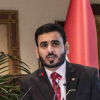
Ahead of the international Basra Oil, Gas & Infrastructure 2017 Conference which CWC Group hosts annually with the Basra Governorate, the Basra Council and the Basra Oil Company, Nawar Abdulhadi, MENA Director for CWC Group interviewed Mr Ali Shadad Al Fares, Chairman of the Oil & Gas Committee at the Basra Council.
Mr Ali Fares highlights the importance of the Conference for the province this year as well as for the rest of Iraq as Basra moves towards expanding to accommodate the upcoming projects in the new era focusing on rebuilding Iraq.
Mr Al Fares touched upon the oil, gas, petrochemicals and power projects, the infrastructure and constructions projects as well as the transportation and logistics projects which will be addressed at the international conference in Beirut between the 30-31st of October.
Nawar Abdulhadi: What are the current opportunities for companies investing in oil and gas in Basra?
Mr Al Fares: There are many opportunities, which are the focus of the local government of Basra and the Federal Oil Ministry. I would like to highlight the following:
- Strategic Sea Water Project to supply the fields for water injection.
- Aqaba pipeline project, which extends from Rumaila field to Najaf Governorate.
- Investment project in the gas fields with a new economic model (Nahran Omar, national fields, the exploitation of gas flared in the fields of other remaining licensing rounds)
- Investment in non-invested oil fields that are managed through the small and medium national effort.
- The joint fields with the Iranian side and the Kuwaiti side.
- There are different projects within which the size of investment is very important as they must be within the contracts of the licensing rounds, such as digging new wells and the maintenance of the old and the infrastructure of the oil and gas sector.
- The Muftiyah tourist project in Basra, located on the Shatt al-Arab, using the private investment model .
Posted in Construction & Engineering In Iraq, Iraq Oil & Gas News Comments Off on Interview with Ali Fares: Overview of the Opportunities
Iraq signs $270m Loan from Japan
Posted on 07 September 2017 .
Iraq has signed for receiving a Japanese loan worth USD270 million according to a statement from the Japanese Embassy in Iraq.
The loan is designed to improve Iraq’s financial situation and to help the country proceed with reforms, the statement by the embassy said, noting that it comes as a second tranche of a USD500 million Japanese financial assistance commitment.
The statement said falling world oil prices and spending on defence and refugee relief portfolios had largely reduced the country’s budget resources. It also pointed to earlier assessments by the International Monetary Fund (IMF) which estimated Iraq’s budget deficit for 2016 by 14.1% and public debt for the same year by 6.99% of the GDP.
In February, Japan approved a loan of about $100 million to support humanitarian, counter-terrorism and infrastructure projects in Iraq. In January, Japan agreed to lend Iraq up to 27.2 billion yen ($240 million) to rebuild damaged electricity infrastructures in areas recaptured from Islamic State militants.
(Source: GardaWorld)
Posted in Politics Comments Off on Iraq signs $270m Loan from Japan
KRG to pay $1bn to Pearl in "Full and Final Settlement"
Posted on 31 August 2017 .
The Kurdistan Regional Government (KRG) will immediately pay $1 billion to the Pearl Consortium, including Dana Gas, and its partners to settle a long-running legal dispute.
In a joint press release, the Kurdistan Regional Government and Pearl Consortium announced the "full and final settlement" between the two parties.
Below is the full press release:
Settlement Agreement between Kurdistan Regional Government of Iraq (the “KRG”) and (i) Dana Gas PJSC; (ii) Crescent Petroleum Company International Limited; and (iii) Pearl Petroleum Company Limited (“Pearl”); together (the “Consortium”)
The KRG and the Consortium, together (the “Parties”), signed a Heads of Agreement onc and Chemchemal fields on 4 April 2007 (the “HoA”). Subsequently a dispute arose between them concerning certain matters under the HoA, and they referred this disputeon 21 October 2013 to an arbitration under LCIA case reference number 132527 (the “Arbitration”) for decision by an arbitral tribunal (the “Tribunal”) in London.
The Parties have mutually agreed to fully and finally settle all their differences amicably by terminating the Arbitration and related court proceedings, and releasing all remaining claims between them, including the substantial damages asserted by the Consortium against the KRG; implementing a mechanism for settlement of $2,239 million awarded by the Tribunal to date ; and proceeding with immediate further development of the HoA’s world class resources for mutual benefit as well as the benefit of the people of the Kurdistan Region and all of Iraq.
The agreed settlement highlights are as follows:
- The KRG will immediately pay Pearl a sum of US$600 million.
- The KRG will also immediately pay Pearl a further US$400 million to be dedicated for investment exclusively for the aforesaid further development to substantially increase production.
- Pearl will increase gas production at Khor Mor by 500 MMscf/day, a 160% increase on the current level of production (the “Additional Gas”). The Additional Gas, together with significant additional amounts of condensate, is expected to begin production in approximately two years.
- The balance of sums awarded by the Tribunal ($1,239 million) is no longer a debt owed by the KRG and will be reclassified as outstanding cost recoverable by Pearl from future revenues generated from the HoA areas.
- The profit share allocated to Pearl from future revenues generated from the HoA areas are adjusted upwards to a level similar to the overall profit levels normally offered to IOCs under the KRG’s Production Sharing Contracts. This adjustment reflects the larger investment risks and costs involved in the development of natural gas resources compared to oil developments. After the recovery of costs and a return on investment by the Consortium, 78% of revenues generated from the HoA areas will be for the account of the KRG, and 22% for the account of Pearl.
- The Parties have clarified the Khor Mor block boundary coordinates and the KRG has awarded the Consortium investment opportunities in the adjacent blocks 19 and 20, and added these to the HoA areas, with commitments by the Consortium to make appraisal investments on these blocks, and developments if commercial oil and gas resources are found.
- The KRG will purchase 50% of the Additional Gas on agreed terms to boost the gas supply to power generation plants in the Kurdistan Region. The other 50% of the Additional Gas (250 mmscf/d) will be marketed and sold by Pearl to customers within Iraq or by export, or can be sold to the KRG as well to further boost power generation within Iraq.
- Pearl will also expand its local training and employment programs towards achieving maximum localization and content, as well as supporting local communities through its active Corporate Social Responsibility (CSR) programmes.
- The Parties have exchanged mutual releases, waivers, and discharges in relation to all claims in relation to the Arbitration and related court proceedings.
- The Parties have also amended and clarified the HoA language and terms, including extension of the term of the contract until 2049.
The Parties are very pleased with their settlement and and look forward to working together to maximise the full potential of the HoA areas, for their mutual benefit as well as that of the people of the Kurdistan Region and all of Iraq.
Under the settlement, the people of the Kurdistan Region and Iraq will enjoy additional revenues and improved electricity supply. The Parties believe that this settlement agreement confirms to international investors that the Kurdistan Region of Iraq offers an attractive and secure environment for investment.
H.E. Dr. Ashti Hawrami, Minister of Natural Resources of the KRG, said:
"The companies’ investment and production to date has already delivered substantial benefits for the Kurdistan Region through enabling cost-effective power generation. We are delighted by the outcome of this settlement which opens a new chapter in the relationship between the parties and will take the development of the important natural gas sector to new heights."
Mr. Majid Jafar, CEO of Crescent Petroleum and Managing Director of the Board of Dana Gas PJSC, added:
"We have always expressed our commitment to amicable resolution of matters to enable proper development of the Khor Mor and Chemchemal fields. We are pleased with this definitive agreement which follows constructive dialogue with the KRG and promises to generate significant value for all concerned. The settlement of all debts and restoration of full cooperation gives a positive outlook for further investment and full realization of the enormous resource potential of the HoA areas."
(Sources: KRG, Dana Gas)
Posted in Iraq Oil & Gas News Comments Off on KRG to pay $1bn to Pearl in "Full and Final Settlement"
Siemens wins Service Agreement to operate Power Plant
Posted on 22 August 2017 .
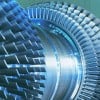
Germany's Siemens has expanded an existing service agreement with KAR Group in Iraq to provide comprehensive operations and maintenance (O&M) for two newly added SSC5-2000E power plant units at the Khormala plant in the Kurdistan region.
The 930-megawatt (MW) natural gas-fired power plant meets nearly 30 percent of the power demand targeted by the Kurdistan Regional Government (KRG), supplying more than four million Iraqi people with reliable electricity.
According to a statemengt from the company, "the extension of the service agreement is set to improve operational flexibility, availability, and performance of gas turbines for the next 15 years."
The Mena Power Report 2017 says the current power demand in Iraq stands at 21GW and is growing faster than supply. The Kurdistan Regional Government plans to increase capacity by building new power plants and increasing the efficiency of existing facilities.
Gianluigi Di Giovanni, Senior Executive Vice President of Siemens Power Generation Services in the Middle East, commented:
"The plant is truly a landmark project, supporting the development goals of the Kurdistan region. That's why we are proud to expand our collaboration with KAR Group to deliver reliable and stable electricity supply to people's homes."
The Khormala multi-year agreement with Siemens covers the operation and maintenance of six SGT5-2000E gas turbines, six SGen5-100A generators along with the associated auxiliary and ancillary systems. It also includes the implementation of Siemens Power Diagnostics®, which is part of the company's "Digital Services for Energy" portfolio, to improve asset visibility, reliability and availability.
Siemens data-driven services enable valuable data from different assets to be analyzed. From there, data is transformed into actionable insights—such as diagnostics, troubleshooting and condition forecasting—that can help improve plant reliability and reduce downtime. In addition, the data processed by Siemens Power Diagnostics® can help balance maintenance costs, improve inspection intervals and provide invaluable insights into operational risks.
Siemens has managed the operation and maintenance of Khormala since 2013 under a multi-year services agreement. Currently, the company has more than 40 personnel on-site managing the power plant on behalf of KAR Group.
(Source: Siemens)
Posted in Construction & Engineering In Iraq, Iraq Industry & Trade News, Iraq Public Works News Comments Off on Siemens wins Service Agreement to operate Power Plant
$191m Japanese Financing for Power Plant
Posted on 07 August 2017 .
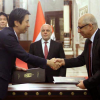
On August 5, the Japan International Cooperation Agency (JICA) under the Government of Japan signed a loan agreement with the Government of the Republic of Iraq in Baghdad to provide a Japanese ODA loan of up to 21.556 billion yen (equivalent to approximately USD 191 million[1]) for the Hartha Thermal Power Station Rehabilitation Project (Phase 2).

At the signing ceremony at the government palace in Baghdad, the loan agreement was signed between Dr. Maher Hammad Johan, Acting Deputy Minister of Finance and Mr. Yuho Hayakawa, Chief Representative of JICA Iraq office in the presence of H.E. Dr. Haider Al-Abadi, Prime Minster of Iraq, Mr. Kentaro Sonoura, Special Advisor to the Prime Minister of Japan, and H.E. Mr. Fumio Iwai, Japanese Ambassador to Iraq.
This concessional ODA loan, with the interest rate of JPY LIBOR +0.05% (variable) for the main portion and fixed 0.01% for the consulting services and with the repayment period of 15 years (including 5 year grace period), is provided based on the Exchange of Notes between Iraqi and Japanese Governments just signed on the same day.
The Hartha Thermal Power Station, with four units of 200 megawatts (MW) each, was originally built to generate 800 MW in total. The power station was constructed as one of the largest power plants in Basrah Governorate by the Japanese companies with Japan’s financial assistance in 1982.
However, due to aging as well as serious damages during the wartimes in the past, operations of the two units, out of the total four units in the station, have been fully suspended for years. The remaining two units, that is, Unit No. 1 and No. 4, have continued their operations by great maintenance efforts of the staff of Ministry of Electricity in spite of huge deterioration of their generation capacities and frequent disruptions of power production.
Posted in Construction & Engineering In Iraq, Iraq Banking & Finance News, Iraq Public Works News Comments Off on $191m Japanese Financing for Power Plant

Iran-Iraq Pipeline comes with Major Environmental Costs
Posted on 05 August 2017 .
By Adnan Abu Zeed for Al Monitor. Any opinions expressed here are those of the author and do not necessarily reflect the views of Iraq Business News.
On July 21, farmers complained about a gas pipeline dredging their farmlands. The pipeline carries gas from Iran to Baghdad through Bismayah, which is located in southeast Baghdad.
Meanwhile, reports on May 22 revealed that the pipeline caused damage to an archaeological site under which it passes.
On March 17, 2016, Iran announced the completion of a 100-kilometer (62-mile) Iranian gas pipeline. It starts at the South Pars gas field and continues to Baghdad to provide fuel for the electricity stations. As part of the project, the Oil and Energy Committee of the Iraq Council of Ministers decided to extend the pipeline through Bismayah to provide gas for electricity stations there.
Many residents in Bismayah were happy at first. However, their happiness did not last as they were forced to vacate parts of their land for the project. According to testimonies documented in a video report broadcast by an Iraqi channel on May 22, a farmer said that a military force stormed onto his land and forced him to accept the extension of the pipeline into his land without providing any documents, which he considered a violation of his rights and of applicable laws.
On July 12, Al-Monitor contacted the Nahrawan police directorate, which said, “The security force securing the site has orders to protect the project of extending the Bismayah gas pipeline and remove any constraints that may hinder its accomplishment.”
Posted in Iraq Oil & Gas News Comments Off on Iran-Iraq Pipeline comes with Major Environmental Costs

Investment Opportunity: Producing Gas Oil from Heavy Fuel Oil
Posted on 04 August 2017 .
The Ministry of Electricity has announced an investment opportunity to build a plant on a BOT basis to produce gas oil from heavy fuel oil in Al Musayab gas turbine station.
Tender No. MOE- HQ11/ 2017
Tender subject : constructing a plant 3200 m³ / day of heavy fuel oil
Closing date : Sunday 10.09.2017
Time : 12:00 pm Baghdad local time
Estimated cost : (6,5 dollar/ barrel) for produced gas oil.
- The interested parties requested to attend MOE Headquarter – Investment and Contracts office/ Tenders Section in Al- Mansour District – Baghdad / Alnaqabat Street to get the investment opportunity documents against non refundable amount of (500,000) ID five hundred thousand Iraqi Dinar to be paid against a receipt with valid official authorization letter of the interested party.
- The Technical, commercial and financial offers shall be submitted in three separated stamped sealed envelopes one for technical the second for commercial containing price depend on section 4 from the document and the third containing financing offer , you have to write on it :address including (website, e mail address, authorized person’s name and phone number) presented offer should be true and correct without additions or correction written with Arabic language stamped by company stamp on all pages .
- You may submit your offer by hand or by DHL (offers sent by email will be rejected) to Ministry of Electricity, headquarter, Investment and Contracts office/ Tenders Section in Al- Mansour District – Baghdad not later than the dead line on Sunday 10.09.2017 before 12:00 pm Baghdad local time, if the day of closing date is holiday, the next day will be the closing date.
- Winner bidder bears the cost of advertisement and any related cost if any.
- MOE has the right to choose the appropriate offers regardless of the offered price.
- Technical and commercial proposals not substantially responsive will be neglected.
- Any question, explanation do not hesitate to contact [email protected] or call Mobile 07901935786
(Source: National Investment Commission)
Posted in Iraq Oil & Gas News, Tenders Comments Off on Investment Opportunity: Producing Gas Oil from Heavy Fuel Oil