


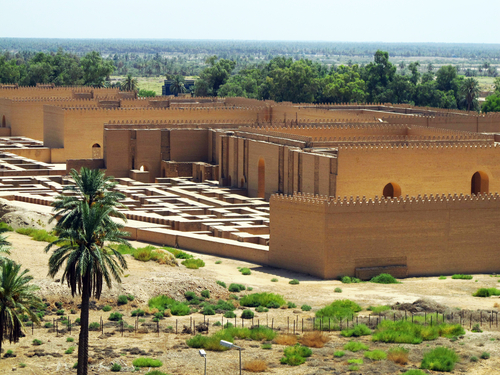
The second event involved the US-led military invasion in 2003. The ruins were further harmed when forces of the Coalition Provisional Authority established Camp Alpha in Babil, destroying parts of the archaeological record with their use of heavy equipment, causing the destruction of some structures.
The US military commander, Col. John C. Coleman, apologized for the damage done in April 2006. In June 2009, UNESCO released a report on damage to the city before and after 2003.
In an attempt to bring tourists back to Babil, cultural authorities are focusing on organized tours as well as promoting the city as a place for meetings and festivals. Of note, the city already hosts the Babylon Festival for International Cultures and Arts, held in the spring. It features poetry and fine arts events, as well as theater performances. The seven-day 2015 festival kicked off April 10.
“This festival aims to revive the city’s history and attract the world’s attention to visiting and preserving it,” said Ali Shalah, chairman of the Board of Trustees of the Iraqi Media Network (IMN) and head of the festival. He noted the participation of “Iraqi and international poets, musicians, painters and fine artists.”
Haleem al-Yasiri, an academic and archaeology expert, painted a modest picture of activity in the city. “The official and popular interest in the city is still not up to its historical significance,” he told Al-Monitor. “According to information from the historic city’s administration, the number of visitors does not exceed dozens per day.”
Comments are closed.