


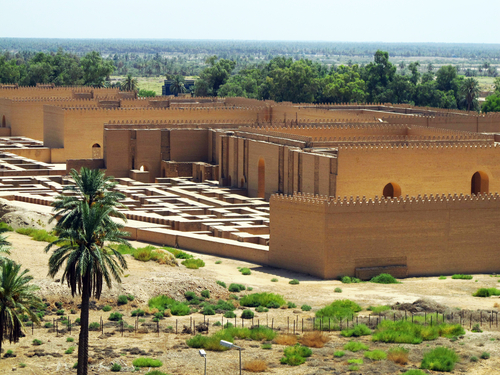
In the center of the ancient city, the Lion of Babylon, a symbol of the strength of Babil, still stands in its original place, although many other parts of this city's heritage such as the Ishtar Gate — now at the Pergamon Museum in Berlin — have been removed or smuggled abroad.
Wissam Taii, from the provincial council's information office, told Al-Monitor, “The local government in Babil is working on renovating the tourist spa surrounding the historic city that was home to Saddam's men. The idea is to turn it into a venue for weddings, graduations and other social activities and make it suitable for accommodating foreign tourists as well as a location for filming international movies and festivals.”
The head of local government in Babil province, Raad al-Jubouri, said, “We are working on portraying Babil as the historic capital of this country and opening the door for investment and exploration, especially since more than 80% of the city’s monuments are yet to be discovered.”
The city of Babil, like other Iraqi historical sites, has long suffered from neglect. The security situation has allowed the theft of untold artifacts, some of them still underground. Meanwhile, fears spread in 2014 that the Islamic State might raid the city and destroy its heritage, but that did not come to pass. Protecting and renovating the city’s cultural heritage will require an Iraqi effort supported by international funding and expertise.
(Babil image via Shutterstock)
Comments are closed.