


Anbar Province to Hold First Investment Conference
Posted on 15 July 2010 .
Al Anbar Province announced that it is ready to hold its first investment conference with the participation of numerous international companies, according to Al SumariaTV.
The province said that it formed a committee to prepare the program for the conference. Meanwhile, the Province Council said that the conference is one of the solutions suggested by Iraq Prime Minister Nouri Al Maliki to eradicate unemployment in the Province.
A member of parliament for Anbar Province, Fouad Jitab, said that the conference is a great opportunity for international companies to invest in the area.
(Source: Al SumariaTV)
Posted in Iraq Industry & Trade News Comments Off on Anbar Province to Hold First Investment Conference
Turkish Consortium Tipped for 500MW Power Plant in Missan
Posted on 06 July 2010 .
A consortium of Turkish firms is negotiating with the authorities in the southern Iraqi Province of Missan for the construction of a 500-megawatt power plant, according to a report from Azzaman News Agency.
Governor Mohammed al-Sudani said the talks were in an advanced stage and that representatives from the Turkish consortium were currently discussing the details on how to start the project.
Sudani did not say how much the plant will cost, but said the site was being prepared and that all legal and administrative issues have been solved.
“Our province enjoys a unique position in Iraq by being stable from the security point of view. This situation should create an environment that will encourage investors and foreign firms to carry out projects,” he said.
The province of which the city of Amara is the capital borders Basra to the south and Iran to the east. It was famous for its marshlands before they dried up mainly due to the declining water levels from the country’s Twin Rivers, the Tigris and the Euphrates.
The province is currently one of the most impoverished in Iraq with high unemployment rates. Its economy has declined drastically in the past few years.
Sudani said his province was keen to expand trade and economic ties with Turkey.
“We have called on Turkish firms to set up a permanent trade fair in the province,” he said.
(Source: Azzaman)
Posted in Construction & Engineering In Iraq, Iraq Public Works News Comments Off on Turkish Consortium Tipped for 500MW Power Plant in Missan
Iraq Launches Five-year Plan for Economic Development
Posted on 06 July 2010 .
China's Xinhua News Agency is so far the only source to report on Iraq's new five-year National Development Plan (NDP), announced on Sunday. The plan targets annual economic growth of 9.4 percent and attempts to cut unemployment.
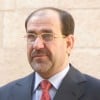
The country's 2010-2014 NDP was announced in a televised event in Baghdad attended by top Iraqi officials, including Prime Minister, Nouri al-Maliki, and the Minister of Planning, Ali Baban.
The plan will include more than 2,700 projects worth about US$186 billion and aims to diversify the Iraqi economy away from oil, as crude exports represent some 90 percent of the country's revenue.
The NDP is also designed to achieve annual economic growth of 9. 4 percent with the goal of cutting the unemployment rate, now estimated at 15 percent, by providing some 3-4 million jobs.
In his speech, Maliki hailed the gathering and said that Iraq is moving in the right direction for reconstruction after years of violence and chaos.
"When we want to develop a country suffering from sabotage, we have to have stable plans and budgets," Maliki said referring to the five-year development plan.
"I feel now that we have put the reconstruction on the right path," Maliki said.
Maliki also called on Iraqi academic and professionals to come back to Iraq to participate in the reconstruction process saying "we have a huge reconstruction process and we need to harness all of our qualified and scientific potential abroad".
Posted in Construction & Engineering In Iraq, Investment, Iraq Banking & Finance News, Iraq Industry & Trade News, Iraq Oil & Gas News, Iraq Public Works News Comments Off on Iraq Launches Five-year Plan for Economic Development

Is Iraq Reverting to Square One?
Posted on 22 June 2010 .
By Tariq Abdell, Founder & Chairman, Mesopotamia Insight.
Iraq's recent upsurge of violence, fueled by political impasse and regional geopolitics - Notably Iran's Mullacracy suicidal ambitions, could easily undermine its fragile democracy and, thus, plunging the country into a vicious downward spiral. The ongoing ignominious political ploys are creating a toxic environment compelling the majority of the Iraqi people to distrust the legitimacy of their government and its institutions, a dangerous threshold that could hastily throw the country back into its darkest years of lawlessness and sectarian violence (06 - 07) or "Square 1" as Mr. Al-Maliki depicted in his recent interview with the New York times.
Mr. Al-Maliki's decisive victory against the militia in early 2008 "Charge of knights" operations had helped the country recover some of its pride and hope. Moreover, this critical milestone was followed by more ambitious and bold steps triggering, in the process, a major shift in the country's mindset and priorities (security is no longer theme du-jour, for instance). Iraqi people gradually began to dust off some of the hefty residues of the sectarian violence and look optimistically beyond security constraints. Sustained by an abrupt rise of the oil prices (over $100 a barrel), jobs creation and rebuilding were the nation's number one priorities; these positive developments were met with positive reactions (political will) from the international community, which was translated into a massive influx of foreign investors including international oil companies probing for business opportunities. Consequently, the Iraqi government began to harvest the fruits of its hard work, and Mr. Al-Maliki' s party (State of law coalition) was awarded with an unanimous victory in the 2009 provincial elections.
Regrettably, Iraq's political infighting and violence, hitherto, are an imminent threat to its long-term stability and unity, and as Abraham Lincoln once said "a house divided against itself cannot stand". Furthermore, Iraqi politicians have, unsurprisingly, failed to live up to the expectations of their constituents merely of their self-serving agendas and inability to fathom the interdependence and impact of political instability, insecurity, and economic underdevelopment on the country's future. The absence, thus far, of a democratic and accountable government (mirroring the will and the aspirations of the Iraqi people) has created a power vacuum that is stalling the country's institutions and, subsequently, jeopardizeing its highest interests for generations to come.
Despite its vast natural resources ( billions of oil and natural gas reserves), Iraq is still lagging far behind many developed countries - that once surpassed - as result of decades of wars, sanctions, and political instability; hence, Iraq's economy is in desperate need of major structural reforms (e.g., investment law, hydrocarbon law). The Economist Intelligence Unit graded Iraq CC- in its credit ratings - Somewhere next to Sudan and Zimbabwe. For instance, investors, international oil companies, and private businesses are still facing a host of frustrating and hindering issues: Corruption, bureaucracy, lack of transparency, extortion, inconsistent customs procedures, visa problems, etc... Hence, in order for Iraq to overcome these challenges and join the 21st century, it must institute a conducive and transparent business environment compatible with its new constitution, consequently, attracting foreign investments, necessary capital, and greatly needed technological know-how, that is susceptible to resuscitate the country's weakened economy, create jobs, and, ultimately, improve the well-being of millions of its disenfranchised citizens.
Fortunately, giving the current black gold rush, Iraq is well positioned as ever before to become the modern days El Dorado - Giving emerging markets insatiable appetite for energy resources- if it succeeds in rebuilding its political capital and enhancing the operational efficiency of its institutions.
To this end, Iraq must renounce its sectarian-based policies, political violence, and espouse an inclusive democratic system that embraces and protects the country's diversities (UN Universal Declaration of Human Rights). Thus, the new government's long-term strategy should entail an action plan that reflects the country's top priorities and the people aspirations:
- National reconciliation to overcome the sectarian and political violence.
- Overhauling of State's weak and inept institutions to rein in corruption and enhance efficiency.
- Providing access to basic services (e.g., drinking water, electricity, and running sewer)
- Advancing the principles of Human Rights and the Rule of Law.
- Investing in education: Higher illiteracy levels are a serious challenge to the country's future.
- Creating jobs: Higher unemployment could be a source for societal and political unrest.
- Revive the country strategic industries to curtail its dependence on petrodollar.
To this end, national reconciliation is an absolute imperative to stave off sectarian violence, political instability, and, most importantly , the collapse of the State's institution. Conversely, we might have to echo Mr. Al-Maliki saying, “We thought we had gone further in eradicating sectarianism than reality has shown.”(New York Times interview). Alas, for as in years to come will prove, undeniably, that both the country and its future generations will pay dearly for these injudicious choices.
The opinions expressed here are those of the author, and do not necessarily reflect the views of Iraq Business News.
Posted in Blog, Tariq Abdell Comments Off on Is Iraq Reverting to Square One?
Iraq Plans 3.5 Million New Jobs
Posted on 16 June 2010 .
Iraq’s current five-year development plan is expected to create 3.5 million new jobs, the Ministry of Planning and Development cooperation said.
In a statement faxed to the newspaper, the ministry said under the 2000-2015 plan 2700 major projects are to be constructed across the country.
“The implementation of the plan is certain to reduce unemployment by offering about 3.5 million new jobs,” the statement said.
It said all the ministries were involved in executing the projects. The plan will not “eradicate” unemployment but will slash it to “manageable levels”, the statement said.
The ministry is working on the next five-year plan, 2015-2020, which “will put an end to joblessness in the country,” the statement said.
Unemployment rates are extremely high in Iraq and are estimated at nearly 50% in some areas.
The ministry urged the bodies executing the current five-year plan projects to go ahead with their plans and spend the allocations earmarked for them.
One major problem facing the authorities working on post-war reconstruction is their inability to spend their annual allocations.
It is not unusual in Iraq for government agencies to return the money allocated for them to the treasury by the end of the fiscal year for not being able to spend it.
These agencies usually cite lack of security and non-availability of contractors to do the job.
( Azzaman )
By Shaymaa Adel
Posted in Iraq Banking & Finance News 1 Comment
Iraq Needs Private Cash
Posted on 06 June 2010 .
Iraq is unlikely to have room to cut interest rates further in 2010, which will see only modest growth, and the government should look to boost the economy by attracting more private capital, a central bank official said.
The Gulf nation, battered by decades of war, economic sanctions and underinvestment, saw growth excluding its key oil sector dip to 4 percent of gross domestic product last year from 10 percent in 2008.
Mudher Kasim, a senior advisor in the central bank, said he did not expect the 4 percent figure to be bettered this year, and that centralised economic planning was acting as a structural brake on growth.
“We have created an environment for stabilisation, but we have to create the environment for development. Stabilisation without development is nothing,” he said. “Unless Iraq enhances investment projects, I think the (economic) situation is very difficult.”
Kasim, who participates in the central bank’s monthly policy meetings, said core inflation, which in Iraq excludes fuel, slowed to 3 percent in April and was likely to remain within the bank’s single-digit target range for the rest of the year.
Subdued inflation gave Iraq leeway to cut base rates by 100 basis points to 6 percent in April, but Kasim said he did not expect further cuts this year, though rates might rise. Interest rates are largely viewed as symbolic in Iraq, whose economy outside the state sector and crude oil production is mostly informal, serving more as a guide to bank rates than a direct monetary mechanism.
The exchange rate for the dinar currency is determined by the central bank at regular currency auctions. Iraq is starved of investment and the process of rebuilding a nation that is still emerging from the shadow of a 2003 US-led invasion to topple Saddam Hussein has been slow.
The economy is still largely disconnected from the global financial system and is dominated by oil, with exports from the third biggest stock of reserves in the world accounting for more than 95 percent of state revenues. Kasim said it was important for the next government to change the country’s current economic model and focus more on leveraging corporate investment by developing private-public partnerships.
“The problem in Iraq is that 90 percent of the wealth of the nation is in the hands of the government. So centralism always dominates the mindset everywhere,” he said. “This (public-private partnership) is the best model for Iraq. I think the next government should take this model, otherwise there is no solution.” Iraq is in a political vacuum after a March 7 election which produced no outright winner, but a high court certification of the results earlier this week means electoral blocs can now begin serious negotiations to form a government.
The current administration has said it is open to PPPs and is considering awarding the country’s fourth mobile phone license to an entity jointly run by the state and the private sector. The state is by far the biggest employer in Iraq, although unemployment is high and currently sits at 18 percent.
Posted in Iraq Industry & Trade News 2 Comments
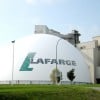
Lafarge Launches $200 Mln Iraq Plant Renovation
Posted on 09 May 2010 .
Karbala, 07 May 2010 - Reuters
France's Lafarge, the world's largest cement maker, launched a $200-million renovation of an Iraqi manufacturing plant on Thursday to boost production and grab a bigger share of the local cement market.
On a tour of the plant, one of Iraq's biggest non-oil industrial projects in recent years, Lafarge chief executive in Iraq Marcel Cobuz said he expected that revamping the 27-year-old factory would help increase its output tenfold to 2 million tonnes annually within two and half years.
"Definitely a lot of revamping is needed here," he said, referring to the factory's dilapidated machines. "They are old, but they are working. They need to be rehabilitated and replaced by more modern ones."
"Our ambition is to have one tonne out of 4 tonnes sold in Iraq," Cobuz said.
Iraq imports about 10 million tonnes of cement each year and consumes around 15 million tonnes, he said. The factory, located in the southern province of Kerbala, has been producing 200,000 tonnes of cement annually.
Iraq is trying to shake off the legacy of years of violence, sanctions and economic decline by opening up its financial and industrial sectors and luring foreign investment and expertise to help it rebuild.
Iraq wants to form joint ventures with foreign investors to overhaul some 240 idle factories around the country over the next five years, Deputy Minister of Industry and Minerals Adel Karim said in March.
Many of the factories are either outdated, were looted in the aftermath of the 2003 invasion or are located in areas still controlled by Islamist insurgents.
The country has multibillion-dollar oil deals in the pipeline, but analysts say it must grow its non-oil sectors if it is to have a viable economy and reduce unemployment, which is still high seven years after the U.S. invasion.
Cobuz toured the factory on Thursday with Boris Boillon, the French ambassador to Iraq, who said the delay in forming a new government in Iraq after a March 7 election produced no outright winner is not an obstacle for French companies interested in investing in Iraq.
Posted in Construction & Engineering In Iraq Comments Off on Lafarge Launches $200 Mln Iraq Plant Renovation
Erbil's New Airport: a Week's Work in a Day
Posted on 28 March 2010 .
By Aiyob Mawloodi
Erbil's new international airport is expected to shoulder a heavy load in the development of the city, the region, and the country.
The General Manager of Erbil's new airport, Mr. Stafford Clarry, announced in a press conference on Wednesday, March 24, that the new Erbil International Airport has started flights as a test period, and the fully completed airport will be officially inaugurated in June 2010.
The new airport, constructed next to the old one, has the longest runway in the Middle East and the fifth longest in the whole world. The length of the runway is 4,800 meters, and its width reaches 90 meters. The total area of the airport is 25,000 square meters. The airport has 16 gates that can receive any type of airplane, and 20 check-ins.
The plan of the airport was designed by Scott Wilson Group PLC, a global integrated design and engineering consultancy for built and natural environments with its headquarters in Britain. It was constructed by a Turkish construction company with its headquarters based in Turkey.
According to Clarry, the old airport, which only has one gate, was capable of receiving 150 flights per week. However, the new airport will, upon completion, have the capacity of 150 flights per day, roughly seven times more than the old airport.
For the purposes of creating new job opportunities for local human resources, the development of the region's capital, increasing the number of travelers, and thus improving the tourism sector in Kurdistan, the Kurdistan Regional Government's (KRG) authorities decided to build a new airport in the shortest time possible, said Clarry at the press conference in Erbil.
"Erbil International Airport will--in terms of transportation, trade, airport management, technology, and tourism--become a very significant factor," said Clarry. "The main objective of building the new airport of Erbil is to support the growth of Kurdistan Region in the future, to become a gate from Erbil to introduce Kurdistan to the world, and to serve as a bridge between the Kurdish culture and the culture of other nations of the world."
Clarry added that with the inauguration of the new airport, the trade and tourism situation will improve vastly, which will in turn create new job opportunities and reduce the unemployment rate in the region.
Clarry said they have signed contracts with five companies who are providing excellent services to passengers, and that negotiations are currently underway with five other companies.
The old airport, which was previously a military airport, was constructed after the 2003 Iraq War, and was officially inaugurated on July 7, 2005. In December 2006, it received the first flight from an IATA airway company.
The airport was intended to serve as a way of attracting foreign investors and businesses to help Iraq's--and especially Kurdistan's--rebuilding process that was started immediately after the collapse of Saddam Hussein's Baathist Regime in 2003. Another purpose of the airport was to help Iraqis and Kurds abroad to return home safe and serve the development of their country. After almost five years of operation, the airport has been successful to a significant degree in achieving those goals.
Erbil's airport is expected to play a very important role in connecting East and West, since it is located on the old route of flights and has a strategic location.
Kurdistan Region, with its capital city of Erbil in particular, is known as the development and rebuilding gateway for all of Iraq, and due to the good security and stability the region is enjoying it has attracted the majority of foreign investment and businesses who are currently doing business in Iraq or are planning to do so in the near future.
The security and stability situation in the rest of Iraq is not suitable for business activities. This reality has increased the significance of Erbil International Airport and thus the load that could not be handled by the old airport. This necessitated the building of a new airport that can handle this heavy load and play an expected role in the development process of the city, the region, and the country.
( Kurdish Globe )
Posted in Iraq Transportation News Comments Off on Erbil's New Airport: a Week's Work in a Day
Over 1 Million Jobless in Iraq
Posted on 21 March 2010 .
Baghdad, 19 March 2010 ( Aswat Al Iraq )
There are more than one million unemployed in Iraq, according to statistics released by the Ministry of Labor and Social Affairs.
“Unemployment from Sept. 16, 2003-Dec. 31, 2009 reached 1.554 million,” a ministry statement received by Aswat al-Iraq news agency quoted an official from the Labor and Vocational Training Department as saying.
The total jobless included 1.359 million men and 194,586 women, the statement pointed out.
Posted in Iraq Oil & Gas News Comments Off on Over 1 Million Jobless in Iraq
Basra - Lowest Unemployment Iraq
Posted on 15 March 2010 .
A discussion loop in Basra on Sunday showed that the province has the lowest unemployment rate throughout Iraq.
“Unemployment is among the biggest challenges that face Iraqi economy,” a source insider to the loop told Aswat al-Iraq news agency.
She said that unemployment negatively affects economic and social circumstances in Iraq.
(Aswat Al Iraq)
Posted in Iraq Banking & Finance News 1 Comment