


US Welcomes Developments in Iraq's Energy Sector
Posted on 10 April 2023 .
Statement from US National Security Advisor Jake Sullivan Welcoming Developments in Iraq's Energy Sector
We welcome significant progress in Iraq this week with respect to energy deals that further strengthen Iraq's sovereignty, independence, and economic prosperity.
First, the Government of Iraq and the Kurdistan Regional Government reached a historic agreement on the export of oil and management of revenues through the Iraq-Turkey Pipeline. This agreement paves the way for a multi-year budget now before Iraq's Council of Representatives and an eventual hydrocarbons law for long-term stability and predictability in Iraq's energy sector.
Second, the Government of Iraq reached an unprecedented $27 billion deal with France's TotalEnergies, including a project to enable the recapture and use of flared gas in southern Iraq. Once implemented, this historic project will increase electricity supply for the benefit of the Iraqi people, advance Iraq's energy self-sufficiency, reduce harmful climate effects from flared gas in southern Iraq, and allow for the export of gas products to new markets.
We are pleased that companies from Qatar, Saudi Arabia, and the United States will play important roles in this infrastructure project. The United States is proud to support these and other regional projects and ongoing diplomatic initiatives to advance a more stable, interconnected, and prosperous Middle East region, which ultimately benefits the United States and the American people.
(Source: The White House)
Posted in Iraq Oil & Gas News, Politics 1 Comment

China to build Power Station in Mansouriya
Posted on 09 April 2023 .
By John Lee.
Iraq's General Company for Electric Power Production has signed a contract with the Chinese company Shanghai Electric for the construction of a combined-cycle power plant for the Mansouriya gas power station.
According to the Ministry of Electricity, the deal is part of the Sino-Iraqi framework agreement and will be implemented on a turn-key basis.
It will add 362 megawatts of energy to the national grid.
(Source: Ministry of Electricity)
Posted in Construction & Engineering In Iraq, Iraq Industry & Trade News Comments Off on China to build Power Station in Mansouriya
Saudi to Fund reconstruction of Baiji Power Station?
Posted on 07 April 2023 .
By John Lee.
The Iraqi Minister of Electricity, Ziyad Ali Fadel, held a meeting this week with the Saudi Export Development Authority (SEDA).
Among the items discussed was the reconstruction of Baiji thermal and gas stations Nos. 1 and 2, and the possibility that these will be financed by the Saudi Export Fund.
(Source: Ministry of Electricity)
Posted in Construction & Engineering In Iraq, Iraq Industry & Trade News, Iraq Oil & Gas News Comments Off on Saudi to Fund reconstruction of Baiji Power Station?

TotalEnergies Confirms Iraq Deal; QatarEnergy to Join Project
Posted on 05 April 2023 .
By John Lee.
TotalEnergies has confirmed that it will proceed with the Gas Growth Integrated Project (GGIP) in Iraq.
In a statement to the markets on Wednesday, it added that QatarEnergy to take a 25-percent stake in the project.
Also, in agreement with Iraqi authorities, TotalEnergies will invite the Saudi company ACWA Power to join its 1GW solar project in Basra.
The full text of the TotalEnergies statement follows:
While confirming all the terms of the Development & Production Contract signed in 2021, TotalEnergies (Paris:TTE) (LSE:TTE) (NYSE:TTE) and the Iraqi Government have, through exchanges in the past months, including in 4 occasions between Prime Minister Al-Sudani and Chairman & CEO Patrick Pouyanné, jointly defined the necessary conditions and mutual insurances to move forward with the Gas Growth Integrated Project (GGIP).
The Iraqi Government and TotalEnergies have agreed on a 30% stake for the Basrah Oil Company (BOC) in the GGIP. Furthermore, in agreement with the Iraqi Government, TotalEnergies has invited QatarEnergy to take a 25% stake in the GGIP.
The consortium will thus be composed of TotalEnergies (45%), Basrah Oil Company (30%) and QatarEnergy (25%).
TotalEnergies welcomes the continuity of the voice of the State of Iraq on this Development & Production Contract, which is a strong and positive signal for foreign investment in the country.
Signed in September 2021, the GGIP has for main purpose to enhance the development of Iraq's natural resources to improve the country's electricity supply.
According to these agreements, TotalEnergies and its partners will invest approximately $10 billion (100% share):
- to recover flared gas on three oil fields in order to supply gas to power generation plants,
- to build a seawater treatment plant in order to provide water injection for pressure maintenance to increase regional oil production, as an alternative to the use of fresh water from rivers and aquifers.
Furthermore, TotalEnergies will develop a 1 GW solar power plant to supply electricity to the Basrah regional grid. In agreement with Iraqi authorities, TotalEnergies will invite the Saudi company ACWA Power to join this solar project.
(Source: TotalEnergies)
Posted in Construction & Engineering In Iraq Comments Off on TotalEnergies Confirms Iraq Deal; QatarEnergy to Join Project
Sustainable Solutions to Combat Climate Change in Iraq
Posted on 05 April 2023 .
Background
Ranked the fifth most vulnerable country to climate change, Iraq's environmental and energy challenges directly affect its overall stability and prosperity.
Working with the Government of Iraq, the private sector and affected communities, USAID is mitigating the impact of climate change by strengthening water management and governance systems, promoting renewable energy solutions, improving management of strategic resources, and supporting businesses developing climate-smart innovations.
Over the past two decades, a steady decrease in Iraq's precipitation, combined with higher temperatures, is creating some of the worst drought conditions in its recorded history, resulting in reduced yields of important crops, such as wheat and barley.
Despite being one of the world's leading oil producers, Iraq relies on Iranian oil and gas imports, as well as diesel generators, to meet growing energy needs. Iraq also flares approximately $3.8 billion worth of gas annually, which is economically and environmentally unsustainable. Iraq's climate risks impact the country's overall stability and prosperity: ongoing water shortages and rising temperatures are placing growing pressure on basic resources and reducing opportunities for livelihoods in once-prosperous sectors, such as agriculture.
Goals
USAID supports the Government of Iraq (GOI) to meet its commitments under the Paris Agreement, improve management and governance of energy resources, implement renewable energy projects, and restore agricultural lands. USAID also leverages the private sector to address climate change issues by facilitating access to financing and investment opportunities for firms developing innovative solutions to conserve water and energy.
Since 2015, USAID has invested over $150 million to improve Iraq's water availability and management, increasing access to potable water for over 12 million Iraqis. Through the Water and Development Alliance (WADA), in partnership with Coca-Cola, USAID piloted a successful water-loss reduction program in the city of Soran in Iraqi Kurdistan, one of Iraq's fastest growing districts. This initiative introduced new management practices and upgraded the water network, saving over 1.1 billion liters of water annually.
Through the Water and Energy for Food (WE4F) Grand Challenge, USAID supports Iraqi small-and medium-sized enterprises working in agriculture, energy, and water to develop projects that sustainably increase food production. Entrepreneurs have received about $500,000 in climate-friendly innovative investments in the agriculture sector. The innovative projects have saved over 700 Mwh of electricity, over 4 million liters of water, and over 9,000 tons of CO2 emissions.
USAID's Iraq Governance and Performance Accountability project supported the Iraqi Ministry of Environment to promote good climate governance and implement climate-friendly service delivery models in the areas of solid waste management, water, and electricity. This includes business process re-engineering for efficiency, cost recovery, improved GOI procurement processes, and capacity development/training on water treatment, such as managing salinity and bacterial contamination. This activity also provided information technology solutions to manage water resources and trained staff on detecting leaks and illegal connections, reducing water wastage by 30 percent in five provinces.
USAID's Durable Communities and Economic Opportunities project partners with the private sector to support young entrepreneurs' climate-smart business ventures and the transition to a more sustainable energy industry. The project mobilizes private finance and encourages corporate decisions that support the transition to more sustainable, resilient, and climate-adaptive power sources. Additionally, the project provides technical assistance and seed funding to youth entrepreneurs' climate-smart businesses that promote innovative agricultural techniques and present renewable energy solutions.
In response to the Basrah water crisis, USAID's Funding Facility for Stabilization program supported the upgrade and rehabilitation of seven water treatment infrastructure projects, which ensured more reliable and clean water to over 80,000 residents. USAID also helped establish the Basrah Water Crisis Committee, which provides a roadmap to mitigate future water crises.
USAID also supports over 140 water infrastructure projects in Anbar, Ninewa, and Salah al-Din provinces, helping to reduce water wastage and provide clean water to residents. In Anbar alone, USAID has helped ensure access to safe water to over 1.3 million residents.
The USAID-sponsored Funding Facility for Economic Reform supports the GOI to meet Iraq's 2030 vision for enhancing climate resilience targets, increasing renewable energy use, and reducing greenhouse gas emissions. USAID also supports the Ministry of Environment to develop a five-year climate strategy and produce its National Appropriate Mitigation Action Plan, a contingency plan for mitigating environmental hazards.
Key Results
- Provided around $1.7 million to SMEs working in green energy/climate-related sectors.
- Trained over 145 water directorate staff in strategic planning and water system management.
- Improved water access for over 12 million Iraqis.
(Source: USAID)
Posted in Agriculture, Iraq Industry & Trade News, Politics Comments Off on Sustainable Solutions to Combat Climate Change in Iraq

PM Opens Karbala Refinery
Posted on 03 April 2023 .
By John Lee.
The Karbala Oil Refinery, Iraq's first oil refinery to operate with modern technologies, has been opened by Prime Minister Mohammed S. Al-Sudani.
Built by Korean company Hyundai, the refinery has a capacity of 140,000 barrels per day and meets the latest environmental-friendly European standards.
It includes a power plant with a capacity of 200 MW (with four units of 50 MW each), provide the refinery with electricity, and supplying 60 MW to the Iraqi national grid.
The refinery is expected to save Iraq billions of dollars in oil imports.
The full text of the Prime Minister's statement is shown below:
Prime Minister Mr. Mohammed S. Al-Sudani, inaugurated the Karbala Oil Refinery, which operates with a capacity of 140,000bpd, following approved international standards. The Minister of Oil, the Governor of Karbala, and several officials and technical advisors attended the inauguration ceremony.
His Excellency conducted a field tour of the refinery departments and was briefed on the production stages and future development plans.
The Karbala Oil Refinery, implemented by the Korean company Hyundai, is one of Iraq's strategic projects. It is the first oil refinery in Iraq to operate with modern technologies. Its products follow the latest environment-friendly European standards. The octane rating for the produced gasoline reaches 95, and the project adheres to Iraqi environmental law.
Karbala Oil Refinery includes 33 operational, service, and storage units with large production capacities. It also consists of integrated terminals, a station for pumping oil derivatives and petroleum products to external terminals, and a power plant with a capacity of 200 MW, with four units, each of which operates with a capacity of 50 MW to provide the refinery with electricity. It will supply 60 MW to the National Electricity Transmission Grid.
(Source: Media Office of the Prime Minister)
Posted in Iraq Oil & Gas News Comments Off on PM Opens Karbala Refinery
Production Starts at Akkas Gas Field
Posted on 31 March 2023 .
By John Lee.
Gas operations have begun at the Akkas gas field in Anbar governorate.
A statement from the Ministry of Oil said production of 60 million standard cubic feet per day (MMSCFD) is being used to produce 90-95 megawatts of electricity.
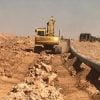
The State Company for Oil Projects (SCOP) built a 30-kilometer pipeline (pictured) to transport gas to the Akkas gas power station.
(Source: Ministry of Oil)
Posted in Iraq Oil & Gas News Comments Off on Production Starts at Akkas Gas Field
Iraq's Energy Sector and in a Climate-Constrained World
Posted on 29 March 2023 .
A Tale of Two Transitions : Iraq's Energy Sector and Macroeconomic Stability in a Climate-Constrained World (English)
This paper from the World Bank assesses the costs and benefits of Iraq's own energy transition from fossil fuel dependent power sector to one with a significantly higher share of renewables amid an accelerating global energy transition.
The paper quantifies the returns of Iraq's energy transition, its high exposure to the global energy transition due to the deep role of oil revenues in the provision of public finances, and the policy tradeoffs associated with moving towards a greener energy mix.
The analysis finds that all decarbonization pathways of the electricity sector bring additional growth and productivity gains compared to maintaining the status-quo, albeit at different levels of cost effectiveness.
However, all pathways (including existing GoI plans) are fiscally costly given the required upfront levels of capex and the subsidy.
This cost could prove to be fiscally steep in deep decarbonization scenarios especially if the transition is fully financed by the public budget.
Consequently, the success of the energy transition in Iraq will largely depend on the political context and on the ambition of a GoI-led reform process that can overcome any socio-political vested interest. It will also require popular understanding and support for the urgency of this transition.
Click here to download the full report.
(Source: World Bank)
Posted in Iraq Industry & Trade News, Iraq Oil & Gas News Comments Off on Iraq's Energy Sector and in a Climate-Constrained World
NIC Boss discusses Saudi Projects in Iraq
Posted on 20 March 2023 .
By John Lee.
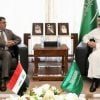
Sultan bin Abdulrahman Al-Murshed, CEO of the Saudi Fund for Development (SFD) welcomed an Iraqi delegation led by the Chairman of the National Investment Commission (NIC), Dr. Haider Muhammad Makiya in Riyadh on Sunday.
The delegation comprised officials from various Iraqi ministries including Foreign Affairs, Finance, Agriculture, Oil, and Electricity, as well as representatives from other government agencies. The Ambassador of the Republic of Iraq to the Kingdom of Saudi Arabia, Dr. Abdul Sattar Al-Janabi, was also present.
The two sides discussed the progress of development projects and programs funded by the Saudi Fund for Development in Iraq, as well as ways to strengthen development cooperation between the two countries in different sectors. Dr. Haider expressed his gratitude to Saudi Arabia for its efforts in providing soft development loans through the Saudi Fund for Development to finance infrastructure and basic service projects for the Iraqi people, emphasizing the crucial role that Saudi Arabia plays in international development.
The SFD has provided two soft development loans worth over $40 million to fund two projects in Iraq, namely the construction of the Saqlawiya Hospital in Anbar Governorate and a metal grain silo to store wheat in Diwaniyah Governorate, aimed at enhancing basic health services and food security.
Additionally, the Government of Saudi Arabia has generously granted funds through the SFD to restore the wards damaged by the Ibn Al-Khatib Hospital fire in the capital, Baghdad, further demonstrating the country's commitment to supporting Iraq's development.
(Source: Saudi Fund for Development)
Posted in Investment, Iraq Industry & Trade News Comments Off on NIC Boss discusses Saudi Projects in Iraq
Iraq Plans More Renewable Energy; 5 Million New Trees
Posted on 14 March 2023 .
By John Lee.
Iraq's Prime Minister has said Iraq will plant five million trees in an attempt to combat climate change and limit the damage caused by dust storms.
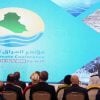
Addressing a climate conference in Basra, Mohammed Shia Al-Sudani added that the plan woule be accompanied by the launch of a "national guide for urban afforestation" for the first time in Iraq.
Other projects will include the construction of renewable energy power stations, the rehabilitation of closed sanitary landfill sites, desertification control projects, water-regulated irrigation techniques, and new water treatment facilities.
He added that one-third of Iraq's electricity needs should be met from renewable sources by 2030.
(Source: Media Office of the Prime Minister)
Posted in Agriculture Comments Off on Iraq Plans More Renewable Energy; 5 Million New Trees