


Iran, Iraq Sign Oil & Gas MoU
Posted on 13 May 2023 .
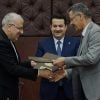
Iran and Iraq have signed a memorandum of understanding on cooperation in the oil and gas industries.
In a meeting attended by Iraqi Prime Minister Mohammad Shia al-Sudani, held in Baghdad on Wednesday, Iran's Oil Minister Javad Owji and his Iraqi counterpart Hayan Abdel-Ghani signed the MoU to cooperate in the oil, gas, and petrochemical projects.
Owji and Sudani put emphasis on the expansion of bilateral cooperation in the energy sector, urging Iran-Iraq Joint Working Group to follow up the implementation of the recent memorandum through holding regular sessions.
The Iraqi prime minister brought forward proposals to develop joint fields, train human resources, and implement petrochemical projects, which were welcomed by the visiting Iranian oil minister, SHANA reported.
Iran's oil minister also held talks with Iraqi Minister of Electricity Ziad Ali Fadel.
On April 29, Iranian President Ebrahim Raeisi, who met his Iraqi counterpart Abdul Latif Rashid in Tehran, underlined the development of Tehran-Baghdad relations and promotion of their cooperation in infrastructure fields, including water, electricity, gas, and energy sectors.
Iran is a major supplier of natural gas to Iraq as the Arab country, which is the third largest crude oil exporter in the world, still struggles with rising demands for natural gas in its power plants.
Iranian authorities say Iraq has settled a part of the huge debts it owed to Iran for previous gas supplies.
(Source: Tasnim, under Creative Commons licence)
Posted in Iraq Oil & Gas News Comments Off on Iran, Iraq Sign Oil & Gas MoU
Iraq to raise Electricity Production to 24,000 MW
Posted on 07 May 2023 .
From Middle East Monitor, under a Creative Commons licence. Any opinions expressed are those of the author(s) and do not necessarily reflect the views of Iraq Business News.
The Iraqi Ministry of Electricity announced its plans to raise electricity production to 24,000 megawatts in May, an increase of 3,500 megawatts from the current production, local media reports.
According to the report, the Ministry said that it started early with the summer plan, which included three phases, indicating that periodic and emergency maintenance work has been completed for the production units of all stations, which will be ready on the first of next May, with the provision of spare parts and financial allocations.
The report also added that the country indicated that the stability of the load at 24,000 megawatts, an increase of 3,500 megawatts, will achieve good stability hours in the summer.
Posted in Iraq Industry & Trade News Comments Off on Iraq to raise Electricity Production to 24,000 MW
Sweden contributes additional $1.9m for Stabilization in Iraq
Posted on 07 May 2023 .
Sweden contributes additional US$ 1.9 million to support stabilization in Iraq
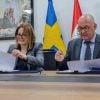
The Government of Sweden has contributed an additional SEK 20 million (US$ 1.9 million) to UNDP's flagship programme, the Funding Facility for Stabilization. Today, a signing ceremony with Her Excellency Ms. Jessica Svärdström, the Ambassador of Sweden to Iraq, and UNDP Resident Representative in Iraq Auke Lootsma formalized this generous contribution.
Since the establishment of the Facility in 2015, the Government of Sweden has contributed SEK 434 million (US$ 42 million) to stabilization efforts in Iraq. With this additional funding, UNDP will be able to continue rehabilitating critical infrastructure and services damaged during the conflict with ISIL and setting the stage for community-based reintegration.
"The Government of the Kingdom of Sweden has been a valuable partner to UNDP. This new contribution comes at a critical time. While a lot of progress has been made, our work is far from over," says UNDP Iraq Resident Representative Auke Lootsma.
"We thank the Government of the Kingdom of Sweden for its unwavering commitment to making a lasting impact in the lives of the people of Iraq. Working together, we can ensure that gains made in previous years are sustained and further built upon," he adds.
"Sweden has a close bilateral relationship with Iraq. The fact that 3% of the Swedish population has its origins in Iraq has created strong people-to-people contacts between our countries. Sweden will continue to support a stable and secure Iraq, including through our bilateral development cooperation," says Swedish Ambassador to Iraq, Her Excellency Ms. Jessica Svärdström.
"Sweden is proud to be a part of stabilization efforts in Iraq and remains committed to contribute to this collaborative work to build a better future for the people displaced and affected by the ISIL conflict," she adds.
As of April 2023, UNDP's Funding Facility for Stabilization has completed more than 3,500 projects across the five liberated governorates of Anbar, Diyala, Kirkuk, Ninewa, and Salah Al-Din. These projects, which include the rehabilitation of schools, hospitals, water systems, electricity networks, and homes, and the creation of short-term employment, have improved the lives of over 8.3 million Iraqis and facilitated the return of 4.9 million people displaced by the ISIL conflict.
(Source: UN)
Posted in Construction & Engineering In Iraq Comments Off on Sweden contributes additional $1.9m for Stabilization in Iraq

Electricity Contracts Renewed in Northern Iraq
Posted on 04 May 2023 .
By John Lee.
Iraq's Council of Ministers has approved the renewal of two contracts between the Ministry of Electricity's General Company for the Transmission of Electricity for the Northern Region and energy suppiers:
- Qaiwan's contract to supply 400-800 megawatts of energy to be extended for one year;
- Kar Group's contract for the supply of 150-385 megawatts of energy to be extended for one year.
(Source: Media Office of the Prime Minister)
Posted in Iraq Industry & Trade News Comments Off on Electricity Contracts Renewed in Northern Iraq
Iraqi Kurdistan to Build Three New Dams
Posted on 01 May 2023 .
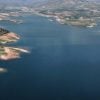
In coordination with the Iraqi Ministry of Water Resources, the Kurdistan Region will construct three new strategic dams to capture one billion cubic meters of water.
Within the framework of the Kurdistan Regional Government's strategic plan to fight drought, three dams named "Dalga", "Mandawa", and "Bakrman" will be constructed in the Erbil, Duhok and Raparin administrations.
The Kurdistan Region's Minister of Agriculture and Water Resources said:
"The General Directorate of Dams in the Kurdistan Region has developed construction plans for these three dams, which will increase the water supplies in the region and protect water security."
Last year, two dams in Garmian and Darbandikhan were constructed and filled with water in 2023. They have a total capacity of 22 million cubic meters.
The three new dams will create a remarkable resource for capturing water, generating electricity and improving agriculture in the Kurdistan Region.
(Source: KRG)
Posted in Agriculture, Construction & Engineering In Iraq, Iraq Industry & Trade News Comments Off on Iraqi Kurdistan to Build Three New Dams
Iraq courts Syrian Investment
Posted on 30 April 2023 .
By John Lee.
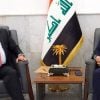
The Chairman of Iraq's National Investment Commission (NIC), Dr. Haider Muhammad Makiya, met with the Syrian Ambassador to Baghdad, Mr. Sattam Jadaan, to discuss strengthening economic cooperation between Iraq and Syria.
They talked about potential joint investment opportunities in various sectors, including housing, oil, industry, agriculture, and electricity.
The Chairman expressed Iraq's interest in attracting Syrian companies to invest in the country and providing investment maps.
The Syrian Ambassador expressed gratitude for the partnership and highlighted the Syrian government's commitment to bilateral investment cooperation with Iraq.
(Source: NIC)
Posted in Construction & Engineering In Iraq Comments Off on Iraq courts Syrian Investment

Jiyad: Iraq Petroleum Sector Chronicle, Volume 4
Posted on 25 April 2023 .
By Ahmed Mousa Jiyad.
Any opinions expressed are those of the author, and do not necessarily reflect the views of Iraq Business News.
The Dedication, Preface, and Introduction of IPSC Project' New Book
Ahmed Mousa Jiyad
Norway
My newest book in the Iraq Petroleum Sector Chronicle Project- IPSCP has been released this month; it is volume 4, has a sub-title, Contracts Amendments in the Making and covers the development in 2013 with comparative linkage to previous years.
This contribution comprises to whom the book was dedicated, the "Preface" jointly written by two prominent patriotic and progressive Iraqis and the "Introduction", which it provides an executive summary of the book.
The recent book is dedicated to all my colleagues with whom I worked, at different capacities, between 1975 and July 1988, on many issues, projects, and missions (inside and outside the country) related to the petroleum sector and the Iraqi economy, particularly at: The Council of Ministers, Ministry of Oil' headquarter, INOC and SCOP.
*****
PREFACE
A Guiding Light-tower in the Solitary of a Deserted Path
By
Fuad Al-Amir and Majid Allawi
We did not have the opportunity to know closely our dear colleague Ahmed Mousa Jiyad until a group comprising many good patriotic oil experts and professionals stood fast confronting the attempt to promulgate a disastrous oil law in 2007, and we have not been able to meet until now. However, a bond of mutual respect, understanding and continuous contact and communication developed between us while we three follow-up and engage in the national discourse on variety of economic and oil issues.
The most intensive contact and important cooperation between us occurred when Iraq National Oil Company-INOC Law "smuggled" in the last days of the parliament's term on March 14, 2018, and the dubious approval of the President of the Republic was granted after only eleven days on March 25, 2018.
Two days after that approval, dear brother Ahmed Mousa Jiyad, wrote and circulate a "direct appeal against the Iraqi National Oil Company Law" to the Federal High Court, on March 27. He provided detailed analysis showing where INOC Law violates the Constitution and shows that the President's endorsement of it is a violation of his basic duty, according to Article 67, to protect and ensure compliance with the Constitution.
Ahmed' initiative was a source of motivation, mobilization, and awareness on how the seriousness of the negative consequences that law could have on the existence of Iraq; as an entity and a state and could transform all oil-producing and non-oil-producing provinces into mini-states, resembling KR' "mini-state," fighting over resources, provincial borders, transit rights and fees, and even over water. Under a state that would be governed by a company, which owns all Iraq's hydrocarbon, and its resources are managed by an appointed, unelected administration.
His memorandum galvanised efforts and assembled much wider support, was the basis for subsequent moves to crystallize and formalise our position and course of action, immediately after INOC Law was published on the Official Gazette, Al-Waqaai Al-Iraqiya.
Our communication continuous after the law was published, and in light of consultations with him, we decided to file an appeal case before the Federal High Court, challenging the premises of law; because the "public" appeal that Ahmed had previously submitted and circulated widely did not meet the legal procedural requirements for filing a case in terms of powers of attorney, legal representation, and other formalities, which may require many months of direct presence and attendance. His residency, work and commitments outside Iraq prevented him from be in Baghdad for the required period.
However, the most important role in that lawsuit was what Ahmed had played in the accurate formulation of all the articles of the lawsuit list, and the statement on the constitutional articles that were violated by the articles of the National Oil Company Law, in an in-depth legal formulation. The lawsuit statement was completely drafted by him, with the exception of the introductions and formalities necessary to be followed and adhered to in such lawsuit regulations. And he continued to follow up on every session during the course of the lawsuit, which was resulted in a decision by the Federal High Court accepting appeals almost all main articles that were appealed against; certainly, the thorough and well-articulated views on the constitutional and legal appeals that he formulated had the decisive role in accepting those appeals and "demolishing" the miserable INOC Law.
What should be highlighted is the depth, objectivity and diversity of his studies and interventions: he addressed and condemned the positions of successive, collusive governments regarding KRG' unconstitutional control of oil operations in Iraqi Kurdistan region. Also, his analysis of the State annual budgets, as he wrote on 2019 budget, condemn the "Policy of extortion and negativity of acquiescence", and asserting any payment from the federal government to KRG not only violates state budget law, but also indicates government failure in protecting the national interests. He addressed and uncovered corruption and irregularities in the work of Ministry of Electricity and how the Minister contract with "himself". He conducted and published serious, in-depth and valuable series of economic studies regarding many projects and suggested agreements such as Basra-Aqaba Pipeline, Agreement with TotalEnergies, the SIIP with ExxonMobil, ..., and many more studies and positions on different issues of petroleum policy, contracts, refineries, development of border joint-oilfields among other topics.
Ustath [Professor] Ahmed Mousa Jiyad is an extension and outcome of a generation of patriotic and progressive experts who carried the concerns of Iraq and its oil issues on their shoulders after the fall of the glorious July 1958 Revolution, after it dared to launch the battle for the liberation of the national oil wealth by enacting Law No. 80 of 1961; the hostile forces mobilized all evil efforts to bring it down.
Great symbols prominent Iraqi experts and intellectuals have taken up the leadership of the oil battle, led by the deceased of Iraq, the great stature Dr. Mohammad Salman Hassan with his lecture that he delivered at the Economists Association and issued a pamphlet entitled "Towards the Nationalization of Iraqi Oil", in which he presented the idea of the gradual nationalization of Iraqi oil. There is another pioneering work presented by Dr. Ibrahim Allawi in his book "Iraqi Oil and National Liberation" in 1967, which has become a reference for every follower of oil issues.
Dear brother Ahmed lived through that generation after his graduation in 1967, and he was among the elite of the progressive youth who gathered around Dr. Mohammad Salman Hassan and coordinate their movements and intellectual activity under that glorious banner.
Now, Ahmed, with exceptional qualities, represents and resembles an extension of all those who preceded him. He has enriched his first academic specialization as a graduate of the Faculty of Economics and Political Science with several specialized academic studies in the most prestigious international, UK and US, universities with a diploma in planning, a master's in development and a master's in law and diplomacy.
Moreover, he enriched the oil library with a series of volumes/books entitled Iraq Petroleum Sector Chronicle-IPSC Project, this fourth volume covers the year 2013. Ahmed' research and publications, particularly IPSC Project, provide the most important documentary reference for Iraqi oil issues.
All that, in addition to his long experience as an employee, chief expert, and negotiator at the Ministry of Oil, INOC, Council of Ministers and Ministry of Trade, explain the depth and width of his analytical approach. Therefore, his treatment of all raised oil issues was distinguished by methodology, professionalism, objectivity, and accurate scientific approach; a spirit of the researcher and analyst of technical, legal and financial factors, economic feasibility, and possible alternatives to the subject he deals with, away from convulsions or constructive and polemical phrases or tendencies.
We mention this to testify how exceptional this unique talent is. And in the highly complex and volatile global conditions in the oil industries and policies, the failure of the competent state agencies, starting with the prime minister, not to benefit from his experiences and consultations is a grave loss and national negligence for which an apology is not sufficient.
He is the sparkling continuity of all generations of Iraqi experts and intellectuals who left and are leaving their marks and giving to their country and to future generations and he becomes a guiding beacon in the solitary of a deserted path.
Baghdad
March 2023

INTRODUCTION
Iraq Petroleum Sector Chronicle Project, Progressing
This fourth book/volume is, mainly, about the development in Iraqi petroleum sector during 2013, but also, it provides the needed continuity by covering the development in previous years that were addressed in the first three volumes in this series of books on Iraq Petroleum Sector Chronicle-IPSC Project.
There is a separate note in this volume outlining IPSC Project, which is one fruition of many decades of constant meticulous research, consultation, documentation, follow up and direct involvement efforts, and of more than six decades since my formal association and engagement with the Ministry of Oil.
The first three volumes/books were published by Lambert Academic Publishing-LAP, this fourth volume is too.
All books have the same main title, Iraq Petroleum Sector Chronicle but with different subtitles, reflecting the major themes that dominate the debate in that particular year/period covered by the related volume.
The first IPSC book has a subtitle, "Grand Opening for Big Push Strategy" and covers the development in the upstream petroleum in Iraq prior to 2011. The subtitle reflects the mood, sentiments, actions, and views that prevailed then both inside and outside the country, expecting Iraq to be a game changer in the international petroleum scene. That was premised on the concluded service contracts pursuant to the bid rounds, particularly the first and the second. The book/volume was published in October 2021 and my dear colleague Tariq Shafiq wrote the Preface.
Signs of powerful restraints and constraints began to emerge and thoughts for revisions were contemplated during 2011. Hence, the subtitle for the second volume reflects that dramatic shift from high expectations originally formulated after concluding the above-mentioned contracts; it was, "A Game Changer, No More". The volume was published in May 2022 and its Preface was written by my dear colleague Dr. Walid Khadduri.
The third book covers 2012, with subtitle "Reality Seldom Coincides with Expectations"; it is in fact a logical continuation or extrapolation of the subtitle for the previous volume. The third book contains many new additions and improvements, especially regarding data and statistics covered in part four. My colleague and twice Minister of Oil, Thamir Al-Ghadhban enriched volume three of the book by writing its Preface.
The current volume comprises the usual four parts, in addition to Preface, Introduction, a brief note on IPSC Project, Table of contents and Abbreviations.
Following the established structure of the previous volumes, Part One contains a selection of my own essays and research work published in 2013. Each of my "Essays..." has its own methodology, structure, assumptions, analysis, discussion and consulted references; information on each essay was provide, when and where it was published and the web-link to access it, if that is permissible by the related websites. This part contains 11 essays.
Part Two of the book comprises views of and positions taken by some selected well-known Iraqi oil professionals, senior government officials and others aiming at presenting a balance of wide spectrum of different, and sometimes opposing, views positions and affiliations; these are presented in a form of own articles, interviews, keynote statements or any other form.
The selected items reflect the richness and diversity of opinion that shaped the discourse among Iraqis at that time and, consequently, enriched the value of this book. Official views, expressed, through detailed interviews and statements, by senior government officials and decision makers reflect the political vision and economic aspiration of the dominant political parties, groups, religious/ politicized individuals and different associations and gatherings of professionals, notably oil experts and professionals inside and outside the country.
This part includes also other articles written or interviews given by non-Iraqi oil professionals, articles, abstracts and extracts from reports, studies and books written or done by international entities, consulting/legal firms, and authors, among others; they were included due to their relevance to Iraq upstream petroleum. There are 22 items in this part two.
Part three, provides much wider global views on the development of the Iraqi petroleum sector, comprises outside foreign and international standpoints and contributions to the debate about Iraq's petroleum and its prospect; a large number of items compiled from many and different external sources includes reports, studies, articles, and media reporting among others, most if not all, were written by non-Iraqis.
This part adds the third perspective of the book; how the outside world looked to Iraqi petroleum matters, what was their preoccupation, how did they understand or fail to understand, analyse, debate the issues, and foresee the implications. Some items provide data and information that are not made available by Iraqi entities through formal channels and thus becomes important source for such information. In total, this part comprises 59 items.
In this volume, Part Four exhibits noticeable addition and improvements, with production of many charts, tables, and introduction of trendlines and regression equations. Data and statistics are vital material evidence and essential for understanding and assessing progress or otherwise in different aspects in petroleum sector.
The part has eight main sections with many sub-sections, 47 tables and 27 charts.
This part provides rather detailed data and analysis not only for 2013 but also covers previous years whenever possible and data are available. A brief review of quantitative and statistical indicators regarding the eight topics are provided hereunder.
This fourth book covers the development of the sector during 2013. It has the subtitle, Contracts Amendments in the Making; the most impacting action and financially rewarding to IOCs.
Click here to download the full analysis in pdf format.
Mr Jiyad is an independent development consultant, scholar and Associate with the former Centre for Global Energy Studies (CGES), London. He was formerly a senior economist with the Iraq National Oil Company and Iraq's Ministry of Oil, Chief Expert for the Council of Ministers, Director at the Ministry of Trade, and International Specialist with UN organizations in Uganda, Sudan and Jordan. He is now based in Norway (Email: mou-jiya(at)online.no, Skype ID: Ahmed Mousa Jiyad). Read more of Mr Jiyad's biography here.
Posted in Ahmed Mousa Jiyad, Iraq Oil & Gas News, Politics Comments Off on Jiyad: Iraq Petroleum Sector Chronicle, Volume 4
US Company to Upgrade Sadr Power Station
Posted on 20 April 2023 .
By John Lee.
Iraq's Council of Ministers has approved the recommendation to convert the Sadr power station from a simple cycle to a combined cycle operation.
The conversion will be done by the American company Stellar Energy for a total cost of $877,200, an increase of 3.2 percent from the original estimate.
Total capacity will be 229 megawatts (MW), and the work will be completed in 36 months.
The Ministry of Electricity will review contractual procedures, and all equipment will be of European and American origin.
(Source: Media Office of the Prime Minister)
Posted in Iraq Industry & Trade News Comments Off on US Company to Upgrade Sadr Power Station
Iraq, Saudi discuss Electrical Interconnector and Solar Projects
Posted on 17 April 2023 .
By John Lee.
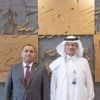
Saudi Arabia's Minister of Energy, Prince Abdulaziz bin Salman bin Abdulaziz Al Saud, held a meeting in Riyadh with Iraqi Minister of Electricity, Engineer Ziad Ali Fadel.
During the meeting, they discussed the developments in the electrical interconnection project between the two countries.
This project will contribute to supporting the reliability of the electrical networks in both countries, achieving economic savings, in addition to promoting the optimal energy mix for electricity production, supporting the integration of renewable energy into the electrical networks, and achieving the optimal investment in electricity generation projects.
The meeting also addressed opportunities for cooperation between the two countries in the field of renewable energy, and the use of the potentials and experiences of ACWA Power in this vital field, and its contribution to developing future projects in Iraq.
The meeting discussed the Kingdom's pioneering experience in smart meters and how to transfer it to the Iraqi side, and the opportunities for Saudi companies - in addition to Iraqi companies - as contractors and manufacturers in developing the infrastructure of smart meters.
The Iraqi side was briefed on the financial and regulatory reforms that the electricity sector in the Kingdom has witnessed over the past three years, and the possibility of exchanging experiences between the two countries in this field.
(Source: Saudi Ministry of Energy)
Posted in Iraq Industry & Trade News Comments Off on Iraq, Saudi discuss Electrical Interconnector and Solar Projects

Iraq to Pay Debts to Iran "within 3-5 Months"
Posted on 12 April 2023 .
Iraq to Pay Debts to Iran within 3-5 Months: Official
The Chairman of the Iran-Iraq Joint Chamber of Commerce said the debt Iraq owes to Iran for import of energy will be paid within the next three to five months.
"We have found several solutions to receive our debt from the Central Bank of Iraq, so, Iraq's oustanding payments to Iran will be cleared gradually within the next three to five months," Yahya Al-e Es'hagh stated.
Regarding the solutions to cut the dependency of the Iranian economy on the US dollar, the former minister of commerce noted that a part of Iran's ties with neighboring Iraq is in the fields of exchange of goods while the other part is related to the export of technical and engineering services and also electricity and gas.
Elsewhere in his remarks, he pointed to the leading role of the private sector and added that a major part of trade relations between Iran and Iraq is done by the private sector.
Iranian products are highly welcomed by people in neighboring Iraq, Al-e Es'hagh emphasized.
(Source: Tasnim, under Creative Commons licence)
Posted in Iraq Banking & Finance News, Iraq Industry & Trade News, Politics Comments Off on Iraq to Pay Debts to Iran "within 3-5 Months"