


US Allows Iraq to Release $500m to Iran
Posted on 12 March 2023 .
US Allows Iraq to Release $500 Million in Iran's Blocked Assets
The United States has allowed Iraq to release the Iranian blocked assets worth $500 million due to sanctions relief, an Iranian official said.
The US has mandated Iraq to release $500 million in Iranian blocked assets, the secretary-general of Iran-Iraq Joint Chamber of Commerce announced on Friday.
Turning to Iran's blocked assets in neighboring Iraq, Hamid Hosseini said the Iraqi officials agreed to deposit Iran's electricity and gas funds into a banking account belonging to the National Iranian Gas Company (NIGC) and Iran's Power Generation, Transmission and Distribution Management Company (known as TAVANIR).
Iran's blocked assets have been left in a bank under the strict supervision of the US and are only allowed to be used for importing goods and commodities that are not subject to sanctions, he said, adding that $1 billion worth of goods and commodities was handed over to Iran last year, so that Iran's debt to Turkmenistan as a result of gas imports was paid through this procedure.
During a recent visit of Iraqi Foreign Minister Fuad Hussein to the US, Iraq was given permission to release the $500 million worth of Iranian assets blocked in the Iraqi banks.
(Source: Tasnim, under Creative Commons licence)
Posted in Iraq Banking & Finance News, Iraq Industry & Trade News Comments Off on US Allows Iraq to Release $500m to Iran

Jordan-Iraq Electricity Interconnector to be Completed by end-2024
Posted on 11 March 2023 .
By John Lee.
Jordan's Minister of Energy and Mineral Resources, Saleh Al-Kharabsheh, has reportedly confirmed that the Jordanian-Iraqi electrical interconnection project is expected to be completed by the end of 2024.
Jordan News quotes the minister as saying that all tenders for the project have been awarded by the Jordanian side, including the tender for the Al-Risha substation transformers, the transmission line tender, the civil works tender, and the switchgear station tender.
(Source: Jordan News)
Posted in Construction & Engineering In Iraq Comments Off on Jordan-Iraq Electricity Interconnector to be Completed by end-2024
Siemens signs Contracts for Iraqi Power Stations
Posted on 09 March 2023 .
Siemens Energy has been awarded long term service contracts for several powerplants, from the Ministry of Electricity of the republic of Iraq, to improve energy stability and availability, as well as provide training, skills, and employment opportunities for Iraqis.
These contracts represent the first portion of prioritized projects under the Iraq Energy Agenda - Wave II agreement, which was signed in Berlin in January 2023 between Siemens Energy and the Ministry of Electricityof the republic of Iraq.
As part of the prioritized packages, Siemens Energy signed three long term service contracts, for five years each, for the Al Sadr, Kirkuk, and Al Rasheed power stations. This will provide maintenance and servicing to ensure the stability of these power plants which generate more than 1 gigawatts of electricity.
The contracts will also enable training and knowledge transfer to local employees of the Ministry of Electricity, as well as other local specialists, to be able to maintain the systems themselves and carry out minor repairs in the future. These contracts are envisioned to enable job opportunities for Iraqis over the next five years.
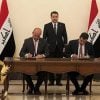
On March 7, 2023, Siemens Energy Middle East Managing Director, Dietmar Siersdorfer, signed the contract for the Kirkuk powerplant with the Director General for the north region production state company, Mr Walid Khalid, and for the Al Sadr and Al Rasheed powerplants, with the Director General for the middle region production state company, Mr Ali Ahmed. The signings were witnessed by Prime Minister of the republic of Iraq Mr Mohamed Shiaa Al Sudani, on the sidelines of a visit by Germany's Minister for Foreign Affairs Annalena Baerbock.
"Siemens Energy is here to support Iraq in ensuring that its people get much needed access to energy whilst decarbonizing the energy system, but quick implementation is necessary to deliver these benefits. Together, we will enable homes, schools, hospitals, and industries to function and flourish and facilitate the transition to cleaner and greener energy," said Dietmar Siersdorfer.
Siemens Energy along with the Ministries of Electricity and Oil of the republic of Iraq are collaborating to use flare gas to generate electricity and are working to determine the exact locations and quantities of available gas. The goal is to be able to announce a viable concept for significant CO2 reduction at the COP28 in Dubai later this year. The parties are also working together to explore the development of renewable energy capacity in Iraq.
(Source: Siemens Energy)
Posted in Construction & Engineering In Iraq, Iraq Industry & Trade News Comments Off on Siemens signs Contracts for Iraqi Power Stations
Iraqi Group to Invest EUR 1bn in Romanian Electricity Plant
Posted on 09 March 2023 .
By John Lee.
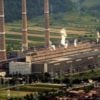
Romania's Prime Minister, Nicolae-Ionel Ciucă, has met with representatives of Iraq's Mass Global Energy Rom, the company that purchased the Mintia Thermal Power Plant.
During the meeting, the investment plan worth over one billion euros, designed to turn the thermal power plant into the EU's largest and most efficient power production capacity by gas was presented.
According to a statement from the Romanian government, the most modern technologies will be used to enable production of at least 1,500 MW.
It adds that, "the components of the plant will be prepared for the transition to the new energy production technologies, based on hydrogen".
The first stage of the investment will be completed within 24 months, and the project will reach full maturity in 36 months.
(Source: Govt of Romania)
(Picture credit: Govt of Romania)
Posted in Investment Comments Off on Iraqi Group to Invest EUR 1bn in Romanian Electricity Plant

Baghdad Seeks to Buy More Gas From Iran
Posted on 06 March 2023 .
Iraq's Minister of Electricity, Ali Fadel, has stated that his country is currently in the process of finalizing a contract to purchase gas from Iran in the summer season.
In a recent interview with Iraqi News Agency, Fadel emphasized that Iraq needs 35,000 megawatts to ensure 24-hour electricity supply during the summer season. Currently, Iraq's electricity production is at 15,600 megawatts, and citizens have access to 18 hours of electricity per day.
Fadel also stated that the situation regarding electricity supply this coming summer will be different from previous years. The Iraqi Ministry of Electricity is ready to sign an agreement with Iran to purchase the required amount of gas for the summer season, which will add 7,000 megawatts of electricity to Iraq's supply.
However, the shortage of fuel is preventing an increase of 5,000 megawatts, although facilities are ready for the production of this amount of electricity.
The Minister also mentioned that Iraq's contracts with Siemens and General Electric will enter the implementation phase from March of this year. As a result, Siemens will produce 1,400 megawatts at the Beiji power plant and 600 megawatts at the Dhi Qar power plant in the first phase, while General Electric will also produce 3,000 megawatts of electricity.
Fadel added that the two companies are obligated to conduct the necessary studies to collect associated gas. With the contracts between Iraq and Siemens and General Electric entering the implementation phase, Iraq's electricity supply is set to receive a significant boost.
In addition, the purchase of gas from Iran will further increase Iraq's electricity supply and help the country meet its energy needs during the summer season.
(Source: Tasnim, under Creative Commons licence)
Posted in Construction & Engineering In Iraq Comments Off on Baghdad Seeks to Buy More Gas From Iran
Renewables alone won't solve Iraq's Power Problems
Posted on 24 February 2023 .
By Jessica Obeid for The Middle East Institute. Any opinions expressed here are those of the author(s) and do not necessarily reflect the views of Iraq Business News.
Iraq needs renewables, but they won't solve its power problems without broader reforms
Two decades on from the 2003 U.S. invasion of Iraq, efforts to improve the country's electricity infrastructure have lagged.
Despite massive hydrocarbon reserves, including the world's fifth-largest proved crude oil and 12th-largest proved natural gas reserves, Iraq struggles with chronic electricity shortages.
Citizens do not have access to reliable electricity service and have to rely on expensive neighborhood diesel generators to cover some of the gap.
Posted in Iraq Industry & Trade News Comments Off on Renewables alone won't solve Iraq's Power Problems

Japan wants to aid 'Weak' Iraqi Private Sector
Posted on 24 February 2023 .
From Rudaw. Any opinions expressed are those of the author(s), and do not necessarily reflect the views of Iraq Business News.
Iraqi economic capital engulfed in trash, suffers from dilapidated electricity
Japan is keen to assist Iraq develop its "weak" private sector by cooperating with Iraqi and Kurdish companies, the Japanese ambassador to Iraq, Futoshi Matsumoto (pictured), said last week.
Posted in Iraq Industry & Trade News Comments Off on Japan wants to aid 'Weak' Iraqi Private Sector

US Ambassador "Excited" at Growth Opportunities in Iraq
Posted on 22 February 2023 .
Remarks for the Ambassador's Keynote Speech at the Iraq Oil and Gas Show
Saturday, February 18, 10:45 a.m. (Babylon Rotana Hotel)
I have recently returned from Washington, D.C. where we had the privilege of hosting Foreign Minister Fuad Hussein and his 15-member delegation. This visit was historic. It was the first Higher Coordinating Committee that was focused on economic cooperation, energy sector development, and climate change.
In Washington, the Foreign Minister and Prime Minister Sudani's advisors laid out a plan to diversify Iraq's economy from being more than just an oil exporting country to a country with vibrant private industries, where the private sector is the main engine of economic growth.
In addition to the meetings with Secretary of State Blinken and other senior government officials, the Foreign Minister's delegation met with the U.S. Chamber of Commerce and about 40 U.S. companies inviting them to play a role in Iraq's economic development, including in growing Iraq's nascent private sector. I came away from this trip confident in the strong and expanding relationship between Iraq and the United States, and excited for the opportunities to foster real growth in Iraq's economic future.
For Iraq to realize this bright future, Iraq must do at least three things: invest in critical infrastructure, combat corruption, and create a business environment that is favorable to foreign direct investment. By that I mean encouraging foreign companies to bring both their capital and their expertise to Iraq and where these investments generate jobs and companies train Iraqis to run their own businesses.
There is no place better to focus these opportunities than the energy sector, specifically the country's electricity grid and oil and gas field development, including gas capture. These areas capture both Iraq's greatest source of revenue and its greatest constraint on economic growth. We all know electricity demand will only grow and there is promising potential for investment and improvement.
I have spoken with the Minister of Oil, the Minister of Electricity, and the prime minister's new adviser on energy, all of whom have laid out a vision for modernizing the energy industry, and not just in the oil sector, but by capturing and using the vast amounts of gas in Iraq to help develop the electricity sector to meet the power demands of a growing economy.
The Biden Administration is encouraging U.S. energy companies-those already in Iraq and new ones, to explore opportunities in Iraq and where they could bring their world-class expertise and help generate jobs for Iraqis. On Thursday, General Electric and the Ministry of Electricity signed an MOU to develop the energy sector in production, transmission, maintenance, staff training, and reducing carbon emissions. And there is certainly more room for other companies.
Strengthening Iraq's energy sector will require significant investment. Gas capture plants will have to be built along with new power plants to use the additional gas. The electricity grid will have to be upgraded and modernized to make sure that the 50 percent of power that is currently lost in transportation due to theft and poor equipment can instead be harnessed to power Iraqi homes and businesses.
That is why energy infrastructure is an obvious place to start with investment. Iraq has a valuable pre-existing resource that has the potential to advantage not just Iraqi citizens, but the economy - especially since the lack of electricity is one of the largest constraints facing manufacturing and industry today.
In the gas field, Iraq has both a challenge and an opportunity. After Russia, Iraq is the highest emitter of flared gas in the world. This causes severe environmental problems. Capturing the gas that is currently flared would dramatically improve Iraq's climate, allowing Iraqis to breathe cleaner air, drink cleaner water, and suffer less from debilitating diseases such as cancer.
But capturing gas is also an economic opportunity. Most assessments conclude that if the amount of gas flared in Iraq today was processed in new electricity generating power plants, Iraq could double the total amount of its electricity production and meet the current shortages. By using captured gas to power electric generators, Iraq could dramatically increase the amount of electricity available to its people - as much as 3,500 MW of additional electricity, or an increase of 25 percent to the entire country's electrical grid.
To fully take advantage of developing the energy sector, we must also address the important challenge of corruption. The business environment must convince foreign companies that their investments are protected, and the regulatory climate is predictable, transparent, and honest. Also companies, especially those that are going to do business with the government, must know they will get paid on time. Unfortunately, this has been an issue in the past.
Finally, the bureaucracy itself must modernize, efficiently process contracts and projects, and streamline the process for companies, both foreign and domestic, to do business here. When companies compare opportunities to do business, they will almost invariably choose those with less risk and greater ease of doing business. In today's fast moving global economy, time matters to international investors.
So let me conclude by saying that modernizing Iraq's energy sector is key to Iraq's ability to become a secure, stable, sovereign country that can provide for its own people using its own vast natural resources.
In Washington last, the Biden Administration launched a new and expanded vision for Iraq focused on economic development. We are committed to working with the Sudani government to create new opportunities that strengthen the economic interests of both our countries and the region. American companies are ready to invest and participate in modernizing Iraq's energy sector to the benefit of Iraq's sovereignty and its environment and help build a more secure future for the Iraqi people.
We are continuing this conversation with Prime Minister Sudani and his team at the Munich Security Conference. We look forward to working with the Government of Iraq, the private sector (including other western companies), and directly with the Iraqi people to make this happen. Thank you.
(Source: US Embassy)
Posted in Iraq Industry & Trade News, Iraq Oil & Gas News, Politics, Security Comments Off on US Ambassador "Excited" at Growth Opportunities in Iraq
Waste Gas Generates Power in Kurdistan
Posted on 19 February 2023 .
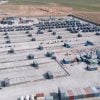
Waste gas used to generate power in Garmian, Kurdistan
A significant step taken by the ninth cabinet of the Kurdistan Region Government (KRG) was to reduce the impact of waste gas on the environment and produce electricity using this gas from oil wells.
The Garmian waste-gas-to-power-plant project is a 165-MW facility of its kind in Iraq and Kurdistan, which generates power from Hasira oil wells. The plant was completed in 2021 and since has created 118 job opportunities for the residents.
The project was constructed on 35 donums land and consists of 180 generators and 45 exchangers. Each generator can produce 0.9 MW of electricity and its daily production has been estimated at 100 MW. Efforts continue to increase the generating amount.
The ninth cabinet has been working on environment-friendly policies to minimize the harms of waste gas on the environment. Besides its economic benefits, the project provides better electricity service to the residents in Garmian.
(Source: KRG)
Posted in Construction & Engineering In Iraq, Iraq Industry & Trade News, Iraq Oil & Gas News Comments Off on Waste Gas Generates Power in Kurdistan
GE signs Electricity MoU with Iraq
Posted on 16 February 2023 .
By John Lee.
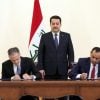
The Prime Minister of Iraq, Mohamed Shia Al-Sudani, has presided over the signing of a memorandum of understanding (MoU) with the American company General Electric (GE).
The memorandum covers areas such as production, efficiency, transportation, maintenance, staff training, and reducing carbon emissions.
It also includes long-term maintenance works for a period of five years, increasing the work efficiency of the energy production units, and establishing new stations for the production of electric energy.
Additionally, there will be studies for the exploitation of associated gas, the establishment of monitoring centers, and the establishment of a training center for staff working in the Ministry of Electricity.
(Source: Media Office of the Prime Minister)
Posted in Iraq Industry & Trade News 1 Comment